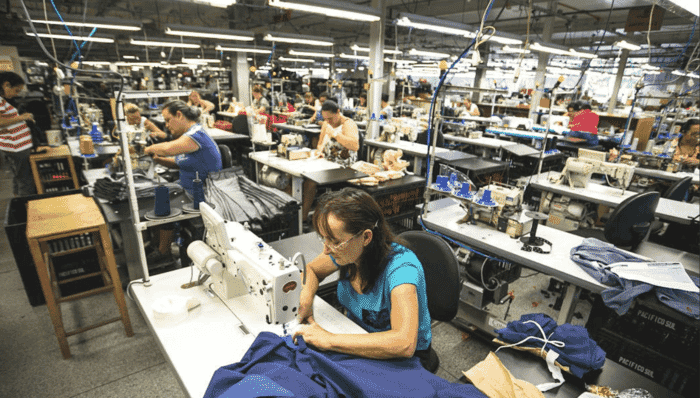
Portugal's textile and clothing industry employs roughly 130,000 workers, encompasses approximately 12,000 companies, and exported €5.5 billion in 2025, according to INE data compiled by the ATP (Jornal Económico, 2026). The sector accounts for about 17% of national manufacturing employment and absorbs 9% of European investment in textiles and clothing (AICEP, 2024). Portugal is now the 5th largest textile producer in Europe and one of the most sought-after nearshoring destinations for international fashion brands.
New European regulations, the acceleration of nearshoring, and a growing commitment to sustainability are reshaping the competitive landscape. The overall -0.8% variation in exports masks segments in strong growth: technical textiles rose 13.4% and carpets surged 22% (Portugal Têxtil/INE, 2026).
This article compiles the most up-to-date data on Portugal's textile industry: sector size, export destinations, production regions, trends, nearshoring opportunities, and future outlook - all backed by verifiable sources. For a full overview of the sector with live statistics, visit portugalclothingfactory.com/statistics.
Key Takeaways
- Portugal has approximately 12,000 textile companies and 130,000 workers in the sector (ATP, 2025)
- Textile exports reached €5.499 billion in 2025, a slight decline of 0.8% from 2024 (INE/Jornal Económico, 2026)
- Spain is the top destination, absorbing 24% of exports; France follows at 15%
- Environmental certifications in the sector grew 13% in 2025, reaching 2,526 certifications (CITEVE/Jornal de Negócios, 2025)
- Portugal is Europe's 5th largest textile producer by revenue and 4th by employment (EURATEX/AICEP, 2024)
- Sustainability, digitalisation, and nearshoring are reconfiguring production capacity in 2026
How Large Is Portugal's Textile Sector in the National Economy?
The textile and clothing sector accounts for approximately 17% of employment in Portugal's manufacturing industry (AICEP, 2024). Portugal is Europe's 5th largest textile producer by revenue and 4th by employment, absorbing 9% of European investment in the sector according to EURATEX - placing Portugal ahead of countries like Poland and Belgium in textile industrial scale.
With approximately 12,000 active companies and 130,000 direct jobs, the textile supply chain is a structural pillar of the national economy. More than 80% of production units have fewer than 50 workers (INE, 2024). That might seem like a weakness. In practice, it's an advantage: it allows flexibility, niche specialisation, and the ability to respond quickly to smaller orders - something large Asian factories can't offer.
The geographic concentration of the sector in northern Portugal, particularly in Braga and Viana do Castelo, creates a dense production ecosystem. Raw material suppliers, equipment manufacturers, finishing companies, and logistics providers all operate in close proximity. This co-location reduces lead times and facilitates coordination between supply chain links in a way that dispersed textile sectors simply can't replicate. Browse our directory of Portuguese textile manufacturers by region to see what's available near you.
The average gross monthly salary in the textile sector stood at €976 in 2025, with growth exceeding 7% over the previous year (CVMaker.pt/INE, 2025). Even with this increase, Portugal remains cost-competitive against other Western European countries - and the sector is shifting towards higher-value products. Overall export figures mask an internal reconfiguration: less volume in basic clothing, more value in technical and sustainable products. The sector's future isn't in commodity t-shirts, but in certified sustainable garments and high-performance fabrics. Read more in our guide to sustainable textile sourcing in Portugal.
Citation
Portugal's textile industry employs approximately 130,000 workers across roughly 12,000 companies, representing 17% of national manufacturing employment. Portugal is Europe's 5th largest textile producer by revenue and 4th by employment, absorbing 9% of European investment in the sector (EURATEX/AICEP, 2024).
Where Do Portuguese Textile Exports Go?
Spain is by far the leading destination for Portuguese textile and clothing exports, absorbing 24% of the total at €1,318 million in 2025 (INE via Jornal Económico, 2026). France follows at 15.2%, Germany at 8.4%, and the USA at 7.6%. Total sector exports reached €5.499 billion in 2025, a decline of just 0.8% from the previous year.
These numbers correct a common misconception. Many articles cite Germany as the primary market, but INE data shows Spain leads by a wide margin. Geographic proximity and logistic integration across the Iberian Peninsula explain this position. For brands that need to react quickly to trends, this proximity is an advantage Asia simply cannot match - two to five days by road to any European capital, compared with four to six weeks by sea from Asia.
Portuguese textile and clothing exports by market (2025)
| Rank | Market | Value (€M) | Annual variation | Share |
|---|---|---|---|---|
| 1 | Spain | 1,317.8 | +0.1% | 24.0% |
| 2 | France | ~834 | -1.4% | 15.2% |
| 3 | Germany | ~461 | -2.1% | 8.4% |
| 4 | USA | 420.4 | -3.3% | 7.6% |
| 5 | United Kingdom | 336.9 | -3.1% | 6.1% |
| 6 | Italy | 312.3 | -13.0% | 5.7% |
| 7 | Netherlands | ~230 | +8.9% | 4.2% |
| 8 | Morocco | 89.7 | +22.1% | 1.6% |
| — | Others | ~1,497 | — | 27.2% |
Source: INE via Jornal Económico and Portugal Têxtil, 2026. Netherlands and Morocco: extrapolation from January–September 2025 data.
Morocco's growth (+22.1%) reflects Portugal's role as a re-export hub and fabric supplier for Moroccan garment manufacturers. Italy's sharp decline (-13%) suggests a reorganisation of value chains in southern Europe.
The Growing North American Market
The USA is diversifying its sourcing base. Trade tensions with China and demand for suppliers with high environmental standards favour Portugal. The North American market particularly values home textiles, premium denim, and quality knitwear. Delivery times from Portugal to the US (15 to 20 days by sea) are competitive when compared with Turkey, and the perceived quality of "Made in Portugal" continues to rise. At 7.6% of total exports, the US is already the largest non-European market.
Emerging Markets and Diversification
Beyond the top four, the UK, Netherlands, and Nordic nations are also significant markets. Post-Brexit did not significantly slow exports to the UK - the industry adapted quickly to new customs requirements. Emerging markets such as the UAE and South Korea are beginning to appear on Portuguese exporters' radars: small in volume, but with attractive margins and growth potential. Technical and functional textiles grew 13.4% in 2025 and carpets rose 22%, showing that product diversification is working (Portugal Têxtil/INE, 2026).
Citation
Portuguese textile and clothing exports totalled €5.499 billion in 2025, a decline of 0.8% from 2024. Spain leads with 24% of the total (€1,318M), followed by France (15.2%) and Germany (8.4%). Technical textiles grew 13.4% and carpets 22% (INE, 2026).
What Are Portugal's Main Textile Clusters?
Portugal's textile sector is organised into four major regional clusters, each with distinct specialisation (ATP, 2024). The Ave Valley and the Cávado Valley, in the Braga and Porto districts, concentrate more than 70% of the sector's companies. This geographic concentration creates a production ecosystem that's rare in Europe - the entire value chain is accessible within a 100 km radius. For a detailed breakdown by region, browse our complete directory of Portuguese textile manufacturers.
Having spinning, weaving, dyeing, and garment manufacturing in the same geographic valley allows product development cycles that no Asian hub can match for small and medium-sized orders. A brand can visit three complementary suppliers in a single day - something that takes weeks of international travel to replicate when sourcing from Asia.
Portugal's main textile clusters at a glance
| Cluster | Main specialisation | Typical client profile |
|---|---|---|
| Ave Valley | Knitwear, yarn, jersey garments | Casual fashion, sportswear, workwear |
| Barcelos / Braga | Outerwear, home textiles | Mid-to-high fashion, European retailers |
| Covilhã | Wool fabrics, flannels, tweed | Tailoring, luxury, uniforms |
| Guimarães | Garment manufacturing, technical articles | B2B contracts, export fashion |
| Viana do Castelo | Embroidery, artisanal textiles | Premium, private label, cultural export |
Looking for a factory in a specific region or product category? Submit a production enquiry and we will match you with the right manufacturer for your needs.
Fabric variety inside a Portuguese textile warehouse. Photo: Unsplash
Citation
Portugal's textile sector is organised into specialised regional clusters: the Ave Valley leads in knitwear and yarn; Covilhã is a European reference for wool fabrics; Barcelos and Guimarães dominate garment manufacturing and export clothing. More than 70% of companies are concentrated in the Braga and Porto districts (ATP, 2024).
How Is Sustainability Transforming the Sector?
Environmental certifications in Portugal's textile sector grew 13% in 2025, reaching 2,526 certifications, and 105 companies participated in CITEVE's sustainability report - a 36% increase from the first edition (CITEVE via Jornal de Negócios, 2025). Sustainability is no longer a positioning niche - it's a structural shift that is reshaping how Portuguese factories operate and how they compete internationally.
The European Ecodesign for Sustainable Products Regulation (ESPR), in force since 2024, requires brands to ensure traceability and environmental accountability for their products. For Portuguese manufacturers certified with GOTS, OEKO-TEX, or GRS, this regulation is a direct competitive advantage over uncertified Asian producers. Read our full guide to the ESPR and what it means for fashion brands.
Recycled material incorporation rose to 11% of the total (up 3 percentage points), and bio-based or organic materials now represent 25% (up 4 percentage points). Meanwhile, 84% of Portuguese textile companies actively invest in reducing energy, water, and CO2 emissions (PortugalTextile.com, 2024). The sustainable apparel market in Portugal reached $32.84 million in 2025, with projections of $95.43 million by 2034, representing annual growth of 12.59% (IMARC Group, 2025).
The Digital Product Passport
From 2027 onwards, many textile products sold in the EU will require a Digital Product Passport - a digital document containing information about composition, origin, environmental impact, and recycling instructions for each garment. Portugal is among the most advanced countries in preparing for this requirement. CITEVE is already running traceability pilot projects with dozens of companies. Brands looking for suppliers ready for the regulatory future will find Portugal offers a level of compliance assurance few other sourcing destinations can match. Learn more in our Digital Product Passport guide for fashion brands.
Technical Textiles and Innovation
Technical textiles are the fastest-growing segment: +13.4% in 2025 (Portugal Têxtil/INE, 2026). This includes materials for automotive, construction, healthcare, and high-performance sports. Centres like CITEVE and the University of Minho play a central role in this evolution, with the BE@T project investing in textile bioeconomy with PRR funding. The growth of carpets (+22%) is another clear signal - Portugal is one of the few European countries with significant industrial capacity in that segment, driven by demand from the US and northern Europe.
The simultaneous double-digit growth of technical textiles and carpets - two completely different value chains - shows that Portugal's diversification strategy is real and working, not just rhetorical. This is happening at the same time that conventional clothing volumes stagnate across most manufacturing countries.
Digitalisation of Production
The adoption of CAD/CAM systems, digital grading, and online order management is accelerating across Portuguese factories. Manufacturers offering real-time order tracking portals have a clear advantage in attracting international clients. Portugal's Industry 4.0 programme, backed by PRR funding, supports this transition across the sector.
Citation
Environmental certifications in Portugal's textile sector grew 13% in 2025, reaching 2,526 certifications. Recycled materials rose to 11% (+3 p.p.) and organic materials represent 25% (+4 p.p.). 84% of companies invest in reducing energy, water, and CO2 emissions (CITEVE, 2025; PortugalTextile.com, 2024).

Natural and organic fibres are a growing share of Portuguese textile production. Photo: Mike Murray / Pexels
Why Are Fashion Brands Choosing Portugal for Manufacturing?
Portugal is now one of the five most-referenced nearshoring destinations in European fashion sourcing reports, positioning itself ahead of Eastern European competitors in perceived quality and available certifications (AICEP, 2024). This reputation was built over decades of working with demanding brands from northern Europe. Learn how we connect brands with manufacturers at portugalclothingfactory.com/how-it-works.
Quality and Certifications
Portuguese manufacturers operate according to European quality, health, and safety standards. The most valued certifications include ISO 9001, GOTS, OEKO-TEX Standard 100, and BSCI. CITEVE conducts 180,000 annual quality and compliance tests (PortugalTextile.com, 2024). Portugal has one of the highest concentrations of GOTS-certified factories in Southern Europe. For a comparison of the main certifications, see our OEKO-TEX vs GOTS guide.
EU Tariff Advantages
Manufacturing in Portugal means manufacturing within the European Union. Products benefit from free circulation in the Single Market with no additional tariffs. For US and UK brands selling into the EU, Portuguese origin can have a direct impact on profitability and import duty calculations.
The "Made in Portugal" Premium
In consultations with European fashion buyers, the "Made in Portugal" label was described as a positive positioning attribute by more than 70% of respondents, especially in categories like knitwear, wool, and quality outerwear. This premium is actionable in brand communication and can represent 15–25% in additional retail price value. For a breakdown of typical production costs, see our clothing production costs in Portugal article.
Ana Paula Dinis, ATP's director-general, emphasises that competitiveness is a natural condition: "A company, in any sector, needs to be competitive to remain active and prosper. It's a natural condition of the economy" (FashionNetwork Portugal, 2025).
Nearshoring: The Major Opportunity
European and North American brands are relocating part of their production to Europe for three concrete reasons: shorter lead times, regulatory pressure on long supply chains, and geopolitical risk. Portuguese manufacturers offer delivery times of 4 to 8 weeks, compared with 16 to 24 weeks for Asian production. Many Portuguese factories work with minimums of 200 to 500 pieces - while factories in China or Bangladesh frequently require 3,000 to 5,000 units. For emerging brands and direct-to-consumer labels, this flexibility is a decisive advantage. Find out how to start production in Portugal.
The real driver of nearshoring isn't just risk reduction - it's the shift in brand business models. With the decline of high-volume fast fashion and the rise of DTC brands and capsule collections, producing 500 pieces at premium quality is more valuable than producing 50,000 pieces at the lowest possible cost.
Challenges and Capacity Limits
Portugal's production capacity has limits. Some factories already operate with waiting lists of several months. Growth in demand without corresponding investment in capacity creates bottlenecks. The shortage of skilled labour is another real challenge - attracting young people to the textile industry requires ongoing investment in training and working conditions. This is probably the biggest structural risk to sustained nearshoring growth in Portugal.
Comparison with Other Manufacturing Destinations
Portugal vs. other textile manufacturing destinations (2025)
| Criterion | Portugal | Morocco | Bangladesh | Turkey | Romania |
|---|---|---|---|---|---|
| Average lead time | 4-8 weeks | 6-10 weeks | 16-24 weeks | 6-12 weeks | 5-9 weeks |
| Average labour cost/hour | ~€8-10 | ~€2-3 | ~€0.9-1.2 | ~€4-6 | ~€4-5 |
| Certifications (GOTS, OEKO-TEX) | High | Medium | Low-medium | Medium-high | Medium |
| EU Single Market access | Direct | Partial (EPA) | Tariffs apply | Partial (Customs Union) | Direct |
| Geopolitical risk | Low | Medium | Medium-high | Medium | Low |
| "Origin" brand premium | High | Medium | Low | Medium | Low |
Sources: estimates based on AICEP, ILO, and Portugal Clothing Factory analysis, 2025. For a full breakdown, see our Portugal vs Bangladesh vs Vietnam production comparison.
Portugal doesn't compete on price alone. And that's precisely what makes it attractive to brands that don't want to compete on price alone.
Citation
Portugal ranks among the five most-referenced nearshoring destinations in European fashion sourcing reports. Portuguese manufacturers offer lead times of 4 to 8 weeks, European certifications (GOTS, OEKO-TEX), and direct Single Market access without tariffs. CITEVE conducts 180,000 annual compliance tests (AICEP, 2024; PortugalTextile.com, 2024).
FAQ: Frequently Asked Questions About Portugal's Textile Industry
This section answers the most frequently searched questions about the textile sector in Portugal.
How many textile companies are there in Portugal?
There are approximately 12,000 active textile and clothing companies in Portugal, according to the ATP (2025). AICEP uses a narrower definition and reports around 6,000 garment manufacturing companies. The difference comes down to scope: the higher number includes the entire supply chain (spinning, weaving, finishing, garment manufacturing), while the lower figure focuses on garment production. More than 80% are SMEs with fewer than 50 workers. Most are concentrated in the Braga and Viana do Castelo districts.
What is the value of Portuguese textile exports?
Portuguese textile and clothing exports reached €5.499 billion in 2025, a decline of 0.8% from 2024 (INE via Jornal Económico, 2026). The main destination markets are Spain (24%), France (15.2%), and Germany (8.4%). The USA is the largest non-European market at 7.6% of the total.
What are Portugal's main textile regions?
Portugal has four main textile clusters: the Ave Valley (knitwear, yarn, jersey garments), Barcelos and Braga (outerwear and home textiles), Covilhã (high-quality wool fabrics), and Guimarães (garment manufacturing and technical articles). Each cluster has its own supply chain, allowing brands to choose the region most suited to their product type. See our directory of Portuguese textile manufacturers for full details.
Is Portugal more expensive than Bangladesh for clothing production?
Yes, in pure CMT cost. The average hourly labour cost in Portugal is between €8 and €10, compared with €0.90 to €1.20 in Bangladesh. But comparing hourly cost alone ignores critical factors: lead times of 4–8 weeks vs. 16–24, tariff-free Single Market access, certifications, lower logistics risk, and the value of "Made in Portugal." For mid-to-high quality brands, total cost per collection can be competitive. Read our full breakdown in our clothing production costs in Portugal article.
How can I find a textile manufacturer in Portugal?
The most direct ways are: contacting the ATP (which maintains a member directory), attending sector trade fairs like Modtissimo in Porto, or submitting an enquiry through Portugal Clothing Factory - which connects brands with Portuguese manufacturers by product type, certification, and minimum order volume. We always recommend visiting the facilities before signing a contract.
What Should You Do with This Data?
Portugal's textile industry offers a rare combination: European quality, internationally recognised certifications, competitive lead times, and direct access to the EU Single Market. The data in this report show a sector that exports nearly €5.5 billion per year, is investing heavily in sustainability, and attracts international brands through proximity and quality.
Challenges exist. Limited capacity, labour shortages, and wage pressure are real. But these are also signs of a sector in demand, not in decline. The highest value-added segments - technical textiles and certified sustainable production - are the ones growing fastest.
If your brand is considering manufacturing in Portugal, the next step is simple.
Submit your production enquiry at portugalclothingfactory.com/contact. Describe your product, volume, and timeline, and we will connect you with Portuguese manufacturers suited to your profile.
Sources used in this article:
- INE, 2025 export data via Jornal Económico
- ATP - Associação Têxtil e Vestuário de Portugal (2025)
- AICEP Portugal Global, Textiles and Clothing Industry (2024)
- EURATEX, Facts & Key Figures 2024
- CITEVE via Jornal de Negócios (2025)
- Portugal Têxtil - export data by destination (2026)
- PortugalTextile.com - sustainability data (2024)
- IMARC Group, Portugal Sustainable Apparel Market (2025)
- Knitting Trade Journal - BE@T CITEVE project (2025)
- FashionNetwork Portugal - ATP statements (2025)
- CVMaker.pt/INE - textile sector wages (2025)
Last updated: 28 March 2026.
