The European Ecodesign for Sustainable Products Regulation (ESPR) entered into force in July 2024 and lists textiles among the first product categories to be regulated. From 2026 to 2027, any brand selling clothing in the European Union faces concrete requirements on durability, recyclability, and traceability. It doesn't matter where the brand is headquartered. If your product reaches an EU consumer, the rules apply.
Compliance isn't optional and isn't future-tense. Companies that started preparing documentation, certified suppliers, and data systems in 2025 are already saving cost and time. Companies waiting for "the final rules" will scramble, pay rush fees on certifications, and risk product withdrawal from the market. We've watched both patterns play out across our sourcing network since 2024.
This guide walks through the four regulations that matter for fashion brands in 2026 (ESPR, Digital Product Passport, Green Claims Directive, textile EPR), the actual deadlines, the real penalties, and a practical compliance checklist. Plus what we've learned from sourcing brands into Portuguese factories that already meet most of the requirements.
Heads up: We're Portugal Clothing Factory, a group of 80 documented Portuguese clothing factories in Porto and Guimarães. Since 2021, we've placed dozens of brands with these factories, so the practical observations in this article are based on first-hand sourcing experience.
Key Takeaways
- The ESPR has been in force since July 2024. Textile-specific delegated acts apply between 2025 and 2027.
- Over 53% of textile sustainability claims in the EU are vague or unsubstantiated (European Commission, 2023).
- The Digital Product Passport (DPP) becomes mandatory for textiles in 2026-2027 and requires verifiable data on composition, origin, certifications, and end-of-life.
- Green Claims Directive enforcement starts in 2026. National fines can reach 4% of annual turnover in some Member States.
- Portugal starts with an advantage: short supply chains, EU labour and environmental compliance, and high density of GOTS/OEKO-TEX certified factories.
- Most Portuguese factories already hold 60-80% of the documentation the DPP requires. Asian supply chains typically hold 10-30%.
Try it free: Calculate your Portuguese production cost in 60 seconds to see what compliance-ready manufacturing actually costs. No email required.
What Is the ESPR and Why Does It Affect Your Brand?
The ESPR (EU Regulation 2024/1781) replaced the former Ecodesign Directive in July 2024 and identifies textiles as one of the highest-priority categories for regulation. According to the European Environment Agency, the textile industry is responsible for approximately 10% of global CO2 emissions and consumes 79 billion cubic metres of water annually (European Environment Agency, 2024). For the European Commission, regulating textiles is no longer optional, and the ESPR is the framework chosen to do it.
Any company placing textile products on the EU market falls under its requirements. That includes Portuguese brands selling locally, European brands manufacturing in Asia, US or UK brands shipping to EU customers, and Asian brands distributing in Europe through marketplaces. The legal trigger is not where you make the product. It's whether the product reaches an EU consumer.
The regulation works through "delegated acts" adopted by product category. These delegated acts define the concrete technical requirements. For textiles, the first delegated act was scheduled for adoption between late 2025 and early 2026, with requirements entering force across 2026-2027 (European Commission, ESPR Regulation, 2024). Brands won't get a long transition: typical compliance windows are 12 to 24 months from the publication of each delegated act.
What Are the Four Mandatory ESPR Pillars for Textiles?
The ESPR covers four mandatory pillars for textiles:
- Durability and repairability. Products designed to last longer and be physically repairable. The regulation will likely set minimum tear-strength, colour-fastness, and seam-strength thresholds. Disposable fast-fashion construction (single-use thread density, fused seams that can't be unpicked) becomes non-compliant.
- Recyclability. Materials must be physically separable and recyclable at end-of-life. Mixed-fibre garments (cotton-polyester blends, bonded laminates) face stricter constraints because they're hard to recycle.
- Recycled content. Minimum percentages of recycled fibres by category. The first textile delegated act is expected to set thresholds in the 10-25% range, increasing over time.
- Restriction of hazardous substances. Limits on harmful chemicals in the final product, aligned with REACH Annex XVII. PFAS, formaldehyde, certain azo dyes, and heavy metals all in scope.
What's the real shift? Not the technical requirements alone. The shift is in evidentiary burden. Brands can no longer make claims without documentation. Design choices, supplier inputs, and end-of-life flows all become verifiable responsibilities, audited at customs, in retail, and through the DPP system.
Citation Capsule: The ESPR (EU Regulation 2024/1781) entered into force in July 2024 and identifies textiles as a priority regulatory category. The textile industry is responsible for 10% of global CO2 emissions and 79 billion cubic metres of water consumption annually (European Environment Agency, 2024). Any brand selling clothing to EU consumers falls under its requirements.
ESPR vs the old Ecodesign Directive: what's actually different
| Element | Old Ecodesign Directive (2009) | ESPR (2024) |
|---|---|---|
| Product scope | Energy-related products only | All physical products including textiles, electronics, furniture |
| Information transparency | Limited disclosure on energy labels | Mandatory Digital Product Passport with full traceability |
| Recycled content | Not regulated | Mandatory minimum thresholds per delegated act |
| Substance restrictions | Sectoral (REACH) | Cross-sectoral with additional textile-specific limits |
| Enforcement | National authorities, light coordination | EU-level coordination + national surveillance + customs checks |
| Penalty alignment | Patchy across Member States | Harmonised minimum penalty framework |
Sources: European Commission, ESPR Regulation, 2024; previous Ecodesign Directive 2009/125/EC.
In practice, the ESPR is a regulatory regime change, not an upgrade. Brands that built compliance infrastructure under the old directive (mostly the energy and electronics sectors) are still ahead. Most textile brands are starting from a low base and discovering, often during their first sourcing call after the regulation, that their existing data systems aren't close to ready.
.jpeg?format=webp)
What Does the Digital Product Passport Change for Brands?
The Digital Product Passport (DPP) is the ESPR's most concrete day-to-day instrument. Article 9 of the regulation requires each textile product to carry a digital record accessible via QR code or RFID, with verifiable information on composition, origin, environmental impact, and end-of-life instructions (European Commission, ESPR Article 9, 2024). The pilot phase ran in 2025, the textile mandate is scheduled for 2026-2027, and there's no realistic chance the timeline slips meaningfully. Industry working groups are already finalising data schemas.
The DPP isn't a marketing object. It's a structured technical record that customs officers, regulators, retailers, and (eventually) consumers can query. The data that goes into it has to be verifiable, traceable, and updated through the product's commercial life.
Mandatory DPP data fields for textiles
| Field category | Examples of required data |
|---|---|
| Identification | Product code, brand, model name, manufacturing batch ID |
| Material composition | Fibre breakdown by % (cotton, polyester, viscose, etc.), recycled content % |
| Origin and supply chain | Country where each substantial transformation occurred (spinning, weaving, dyeing, cut-and-sew) |
| Certifications | OEKO-TEX, GOTS, GRS, Bluesign, ISO 9001 (with certificate number and validity dates) |
| Chemical inputs | Compliance with REACH Annex XVII; presence/absence of restricted substances |
| Carbon and water footprint | Indicative or measured per garment, methodology declared |
| Repair and care instructions | Repairability rating; spare-parts availability; washing/drying instructions |
| End-of-life instructions | Recycling pathway; whether the garment is mono-material or blend; disassembly notes |
| Producer responsibility data | EPR registration number(s); waste management contributions paid |
Source: European Commission ESPR Article 9 + draft delegated acts, 2024-2025.
The technical burden isn't generating the QR code. That's trivial. The burden is collecting verifiable data from suppliers and updating it as your supply chain shifts. A brand that switches from a Portuguese cotton mill to a Turkish blend mill mid-season has to update DPPs for every affected SKU, with the new certification numbers and audit trail. The brands that struggle are the ones that don't know which fields belong to which suppliers or whose suppliers won't share certification details.
For a complete practical guide to the DPP, including the 6 implementation steps, see our dedicated Digital Product Passport guide.
Find your factory: Browse the free factory directory preview, or unlock the premium directory for €39 to see which Portuguese factories already maintain DPP-ready documentation.
Citation Capsule: The Digital Product Passport requires brands to provide, via QR code or RFID, verifiable information on composition, origin, certifications, and end-of-life instructions for each textile product. The mandate enters into force in 2026-2027 (European Commission, ESPR Article 9, 2024). Brands sourcing from factories without robust certification records face the highest implementation cost.
Does the Green Claims Directive End Unproven Sustainability Claims?
The Green Claims Directive, approved by the European Parliament in March 2024, prohibits vague or unverified sustainability claims on products and marketing. According to the European Commission's market study, more than 53% of sustainability claims in the textile sector are vague, misleading, or entirely unsubstantiated (European Commission, market study, 2023). National enforcement begins in 2026, and several Member States have already started acting under existing consumer-protection law.
What changes for fashion brands? Almost everything in your marketing copy. Any environmental claim used on packaging, labels, websites, social ads, or brand storytelling will need verification by an accredited third-party body before publication.
Compliant vs non-compliant claims (real examples)
| Non-compliant claim | Why it fails | Compliant alternative |
|---|---|---|
| "Eco-friendly fabric" | Vague, no methodology | "Made from GOTS-certified organic cotton (cert no. CU 1234567)" |
| "Sustainable collection" | Undefined; no third-party verification | "30% lower CO2e per garment vs our 2024 baseline, verified by [auditor]" |
| "Made with love and respect for the planet" | Marketing language without measurable claim | Drop the claim or replace with verified specifics |
| "Recycled materials" | No %, no certification | "Outer fabric: 65% rPET (GRS-certified, cert no. XX)" |
| "Carbon-neutral t-shirt" | "Neutral" implies offset; offsets are tightly regulated | "Lifecycle CO2e: 4.1 kg per unit, calculated to ISO 14067" |
| "Vegan" | Allowed if accurate, but implies sustainability | Allowed; just don't pair with unproven environmental claims |
| "Responsibly made" | Undefined; widely flagged | Drop or replace with SA8000/BSCI audit reference |
| "Green production" | Vague | Drop or replace with specific certifications + measurement |
Sources: European Commission market study, 2023; European Parliament, Green Claims Directive, 2024; Refashion compliance examples, 2024.
What it takes to keep a claim
To maintain a sustainability claim under the directive, a brand must:
- Define the specific environmental criterion. CO2 emissions per garment? Water saved vs baseline? Avoided microplastic shedding? The criterion has to be measurable.
- Use a recognised methodology. ISO 14067 for product carbon footprint, ISO 14046 for water, PEF (Product Environmental Footprint) per the EU recommendation.
- Get verification by an accredited third party. Self-declared claims are no longer acceptable. The verification body must be ISO 17029 accredited.
- Maintain a documentation trail accessible to enforcement authorities. This includes raw supplier data, methodology, audit reports, and any updates.
- Re-verify when supply chain changes. Switching mills or fabrics invalidates prior claims. Build the budget for re-verification into supply-chain change costs.
Real penalty data by Member State
The directive harmonises a minimum penalty floor, but Member States set actual amounts. A few benchmarks visible in 2024-2025 enforcement actions:
- Germany: Fines up to €50,000 per misleading claim, recurring violations stack. Multiple textile brands have paid €100,000+ in cumulative penalties since 2024.
- Netherlands: ACM (consumer authority) fines up to 4% of annual turnover for systemic greenwashing. Active investigations since 2023.
- France: ADEME-coordinated audits with fines up to €1.5 million for repeat offenders under the Climate and Resilience Law (which pre-dated the EU Directive).
- Belgium: Class-action liability framework allows consumer groups to sue for refunds on greenwashed products.
Sources: European Parliament Green Claims Directive, 2024; Refashion regulatory tracker, 2024; national consumer authority reports.
The brands hit hardest in early enforcement actions weren't fast-fashion players. They were premium and "sustainable" brands that built marketing around vague claims, often based on a single GOTS-certified fibre input applied to garments where 80% of the fabric was uncertified. The directive specifically targets that pattern.
Citation Capsule: The Green Claims Directive, approved in 2024 and enforceable from 2026, prohibits vague sustainability claims without independent verification. According to the European Commission (2023), more than 53% of environmental claims in the textile sector are vague or misleading. Penalties range from €50,000 per claim in Germany to 4% of annual turnover in the Netherlands.
How Does Extended Producer Responsibility (EPR) Work for Textiles?
EPR for textiles originates from the Waste Framework Directive (2018/851/EU), which required Member States to establish separate collection systems for used textiles by 1 January 2025 (European Parliament, Directive 2018/851/EU, 2018). Each country implements its own scheme. France leads with the longest-running system, while Portugal, Spain, Germany, and others are at various stages of rollout.
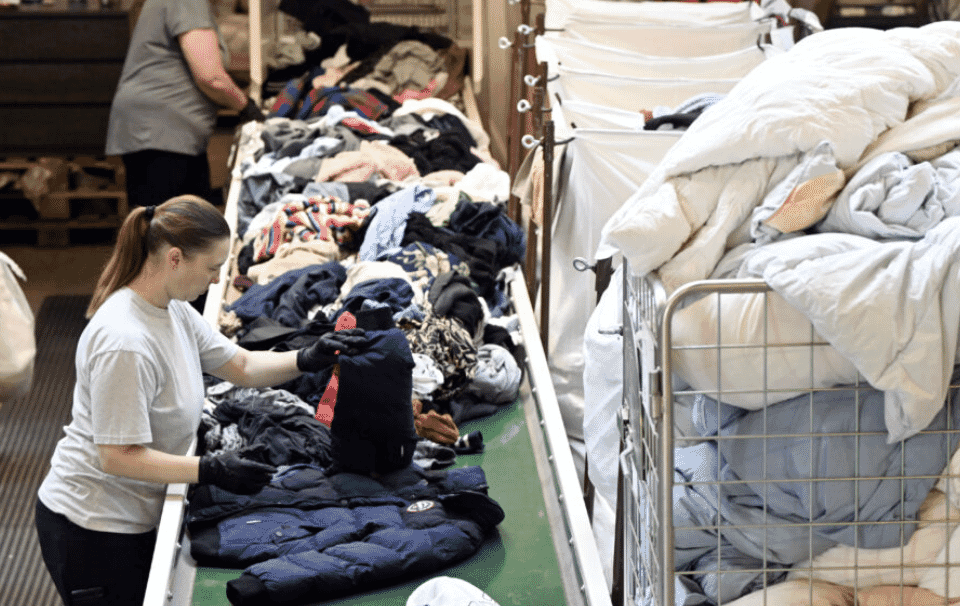
Brands placing textile products on a Member State's market must register with that country's EPR scheme, declare volumes annually, and pay an eco-contribution per unit (or per kilogram, depending on the country). Funds collected support textile collection, sorting, and recycling infrastructure.
Eco-contribution comparison across Member States
| Country | EPR scheme | Eco-contribution per garment unit | Status (2026) |
|---|---|---|---|
| France | Refashion | €0.006 to €0.12 (varies by category and eco-modulation) | Mature, mandatory since 2007 |
| Netherlands | UPV Textiel | €0.15 average (under review) | Operational since 2023 |
| Sweden | Producentansvar Textil | €0.05 to €0.20 (per kg model) | Operational since 2024 |
| Germany | Federal scheme rollout | TBD, expected 2026-2027 | In transposition |
| Portugal | National scheme via APA | TBD, expected 2026 | In implementation |
| Spain | RAP Textil | TBD, expected 2026 | In transposition |
Sources: Refashion eco-contribution table 2024; UPV Textiel 2024; Naturvardsverket Sweden 2024; APA Portugal regulatory consultation 2025.
What brands need to do
Every brand selling into an EPR-active country must:
- Register with the national managing entity once it's operational. In Portugal, that registration is expected to open between mid-2026 and early 2027.
- Declare volumes of products placed on the market each year (units or kg).
- Pay the eco-contribution based on declared volumes.
- Meet collection and recycling targets as defined in the national regulation.
- Eco-modulate contributions where supported. Brands using recycled content, designing for repairability, or hitting durability thresholds pay reduced rates in France and the Netherlands. Portugal's draft regulation suggests a similar mechanism.
For international brands selling in Portugal but manufacturing outside the country, registration applies equally. The principle is straightforward: whoever places the product on the market is responsible for its end of life. No exemption for distance sellers, e-commerce platforms, or marketplace fulfilment.
The brands that fare best in this transition are the ones already designing for circularity. A mono-material polyester garment with a clear recycling pathway pays a much lower eco-contribution than a cotton-elastane blend with bonded seams. Eco-modulation is the financial lever the EU is using to reward better design.
Running into compliance complexity? Get in contact and tell us what you're making. We're a group of Portuguese factories and we answer every serious brief within 24 hours.
Citation Capsule: EU Directive 2018/851/EU required Member States to create separate textile waste collection systems by January 2025. Eco-contributions range from €0.006 to €0.20 per unit across France, the Netherlands, and Sweden (Refashion 2024; UPV Textiel 2024). Portugal's national EPR scheme is in implementation with rollout expected in 2026.
What Is the Compliance Timeline for Brands?
The EU's textile regulation package doesn't enter into force all at once. The ESPR provides for phased adoption of delegated acts between 2024 and 2030 (European Commission, ESPR, 2024), and each Member State sets its own transposition pace for EPR and Green Claims. This phasing allows a structured action plan, but it also creates a coordination trap: brands treating each regulation as a separate problem will spend 3 to 5 times more on compliance than brands treating them as one data system.
The real insight: solve traceability once, and you solve all four regulations. The DPP needs composition and origin data. The Green Claims Directive needs proof. The EPR needs declared volumes and material composition for eco-modulation. The ESPR needs the full picture. The same supplier data feeds every system. Investment in supply-chain data infrastructure isn't a compliance cost. It's commercial infrastructure that becomes table stakes for selling in the EU.
Key Dates Table
| Regulation | Key date | What you should be doing | Priority |
|---|---|---|---|
| ESPR (entry into force) | July 2024 | Map regulation impact on supply chain; identify data gaps | High (overdue if not done) |
| Textile EPR EU (mandatory collection) | January 2025 | Monitor national PT regulation; register in FR/NL/SE if applicable | High |
| Textile DPP (pilot phase) | 2025-2026 | Audit supply-chain data; choose DPP platform vendor | High |
| ESPR (1st textile delegated act) | 2025-2026 | Adapt design and composition to concrete requirements | Medium-High |
| Green Claims Directive | 2026 | Audit all marketing claims; certify or remove | Urgent |
| Textile DPP (mandatory) | 2026-2027 | DPP implemented for full SKU range | Critical |
| ESPR additional delegated acts | 2027-2030 | Monitor expansion to footwear, accessories, home textiles | Planning |
Sources: European Commission (ESPR, 2024); European Parliament (Green Claims Directive, 2024); Directive 2018/851/EU.
Compliance action checklist by quarter (for 2027)
For brands behind schedule, here's a realistic 12-month catch-up plan:
Q4 2026 (October-December)
- Audit all current sustainability claims on website, packaging, and ads. Flag any vague claims.
- Request certification numbers + validity dates from every fabric and trim supplier.
- Identify which suppliers will not (or cannot) provide DPP-ready data.
Q1 2027 (January-March)
- Replace flagged sustainability claims with verified specifics or remove them.
- Begin sourcing alternative suppliers for the gaps identified last quarter.
- Choose a DPP platform vendor (several EU-based options available; pricing typically scales with SKU count).
Q2 2027 (April-June)
- Implement DPP for at least 20% of your SKU range as a pilot.
- Complete supplier transitions for any non-compliant input materials.
- Register with EPR schemes in every Member State where you sell.
Q3 2027 (July-September)
- Roll DPP out to 100% of SKUs.
- Re-audit all marketing for Green Claims compliance.
- File first annual EPR declarations (deadlines vary by country, typically end of Q1).
This is an aggressive but realistic timeline for a brand starting from low compliance maturity. Brands already certified under GOTS or OEKO-TEX with established supplier data systems can collapse this into 4-6 months.
How Does Manufacturing in Portugal Make Compliance Easier?
Manufacturing in Portugal doesn't automatically resolve regulatory requirements, but it significantly reduces complexity. According to ATP, Portuguese factories operate with shorter supply chains, under European labour and environmental legislation, and many already hold the certifications the ESPR will formalise as mandatory (ATP, Textile Sustainability Report, 2025). Geographic proximity is a concrete advantage that becomes a financial advantage once compliance costs scale.
In our sourcing experience since 2021, the saving shows up in hours rather than invoices: populating a DPP record from a Portuguese supplier's existing certificates takes a fraction of the time it takes to reconstruct the same data across a multi-tier Asian chain. The compliance maturity is built into the supplier base, not added on top.
Traceability through proximity
A supply chain with fibres, fabric, and garment manufacturing in Portugal can be physically audited in days. A chain distributed across Asia, Turkey, and Eastern Europe can take months to document, especially if it involves intermediaries without digital systems.
For the DPP specifically, the practical difference is direct. A Portuguese manufacturer certified with OEKO-TEX or GOTS already maintains documentation on composition, fibre origin, and chemical restrictions. These are exactly the data fields the DPP requires. The factory hands them over as PDFs or via API; the brand inserts them into the DPP record. Time to populate a DPP for a Portuguese-made garment: typically 2 to 4 hours per SKU. For an Asian-made garment with 4-tier subcontracting and incomplete certificates: 8 to 30 hours per SKU.
Certifications already aligned with the ESPR
Portugal has one of the highest densities of GOTS and OEKO-TEX Standard 100-certified factories in Southern Europe (GOTS, certificate list, 2024). These certifications cover criteria the ESPR will formalise: absence of hazardous substances, audited production conditions, and raw material traceability.
For the Green Claims Directive specifically, a brand using GOTS fibres has a documentary basis to claim, with proof, that the product uses certified organic raw materials. That foundation doesn't have to be built from scratch. Layer in OEKO-TEX for chemical safety, GRS for recycled content, and SA8000 for social compliance, and most of the verifiable claim infrastructure is already there.
Proximity for audits
The ESPR, DPP, and EPR will create the need for more frequent audits, both customs-driven and brand-driven. Distance matters. A visit to a factory in the Ave Valley is a 1-hour flight from any European capital. A visit to a supplier in Bangladesh is a 4-day operation with intermediary logistics, language coordination, and paperwork. European regulation is rewriting the economic rules of fashion sourcing.
The lower production cost in Asia is being offset by the growing cost of compliance with long, opaque supply chains. For mid-to-high quality brands, the calculation is starting to favour European production. This wasn't the case five years ago. The shift is visible in PCF's pipeline: brand enquiries from US and UK companies looking to nearshore have roughly tripled between 2023 and 2026, almost entirely driven by compliance and tariff exposure rather than production quality concerns.
Citation Capsule: Portugal has one of the highest densities of GOTS and OEKO-TEX Standard 100-certified factories in Southern Europe, according to the Global Organic Textile Standard (2024). These certifications cover the traceability, composition, and chemical restriction criteria the ESPR will formalise as mandatory requirements.
.jpeg?format=webp)
What Should You Ask Your Factory in 2027?
For brands not switching factories, the immediate priority is closing data gaps with current suppliers. Send your factory this checklist and time the response. A factory that takes 2-3 days to deliver complete documentation is a long-term partner. A factory that delays beyond 2 weeks or returns partial answers is a compliance risk.
- Provide every active certification with certificate number, issuing body, valid-from and valid-until dates. (OEKO-TEX, GOTS, GRS, Bluesign, ISO 9001, SA8000, BSCI, BCI, etc.)
- Document fibre composition for every fabric used in production: % by weight, fibre type, recycled content where applicable.
- Document the chain of custody for each substantial transformation: where the fabric was woven/knitted, dyed, finished, and cut-and-sewn.
- Confirm REACH Annex XVII compliance for chemical inputs, with audit reports from the most recent year.
- Provide the wastewater treatment status and discharge data if available.
- State the energy mix powering production, especially renewable percentage.
- Provide CO2e per garment if calculated, or fabric-level CO2e if available.
- Confirm SA8000 or BSCI audit results for social compliance.
- State whether they participate in any DPP pilot programme (a growing number of Portuguese factories joined pilots in 2025).
- Provide a sample CSV or API endpoint demonstrating how data will flow to your DPP system.
Factories that respond completely to all 10 are roughly 1 in 5 in our experience. Most can answer 7 or 8 fully and need a quarter to close the rest. Plan for that gap.
Skip 6 weeks of cold outreach: Tell us what you're making and we'll check the fit against the factories in our group. Get in contact. Replies within 24 hours, no commissions.
What Are the Most Common Misconceptions About ESPR Compliance?
We hear the same incorrect assumptions repeatedly during sourcing calls. The biggest ones:
"My brand is too small to be affected." False. The ESPR applies regardless of company size. Small and micro-enterprises may receive simplified provisions in delegated acts, but no full exemption. Plan for at least baseline DPP compliance.
"If I just use organic cotton, I'm covered." False. GOTS-certified organic cotton is one input field on the DPP. It doesn't cover chemical restrictions on dyes, social compliance audits, end-of-life data, or recycled content thresholds. Single-certification compliance is incomplete.
"My supplier said they're certified, that's enough." False. Certifications must be verified against the certifying body's public registry, not taken on the factory's word. Approximately 1 in 8 factories overstates certifications, in our experience. Always pull the certificate from the GOTS, OEKO-TEX, GRS, or Bluesign database and check it's currently valid.
"The DPP is just a QR code." Misleading. The QR code is the front door. Behind it sits a structured data record with 30+ mandatory fields, version history, supplier sign-offs, and audit trail. The compliance work is the data, not the QR.
What Else Do Brands Get Wrong About Scope and Timing?
"I'll wait for the final delegated act." Costly. Each delegated act has a 12-24 month implementation window. Brands that haven't started preparing by the publication date typically miss the deadline, pay rush fees on certifications, and risk product withdrawal at customs.
"Selling on Amazon shifts the responsibility." False. The brand placing the product on the market is responsible, regardless of fulfilment channel. Marketplace platforms increasingly require compliance documentation upfront and are pre-emptively de-listing non-compliant products.
"Carbon offsets cover Green Claims requirements." False. The directive specifically restricts how offsets can be referenced. "Carbon-neutral" claims based on offsets alone are non-compliant in 2026. Methodology and reduction-versus-baseline disclosure is required.
"My UK warehouse means I'm post-Brexit exempt." False. If your products reach EU consumers, the regulations apply. UK fulfilment doesn't change EU market entry obligations.
Frequently Asked Questions About ESPR and EU Textile Regulation
Is the ESPR already in force in 2026?
Yes. The ESPR entered into force in July 2024. In 2026, textiles are in a transition phase: the first specific delegated act is in the adoption process, with requirement enforcement expected for 2026-2027 (European Commission, ESPR, 2024). Brands should prepare now.
What is the Digital Product Passport for textiles?
The DPP is a digital record accessible via QR code or RFID. It contains verifiable information on fibre composition, country of manufacture, certifications, end-of-life instructions, and EPR registration. The ESPR makes it mandatory, with a pilot phase in 2025 and enforcement from 2026-2027 (European Commission, ESPR Article 9, 2024). Learn more in our DPP guide.
Is my small brand also affected?
Yes. The ESPR has no size threshold by default. Any company placing textile products on the EU market falls under the requirements. The European Commission may provide simplified provisions for micro and small enterprises in delegated acts, but no full exemption is expected. Start documenting your supply chain in 2026. See our guide on small batch clothing production in Portugal.
What happens if you don't comply with the Green Claims Directive?
Non-compliance can result in national fines (up to €50,000 per claim in Germany, up to 4% of annual turnover in the Netherlands), product withdrawal, and an obligation to correct misleading communication. In Germany, the Netherlands, and France, authorities already act against greenwashing claims with public proceedings and significant reputational impact (European Parliament, Green Claims Directive, 2024).
How much will textile EPR cost in Portugal?
The values have not yet been finalised by the national regulation. In France, the Refashion eco-contribution ranges between €0.006 and €0.12 per unit (Refashion, 2024). In the Netherlands, eco-contributions average €0.15 per unit. In Sweden, costs run €0.05-€0.20 per kilogram of textile placed on the market. Portugal's contribution is expected in the same order of magnitude with eco-modulation rewards for circularity-friendly design.
Does the ESPR apply to second-hand and resale brands?
Partially. Brands placing new products on the market are fully subject. Resale platforms operate under different but related rules: the EPR system covers initial product placement, so a garment recirculating through resale is technically already accounted for once. Selling new-old-stock or upcycled garments creates a new market placement that triggers fresh obligations.
What's the minimum supply-chain documentation I need by January 2027?
At minimum: fibre composition by weight for every garment, country of last substantial transformation, all active certifications with valid certificate numbers, REACH compliance attestation, and end-of-life recycling pathway notes. Brands without this by January 2027 will struggle to populate the DPP at all and risk product withdrawal at retail or customs.
Can my factory help with DPP compliance, or is that the brand's responsibility?
Both. The brand owns the regulatory obligation and the DPP record. The factory provides the source data: certifications, composition records, chemical compliance, audit trails. A good factory in 2026 hands over DPP-ready data sets without being asked. A factory that doesn't have the data or won't share it is a compliance risk, not a sourcing partner. We've stopped recommending several factories specifically because their data hygiene wasn't ready.
How Do You Prepare for Compliance Now?
Compliance is no longer a sustainability team's concern; it's an operations and legal one. The brands that handle 2026-2027 well are the ones treating it as a data infrastructure project, not a marketing one. Audit the data available in your supply chain, identify the gaps, and either close them with your current suppliers or find new ones who already have the documentation in place.
If your brand is considering sourcing in Portugal, whether for a new line or to diversify your current supply chain ahead of compliance deadlines, we can help. Portugal Clothing Factory has been routing brands to documented Portuguese factories since 2021, with first-hand sourcing experience across most of the certifications and DPP-ready data systems the ESPR requires. Flat fees, no commissions, replies in 24 hours.
We're a group of 80 documented Portuguese clothing factories based in Porto and Guimarães. Tell us your product, volume, and timeline. We'll route your brief to the right factory in the group, usually within 24 hours. You work directly with the factory. No commissions, no pitch, no upsell.
Get in contact Download the directory (€39)Need a tech pack? Get a factory-ready single-style tech pack for €79. See what's included.
Sources
- European Commission, Regulation (EU) 2024/1781 (ESPR), July 2024
- European Parliament, Green Claims Directive, March 2024
- European Commission, Market study on sustainability claims in textiles, 2023
- European Parliament, Waste Framework Directive 2018/851/EU, 2018
- Refashion (France) eco-contribution table 2024
- GOTS, certified producer list 2024
- European Environment Agency, environmental impact of the textile sector, 2024
- ATP, Textile Sustainability Report 2025
- UPV Textiel (Netherlands EPR scheme), 2024
- Naturvardsverket (Swedish EPA), textile EPR rollout 2024