Choosing between CMT and full package production is one of the first decisions any fashion brand faces when looking for a factory. In the CMT (Cut, Make, Trim) model, the brand supplies fabrics and trims, and the factory only cuts, sews, and finishes. In full package production, the factory handles everything, from sourcing the fabric to delivering the finished garment. According to AESTEXPORT (2023), more than 60% of Portuguese textile exports follow the CMT or equivalent regime, but the picture changes dramatically for first-time and small-volume buyers, where full package dominates.
Across documented Portuguese factory data since 2021, we've watched the CMT vs full package decision trip up roughly half of first-time founders. The most common mistake: choosing CMT for the lower headline CMT cost, then losing 10-15 weeks chasing fabric that gets delayed, mis-shipped, or short-yarded. The second most common mistake: choosing full package for the simplicity, then discovering the factory's fabric choice doesn't fit the brand's positioning. Neither model is universally better. The right call depends on your sourcing maturity, certification needs, working capital, and time available, plus whether your category has accessible fabric suppliers in the first place.
The difference between the two models affects cost per unit, working capital, lead time, quality control, certifications, and operational complexity. Whether you're launching a clothing brand or scaling production into a second collection, this guide gives you the framework to decide with concrete data, real cost breakdowns, and a week-by-week workflow comparison.
Key Takeaways
- CMT requires the brand to supply fabric and trims; full package delegates everything to the factory.
- CMT MOQs in Portugal start at 100-500 pieces; full package can require 200-1,000 pieces.
- Most first-collection brands we handle choose full package, because they arrive without a fabric supplier.
- A semi-package hybrid (brand sources fabric, factory handles trims) is offered by about 25% of Portuguese factories (ANIVEC/ATP, 2024).
- Switching from full package to CMT typically becomes worthwhile around 1,000 pieces/style/year.
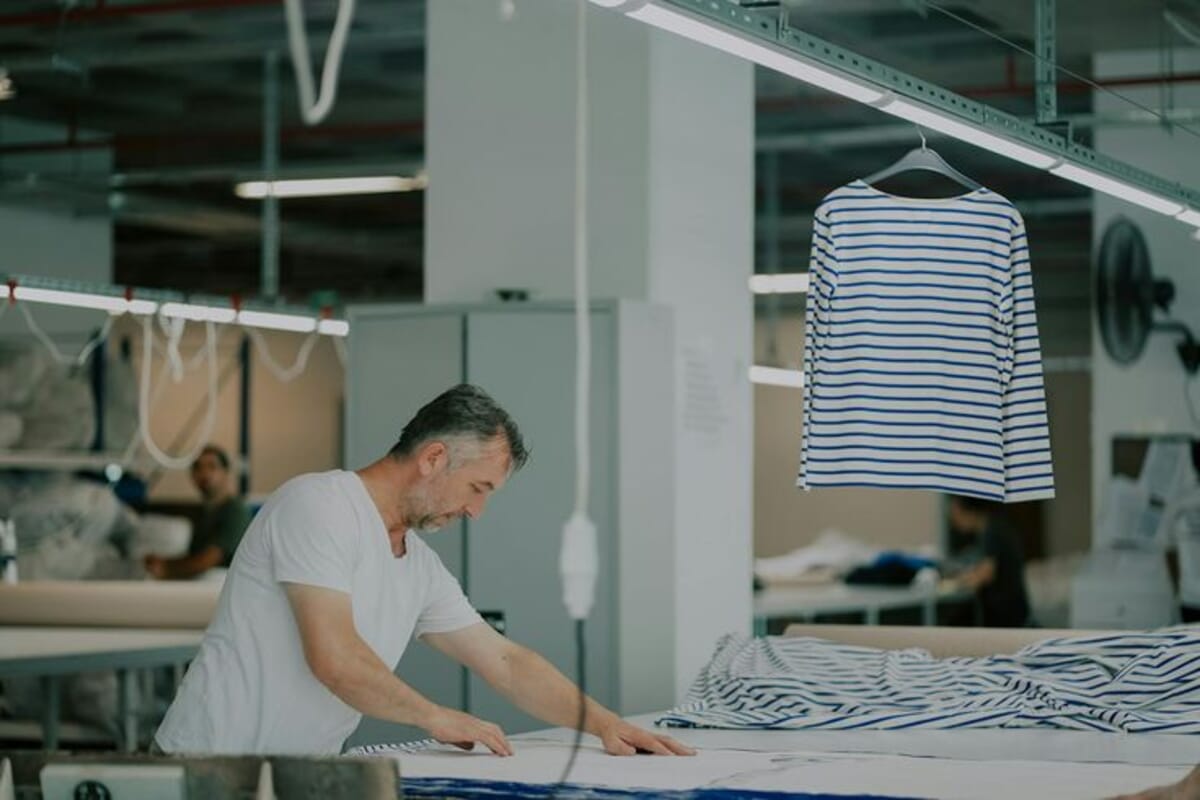
Textile factory in northern Portugal set up for both CMT and full package production.
What Is CMT (Cut, Make, Trim)?
More than 60% of Portuguese textile exports are processed under the CMT or equivalent regime, according to the Selective Garment Association (AESTEXPORT, 2023). In the CMT model, the brand takes responsibility for sourcing fabrics and trims. The factory receives the materials and performs three operations: cutting, sewing, and finishing. The brand owns the bill of materials; the factory rents its labour and machinery to convert that bill into finished garments.
It's a proven model. It's been working for decades in Portugal's textile industry, particularly in the relationship between Portuguese factories and Spanish, French and German brands that bring their own fabric supplier networks.
Citation Capsule: According to AESTEXPORT (2023), more than 60% of Portuguese textile exports are processed under the CMT or equivalent regime, making this the dominant model among northern Portuguese factories working with European brands.
How Does It Work in Practice?
The brand selects the fabric from its own supplier, orders the required yardage (with a 10-15% safety margin for cutting losses), and has it delivered directly to the factory. Buttons, zippers, woven labels, hangtags and ribbons are also the brand's responsibility. The factory receives everything, runs incoming fabric inspection, cuts according to approved patterns and markers, and sews the garments. The factory's invoice covers cutting, sewing, finishing, packing and quality control. Nothing else.
Sounds simple? In theory, it is. In practice, it requires coordination across 4-7 separate suppliers (fabric mill, dyehouse, button supplier, label supplier, hangtag printer, polybag supplier, transport) all timed to arrive at the factory in the right week. We've watched brands lose 4-6 weeks of lead time waiting for a single late zipper shipment because nobody owned the trim coordination. In conversations with factories in the Ave Valley, we've found that many actually prefer CMT for smaller orders because it eliminates the risk of fabric stock on the factory's side. This translates into less resistance to starting production for brands with established fabric supplier relationships.
Who Typically Uses the CMT Model?
CMT is chosen by brands that already have trusted fabric suppliers, usually after their first or second collection. Also by those who want to control the origin and certification of materials, such as GOTS or OEKO-TEX fabrics that the factory might not stock. And by brands in a scaling phase that want to reduce cost per unit by eliminating the factory's margin on materials. In our pipeline, we typically see the CMT shift around year 2-3 of a brand's life, after they've identified the 2-3 fabrics they reorder consistently.
Typical MOQs in Portugal for CMT range between 100 and 500 pieces per style, depending on technical complexity and the factory's tier.
Advantages of CMT
- Full control over fabric origin and quality, including specific certifications (GOTS, GRS, OEKO-TEX with verified certificate numbers)
- More transparent manufacturing cost, with no factory margin on materials (typical 12-22% margin saved)
- Ability to use certified or specialty fabrics that the factory's suppliers don't carry
- Flexibility to change fabrics between seasons without renegotiating with the factory
- Cleaner cost benchmarking across multiple factories using the same exact bill of materials
Disadvantages of CMT
- Requires sourcing infrastructure: time, knowledge, and logistics capability across 4-7 suppliers
- The brand assumes the risk of yardage errors, fabric defects on arrival, or fabric delivery delays
- More touchpoints to manage, which increases operational complexity and email volume
- Working capital tied up earlier (you pay the fabric mill before production starts, often 60-90 days before finished goods arrive)
- Quality risk transfers upstream: a defective fabric batch is your problem, not the factory's
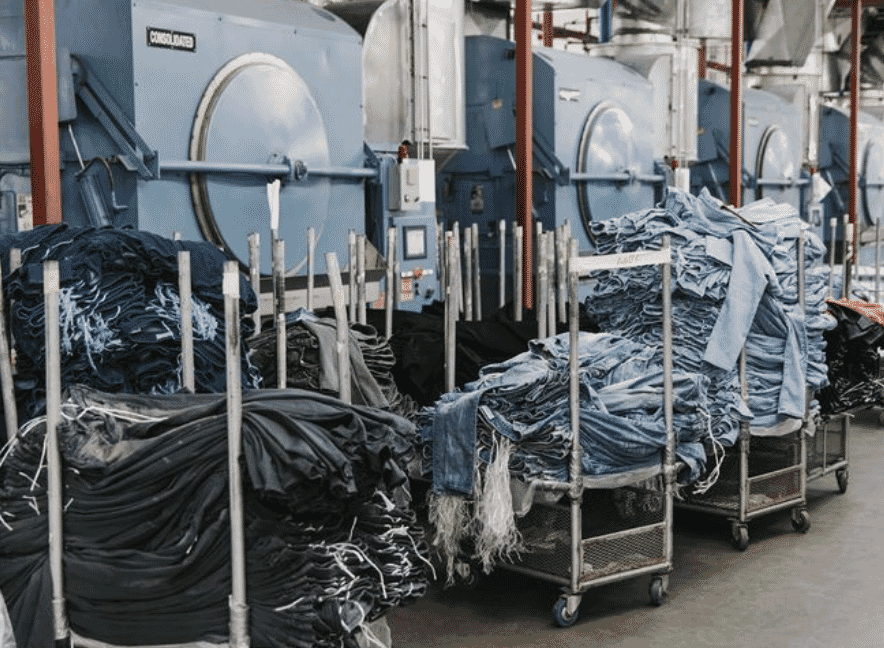
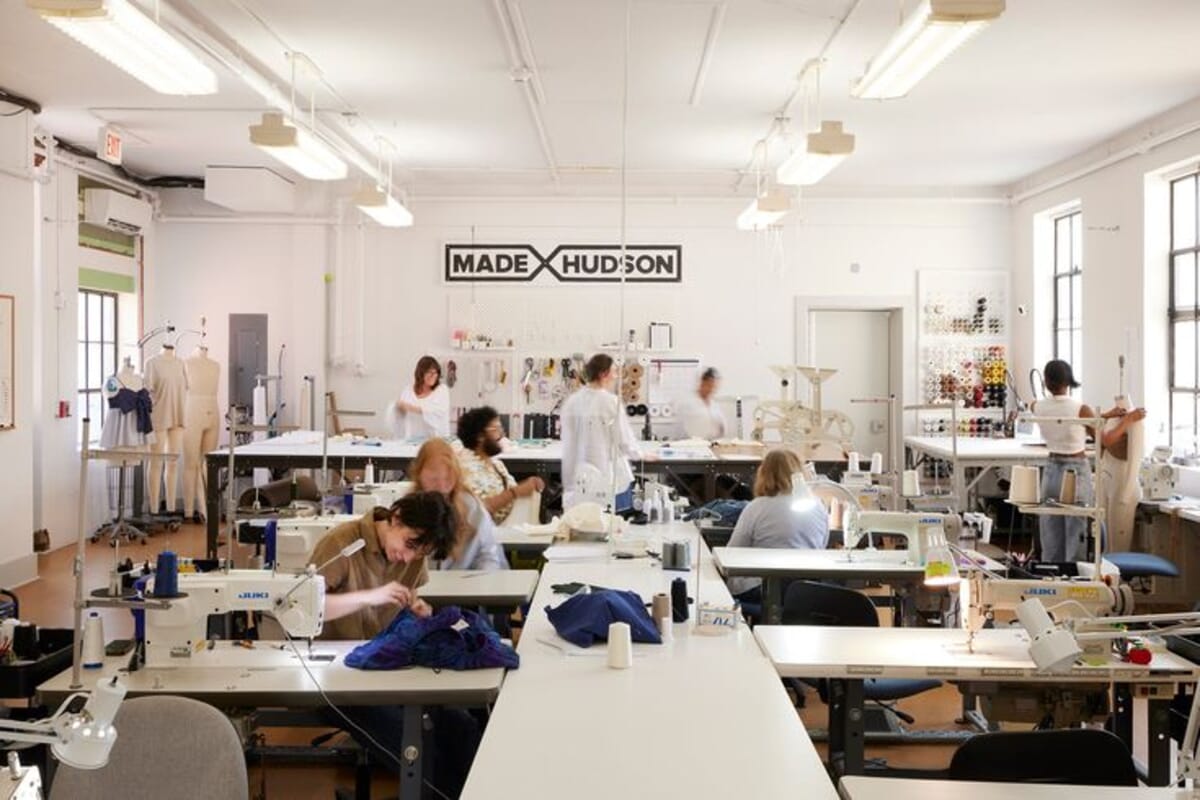 Fabric warehouse: in the CMT model, the brand is responsible for selecting and delivering fabric to the factory.
What Is Full Package Production?
The full package model has been growing among Portuguese factories working with smaller international brands. The Portuguese Textile and Clothing Association (ATP, 2024) estimates that around 35% of national factories now offer full package services, compared with 20% a decade ago. In full package production, the factory takes on the entire chain: fabric, trims, cutting, sewing, finishing, packing, and quality control. The brand sees one invoice for one finished product, FOB Portugal.
But does simplifying always pay off? Not always. The trade-off is real.
Citation Capsule: Around 35% of Portuguese textile factories currently offer full package production services, a significant increase from 20% ten years ago, according to the ATP (2024), reflecting growing demand from international brands.
How Does It Work in Practice?
The brand sends the tech pack, approves samples, and the factory handles everything else. This includes selecting and negotiating with fabric suppliers (typically from the factory's existing relationships), purchasing trims at standing-order rates, coordinating the production calendar, and managing all logistics through to finished-goods packing. The result delivered to the brand is the finished garment in retail-ready packaging.
In the enquiries we've analysed, we've observed that most first-collection brands arrive without a defined fabric supplier. For these brands, full package production is almost always the most realistic path. It avoids the logistical bottleneck of having to source fabric before even confirming the factory, and it lets the founder focus on brand-building, marketing and audience while the factory runs the supply chain in parallel.
Who Typically Uses Full Package Production?
Fashion startups, first-collection brands, and brands without an internal sourcing team. It's also common for established brands launching new categories outside their area of expertise (a knitwear brand launching denim, for example). MOQs tend to be higher, frequently between 200 and 1,000 pieces per style, because the factory needs to cover the risk of fabric stock and committed minimums with mills.
See our guide on clothing production costs in Portugal to understand how the model affects your budget.
Advantages of Full Package Production
- A single point of contact for the entire production chain
- Ideal for brands without sourcing infrastructure or industry experience
- Reduces the time and management effort the brand carries, since one supplier replaces four to seven
- Factory negotiates fabrics with accumulated volume, which can generate competitive prices
- Working capital deployed later (typical payment 30% deposit, 70% on shipment, vs CMT where fabric is paid upfront)
- Quality risk concentrated at one supplier: easier to assign accountability if something goes wrong
Disadvantages of Full Package Production
- The brand has less control over fabric quality, origin and supplier
- Cost per unit includes the factory's margin on materials (typically 12-22%)
- It can be harder to guarantee specific fabric certifications unless the factory already holds them
- MOQs are generally higher, representing a greater initial investment
- Fabric substitution risk: factories sometimes substitute "equivalent" fabrics if the original is delayed, and the brand discovers this only after production
- Less competitive cost benchmarking since fabric pricing is opaque
Running into production issues? Get in contact and tell us what you're making. We're a group of Portuguese factories and we answer every serious brief within 24 hours.
Heads up: We're Portugal Clothing Factory, a group of 80 documented Portuguese clothing factories, 25 verified. The CMT and full package ranges below come from quotes across the group.
How Do CMT and Full Package Compare in Practice?
According to data compiled by ANIVEC (2024), average MOQs in CMT are 40-60% lower than in full package production for the same garment type, making CMT more accessible in volume but more demanding in management. The table below summarises the key differences between the two models.
Citation Capsule: Average MOQs in CMT are 40-60% lower than in full package production for the same garment type in Portugal, according to ANIVEC (2024), although CMT transfers all fabric sourcing responsibility to the brand.
| Criterion | CMT | Full Package |
|---|---|---|
| Who sources the fabric | The brand | The factory |
| Fabric quality control | Full (by the brand) | Partial (dependent on factory) |
| Manufacturing cost per unit | Generally lower (-12 to -22%) | Generally higher (includes margin on materials) |
| Typical MOQ in Portugal | 100-500 pieces per style | 200-1,000 pieces per style |
| Operational complexity | High (4-7 suppliers) | Low (single supplier) |
| Time investment by founder | 60-100 hours per collection | 15-30 hours per collection |
| Working capital cycle | Longer (fabric paid upfront) | Shorter (deposit + balance) |
| Ideal for | Brands with established sourcing | Startups, first collections |
| Main risk | Yardage errors or fabric delays | Less control over materials |
| Production lead times | Depend on fabric delivery by the brand | Factory manages internally |
| Suitable for certified fabrics | Yes, easily | Depends on the factory's suppliers |
| Cost transparency | High (every line itemised) | Medium (often single number) |
Learn more about textile production lead times and how they vary between the two models.
What Does This Table Mean in Practice?
There is no universally better model. The right choice depends on where the brand stands right now: sourcing maturity, available budget, the level of control desired over materials, and how much of the founder's time is genuinely available for supply-chain management vs marketing and brand-building.
Many brands start with full package and migrate to CMT as they grow. It's a natural progression, not a planning failure.
What's the Real Cost Breakdown for 300 Hoodies in CMT vs Full Package?
Headline numbers don't always reveal the real economics. Here's a side-by-side breakdown of a typical 300-hoodie production order at a mid-tier Portuguese factory, comparing both models. The product is a 350 GSM organic cotton hoodie with custom woven label, screen-printed neck label, drawcord, and metal eyelets.
| Cost Line | CMT (€) | Full Package (€) | Notes |
|---|---|---|---|
| Fabric (300 pcs × 1.4m × €11/m) | 4,620 | included | CMT: brand pays mill direct |
| Fabric overage (10%) | 462 | included | CMT: brand pays for cutting safety |
| Trims (eyelets, drawcord, woven label) | 540 | included | CMT: brand orders separately |
| Trim MOQ overage waste | 180 | absorbed | CMT: trim MOQs leave overstock |
| Hangtags & polybags | 120 | included | CMT: brand sources |
| Inbound logistics to factory | 150 | absorbed | CMT: brand ships fabric to factory |
| Sample fabric (proto + fit + PPS) | 280 | included | CMT: brand pays mill for sampling |
| CMT labour (300 × €8.50) | 2,550 | n/a | Cutting, sewing, finishing, QC |
| Full package per-piece (300 × €23.50) | n/a | 7,050 | All-in including factory margin |
| Subtotal | 8,902 | 7,050 | |
| Founder time (CMT: ~80 hrs at €25/hr opportunity cost) | 2,000 | 0 | CMT requires more hands-on management |
| True total cost | 10,902 | 7,050 | |
| Per-piece true cost | €36.34 | €23.50 |
The headline CMT cost looks lower (€8,902 vs €7,050), but once you factor in founder time at a realistic opportunity cost, full package becomes cheaper for this scale. CMT only becomes financially worthwhile when the founder time stops being the bottleneck (because someone else manages sourcing) or when volume is high enough to dilute the per-order time investment.
When CMT Math Starts Winning
The same hoodie at 1,500 pieces tells a different story:
| Cost Line | CMT (€) | Full Package (€) |
|---|---|---|
| Fabric + overage | 25,410 | included |
| Trims + overage | 1,620 | included |
| Hangtags & polybags | 600 | included |
| Sampling | 280 | included |
| CMT labour (1,500 × €8.50) | 12,750 | n/a |
| Full package (1,500 × €22) | n/a | 33,000 |
| Founder time (~100 hrs) | 2,500 | 0 |
| True total cost | 43,160 | 33,000 |
| Per-piece | €28.77 | €22.00 |
Wait, full package still wins? Yes, at this volume, because the factory's bulk fabric purchasing power generates better fabric pricing than a brand can typically secure independently. CMT only beats full package when the brand has direct mill relationships and 2,000+ piece annual fabric orders that command volume pricing. Below that threshold, the factory's fabric procurement is genuinely cheaper for the brand. This counterintuitive result surprises most founders.
The implication: choose CMT for control and certification reasons, not primarily for cost savings, until your annual volume per fabric exceeds 2,000-3,000 metres.
How Does the Week-by-Week Workflow Compare for CMT vs Full Package?
Another way to understand the difference: how the founder's calendar actually looks across a 14-week production cycle. Full package front-loads the work into tech pack and sample approval, then goes quiet. CMT spreads it across the whole run, because fabric and trims have to land at the factory in the right week.
CMT Workflow
| Week | Brand activity | Factory activity |
|---|---|---|
| 1-2 | Confirm tech pack, send to fabric mill, order fabric (100% prepay, 4-6 week lead) | Wait for materials |
| 1-2 | Send trim orders to 4-5 suppliers separately | Wait |
| 3-4 | Track fabric production, manage QC at mill | Schedule production line |
| 5-6 | Coordinate fabric shipping to factory; receive trim shipments at factory | Receive incoming materials, run inspection |
| 7-8 | Approve fabric arrival, resolve any quality issues | Sample production, fit revisions |
| 9-10 | Approve PP sample | PPS approval, bulk start |
| 11-13 | Monitor production | Bulk production |
| 14 | Receive shipment, QC | Pack and ship |
Total founder hours: ~80-100 across the cycle, concentrated in weeks 1-6.
Full Package Workflow
| Week | Brand activity | Factory activity |
|---|---|---|
| 1 | Confirm tech pack and pay 30% deposit | Source fabric and trims |
| 2-4 | Approve fabric swatches sent by factory | Receive materials |
| 5-7 | Sampling iterations | Run protos and fit samples |
| 8-9 | Approve PP sample | PPS production and approval |
| 10-13 | Monitor production via WhatsApp | Bulk production |
| 14 | Pay balance, receive shipment | Pack and ship |
Total founder hours: ~15-30 across the cycle, distributed evenly.
The 50-70 hour difference is exactly where the time-cost gap lives. For a founder whose marketing or fundraising hour is genuinely worth €25-50, that's €1,250-€3,500 of hidden cost in the CMT model, on top of the visible cost lines.
 Freight, duties and trim minimums are where CMT budgets usually slip.
What Hidden Costs Do Founders Often Miss?
Both models have costs that don't show up in the headline quote. In CMT they sit in trim minimums, fabric overage, inbound freight and the founder's own hours. In full package they sit in the factory's margin on materials and the price you pay for not seeing the fabric invoice. These are the ones that surprise first-time founders.
Hidden Costs in CMT
- Fabric overage waste: factories require 10-15% extra fabric for cutting safety. On a 300m fabric order, that's 30-45m of fabric you pay for and don't see in finished pieces.
- Trim MOQ overstock: custom woven labels with a 1,000-unit MOQ at €0.80 each is €800 sitting in your trim drawer if your first order is 200 pieces.
- Inbound logistics: shipping fabric from a Portuguese mill to a Portuguese factory is small (€80-200), but cross-border (Italian fabric to Portuguese factory) can run €350-€800 per pallet plus customs paperwork.
- Mill QC fees: if you want third-party inspection at the mill before shipment to factory (recommended for first orders), expect €200-500.
- Currency exposure: if you source fabric from outside the eurozone (UK, Turkey), exchange rate variation between order and payment can be €100-€500.
- Sample fabric: mills often charge for sample yardage for proto/fit samples (€50-€200 per sample round).
Hidden Costs in Full Package
- Fabric markup opacity: factories typically add 12-22% to fabric cost. On expensive specialty fabrics, this is the single largest hidden cost.
- Substitution risk: if your specified fabric is delayed, factories sometimes substitute "equivalent" fabrics. The first you may know is when finished pieces arrive.
- Higher MOQ floor: you can't negotiate a 100-piece order on full package the way you can on CMT, because the factory's fabric mill MOQ binds you.
- Less competitive bidding: harder to compare quotes across factories because each one bundles fabric differently.
- Trim quality variance: factory's standard trim suppliers may not fit your brand standard.
In our experience, brands that think they're saving 15% by choosing CMT but don't account for hidden costs typically end up paying within 3-5% of the full package equivalent on small orders. The maths reveals itself on the second or third order.
Try it free: Model both routes in the garment cost calculator before you ask any factory to quote. 60 seconds, no email required.
When Should You Choose CMT in Portugal?
Data from ANIVEC (2024) indicates that brands with efficient sourcing save between 10% and 20% on total cost per unit using CMT, compared with full package production. The model makes more sense when the brand already has the capacity to manage fabric procurement independently, and when annual volume per fabric exceeds the 1,000-2,000 metre threshold.
Citation Capsule: Brands with efficient sourcing save between 10% and 20% on total cost per unit using CMT instead of full package production, according to ANIVEC (2024), by eliminating the factory's margin on materials.
The Brand Already Has Established Fabric Suppliers
If the brand already works with a fabric agent or has direct access to suppliers in Portugal, Italy, or other markets, CMT is the natural choice. The factory receives the fabric and focuses on what it does best: cutting, sewing, and finishing. Already have sourcing relationships? Then why would you pay the factory to do what you already do well?
The Brand Wants to Control Material Origin and Certification
Sustainability is now a growing requirement, from both consumers and European regulators. The ESPR regulation will reinforce this trend. If the brand wants to guarantee GOTS-certified organic cotton, GRS recycled fibres, or fabrics with proven traceability, CMT offers full control over that chain. We've observed that sustainable fashion brands, especially those selling in northern European markets, arrive at factory sourcing with their fabrics already defined and certified. For these brands, full package production would be problematic. Factories rarely have access to the same certified material suppliers, particularly for specialty bio-based or GRS recycled fabrics.
The Brand Is Scaling and Wants to Reduce Cost per Unit
As volumes grow, negotiating directly with fabric suppliers becomes a real competitive advantage. For orders above 1,500-2,000 metres per fabric, the brand can frequently obtain better prices than the factory could. The result: lower total cost, even factoring in management costs. See our production cost comparison for detailed data.
The Brand Has a Dedicated Production Manager
If you've hired or contracted a production manager (a 1-day-per-week consultant from €600-1,200/month, or full-time at €2,500-4,500/month gross), CMT becomes operationally feasible. The production manager owns the supplier coordination that the founder used to do. We typically see this hire happen in year 2-3 of a brand's life, and it usually triggers the migration from full package to CMT.
When Should You Choose Full Package Production?
More than 70% of independent fashion brands opted for full package production on their first collection, according to the ATP (ATP, 2024). Full package production is the most pragmatic choice for brands that are just starting out or that lack sourcing infrastructure.
Citation Capsule: More than 70% of independent fashion brands opted for full package production on their first collection, according to the ATP (2024), simplifying market entry by delegating sourcing and logistics to the factory.
First Collection or Startup
When a brand produces for the first time, there are many unknowns. Managing fabric sourcing simultaneously with product development, factory search, financing, and launch is too much for a small team. Full package concentrates responsibility with the factory and lets the founder focus on the highest-value activities: marketing, audience-building, financial planning, and customer development.
Need additional guidance? Our guide on how to launch a clothing brand covers this topic in detail.
The Brand Lacks Time or Expertise to Source Fabric
Sourcing fabric well requires knowledge of markets, the ability to evaluate quality, and time to visit suppliers or order samples. If the brand doesn't have those capabilities, delegating to the factory is a rational decision. Yes, cost per unit will be slightly higher. But the time saved has value, and the absence of a fabric-coordination disaster is itself worth a markup.
You Need a Single Point of Contact
For brands managing production remotely, or whose founders have other responsibilities, the operational simplicity of full package has real value. One contact person means fewer communication breakdowns and less time spent coordinating. We've watched brands run their full-package production from another country with minimal friction; the same brand running CMT from outside Portugal would struggle materially with fabric supplier coordination.
Your Volumes Don't Justify Direct Mill Relationships
Below 800-1,000 pieces per fabric per year, you don't have enough volume to be a meaningful customer to a fabric mill. Mills will quote you "list price" with no negotiation. The factory, ordering 30,000 metres of the same fabric across all clients, gets 15-25% better pricing than you'll secure on your own. Below this threshold, full package is genuinely cheaper than CMT, even after accounting for the factory's markup.
Want to know how to negotiate with factories in Portugal? Start by defining the production model before the first conversation.
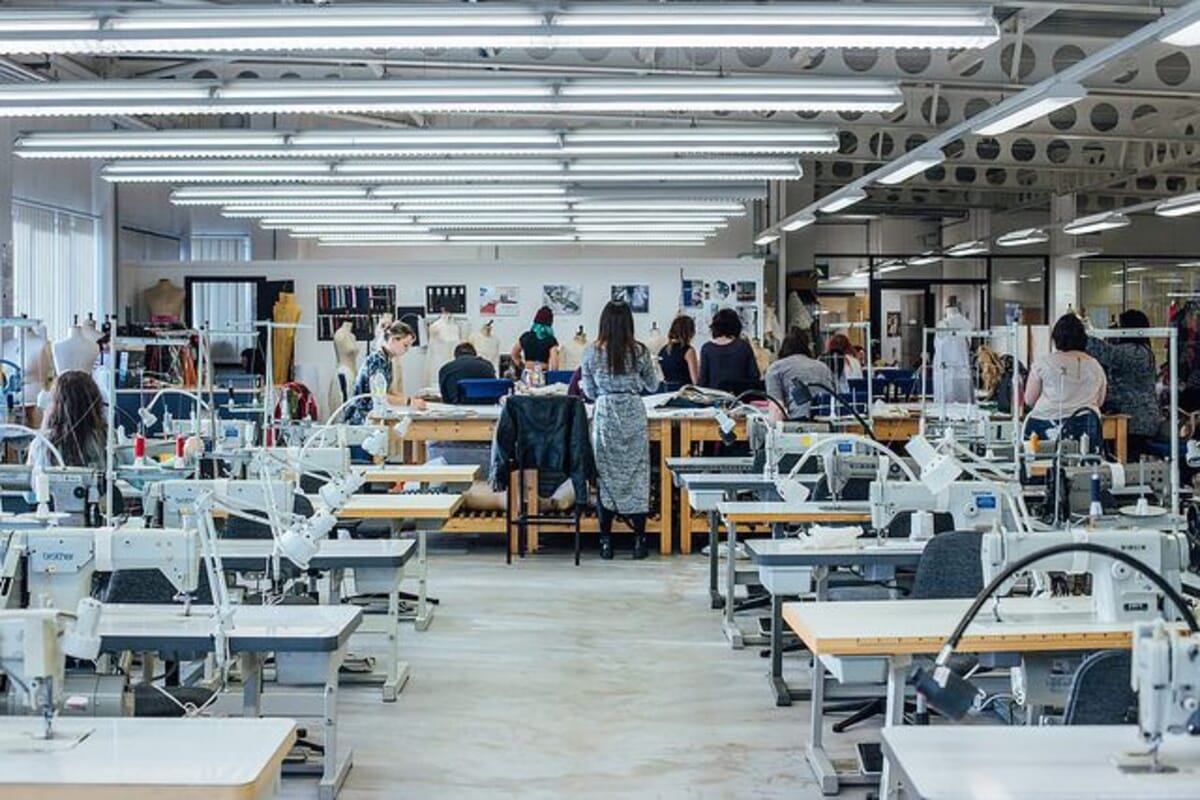 In full package production, the factory manages the entire process, from fabric procurement to the finished garment.
Full package factories carry the sampling burden that CMT brands carry themselves.
Is There a Hybrid Semi-Package Model?
Yes, and it's becoming more common. According to factories contacted in Minho and the Ave Valley, around 25% now formally offer a semi-package model where the brand sources the main fabric and the factory handles the trims (ANIVEC, 2024). This approach offers a balance between control and convenience, and is often the right answer for brands in transition.
Citation Capsule: Around 25% of factories in northern Portugal now formally offer a semi-package model, where the brand supplies the main fabric and the factory handles the trims, according to ANIVEC data (2024).
How Does the Semi-Package Model Work?
The brand maintains control over the most critical element: the fabric. The factory, in turn, uses its regular trim suppliers, with whom it already has relationships and negotiated volumes. The result is a more balanced partnership.
The semi-package split typically looks like:
- Brand supplies: main fabric (the highest-margin and most positioning-relevant element)
- Factory supplies: all trims (zippers, buttons, drawcords, woven labels, hangtags, polybags), plus all labour
This hybrid solves the two biggest pain points: it eliminates the brand's trim-coordination burden (typically 30-40% of CMT management hours), while preserving the brand's control over fabric and certifications. We've seen this model become the dominant choice for brands in year 2-3, between starting up (full package) and scaling fully (pure CMT).
Some factories describe this model as their preferred way of working with growing brands. The brand learns to manage fabric sourcing gradually, without having to master the entire trims universe immediately.
It's Worth Asking the Factory
Not all factories openly advertise the hybrid model. But many are open to the conversation. When contacting Portuguese factories, ask directly: "Do you work with a model where I supply the fabric and you handle the trims?"
The answer may surprise you. And if you're evaluating factories, see our guide on red flags to watch for and on small quantity production.
How Do Factories Actually Think About These Models?
In conversations with factory owners across the Ave Valley and Barcelos region, we've heard a consistent pattern: model preference tracks the factory's balance sheet, not its opinion of your brand. Smaller factories avoid tying capital up in fabric stock; larger ones want the higher invoice value. Knowing which you are dealing with changes how you negotiate.
What Factories Like About CMT
- Lower capital risk: they don't tie up cash in fabric stock for the brand's order
- Cleaner operational scope: they're paid for labour, not for procurement headaches
- Easier to take small orders: without fabric MOQ exposure, they can accept 100-piece orders profitably
- Faster turnaround: if the brand's fabric arrives on time, factory throughput improves
- Less liability: quality issues with fabric are the brand's problem, not the factory's
What Factories Dislike About CMT
- Coordination burden: factories often end up "babysitting" brand-side suppliers anyway
- Late fabric = idle production line: disruption to schedule when brand's fabric is delayed
- Lower revenue per order: no margin on materials reduces total invoice
- Quality finger-pointing: if a finished piece fails, was it the fabric or the construction?
What Factories Like About Full Package
- Higher revenue per order: factory captures fabric and trim margin
- Standing relationships: they get bulk discounts from their regular fabric mills
- Schedule control: they own the entire timeline and can plan capacity confidently
- Standardisation: they can use familiar fabrics and trims, reducing setup risk
What Factories Dislike About Full Package
- Capital tied up: they have to fund fabric purchases for 6-10 weeks
- Brand-side spec changes: mid-production fabric change requests are costly
- Higher MOQ requirements: they need volume to absorb fabric MOQs profitably
- Liability concentration: if anything goes wrong (fabric, trims, construction), it's all on them
The implication for your negotiation: a factory that pushes you hard toward full package is often signalling they want capital deployment and revenue concentration. A factory that prefers CMT often has constrained working capital. Both are normal; just understand what's being offered and why.
What Are the Common Mistakes by Model?
Mistakes Founders Make in CMT
- Underestimating fabric overage requirements (10-15% extra is mandatory)
- Forgetting trim MOQs (custom labels with 1,000-unit MOQs leave overstock)
- Skipping mill QC (defective fabric arriving at factory is your problem)
- Choosing a fabric the factory hasn't worked with (unfamiliar fabrics get higher reject rates)
- Mismatching fabric arrival to factory production slot (fabric arrives, factory line is fully booked elsewhere)
- Not insuring fabric in transit (a damaged shipment from Italy is uninsured loss)
Mistakes Founders Make in Full Package
- Not specifying fabric tightly enough (allows factory substitution)
- Trusting "equivalent" claims without lab confirmation (200 GSM substituted with 180 GSM)
- Comparing quotes from different factories without itemised breakdowns (apples to oranges)
- Skipping fabric swatch approval before bulk (you find out the colour is off when 500 pieces arrive)
- Not asking which mill the factory will use (you have a right to know)
- Accepting the first MOQ quoted (often negotiable down 20-30% with persistence)
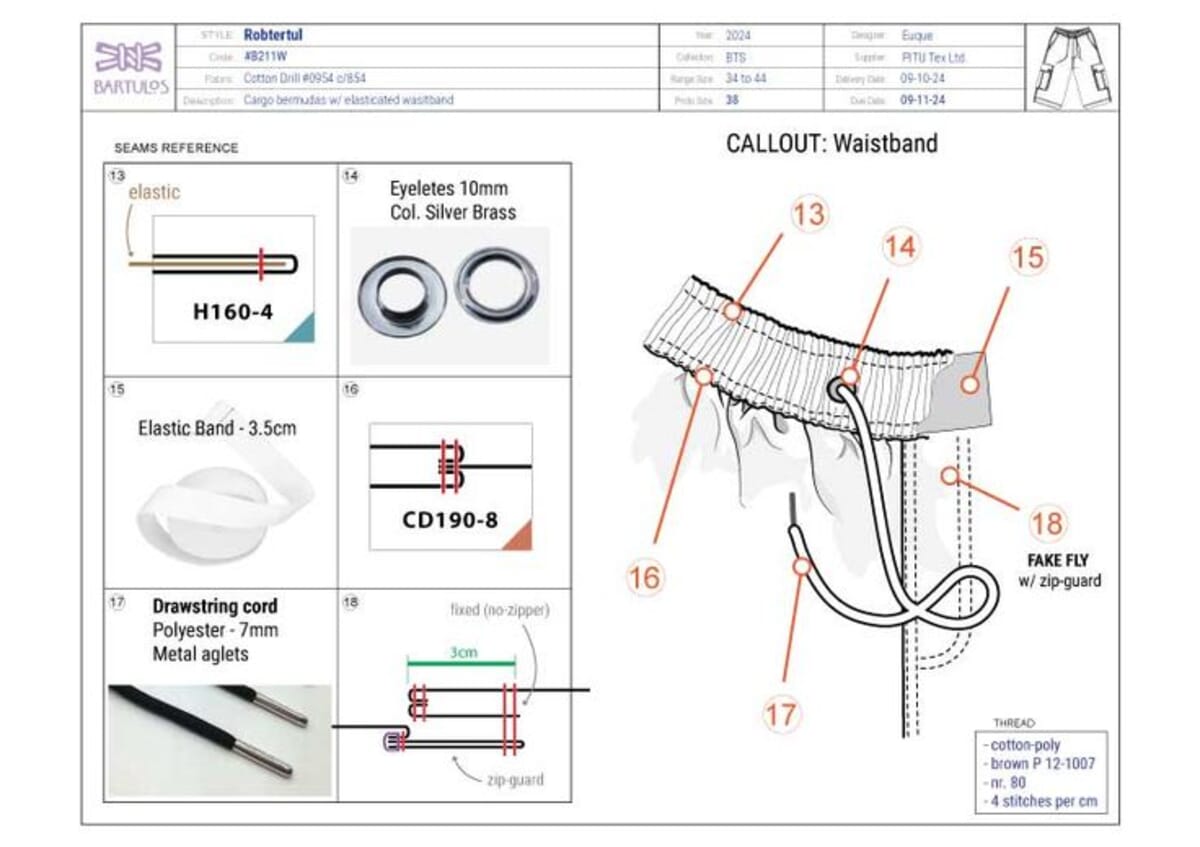 Switching models is a documentation exercise before it is a commercial one.
Need a tech pack? CMT only works when the spec is airtight. Get a factory-ready single-style tech pack for €79. See what's included.
When Should You Switch Models?
The migration from full package to CMT typically follows a predictable trajectory. Here's the maturity curve we observe across our pipeline:
| Brand stage | Annual volume | Typical model | Why |
|---|---|---|---|
| Year 1 (launch) | 200-800 pieces total | Full package | No infrastructure, founder time scarce |
| Year 2 (scale) | 1,500-4,000 pieces total | Semi-package | Brand owns 1-2 fabric relationships, factory handles trims |
| Year 3+ (mature) | 5,000+ pieces total | CMT | Full sourcing infrastructure, dedicated production manager |
| Year 4+ (multi-line) | 15,000+ pieces total | CMT + dedicated factory partnership | Negotiate exclusive capacity slots |
The key trigger for switching is usually one of three things:
- Volume per fabric exceeds 2,000 metres/year, making direct mill relationships financially worthwhile
- You hire a dedicated sourcing or production person, eliminating the founder-time bottleneck
- You launch a sustainability-positioned line that requires specific certifications the factory doesn't carry
If none of these apply, stay on full package or semi-package. The migration to CMT is not a brand-maturity badge to be earned; it's an operational choice that should pay back in measurable cost savings.
Whichever model you pick, the factory ships the same finished goods.
Frequently Asked Questions About CMT vs Full Package
Is CMT Always Cheaper Than Full Package?
Not necessarily. CMT has a lower manufacturing cost per unit, but the brand assumes sourcing, logistics, and supplier management costs. According to ANIVEC (2024), total cost in CMT can be 10-20% lower for brands with efficient sourcing. Without that efficiency, the saving disappears, and CMT can actually be more expensive once founder time and trim overstock are factored in. Below 1,000-1,500 pieces per style per year, full package is often genuinely cheaper.
Can I Switch From CMT to Full Package With the Same Factory?
Yes. Many brands take the reverse journey: they start with full package and migrate to CMT as they build sourcing capability. Most Portuguese factories accept both models. We recommend discussing this possibility during the initial negotiation phase, so the factory understands your trajectory and can support the transition. Some factories actually prefer this evolution because it means a long-term client relationship.
Do Portuguese Factories Prefer CMT or Full Package?
It depends on the factory's profile. Smaller factories, with less capital for fabric stock, tend to prefer CMT. Larger factories frequently prefer full package because the higher invoice value and standing fabric relationships work in their favour. According to AESTEXPORT (2023), most factories work with both models, adapting to the client's profile. A factory's preference is also a signal of their financial position; ask why during your evaluation.
What Does FOB Mean in Clothing Production?
FOB (Free On Board) is an Incoterm that defines the point at which the factory's responsibility for the goods ends. In an FOB contract, the factory delivers at the port of origin (or in Portuguese context, ex-works at the factory door) and responsibility passes to the brand. In full package production, the FOB price includes materials and manufacturing. In CMT, it reflects manufacturing only. Always confirm whether quotes are FOB Portugal, DAP destination, or ex-works, since this can shift cost by 5-15%.
How Does the Digital Product Passport Affect the Choice Between CMT and Full Package?
European regulation will require full material traceability for textile products from 2027 onwards. In CMT, the brand directly controls the supply chain and can document every step. In full package, the brand depends on the factory's transparency and the documentation factories collect from their fabric mills. According to the European Commission, the DPP will require composition, country of origin, water and energy use, and recyclability data. Brands sourcing in Portugal benefit from short, EU-native supply chains regardless of model, but CMT typically offers cleaner audit trails for sustainability-positioned brands.
What Happens If My Fabric Arrives Late in CMT?
Your factory production slot may be lost. Factories schedule weeks ahead, and a 2-week fabric delay can push your production back 6-8 weeks if the next available slot is already booked. This is one of the most expensive hidden risks of CMT. Mitigation: build a 2-3 week buffer into your fabric order timing, insist on third-party mill QC, and have a written agreement with your factory about how delays are handled.
Can I Use Both Models for Different Styles in the Same Order?
Yes. We see this regularly. A brand might use CMT for its heritage knit T-shirt (where they have a long-standing fabric relationship) and full package for a new tailored blazer (where they don't). Most Portuguese factories accommodate this if the volumes per style are economically reasonable. Ask the factory upfront whether they can quote both models within a single order; some can, some prefer not to.
Does the Choice Affect Lead Times?
Yes. Full package typically runs 8-12 weeks total. CMT runs 10-16 weeks total because the fabric procurement happens before factory production starts (in parallel with sample approval, but the bulk fabric order has to land before bulk production can begin). For tight launch timelines, full package is usually faster. For brands that can plan 16+ weeks ahead, CMT lead time isn't a problem.
Should I Sign a Different Contract for CMT vs Full Package?
The contracts are typically structured similarly but contain different clauses about material liability. Critical CMT clauses: who insures fabric in transit, who bears cost of mill defects, what happens if fabric arrives late, what counts as "received in good condition." Critical full package clauses: who owns fabric IP, what happens if specified fabric is unavailable, what substitution rules apply, how price changes from fabric volatility are handled. Don't assume the factory's standard template covers your specific model adequately. Read carefully or have it reviewed.
What Model Do Big Brands Like Inditex Use in Portugal?
Mostly CMT, but supported by their own dedicated sourcing teams who manage fabric mills directly. Inditex (Zara, Pull&Bear, Bershka) operates in-house sourcing infrastructure that an indie brand cannot replicate. They use CMT because at their volumes (millions of pieces per year), the fabric margin savings are enormous and they have the people to manage it. This is why CMT is the dominant export model in Portugal: the largest buyers operate it. But that doesn't mean it's right for a brand at 200 pieces per style per season.
Talk to our team: Still unsure which model fits? Get in contact and tell us your product, volume and timeline. We'll tell you which route the factories in our group would quote you on.
Conclusion: Which Model Should You Choose?
The decision between CMT and full package production isn't final or irreversible. It's a strategic decision that should reflect where the brand is now, not where it wants to be in five years.
The rule of thumb is simple. If you don't yet have a fabric supplier you work with regularly, start with full package. If you already have that relationship and want more control and margin, explore CMT. And if you're somewhere in between, ask the factory whether they offer a semi-package model that splits the work along the lines that suit you both.
Across documented Portuguese factory data since 2021, we've watched the most successful brand journeys move along a clear path: full package in year 1 (focus on validation and audience), semi-package in year 2 (own one fabric relationship, delegate the rest), CMT in year 3 (full sourcing infrastructure, dedicated production manager, mature brand). Brands that try to skip stages, particularly going straight to CMT in year 1, almost always burn 10-20% extra cost and 50+ founder hours that should have gone into marketing.
Does Portugal Support Both Models?
Portugal has a mature textile industry, with factories experienced in both models. The question isn't which model the country supports, but which model your brand can support operationally right now.
Learn more about sustainable textile sourcing and see how Portugal compares with Bangladesh and Vietnam in terms of cost and quality.
Want to request a production quote (CMT, full package or hybrid) in Portugal? Describe your project at portugalclothingfactory.com/contact or get in contact to talk through which model fits your stage.
We're a group of 80 documented Portuguese clothing factories, 25 verified, based in Porto and Guimarães. Tell us your product, volume, and timeline. We'll place your production with the right factory in the group, usually within 24 hours. Flat fees, no commissions, no upsell.
Get in contact Download the directory (€39)Need a tech pack? Get a factory-ready single-style tech pack for €79. See what's included.
Sources
- AESTEXPORT, Selective Garment Association (2023). Data on Portuguese textile exports. https://www.aestexport.pt
- ANIVEC, National Association of Clothing and Garment Industries (2024). Clothing sector report. https://www.anivec.com
- ATP, Portuguese Textile and Clothing Association (2024). Data on factories and production models. https://atp.pt
- European Commission (2024). Digital Product Passport for textiles. https://commission.europa.eu
Related reading
- Private label vs custom manufacturing
- Cut-and-sew vs blank garments
- How to find a clothing manufacturer
- Clothing manufacturing costs in Portugal
Portugal Clothing Factory is a group of 80 documented Portuguese clothing factories, 25 verified, in the northern textile cluster (Porto, Guimarães, Braga, Barcelos, Famalicão). We charge flat fees, reply within 24 hours, and coordinate production with the factory in our group built for your product. See how we work → or get in contact →.

.jpeg)