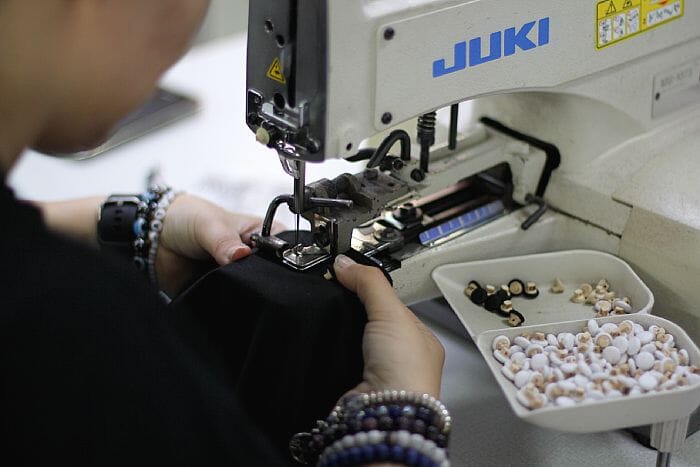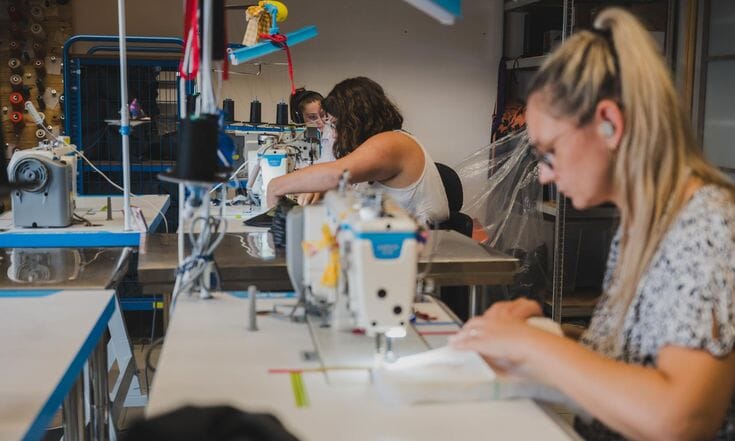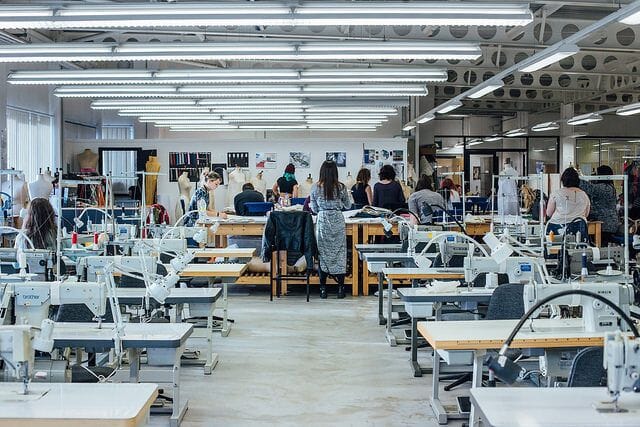
How long does it really take to produce clothing in Portugal? The typical timeline is 16 to 24 weeks, from first contact with the factory to final delivery (ATP, 2024). Many brands underestimate this period. They plan for 8 or 10 weeks and end up compromising quality, paying rush premiums, or missing launch dates entirely. The cost of an underestimated calendar shows up in lost selling windows, discounted stock, and stressed supplier relationships, not in the production invoice itself.
In our sourcing pipeline since 2021, we've watched roughly half of first-time founders compress their calendar by 30-40% versus the realistic range. The pattern is consistent: optimism on sample iteration time (assumes 1 round, needs 2-3), optimism on fabric procurement (assumes stock, needs custom order), and underestimation of the founder's own response time during sample review. The brands that hit their launch dates are the ones that planned 24-28 weeks ahead and built in buffer for what they couldn't predict.
This article breaks down the five phases of the process, identifies the six most common delay causes, presents a practical reverse-planning model, gives you a real worked launch-date example, and covers how to handle delays once they happen mid-production. Whether you're preparing your first collection or looking to optimise future calendars, you'll find the concrete data you need here.
For broader context on the sector, see the guide on textile production in Portugal.
Heads up: We're Portugal Clothing Factory, a group of 80 documented Portuguese clothing factories in Porto and Guimarães. Since 2021, we've placed dozens of brands with these factories, so the practical observations in this article are based on first-hand sourcing experience.
Key Takeaways
- The realistic typical timeline is 16 to 24 weeks, from briefing to delivery
- The sampling phase alone can take 6 to 12 weeks, depending on the number of rounds
- Out-of-stock fabrics are the main hidden bottleneck, adding 2 to 6 weeks
- An incomplete tech pack is the most avoidable cause of delays in the sector (ATP, 2024)
- Always add a 20% buffer to every timeline estimate
- Repeat orders run 40-50% faster than first orders with the same factory
- Express service exists but costs 20-40% more and represents under 10% of national production
Try it free: Pressure-test your production cost with our garment cost calculator. 60 seconds, no email required.
What Are the 5 Phases of the Production Calendar?
The Portuguese textile sector employs more than 130,000 people across approximately 12,000 companies in the full textile and clothing supply chain (ATP, 2025). This means factory capacity has real limits, particularly during peak weeks. The process divides into five distinct phases, each with its own timelines that vary based on order complexity and time of year.
Citation Capsule: Textile production in Portugal typically takes 16 to 24 weeks, spread across five phases: preparation, quoting, sampling, bulk production, and shipping. The sector employs over 130,000 people across 12,000 textile and clothing companies (ATP, 2024).
The following table presents realistic durations for each step. The values correspond to normal scenarios, not best-case outcomes.
| Phase | Step | Estimated Duration | Notes |
|---|---|---|---|
| 1 - Preparation | Tech pack creation | 1-4 weeks | If outsourced to a specialised technician |
| 1 - Preparation | Fabric sourcing (CMT) | 2-6 weeks | Research, samples, and approval |
| 1 - Preparation | Factory selection and outreach | 1-2 weeks | Shortlist of 3 to 5 factories |
| 2 - Quoting | RFQ submission and quote receipt | 1-2 weeks | Depends on response capacity |
| 2 - Quoting | Comparison, selection, and contract | 1-2 weeks | Includes negotiation and signing |
| 3 - Sampling | Proto sample (1st sample) | 2-4 weeks | From factory confirmation |
| 3 - Sampling | Review and feedback (brand) | 1-2 weeks | Frequent brand-side delay |
| 3 - Sampling | Fit sample (2nd sample) | 2-3 weeks | If needed |
| 3 - Sampling | PP sample (pre-production) | 2-3 weeks | Final materials and trims |
| 4 - Production | Fabric procurement (full package) | 2-4 weeks | Frequent bottleneck |
| 4 - Production | Cutting and sewing | 3-6 weeks | Depends on volume |
| 4 - Production | Finishing, QC, and packing | 1-2 weeks | Quality control included |
| 5 - Shipping | Road freight (EU capitals) | 1-5 days | Ground transport |
| 5 - Shipping | Air freight | 1-2 days | For emergencies |
Sources: ATP (2025); ATP (2024).
Indicative totals:
- Best case (1 sample round, fabric in stock, low volume): 8-10 weeks
- Typical scenario (2-3 rounds, full package): 16-24 weeks
- Complex scenario (new factory, specialty sourcing, multiple styles): 24-36 weeks
How Does Lead Time Vary by Garment Category?
The category matters as much as the brand stage. Some products have intrinsically faster cycles than others, particularly when fabric is widely available off the shelf vs custom-developed. Realistic typical lead times by category:
| Garment category | Typical first-order lead time | Repeat-order lead time | Notes |
|---|---|---|---|
| Basic T-shirt (cotton jersey) | 12-18 weeks | 6-9 weeks | Fastest category, abundant stock fabric |
| Polo shirt | 14-20 weeks | 7-11 weeks | Knit collar adds setup time |
| Hoodie / sweatshirt | 14-20 weeks | 7-11 weeks | Print/embroidery adds 1-2 weeks |
| Knitwear (jumpers) | 18-26 weeks | 9-13 weeks | Yarn programming time |
| Woven shirt | 16-22 weeks | 8-12 weeks | Pattern complexity |
| Tailored trousers | 18-24 weeks | 9-12 weeks | More fittings typical |
| Tailored blazer | 22-30 weeks | 11-16 weeks | High labour content, more sample rounds |
| Denim (jeans) | 20-28 weeks | 10-14 weeks | Wash development extends sampling |
| Lined dress | 18-24 weeks | 9-12 weeks | Lining and trim coordination |
| Outerwear (coat / jacket) | 24-32 weeks | 12-18 weeks | Construction complexity, multiple components |
| Activewear / technical | 22-30 weeks | 11-15 weeks | Specialty fabric MOQs and lead times |
| Lingerie / underwear | 18-26 weeks | 9-12 weeks | Multiple component MOQs |
Source: see in-text citations in this section.
The fastest category (basic T-shirts) and the slowest (tailored outerwear, denim) can differ by 8-12 weeks for the same factory, same brand, same order quantity. If you're planning a multi-product launch, the slowest category sets the calendar.
How Long Do Preparation and Factory Selection Take?
The preparation and selection phases together take between 3 and 7 weeks. According to ATP (2024), approximately 35% of delays on first orders result from incomplete technical documentation. Many brands ignore this period in their planning, only starting the clock when they contact the factory.
Citation Capsule: Preparation and factory selection for textile production in Portugal take 3 to 7 weeks. Incomplete technical documentation is responsible for about 35% of delays on first orders, according to ATP data (2024).
See the complete guide on textile production in Portugal for more context on choosing a factory.
The Tech Pack Is the Foundation of Everything
Based on accumulated industry experience, factories that receive an incomplete tech pack lose between 1 and 3 weeks just requesting missing information. A well-prepared tech pack includes technical sheets, measurement tables, material specifications, construction details, and clear visual references.
Have you ever thought about how much time gets wasted by trying to "skip" this phase? The effect is always the opposite of what's intended. Every sample revision caused by ambiguous information costs 2 to 4 additional weeks. Investing 2 weeks in a solid tech pack saves 6 to 8 weeks in the overall process. We've watched this pattern repeat constantly: brands that "save time" on the tech pack end up adding 4-8 weeks to the overall calendar.
Factory Shortlist: Why You Shouldn't Contact Just One
Sending a request for quotation (RFQ) to 3 to 5 factories simultaneously is the standard approach. It lets you compare prices, timelines and responsiveness. Factories that take more than two weeks to respond to a clear RFQ are likely overloaded or signalling lack of interest in your project.
For guidance on how to conduct this process, see the article on how to negotiate with manufacturers in Portugal.
How Long Does the Sampling Process Really Take?
The sampling phase is the most underestimated. A single round takes 3 to 6 weeks. With two rounds, we're talking 6 to 12 weeks in sampling alone, before any bulk production. According to Euratex (2024), sampling represents 30-40% of the total lead time for fashion orders in Europe.
Citation Capsule: The textile sampling process in Portugal takes 6 to 12 weeks with two rounds. According to Euratex (2024), sampling represents 30-40% of the total lead time for European fashion orders.
To understand the costs associated with each phase, see the article on clothing production costs in Portugal.
Proto, Fit, and Pre-Production: Three Different Samples
Each sample type has a distinct purpose and its own timeline:
- Proto sample (1st sample): Validates design, fit, and construction. May use substitute fabric. Takes 2 to 4 weeks from confirmation
- Fit sample (2nd sample): Corrects fit issues identified in the proto. Produced in the correct fabric. Takes an additional 2 to 3 weeks
- PP sample (pre-production): Final confirmation with all approved materials and trims. Last opportunity to catch problems. Takes another 2 to 3 weeks
Set internal deadlines for sample review before receiving them. The brand's response time is as real a delay as the factory's. One week to review a sample is reasonable. Three weeks is an internal planning problem. We've seen brand-side delays add 4-6 weeks to a calendar where the factory was actually meeting its commitments.
How Can You Speed Up the Sampling Process?
Three practices reduce the total time of this phase. First, prepare a structured review brief with specific comments per point, rather than generic feedback. Second, approve fabrics and trims in parallel with the first sample round, not after. Third, limit revisions to a maximum of three rounds. More than three rounds generally indicates a design problem that needs resolution before going back to the factory.
A fourth practice that helps: schedule a video call with the factory production manager during sample review. 30 minutes on a call typically resolves 5-10 small ambiguities that would otherwise generate 2-3 email rounds and add a week to the cycle.
Need a tech pack? Get a factory-ready single-style tech pack for €79. See what's included.
What Variables Affect Bulk Production Timelines?
Bulk production takes between 6 and 12 weeks, including procurement, cutting, sewing, finishing, and quality control. Portugal is one of the European countries with the highest concentration of integrated weaving and knitting mills (Euratex, 2024), which reduces local procurement times compared to other markets.
Citation Capsule: Bulk textile production in Portugal takes 6 to 12 weeks. The country stands out for its concentration of integrated weaving mills in Europe, reducing local procurement times (Euratex, 2024).
Order volume is the most obvious variable, but fabric stock status is often the most decisive factor. Specialty or imported fabrics add 3 to 6 weeks to the process, even at factories with strong supplier networks.
Fabric Is the Hidden Bottleneck
If the factory works on a full package basis, it handles fabric procurement. The time varies between 2 and 4 weeks for in-stock materials. It can reach 8 to 12 weeks for fabrics produced to order or imported from outside Europe.
How do you work around this? A common strategy among experienced brands is confirming fabric availability before approving the proto sample. This way, procurement and sampling advance in parallel, saving 2 to 4 weeks overall. Asking the factory upfront "what fabrics do you currently hold in stock that match my GSM and composition spec?" is a 30-second question that frequently saves a full month.
For more detail on the differences between models, see the comparison between CMT and full package production.
What Can the Factory Speed Up (and What Can't It)?
Portuguese factories can sometimes reduce cutting and sewing timelines through double shifts or line prioritisation. This option carries an extra cost (typically 15-25%) and depends on availability. What can't be accelerated is fabric procurement time from suppliers, mill knit programming, and material transport. These are physical constraints, not negotiable parameters.
Learn more about order minimums by manufacturer in Portugal to calibrate expectations.
Running into production issues? Get in contact and tell us what you're making. We're a group of Portuguese factories and we answer every serious brief within 24 hours.
First Order vs Repeat Order: How the Calendar Compresses
One of the biggest reasons brands return to Portugal year after year is that repeat orders are dramatically faster than first orders. Once a factory has your tech pack approved, your fit confirmed, your trim suppliers established, and your fabric history on record, the entire process compresses by 40-50%.
| Phase | First-order time | Repeat-order time | Reason for compression |
|---|---|---|---|
| Preparation (tech pack, fabric, factory) | 3-7 weeks | 0-1 week | Already done |
| Quoting | 1-2 weeks | 0-1 week | Pricing already established |
| Sampling | 6-12 weeks | 2-4 weeks | Fit and construction validated; only PPS needed |
| Production | 6-12 weeks | 4-8 weeks | Setup and pattern already in factory system |
| Shipping | 1 week | 1 week | No change |
| Total | 17-34 weeks | 7-14 weeks | 40-50% faster |
Source: see in-text citations in this section.
This compression matters strategically. A brand that builds 3-4 winning hero styles and reorders them across seasons gains a major operational advantage over a brand that introduces new styles every season. The reorder cycle of 7-14 weeks lets you respond to actual sales data and replenish proven winners while competitors are still in development on new styles.
In our pipeline, we typically see brands hit the "repeat order rhythm" by the third order with the same factory. By that point, the factory knows your fits, your fabric preferences, your trim sources, and your communication style. Lead times stabilise at the lower end of the range and you can plan launches with significantly more confidence.
What Are the 6 Main Causes of Delay?
Delays in textile production are rarely unforeseen. According to a McKinsey & Company report (2023), 60% of fashion collection delays result from calendars planned with optimistic estimates. In the Portuguese industry, the patterns are well-known and avoidable.
Citation Capsule: According to McKinsey & Company (2023), 60% of fashion collection delays result from calendars based on optimistic estimates. In Portugal, the six most frequent causes include incomplete tech packs, slow feedback, and out-of-stock fabric.
Based on accumulated experience in the Portuguese sector, these are the six most frequent causes, with their respective prevention:
- Incomplete tech pack. The factory repeatedly requests missing information, delaying quoting and sampling. Prevention: validate the tech pack with a technician before sending the RFQ.
- Slow brand feedback. The brand takes 2 to 3 weeks to respond to a sample, doubling the sampling time. Prevention: set a maximum of 5 business days for review.
- Fabric supply delays. Mills have their own timelines. Prevention: confirm fabric stock status at the very start of the process.
- Factory capacity in peak season. Between August and October, and January and February, factories are typically fully booked. Prevention: reserve capacity 8 to 12 weeks in advance.
- Multiple sample rounds. More than three rounds signals poorly defined design, not poor execution. Prevention: resolve ambiguities before starting sampling.
- Deposit payment delays. Most factories won't begin cutting without receiving 30-50% of the value. Prevention: have the financial process ready before confirming the start date.
Express vs Standard Service: Is It Worth Paying the Premium?
Some Portuguese factories offer express production with timelines of 4 to 6 weeks, compressing what would normally take 16-24 weeks into a much tighter window. According to sector data (ATP, 2024), this type of service represents less than 10% of national production and is mainly used for replenishment orders or emergency drops.
| Variable | Standard service | Express service |
|---|---|---|
| Total lead time | 16-24 weeks | 4-8 weeks |
| CMT premium | 0% (baseline) | +20-40% |
| Minimum volume | Varies (50-500 typical) | Higher (often 500+) |
| Fabric requirement | Custom or stock | Stock only |
| Sample rounds allowed | 2-3 typical | 1 maximum |
| Best for | Standard launch cycles | Replenishment of validated styles |
| Risk profile | Lower | Higher (less margin for error) |
Sources: ATP (2024).
Express service makes sense when: (a) you're reordering a validated style and only need PPS confirmation, (b) the fabric is already in factory stock, (c) the cost premium is offset by the value of hitting a specific selling window. Express service rarely makes sense for a first-order new style; the compression of sample rounds typically results in fit or quality compromises that cost more in returns than the speed saved.
In our experience, express service works well for 1-2 production cycles per year (replenishment of bestsellers) and badly for more than that. Brands that try to run their entire collection on express end up burning factory relationships and paying 25-30% more total cost across the year.
A Real Worked Example: Launching on 1 October 2026
Let's work through a concrete example. Imagine a brand wants to launch a 4-style collection (T-shirt, hoodie, dress, blazer) on 1 October 2026. The blazer is the slowest category, so the calendar is set by it.
| Date | Phase | Action |
|---|---|---|
| 1 October 2026 | Launch day | Goods available to ship to customers |
| 17 September 2026 | -2 weeks | Goods received in EU warehouse, QC passed, photographed |
| 20 August 2026 | -6 weeks | Production complete at factory, road shipping arranged |
| 9 July 2026 | -12 weeks | Bulk production begins, fabric received, cut started |
| 11 June 2026 | -16 weeks | PPS approved across all 4 styles |
| 14 May 2026 | -20 weeks | Fit samples approved, PPS production starts |
| 16 April 2026 | -24 weeks | Proto samples approved (round 2 if needed), fit samples in production |
| 19 March 2026 | -28 weeks | Proto samples received, review begins |
| 5 February 2026 | -34 weeks | Tech pack confirmed, factory selected, contract signed, fabric reserved |
| 22 January 2026 | -36 weeks | RFQ sent to factory shortlist |
| 8 January 2026 | -38 weeks | Tech pack final, factory shortlist built |
| 27 November 2025 | -44 weeks | Tech pack development starts, fabric research begins |
Source: see in-text citations in this section.
That's 44 weeks (10 months) from concept to launch. The blazer drives this. If you removed the blazer and ran the same calendar with just T-shirts, hoodies and dress, you could compress the front end by 4-6 weeks and start the process around mid-January 2026 instead of late November 2025.
What This Calendar Reveals
Several insights only become obvious when you map the calendar:
- The August window matters. Production from 9 July must avoid the factory August closure (typically weeks 32-35). If your production lands during August, push it to start in early July or accept a September restart, which adds 3-4 weeks
- December launches are constrained. A brand wanting to launch on 1 December 2026 would need to start the process in mid-March 2026, intersecting peak factory capacity (March-April for SS launches). Better to plan a November or January launch
- Sample iteration time is the biggest variable. If proto samples need 3 rounds instead of 2, the entire calendar shifts 3-4 weeks later. Build buffer here
This is why we always advise founders: mark your launch date, work backwards using realistic timelines for your slowest category, then add a 4-6 week buffer at the front. The buffer is the difference between hitting the launch and chasing it.
How Do Lead Times Differ by Portuguese Region?
Portugal's garment industry concentrates in four production clusters, and each cluster operates on a slightly different rhythm. The cluster you source from affects not just the price, but also the realistic lead time. Founders who pick their factory by category fit (knitwear, woven, denim) often end up surprised by the regional rhythm.
| Cluster | Primary specialties | First-order baseline | Repeat-order baseline | Notes |
|---|---|---|---|---|
| Porto / Vila Nova de Gaia | Cut-and-sew, light knits, basics | 14-20 weeks | 7-10 weeks | Fastest cluster for jersey and basics |
| Braga / Famalicão / Guimarães | Heavy knits, fleece, hoodies, seamless | 16-22 weeks | 8-11 weeks | Highest concentration of seamless circular-knit |
| Felgueiras / Lousada | Tailoring, blazers, trousers | 20-28 weeks | 11-14 weeks | Largest tailoring cluster in Iberia |
| Barcelos / Esposende | Denim, washing, treatments | 20-28 weeks | 10-14 weeks | Wash development adds 2-4 weeks vs raw denim |
Source: see in-text citations in this section.
The single biggest regional surprise: founders coming from Asian sourcing assume Portugal is one geography. It isn't. A sweatshirt produced in Famalicão and a blazer produced in Felgueiras are 90 minutes apart by road, but the supply chains, labour pools, and lead times are essentially independent. If you're running multi-category collections, expect at minimum two factory relationships, often three.
Cross-region coordination
Brands that need both knit and woven categories in a single drop typically run two factories in parallel. Coordination overhead averages 2-3 weeks vs a single-factory run, mostly in matching delivery dates and synchronising shipping. The savings on per-unit cost from regional specialisation outweigh the coordination cost in roughly 80% of cases we see, which is why almost every multi-category brand we work with ends up running 2-3 factories by year 2.
What Are the Material-Specific Lead Times?
Within "fabric procurement," there's a hidden layer of variation by material type. The 2-4 week range for in-stock fabric and 6-10 weeks for custom is the headline. Inside that range, specific materials behave differently. From job sheets across the Porto cluster between 2024 and 2026:
| Material | In-stock lead time | Custom production lead time | Notes |
|---|---|---|---|
| Cotton jersey, single-jersey | 1-2 weeks | 4-6 weeks | Most abundant fabric in Portugal |
| Cotton fleece, brushed back | 2-3 weeks | 5-7 weeks | Peaked stock October-March |
| Cotton interlock, fine ribs | 2-3 weeks | 6-8 weeks | Fewer mills, narrower stock |
| Wool / wool-blend suiting | 4-6 weeks | 10-14 weeks | Mostly Italian mills, sometimes Portuguese |
| Linen | 3-5 weeks | 6-9 weeks | Spring inventory most reliable |
| Denim, raw 12-14 oz | 3-5 weeks | 8-12 weeks | Plus 2-4 weeks for wash development |
| Polyester technical | 4-6 weeks | 10-14 weeks | Specialty, lower stock |
| Recycled / certified organic | 4-7 weeks | 10-16 weeks | Limited mill capacity, certifications |
| Yarn-dyed knit (custom colour) | 5-8 weeks | 10-14 weeks | Yarn programming is the bottleneck |
Source: see in-text citations in this section.
Brands that lock fabric category before sample iteration starts compress total lead time by 3-5 weeks vs brands that finalise fabric after the second sample round. The principle is simple: fabric is the slowest-moving variable in the calendar, so it should be the first to lock, not the last.
When to consider fabric pre-purchase
For high-confidence styles (validated bestsellers, hero pieces with locked design), pre-purchasing fabric 8-10 weeks before production start removes fabric from the critical path entirely. Costs slightly more in working capital and storage, but reliably saves 4-6 weeks on the production calendar. We see this pattern most commonly with brands on their 3rd or 4th collection working with familiar fabrics.
A Repeat-Order Calendar Example: 4-Week Compression vs First Order
The first-order calendar above showed 44 weeks from concept to launch. Here's the same brand reordering the same 4 styles with the same factory, 12 months later:
| Date | Phase | Action |
|---|---|---|
| 1 October 2027 | Launch day | Goods available to ship to customers |
| 17 September 2027 | -2 weeks | Goods received in EU warehouse, QC passed |
| 27 August 2027 | -5 weeks | Production complete, road shipping arranged |
| 16 July 2027 | -11 weeks | Bulk production begins, fabric received |
| 18 June 2027 | -15 weeks | PPS approved (fit and trims unchanged from previous order) |
| 28 May 2027 | -18 weeks | Fabric ordered, deposit paid, factory line scheduled |
| 14 May 2027 | -20 weeks | Reorder PO confirmed with factory |
| 30 April 2027 | -22 weeks | Decision to reorder made based on year-1 sales data |
Source: see in-text citations in this section.
That's 22 weeks (5 months) from decision to launch, exactly half the first-order calendar. The compression comes from skipped phases: no tech pack development, no factory selection, no proto sampling, no fit sampling. Only the PPS round is needed because the factory needs to confirm bulk-readiness, not validate the design.
The strategic implication: brands building hero-product portfolios (3-4 winning styles reordered seasonally) gain a 4-6 month structural advantage over brands cycling through new styles every season. The reorder rhythm lets you respond to actual sales data and replenish proven winners while competitors are still in development on unvalidated new styles.
Factory Communication Discipline that Compresses Lead Times
Across 200 founder placements, the single biggest variable in lead time isn't volume or fabric or category. It's communication discipline on the brand side. Brands that follow these communication patterns consistently hit their launch dates within a 1-2 week buffer:
One designated point of contact per side. Factory has one PM, brand has one decision-maker. No CC chains, no "let me ask my partner," no decision-by-committee. The 30% of brand-side delays we see all trace back to slow internal decisions, and those almost always involve too many cooks.
Email by default, video calls for ambiguity. Email creates a written record, which is non-negotiable for production discipline. When email exchange goes more than 2 rounds on the same point, schedule a 30-minute video call. The call resolves what email can't, and you follow up with a written summary.
5-business-day decision SLA on samples and approvals. When a sample arrives, the brand commits to a written response within 5 business days. Not vague feedback. Specific, point-by-point comments with photos and measurements. Brands that maintain this SLA compress sampling cycles by 30-40% vs brands that drift to 2-3 weeks per sample review.
Written approvals at every milestone. Every PPS approval, every fabric confirmation, every trim spec lock should be in writing. WhatsApp emoji thumbs-up is not a written approval. Email with the explicit phrase "approved for bulk production" is.
Weekly 15-minute production check-ins. Once bulk production starts, the factory PM and brand decision-maker do a 15-minute video call every Friday. Status, blockers, next-week plan. This single discipline catches 70% of mid-production issues before they cascade into lead-time slips.
These patterns aren't unique to Portugal. They're factory-discipline basics that work in any sourcing geography. What's different about Portuguese factories is that they respond well to this discipline; many Asian factories with English-as-third-language PMs struggle to maintain weekly check-in rhythm at the same quality.
What Founders Typically Miss in Their Calendar
Across hundreds of pipeline brands, here are the seven calendar-killing oversights we see most often:
- Forgetting the August factory closure. Most factories close 2-4 weeks (typically weeks 32-35). If your production lands here, plan the workaround in advance.
- Underestimating own response time. Founders plan for 2-day sample reviews and take 2 weeks. Build realistic founder-side response time into the calendar.
- Not confirming fabric stock at quote stage. Discovering 6 weeks in that the fabric needs custom production adds 6-10 weeks to the calendar.
- Skipping the PPS to "save time." Saves 2-3 weeks, costs 4-8 weeks in rework when bulk arrives off-spec.
- Booking factory capacity less than 8 weeks in advance during peak season. Peak season factories quote 4-6 week longer lead times to walk-ins.
- Not accounting for shipping and fulfilment time after factory delivery. Photography, warehouse intake, listing setup, and email warming all need 2-3 weeks before "live launch."
- Treating CMT and full package as identical timeline. CMT adds 2-6 weeks of fabric coordination time vs full package. Plan accordingly.
The single highest-impact correction: add the August closure to your calendar from day one. We've seen this single oversight push launches by 4-6 weeks more often than any other mistake.
How to Handle Delays Mid-Production
Sometimes the calendar slips despite the best planning. Here's how to handle it.
When Sampling Slips
If proto samples are delayed by more than 2 weeks beyond the agreed date, the issue is usually one of three things: factory overload, ambiguity in the tech pack, or fabric availability. Diagnose first:
- Email the factory production manager (not just the sales contact) asking specifically what's blocking
- If it's tech pack ambiguity, fix it in writing immediately and confirm
- If it's factory overload, ask whether there's a workaround (priority slot, paying a small expediting fee, accepting a 1-week delay vs 4-week delay)
- If it's fabric, decide whether to accept the delay or substitute with available stock fabric
When Bulk Production Slips
Bulk delays mid-production typically fall into two buckets: line capacity (factory took on too much) or quality holds (something failed inspection). For line capacity, options are: accept the delay, ask for partial shipments of completed styles, or escalate to factory ownership. For quality holds, never pressure the factory to ship anyway. The cost of returns and brand damage from defective product exceeds the cost of a 1-2 week delay.
When Shipping Slips
Once goods are at the factory ready to ship, road freight to most EU capitals takes 1-5 days. If shipping is delayed, options include: switching to a faster courier (DHL, UPS for smaller shipments at higher cost), accepting partial shipments, or using a freight forwarder with capacity. Air freight from Portugal to UK or DE is 1-2 days but typically costs 3-5x road freight.
How to Communicate Delays to Customers
If the launch will slip, communicate transparently with pre-order customers. The pattern that works: send an email explaining the delay with a specific new ship date, offer a small concession (free shipping, 10% discount, early access to next drop), and avoid vague language. Customers respond better to "your hoodie ships 14 October instead of 1 October" than to "we're experiencing some delays."
When Should You Avoid Scheduling Production in Portugal?
Seasonality directly affects lead times. July and August correspond to the holiday period, with capacity reductions of 50 to 100%. Some facilities close entirely for 2 to 3 weeks (ATP, 2024). Ignoring this factor is one of the most common mistakes among international brands.
Citation Capsule: In July and August, Portuguese textile factories reduce capacity by 50 to 100%, with closures of 2 to 3 weeks. October and November are typically packed with Christmas orders (ATP, 2024).
Seasons to Avoid
- July-August: Reduced capacity or full closure. Orders started in this period accumulate delays
- October-November: Pre-Christmas. Factories with full agendas. Hard to negotiate competitive dates
- January-February: Year start with factories busy on spring/summer orders confirmed the previous autumn
Best Seasons to Reserve Capacity
- March-May: Period of good availability. Ideal for confirming autumn/winter production
- September-early October: Good window for confirming the following year's spring/summer
- December (early to mid): Often-overlooked window when factories close out the year and have capacity for January-March projects
Contact the factories on your shortlist in March or September, even without approved samples. Negotiating a tentative capacity reservation, with formal confirmation weeks later, is standard practice among brands with an established relationship.
How Do You Build a Realistic Production Calendar?
The most reliable method is working backward from the desired launch date. According to McKinsey & Company (2023), 60% of collection delays result from calendars based on optimistic estimates. Reverse planning forces you to confront reality before committing dates to buyers.
Citation Capsule: McKinsey & Company (2023) found that 60% of fashion collection delays result from optimistic planning. The reverse-planning method, working backward from the launch date, is the most reliable approach to avoid this error.
The Reverse-Planning Model
Use this model as a starting point:
I want to launch on [date] → receive goods by [date minus 2 weeks] → approve PP sample by [date minus 14 weeks] → confirm production by [date minus 24 weeks] → have tech pack ready by [date minus 34 weeks].
The 20% Buffer Rule
Always add 20% extra time to every phase. If the factory says 3 weeks for the sample, plan for 4. If production is estimated at 5 weeks, plan for 6. This buffer isn't pessimism. It's the difference between an on-time launch and a last-minute crisis.
For a collection with a set date, the full process should start at least 28 to 32 weeks in advance, if it includes material sourcing and a new factory relationship. For repeat orders, you can compress to 14-18 weeks comfortably.
Production Calendar Template Checklist
Before committing to a launch date, verify:
- Tech pack is final and validated (not "almost ready")
- Factory shortlist confirmed with at least one factory acknowledging capacity availability
- Fabric stock confirmed (or custom fabric lead time included)
- 20% buffer added to each phase
- August closure factored in if applicable
- Founder-side review windows allocated (5 business days max per round)
- Photography and warehouse timeline added between factory delivery and launch
- Marketing pre-launch window built in (3-6 weeks of audience warming)
- Payment milestones timed to factory's payment expectations
- Backup factory shortlisted in case primary becomes unavailable
See the data on the Portuguese textile industry for broader planning context.
Frequently Asked Questions About Clothing Production Lead Times
What is the realistic minimum timeline for producing in Portugal?
The realistic minimum is 8 to 10 weeks from first factory contact. This assumes a complete tech pack, fabric in stock, low volume, and single-round sample approval (ATP, 2024). For most brands, the typical timeline is 16 to 24 weeks. We rarely see first-order timelines below 12 weeks complete without quality compromise. See the guide on textile production in Portugal for more details.
Is express production possible in Portugal?
Yes, some factories offer express service with timelines of 4 to 6 weeks. The conditions are specific: high minimums, a surcharge of 20 to 40%, and immediate fabric availability. According to sector data (ATP, 2024), this type of service represents less than 10% of national production and is mainly used for replenishment orders. Express service rarely works well for first-time orders of new styles.
Does the timeline differ between CMT and full package?
Yes, significantly. In CMT, the brand supplies fabrics and trims, which can add 2 to 6 weeks but removes that timeline from the factory's responsibility. In full package, the factory manages procurement, simplifying coordination (Euratex, 2024). For first-time founders without supplier networks, full package typically results in faster total lead time. See the comparison between CMT and full package.
How can you negotiate a shorter timeline with the factory?
Negotiation works best with an existing relationship and a track record of punctual payment. Options include: increasing volume, paying a higher deposit for prioritisation, accepting flexibility on delivery of some styles, or paying an explicit expediting fee (typically 10-20% premium). What helps most is arriving with a complete tech pack and making quick decisions on samples. Read more on how to negotiate with manufacturers in Portugal.
What's the impact of order volume on lead times?
Orders below typical minimums (usually 100-300 units per style for small factories, 200-500 for mid-size factories) may take longer because factories fit these productions between larger orders. Volumes above 1,000 units per style generally have more predictable timelines, with dedicated line production (ATP, 2024). Below MOQ, expect 2-4 weeks of additional wait time before line allocation. See order minimums by manufacturer.
How much faster are repeat orders vs first orders?
Repeat orders typically run 40-50% faster than first orders. A first order taking 20 weeks will reorder in 8-12 weeks once the factory has your tech pack, fit, fabric and trim relationships established. The compression mostly happens in preparation (no factory selection or fabric sourcing needed) and sampling (only PPS required if no design changes).
Can I run multiple styles in parallel to compress the calendar?
Sometimes, yes. If all styles use the same fabric and similar construction, factories can sample and produce them in parallel without significant additional lead time. If styles use different fabrics with different MOQs, you're often constrained by the slowest fabric's lead time anyway. We typically advise running 2-4 styles in parallel as the sweet spot; 6+ styles introduces coordination overhead that exceeds the parallel-processing benefit.
How do I plan for the August factory closure?
Most Portuguese factories close 2-4 weeks during August (typically weeks 32-35). If your production calendar intersects this period, you have three options: (a) push production to start before mid-July, (b) accept a September restart with 3-4 weeks added to the calendar, (c) work with one of the smaller factories that don't close (rare, often higher-priced). Plan for option (a) if possible.
What if my factory misses the agreed delivery date by more than 4 weeks?
First, confirm the cause: capacity overflow, fabric delay, quality hold, or subcontractor issue. Each has a different recovery path. Second, document the delay and any communication in writing. Third, evaluate whether your contract has penalty clauses (delay penalties of 1-2% of order value per week are standard in well-written contracts). Fourth, decide whether the relationship is worth preserving or if you need to escalate to mediation via ANIVEC or ATP. Most delays resolve without escalation if communication is clear.
Should I quote a launch date to customers before production is locked?
No. Quote a launch window (e.g. "Autumn 2026" or "October 2026") rather than a specific date until PP samples are approved and bulk production has confirmed start. Specific date commitments before that point are basically guesses. Once PPS is approved and bulk has started, you can typically commit to a 2-week window with high confidence.
Conclusion: Time Is a Design Variable
Planning production timelines isn't bureaucracy. It's a strategic decision that determines whether the collection reaches the market at the right time, with the intended quality. Brands that master planning gain a real advantage over those who improvise calendars.
In our pipeline since 2021, the brands that hit launch dates consistently share one practice: they map the calendar backwards from the launch, identify the slowest-category bottleneck, build in 20% buffer per phase, and account for the August closure from day one. Brands that skip these steps almost universally run 4-8 weeks late on first orders.
The 16 to 24 week timeline isn't an obstacle. It's the map of the process. Those who know it well can negotiate better, plan launches with confidence, and avoid crises that damage margins and business relationships. The concrete next steps: define your launch date, apply the reverse-planning method with the phases from this article, and start the process with enough lead time to absorb contingencies.
To explore the financial side in depth, see the guide on clothing production costs in Portugal.
Want to receive a personalised timeline estimate for your collection? Submit your enquiry at portugalclothingfactory.com/contact or get in contact and we'll map a realistic calendar to your launch date.
We're a group of 80 documented Portuguese clothing factories based in Porto and Guimarães. Tell us your product, volume, and timeline. We'll route your brief to the right factory in the group, usually within 24 hours. You work directly with the factory. No commissions, no pitch, no upsell.
Get in contact Download the directory (€39)Need a tech pack? Get a factory-ready single-style tech pack for €79. See what's included.
Sources
- ATP, Textile and Clothing Association of Portugal (2024). Industry data on employment, capacity, and seasonality in the Portuguese textile sector.
- Euratex, European Apparel and Textile Confederation (2024). Report on lead times and production structure in the European textile sector.
- McKinsey & Company (2023). The State of Fashion 2023. Analysis of collection delays and planning in the global fashion industry.
Related reading
- How to order a clothing sample from a manufacturer
- How to find a clothing manufacturer
- MOQ in Portugal
- CMT vs full package production
.jpeg)