.jpeg)
Finding a clothing manufacturer is the single decision most likely to make or break a new fashion brand. Pick the wrong factory and you'll lose 3-6 months of runway, €5,000-€20,000 in rejected samples and bad first orders, and the working capital that a startup brand can't afford to leak. Pick the right factory and your first drop ships on time, your second drop scales smoothly, and your third drop has the production track record that retail buyers want to see.
This guide walks through the 8-step process we use at Portugal Clothing Factory to find, vet, and onboard manufacturers for the brands we work with. It covers where to search, how to evaluate, what to ask, the red flags that get factories rejected, and how to compare manufacturing regions at a high level. Plus first-hand observations from sourcing across our 80 documented Portuguese factories and benchmarking dozens more across Turkey, Italy, Romania, and beyond since 2021.
Heads up: We're Portugal Clothing Factory, a group of 80 documented Portuguese clothing factories in Porto and Guimarães. Since 2021, we've placed dozens of brands with these factories, so the practical observations in this article are based on first-hand sourcing experience.
Key Takeaways
- Start with specialised directories: Europages, Sewport, Foursource, and Sqetch cover Europe; Alibaba and Made-in-China cover Asia; Maker's Row and FactoryMatch cover North America (Europages, 2025; Just-Style, 2025).
- Trade shows are still the highest-signal channel: Premiere Vision (Paris), Magic (Las Vegas), Source Fashion (London), and China International Apparel Fair (Shanghai) connect you with vetted manufacturers face-to-face.
- Specificity in your first email determines your response rate. Lead with garment type, volume, target price, timeline, and an attached tech pack.
- Watch for red flags: No certifications, unwillingness to share factory photos, no reference clients, prices 40%+ below market, and poor communication responsiveness.
- Region choice matters: Europe for low-MOQ premium and tight EU lead times, Asia (China/Vietnam/Bangladesh) for volume and unit cost, Americas (Mexico/USA) for nearshoring to North America.
- Always sample before committing. A factory that delivers a clean sample in 2-3 weeks predicts smooth bulk; a factory that takes 6+ weeks predicts trouble.
- Budget 3-6 months for the process end-to-end, longer if you don't have a tech pack ready.
Try it free: Pressure-test your production cost across European manufacturers in 60 seconds with our garment cost calculator. No email required.
Why Does Manufacturer Choice Make or Break a Brand?
Before diving into the how, let's address why this single decision carries so much weight. Manufacturer choice is the moment your brand's economics, timeline, and quality reputation are locked in for the next 12-24 months.
Runway risk. A wrong-factory mistake typically costs a startup brand 3-6 months of recovery time: re-tooling tech packs, re-sampling, rebuilding pricing, and waiting on a new production calendar. For a brand operating on 12-18 months of runway, that's a third of the company's life burned on a fixable upstream decision.
Sample failure cost. Factories that can't deliver a clean sample in 2-3 weeks typically can't deliver clean bulk on schedule either. In our sourcing pipeline, brands that switch factories mid-development burn an average of €5,000-€20,000 in rejected samples, re-cut patterns, and unusable first orders before they reset.
Capital leak. The lowest CMT quote rarely produces the lowest landed cost. Once you factor in MOQ commitment, sample fees, shipping, duty, defect rework, and the cost of late delivery into a launch window, the cheapest factory on paper is often the most expensive in practice.
Delivery reliability. McKinsey and the Business of Fashion have repeatedly flagged supply-chain reliability as a top strategic priority for fashion executives, with on-time delivery and inventory accuracy now ranking above unit cost in most sourcing decisions (McKinsey & BoF State of Fashion, 2024). A factory that misses your launch window costs you the launch itself, not just the goods.
Brand quality signal. First-order quality defines how retail buyers, press, and repeat customers perceive your brand. A factory with average defect rates of 1-2.5% produces a different brand experience than one running 5-12% defect rates, regardless of where either factory is located (Sourcing Journal, 2025).
The good news: every one of these risks is controllable if you treat factory selection as a structured 8-step process rather than a Google search. The rest of this guide walks through that process.
Citation Capsule: Finding the right clothing manufacturer is the single most consequential decision for emerging fashion brands. McKinsey and the Business of Fashion have repeatedly flagged supply-chain reliability as a top strategic priority for fashion executives, with regional diversification and nearshoring accelerating across 2024–2026 as brands rebalance away from single-country exposure (McKinsey & BoF State of Fashion, 2024).
Step 1: Define Your Requirements Before You Search
The biggest mistake new brand founders make is reaching out to manufacturers before knowing what they need. Manufacturers receive hundreds of unqualified enquiries every week. The brands that get responses are specific, professional, and demonstrate readiness to produce.
In our sourcing pipeline since 2021, we estimate that 70% of "no-response" cases are actually because the brand's initial email was too vague to take seriously, not because the factory was unavailable. Get this step right and your response rate triples.
Your Pre-Search Checklist
Before contacting a single factory, prepare:
| Requirement | What to Define | Why It Matters |
|---|---|---|
| Garment types | T-shirts, hoodies, dresses, outerwear, etc. | Factories specialise. A knitwear factory won't make denim |
| Estimated volume | Units per style per colour, per order | Determines which factories are a good fit |
| Target price range | Maximum cost per unit you can afford | Filters out factories above/below your tier |
| Quality tier | Basic, mid-range, premium, luxury | Matches you with the right production level |
| Fabric preferences | Cotton, organic, polyester, blends, custom | Affects which factories have supply chain access |
| Timeline | When you need goods delivered | Determines urgency and lead-time requirements |
| Certifications needed | GOTS, OEKO-TEX, BSCI, GRS, Fair Trade | Not all factories carry all certifications |
| Services needed | Design support, pattern making, sampling, production, packaging | Full-service vs CMT (Cut-Make-Trim) only |
Sources: Oberlo (2025).
"Before you begin searching for manufacturers, you must first understand exactly what type of manufacturer you are looking for. If you are looking for a manufacturer to produce a batch of T-shirts, you would be wasting your time looking for manufacturers that specialise in denim." (Oberlo, 2025)
If you don't have a tech pack ready, that's the first thing to fix. A factory-ready tech pack is the document that makes your enquiry credible. Without one, factories will either ignore you or quote conservatively to cover the unknowns. See our how to create a tech pack guide for what factories actually need.
Need a tech pack? Get a factory-ready single-style tech pack for €79. See what's included.
Step 2: Where to Find Clothing Manufacturers
Online B2B Directories
These platforms aggregate verified manufacturers with searchable filters. The best platform depends on which region you're sourcing in:
| Platform | Region | Focus | Best For |
|---|---|---|---|
| Europages | Europe | Pan-European B2B, 3M+ companies | Broad search across all EU countries |
| Foursource | Global (EU-heavy) | Apparel-specific, MOQ filters, certifications | Serious sourcing with detailed profiles |
| Sewport | Global | Designer-to-factory matching, MOQ filters | Emerging brands, pattern making services |
| Sqetch | Europe | Curated manufacturers, sustainability focus | Sustainable and ethical brands |
| Alibaba | Asia (China-heavy) | Massive supplier base, Trade Assurance escrow | Volume sourcing in Asia |
| Made-in-China | China | Verified Chinese suppliers, gold-supplier tiering | Direct China sourcing with supplier vetting |
| Global Sources | Asia (broader) | Hong Kong-based, audited supplier directory | Mid-volume Asian sourcing with verification |
| Maker's Row | USA | American factory network, transparent pricing | Domestic US production, made-in-USA brands |
| FactoryMatch | North America | Curated US and Canadian factories | Nearshore production for North American brands |
| Kompass | Global | Large industrial database, less fashion-specific | Supplementary research |
Sources: Europages, 2025; Just-Style, 2025; Sourcing Journal, 2025.
If your focus is Portugal specifically, PCF's manufacturer directory (€39 one-time) lists only pre-screened Portuguese factories with verified MOQs, lead times, and contact details. No cold outreach to unvetted suppliers, no paid placements. It's the fastest way to build a qualified Portugal shortlist without spending weeks on directory noise.
In our experience, directories are best for the initial long list (50-100 candidate factories), not the shortlist. Most directory listings are paid placements with limited verification. Treat them as starting points and apply your own verification process before spending time on outreach.
For Portugal specifically, our premium factory directory (€39) lists our 80 documented Portuguese factories with direct contacts, MOQs, specialisations, and certification status, all verified by us before listing.
Trade Shows and Exhibitions
Face-to-face meetings remain the highest-signal channel for evaluating manufacturers. Key trade shows by region:
| Trade Show | Location | Focus | When | Best For |
|---|---|---|---|---|
| Premiere Vision | Paris | Fabrics, manufacturing, trends | Feb & Sep | Premium and luxury brands |
| Munich Fabric Start | Munich | Technical fabrics, trims, innovations | Jan & Sep | Performance and innovative textiles |
| Modtissimo | Porto, Portugal | Portuguese textile industry | Mar & Sep | Brands sourcing in Portugal |
| Source Fashion | London | B2B sourcing, EU and Turkish manufacturers | Jul | UK and international brands |
| Milano Unica | Milan | Italian textiles and manufacturers | Feb & Jul | Luxury and Italian production |
| Magic Las Vegas | Las Vegas | Largest US apparel trade show, global supplier mix | Feb & Aug | US and North American brand sourcing |
| China International Apparel Fair | Shanghai | Chinese apparel manufacturers and exporters | Mar | Direct China sourcing at scale |
| Apparel Sourcing Paris / Texworld | Paris | Global textiles, heavy Asian and Turkish presence | Feb & Sep | Broad cross-region fabric sourcing |
| Who's Next | Paris | Fashion exhibition, 600+ exhibitors | Jan & Sep | Womenswear producers (Source Fashion, 2025) |
Sources: Source Fashion (2025).
Trade show tips:
- Book meetings with exhibitors before attending. Walk-in conversations are possible but less productive (Source Fashion, 2025).
- Bring your tech packs, fabric swatches, and mood boards. Concrete materials change the tone of every conversation.
- Collect business cards and follow up within 48 hours, while you're still memorable.
- Budget €600-€1,200 (US$650-US$1,300) for travel and accommodation per fair, plus the ticket cost. Long-haul trade shows (Shanghai, Las Vegas) will run 2-3x that. Consider it an investment in your supply chain.
Google and Direct Search
Don't underestimate targeted Google searches:
- "clothing manufacturer [country] [garment type]" (e.g., "hoodie manufacturer Portugal")
- "private label clothing [country]" (e.g., "private label clothing Turkey")
- "CMT factory [region]" (e.g., "CMT factory Porto")
- "[fabric type] manufacturer [country]" (e.g., "organic cotton jersey manufacturer Portugal")
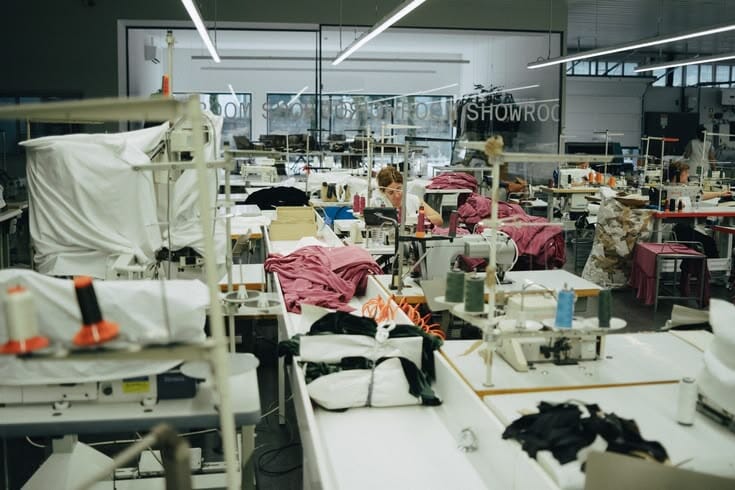
Look at the manufacturer's website critically: professional photos, clear capability descriptions, client logos or testimonials, and listed certifications are positive signals. Generic stock photos, no client list, and vague capability copy are warning signs.
Sourcing Agents
Hiring a sourcing agent outsources the search-and-vet process. Agents typically have existing factory relationships, local knowledge, and negotiating experience that small brands lack (Sourcing Journal, 2025).
| Agent Model | How It Works | Typical Cost |
|---|---|---|
| Commission-based | Agent earns 5-15% on production orders | No upfront cost, but adds 5-15% per unit forever |
| Flat-fee sourcing | One-off fee for sourcing and shortlisting | €450-€4,500 depending on scope |
| Full-service agency | End-to-end production management | 10-20% of total production cost |
| Hybrid (sourcing + retainer) | Sourcing fee + monthly retainer for ongoing oversight | €450-€900 sourcing + €250-€400/month |
Sources: Sourcing Journal (2025).
We're partial to flat-fee sourcing for ethical reasons: commission-based models create an incentive for the agent to push you toward higher-priced factories, since the agent's cut grows with the quote. Flat fees align the agent's interests with the brand's. PCF works differently: we are a group of factories, enquiries are free, and pricing is shared once the fit is confirmed. No commissions.
Skip 6 weeks of cold outreach: Tell us what you're making and we'll check the fit against the factories in our group. Get in contact. Replies within 24 hours, no commissions.
Industry Networks and Referrals
- LinkedIn: Search for production managers, factory owners, and textile industry professionals. In our experience, direct outreach with a clear, specific brief consistently gets responses.
- Fashion industry Facebook groups: Groups like "Fashion Brand Owners" and "Clothing Manufacturers and Suppliers" have thousands of members sharing recommendations.
- Fashion councils and export offices: Portugal Fashion Council, Italy's ICE Trade Agency, Turkey's ITKIB, the US Commercial Service, and India's Apparel Export Promotion Council all facilitate introductions to local manufacturers (CBI, 2025).
- Other brand founders: Ask peers in the industry who they manufacture with. Referrals from trusted sources are the highest-signal leads.
Sourcing Agent vs DIY: Decision Matrix
Should you handle sourcing yourself or hire help? It depends on your stage and where you're sourcing.
| Situation | DIY | Sourcing Agent |
|---|---|---|
| First brand, no industry contacts | Slow but possible | Faster, lower error risk |
| Sourcing in Portugal (English fluent) | Doable with research | Helpful for shortlist + vetting |
| Sourcing in Italy (some English) | Possible for premium tier | Helpful for navigating laboratori |
| Sourcing in Turkey | Recommended to use agent | Strongly helpful for language + vetting |
| Sourcing in China / Asia | Strongly recommended | Almost essential |
| Re-sourcing after a bad experience | Risky to repeat solo | Strongly helpful |
| Multi-country diversification | Complex to manage solo | Helpful for coordination |
Source: see in-text citations in this section.
In our pipeline, brands that DIY their first sourcing typically take 4-8 weeks longer than brands using a sourcing service, and 30-40% end up needing to switch factories within their first year. The DIY savings on the sourcing fee are usually offset by the cost of a wrong-factory mistake.
Step 3: How to Write Your First Manufacturer Email
Your initial email determines whether you get a response. Manufacturers receive 50-150 enquiries per month and triage ruthlessly. Here's a template that works:
Subject: Production enquiry: [Garment Type], [Volume] units, [Your Brand Name]
Body:
Dear [Name / Production Team],
My name is [Name], founder of [Brand]. We're a [brief description, e.g., "sustainable womenswear brand based in Berlin, launching our first collection"].
We're looking for a manufacturing partner for the following: - Garment type: [e.g., Organic cotton t-shirts and hoodies] - Estimated volume: [e.g., 200-300 units per style, 4 styles, 2-3 colourways] - Target price range: [e.g., €8-€12 per unit for t-shirts] - Fabric: [e.g., 180 GSM organic cotton jersey, GOTS certified] - Timeline: [e.g., Need goods by September 2026] - Services needed: [e.g., Pattern making, sampling, production, labelling]
I've attached [tech pack / sketches / reference images] for your review.
Could you please advise on: 1. Your minimum order quantities 2. Approximate pricing for the above 3. Lead times for sampling and production 4. Your available certifications (GOTS, OEKO-TEX, etc.)
I'd be happy to Get in contact to discuss further.
Best regards, [Name]
What makes this effective:
- Specific volume and product information (not "I want to make t-shirts")
- Shows you've done homework (fabric specs, GSM, budget range)
- Includes an attachment (tech pack or sketches)
- Asks clear, answerable questions
- Professional tone without being overly formal
"A tech pack allows you to get a cost price from different manufacturers and give them the opportunity to source the best fabrics and components, prior to making a call on which factory to use." (Surefront, 2025)
What NOT to do in your first email
- Don't ask "do you make clothes?" (yes, they do; tell them what you make)
- Don't promise huge volumes you can't deliver (you'll lose credibility when you scale back)
- Don't ask for prices without specifying volumes (the answer will always be "it depends")
- Don't use templates that look obviously copy-pasted (factories spot these immediately)
- Don't leave the timeline vague ("ASAP" or "as soon as possible")
Step 4: How to Evaluate and Compare Manufacturers
Evaluation Criteria
Once you've received responses from several manufacturers, compare them systematically:
| Criterion | What to Check | Red Flag |
|---|---|---|
| Response time | Did they reply within 2-3 business days? | More than a week with no response |
| Communication quality | Clear, specific answers? English proficiency? | Vague responses, avoiding questions |
| MOQ flexibility | Does their MOQ match your volume? | Rigid MOQ with no flexibility |
| Pricing transparency | Detailed cost breakdown provided? | Single price with no breakdown |
| Certifications | OEKO-TEX, GOTS, BSCI, GRS, ISO | Refuses to share certificates |
| Client references | Willing to share references / portfolio? | No references, no previous work shown |
| Factory photos / video | Modern equipment, clean, organised? | Won't share factory images |
| Sampling process | Clear sampling timeline and cost? | Unclear process, suspiciously high sample costs |
| Capacity | Can they handle your volume AND growth? | Already at capacity, long waitlists |
| Location | Factory location accessible for visits? | Won't disclose factory address |
Source: see in-text citations in this section.
The Quote Comparison Table
When you receive quotes, standardise them in a comparison table:
| Factor | Factory A (Portugal) | Factory B (Turkey) | Factory C (Romania) |
|---|---|---|---|
| Unit price (CMT) | €11.50 | €9.00 | €7.00 |
| MOQ per style/colour | 100 | 300 | 500 |
| Sample cost | €75 | €55 | €90 |
| Sample lead time | 10 days | 14 days | 18 days |
| Production lead time | 4 weeks | 5 weeks | 6 weeks |
| Shipping to [your warehouse] | 3 days | 10 days | 5 days |
| Certifications | OEKO-TEX, GOTS | OEKO-TEX, BSCI | BSCI |
| Services included | Full-service + design support | CMT + labelling | CMT only |
| Total landed cost (300 units) | €4,500 | €3,800 | €4,400 |
Sources: Business of Fashion (2024).
The lowest CMT cost rarely wins on total landed cost once you factor in MOQ commitment, lead time, and the cost of a wrong-factory mistake. Run the math both ways.
Citation Capsule: Red flags in manufacturer evaluation typically surface during the sampling and reference-check phase, not during initial outreach. The Business of Fashion's industry coverage consistently identifies supplier transparency and on-site verification as the most reliable signals for separating credible factories from brokers (Business of Fashion, 2024).
Step 5: Red Flags to Watch For
Years of industry experience have produced a clear list of warning signs.
Definite Red Flags
-
No certifications or compliance documentation. If a factory refuses to show BSCI, OEKO-TEX, or equivalent certificates, they likely don't meet basic ethical and environmental standards. Approximately 1 in 8 factories overstates certifications, in our experience. Always verify on the issuing body's public registry.
-
Prices significantly below market rate. If a quote is 40%+ cheaper than competitors for the same product, quality or labour standards are being cut somewhere. The cost has to come from somewhere; in our experience, it usually comes from defects, late deliveries, or undisclosed subcontracting.
-
No factory address or photos. Legitimate manufacturers are proud of their facilities. Reluctance to share this information suggests they may be middlemen or operate substandard facilities.
-
Requests for large upfront payments. Industry standard is 30-50% deposit with the balance due before or upon shipment. Anything over 50% upfront is unusual; anything over 70% is a structural risk.
-
Unclear or nonexistent sampling process. A professional manufacturer has a defined sampling workflow with clear costs and timelines. Vagueness here predicts chaos in production.
-
Factory won't allow visits or stages them with weeks of notice. Real factories are ready to host buyers within 1-2 weeks. Resistance to visits is a structural red flag.
-
All communication routes through a single sales contact who avoids putting you in touch with the production team. Often a sign of a middleman pretending to be a factory.
Yellow Flags (Investigate Further)
- Very slow communication (may indicate capacity issues or disinterest in small orders)
- Reluctance to provide client references
- Unable to specify exact fabric suppliers or sources
- No clear quality control process described
- Located in a region you can't easily visit
When browsing online directories, always request product samples, review past work, and time response speed. These three signals reveal more about a factory's professionalism and quality control than any pitch deck (PCF sourcing notes, 2025).
Find your factory: Browse the free factory directory preview, or unlock the premium directory for €39 to see our 80 documented Portuguese factories with direct contacts and MOQs.
For a deeper look at red flags specific to Portuguese factories, see our red flags when choosing a Portuguese clothing manufacturer guide.
Step 6: The Sampling Process
Never skip sampling. It's the single most important quality gate before committing to a production run.
Sampling Timeline
| Stage | What Happens | Typical Timeline | Cost |
|---|---|---|---|
| Proto sample | First sample from your tech pack / sketches | 7-14 days | €45-€180 / style |
| Review and corrections | You evaluate, send detailed feedback | 3-7 days (your side) | (your time) |
| Revised sample | Factory makes corrections | 5-10 days | Often included |
| Pre-production sample | Final approved sample before bulk | 5-7 days | Often included |
| Size set | Samples in all sizes for fit testing | 7-14 days | €27-€72 / size |
Sources: White2Label, 2025; Kozanteks, 2025; Bomme Studio, 2025; PCF internal sourcing data.
What to Evaluate in Samples
Check these quality points in every sample:
- Measurements: Compare every measurement against your spec sheet. Tolerances of ±0.5 cm for critical measurements (chest, length) and ±1 cm for less critical ones are standard.
- Fabric hand and weight: Does it feel right? Is the GSM (grams per square metre) what you specified? Bring a calibrated scale if you're picky.
- Stitching quality: Check stitch density (stitches per inch), seam straightness, thread tension, and bartacking on stress points (pocket corners, belt loops, neck taping).
- Construction details: Are pockets placed correctly? Are seam allowances consistent? Is the label positioned right? Are interior labels comfortable against skin?
- Wash testing: Wash the sample 3-5 times and check for shrinkage, colour fastness, pilling, and shape retention. This is non-negotiable.
- Finishing: Check for loose threads, chalk marks, stains, and overall cleanliness.
In our sourcing experience, sample velocity is the strongest predictor of bulk-production reliability. A factory that delivers a clean proto sample in 2 weeks and one revision round will usually deliver clean bulk on schedule. A factory that takes 6+ weeks for the first sample with multiple defects is signalling capacity, communication, or quality issues that will compound at bulk.
Need a tech pack? Get a factory-ready single-style tech pack for €79. See what's included.
.jpeg?format=webp)
Step 7: Choosing Your Manufacturing Region
Region choice is the single biggest lever on unit cost, lead time, MOQ floor, and compliance burden. The right region depends on where you sell, what you make, and how much volume you can commit to per style. Here's the high-level comparison across the three production clusters that matter for most brands.
Europe
- Portugal: Low-MOQ premium production (50-300 units), strong sustainability credentials, English-fluent, 2-5 day EU lead times. Best for DTC startups and sustainable brands (ATP Portugal, 2025).
- Italy: Luxury fabrics, leather, tailoring. MOQs 50-500, premium-to-luxury pricing (€15-€100+ / unit). Best for brands positioning at the top of the market (Business of Fashion, 2025).
- Turkey: Vertically integrated denim, knitwear, and cotton basics. MOQs 150-500, mid-range pricing, 5-15 day EU lead times by road (ITKIB, 2025).
- Romania: EU's lowest labour costs (~€280-€420/month wages), basic-to-mid garments, MOQs 100-500. Best for cost-effective EU-compliant volume (Euratex, 2025).
- Poland: Mid-tier production, sportswear and workwear, MOQs 200-500. Central EU logistics, growing capability base.
Europe wins on lead time to EU markets (days, not weeks), low-MOQ flexibility, EU regulatory compliance baked into the product (REACH, ESPR/DPP from 2026-2027), and IP enforceability through EU courts. Trade-off: higher per-unit cost than Asia at comparable quality tiers.
Asia
- China: The largest and most vertically integrated apparel ecosystem in the world. MOQs typically 500-1,000+ per style, lowest unit costs at scale, fastest fabric-to-finished-garment turnaround for complex products. Trade-offs: 30-50 day sea freight to EU/US, tariff exposure (US Section 301), IP enforcement gaps (Sourcing Journal, 2025).
- Vietnam: The dominant China-alternative since the 2018-onwards tariff wave. Strong in activewear, outerwear, and synthetic-blend garments. MOQs 500-1,000+, lead times 35-50 days by sea. CPTPP membership gives duty advantages into several markets (Just-Style, 2025).
- Bangladesh: The world's second-largest apparel exporter after China. MOQs 1,000-5,000+, lowest unit costs globally for cotton basics, knits, and woven shirts. Post-Rana Plaza Accord factories now operate to verifiable safety standards, but brands need to insist on Accord/RSC-certified facilities.
- India: Strong in cotton, viscose, embroidery-heavy and craft-led garments. MOQs 500-2,000. Tirupur (knits) and NCR (woven) are the main clusters. Useful for brands wanting handwork at industrial scale.
Asia wins on unit cost at volume, depth of vertical integration, and capability for complex multi-component garments. Trade-offs: higher MOQs that lock startup brands into inventory risk, longer lead times that compress launch windows, and IP/compliance exposure that needs structured agent or QC partner coverage.
Americas
- Mexico: The dominant nearshore for US brands. USMCA-compliant tariff treatment, 3-7 day truck freight to US warehouses, MOQs 300-1,000. Strong in denim, knits, and uniforms. Volume capacity is rebuilding after the 2010s shift to Asia.
- USA: Los Angeles, New York, and the Carolinas remain active for cut-and-sew. MOQs 100-500 for boutique factories, MOQs 500-2,000 for scaled CMT. Best for "Made in USA" positioning and brands wanting domestic supply-chain control. Highest unit cost in the cluster (Just-Style, 2025).
The Americas cluster wins on speed-to-market for North American brands, tariff predictability under USMCA, and the brand value of nearshore or domestic production. Trade-offs: smaller supplier base than Europe or Asia, higher unit costs at every comparable tier.
European Manufacturing Hub Comparison
For brands narrowing in on Europe specifically, here's how the five main hubs compare on wages, MOQ, lead time, and quality tier:
| Factor | Portugal | Italy | Turkey | Romania | Poland |
|---|---|---|---|---|---|
| Avg monthly wage | €730-€1,100 | €1,650-€2,300+ | ~€570 | €280-€420 | €550-€825 |
| Typical MOQ | 50-300 | 50-500 | 150-500 | 100-500 | 200-500 |
| Lead time to EU | 2-5 days | 2-5 days | 5-15 days | 3-7 days | 2-5 days |
| Quality tier | Premium | Luxury | Mid-premium | Basic-mid | Mid |
| Best for | DTC, startups, sustainable | Luxury, high fashion | Denim, basics, volume | Cost-effective EU production | Mid-tier, sportswear |
Source: see in-text citations in this section.
For a deeper Portugal vs Asia comparison, see our Portugal vs China vs Turkey manufacturing guide and Portugal vs Bangladesh vs Vietnam comparison.
Step 8: Placing Your First Order
Once you've approved the final sample, you're ready for your first production order.
Production Order Timeline
| Phase | Duration | Your Action |
|---|---|---|
| Order confirmation and deposit | Day 1 | Sign production agreement, pay 30-50% deposit |
| Fabric sourcing and approval | 1-3 weeks | Approve fabric swatch / lab dip if custom |
| Cutting and production | 2-4 weeks | Factory produces your order |
| Quality inspection | 2-3 days | Review QC report or inspect in person |
| Finishing and packing | 3-5 days | Confirm packaging specifications |
| Shipping | 2-15 days (within EU) | Arrange logistics or use factory's shipping |
| Balance payment | Before / upon shipment | Pay remaining 50-70% |
Source: see in-text citations in this section.
First-Order Best Practices
- Keep your first order conservative. Order at or near the MOQ for 2-3 styles maximum. Test the manufacturer's quality, reliability, and communication before scaling.
- Get everything in writing. A production agreement should specify: quantities, pricing, payment terms, delivery dates, quality standards, and consequences for late delivery or quality defects.
- Maintain open communication. Check in weekly during production. Good manufacturers appreciate engaged clients; it signals you care about quality.
- Plan for the learning curve. Your first order will rarely be perfect. Budget extra time for potential delays, re-shipments, or quality negotiations.
Negotiation Tactics for First Orders
Most brands leave money on the table at the first-order stage because they don't know what's negotiable. Concrete leverage points:
- MOQ flexibility. Most factories will accept lower MOQs for a 5-15% per-unit premium. Worth it for testing styles before scaling.
- Sample cost waiver against bulk. Many factories will waive the sample cost if the bulk order proceeds. Ask explicitly.
- Free revisions. Negotiate a fixed number of free sample revisions (3-4 is standard) before incremental fees kick in.
- Payment terms. First orders often require 30-50% deposit. After 2-3 successful orders, you can typically renegotiate to net 30 or 30/70 with delivery-trigger.
- Quality guarantees. Ask for written defect-rate caps (e.g., "factory replaces defects above 2%"). Reputable factories will commit.
For deeper Portuguese-specific negotiation tactics, see our how to negotiate with Portuguese clothing manufacturers guide and first meeting with a clothing manufacturer checklist.
Common Mistakes Brand Founders Make When Finding a Manufacturer
These are the patterns we see most often during sourcing calls, ranked by frequency:
1. Sending generic outreach to 50+ factories at once. Mass outreach signals desperation and gets ignored. Better to send 10 specific, well-researched emails than 100 templated ones. We've watched brands burn 6 weeks on this approach with zero responses.
2. Picking the cheapest quote without verifying capacity or quality. The lowest €/unit quote often comes from factories that either subcontract (creating uncontrolled quality variance) or under-quote to win the project then upcharge mid-production. Compare on landed cost, not unit cost, and verify capacity.
3. Skipping the factory visit. Portugal is accessible from any major EU city in under 4 hours. The cost of a 2-day trip (€600-€1,200) is less than one bad first order. Brands that skip the visit are 3-4x more likely to hit issues mid-bulk.
4. Negotiating only on price, never on terms. Per-unit price is one lever among many. MOQs, sample costs, payment terms, defect-rate guarantees, and lead-time penalties matter equally. Brands that negotiate only on price typically pay above-average total cost over a year of production.
5. Not retaining customs documentation. EU regulations require brands to retain origin and certification documentation for 5+ years. Brands that don't set up archival processes early risk audit failures down the line. See our ESPR guide for the full compliance picture.
6. Choosing a factory before having a tech pack. Without a tech pack, the factory has to fill in dozens of design decisions for you. Each filled-in decision is either a guess (which you'll regret) or a question that delays sampling. A tech pack-first approach compresses your timeline by 2-4 weeks.
7. Ignoring communication-style fit. Factories that take 5 days to respond mid-sourcing will take 5 days mid-production. Factories that miss small details in initial emails will miss bigger ones in tech-pack execution. Communication quality is the single best predictor of overall partnership success.
Conclusion
Finding a clothing manufacturer is not a weekend project. It's a strategic process that typically takes 3-6 months from initial research to first delivery, regardless of which region you source in. But the investment pays dividends in product quality, brand positioning, supply-chain reliability, and the peace of mind that comes from working with a transparent production partner.
The most successful approach combines online research (directories, Google, LinkedIn) with in-person vetting (trade shows, factory visits) and peer recommendations. Cast a wide net in your initial search, then narrow ruthlessly based on communication quality, pricing transparency, sample quality, and cultural fit. Match your region to your product, volume, and where you sell, not to whichever factory replies first.
For brands targeting European consumers with premium or sustainably positioned products, European manufacturing, particularly in Portugal, is a strong fit. For brands chasing low unit cost at high volume, Asia remains hard to beat. For North American brands prioritising speed-to-shelf, Mexico and the USA win on logistics. With 2026's tariff dynamics and ESPR/DPP compliance burden, more brands are diversifying across regions rather than betting on a single country (McKinsey & BoF State of Fashion, 2024).
"European manufacturers now offer low MOQs, sampling packages, and even design development to support small brands and ethical startups." (Wonnda, 2025)
Talk to a real person: Get in contact. Porto-based, no pitch, no upsell. We'll tell you honestly whether DIY sourcing fits your stage or whether a sourcing service makes sense for your brand.
Frequently Asked Questions
How long does it take to find a clothing manufacturer?
Plan for 3-6 months from initial research to receiving your first production order, regardless of region. The breakdown is roughly: 2-4 weeks for initial research and outreach, 2-4 weeks for receiving and comparing quotes, 3-6 weeks for the sampling process (including revisions), and 4-8 weeks for production and delivery. Asian sourcing typically adds 3-5 weeks at the back end for sea freight. Many brands start searching 6-9 months before their target launch date. The timeline can be compressed if you already have a tech pack ready and know exactly what you need, but rushing the vetting and sampling process often leads to costly mistakes.
What is the minimum order for clothing manufacturers?
MOQs vary significantly by region and factory type. The lowest MOQs are found in Portugal, where many manufacturers accept 50-200 units per style per colour (ATP Portugal, 2024). Italian factories (laboratori) also accept small runs, sometimes as low as 50 units for luxury goods. Turkey typically starts at 150-500 units; Romania and Poland generally require 100-500 units. Asian factories (China, Vietnam, Bangladesh) typically start at 500-1,000+ units per style at comparable quality tiers. Boutique US cut-and-sew shops accept 100-500. These numbers can decrease if you use stock fabrics, reduce colourways, or consolidate multiple styles into a single order.
How do I verify that a clothing manufacturer is legitimate?
Start with certifications. Ask for OEKO-TEX, GOTS, BSCI, WRAP, SA8000, or ISO certificates and verify them through the issuing body's online database. Request a factory visit or at minimum a video call showing the production floor. Ask for 2-3 client references and contact them directly. Check the company registration in the country's business registry (most EU and many Asian countries have public databases). Review their social media presence and reviews. Finally, order samples before committing to production. The quality of samples and the professionalism of the sampling process tells you almost everything you need to know about the factory.
Should I use a sourcing agent to find a manufacturer?
Sourcing agents are most valuable when you're sourcing in a country where you don't speak the language, don't have existing industry contacts, or need ongoing production management. For Portugal and Italy, where English is widely spoken and directories are well-developed, many brands successfully source directly. For Turkey, Eastern Europe, and most of Asia, agents can be significantly more helpful for navigating language barriers and vetting factories. Expect to pay 5-15% commission on production orders or a flat fee of €450-€4,500 (US$500-US$5,000) for sourcing services. The trade-off is cost vs time. Agents save you significant research and vetting time, but commission-based agents add ongoing per-unit cost. Factory groups like PCF take no commissions: enquiries are free and pricing is confirmed after qualification.
How much does it cost to source a manufacturer myself vs hire help?
DIY sourcing has no direct fee but typically costs 6-10 weeks of founder time and €600-€2,400 in factory-visit travel. A factory group like PCF checks your brief against its own factories free of charge and shares pricing once the fit is confirmed. A commission-based sourcing agent charges 5-15% on every order forever. For first-time founders sourcing in countries where they don't have contacts, the flat-fee option typically pays back within 1-2 production cycles via faster timeline and lower factory-mismatch risk.
What's the difference between CMT and full-package production?
CMT (Cut, Make, Trim) means the brand sources fabric and trims separately and sends them to the factory for cutting, sewing, and finishing. Full-package production means the factory handles fabric sourcing, trims, and production end-to-end. CMT is cheaper per-unit (€2-€50 typical range in Portugal) but requires the brand to manage fabric supply chains. Full-package is roughly 35-65% more per unit but reduces brand-side complexity. For first-time brands without supplier relationships, full-package usually makes sense. For established brands with mill relationships, CMT saves money. See our CMT vs full package production guide.
How do I know if a factory is a good cultural fit?
Cultural fit shows up in three places: response time, communication directness, and willingness to push back on bad ideas. A factory that responds within 24 hours, gives direct answers (including saying "no" when something can't be done), and pushes back on tech pack errors before they become production errors is a long-term partner. A factory that always says yes and takes 5+ days to reply is going to create problems mid-bulk.
We're a group of 80 documented Portuguese clothing factories based in Porto and Guimarães. Tell us your product, volume, and timeline. We'll route your brief to the right factory in the group, usually within 24 hours. You work directly with the factory. No commissions, no pitch, no upsell.
Get in contact Download the directory (€39)Need a tech pack? Get a factory-ready single-style tech pack for €79. See what's included.
Sources
- Europages, European Clothing Manufacturer Directory
- Source Fashion, B2B Fashion Sourcing Trade Show, London
- Oberlo, How to Find Clothing Manufacturers: 5 Ways
- Just-Style, Global Apparel Industry News and Sourcing Analysis
- Euratex, European Apparel and Textile Confederation (EU sector data and country breakdowns)
- Sourcing Journal, Apparel Sourcing News and Manufacturer Vetting Coverage
- Business of Fashion, Italian and European Luxury Manufacturing Coverage
- ATP Portugal (Associação Têxtil e Vestuário de Portugal), Portuguese textile sector overview and MOQ benchmarks (2024)
- FashionNetwork, Portuguese Textile Industry Transformation
- CBI, 10 Tips for Finding Buyers in the European Apparel Market
- Surefront, The Complete Guide to Fashion Tech Packs
- White2Label, The Ultimate Guide to Tech Packs in Clothing
- Kozanteks, Creating a Tech Pack for Your Clothing Line
- Bomme Studio, How to Create a Clothing Tech Pack for Manufacturing
- ITKIB / Turkish Apparel Exporters Association, Sector Statistics and Export Reports
- ATP, Textile Sector Activity Report 2025
Related reading
- red flags when choosing a Portuguese clothing manufacturer
- how to negotiate with Portuguese clothing manufacturers
- how to start a clothing brand in Portugal
- first meeting with a clothing manufacturer
- top 10 Portuguese clothing factories for small brands
- Portugal vs China vs Turkey manufacturing comparison
- how to create a tech pack
- CMT vs full package production in Portugal
- MOQ in Portugal
- ESPR and EU textile regulation 2026
Sourcing intel from inside Portugal.
One email a month. New vetted factories, capacity openings, sourcing scripts that work, and the questions to ask before you sign anything. Built for founders launching in Europe.
Real content, no spam. Unsubscribe any time.