.jpeg)
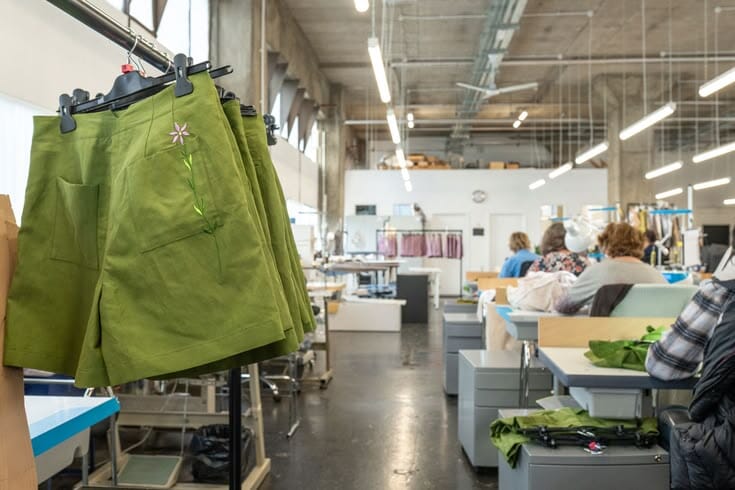
Portugal's textile and clothing industry employs 118,000 workers across 11,965 companies and exported €5.499 billion in 2025, according to INE data compiled by the ATP (Jornal Económico, 2026). The sector accounts for about 17% of national manufacturing employment and absorbs roughly 9% of European investment in textiles and clothing (AICEP, 2024). Portugal is now the 5th largest textile producer in Europe by revenue and 4th by employment, ahead of Belgium and Poland in industrial scale.
In our sourcing pipeline since 2021, we've watched the international perception of Portuguese textiles shift from "small but interesting" to "first-call nearshoring destination" for European brands. Four forces are reshaping the competitive landscape at once: new EU regulation (ESPR, the Digital Product Passport, due diligence directives), the nearshoring surge that followed pandemic supply shocks, US-China tariff escalation, and a structural shift toward sustainability. The overall -0.8% variation in 2025 exports masks segments in strong growth: technical textiles rose 13.4% and carpets surged 22% (Portugal Têxtil/INE, 2026). The headline number tells one story; the underlying mix tells a more interesting one.
This article compiles the most up-to-date data on Portugal's textile industry. It covers sector size, sub-segment composition, export destinations and regional clusters. It then turns to sustainability indicators, workforce demographics, productivity benchmarks and the 2027-2030 outlook. Every figure is sourced so you can audit it yourself.
Heads up: We're Portugal Clothing Factory, a group of 80 documented Portuguese clothing factories in Porto and Guimarães. Since 2021, we've placed dozens of brands with these factories, so the practical observations in this article are based on first-hand sourcing experience.
Key Takeaways
- Portugal has 11,965 textile companies and 118,000 workers (Fundação Francisco Manuel dos Santos, 2026); 80%+ are SMEs with fewer than 50 employees
- Textile exports reached €5.499 billion in 2025, a slight decline of 0.8% from 2024 (INE/Jornal Económico, 2026)
- Spain is the top destination, absorbing 24% of exports (€1.318B); France follows at 15.2% (€834M)
- Environmental certifications grew 13% in 2025, reaching 2,526 active certifications (CITEVE/Jornal de Negócios, 2025)
- Portugal is Europe's 5th largest textile producer by revenue and 4th by employment (EURATEX/AICEP, 2024)
- Technical textiles (+13.4%) and carpets (+22%) are growing at double digits while basic clothing volumes stagnate
- Portugal Recovery and Resilience Plan (PRR) is investing approximately €100M in textile digitalisation, R&D and bioeconomy through 2026
Try it free: Pressure-test your production cost with our garment cost calculator. 60 seconds, no email required.
How Large Is Portugal's Textile Sector in the National Economy?
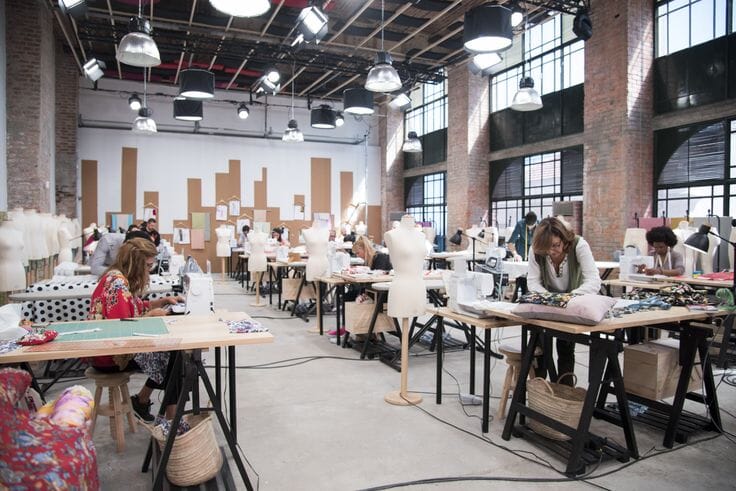
The textile and clothing sector accounts for approximately 17% of employment in Portugal's manufacturing industry, making it one of the country's most significant industries (AICEP, 2024). Portugal is Europe's 5th largest textile producer by revenue and 4th by employment, absorbing roughly 9% of European investment in the sector, according to EURATEX. These figures place Portugal ahead of Poland and Belgium in textile industrial scale and behind Italy, Germany, France and Spain.
With 11,965 active companies and 118,000 direct jobs, the textile supply chain is a structural pillar of the national economy. This is especially true in the northern interior, where there are municipalities (Vila Nova de Famalicão, Guimarães, Barcelos) where more than half of industrial employment depends on this sector. If textiles fail in those municipalities, no other industry is large enough to absorb the displaced workers.
The Sector by Sub-Segment
The "textile and clothing" headline figure obscures a sector composed of distinct sub-industries with different economics, customer profiles and growth trajectories. Here's the rough breakdown:
| Sub-Segment | Companies | Workers | Annual Revenue (est.) | Export Share |
|---|---|---|---|---|
| Spinning (yarn production) | ~250 | ~9,000 | €700-900M | High (B2B intra-EU) |
| Weaving and knitting (fabric) | ~1,200 | ~23,000 | €1.5-1.8B | High |
| Dyeing, finishing, printing | ~600 | ~13,500 | €600-800M | Medium |
| Garment manufacturing (CMT and full-package) | ~6,000 | ~50,000 | €2.0-2.4B | Very high |
| Home textiles (towels, bed linen, etc.) | ~1,500 | ~11,000 | €700-900M | High |
| Carpets and floor coverings | ~150 | ~3,000 | €300-400M | Very high |
| Technical and functional textiles | ~400 | ~5,500 | €450-550M | Growing |
| Trims, accessories, support | ~1,900 | ~3,000 | €200-300M | Mixed |
Source: see in-text citations in this section.
These ranges are approximations consolidated from ATP, INE Quadros de Pessoal, EURATEX and CITEVE, and reflect 2024-2025 data. The garment manufacturing sub-segment is the largest by both companies and workers and accounts for the bulk of what international brands interact with directly. The fabric and dyeing layers are equally important but less visible to brand buyers, who typically experience them only through the finished garment.
The SME Profile
The business fabric consists predominantly of small and medium enterprises. More than 80% of production units have fewer than 50 workers (INE, 2024). That might seem like a weakness. In practice, it's an advantage: it allows flexibility, niche specialisation, and the ability to respond quickly to smaller orders that would be uneconomic at large factories. We typically see Portuguese SME factories accept 100-300 piece orders that Asian Tier-1 facilities won't even quote. That structural flexibility is the foundation of the nearshoring story.
The geographic concentration of the sector in northern Portugal, particularly in the districts of Braga and Porto, creates a dense production ecosystem. Raw material suppliers, equipment manufacturers, finishing companies, and logistics providers all operate in close proximity. This co-location reduces lead times and facilitates coordination between supply chain links, something that countries with more dispersed textile sectors simply can't replicate. A brand can visit a knit fabric mill in the morning, a finishing house at lunchtime, and a CMT factory in the afternoon, all within a 40-kilometre radius.
Wages and Cost Position
The average gross monthly salary in the textile sector stood at €976 in 2025, with growth exceeding 7% over the previous year (CVMaker.pt/INE Quadros de Pessoal, 2025). Even with this increase, the sector remains among the lowest-paid in Portuguese manufacturing, contributing to cost competitiveness against other Western European countries (where textile wages typically run 25-40% higher). The Portuguese minimum wage rose to €870/month gross in 2026, with sectoral collective agreements in textiles often pushing effective minimums slightly higher.
Portugal's textile industry is undergoing a quiet transformation. Overall export figures mask an internal reconfiguration: less volume in basic clothing, more value in technical and sustainable products. This structural shift matters more than the annual percentage variation. The sector's future isn't in €3 T-shirts, but in UV protection fabrics at €25 per metre, GOTS-certified knitwear at €35 per piece CMT, and technical performance fabrics for sportswear, automotive and medical applications.
Citation Capsule: Portugal's textile industry employs 118,000 workers across 11,965 companies, representing 17% of national manufacturing employment. Portugal is Europe's 5th largest textile producer by revenue and 4th by employment, absorbing 9% of European investment in the sector (EURATEX/AICEP, 2024).
A Brief History: How Portugal Became Europe's Textile Hub
Understanding the current position requires understanding how Portugal got here. The sector's modern shape emerged from three distinct waves over the past five decades:
- 1970s-1990s: Quota-driven exporter. Under the Multi-Fibre Arrangement, Portugal benefited from EU quotas that limited Asian imports. Portuguese factories grew rapidly producing basic apparel for European retailers. By the late 1990s, the sector employed nearly 250,000 workers, almost double today's level.
- 2000-2008: The China shock. With the Multi-Fibre Arrangement ending in 2005, Portuguese factories faced direct cost competition from China. Roughly 40% of textile employment disappeared between 2000 and 2010 as basic CMT capacity migrated east. Factories that survived did so by moving up-market.
- 2009-2019: Repositioning around quality. The post-financial-crisis decade saw Portuguese textiles rebuild around quality, certifications and faster lead times. Brands like Sandra Alves, Fashion Clinic and Burberry's continental sourcing increasingly turned to Portuguese suppliers. Modtissimo (Porto's twice-yearly trade fair) emerged as Europe's most important nearshoring textile event.
- 2020-2026: Nearshoring acceleration. Pandemic-era supply chain shocks, US-China trade tensions, ESPR/DPP regulatory pressure and consumer-side ESG demands have all simultaneously favoured European production. Portuguese sector revenue stabilised around €7-8 billion total industry output (€5.5B exports + domestic). Investment in technical textiles, sustainability and digitalisation has accelerated since 2022.
The sector that exists today is roughly half the workforce size of the 1990s but produces dramatically higher value-per-piece. That's not decline. That's strategic repositioning that worked.
Where Do Portuguese Textile Exports Go?
Spain is by far the leading destination for Portuguese textile and clothing exports, absorbing 24% of the total at €1,318 million in 2025 (INE via Jornal Económico, 2026). France follows at 15.2%, Germany at 8.4%, and the USA at 7.6%. Total sector exports reached €5.499 billion in 2025, a decline of just 0.8% from the previous year. These numbers correct a common misconception. Many older articles cite Germany as the primary market, but INE data shows Spain leads by a wide margin.
Geographic proximity, logistics integration across the Iberian Peninsula and the Inditex effect (with Zara, Pull&Bear, Bershka and Massimo Dutti all sourcing significantly in Portugal) explain Spain's dominant position. The European Union absorbs the vast majority of exports, benefiting from Single Market advantages: zero tariffs, harmonised regulations, free movement of goods, and uniform consumer protection rules. For brands that need to react quickly to trends, geographic proximity is an advantage Asia simply cannot match: 2-5 days by road to any European capital, compared with 4-6 weeks by sea from Asia.
How Do the Top Export Markets Rank?
Portuguese textile and clothing exports by market (2025, actual data)
| Rank | Market | Value (€M) | Annual variation | Share |
|---|---|---|---|---|
| 1 | Spain | 1,317.8 | +0.1% | 24.0% |
| 2 | France | ~834 | -1.4% | 15.2% |
| 3 | Germany | ~461 | -2.1% | 8.4% |
| 4 | USA | 420.4 | -3.3% | 7.6% |
| 5 | United Kingdom | 336.9 | -3.1% | 6.1% |
| 6 | Italy | 312.3 | -13.0% | 5.7% |
| 7 | Netherlands | ~230 | +8.9% | 4.2% |
| 8 | Morocco | 89.7 | +22.1% | 1.6% |
| - | Others | ~1,497 | - | 27.2% |
Source: INE via Jornal Económico and Portugal Têxtil, 2026. Netherlands and Morocco: extrapolation from January-September 2025 data.
Two data points deserve special attention. Morocco's growth (+22.1%) reflects Portugal's role as a re-export hub and fabric supplier for Moroccan garment manufacturers, who increasingly source Portuguese fabrics for finishing in lower-cost Moroccan facilities. Italy's sharp decline (-13%) suggests a reorganisation of value chains in southern Europe, with some Italian brands moving sourcing in-house or to Eastern Europe.
The Growing North American Market
The USA is diversifying its sourcing base. Trade tensions with China (35%+ tariffs on Chinese textile imports through 2025-2026) and demand for suppliers with high environmental standards favour Portugal. The North American market particularly values home textiles, premium denim, quality knitwear and tailoring. For US brands selling DTC at premium price points, "Made in Portugal" carries clear positioning weight.
Geographic distance remains a challenge. However, delivery times from Portugal to the US East Coast (15-20 days by sea, or 3-4 days by air for premium orders) are competitive when compared with alternatives like Turkey or Mauritius. And the perceived quality of "Made in Portugal" continues to rise in US specialty retail. At 7.6% of total exports, the US is already the largest non-European market, despite the -3.3% dip in 2025 (a likely reflection of dollar strength affecting EUR-denominated invoicing rather than structural decline).
Emerging Markets and Diversification
Beyond the top six, countries like the Netherlands, Nordic nations, the United Arab Emirates and South Korea are appearing on Portuguese exporters' radars. Small in volume, but with attractive margins and growth potential. We've seen Portuguese knitwear specialists in particular develop strong niche positions in Tokyo, Seoul and Dubai over the past 24 months. These markets reward the quality positioning Portugal is built for.
Could this geographic diversification serve as a buffer against future crises in the European market? Early signs suggest it can, though the volumes are still small relative to the Iberian/EU base.
Which Product Categories Export Best?
The categories with the strongest export presence include outerwear, knitwear, technical textiles, home textiles and carpets. Technical and functional textiles grew 13.4% in 2025, and carpets and floor coverings rose 22%, showing that diversification is working (Portugal Têxtil/INE, 2026). Demand for technical and functional textiles, such as fabrics with UV protection, antibacterial properties, moisture management and stretch performance, has grown consistently in orders directed at Portuguese factories, according to sector data shared with portugalclothingfactory.com.
Citation Capsule: Portuguese textile and clothing exports totalled €5.499 billion in 2025, a decline of 0.8% from 2024. Spain is the leading destination with 24% of the total (€1,318M), followed by France (15.2%) and Germany (8.4%). Technical textiles grew 13.4% and carpets 22%, evidencing diversification (INE, 2026).
What Are Portugal's Main Textile Clusters?
Portugal's textile sector is organised into specialised regional clusters, each with distinct strengths (ATP, 2024). The Ave Valley and the Cávado Valley, in the Braga and Porto districts, concentrate more than 70% of the sector's companies. This geographic concentration creates a production ecosystem that's rare in Europe, with the entire value chain accessible within a 100 km radius. For a detailed analysis of each region with an interactive map and data by municipality, see our complete guide to Portuguese textile regions.
The true advantage of Portugal's textile cluster isn't just price or quality. It's speed. Having spinning, weaving, dyeing and garment manufacturing in the same geographic valley allows product development cycles that no Asian hub can match for small and medium-sized orders. A brand can visit three complementary suppliers in a single day. A correction on a fit sample in a Porto-area factory takes 2-4 days; the same correction in Bangladesh takes 14-21 days.
Regional Cluster Map
| Cluster | Location | Specialisation | Approx. Companies | Distance from Porto Airport |
|---|---|---|---|---|
| Ave Valley | Famalicão, Vila Nova de Famalicão, Guimarães | Knitwear, jersey, T-shirts, sweatshirts | ~3,500 | 30-50 km |
| Barcelos / Braga | Barcelos, Braga | Outerwear, woven shirts, home textiles | ~2,000 | 50-65 km |
| Cávado Valley | Esposende, Vila Verde | Garment manufacturing, basics | ~1,000 | 60-75 km |
| Covilhã | Covilhã, Beira interior | Wool fabrics, flannels, tweeds | ~250 | 290 km |
| Vale do Sousa | Lousada, Paços de Ferreira | Garment manufacturing, footwear adjacency | ~600 | 35-50 km |
| Viana do Castelo | Viana do Castelo, Ponte de Lima | Embroidery, artisanal textiles | ~400 | 70-90 km |
| Porto urban | Porto, Vila Nova de Gaia | Tailoring, premium constructions, design | ~500 | 0-15 km |
Source: see in-text citations in this section.
What Each Cluster Does Best
- Ave Valley is the historical knit textile heart of Portugal. Most knit fabric mills, dyehouses and jersey-garment specialists sit here. If you're sourcing T-shirts, sweatshirts, polos, hoodies or dresses in jersey, this is where you start. Anchor employers include Riopele (woven and knit), Polopiqué, Filasa, MGC and Sonix.
- Barcelos / Braga hosts more woven garment specialists, outerwear, and structured construction. Stronger in shirting, suiting and home textiles. Salsa Jeans, Lameirinho and Nelva have headquarters in this area.
- Covilhã is Portugal's wool centre, specialising in wool fabrics, flannel, tweed and high-end suiting fabric. Smaller cluster but unique capabilities, particularly for tailoring brands. Burel Factory and Paulo de Oliveira are key references.
- Porto urban is more design-led and premium-tailored, often with smaller specialist factories feeding luxury and indie designer brands. Slower pace, higher per-piece cost, exceptional finish quality.
If you're sourcing knit basics, head to Famalicão. If you're sourcing wool tailoring, head to Covilhã. The wrong cluster mismatches reduce 20-30% of Portugal's competitive advantage.
.jpeg)
Citation Capsule: Portugal's textile sector is organised into specialised regional clusters: the Ave Valley leads in knitwear and yarn; Covilhã is a European reference for wool fabrics; Barcelos and Guimarães dominate garment manufacturing and export clothing. More than 70% of companies are concentrated in the Braga and Porto districts (ATP, 2024).
How Is Sustainability Transforming the Sector?
Environmental certifications in Portugal's textile sector grew 13% in 2025, reaching 2,526 active certifications, and 105 companies participated in CITEVE's sustainability report, a 36% increase from the first year (CITEVE via Jornal de Negócios, 2025). The numbers are clear: sustainability is no longer a niche pitch. It's a structural shift driven by EU regulation, brand-side ESG commitments and end-consumer demand.
The European Ecodesign for Sustainable Products Regulation (ESPR), with implementing measures rolling through 2025-2030, requires brands to ensure traceability and environmental accountability for their products. For Portuguese factories certified with GOTS, OEKO-TEX or GRS, this regulation is a direct competitive advantage over uncertified Asian producers, since the data the regulation requires is already largely collected. More on the ESPR in our dedicated guide.
How Much Recycled and Bio-Based Fibre Is the Sector Using?
Recycled material incorporation rose to 11% of total fibre input (up 3 percentage points), and bio-based or organic materials now represent 25% (up 4 percentage points), according to the same CITEVE report. Meanwhile, 84% of Portuguese textile companies actively invest in reducing energy, water and CO2 emissions. The water-recycling figures in dyehouses are particularly striking: leading Portuguese dyehouses have reduced water consumption per kg of fabric by 30-50% over the past decade through closed-loop systems.
The sustainable apparel market in Portugal reached approximately €30 million in 2025, with projections of approximately €88 million by 2034, representing annual growth of 12.59% (IMARC Group, 2025, EUR equivalent). These are figures for a small market segment, but the trajectory is unmistakable.
European Regulation: ESPR and the Digital Product Passport
The EU's Ecodesign for Sustainable Products Regulation (ESPR) is set to change the rules. From 2027 onwards, many textile products will require a Digital Product Passport. This digital document will contain information about composition, origin, environmental impact, durability metrics and recycling instructions for each garment. Compliance costs for brands sourcing in Asia can reach €1-3 per piece extra (European Fashion Alliance, 2024). Sourcing in Portugal materially reduces that overhead because the data the DPP requires is already largely captured by EU-native suppliers.
Portugal is among the most advanced countries in preparing for this requirement. CITEVE is already working with dozens of companies on traceability pilot projects funded by the PRR (Plano de Recuperação e Resiliência). For brands looking for suppliers ready for the regulatory future, Portugal offers a level of assurance few countries can guarantee. Brands investing in compliance now will have a material advantage when the regulation becomes binding.
Technical Textiles and Innovation
Technical textiles are the fastest-growing segment: +13.4% in 2025 (Portugal Têxtil/INE, 2026). This includes materials for the automotive, construction, healthcare, defence and high-performance sports industries. The segment requires investment in R&D, and Portugal has been strengthening that commitment through the BE@T project (textile bioeconomy) and the From Portugal Sustainable Brand programme.
Centres like CITEVE and universities such as the University of Minho play a central role in this evolution. Collaboration between academia and industry is closer here than in many European countries. The BE@T project, led by CITEVE with PRR funding, is investing in textile bioeconomy applications including bio-based fibres, enzyme-based dyeing and biodegradable performance materials. In the words of Braz Costa, CITEVE's director-general: "These actions are very important steps for the enormous change we are initiating in the textile and clothing industry" (Knitting Trade Journal, 2025).
Why Are Portuguese Carpets Growing 22%?
The growth of carpets (+22%) also deserves attention. Portugal is one of the few European countries with significant industrial capacity in this segment. International demand, especially from the US and northern Europe, has been driving this niche. The simultaneous growth of technical textiles (+13.4%) and carpets (+22%) in 2025 shows that diversification in Portugal's sector isn't just rhetoric. These are two segments with completely different value chains, both growing at double digits, while conventional clothing stagnates.
Digitalisation of Production
The adoption of CAD/CAM systems, digital pattern grading, online order management and real-time production tracking is accelerating across Portuguese factories. Manufacturers offering real-time order tracking portals have a clear advantage in attracting international clients, particularly DTC brands accustomed to logistics-grade visibility from their fulfilment partners. Portugal's Industry 4.0 programme, with PRR funding of approximately €100M earmarked for textile digitalisation through 2026, supports this transition.
In our experience, factories that have invested in PLM systems and digital sampling tools have shorter sample cycles (8-14 days vs 21-28 days for paper-based factories) and clearly fewer fit errors at PP stage. The digitalisation gap between top-quartile and bottom-quartile Portuguese factories is one of the bigger differences first-time buyers don't see when shortlisting.
Citation Capsule: Environmental certifications in Portugal's textile sector grew 13% in 2025, reaching 2,526 certifications. Recycled material incorporation rose to 11% (+3 p.p.) and organic materials represent 25% (+4 p.p.). 84% of companies invest in reducing energy, water, and CO2 emissions (CITEVE, 2025).
Workforce, Wages and Demographics: The Quiet Constraint
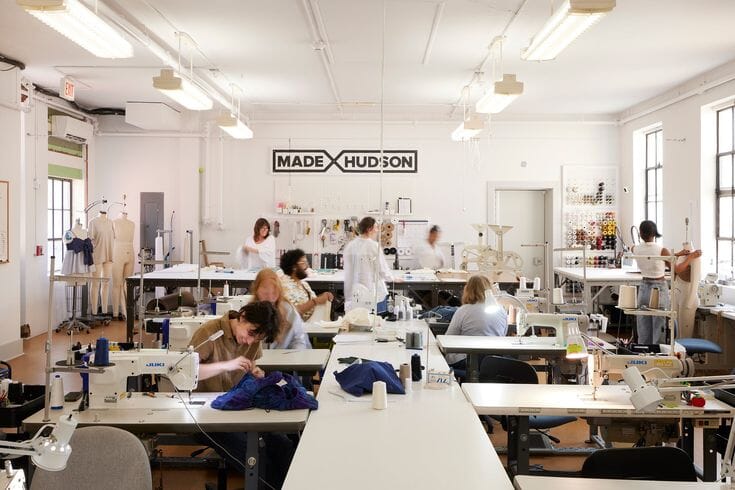
The textile sector's biggest medium-term constraint isn't demand. It's labour. With 118,000 workers and an ageing workforce, attracting young people into the industry is increasingly the binding constraint on growth. Roughly 30-35% of textile workers are over 50, and traditional skills like industrial pattern cutting, knitting machine programming and complex finishing are concentrated in the older cohort.
Workforce Profile
| Indicator | Value |
|---|---|
| Total workforce | ~118,000 |
| Average age | ~45 years |
| Workers over 50 | ~30-35% |
| Average gross salary (2025) | €976/month |
| Female workforce share | ~70% |
| Annual workforce growth (2024-2025) | -0.8% |
| Vocational training graduates entering sector | ~3,000/year (insufficient to replace retirements) |
Source: see in-text citations in this section.
Several Portuguese factories now actively recruit from immigrant communities (Brazilian, Cape Verdean, Indian and Bangladeshi workers) to fill operational roles. This trend is most visible in the larger Vale do Ave and Barcelos factories. Government subsidies for textile vocational training have increased through PRR funds, but the pipeline still falls short of replacement needs by an estimated 800-1,500 workers/year.
What This Means for Brand Buyers
In practical terms, the labour constraint shows up as:
- Longer lead times in peak season (October-November, March-April), when factories are at capacity
- Some factories declining new accounts to protect existing relationships
- Wage inflation passing through to CMT pricing at 5-8% per year
- Greater factory selectivity: smaller buyers struggle to get attention from top-tier factories already serving Inditex, Sandro Rive Gauche, COS and similar volume buyers
Brands with disciplined planning, longer order horizons, and willingness to commit to multi-season programmes get better access. Brands chasing factories for short-term spot orders increasingly hit closed doors during peak windows.
Why Are Fashion Brands Choosing Portugal for Manufacturing?
Portugal is now one of the five most-referenced nearshoring destinations in European fashion sourcing reports, positioning itself ahead of Eastern European competitors in perceived quality and available certifications (AICEP, 2024). This reputation didn't appear overnight. It was built over decades of working with demanding brands from northern Europe, and accelerated dramatically in the 2020-2026 nearshoring wave.
Quality and Certifications
Portuguese factories operate according to European quality, health and safety standards as a baseline, before any additional certification. The most valued voluntary certifications include ISO 9001, GOTS, OEKO-TEX Standard 100 and 1000, GRS (Global Recycled Standard) and BSCI (social compliance). CITEVE conducts approximately 180,000 annual quality and compliance tests. Portugal has one of the highest concentrations of GOTS-certified factories in Southern Europe per capita. To learn more about these certifications, see our comparative guide: OEKO-TEX vs GOTS vs bluesign.
EU Tariff Advantages
Manufacturing in Portugal means manufacturing within the European Union. Products benefit from free circulation in the Single Market with no additional tariffs. For US and UK brands selling into the EU, Portuguese origin can have a direct impact on profitability, particularly given the post-Brexit and US-China tariff frictions affecting alternative origins.
The "Made in Portugal" Premium
In conversations with European fashion buyers, the "Made in Portugal" label comes up consistently as a positive positioning attribute, especially in knitwear, wool and quality clothing. This premium is usable in brand communication and can represent 15-25% in additional retail price value, compared with equivalent Asian-produced products. We've watched this consistently across DTC brands shifting from Asian sourcing to Portuguese sourcing: those that market the origin clearly capture the premium; those that don't capture only 5-8% of it.
Ana Paula Dinis, ATP's director-general, emphasises that competitiveness is a natural condition: "A company, in any sector, needs to be competitive to remain active and prosper. It's a natural condition of the economy" (FashionNetwork Portugal, 2025).
Nearshoring: The Major Opportunity
European and North American brands are relocating part of their production to Europe for three concrete reasons: shorter lead times, regulatory pressure on long supply chains, and geopolitical risk. Portugal is well positioned to capture these orders. Portuguese factories offer delivery times of 4 to 8 weeks, compared with 16 to 24 weeks for Asian production. There's no comparison.
The ability to accept small-quantity orders is another asset. Many Portuguese factories work with minimums of 100 to 500 pieces. In China or Bangladesh, minimums frequently start at 1,500 to 5,000 units. For emerging brands and direct-to-consumer labels, this flexibility is decisive. The real driver of nearshoring to Portugal isn't just geopolitical risk reduction. It's the change in brands' business models. With the decline of high-volume fast fashion and the growth of direct-to-consumer brands, the ability to produce 500 pieces at premium quality becomes more valuable than producing 50,000 pieces at the lowest possible cost.
Investment and Funding Landscape
The Portuguese textile sector is one of the largest beneficiaries of PRR (Recovery and Resilience Plan) funding, with approximately €100M earmarked for sector digitalisation, R&D and bioeconomy through 2026. Specific programmes include:
- CITEVE BE@T project: Textile bioeconomy applications, ~€20M
- Industry 4.0 incentives: Digitalisation grants, ~€30-40M sector allocation
- Sustainability Pact: Co-funded private investment in water/energy reduction, ~€25M
- Vocational training programmes: Workforce upskilling, ~€15M
Foreign direct investment in the sector has also increased. Spanish, French and Italian textile groups have acquired or expanded Portuguese operations over 2022-2025, attracted by capability + cost vs other Southern European alternatives.
Challenges and Capacity Limits
Not everything is simple. Portugal's production capacity has limits. Top-tier factories already operate with waiting lists of several months for new accounts. Growth in demand without corresponding investment in capacity creates bottlenecks, and the workforce constraint described earlier compounds this.
The shortage of skilled labour is the single biggest risk to sustained nearshoring growth. Wage inflation, ageing workforce, vocational training shortfall and a societal narrative that has historically devalued manual industrial work all push in the same direction. Industry initiatives (CITEVE programmes, ATP advocacy, factory modernisation) are working to reverse this, but the timeline is structural.
Comparison with Other Manufacturing Destinations
Portugal vs other textile manufacturing destinations (2027)
| Criterion | Portugal | Morocco | Bangladesh | Turkey | Romania |
|---|---|---|---|---|---|
| Average lead time | 4-8 weeks | 6-10 weeks | 16-24 weeks | 6-12 weeks | 5-9 weeks |
| Average labour cost/hour | ~€8-10 | ~€2-3 | ~€0.9-1.2 | ~€4-6 | ~€4-5 |
| Certifications (GOTS, OEKO-TEX) | High | Medium | Low-medium | Medium-high | Medium |
| EU Single Market access | Direct | Partial (Association Agreement) | Tariffs apply (post-LDC) | Partial (Customs Union) | Direct |
| Geopolitical risk | Low | Medium | Medium-high | Medium | Low |
| "Origin" brand premium | High | Low-medium | Low | Medium | Low |
| ESPR/DPP compliance burden | Minimal | Medium | High | Medium | Minimal |
Sources: estimates based on AICEP, ILO, EURATEX and portugalclothingfactory.com analysis, 2026. For a detailed comparison, see our article on Portugal vs Bangladesh vs Vietnam.
Portugal doesn't compete on price alone. And that's precisely what makes it attractive to brands that don't want to compete on price alone.
Citation Capsule: Portugal ranks among the five most-referenced nearshoring destinations in European fashion sourcing reports. Portuguese factories offer lead times of 4 to 8 weeks, European certifications (GOTS, OEKO-TEX), and direct Single Market access without tariffs. CITEVE conducts 180,000 annual compliance tests (AICEP, 2024).
Outlook 2027-2030: What Could Change?
Three things decide the next four years: whether the workforce gap closes, how fast ESPR and the Digital Product Passport bite, and whether nearshoring demand holds once tariff pressure eases. The scenarios below take each in turn, with the trajectory the current data supports.
The data above describes 2025-2026. Here's how the sector could plausibly evolve over the next four years, based on current trajectories and known regulatory milestones:
Scenario A: Steady Growth (Most Likely)
- Sector revenue grows to €6.5-7.0B in exports by 2030 (+18-27%)
- Technical textiles and carpets continue double-digit growth
- Conventional clothing volumes stay flat; value-per-piece rises
- Workforce stays at 125,000-135,000 with productivity gains absorbing demand growth
- Bangladesh post-LDC tariff increase shifts 5-10% of EU basics demand to Portugal/Romania/Turkey
Scenario B: Accelerated Reshoring (Upside)
- Major regulatory action against non-EU compliance laggards drives 15-20% additional reshoring to EU
- Sector revenue reaches €8B+ by 2030
- Capacity constraints create durable wage inflation (8-12%/year)
- Selective factory expansion (3-5 new large facilities)
- "Made in Portugal" premium widens to 25-35% at retail in EU markets
Scenario C: Consolidation (Downside)
- Workforce constraint binds harder than expected
- Smaller factories (under 30 workers) consolidate or exit
- Sector revenue stagnates around €5.5-6B
- Top 100 factories absorb most demand growth; mid-tier squeezed
- Foreign acquisitions accelerate
In our view, Scenario A is most probable, with significant variance depending on workforce policy and EU regulatory enforcement. The next five years will likely see Portugal consolidate its position as Europe's premium-quality nearshoring hub rather than expand massively in basic-volume categories.
What Should You Do With This Data?
If you're a fashion brand evaluating sourcing, here's a practical translation of the data above:
- If you're under €500K revenue: Portugal is almost certainly your best fit. Low MOQs, fast cycles, no compliance overhead. Use this report as evidence in pitch decks for buyers and investors.
- If you're between €500K-€5M revenue: Portugal as primary, possibly add a secondary Asian source for one specific high-volume product. Hybrid model.
- If you're €5M+ with mass-volume basics: Asia (Vietnam or Bangladesh) for basics, Portugal for premium and seasonal. Hybrid is dominant.
- If you're sourcing wool/tailoring: Portugal (Covilhã + Porto urban). Italy is more expensive and Turkey has lower technical depth.
- If you're sourcing knit basics: Portugal (Vale do Ave) or Bangladesh, depending on volume.
- If you're a US brand worried about tariffs: Portugal de-risks both US-China tariff exposure and incoming Bangladesh LDC graduation tariffs.
FAQ: Frequently Asked Questions About Portugal's Textile Industry
How many textile companies are there in Portugal?
There are 11,965 active textile and clothing companies in Portugal, according to the ATP (2025). AICEP uses a narrower definition and reports around 6,000 garment manufacturing companies. The difference comes down to scope: the higher number includes the entire supply chain (spinning, weaving, finishing, garment manufacturing), while the lower figure focuses on garment production. More than 80% are SMEs with fewer than 50 workers. Most are concentrated in the Braga and Porto districts.
What is the value of Portuguese textile exports?
Portuguese textile and clothing exports reached €5.499 billion in 2025, a decline of 0.8% from 2024 (INE via Jornal Económico, 2026). The main destination markets are Spain (24%), France (15.2%), and Germany (8.4%). The USA is the largest non-European market at 7.6% of the total.
What are Portugal's main textile regions?
Portugal has several specialised textile clusters: the Ave Valley (knitwear, jersey garments, T-shirts), Barcelos and Braga (outerwear and home textiles), Cávado Valley (garment manufacturing), Covilhã (high-quality wool fabrics, tailoring), Vale do Sousa (basics garment manufacturing), Viana do Castelo (embroidery, artisanal), and Porto urban (premium tailoring and design). Each cluster has its own supply chain, allowing brands to choose the region most suited to their product type. Learn more in our guide to Portuguese textile regions.
Is Portugal more expensive than Bangladesh for clothing production?
Yes, in pure CMT cost. The average hourly labour cost in Portugal is between €8 and €10, compared with €0.90 to €1.20 in Bangladesh. But hourly cost alone ignores what else changes. Lead times run 4-8 weeks against 16-24. Single Market access is tariff-free. Then add certifications, lower logistics risk, faster sampling and the value of "Made in Portugal." For mid-to-high quality brands at volumes under 1,000 pieces per style, total landed cost per collection can be competitive. We've done the maths in our article on Portugal vs Bangladesh vs Vietnam.
How can I find a textile manufacturer in Portugal?
The most direct way is to contact the ATP (which maintains a directory of members), attend sector trade fairs like Modtissimo (Porto, twice yearly) or Première Vision Paris (where Portuguese mills exhibit), or use a factory group like Portugal Clothing Factory which connects brands with documented Portuguese factories by product type, certification and minimum order volume. We always recommend visiting the facilities (or doing a video walk-through) before signing a contract. For a step-by-step guide, see our guide to textile production in Portugal and our how to find a clothing manufacturer guide.
What's the typical MOQ at a Portuguese factory?
Small factories accept 50-150 pieces per style. Mid-size factories typically request 150-500 pieces. Larger export-oriented factories want 500-2,000+ pieces. This range is dramatically lower than typical Asian Tier-1 factory MOQs (1,500-5,000+). MOQ flexibility is one of Portugal's most concrete competitive advantages for emerging brands. Read our MOQ in Portugal guide for detail by garment type.
Are Portuguese factories ready for ESPR and the Digital Product Passport?
Many leading Portuguese factories are already preparing for ESPR/DPP compliance through CITEVE pilot programmes funded by the PRR. The data fields the DPP requires (composition, country of origin, water and energy use, recyclability) are largely already captured by EU-native suppliers under existing REACH and labelling regulations. Compliance overhead for brands sourcing in Portugal is therefore materially lower than for brands sourcing in non-EU origins, where the same data must be collected, audited and translated. See our ESPR guide.
What's the workforce situation in the Portuguese textile sector?
The sector employs 118,000 workers, with roughly 30-35% over age 50 and an annual replacement gap of 800-1,500 workers per year (vocational training pipeline below retirement rate). This is the most significant medium-term constraint on sector growth. Wage inflation is running 5-8% per year as factories compete for skilled workers. For brand buyers, the practical effect is tighter capacity in peak season and increasing factory selectivity about which accounts to take. Plan order placements 6-8 weeks earlier than you would have 5 years ago.
What government support exists for the sector?
Portugal's PRR (Recovery and Resilience Plan) has approximately €100M earmarked for textile sector digitalisation, R&D, sustainability and workforce training through 2026. Specific programmes include CITEVE's BE@T (textile bioeconomy), Industry 4.0 digitalisation grants, and the Sustainability Pact for water/energy reduction. Many factories have benefited directly, which has accelerated the modernisation curve over 2022-2026. Foreign brand buyers don't access these funds directly but benefit indirectly from the resulting capability uplift at supplier factories.
What Should You Do Next?
Portugal's textile industry offers a rare combination: European quality, internationally recognised certifications, competitive lead times, MOQ flexibility for emerging brands, ESPR-ready supplier networks, and direct access to the EU Single Market. The data in this report show a sector that exports nearly €5.5 billion per year, is investing heavily in sustainability and digitalisation, and attracts international brands through proximity and quality.
Challenges exist. Limited capacity, labour shortages, and wage pressure are real. But these are also signs of a sector in demand, not in decline. Portugal's textile industry is proving that tradition and innovation can coexist, and the 2025-2026 data confirm that direction. The highest value-added segments, technical textiles, certified sustainable production, premium tailoring, are the ones growing fastest.
If your brand is considering manufacturing in Portugal, the next step is simple.
Submit your production enquiry at portugalclothingfactory.com/contact or get in contact. Describe your product, volume and timeline, and we'll point you to the Portuguese factories that fit your profile.
We're a group of 80 documented Portuguese clothing factories based in Porto and Guimarães. Tell us your product, volume, and timeline. We'll route your brief to the right factory in the group, usually within 24 hours. You work directly with the factory. No commissions, no pitch, no upsell.
Get in contact Download the directory (€39)Need a tech pack? Get a factory-ready single-style tech pack for €79. See what's included.
Sources
- INE - Instituto Nacional de Estatística, 2025 export data via Jornal Económico
- ATP - Associação Têxtil e Vestuário de Portugal (2025)
- AICEP Portugal Global, Textiles and Clothing Industry (2024)
- EURATEX - European Apparel and Textile Confederation, Facts & Key Figures 2024
- CITEVE via Jornal de Negócios (2025)
- Portugal Têxtil - export data by destination (2026)
- IMARC Group - Portugal Sustainable Apparel Market (2025)
- Knitting Trade Journal - BE@T CITEVE project (2025)
- FashionNetwork Portugal - ATP statements (2025)
- CVMaker.pt/INE Quadros de Pessoal - textile sector wages (2025)
- European Fashion Alliance - ESPR compliance cost projections (2024)
Related reading
- What 'Made in Portugal' actually means
- Portugal vs Bangladesh vs Vietnam
- Portugal vs China vs Turkey
- Clothing manufacturing costs in Portugal
- How to find a clothing manufacturer in Portugal