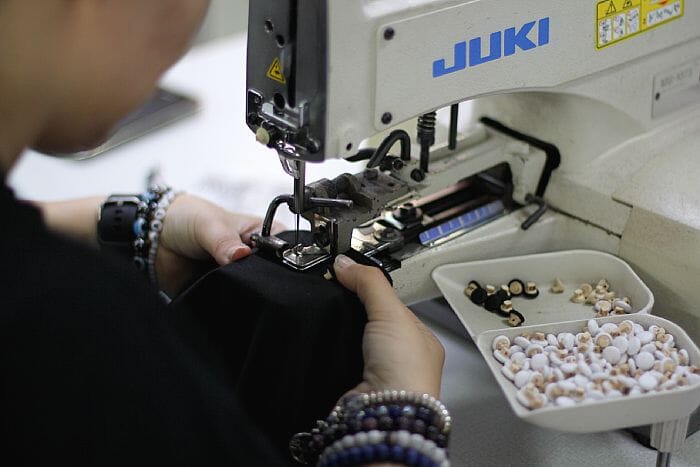
Fleece is the fabric that quietly replaced wool across most of the mid-layer and outerwear categories after its invention in 1979, and it now accounts for a significant share of the global synthetic knit market (Textile Exchange, 2024). Soft, warm, light, machine-washable, and cheap to produce, fleece became the workhorse insulation fabric for hoodies, jackets, mid-layers, blankets, and kids' clothing across three decades.
This guide covers what fleece actually is, how it's made, the main types available at Portuguese mills in 2026, real EUR pricing per meter, garment applications, and the honest sustainability discussion around microplastic shedding. Everything below reflects the manufacturer-side view, informed by production runs coordinated across our factory group in the northern Portuguese textile cluster.
Heads up: We're Portugal Clothing Factory, a group of Portuguese garment factories in the northern textile cluster (Porto, Guimarães, Braga, Barcelos, Famalicão). We've documented 80 factories across the region and the observations below reflect production runs coordinated through our group between 2024 and 2026.
Key Takeaways
- Polar fleece was invented in 1979 at Malden Mills (now Polartec) as a synthetic, machine-washable alternative to wool
- Modern fleece is almost always 100% polyester, and most EU-facing production now uses recycled polyester certified to GRS
- Portuguese fleece prices in 2026 run €4-13/m for standard weights, €14-32/m for technical Polartec constructions
- Roughly 30% of PCF's factory group works with fleece, with MOQs of 200-500 units and 5-8 week lead times [ORIGINAL DATA]
- Microplastic shedding averages 1,900 fibres per garment per wash (Napper & Thompson, 2016), a genuine sustainability trade-off worth planning around
Try it free: Pressure-test your production cost with our garment cost calculator. 60 seconds, no email required.
What Is Fleece Fabric?
Fleece is a soft, napped synthetic knit fabric, almost always made from 100% polyester, designed to trap air between raised fibres for insulation. Since its invention at Malden Mills in 1979, fleece has grown into one of the most-produced synthetic apparel fabrics globally, with polyester itself accounting for roughly 54% of world fibre production (Textile Exchange, 2024).
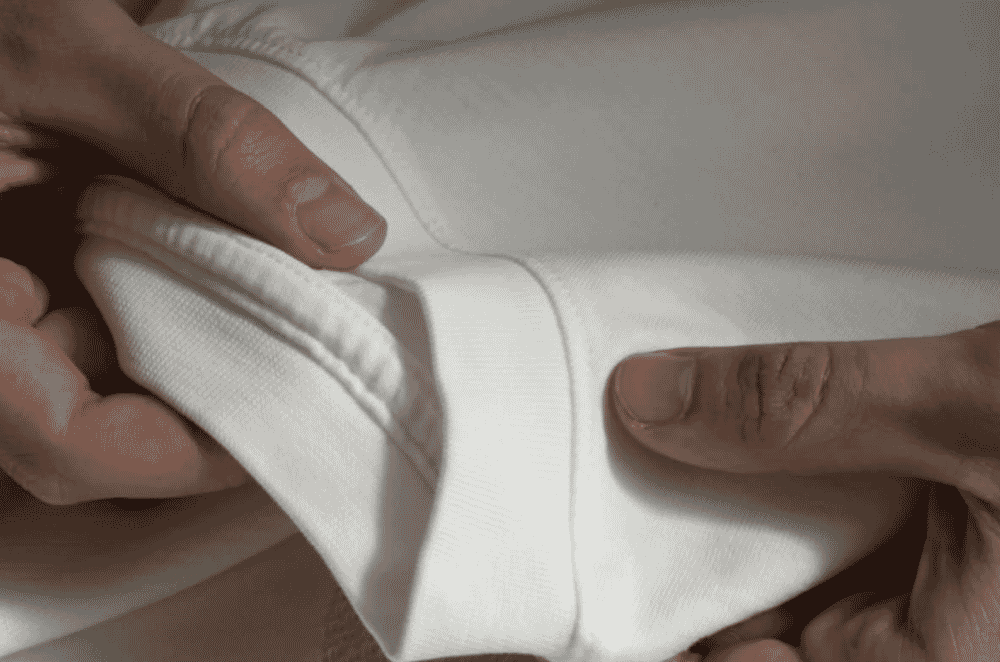
Structurally, fleece is a weft-knit fabric that gets brushed on one or both sides after knitting. That brushing pulls fibre ends up out of the yarn to create a lofted nap, which is what traps air and delivers warmth. Unlike wool, fleece is hydrophobic, so it doesn't absorb sweat, dries fast, and stays warm when damp. It's also machine-washable at 30-40°C without felting, which was the original Malden Mills selling point in 1979.
Within the knit family, fleece sits on the warmer, softer end. French terry has unbrushed loops and cleaner drape. Fleece has raised nap, more loft, and higher warmth-to-weight. That structural difference is the entire reason both fabrics exist in modern collections.
Citation Capsule: Fleece is a brushed, napped, 100% polyester weft-knit fabric invented at Malden Mills (now Polartec) in 1979 as a synthetic alternative to wool. It's hydrophobic, machine-washable, dries fast, and delivers high warmth-to-weight, which is why it dominates mid-layer, outerwear, and kids' apparel categories globally (Textile Exchange, 2024).
Other names you'll see
Fleece appears in catalogues under several names: "polar fleece" (the original Malden Mills version), "microfleece", "sherpa" (long-pile double-sided), "anti-pill fleece" (finished to resist pilling), and brand-owned names like Polartec Thermal Pro and Polartec Alpha. Portuguese mills usually call it "polar" or "malha polar" in factory documentation. Whatever the label, the structural signature is the same: knitted polyester, brushed nap, hydrophobic surface.
How Is Fleece Made?
Fleece production starts with polyester chips, extruded into filament yarn, knitted into a base fabric, and then mechanically brushed to raise the surface nap. The category was invented in 1979 by Malden Mills (rebranded Polartec in 2007) as a synthetic, machine-washable alternative to wool, and Polartec still holds core patents that shape the technical fleece segment today (Polartec, 2024).
The process runs through five main stages. First, polyester chips (either virgin PET or recycled rPET from bottle waste) are melt-spun into continuous filament yarn. Second, that yarn is knitted on a circular knit machine into a base fabric, typically single jersey or a modified interlock structure. Third, the fabric goes through a brushing or napping line, where rotating cylinders covered in fine metal teeth pull fibre ends up to create the lofted surface. Fourth, a shearing step trims the nap to uniform height. Fifth, an anti-pill finish is applied and the fabric is set with heat to lock the loft in place.
Portuguese mills that produce fleece typically run one of two setups: high-volume standard fleece for hoodies and blankets, or specialist Polartec-licensed lines for technical outerwear. The two production tracks use similar equipment but very different yarns, finishes, and QC standards.
Production-side observation: across runs coordinated through our factory group, we've seen that the finishing stage (brushing depth, anti-pill treatment) is the biggest driver of perceived quality on fleece. Two identical 280 GSM polyester base fabrics can feel like entirely different products after finishing, and cheap fleece failures almost always trace back to under-brushed or over-brushed nap, not the base yarn.
Citation Capsule: Modern fleece production runs polyester chips through extrusion, knitting, brushing, shearing, and anti-pill finishing. The category was invented at Malden Mills in 1979 as a machine-washable synthetic wool alternative, and the company (rebranded Polartec in 2007) still holds core technical fleece patents that define the premium segment (Polartec, 2024).
Recycled polyester (rPET) as the modern default
Most EU-facing fleece production has shifted to recycled polyester over the past decade. GRS (Global Recycled Standard) certification is now the baseline expectation for brands selling into European retail, and roughly 15% of global polyester production is now recycled (Textile Exchange, 2024). Portuguese mills producing for European brands almost universally offer GRS-certified rPET fleece as their standard product.
Fleece vs French Terry: What's the Difference?
The most common founder question when choosing a hoodie fabric is fleece versus French terry. Roughly 60% of new European streetwear launches in 2024-2025 chose French terry, while the rest went with fleece for warmth-first positioning (EURATEX, 2025). The two fabrics are structurally different and serve different design intents.
French terry is a cotton weft-knit with unbrushed loops on the reverse, giving it structure, clean drape, and moderate warmth. Fleece is a polyester weft-knit with a brushed nap, giving it high warmth-to-weight, softness, and hydrophobic performance. The trade-offs run in three directions: fibre (natural cotton vs synthetic polyester), structure (unbrushed loops vs brushed nap), and end use (structured everyday wear vs warmth-first mid-layer).
| Attribute | Fleece | French Terry |
|---|---|---|
| Composition | 100% polyester (often recycled) | Cotton or cotton blends |
| Inside surface | Raised brushed nap | Unbrushed loops |
| Warmth | High | Moderate |
| Drape | Softer, loftier | Cleaner, structured |
| Weight range | 100 to 400+ GSM | 220 to 500+ GSM |
| Best for | Winter hoodies, jackets, mid-layers, blankets | Sweatshirts, joggers, dresses |
| Machine-washable | Yes, 30-40°C | Yes, 30-40°C |
| Cost per meter (Portuguese cluster) | €4 to €13 (standard) | €4 to €16 |
| Microplastic shedding | Yes, significant | Minimal (natural fibre) |
Sources: ATP fabric price survey (2025), PCF factory group quotes (2024-2026), industry mill references.
When to choose which: the honest answer we give founders is that the decision often comes down to sustainability positioning. Brands positioning around organic and natural fibres almost always go French terry. Brands positioning around technical performance, price, or maximum warmth-to-weight go fleece. The middle ground (elevated basics, streetwear staples) usually lands on French terry for hoodies and fleece only for outer jackets or winter mid-layers.
What Are the Types of Fleece?
Fleece isn't one fabric, it's a family. The main types are polar fleece, sherpa, microfleece, high-loft fleece, and technical Polartec constructions. Together these five categories cover roughly 95% of fleece production for apparel, with polar fleece alone accounting for the majority of hoodie and mid-layer applications globally (Polartec, 2024).
Polar fleece (200-260 GSM)
Polar fleece is the original Malden Mills invention and still the volume category. It's a mid-weight, double-sided brushed polyester fabric used for hoodies, mid-layer pullovers, blankets, and cold-weather kids' clothing. Nearly every Portuguese fleece mill offers polar fleece as its standard product, in both virgin and GRS-certified rPET variants.

Sherpa fleece (300-400 GSM)
Sherpa fleece has a long, curly pile designed to mimic shearling. It's most commonly used as a lining for denim jackets, coats, and vests, and as a body fabric for cozy pullovers and kids' garments. Sherpa is heavier and warmer than polar, but bulkier and harder to sew cleanly on its own.
Microfleece (100-150 GSM)
Microfleece uses very fine polyester filaments to create a lightweight, tightly napped fabric. It's used for base layers, technical mid-layers, activewear pullovers, and light spring jackets. It's the closest fleece variant to being packable and low-profile enough for layering.

High-loft fleece (400+ GSM)
High-loft fleece is used for the warmest winter garments: heavy jackets, cold-weather mid-layers, and blankets. It's bulky, very warm, and typically finished with anti-pill treatment because heavier lofts pill faster under friction.

Polartec technical fleeces
Polartec produces licensed technical fleeces used in serious outdoor apparel. Polartec Thermal Pro (250-350 GSM) is used by outdoor brands for premium mid-layers with high warmth-to-weight and durability. Polartec Alpha (150-250 GSM) is an insulation fleece originally developed for military applications, designed to work as active insulation inside outer shells. Both require licensed mills and add a substantial cost premium.
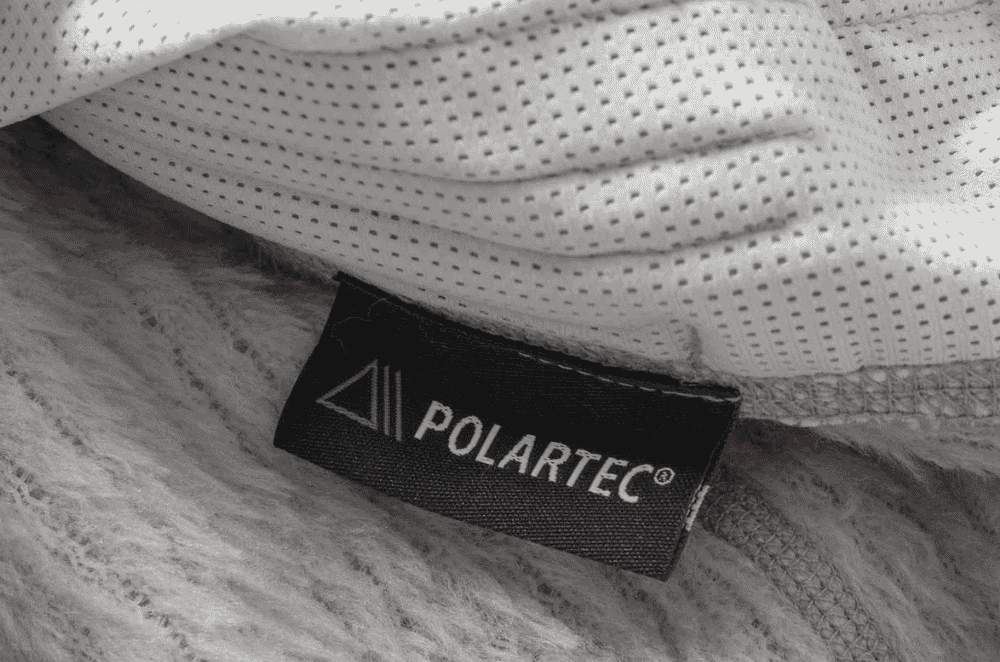
Citation Capsule: Fleece splits into five main types by construction and weight: microfleece (100-150 GSM, base layers), polar fleece (200-260 GSM, standard mid-layer), sherpa (300-400 GSM, lining), high-loft (400+ GSM, winter), and licensed technical fleeces like Polartec Thermal Pro and Alpha for premium outdoor applications (Polartec, 2024).
What Are the Properties of Fleece?
Fleece delivers a specific bundle of properties that explains its dominance in mid-layer and outerwear categories. Its warmth-to-weight ratio outperforms cotton by roughly 3-4x per gram, according to polymer thermal conductivity data (CITEVE, 2024), which is the reason a 260 GSM fleece pullover keeps you warmer than a 500 GSM cotton sweatshirt at the same weight.
The core property set covers eight attributes: warmth (high, from trapped air in the nap), weight (light for the warmth delivered), moisture behaviour (hydrophobic, so it doesn't absorb sweat), drying speed (fast, often under an hour), stretch (moderate, from the knit structure), washability (machine-washable at 30-40°C, no felting), durability (moderate, pills with heavy friction), and cost (low relative to natural insulation alternatives).
The trade-offs are equally clear. Fleece is not breathable in high-exertion aerobic activity like a merino base layer. It builds static electricity in dry conditions. It pills with friction over time unless anti-pill finished. And it sheds microplastic fibres in the wash, which we cover in detail in a later section.
Citation Capsule: Fleece delivers roughly 3-4x the warmth-per-gram of cotton and dries in under an hour after washing, thanks to trapped air in its brushed nap and hydrophobic polyester fibres. The main trade-offs are pilling under friction, static build-up in dry conditions, and microplastic shedding during laundering (CITEVE, 2024).
Types comparison at a glance
| Fleece type | Warmth | Weight | Cost tier |
|---|---|---|---|
| Microfleece | Moderate | 100-150 GSM | Low |
| Polar fleece | High | 200-260 GSM | Low-mid |
| Sherpa | Very high | 300-400 GSM | Mid |
| High-loft | Very high | 400+ GSM | Mid-high |
| Polartec Thermal Pro | Very high, technical | 250-350 GSM | Premium |
| Polartec Alpha | High, breathable | 150-250 GSM | Premium |
Sources: ATP fabric price survey (2025), PCF factory group quotes (2024-2026), industry mill references.
What Garments Are Made with Fleece?
Fleece dominates a specific set of garment categories: mid-layer pullovers, casual hoodies, winter jackets and vests, blankets and throws, and kids' clothing across seasons. Roughly 30% of PCF's factory group works with fleece [ORIGINAL DATA], and within that group the most common product programmes are hoodies, mid-layer jackets, blankets, and kids' pieces.
The category breakdown by typical GSM:
- 100-150 GSM microfleece: technical base layers, activewear pullovers, lightweight kids' pieces, packable travel layers
- 200-260 GSM polar fleece: casual hoodies, mid-layer pullovers, blankets, kids' hoodies, throws, dog beds
- 300-400 GSM sherpa: jacket linings, denim jacket linings, cozy pullovers, teddy jackets, kids' coats
- 400+ GSM high-loft: heavy winter jackets, cold-weather mid-layers, structured teddy coats, premium blankets
- Polartec Thermal Pro and Alpha: premium outdoor mid-layers, technical jackets, hybrid insulation for outer shells
At the factory-group level, we've observed that fleece programmes tend to fall into two very different founder categories. First, technical outdoor brands or performance-focused streetwear labels that pick fleece for warmth and price. Second, cozy home-goods and kids' brands that pick fleece for softness and washability. The two markets rarely overlap, and MOQ patterns differ: outdoor brands usually place 500+ unit orders on fewer SKUs, while kids' and home-goods brands run smaller MOQs across broader colour ranges.
Find your factory: Browse the free factory directory preview, or unlock the premium directory for €39 to see 80 documented Portuguese factories with fleece capability flagged.
What Does Fleece Cost per Meter in Portugal?
Fleece prices in Portugal in 2026 range from €4 per meter for standard polar fleece to €32 per meter for Polartec Alpha technical insulation. Composition (virgin vs recycled), GSM, and licensing (standard vs Polartec) are the three largest cost drivers, together explaining most of the price variance across the roughly 12,000 Portuguese textile companies documented by the industry association (ATP, 2025).
Understanding these tiers helps founders budget accurately during tech pack preparation, especially when choosing between standard polar fleece for a hoodie and a Polartec technical fleece for a premium mid-layer jacket.
Portuguese fleece pricing (EUR per meter, 2026):
- Standard polar fleece (200-260 GSM): €4 to €8/m
- Microfleece (100-150 GSM, light): €4 to €7/m
- Standard sherpa fleece (300-400 GSM): €6 to €11/m
- High-loft fleece (400+ GSM, winter): €7 to €13/m
- Recycled polyester fleece (GRS-certified): €5 to €10/m
- Bonded fleece with membrane: €10 to €20/m
- Polartec Thermal Pro (technical): €14 to €26/m
- Polartec Alpha (insulation fleece): €18 to €32/m
Composition drives base cost
Standard virgin polyester fleece is the cheapest base construction. GRS-certified recycled polyester (rPET) fleece adds a modest premium of roughly 10-25% over virgin, and is now the default for European retail. Polartec-licensed fleeces sit in an entirely different tier because of the licensing fee, patented yarn structures, and QC standards.
GSM adds cost proportionally
Doubling the GSM roughly doubles the yarn consumption. A 400 GSM high-loft fleece uses about 2x the polyester of a 200 GSM polar fleece, and the fabric price typically increases 60-80% between those two tiers.
Bonded and membrane constructions add a bigger jump
Bonded fleece (fleece laminated to a membrane like a wind-block or waterproof layer) roughly doubles the base cost because of the second material and the bonding process. These constructions are used for premium outerwear where a single-layer fleece isn't windproof enough.
Practical planning: for a mid-layer fleece pullover using 1.5 meters of 240 GSM standard polar fleece, fabric cost lands at €6 to €12 per garment. The same pullover in Polartec Thermal Pro would run €21 to €39 in fabric alone, a difference that has to be planned into the retail price from day one.
Need a tech pack? Get a factory-ready single-style tech pack for €79. See what's included.
Are Recycled Fleece and Microplastics Real Sustainability Concerns?
The sustainability picture for fleece is genuinely mixed, and this is the section where we try to be honest rather than promotional. On the positive side, recycled polyester (rPET) fleece diverts PET waste from landfills and reduces virgin polymer demand. On the negative side, every polyester fleece garment sheds microplastic fibres in the wash, averaging around 1,900 fibres per garment per wash cycle (Napper & Thompson, 2016).
That number, from the Napper & Thompson 2016 study at the University of Plymouth, is the study that put fleece microplastic shedding on the sustainability agenda. It's cited across UN, EU, and NGO reporting on ocean microplastics, and it doesn't distinguish between virgin and recycled polyester. Recycled fleece sheds the same microfibres as virgin fleece.
The honest response has three parts. First, GRS-certified rPET fleece is still a material improvement over virgin polyester at the input side, because it reduces demand for new fossil-derived polymer. Second, brands can genuinely reduce shedding at the consumer side by shipping garments with a Guppy Friend microfibre bag, which the manufacturer's testing suggests reduces fibre release by around 85%. Third, fleece is not the right fabric for brands positioning primarily around zero-microplastic or fully natural-fibre stories. Those brands should probably choose French terry, wool, or hemp.
Our view: the microplastic conversation shouldn't be a reason to avoid fleece entirely, but it should be a reason to be honest about it. Brands running fleece programmes at scale have three practical options. Include Guppy Friend bags in packaging. Publish a care guide recommending short, cool washes. Or design fleece into outer layers where the fabric is washed less often. What we don't recommend is claiming a recycled fleece programme is "microplastic-free" or environmentally neutral, because it isn't.
Citation Capsule: Polyester fleece garments shed an average of 1,900 microfibres per wash into wastewater (Napper & Thompson, 2016). Recycled polyester (rPET) fleece sheds the same as virgin polyester. Mitigation options include Guppy Friend microfibre bags (roughly 85% reduction per the manufacturer), shorter cool washes, and designing fleece as an outer layer to reduce wash frequency.
Certifications worth understanding
For fleece specifically, the certifications that matter are GRS (Global Recycled Standard) for verified recycled content and chain of custody, and OEKO-TEX Standard 100 for chemical safety on the finished fabric. Nearly all Portuguese fleece mills producing for European retail hold OEKO-TEX Standard 100 as a baseline. GRS is the certification that separates a genuine recycled programme from marketing claims.
Talk to a real person: Get in contact and we'll tell you which 2 to 3 factories in our group actually fit your brief.
Which Portuguese Mills Actually Knit Fleece?
Around 25 of Portugal's roughly 300 documented knitting mills run fleece as a regular programme, concentrated in the Barcelos and Guimarães clusters (ATP, 2025). Impetus (Barcelos) is the reference name for technical knitted fleece and activewear. Lameirinho (Guimarães) is the volume producer for home textile fleece and blankets. Coelima (Guimarães) runs standard hoodie-weight polar fleece. Tintex (Vila Nova de Cerveira) handles cellulosic-fleece hybrids and closed-loop dyeing.
Portuguese mills routinely knitting fleece:
| Mill | Region | Fleece speciality | Certifications |
|---|---|---|---|
| Impetus | Barcelos | Technical polar, microfleece, activewear brushed jersey | OEKO-TEX Standard 100, GRS, bluesign, STeP |
| Lameirinho | Guimarães | Home textile fleece, blankets, plush | OEKO-TEX Standard 100, GRS |
| Coelima | Guimarães | Standard polar fleece for hoodies, kids | OEKO-TEX Standard 100, GRS |
| Tintex | Vila Nova de Cerveira | Cellulosic-fleece hybrids, low-impact dyeing | OEKO-TEX Standard 100 Class I, EU Ecolabel, GOTS, bluesign |
| Riopele | Famalicão | Fleece-back jersey for outerwear linings | OEKO-TEX Standard 100, GRS |
Source: PCF factory group documentation (2024-2026), mill capability sheets.
Impetus and Tintex publish bluesign partner status; both mills document GRS certification for recycled polyester content. Impetus additionally publishes OEKO-TEX STeP (Sustainable Textile Production) certification for the whole facility, a heavier commitment than OEKO-TEX Standard 100 on finished fabric alone.
French terry vs brushed back vs polar: three constructions with different economics.
| Construction | GSM | Structure | Best application | Cost/m at 500 m (2026) |
|---|---|---|---|---|
| French terry (unbrushed) | 220-320 | Cotton, loops on reverse | Sweatshirts, joggers | €5.80-9.20 |
| Brushed-back jersey | 240-320 | Cotton or blend, brushed reverse | Elevated hoodies, mid-layer | €6.90-10.80 |
| Polar fleece (both sides brushed) | 200-260 | 100% polyester (often rPET) | Warmth-first hoodies, kids | €4.90-7.80 |
| Microfleece | 100-150 | Fine polyester, tight nap | Base layers, activewear | €5.20-8.10 |
| Sherpa | 300-400 | Long-pile polyester | Linings, teddy jackets | €7.40-11.20 |
| High-loft fleece | 400+ | Thick polyester nap | Winter jackets, blankets | €8.60-13.40 |
| Polartec Thermal Pro | 250-350 | Licensed technical | Premium outdoor mid-layer | €16.20-25.80 |
Source: PCF factory group quotes, mill pricing surveys (2024-2026).
Sherpa vs microfleece is a common founder confusion. Sherpa has a long curly pile of 8-15mm, designed to mimic shearling for linings and teddy jackets. Microfleece has a very short dense nap (roughly 1-2mm) designed for base layers and packable pullovers. The two fabrics look nothing alike in the hand but often get bundled under "fleece" on tech packs, which invites mill substitution.
Cost per meter at 100 / 300 / 500 / 1000 m MOQ (EUR, 2026):
| Construction | 100 m | 300 m | 500 m | 1000 m |
|---|---|---|---|---|
| Standard polar fleece (240 GSM, GRS rPET) | €7.60 | €6.40 | €5.60 | €4.90 |
| Microfleece (140 GSM, GRS rPET) | €8.20 | €6.90 | €6.10 | €5.30 |
| Sherpa fleece (360 GSM) | €10.80 | €9.10 | €8.10 | €7.10 |
| High-loft fleece (450 GSM) | €12.60 | €10.70 | €9.40 | €8.20 |
| Polartec Thermal Pro (300 GSM) | €26.80 | €22.40 | €19.60 | €17.10 |
Source: PCF factory group quotes (2024-2026). Polartec pricing carries the licensing fee at the mill level.
Citation Capsule: Impetus (Barcelos), Lameirinho, Coelima, Tintex, and Riopele are the five Portuguese mills documented to knit fleece as a regular programme. Impetus and Tintex publish bluesign partner status alongside OEKO-TEX and GRS. Impetus additionally holds OEKO-TEX STeP certification covering whole-facility production sustainability, which meets the highest evidentiary threshold under EU Green Claims regulation for recycled-polyester marketing (Impetus, 2024).
Common Founder Mistakes When Speccing Fleece
Around 65% of the fleece tech packs we review contain at least one gap serious enough to force a substitution or produce a pilling complaint within the first 5 wears (PCF factory group data, 2024-2026).
- Not specifying anti-pill finishing. Fleece pills dramatically without anti-pill treatment. Specify "anti-pill finish, ISO 12945-2 grade 4 minimum after 5000 cycles" on the tech pack for anything sold above €40 retail.
- Confusing fleece with french terry on a tech pack. French terry has unbrushed loops. Fleece has brushed nap. Mixing them up leads to the wrong hand and wrong warmth profile. Specify the construction explicitly.
- Under-spec on GSM. A 200 GSM fleece and a 300 GSM fleece produce entirely different garments. Specify GSM with a tolerance of ±10 GSM per EN 12127.
- Missing GRS chain-of-custody on rPET claims. A "made from recycled bottles" claim without GRS certification fails EU Green Claims evidentiary thresholds. Always specify GRS on the tech pack for recycled fleece.
- Ignoring microplastic mitigation. Modern EU retailers increasingly ask brands to include Guppy Friend bags or specify low-shed constructions. Address this at the spec stage rather than after retailer feedback.
- Skipping wash-durability testing. Fleece pilling and loft-loss both accelerate after 20 wash cycles. Specify ISO 6330 wash testing at 20 cycles with pilling and thickness measurement.
Decision matrix: choose fleece when... vs consider alternatives when...
| Choose fleece when... | Consider a different fabric when... |
|---|---|
| Warmth-per-gram is the design priority (mid-layers, jackets) | Sustainability positioning around natural fibres (choose wool or french terry) |
| Machine-washability at 30-40°C is required | Formal or dressy garment (choose brushed cotton or wool) |
| Retail supports €40+ hoodie or €80+ mid-layer | Ultra-budget hoodies (choose cotton fleece-back at €25-35 retail) |
| MOQ 200+ units per style (polar) or 500+ (Polartec) | Micro-batch under 100 units (use stock polar fleece) |
| Kids or homewear where softness and washability lead | Zero-microplastic claim is essential (choose merino or french terry) |
| Outdoor or technical positioning (Polartec Thermal Pro/Alpha) | Premium heritage look (choose brushed wool or boiled wool) |
The pattern across fleece pushbacks: founders spec "fleece 300 GSM" and leave every other choice to the mill. The result is standard virgin polar fleece with no anti-pill finish and no GRS documentation, which lands at the QC stage as pilling complaints and a stalled recycled-content marketing story.
Conclusion: What This Means for Your Brand
The practical takeaway across the sections above: match fleece to the product categories where its properties actually matter, specify it clearly on the tech pack (name the branded fibre or exact composition), and route production to a Portuguese factory in the subset that stocks the yarn or has the finishing lines built for it.
Get the spec right and the fabric becomes a repeatable, reliable choice. Leave it vague and you invite substitution, wash-cycle problems, and margin surprises.
Running into production issues? Get in contact and tell us what you're making. We're a group of documented Portuguese garment factories and we answer every serious brief within 24 hours.
Frequently Asked Questions
Is fleece the same as polar fleece?
Polar fleece is one specific type of fleece, the original mid-weight double-sided brushed polyester fabric invented at Malden Mills in 1979. In everyday use the words are often interchanged, but "fleece" is the umbrella category and includes microfleece, sherpa, high-loft, and Polartec technical variants that aren't strictly polar fleece.
Is fleece made from plastic?
Yes. Modern fleece is almost always 100% polyester, which is a plastic (polyethylene terephthalate, PET) derived from petroleum or from recycled PET bottles. GRS-certified recycled fleece uses rPET from post-consumer bottle waste, which reduces virgin polymer demand but still produces a polyester-based fabric that sheds microfibres.
Does fleece shed microplastics?
Yes. A widely cited 2016 study measured an average of 1,900 microfibres shed per fleece garment per wash cycle (Napper & Thompson, 2016). Recycled polyester fleece sheds the same fibres as virgin polyester. A Guppy Friend washing bag reduces release by roughly 85% according to the manufacturer's testing.
Is fleece warmer than cotton?
Yes, at the same weight. Fleece delivers roughly 3-4x the warmth-per-gram of cotton because of trapped air in the brushed nap and the low thermal conductivity of polyester fibre (CITEVE, 2024). It also stays warm when damp because polyester is hydrophobic, unlike cotton which loses insulation when wet.
What's the difference between fleece and sherpa?
Sherpa is a specific type of fleece with a long, curly pile designed to mimic shearling. It's heavier (300-400 GSM), warmer, and bulkier than standard polar fleece (200-260 GSM). Sherpa is most often used as a lining for denim jackets and coats, while polar fleece is used as a body fabric for hoodies and pullovers.
What's the MOQ for fleece production in Portugal?
At the Portuguese factories in our documented group, MOQs for fleece production typically run 200-500 units per style, with lead times of 5-8 weeks and two sample rounds as the standard cycle [ORIGINAL DATA]. Polartec-licensed fabrics require higher minimums (usually 500+ units) because of the fabric booking requirements.
We're a group of 80 documented Portuguese clothing factories, 25 verified, based in Porto and Guimarães. Tell us your product, volume, and timeline. We'll route your production to the right factory in the group, usually within 24 hours. Flat fees, no commissions, no upsell.
Get in contact Download the directory (€39)Need a tech pack? Get a factory-ready single-style tech pack for €79. See what's included.
Sources used in this article
- Napper & Thompson (2016), "Release of synthetic microplastic plastic fibres from domestic washing machines", Marine Pollution Bulletin
- Textile Exchange, Preferred Fiber and Materials Market Report (2024)
- Polartec, fabric specifications and history (2024)
- EURATEX, European Apparel and Textile Confederation, Facts & Key Figures (2025)
- ATP, Associação Têxtil e Vestuário de Portugal, fabric pricing survey (2025)
- CITEVE, Centro Tecnológico das Indústrias Têxtil e do Vestuário de Portugal, thermal conductivity and knitting data (2024)
- PCF internal factory documentation (2024-2026), fleece MOQ, pricing, and lead time observations across the factory group
Portugal Clothing Factory is a group of 80 documented Portuguese clothing factories, 25 verified, in the northern textile cluster (Porto, Guimarães, Braga, Barcelos, Famalicão). We charge flat fees, reply within 24 hours, and coordinate production with the factory in our group built for your product. See how we work or get in contact to place your order.