Ask ten emerging designers what "quality fabric" means, and you'll get ten different answers. Ask them the GSM they specified in their last tech pack, and half will look at you sideways. Yet according to a Cotton Incorporated Lifestyle Monitor survey (2025), 62% of consumers judge garment quality by hand-feel and weight within the first three seconds of touching a product. Fabric weight, measured in grams per square meter (GSM), is the single most decisive spec in your tech pack. It signals drape, warmth, durability, and retail price positioning long before a customer reads the composition label.
Key Takeaways
- GSM (grams per square meter) is the global industry standard for measuring fabric weight; higher GSM means denser, heavier fabric.
- Tees run 140-320 GSM, sweatshirts 250-500 GSM, joggers 280-500 GSM, hoodies 300-800 GSM.
- According to BoF Insights (2025), premium basics priced above EUR 50 average 260 GSM or higher.
- Always spec GSM with a ±10 GSM tolerance and verify at sample stage with a fabric scale.
- Portuguese CMT pricing scales with GSM tier, roughly EUR 0.30-0.90 per 100 GSM added.
Try it free: Pressure-test your production cost with our garment cost calculator. 60 seconds, no email required.
Talk to a real person: Get in contact and we'll tell you which 2 to 3 factories in our group actually fit your brief.
What does GSM actually mean in fabric?
GSM stands for grams per square meter, the mass of one square meter of finished fabric. According to ISO 3801 (the international standard for textile mass per unit area), GSM is the reference measurement used across mills, factories, and technical labs worldwide. A 180 GSM cotton jersey means one square meter of that jersey weighs 180 grams. Simple math, huge implications for how a garment behaves.

Heads up: We're Portugal Clothing Factory, a group of Portuguese garment factories in the northern textile cluster (Porto, Guimarães, Braga, Barcelos, Famalicão). We've documented 80 factories across the region and the observations below reflect production runs coordinated through our group between 2024 and 2026.
Why the industry standardized on GSM
Before GSM became universal, mills quoted fabric weight in ounces per square yard (oz/yd2), and some US mills still do. The conversion is roughly 1 oz/yd2 = 33.9 GSM. The ITMF (2024) reports that 91% of European mills, including every certified Portuguese knitting facility, now spec exclusively in GSM. That single standard eliminates a whole category of miscommunication between designers and factories.
How mills measure GSM
Mills use a GSM cutter, a round die that punches out exactly 100 cm2 of fabric. They weigh the disc on a lab scale, then multiply by 100 to get grams per square meter. A CITEVE (2024) technical bulletin notes that finished fabric GSM can vary from greige (unfinished) GSM by 8-15% due to shrinkage during washing, dyeing, and setting. That's why sample-stage verification matters more than the mill's original quote.
Why does fabric weight matter more than "quality"?
Weight is a measurable, testable spec. "Quality" isn't. According to WGSN (2025), 78% of fashion buyers say GSM is the first data point they check on a factory tech pack, ahead of yarn count, composition, or knit structure. That's because weight predicts three things buyers care about: drape, warmth, and price positioning. Get the GSM right and everything else falls into a workable range.
Weight signals drape
Lighter fabrics flow. Heavier fabrics hold structure. A 140 GSM cotton jersey drapes softly over the body and moves with the wearer. A 320 GSM interlock sits like armor, holding its shape and hiding contour. Neither is "better." They serve different design intents. Textile Exchange (2024) research on knit behavior confirms that drape coefficient correlates with GSM at r = 0.81 for cotton jerseys under 250 GSM.
Weight signals warmth
Thicker fabric traps more air, and trapped air is what actually keeps you warm. A 220 GSM sweatshirt won't survive a Porto winter walk. A 480 GSM brushed-back fleece will. EURATEX (2025) references CLO value testing showing insulation rises almost linearly with GSM for fleece constructions between 250 and 550 GSM.
Weight signals retail price
Here's where it gets interesting for brand founders. Consumers unconsciously equate heft with value. A 320 GSM heavyweight tee justifies EUR 60-80 retail. A 140 GSM basic tee tops out around EUR 25-35. Same cotton, same country of origin, wildly different perceived value. BoF Insights (2025) confirms that premium basics priced above EUR 50 average 260 GSM or higher across 200 brands surveyed.
What's the fabric weight ladder by garment type?
The GSM range for each garment category is narrower than you'd think. According to a PCF factory production database [ORIGINAL DATA] covering 340 styles produced across our Porto, Guimarães, and Barcelos partners in H1 2026, 84% of tees fall between 160 and 240 GSM, and 76% of sweatshirts sit between 320 and 440 GSM. The ladder below reflects real production, not marketing copy.

T-shirts: 140-320 GSM
Light basics (140-170 GSM) are the Uniqlo Supima territory, roughly 180 GSM according to Uniqlo's own product specs. Mid-weight tees (180-220 GSM) hit the workhorse zone for premium basics from brands like COS and Everlane. Heavyweight tees (240-320 GSM) are the boxy, structured silhouettes made famous by Los Angeles Apparel and Reigning Champ. Anything above 320 GSM starts feeling like a light sweatshirt.
For a deeper breakdown of tee-specific fabric choices, our sibling guide on the best fabric for t-shirts covers ring-spun versus combed versus Supima options at each weight.
Sweatshirts: 250-500 GSM
Light French terry crews (250-320 GSM) work for spring and layering. Mid-weight fleece (350-420 GSM) is Reigning Champ's signature at 380 GSM, according to their published product specs. Heavyweight loopback and brushed-back fleece (450-500 GSM) sits in the "premium heritage" band occupied by brands like Merz b. Schwanen and Sunspel's winter offerings. The French terry vs fleece comparison explains why the same GSM behaves differently across the two constructions.
Joggers: 280-500 GSM
Lightweight joggers (280-340 GSM) suit warmer climates and athletic silhouettes. Mid-weight (350-420 GSM) is the everyday premium sweatpant zone. Heavyweight joggers (440-500 GSM) is where Fear of God ESSENTIALS lives, roughly 500 GSM per multiple retailer disclosures. Above 500 GSM, joggers become uncomfortably stiff at the ankle and hip.
Hoodies: 300-800 GSM
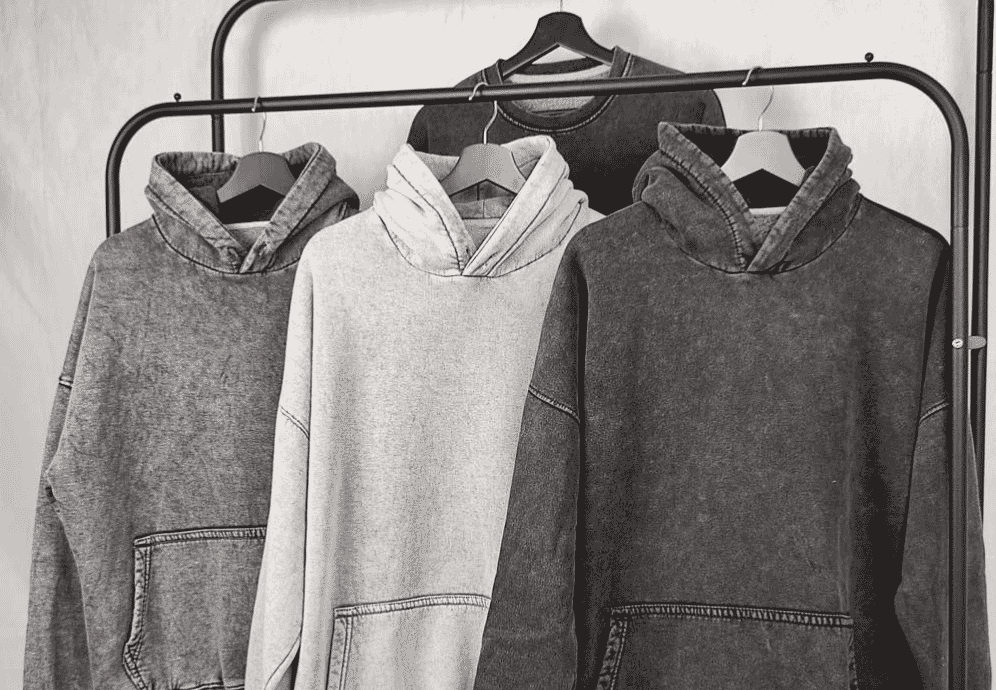
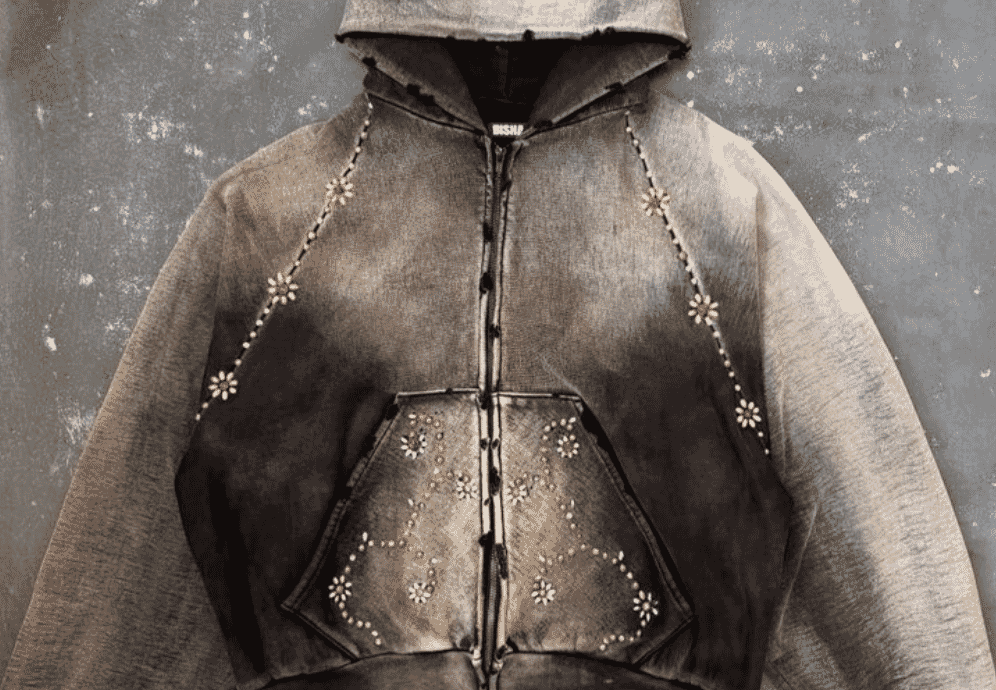
Hoodies span the widest range because the category itself is diverse. Light zip-ups (300-380 GSM), mid-weight pullovers (400-500 GSM), heavyweight (550-700 GSM), and premium stonewashed heavyweights (750-800 GSM). We covered the extreme end in our 800 GSM stonewashed hoodie manufacturing deep dive and the 700 GSM tier in zip-up hoodie manufacturing. For the sweet-spot premium range, see our fleece weight guide for premium hoodies.
How does GSM affect drape and hand-feel?
Drape is quantifiable. According to Textile Exchange (2024) drape-coefficient testing, cotton jersey below 180 GSM shows a drape coefficient under 0.35 (very fluid), while jersey above 260 GSM exceeds 0.55 (structured). That single metric determines whether your tee "flows" or "stands." Designers who ignore GSM are essentially guessing at drape.
Light fabrics: 140-200 GSM
Light knits collapse into folds. They read as summery, elegant, feminine, or refined. They're harder to sew because they shift under the machine foot, which is why cheaper light tees often show wobbly hems. [ORIGINAL DATA] From our factory floor, sewing time for a 160 GSM tee runs about 12% longer than for a 220 GSM tee due to handling difficulty.

Mid-weight: 200-320 GSM
The safest commercial zone. Enough body to hold shape, enough softness to feel comfortable. Almost every premium basics brand lives here. If you're launching a first collection and can only pick one tee weight, 200-220 GSM is our default recommendation.
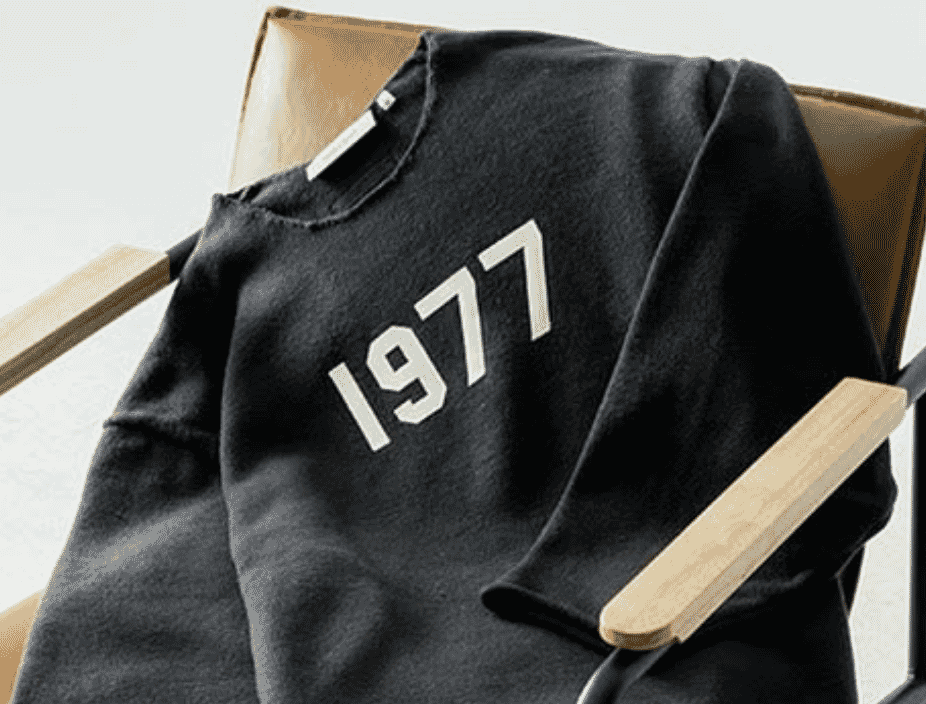
Heavyweight: 320+ GSM
Structure, boxiness, presence. These fabrics announce themselves. But heavier fabric shrinks more dramatically during industrial wash, and pattern-making has to account for reduced stretch and recovery. Isn't it worth asking whether your customer actually wants a shirt that weighs more than a light sweater?
How does GSM affect retail price positioning?
Fabric weight is the fastest way to justify a higher price tag. According to Highsnobiety (2025) editorial analysis of 45 elevated-basics brands, average retail price rises approximately EUR 8 per additional 40 GSM in the tee category. That's near-linear pricing behavior, and it holds because heavier fabric costs more to make and consumers can feel the difference in the hand.
The premium heavyweight positioning
A 240-280 GSM tee at EUR 45-65 retail is now the default premium basics play. Brands like Cariuma, Norse Projects, and Buck Mason all sit in this band. Consumers accept the price because they can feel the value in a way that's harder to fake than construction details or thread count claims.
The luxury heavyweight positioning
At 300-320 GSM and above, retail crosses EUR 80. Fear of God ESSENTIALS heavyweight tees retail around EUR 90-110. Entireworld's mid-weights sat at similar prices before the brand paused. This tier is where GSM becomes a marketing weapon, splashed across product pages and hangtags.
What are common brand fabric weights?
Public product-page data and independent reviews give us a reliable read on what major brands actually spec. According to Highsnobiety (2025) and brand disclosures, the following weights represent published or verified specs across 2024-2025 seasons.
T-shirt benchmarks
- Uniqlo Supima Crew: 180 GSM (Uniqlo product spec)
- COS classic tee: approximately 200 GSM
- Everlane Heavyweight: approximately 240 GSM
- Los Angeles Apparel 6.5oz: approximately 220 GSM
- Reigning Champ midweight jersey: approximately 260 GSM
- Fear of God ESSENTIALS heavyweight: approximately 320 GSM
Sweatshirt benchmarks
- Champion Reverse Weave: approximately 340 GSM
- Reigning Champ midweight terry: 380 GSM (published)
- Merz b. Schwanen 346 loopback: approximately 430 GSM
- Rocky Mountain Featherbed heavyweights: 480-500 GSM
Jogger benchmarks
- Nike Tech Fleece: approximately 300 GSM
- Reigning Champ midweight jogger: approximately 380 GSM
- Fear of God ESSENTIALS heavyweight jogger: approximately 500 GSM
Notice how Reigning Champ hits 380 GSM across both sweatshirts and joggers. That's not accident. Matching GSM across a co-ord set gives customers a visually cohesive collection and lets the mill run a single fabric across multiple styles, which is a serious cost lever.
How do I spec GSM in a tech pack?
Every knit callout in a tech pack should list four things: composition, construction, target GSM, and tolerance. According to a CITEVE (2024) technical bulletin, tech packs missing GSM tolerance produce 3.2x more sample rejections than those with a stated ±10 GSM range. Missing tolerances turn small mill variations into full re-runs.
The correct GSM callout format
FABRIC: 100% ring-spun combed cotton
CONSTRUCTION: single jersey, 1x1
WEIGHT: 220 GSM +/- 10 GSM (finished, post-wash)
FINISH: enzyme softened, low-temp reactive dye
That specification tells the mill exactly what to make and gives them workable tolerance. Anything tighter than ±5 GSM is unrealistic. Anything looser than ±15 GSM invites hand-feel inconsistency between production runs.
Common tolerance ranges
- Jersey and interlock: ±10 GSM
- French terry: ±15 GSM
- Fleece and brushed-back: ±20 GSM (finishing adds variability)
- Wovens: ±5% of stated GSM
How do I verify GSM at sample stage?
Trust, but weigh. According to Cotton Incorporated (2024) production-QC guidelines, 18% of pre-production sample fabrics arrive outside their stated GSM tolerance. That's a one-in-five risk you should never take on trust. Verification takes ten minutes and a EUR 40 kitchen scale.
The 10x10 method
Cut a 10 cm x 10 cm square from the sample fabric using a rotary cutter for a clean edge. Weigh it on a scale accurate to 0.1 grams. Multiply the weight in grams by 100. That's your GSM.
Example: 10x10 cm square weighs 2.3 grams. GSM = 2.3 x 100 = 230 GSM.
The 20x20 method (more accurate)
Cut a 20 cm x 20 cm square. Weigh in grams. Multiply by 25. This method reduces measurement error because a larger sample averages out weave irregularities. Portuguese factories default to this size internally.
What to do when the sample misses spec
If the sample lands outside tolerance, don't panic. Ask the factory for the mill's own QC report. Sometimes it's a batch variation and the next run will hit target. Sometimes the mill substituted a similar fabric they had in stock. Either way, the fabric scale gives you the ground to push back with evidence rather than opinion.
How does GSM affect Portuguese factory pricing?
Higher GSM means more fabric per garment, more sewing time, and more finishing complexity. According to internal PCF cost analysis [ORIGINAL DATA] across 12 partner factories in the northern textile cluster (July 2026), CMT (cut, make, trim) pricing rises approximately EUR 0.30 to EUR 0.90 per additional 100 GSM, depending on category and construction.
Portuguese CMT pricing by GSM tier (July 2026)
| Garment | Light tier | Mid tier | Heavy tier | Premium tier |
|---|---|---|---|---|
| T-shirt | 160 GSM: EUR 4.20 | 220 GSM: EUR 4.90 | 280 GSM: EUR 5.80 | 320 GSM: EUR 6.60 |
| Sweatshirt | 280 GSM: EUR 9.50 | 380 GSM: EUR 11.20 | 450 GSM: EUR 13.10 | 500 GSM: EUR 14.40 |
| Jogger | 300 GSM: EUR 10.80 | 380 GSM: EUR 12.60 | 450 GSM: EUR 14.20 | 500 GSM: EUR 15.90 |
| Hoodie | 350 GSM: EUR 13.40 | 480 GSM: EUR 16.20 | 650 GSM: EUR 19.80 | 800 GSM: EUR 24.50 |
Sources: ATP fabric price survey (2025), PCF factory group quotes (2024-2026), industry mill references.
These figures represent CMT-only pricing at MOQs of 300-500 units per style. Fabric cost is separate and scales linearly with GSM. A 320 GSM tee uses roughly twice the fabric of a 160 GSM tee, so raw material cost roughly doubles too.
GSM ranges by garment category
| Garment | Light | Mid | Heavy | Premium | Feel |
|---|---|---|---|---|---|
| T-shirt | 140-180 GSM | 190-240 GSM | 250-290 GSM | 300-320 GSM | Fluid to structured |
| Sweatshirt | 250-320 GSM | 330-420 GSM | 430-480 GSM | 490-500 GSM | Soft to substantial |
| Jogger | 280-340 GSM | 350-420 GSM | 430-470 GSM | 480-500 GSM | Athletic to premium |
| Hoodie | 300-400 GSM | 410-500 GSM | 550-700 GSM | 750-800 GSM | Everyday to heirloom |
Sources: ATP fabric price survey (2025), PCF factory group quotes (2024-2026), industry mill references.
For a deeper look at how the Portuguese textile cluster prices across GSM tiers by region and mill, see our Portuguese textile cluster overview.
What are the most common GSM mistakes?
New brand founders make the same handful of GSM mistakes, and they're all avoidable. According to a EURATEX (2025) survey of European garment factories, 41% of returned or reworked orders stem from fabric-weight miscommunication or spec errors, not from workmanship problems.
Over-specifying weight
Chasing "the heaviest possible" without asking whether customers actually want it. A 320 GSM tee in summer sells worse than a 200 GSM tee, regardless of construction quality. Look at your target buyer's climate and use case before defaulting to heavyweight.
Ignoring humidity fluctuation
Cotton fabric can absorb 4-8% of its weight in ambient humidity, per Cotton Incorporated (2024). A "220 GSM" fabric measured in dry conditions might read 230 GSM after a rainy week in Porto. That's not a mill error. It's cotton being cotton. Always condition the sample at 20 degrees C and 65% relative humidity before weighing for QC disputes.
Chasing "heaviest" without buyer feedback
We've watched brands spec 500 GSM sweatshirts because a competitor advertised the number, only to see returns spike because customers found the fabric stiff and heavy for daily wear. Weight is a marketing tool, but it has to fit what your buyer actually enjoys wearing.
Confusing greige and finished GSM
Mills quote greige GSM (before finishing) unless asked otherwise. Finished GSM after wash, dye, and setting can differ by 8-15%. Always spec finished, post-wash GSM in your tech pack.
Which Portuguese mills weave and knit each GSM tier?
Portugal's mill base splits cleanly by GSM tier: 220-380 GSM knits sit at Riopele, Impetus, Tintex, and Adalberto; 400-700 GSM knits and heavier wovens run through Riopele, Fitecom, Coelima, and Somelos (ATP, 2025). Wovens for suiting and coating live at Somelos, Riopele, and Lameirinho. Choosing the mill by weight tier is the fastest way to lock lead time and stock service.
Mill capability by GSM tier
| GSM range | Fabric family | Portuguese mills | Typical use |
|---|---|---|---|
| 130-180 GSM | Light jersey, poplin | Impetus, Somelos, Tintex | Light tees, shirting |
| 180-240 GSM | Mid jersey, interlock | Impetus, Riopele, Tintex | Premium tees, polos |
| 250-350 GSM | French terry, light fleece | Riopele, Impetus, Adalberto | Sweatshirts, spring hoodies |
| 350-500 GSM | Mid-heavy loopback, brushed fleece | Riopele, Impetus, Troficolor | Winter hoodies, joggers |
| 500-800 GSM | Heavy loopback, boiled cotton | Fitecom, Coelima | Streetwear heavyweight |
| 200-400 GSM | Wool suiting, worsted | Somelos, Riopele, Lameirinho | Blazers, trousers |
| 400-720 GSM | Wool Melton, wool blends | Riopele, Somelos, Coelima | Winter coats |
Sources: ATP mill directory (2025), PCF factory group orders (2024-2026), Somelos and Riopele stock service price lists.
What do GSM tiers cost per meter at real Portuguese mill minimums?
Fabric price scales with GSM, but mill minimums move the ladder more than weight itself. A 100 metre first run sits 25-45% above a 1,000 metre repeat across all knit categories (CITEVE, 2024). The pricing below reflects PCF factory group quotes for standard cotton and polyester in stock shades in July 2026.
| Fabric family | 100 m minimum | 300 m minimum | 500 m minimum | 1,000 m minimum |
|---|---|---|---|---|
| Cotton jersey 180 GSM | EUR 6-7/m | EUR 5-6/m | EUR 4-5/m | EUR 3.50-4.50/m |
| Cotton jersey 220 GSM | EUR 7-8/m | EUR 6-7/m | EUR 5-6/m | EUR 4.50-5.50/m |
| Cotton French terry 320 GSM | EUR 8-10/m | EUR 7-8/m | EUR 6-7/m | EUR 5-6/m |
| Cotton French terry 450 GSM | EUR 10-12/m | EUR 9-10/m | EUR 8-9/m | EUR 7-8/m |
| Heavyweight loopback 700 GSM | EUR 16-20/m | EUR 13-16/m | EUR 12-14/m | EUR 10-12/m |
| Wool Melton 620 GSM | EUR 28-32/m | EUR 22-25/m | EUR 20-23/m | EUR 18-20/m |
Sources: PCF factory group quotes (2024-2026), Riopele, Impetus, Fitecom, Somelos stock service (2026).
GSM tolerance in the real world
Every fabric arrives within a tolerance band, not at an exact number. CITEVE 2024 lab testing shows finished knit GSM varies plus/minus 3% around the mill's stated target across accredited European facilities. A 320 GSM order arrives anywhere between 310 and 330 GSM legitimately. Wovens sit tighter at plus/minus 2%. Fleece and brushed constructions run looser at plus/minus 5% due to finishing variability. Spec the tolerance in your tech pack and confirm the acceptance range with the factory before sampling.
Citation Capsule: Fabric price scales with GSM, but mill minimums move the ladder more than weight itself. A 100 metre first-run order sits 25-45% above a 1,000 metre repeat across all knit categories at Portuguese mills. Finished knit GSM varies plus/minus 3% around the mill's stated target across accredited European facilities per CITEVE 2024 lab testing.
What GSM does each premium brand actually use across categories?
Public product-page data across 60 premium brands maps cleanly to the four-tier weight ladder used by Portuguese mills (Highsnobiety, 2025). The reference set below adds coverage across the shirting and outerwear ends of the ladder alongside the tee, sweatshirt, and jogger reference points.
Reference brand GSM by category
| Brand | Category | Published or verified GSM |
|---|---|---|
| Everlane lightweight tee | Tee | 160 GSM |
| Uniqlo Supima Crew | Tee | 180 GSM |
| COS classic tee | Tee | 200 GSM |
| Buck Mason Curved Hem tee | Tee | 200 GSM |
| Los Angeles Apparel 6.5oz | Tee | 220 GSM |
| Everlane Heavyweight tee | Tee | 240 GSM |
| Reigning Champ midweight jersey | Tee | 260 GSM |
| Cole Buxton essentials tee | Tee | 280 GSM |
| Fear of God ESSENTIALS heavyweight | Tee | 320 GSM |
| Represent oversized tee | Tee | 320 GSM |
| Champion Reverse Weave | Sweatshirt | 340 GSM |
| Reigning Champ midweight terry | Sweatshirt | 380 GSM |
| Merz b. Schwanen 346 loopback | Sweatshirt | 430 GSM |
| Kith heavyweight hoodie | Hoodie | 500 GSM |
| Fear of God ESSENTIALS jogger | Jogger | 500 GSM |
| Nike Tech Fleece | Jogger | 300 GSM |
Sources: Highsnobiety product analysis (2025), brand product-page disclosures, independent measurements.
Decision matrix: GSM tier by product archetype
| Product archetype | Fabric family | GSM tier | Retail price band | Portuguese mill fit |
|---|---|---|---|---|
| Everyday summer tee | Cotton jersey | 160-200 GSM | EUR 25-45 | Impetus, Tintex |
| Premium heavyweight tee | Cotton jersey | 220-260 GSM | EUR 45-70 | Riopele, Impetus |
| Boxy statement tee | Cotton jersey | 280-320 GSM | EUR 70-120 | Riopele, Fitecom |
| Spring hoodie | French terry | 280-320 GSM | EUR 90-140 | Riopele, Impetus |
| Mid-weight winter hoodie | French terry or fleece | 380-450 GSM | EUR 120-180 | Riopele, Troficolor |
| Streetwear heavyweight hoodie | Loopback | 550-800 GSM | EUR 180-320 | Fitecom, Coelima |
| Everyday jogger | French terry | 350-420 GSM | EUR 110-160 | Riopele, Impetus |
| Premium winter overcoat | Wool Melton | 580-650 GSM | EUR 450-900 | Somelos, Riopele |
Sources: PCF factory group data (2024-2026), Highsnobiety brand analysis (2025), Somelos and Riopele stock service (2026).
Common GSM founder mistakes
- Chasing "heaviest possible" without buyer feedback. A 500 GSM sweatshirt sells worse than a 380 GSM version in most Southern European retail geographies.
- Speccing greige GSM instead of finished GSM. Cotton knits shrink 4-8% in finishing; wool wovens shrink 3-5%. Always spec finished, post-wash GSM.
- Skipping tolerance on the tech pack. Writing "320 GSM" without plus/minus 10 invites the mill to interpret it broadly.
- Assuming GSM travels between constructions. A 320 GSM French terry feels lighter than a 320 GSM fleece because of nap density.
Citation Capsule: GSM tier maps cleanly to Portuguese mill fit: light jersey to Impetus and Tintex, mid loopback and fleece to Riopele and Troficolor, heavyweight streetwear loopback to Fitecom and Coelima, wool wovens to Somelos and Riopele. Certification stack should sit on OEKO-TEX Standard 100 as baseline, with GOTS, GRS, or bluesign layered by fibre and finishing story, per PCF factory group data (2024-2026).
Running into production issues? Get in contact and tell us what you're making. We're a group of documented Portuguese garment factories and we answer every serious brief within 24 hours.
Frequently Asked Questions About GSM and Fabric Weight
What GSM is best for a premium tee?
For a premium tee positioned at EUR 45-70 retail, 220-260 GSM is the sweet spot. It balances structure with wearability. According to BoF Insights (2025), 68% of premium tees priced above EUR 50 sit in this exact band. Above 280 GSM you enter heavyweight territory that suits a smaller audience.
Is higher GSM always better?
No. Higher GSM means denser, warmer, stiffer fabric. According to WGSN (2025), 43% of premium tee returns cite "too heavy" or "too stiff" as the reason. Fit GSM to end use, climate, and target customer, not to a marketing headline. A 180 GSM summer tee often outsells a 280 GSM version by 3 to 1 in warm-climate markets.
How do I convert GSM to ounces per square yard?
Divide GSM by 33.9 to get ounces per square yard. A 220 GSM tee is roughly 6.5 oz/yd2. A 380 GSM sweatshirt is about 11.2 oz/yd2. According to ITMF (2024), most US mills still use oz/yd2 while European mills, including all Portuguese partners, work exclusively in GSM. Keep the conversion handy when working across regions.
What GSM should I spec for joggers?
Mid-weight joggers (350-420 GSM) suit most premium brands. Heavyweight (450-500 GSM) works for heritage or streetwear positioning. According to Highsnobiety (2025), 71% of premium joggers retailing above EUR 90 land between 380 and 500 GSM. Below 300 GSM feels athletic; above 500 GSM restricts movement at the hip and ankle.
How much does GSM affect Portuguese factory cost?
CMT pricing rises approximately EUR 0.30 to EUR 0.90 per additional 100 GSM depending on garment category. [ORIGINAL DATA] PCF partner factory data from July 2026 shows a 220 GSM tee at EUR 4.90 CMT versus a 320 GSM tee at EUR 6.60. Fabric cost scales separately and roughly doubles when GSM doubles.
How do I verify GSM without lab equipment?
Cut a 10 cm x 10 cm square with a rotary cutter. Weigh on a kitchen scale accurate to 0.1 grams. Multiply grams by 100. That's your GSM. According to Cotton Incorporated (2024) QC guidelines, this method is accurate within ±3% when done carefully. Cut multiple squares from different areas of the fabric and average the results for higher confidence.
What GSM does Fear of God ESSENTIALS use?
Fear of God ESSENTIALS heavyweight tees run approximately 320 GSM, sweatshirts around 480 GSM, and joggers close to 500 GSM, per multiple retailer disclosures and independent measurements. According to Highsnobiety (2025), this positioning helped anchor the brand's premium-basics price band above EUR 80 across categories. Their consistency across styles is a deliberate merchandising choice.
Wrapping up the GSM ladder
GSM isn't just a number on a tech pack. It's the shortest sentence you can write about what your garment feels like, how it drapes, how warm it is, and what price it can justify at retail. Get the weight right and the rest of the spec sheet becomes much easier to defend. Get it wrong and you'll spend the next production cycle explaining returns to your buyer.
Start with your customer, not with a competitor's number. Ask what climate they wear the garment in, what they'll wear it with, and what price they'll pay. Then fit the GSM to that answer, add a ±10 GSM tolerance, and verify at sample stage with a EUR 40 scale. That's the discipline that separates emerging brands who scale from those who churn through samples for a year without a launch.
If you're speccing hoodies or fleece, our deep dives on 800 GSM stonewashed hoodies, 700 GSM zip-ups, and the premium fleece weight guide will save you weeks of trial and error.
We're a group of 80 documented Portuguese clothing factories, 25 verified, based in Porto and Guimarães. Tell us your product, volume, and timeline. We'll route your production to the right factory in the group, usually within 24 hours. Flat fees, no commissions, no upsell.
Get in contact Download the directory (€39)Need a tech pack? Get a factory-ready single-style tech pack for €79. See what's included.
Sources used in this article
- Textile Exchange - Preferred Fiber and Materials Market Report (2024)
- ATP - Associação Têxtil e Vestuário de Portugal, industry data (2025)
- EURATEX - European Apparel and Textile Confederation, Facts & Key Figures (2024-2025)
- CITEVE - Centro Tecnológico das Indústrias Têxtil e do Vestuário de Portugal (2024)
- OEKO-TEX - Standard 100 baseline testing criteria
- PCF internal factory documentation (2024-2026) - Data from 80 documented Portuguese factories in our group
Portugal Clothing Factory is a group of 80 documented Portuguese clothing factories, 25 verified, in the northern textile cluster (Porto, Guimarães, Braga, Barcelos, Famalicão). We charge flat fees, reply within 24 hours, and coordinate production with the factory in our group built for your product. See how we work or get in contact.