Denim manufacturers come in three kinds. Fabric mills spin, dye and weave denim and sell it by the metre or yard. Garment makers cut, sew, wash and finish that fabric into jeans, jackets and skirts. Vertically integrated groups do both, sometimes from raw cotton to the finished pair. Before you send a brief, it helps to know which kind of company you are writing to, because each one quotes, samples and sets minimums differently.
This guide profiles ten well-known denim manufacturers and checks every fact against the company’s own website, so you can see what each one actually says it makes. It then shows where denim fabric is made, using trade data, and covers how to choose a supplier, how minimums behave, what a denim tech pack needs and where Portugal fits. For our own production page, see denim manufacturer in Portugal.
What to know
- Mill, garment maker or integrated. A mill sells fabric, a garment maker sells finished jeans, and an integrated group can sell both. Ask which one you are talking to before you ask for a price.
- Most big names are integrated now. Of the ten profiled here, only ISKO, Orta, Bossa, Cone Denim and Advance Denim present themselves mainly as fabric producers, and even Orta runs its own atelier and laundry.
- Fabric is concentrated in a few countries. China and Pakistan were the two largest exporters of heavy cotton denim fabric in 2024, at $634.7m and $508.5m (WITS).
- Portugal buys most of its denim fabric in. In 2024 Portugal imported $10.63m of heavy cotton denim fabric and exported $1.26m, with Turkey and Pakistan the two largest sources.
- Small runs need the right partner. Large mills sell by the metre per colour; a brand ordering a few hundred pairs usually works through a garment factory that buys the fabric for it.
What is the difference between a denim mill and a jeans manufacturer?
A denim mill makes fabric; a jeans manufacturer makes garments. The words get mixed up in search results and supplier lists, but the two businesses sell different things, price in different units and need different information from you.
Denim fabric mills
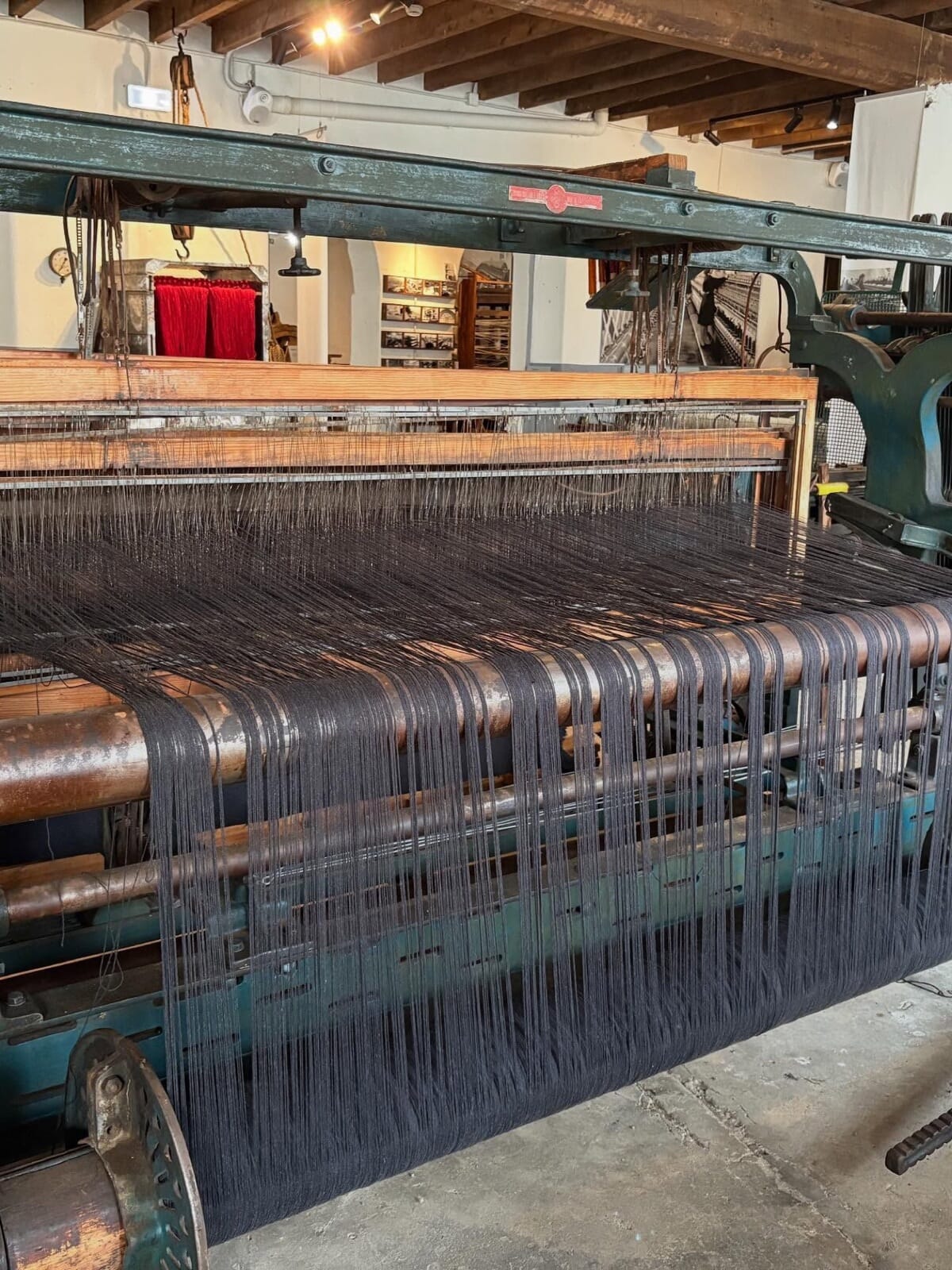
A mill turns cotton, and often elastane, polyester or recycled fibre, into denim. The work runs through spinning, indigo dyeing of the warp yarn, weaving on wide looms and finishing the fabric. A mill sells by length, quoted per metre or yard, with the price set by weight, composition, construction, stretch and finish. Its customers are brands that buy fabric and garment factories that buy it on a brand’s behalf. Most mills show seasonal collections and lend fabric samples, and the larger ones run development teams that will engineer a fabric to a brief.
Jeans and garment makers
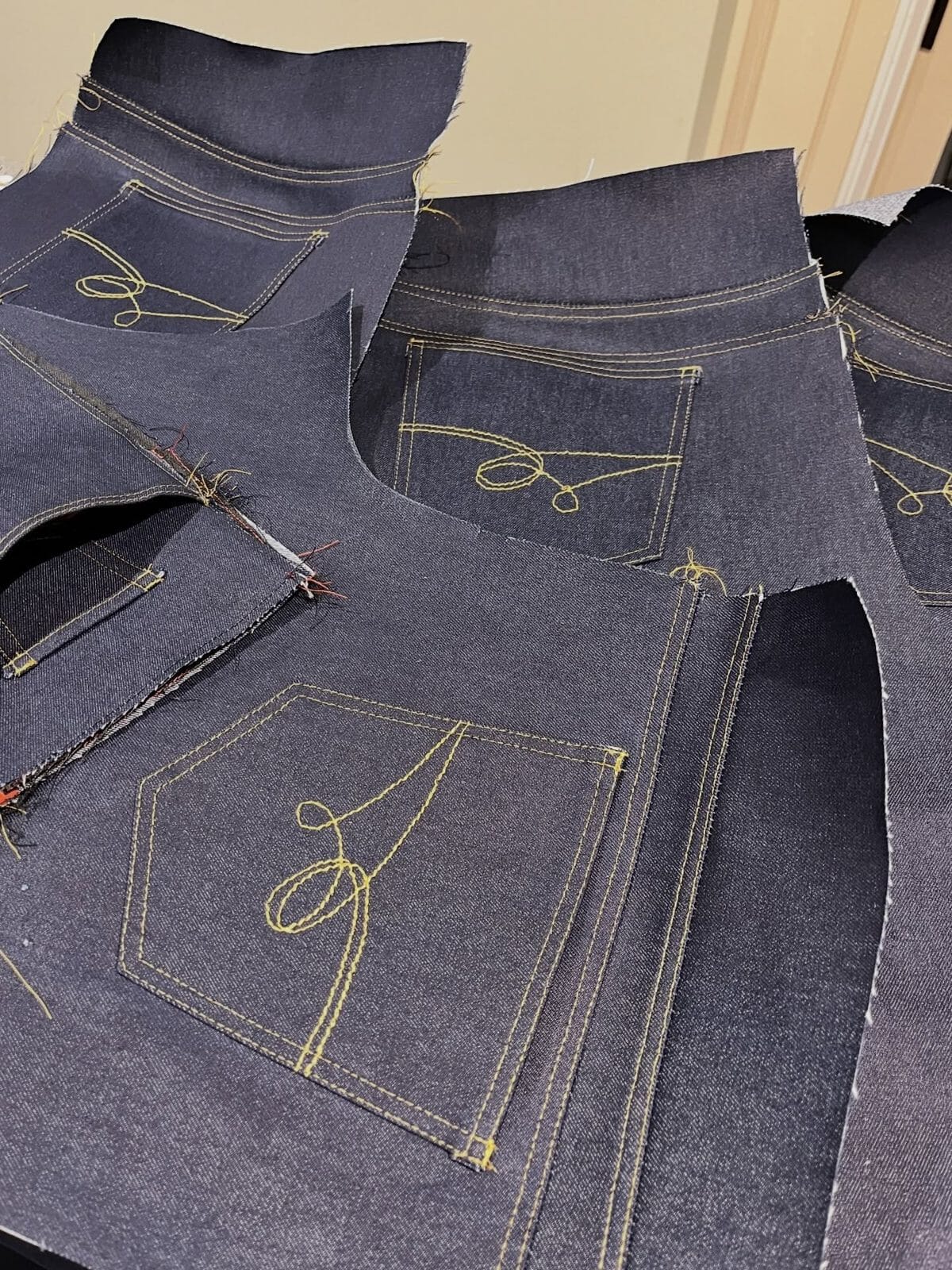
A garment maker cuts the fabric, sews it with the heavy machines denim needs, presses on rivets and buttons, then washes and finishes the jeans, either in its own laundry or in an outside laundry it uses regularly. It sells finished pieces, priced per unit, with minimums per style and colour. The questions it asks are about your pattern, sizes, wash, trims and quantities, not about yarn counts.
Vertically integrated groups
An integrated group owns both sides, so one company can weave the fabric and sew and wash the jeans. That shortens the chain and puts quality responsibility in one place, but it usually comes with larger commitments, because the group is built to keep its own looms and lines full. Several of the companies below started as mills and added garment units later, which is why it pays to ask a company what it does today rather than rely on an old description.
How did we choose these denim manufacturers?
We picked ten companies that come up again and again when brands research denim supply, across Turkey, India, Pakistan, China, Vietnam and the Americas. We then checked each one on its own website in November 2026 and kept only what the company itself states: where it is based, when it started, what it makes and any figures it publishes. Where an older description of a company did not hold up, we left it out. That removed several numbers that circulate online, including capacity figures we could not find on the companies’ own pages.
The list is not a ranking, and none of these companies is a partner of ours. They are large producers, most of them built for volume, and they are listed so you know who is who in the industry. Treat each profile as a starting point for your own checks, not as a recommendation, and confirm anything that matters to your order directly with the company.
Who are the leading denim manufacturers?
The ten profiles follow, grouped loosely by country. Each one says what the company sells, where it is based and what it publishes about itself.
ISKO (Turkey): fabric
ISKO describes itself as a global denim company with more than 100 years of experience in textiles, and its range covers denim, casual wear and workwear fabrics. Its collections include the Fashion collection, the cotton-free Casual Line, ISKO Luxury by PG, ISKO Corduroy and ISKO Pro workwear fabrics, and brands, designers and garment manufacturers can request fabric samples through its contact form. The social responsibility policy on its site is written around Turkish labour law.
What it sells: fabric, not finished jeans. Fits: brands and garment factories that want a large, development-led fabric supplier and will cut and sew elsewhere.
Orta (Turkey): fabric, with an atelier
Orta, also known as Orta Anadolu, was founded in 1953 and became a denim manufacturer in 1985, after starting as a spinning and weaving company. It operates in Turkey with more than 1,000 employees, has its head office in Istanbul and set up its sustainability division, Orta Blu, in 2010. Its Denim Service, an in-house atelier and laundry unit set up in 2006, has a capacity of 45,000 garments a year and is used to show its fabrics in creative washes.
What it sells: denim fabric; the atelier exists to develop and present it. Fits: fashion and premium brands that want an established Turkish fabric and a mill that can show it washed.
Bossa (Turkey): fabric
Bossa was founded in 1951 and is headquartered in Adana. It designs seasonal denim collections, and its mechanical-stretch fabrics are made without polyester or elastane. Bossa sells fabric to brands and garment makers rather than finished jeans.
What it sells: denim fabric. Fits: brands that want a long-established Turkish mill, including rigid-look stretch without synthetic fibre.
Kipaş Denim (Turkey): integrated
Kipaş Denim belongs to Kipaş Textiles, a subsidiary of Kipaş Holding, which was founded in 1984 in Kahramanmaraş. Its timeline lists a garment manufacturing facility, Bozkurt, from 1997 and the founding of Kipaş Denim in 2003, and the group gives its annual output as about 5 million garments. The denim business describes an integrated denim facility with its own research and development centre and says 50% of its production is made with sustainable resources.
What it sells: denim fabric, with garment manufacturing in the same group. Fits: mid-size and large programmes that want fabric and making inside one Turkish group.
Arvind (India): integrated
Arvind traces its roots to 1897 in Ahmedabad, and in 1987 it commissioned what it describes as India’s very first denim manufacturing plant there. Its timeline records 1993 partnerships with V.F. Corporation and Cluett Peabody & Co. that brought brands like Lee Jeans and Arrow Shirts to India. Today its textile business lists denim, wovens, knits, garments, voiles and home linens as divisions, and says it has led denim in India since the early 1980s.
What it sells: denim fabric and garments. Fits: volume programmes that want one corporate group for fabric and making.
Artistic Milliners (Pakistan): integrated
Artistic Milliners, based in Karachi, produces denim fabrics and garments as well as wovens and piece-dyed fabrics, and lists spinning, weaving, dyeing, garment manufacturing and finishing in Pakistan. The group has added renewable energy, sourcing operations in the Western Hemisphere and an operation in Mexico.
What it sells: denim fabric and garments. Fits: brands that want weaving, sewing and washing inside one Pakistani group.
Soorty (Pakistan and Bangladesh): integrated
Soorty calls itself one of Pakistan’s largest denim makers and exporters, with 43 years of experience in denim and jeans across Pakistan and Bangladesh. It says its LEED Platinum denim mill can produce 9.5 million yards of fabric a month. On the garment side it gives a total capacity of 5.8 million garments a month, 3.8 million from Pakistan and 2.0 million from Bangladesh, with a LEED Platinum garment factory in Karachi. Soorty also states that it holds 5% of the market share of denim apparel imports into the EU, UK and USA.
What it sells: fabric and finished jeans at very large scale. Fits: high-volume programmes; the published capacities show who it is built for.
Cone Denim (USA, Mexico, China): fabric
Cone Denim was founded in 1891 in Greensboro, North Carolina, and describes itself as a supplier of denim fabrics. Its fabric is made at three plants: Parras in Mexico, operating since 1995; Yecapixtla, also in Mexico, since 1998; and Jiaxing in China, since 2007, which weaves fabrics from 5.5 oz to 16 oz as well as selvage denim. Cone is part of Elevate Textiles, alongside American & Efird, Burlington and Gütermann.
What it sells: denim fabric. Fits: brands that want heritage American denim with production in Mexico or China, then a separate garment factory.
Saitex (Vietnam and USA): integrated
Saitex makes jeans in Dong Nai, Vietnam, runs a microfactory in Los Angeles and has its own fabric mill in Vietnam. The mill weaves on rapier looms from Picanol of Italy and dyes its indigo on Karl Mayer rope dyeing machines. Older write-ups describe Saitex as a garment maker that buys its denim in; its own site now presents a vertical set-up with fabric and garments.
What it sells: finished jeans, with fabric from its own mill. Fits: brands that want a sustainability-led partner for finished denim in Asia or in Los Angeles.
Advance Denim (China and Vietnam): fabric
Advance Denim was founded in 1987 in Shunde, in Guangdong Province, says it is the oldest denim mill in China and has more than 1,100 employees. It also produces in Vietnam, and says its in-house laboratory is certified by brands including Levi’s, Kontoor Brands, AEO and Gap.
What it sells: denim fabric. Fits: brands sourcing fabric in East Asia at volume, with a garment factory in the region.
Here is how the ten compare at a glance.
| Company | Based | Type | Sells |
|---|---|---|---|
| ISKO | Turkey | Fabric mill | Denim, casual and workwear fabrics |
| Orta | Istanbul, Turkey | Fabric mill with atelier | Denim fabric; washed garments for development |
| Bossa | Adana, Turkey | Fabric mill | Denim fabric, including mechanical stretch |
| Kipaş Denim | Kahramanmaraş, Turkey | Integrated group | Denim fabric and garments |
| Arvind | Ahmedabad, India | Integrated group | Denim, other fabrics and garments |
| Artistic Milliners | Karachi, Pakistan | Integrated group | Denim fabric and garments |
| Soorty | Pakistan and Bangladesh | Integrated group | Denim fabric and jeans |
| Cone Denim | Greensboro, USA; Mexico; China | Fabric mill | Denim fabric, including selvage |
| Saitex | Dong Nai, Vietnam; Los Angeles | Integrated group | Jeans, with its own fabric mill |
| Advance Denim | Shunde, China; Vietnam | Fabric mill | Denim fabric |
Source: each company’s own website, checked 13 November 2026.
The start years each company gives show how old most of this industry is. Cone has supplied denim since 1891, while the Turkish and Asian mills mostly date their denim operations to the 1980s or later.
Where is denim fabric made?
Mostly in Asia and Turkey. Trade data for heavy cotton denim, the customs line for denim with at least 85% cotton weighing more than 200 g/m2 (HS 520942), shows a small group of countries supplying most of what is traded. The figures below are export values reported to UN Comtrade and published by the World Bank’s WITS service.
In 2024 the top five exporters of this fabric were China ($634.7m), Pakistan ($508.5m), India ($225.9m), Turkey ($223.5m) and Egypt ($121.0m). China’s exports rose from $501.9m in 2023, and India moved ahead of Turkey, from $169.5m to $225.9m.
Two cautions apply. First, this customs line only covers heavy denim with 85% or more cotton; lighter denims and blends with more synthetic fibre sit under other headings, so the chart is a guide to where cotton denim is woven rather than a full count of all denim. Second, much denim never crosses a border as fabric: in the large producing countries it is woven and sewn in the same country, then exported as jeans. That is one reason the integrated groups above are concentrated in the same places as the fabric trade.
For a brand, the practical point is that the fabric in a pair of jeans made in Europe has often travelled first. That matters for lead times, for duty and origin rules if you sell across borders, and for what you can honestly say on a label or product page about where the jeans were made.
How do you choose a denim manufacturer?
Decide whether you are buying fabric or jeans, then shortlist by volume, wash and market. The order of those questions matters, because the first one already removes half of any list.
Start with fabric or finished jeans
If you want to choose the fabric yourself and have it made up elsewhere, you are talking to mills, and your questions are about weight, composition, stretch, shrinkage, colour fastness, shade and minimum length per colour. If you want finished jeans, you are talking to garment makers or the garment arm of an integrated group, and your questions shift to fit, sewing quality, laundry, trims, unit price and minimum pieces per style and colour.
Many smaller brands do both: they pick a fabric from a mill’s collection, often one the garment factory already buys, and the garment factory orders it, cuts it and sews it. That keeps the brand in control of the look without having to buy a full mill run of fabric itself.
Size the supplier to your volume
The capacities several of these companies publish are a useful signal. A group that gives its garment output in millions of pieces a month is built for programmes that keep lines running for weeks; a first collection of a few hundred pairs will not be its priority, however polite the reply. A mid-size garment factory with a laundry nearby is usually the better fit for a new label, and it can still buy fabric from a well-known mill.
Ask about the laundry before the sewing
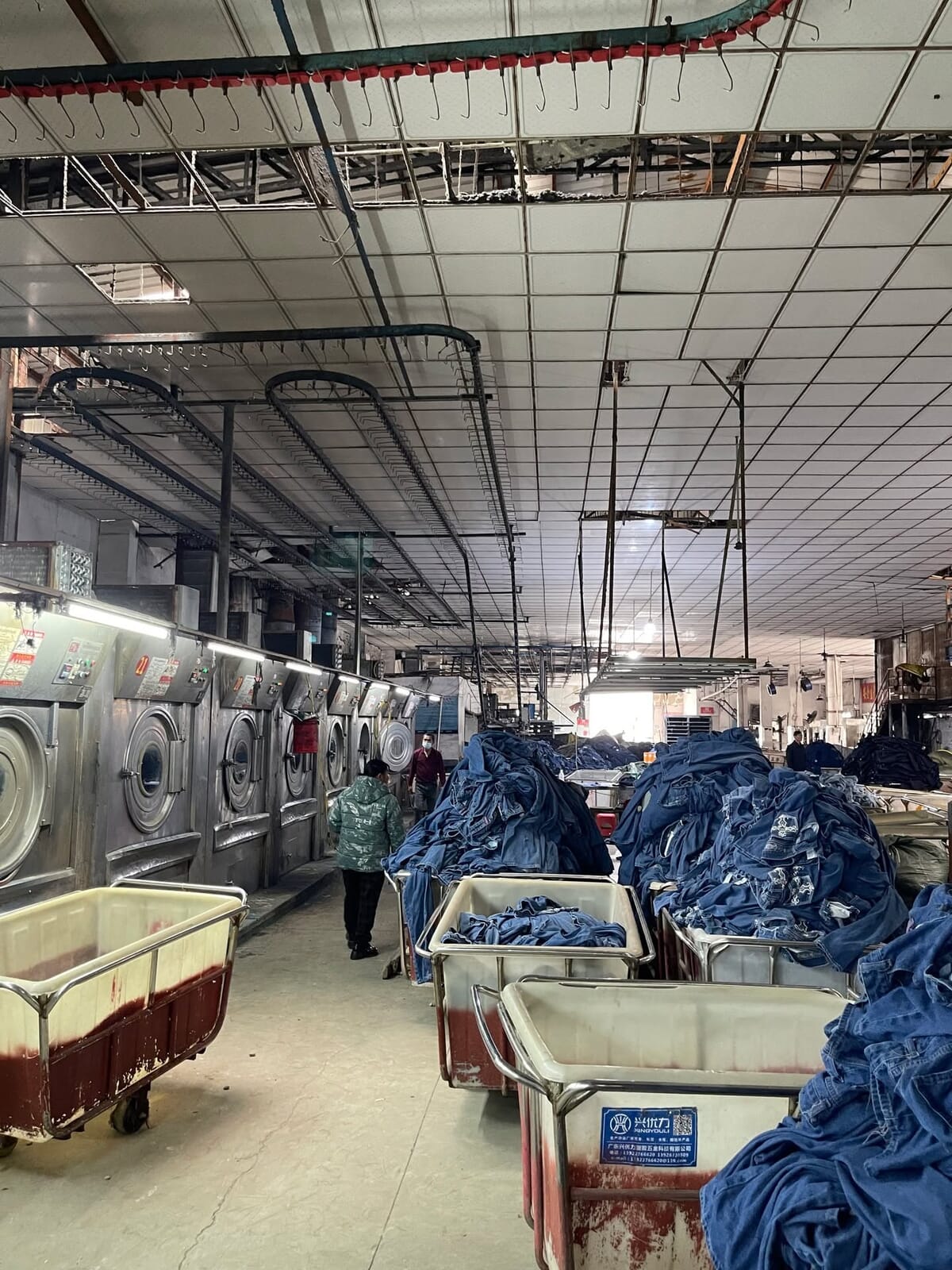
Two factories can sew the same jean and deliver visibly different products, because the wash is where denim gets its character. Decide your wash early: a raw or rinse-only programme opens up most factories, while a heavily processed vintage finish narrows the list to those with a laundry that can hold the recipe from batch to batch. Ask to see finished garments from a recent run rather than a swatch card, and ask how much shade variation the factory considers acceptable between units, since on a washed product some variation is inherent. Our guide to denim wash types explains what each finish does.
Check what you can claim
Sustainability programmes, recycled fibre and certifications vary a great deal between mills and between fabric qualities from the same mill. If you plan to make a claim on the product, ask for the certificate that covers the specific fabric and the legal entity that sells it to you, and keep it on file. A company-wide statement on a website is not the same as a certificate for your article.
What minimums do denim manufacturers set?
Mills set minimums in length per colour; garment makers set them in pieces per style and colour. The two are linked, because the fabric for your order has to come from somewhere, and that is usually where small orders get stuck.
A mill weaving a fabric to your specification has to dye and weave a full run of it, so its minimum is measured in metres or yards of one quality and one shade. Large mills publish collections and keep some qualities available more readily than others, and fabric a garment factory already buys for other customers is the easiest to use in small quantities. Ask the mill or the factory which qualities can be supplied for a small order before you fall in love with one.
On the garment side, the minimum depends on the factory and on the wash, because an industrial washer needs a sensible load to run a recipe consistently. A few hundred pairs in one wash is a normal first order for a mid-size factory, while the large groups above are organised around much bigger programmes. If you need fewer pieces, it is better to say so in the first message than to find out after sampling.
For the denim we place in Portugal, minimums are 50 to 100 pieces per style and colour, agreed case by case, and a production lead time of 8 to 10 weeks is the figure to plan around. The minimum order quantities in Portugal page explains how the minimums work across sizes and colours.
How do you work with a denim factory?
With a complete tech pack, an agreed wash standard and realistic sampling time. Denim has more variables than most garments, and each one that is left open becomes a question during sampling.
What a denim tech pack needs
- Fabric: weight, composition, construction, stretch and the shrinkage you expect after washing, or the exact mill quality if you have chosen one.
- Wash and finish: a physical or photographed wash standard, the target shade after laundry and any abrasion, tint or damage effects.
- Measurements: a graded size chart measured after washing, because denim shrinks and moves in the laundry.
- Construction: seam types, stitch density, thread colour and weight, chainstitch hems, bartacks and pocket bags.
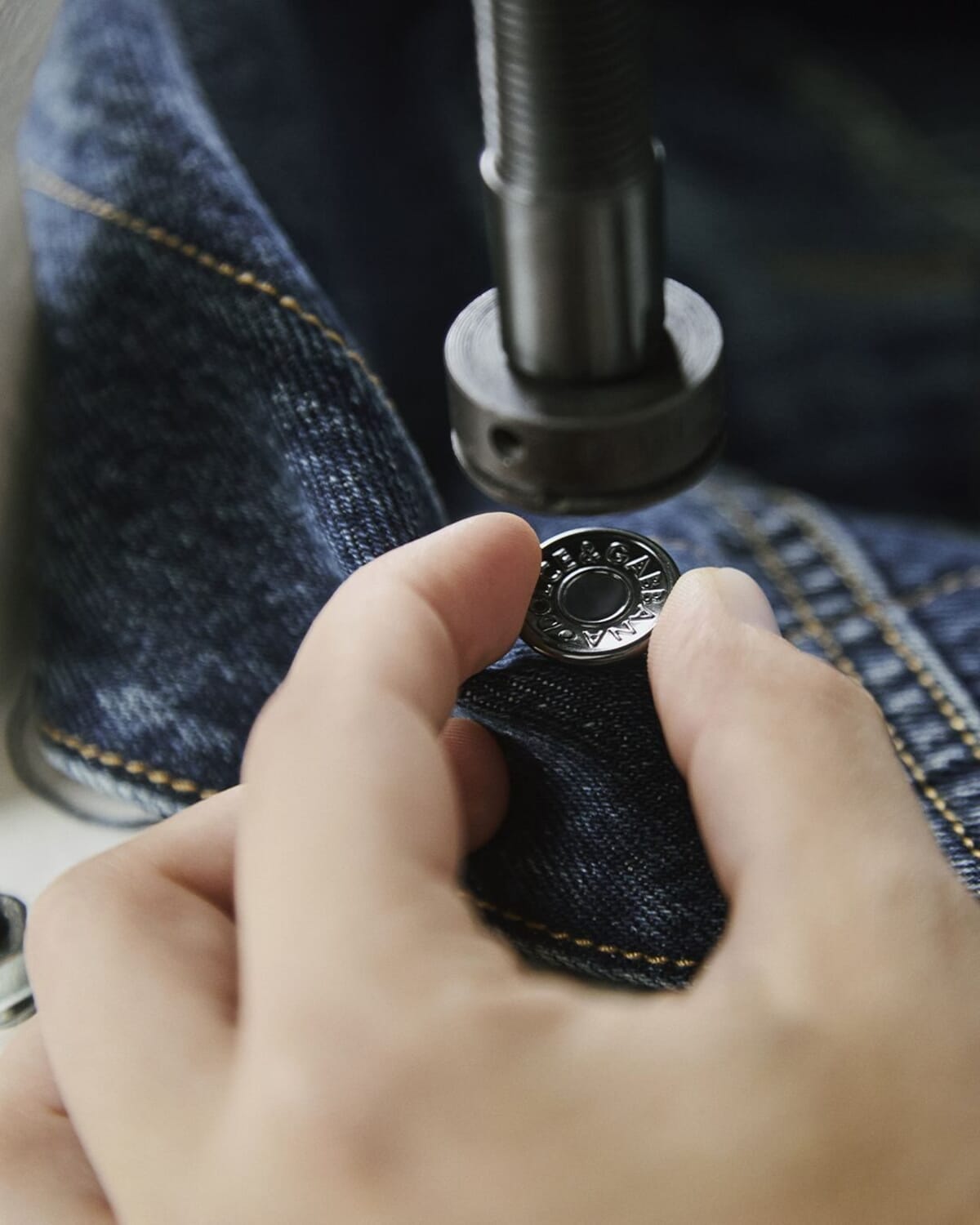
- Trims: rivets, shank buttons, zips, labels and leather or jacron patches, with finishes that survive the wash.
- Packing and labelling: care, fibre content and size labels, swing tags and folding.
If you do not have a tech pack yet, our tech pack service prepares one that a factory can quote from.
Sampling takes longer for denim
Denim prototypes take longer than most garments because each one has to be washed: on the denim we place, they cost €150 to €400 each and take 3 to 6 weeks. A wash or dye treatment adds about €2.50 a unit to the production price. Plan at least one round for fit and one for wash, and approve the wash on the production fabric, not on a substitute. Our denim prototyping guide walks through the steps.
Check that the company is what it says
Ask for the business registration and confirm it covers textile or garment production, request a live video walk-through or visit, and check that the company name and address on the quote are the same as on the export documents and certificates. For denim in particular, ask directly whether the company weaves fabric, sews garments or both, and who runs the laundry. Those checks separate mills and factories from trading companies that present themselves as manufacturers.
Where does Portugal fit in denim?
As a place to make and wash jeans close to European customers, usually with imported fabric. The trade data and the way the northern Portuguese cluster is organised both point the same way.
The fabric is mostly imported
In 2024 Portugal imported $10.63m of heavy cotton denim fabric (HS 520942), led by Turkey ($3.82m), Pakistan ($2.27m), Spain ($1.36m), Italy ($1.05m) and India ($0.74m). Its exports of the same fabric were $1.26m, so it imported about 8.4 times as much as it exported. Turkey and Pakistan alone supplied 57% of the total.
It is also what brands see when they make jeans here: the fabric is usually woven in Turkey, Italy, Spain or further away, and the cutting, sewing, washing and finishing happen in Portugal. It is a normal arrangement, and it is worth being clear about it in your product copy, because fabric is the most significant input in a pair of jeans.
Laundries close to the sewing floor
Denim is made as much in the laundry as on the sewing floor, and the northern Portuguese cluster has specialist laundries alongside its cut-and-sew factories. Being able to develop a wash, adjust it and see the result within days, rather than across an international shipment, is a real advantage when a brand is still deciding on its finish.
Denim machinery is specific
Chainstitch hemming, felled seams, bartacking and riveting need machines that a general apparel factory may not have. A factory without them will compromise visibly, which is why denim should be placed with a factory that runs the category regularly rather than one that can sew it in principle.
Environmental rules shape the finish
Laundry is water and chemical intensive, and EU rules on emissions and chemicals affect which finishes are practical and what they cost. Lower-impact processes such as ozone and laser finishing are part of the toolset in many European laundries. It is better to settle the finish during wash development than to find out later that a process is unavailable or expensive. For the fabric side of sourcing here, see fabric sourcing in Portugal.
Working with Portugal Clothing Factory
Our team places and manages clothing production with factories in our group in the northern Portuguese textile cluster, including partner factories that sew and finish denim with laundries close by. We are not one of the large mills above and do not weave fabric. For a denim brief, the first useful questions are what fabric you want, what wash, how many pieces and for which market, because those decide which factory in our group fits. We place the order with that factory and stay involved through sampling, wash approval, production and delivery. The denim manufacturer in Portugal page covers the jeans, jackets and skirts we take on.
Across our group, denim minimums are usually 50 to 100 pieces per style and colour, agreed case by case. We agree our fee in writing, take no commission on production, and the partner factory invoices the production.
Get in contact with the item, fabric, wash, quantity and timeline. Our team replies within 24 hours.
Frequently asked questions
What is the difference between a denim mill and a jeans manufacturer?
A denim mill spins, dyes and weaves fabric and sells it by the metre or yard. A jeans manufacturer cuts, sews, washes and finishes that fabric into garments and sells them per piece. Vertically integrated groups do both.
Which countries export the most denim fabric?
For heavy cotton denim (HS 520942), the top five exporters in 2024 were China ($634.7m), Pakistan ($508.5m), India ($225.9m), Turkey ($223.5m) and Egypt ($121.0m), according to WITS.
Is Saitex a fabric mill or a garment maker?
Both, according to its own website: Saitex makes jeans in Dong Nai, Vietnam, runs a microfactory in Los Angeles and has its own fabric mill in Vietnam.
Can I order finished jeans from a fabric mill?
Usually not. A mill such as ISKO, Bossa or Cone Denim sells fabric. For finished jeans you need a garment factory, which can buy the mill fabric for you, or an integrated group that also sews.
Are the large denim manufacturers right for small brands?
Mostly not directly. They are built for volume and set minimums in metres per colour or in large garment programmes. A small brand is usually better served by a mid-size garment factory that buys fabric in, often a quality it already uses.
Where does denim made in Portugal get its fabric?
Mostly from imports. In 2024 Portugal imported $10.63m of heavy cotton denim fabric, led by Turkey and Pakistan, and exported $1.26m.
What minimum do you work to for denim?
For the denim we place in Portugal, 50 to 100 pieces per style and colour, agreed case by case, with a production lead time of 8 to 10 weeks.
How do I check a denim manufacturer is real?
Ask for the business registration, a live walk-through or visit, and check that the name and address on the quote are the same as on the export documents and certificates. Ask directly whether the company weaves, sews or both.
Our team places and manages clothing production with factories in our group in northern Portugal, usually from 50 to 100 pieces per style and colour. Tell us your product, fabric, volume and timeline, and we reply within 24 hours. Fee agreed in writing, no commissions.
Send your brief Portugal factory directory (€49)No tech pack yet? We prepare one style, factory-ready, for €79. What it includes.
Sources
- WITS (World Bank), UN Comtrade data, HS 520942 (denim, 85% or more cotton, over 200 g/m2): top exporters 2024 and 2023; Portugal imports by partner and exports by partner, 2024.
- ISKO: About us; FAQ.
- Orta: About; Denim Service.
- Bossa: About us; collections; company infobox on Wikipedia.
- Kipaş Textiles: Denim; Milestones.
- Arvind: The Arvind story; Fabric and apparel.
- Artistic Milliners: company website.
- Soorty: About us; Denim fabric; Garments.
- Cone Denim: Who we are; Our timeline.
- Saitex: Factories; Saitex Mill.
- Advance Denim: About us.
- Portugal Clothing Factory, denim manufacturer in Portugal (minimums, lead time, prototype and wash costs).
Portugal Clothing Factory places and manages clothing production with factories in our group in the northern Portuguese textile cluster. We agree our fee in writing, reply within 24 hours, and stay involved through sampling, quality control and delivery. See how we work or get in contact.