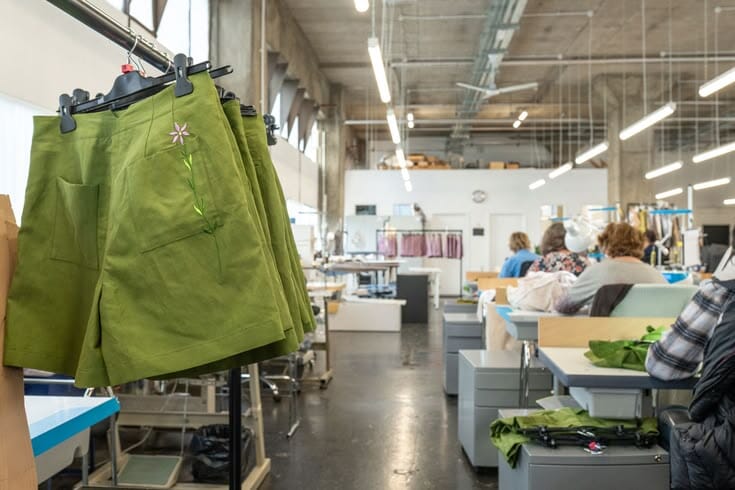
Portugal is one of the most competitive textile production destinations in Europe. The sector counts 11,965 active companies and exported 5,499 million EUR in 2025 (INE via Jornal Economico, 2026). The country combines recognised quality, European compliance, and short delivery lead times. This guide covers the entire process, from first contact with a manufacturer to final delivery of your order.
This isn't an overstatement: brands from around the world choose Portugal for proximity, skilled labour, and the automatic regulatory compliance that EU membership provides. But the process has well-defined stages, and knowing them in advance makes the difference between a successful first collection and months of avoidable delays.
Heads up: We're Portugal Clothing Factory, a group of 80 documented Portuguese clothing factories in Porto and Guimarães. Since 2021, we've placed dozens of brands with these factories, so the practical observations in this article are based on first-hand sourcing experience.
Key Takeaways
- Portugal exported 5.5 billion EUR in textiles in 2025 (INE via Jornal Economico, 2026)
- The production process has 7 steps: documentation, manufacturer, quotes, samples, MOQ, QC, and logistics
- Typical MOQs range from 50 to 300 units depending on factory type
- The CMT model suits brands with their own suppliers; full package simplifies operations
- A complete tech pack is essential for accurate quotes
Try it free: Pressure-test your production cost with our garment cost calculator. 60 seconds, no email required.
Why Choose Portugal for Textile Production?
Portugal's textile and clothing sector employs around 118,000 people across 11,965 active companies (FFMS/PORDATA, 2026). It exported 5,499 million EUR in 2025 (INE via Jornal Economico, 2026). Geographic proximity and EU membership make Portugal a strategic choice for European and international brands seeking quality without the risks of Asian supply chains.
The concept of nearshoring gained momentum after the supply chain disruptions of 2020-2022. Manufacturing in Portugal reduces transit time to Western Europe to two to five days by road. Compare that with four to six weeks by sea from Asia. This logistical advantage translates into more agile collections and less capital tied up in stock.
What Does "Made in Portugal" Add Commercially?
Origin has moved from the care label to the product page. In the briefs that reach us, European brands now state Portuguese manufacturing as a positioning requirement, not a cost question. They ask for traceability documentation up front. That is a change in what brands want to be able to say about a garment, not a claim about what shoppers will pay.
And regulatory compliance? Portuguese factories operate under EU labour and environmental legislation, which eliminates the audit risks commonly associated with suppliers in third countries. For brands selling in Europe, this simplifies everything.
Citation Capsule: Portugal's textile and clothing sector counted 11,965 active companies and around 118,000 workers in 2026, and exported 5,499 million EUR in 2025, a fall of 0.8% on the previous year. Activity is concentrated in the districts of Braga, Porto, and Viana do Castelo. (INE via Jornal Economico, 2026; FFMS/PORDATA, 2026)
For a more detailed analysis with updated data, see our article with full Portuguese textile sector statistics.
What Are the Two Production Models: CMT vs Full Package?
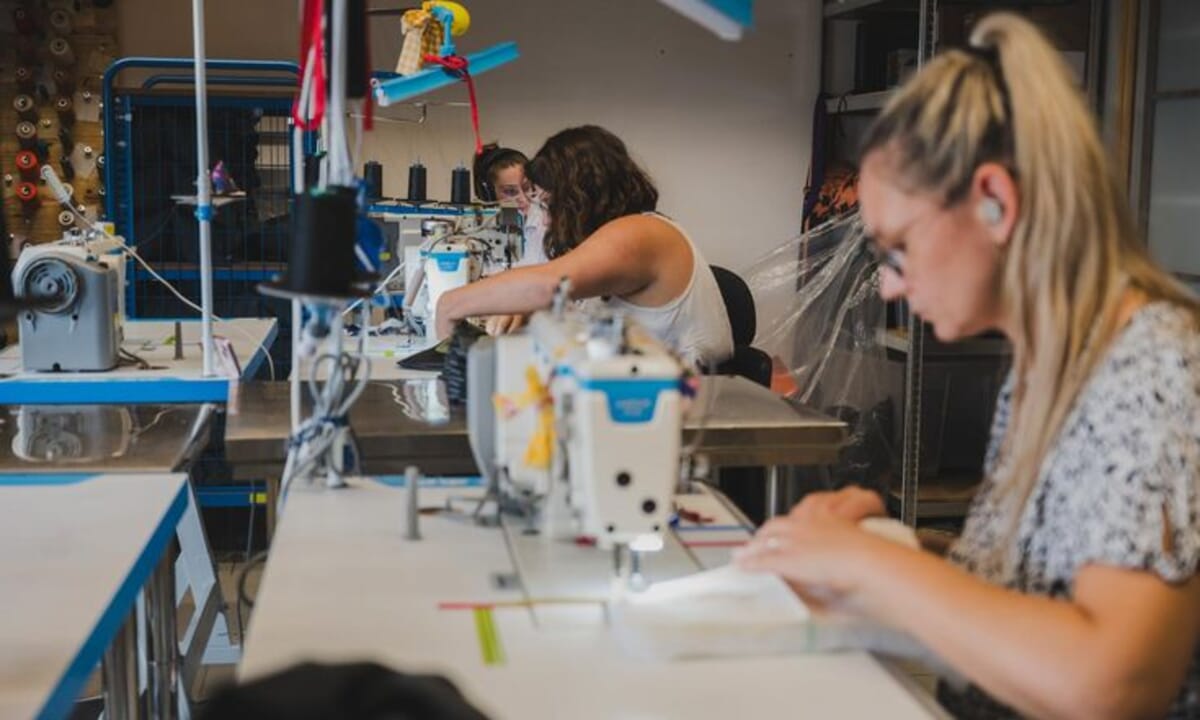
Most Portuguese factories will quote either model. In our own group of 80 documented factories, the majority price a style both ways once they have the tech pack. The model is usually the brand's decision, not the factory's constraint. The choice between CMT (Cut, Make, Trim) and Full Package Production has direct implications for cost, control, and operational complexity. In CMT, the brand supplies the materials and the factory manufactures. In full package, the factory manages the entire chain, from fabric to packaging. In practice, brands with fewer than three years of operation tend to benefit from full package production, as it reduces the management burden. Brands with collections above 500 units per reference and specific materials usually migrate to CMT to improve margins.
For a detailed comparison with cost analysis, advantages, and disadvantages of each model, read our CMT vs Full Package comparison.
Running into production issues? Get in contact and tell us what you're making. We're a group of Portuguese factories and we answer every serious brief within 24 hours.
Step 1: How Do You Prepare Production Documents?
Most production delays start before a single stitch is sewn. Across the briefs we place with factories, the recurring cause is an incomplete document set: no graded size chart, no trims list, no Pantone references. The factory then quotes from assumptions, and every assumption becomes a sample round. Having the right documents before the first contact saves weeks of back-and-forth and increases your credibility with the manufacturer.
What Is a Tech Pack?
The tech pack is the master document of production. It brings together all the information a factory needs to produce a garment autonomously and consistently. An incomplete tech pack is the primary cause of incorrect samples and rework.
A complete tech pack should include:
- Technical sketches (flat sketches) with measurements from all views
- Size chart with grading table
- Fabric specifications: composition, weight (GSM), weave, treatments
- Trims list: zippers, buttons, labels, threads, interlinings
- Sewing instructions: stitches per centimetre, seam allowances, finishes
- Labels and packaging: dimensions, materials, placement
- Colour references: Pantone codes or physical swatches
What Is a BOM (Bill of Materials)?
The BOM is a detailed list of all materials required to produce one unit. It includes supplier references, quantities, and units of measurement. It's separate from the tech pack but complementary. It allows you to calculate costs accurately and identify materials with long lead times.
Grading (Size Specifications)
Grading defines how measurements scale between sizes. It should be specified with clear tolerances, typically +/- 0.5 cm to +/- 1 cm per measurement. Without a grading table, the factory applies its own criteria, and this frequently results in garments that are out of specification. If you don't have the internal capability to create a tech pack, specialised services exist in Portugal and online, priced between 150 and 400 EUR per style. The investment is always less than the cost of a poorly executed sample.
Step 2: How Do You Find and Choose a Manufacturer in Portugal?
Portugal has a significant concentration of manufacturers in the north of the country, in the districts of Braga, Porto, Viana do Castelo, and Guimaraes. According to the INE, over 70% of the sector's companies are located in this region (INE, 2024). Finding the right factory requires structured research.
Where Do You Look for Manufacturers?
- B2B platforms: Specialised directories such as portugalclothingfactory.com list verified manufacturers by specialisation, certifications, and minimum capacity.
- Trade fairs: Modtissimo (Porto), Texworld Paris, and Premiere Vision are regular meeting points with Portuguese manufacturers.
- ATP: The Portuguese Textile and Clothing Association maintains a database of members with contacts and areas of specialisation.
- Chambers of Commerce and AICEP: Useful for foreign brands seeking Portuguese partners.
What Are the Right Selection Criteria?
After building an initial list, the screening should consider:
- Specialisation: A factory that specialises in knits isn't the right choice for woven fabrics. Confirm the portfolio.
- Certifications: OEKO-TEX, GOTS, BSCI, or ISO 9001 indicate investment in quality and compliance.
- Capacity: Confirm that the minimum MOQ aligns with your intended volume.
- Client references: Ask for contacts from brands that have already produced there. A solid factory shares them without hesitation.
- Communication capability: A factory that responds within 24-48 hours during the initial phase tends to maintain the same standard during production.
Red Flags: Warning Signs in Manufacturers
Factories that request full upfront payment, don't provide material safety data sheets, or avoid visits should raise immediate suspicion. The same applies to quote proposals without seeing the tech pack. Read about the 12 most common warning signs in textile manufacturers in our dedicated article.
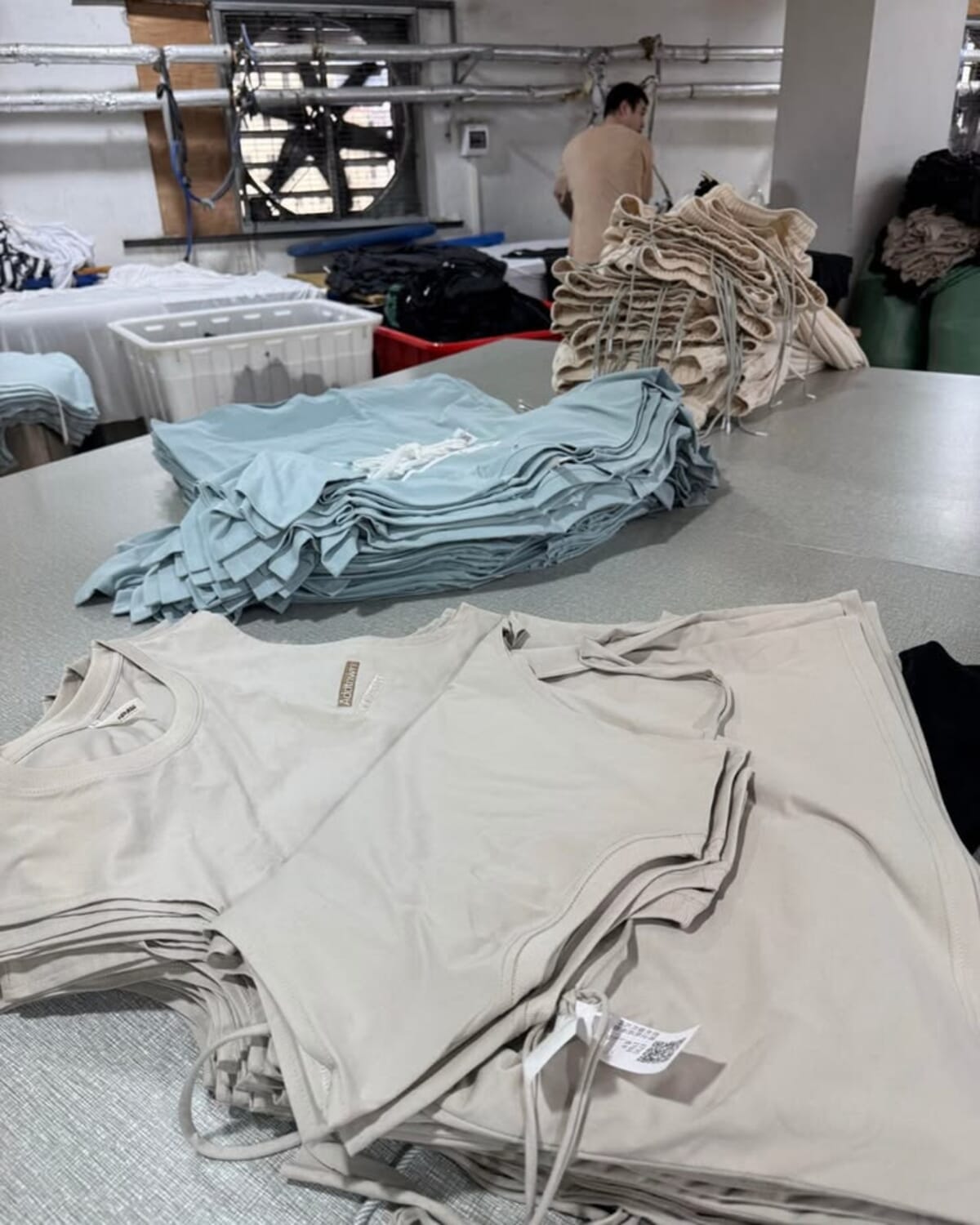
Find your factory: Browse the free factory directory preview, or unlock the premium directory for €39 to see 80 documented Portuguese factories with direct contacts and MOQs.
Step 3: How Do You Request Quotes and Negotiate with Manufacturers?
The quality of the request for quotation (RFQ) directly determines the quality of the responses received. A brief that arrives with volume, tech pack, and target date attached comes back as a line-item quote. A brief without them comes back as a price range or a request for more information. With a well-crafted RFQ, comparison between factories becomes objective.
What to Include in the Request for Quotation
An effective RFQ should contain:
- Complete tech pack or summary technical sheet per style
- Estimated volume per style and per size (breakdown)
- Preferred model: CMT or full package
- Target delivery deadline
- Certification or compliance requirements
- Preferred payment terms
What Should the Quote Include?
The quote should specify the CMT or FPP price per unit, the MOQ, the lead time, the proposed payment terms (typically 30-50% deposit), and sampling costs. If any of these elements are missing, request clarification before proceeding.
How to Compare Quotes Fairly
Comparing only the unit price is a common mistake. The correct analysis considers total cost: unit price, sampling cost, packaging cost, payment terms, and lead time. A factory that's 15% more expensive but with a three-week shorter lead time can be more profitable, depending on the context. In practice, requesting quotes from three to five factories per style is the ideal range. Fewer than three doesn't provide a market reference. More than five creates noise and disperses the factories' attention. See our negotiation guide for Portuguese manufacturers for more detailed guidance.
Step 4: How Does the Sampling Process Work?
The sampling process is iterative by nature. Expecting the perfect garment on the first sample is unrealistic, even with a flawless tech pack. Across the styles we see go through Portuguese factories, two to three sample rounds is the normal path to approval for a new product. Understanding the phases and how to give structured feedback saves time and money.
What Are the Four Phases of Sampling?
Proto Sample (Prototype Sample): First version of the garment, typically in substitute fabric. Validates construction, drape, and proportions. It doesn't represent the final product.
Fit Sample: Produced in the correct fabric or a close equivalent. Validates body fit, measurements, and structural finishes. This is where grading corrections are identified.
Pre-Production Sample: Produced with exactly the final materials, colours, and trims. Requires formal approval before proceeding to bulk production. It's the reference for quality control.
Production Sample (Production Confirmation): On larger-volume orders, some factories send a piece from the first 10-20% produced for confirmation before completing the full order.
| Sample type | Fabric used | Typical lead time | Purpose |
|---|---|---|---|
| Proto Sample | Substitute fabric | 10-14 days | Validate construction, drape, proportions |
| Fit Sample | Correct fabric (or close equivalent) | 10-18 days | Validate body fit, measurements, structural finishes |
| Pre-Production Sample (PPS) | Final materials, colours, trims | 14-21 days | Final approval before bulk; reference for QC |
| Production Sample | From the first 10-20% of bulk | 2-5 days into bulk | Confirm bulk run matches the PPS |
Source: see in-text citations in this section.
How Many Rounds to Expect and What Does It Cost?
For a new product with a new manufacturer, expect two to three rounds to approval. Each round typically costs between 80 and 300 EUR per style and has a lead time of 10 to 21 days. For a complete cost analysis by phase, see the article on clothing manufacturing costs in Portugal.
How to Give Professional Feedback
Feedback should be written, with annotated photographs and references to the tech pack measurements. Vague comments like "the fit isn't right" don't allow the factory to act. "The side seam is 1.5 cm ahead of the specified position, see measurement B7" is actionable and resolves the issue in one round.
Step 5: How Do You Plan MOQ and Production Timelines?
MOQs in Portugal run from 50 units at a boutique factory to 500 or more at a large-scale one. The total calendar, from briefing to delivery, usually sits between 14 and 30 weeks. Those two numbers are the biggest friction points between brands and manufacturers. Understanding the manufacturer's logic makes negotiation and planning easier.
A factory sets its MOQ from setup time, not from greed. Threading a machine, cutting a marker, and programming an embroidery head cost the same whether the run is 50 pieces or 500. The smaller the run, the more of that fixed cost each garment carries.
How Do You Build a Realistic Production Calendar?
For MOQ negotiation strategies and tables by factory type, see the article on minimum MOQ with Portuguese manufacturers. If you need detailed timelines by product type and production phase, see the article on textile production timelines. Always add a buffer of 15-20% to the planned calendar. The most common causes of delay are late fabric deliveries, unplanned sample revisions, and factory capacity adjustments. A brand that arrives to market late pays a much higher price than the cost of planning with margin.
Citation Capsule: A realistic Portuguese production calendar runs 14 to 30 weeks from briefing to delivery, with a 15 to 20% buffer on top. The two most variable blocks are sampling, at 4 to 10 weeks, and material confirmation, at 2 to 4 weeks. Late fabric delivery is the single most common cause of slippage.
Step 6: How Do You Manage Quality Control in Production?
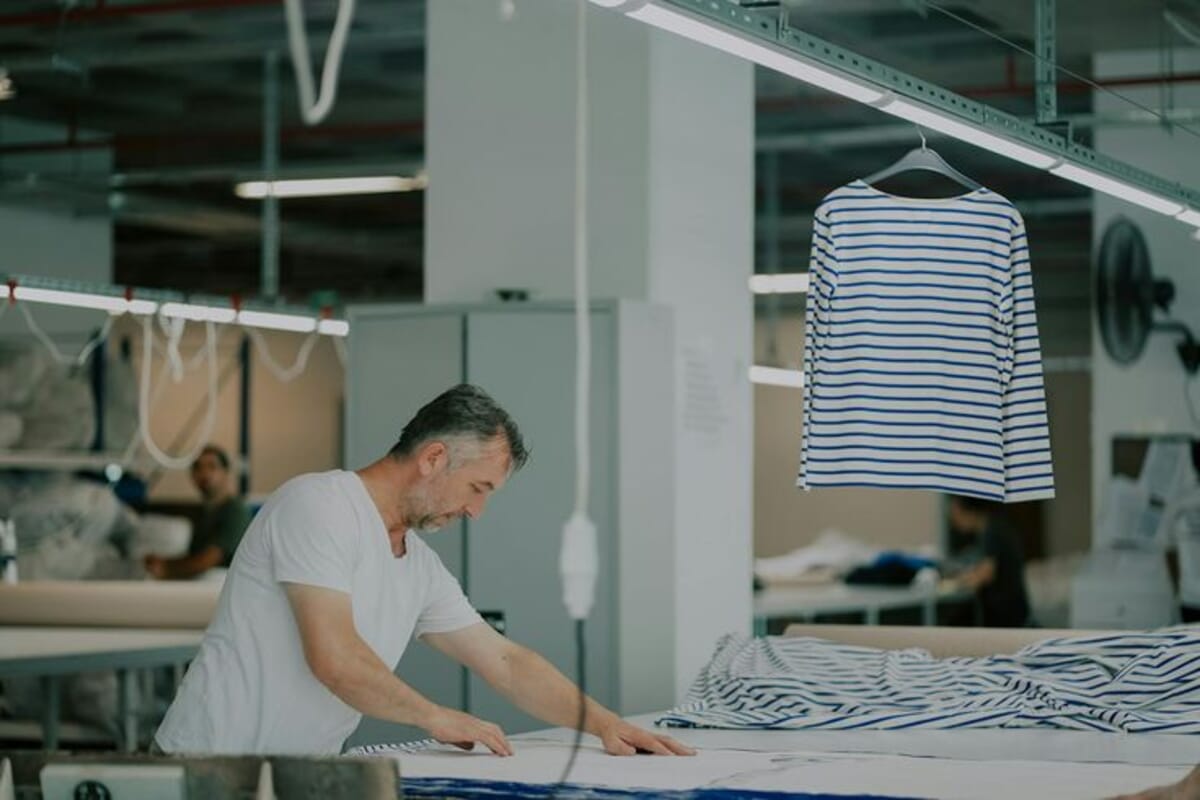
Quality control isn't a final event, it's a continuous process throughout the entire production. An in-line check at 20 to 30% of the order catches a systematic error early. A misplaced pocket or the wrong stitch density then affects a few dozen pieces instead of the whole run. Integrating checkpoints at multiple stages is standard practice in Portuguese factories.
In-Line Inspection vs. Final Inspection
In-line inspection occurs during production, typically when 20-30% of the order is complete. It allows you to identify and correct errors before they propagate. Final inspection occurs when 100% of the order is sewn and 80% is packed. It's the last barrier before shipment.
AQL Explained Simply
AQL stands for Acceptable Quality Limit. It defines the maximum percentage of defects tolerable in a sample. The AQL 2.5 level is the most common for apparel: up to 2.5% defects per sample is considered acceptable. The inspector tests a statistical sample and approves or rejects based on that threshold.
When to Hire an External Inspector
For orders exceeding 500 units or for a first production run with a new manufacturer, an independent inspector is a justified cost. The average cost of a pre-shipment inspection in Portugal is around 250-400 EUR per day.
Step 7: How Does Logistics and Final Delivery Work?
The last phase is frequently underestimated. Portugal has strong road, sea, and air transport connections, serving global markets. According to ANTRAM data, road transport between Portugal and major European markets takes between two and five days (ANTRAM, 2024). The wrong choice of Incoterm can turn a successful production run into a logistics problem.
Incoterms: The Three Most Common
- EXW (Ex Works): The factory's responsibility ends when goods are available at the premises. The brand organises and pays for all transport.
- FOB (Free on Board): The factory delivers the goods on board the vessel at the port of origin. From that point, the risk lies with the brand.
- DDP (Delivered Duty Paid): The factory delivers to the final destination with all taxes paid. The simplest option but usually the most expensive.
| Incoterm | Factory responsibility | Brand responsibility | Cost impact |
|---|---|---|---|
| EXW (Ex Works) | Make goods available at factory premises | All transport, customs, insurance, destination taxes | Cheapest factory price; brand pays for everything downstream |
| FOB (Free on Board) | Deliver to port of origin (typically Leixões) | Sea/air freight, destination customs, taxes | Mid-range; common for intercontinental shipments |
| DDP (Delivered Duty Paid) | Deliver to final destination with all duties paid | Receive the shipment | Highest factory price; simplest for brand (no surprises) |
Source: see in-text citations in this section.
For European brands receiving from Portugal, the most common arrangement is EXW or DAP, with road transport organised by the brand or a trusted freight forwarder.
What Are the Transport Options from Portugal?
- Road: Ideal for continental Europe. Lead times of 2-5 days. Cost of 100-400 EUR per pallet for destinations like France, Germany, or the Netherlands.
- Sea: For intercontinental markets (USA, Brazil, Middle East). FCL or LCL. Lead times of 12-30 days.
- Air: For urgent deliveries or samples. Cost 4-8x higher than sea freight. Lead times of 2-5 days to any destination.
What to Check on the Packing List
The packing list should include reference and quantity per carton, gross and net weight, dimensions, and total number of cartons. Compare it against the purchase order before signing any transport document. This prevents customs problems.
How Much Does It Cost to Manufacture Clothing in Portugal?
The average labour cost in the Portuguese textile industry is 9.80 EUR/hour, compared with 25-35 EUR in Germany or France and 2-4 EUR in China (EURATEX, 2023). Portugal is more expensive than Asia but competitive against other European countries, which explains the growth of nearshoring. The final cost per unit depends on the model (CMT vs full package), complexity, and volume.
For a complete analysis with price tables by category, total cost components, and practical examples, see the detailed article on clothing manufacturing costs in Portugal. You can also compare with costs in Bangladesh and Vietnam.
Citation Capsule: The average labour cost in the Portuguese textile industry is 9.80 EUR/hour, according to EURATEX (2023). This positions Portugal competitively against Western Europe (25-35 EUR/hour) while maintaining a significant quality advantage over Asian markets (2-4 EUR/hour).
What Certifications Are Relevant for Production in Portugal?
Portugal is among the ten European countries with the highest number of active OEKO-TEX STANDARD 100 certifications (OEKO-TEX Association, 2024). This concentration makes it easier to meet sustainability requirements and simplifies entry into demanding retail chains. The most common certifications in the Portuguese context are OEKO-TEX Standard 100, GOTS, BSCI, and, increasingly, the requirements of the ESPR.
The right certification depends on the product, the target market, and the applicable regulatory requirements. A brand selling directly to consumers in the EU will have different requirements from one supplying large retailers with mandatory social audits.
For a detailed comparison between OEKO-TEX, GOTS, and bluesign, with costs, requirements, and applicability by brand type, see the OEKO-TEX vs GOTS vs bluesign comparison. On the impact of new European regulation, see the article on ESPR and textile regulation 2027 and the Digital Product Passport guide.
Citation Capsule: Portugal is among the ten European countries with the highest number of active OEKO-TEX STANDARD 100 certifications, according to the OEKO-TEX Association (2024). This concentration makes it easier to meet sustainability requirements demanded by international brands manufacturing in the country.
FAQ: Frequently Asked Questions About Textile Production in Portugal
Five questions cover most of what brands ask us before a first Portuguese order. How long does it take, what is the minimum, are small brands viable, is a tech pack required, and how do you arrange a visit? Short answers below, with links to the detailed articles.
How long does it take to produce a collection in Portugal?
From initial briefing to delivery, a new collection with a new manufacturer takes between 14 and 30 weeks. The sampling phases (4-10 weeks) and material confirmation (2-4 weeks) are the most variable. Working with familiar manufacturers can reduce this timeline by 30-40%. See the article on production timelines for planning templates.
What is the typical minimum MOQ in Portugal?
The minimum MOQ ranges from 50 units at a boutique factory to 300-500 units at a medium-sized factory. For cut-and-sew knits, MOQs start at 50-100 units. Consolidating multiple styles with one manufacturer is effective for negotiating lower MOQs. Learn more in the article on minimum MOQ.
Is Portugal a good option for small brands?
Yes, especially for brands that value quality, traceability, and short lead times. Small and boutique factories work with volumes starting from 50 units. The unit cost will be higher, but the flexibility and close support compensate in early stages. See the guide to small quantity production.
What is a tech pack and is it mandatory?
A tech pack is the document with all the technical details needed to produce a garment: measurements, materials, trims, sewing instructions, and packaging. It's not legally mandatory, but it's indispensable in practice. Serious factories refuse to quote without one. Without precise information, any price is an estimate without foundation.
How can I visit a manufacturer before ordering?
Visiting the factory is highly recommended before a first order. Most Portuguese manufacturers welcome visits by prior appointment. Take the opportunity to observe the production line, check working conditions, review samples from previous clients, and meet with the production manager.
Conclusion: Next Steps to Manufacture in Portugal
Manufacturing in Portugal offers a combination that's hard to match: European quality, integrated regulatory compliance, logistical proximity, and decades of experience serving the world's leading brands. The process has seven clear steps, from tech pack to delivery, and each one requires specific preparation.
The data confirms the potential: 5,499 million EUR in exports in 2025, 11,965 active companies, and competitive labour costs relative to Western Europe. But success depends on preparation. A solid tech pack, a well-structured RFQ, and a realistic calendar make more difference than the unit price.
If you're planning a collection, start by exploring the articles in this cluster: how to launch a clothing brand, initial investment, and sustainable sourcing.
Have a production project in mind? Submit your request at portugalclothingfactory.com/contact and receive guidance within 48 hours.
We're a group of 80 documented Portuguese clothing factories based in Porto and Guimarães. Tell us your product, volume, and timeline. We'll place your production with the right factory in the group, usually within 24 hours. You work directly with the factory. No commissions, no pitch, no upsell.
Get in contact Download the directory (€39)Need a tech pack? Get a factory-ready single-style tech pack for €79. See what's included.
Sources
- INE via Jornal Economico (2026). "Textile and clothing exports fall 0.8% to 5,499 million euros in 2025." https://jornaleconomico.sapo.pt/noticias/exportacoes-do-textil-e-vestuario-caem-08-para-5-499-milhoes-de-euros-em-2025/
- FFMS / PORDATA (2026). Textile and clothing industry: companies and employed persons in Portugal. https://www.ffms.pt
- ATP - Associacao Textil e Vestuario de Portugal (2026). Member directory and sector resources. https://www.atp.pt
- EURATEX (2023). Annual Report - Key Figures of the European Textile and Clothing Industry. https://euratex.eu
- OEKO-TEX Association (2024). Annual Report and Certification Statistics. https://www.oeko-tex.com
- INE - Instituto Nacional de Estatistica (2024). Industrial Production Statistics. https://www.ine.pt
- ISO - International Organization for Standardization (2023). Quality Management in Textile Manufacturing. https://www.iso.org
- ANTRAM - Associacao Nacional de Transportadores Publicos Rodoviarios de Mercadorias (2024). Road Transport Data. https://www.antram.pt