.jpeg)
Choosing the wrong factory is one of the most expensive mistakes a fashion brand can make. According to McKinsey & Company (2023), production chain failures cost brands up to 25% of total order value in delays, rework and lost deposits. With over 12,000 registered textile and clothing companies in Portugal (ATP, 2025), the supply is vast, but quality varies enormously. The seven red flags below are concrete, observable warning signs we've seen show up repeatedly across hundreds of factory introductions in our sourcing pipeline since 2021. If you recognise any of them in a potential partner, slow down before committing a deposit.
In our experience, brands rarely lose money on a factory because they couldn't tell the warning signs from normal behaviour. They lose money because they wanted the deal to work. Recognising a red flag is the easy part. Walking away from a quote that's 30% cheaper than the rest of your shortlist is the hard part. This guide gives you the recognition tools and the scripts to act on them, plus a recovery path if you spot a red flag once production is already under way.
Heads up: We're Portugal Clothing Factory, a group of 80 documented Portuguese clothing factories in Porto and Guimarães. Since 2021, we've placed dozens of brands with these factories, so the practical observations in this article are based on first-hand sourcing experience.
Key Takeaways
- Over 30% of disputes between brands and factories result from insufficient documentation (ATP, 2022)
- Certifications like OEKO-TEX and GOTS are verifiable online in under 5 minutes
- Lead times under 6 weeks and prices 20%+ below market require detailed justification
- A formal production contract is the most effective protection against surprises
- 35% of Portuguese factories operate exclusively domestically (AICEP, 2023). No export history is not automatically a red flag, but absence of any references is
.jpeg)
Why Is Choosing the Right Factory So Critical?
Factory selection determines quality, lead times and financial viability for any brand. According to the ATP (2024), Portugal has over 12,000 companies across the textile and clothing supply chain, but the dispersion in quality, ethics and reliability is wide enough that two factories on the same industrial estate in Vila Nova de Famalicão can deliver very different outcomes for the same brief.
The costs of a poor choice accumulate fast. Lost deposits of 30 to 50%, rework on out-of-spec pieces, delays that push collections into the wrong season, and the reputational damage with end customers, which is the hardest cost to recover. In our sourcing pipeline, the brands that come to us after a failed first attempt at sourcing typically spent 4,000 to 18,000 EUR on a deposit they couldn't recover, plus 3-6 months of lost time. Prior due diligence isn't bureaucracy. It's direct financial protection.
Most brands that face serious problems with factories admit, in hindsight, that the warning signs were present from the earliest interactions. The issue was not knowing what to look for, or, more often, hoping that what looked like a red flag would turn out to be nothing. Hope is not a sourcing strategy.
The Red Flag Severity Matrix
Not every warning sign is the same weight. Here's how we categorise them in our internal vetting:
| Severity | Pattern | Action |
|---|---|---|
| Critical (walk away) | Refuses factory visit, refuses contract, requests 100% upfront, no verifiable address | Stop. No exceptions. |
| High (deep verification) | Unverifiable certifications, price more than 25% below market, lead time under 6 weeks for new style | Three independent reference calls + factory visit + lawyer-reviewed contract before any payment |
| Medium (extra checks) | Slow response (48-72h), incomplete tech pack acknowledgement, vague subcontracting answers | One reference call + clear contract + small pilot order |
| Low (note and watch) | Minor language friction, slight pricing variance vs market, no website | Proceed cautiously, document everything |
Source: see in-text citations in this section.
The seven red flags below sit mostly in the Critical and High categories. Each one is a specific behaviour you can observe before you've committed any cash.
Citation Capsule: Portugal has over 12,000 registered textile and clothing companies (ATP, 2024), but quality dispersion requires brands to perform structured due diligence before confirming any production partnership. We typically see brands lose 4,000-18,000 EUR on a single failed sourcing attempt when they skip this step.
Red Flag #1: No Technical Documentation Required Before Quoting?
A professional factory never provides a binding quote without detailed specifications. CITEVE (Portuguese Textile and Clothing Technology Centre) recommends that every production request include a minimum tech pack with measurements, materials and finishes. A quote produced without this foundation is an estimate with no real value. It tells you almost nothing about what your final piece will cost or look like.
Without technical specifications, the factory quotes with enormous margins of error. When production starts, the surprises come: substituted materials, different stitching, measurements off spec. The "agreed" price quickly becomes a starting point for renegotiation. We've watched brands receive 500 pieces of a "white cotton T-shirt" where the cotton turned out to be 60/40 cotton/polyester, the white was an ivory closer to beige, and the GSM was 30% lower than specified. The factory's defence: "you didn't say."
A factory that quotes without technical documentation will produce without technical documentation. Results will be inconsistent from order to order.
What to Include in Your Tech Pack
Before contacting any factory, prepare a basic tech pack. It should include:
- Flat technical sketch (front, back, key construction details)
- Measurement chart with grading rules across sizes
- Bill of materials with exact fabric specs (fibre composition, GSM, finish), trim list and supplier preferences if any
- Stitches per centimetre and seam type per construction zone
- Labelling instructions (main label, care label, woven vs printed)
- Packaging instructions (polybag, hangtag, retail-ready)
Even a simple document is enough to test the factory's seriousness in their response. A factory that asks one or two clarifying questions back is engaged. A factory that quotes a price without acknowledging the tech pack at all is signalling the level of attention you'll receive in production.
What a Good vs Bad Quote Looks Like
| Quote Element | Good Factory | Red Flag Factory |
|---|---|---|
| Tech pack required upfront | Yes, with clarifying questions | "Send a photo of the design, we'll quote" |
| Pricing breakdown | CMT, fabric, trims, finishing separately | Single lump-sum number |
| Quote validity | 30-60 days, written | "Valid this week only" |
| Sample policy | Clear cost, clear rounds | Vague, "we'll see" |
| MOQ stated | Specific number per style/colour | Refuses to commit before deposit |
Source: see in-text citations in this section.
Citation Capsule: CITEVE recommends that any textile production request be accompanied by a minimum tech pack with measurements, materials and finishes. A quote without this foundation offers no guarantee of consistency in the final production.
Red Flag #2: Refuses Factory Visits?
Legitimate factories welcome visits. According to Fashion Revolution (2023), supply chain transparency is a direct indicator of labour compliance and quality. A factory confident in its work has no reason to hide its facilities from a serious prospect, particularly one bringing 200+ pieces.
Refusal may indicate inadequate working conditions, lack of declared equipment, undisclosed subcontracting, or that the "factory" is actually a brokerage routing your order to whichever production capacity is cheapest that week. In Portugal, labour legislation (Labour Code, Article 127) requires minimum conditions that any compliant factory should be able to show openly. If they won't show you, why not?
How to Proceed With a Visit Request
Insist on a visit before signing any contract. An in-person visit lets you evaluate equipment condition, space organisation, worker conditions and actual production capacity. If the factory categorically refuses, remove it from your shortlist. No exceptions.
If you genuinely cannot travel to Portugal (we work with brands in California, Australia and Singapore), the modern compromise is a live video walk-through:
- 30-60 minute scheduled call, factory floor tour
- Camera moves through cutting room, sewing lines, finishing, warehouse
- Owner or production manager on camera (not just a phone propped up)
- You ask specific questions: "How many machines run that fabric?" "Where does fabric inspection happen?"
- Recording of the call, with permission, for your records
A factory that won't do a video walk-through but says "come visit anytime" is using the cost of travel as a barrier to verification. That's a red flag too.
What to Look For During a Visit
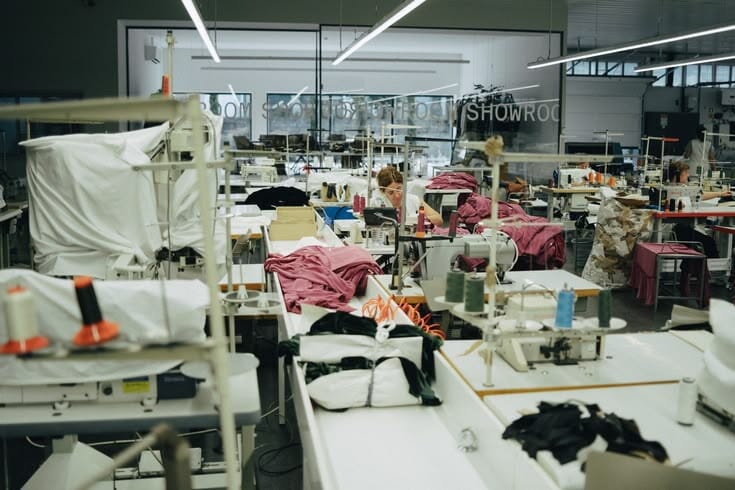
- Cutting room organised, marker plans visible, fabric inspection station present
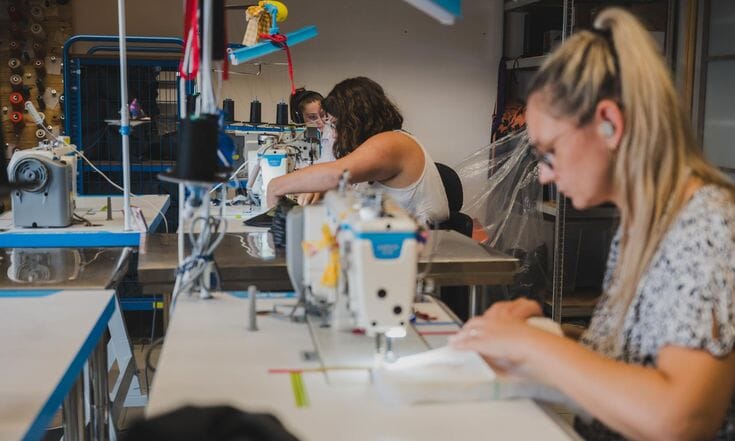
- Sewing lines populated, not empty (empty lines mean orders are subcontracted out)
- Quality control station between sewing and finishing, not just at the end
- Pressing and finishing area separate from sewing, with adequate ventilation
- Warehouse with labelled fabric rolls and trims, not chaos
- Workers present at workstations, not sitting around or absent
- A real reception area, real signage, real company name on the building
.jpeg)
Citation Capsule: Fashion Revolution (2023) identifies supply chain transparency as a direct indicator of labour compliance. A factory that refuses facility visits raises legitimate questions about actual operating conditions.
Red Flag #3: Certifications You Can't Verify?
Claiming certifications without proof is an immediate red flag. According to the OEKO-TEX Association (2024), there are over 11,000 active OEKO-TEX STANDARD 100 certificates, all publicly verifiable with the certificate number. Verification takes less than five minutes. There's no excuse for a factory to refuse a certificate number, and no excuse for a brand to skip the check.
False or expired certifications don't protect the brand against European regulations. A brand using a factory with an invalid GOTS certification can lose contracts with major distributors who audit upstream. In our pipeline, we've seen this play out twice in the last 18 months: brands selling to Selfridges and Galeries Lafayette had their orders pulled because the factory's GOTS certificate had lapsed two years earlier and nobody had checked. The legal consequences in the European market are real and costly.
Never accept a photocopy of a certificate as sufficient proof. Ask for the number and verify it on the certifying body's website.
Where to Verify Each Certification
- OEKO-TEX: oeko-tex.com/certificate-check → enter certificate number → confirm scope, products covered, expiry date
- GOTS: global-standard.org → public database with certifier, scope and validity
- GRS / RCS (Recycled Content Standards): textileexchange.org → search certified facilities
- ISO 9001 / 14001: Cross-reference with IPAC (Portuguese Accreditation Institute) for Portuguese-issued certificates
- SA8000 (Social Accountability): sa-intl.org for accredited facilities database
- bluesign: bluesign.com public partners list
If the factory doesn't provide the certificate number immediately, that already says a great deal about the certification's validity. A certified factory has the number on file, can give it to you within an hour by email, and welcomes the verification.
Questions to Ask About Certifications
- Which exact products / fabrics are covered by this certificate? (Many GOTS certs cover only specific lines, not the whole factory.)
- What is the expiry date? (Certificates need annual renewal.)
- Who is the issuing certification body? (Should match the public database.)
- Can you provide the most recent audit summary? (Optional but reasonable for premium orders.)
Citation Capsule: According to the OEKO-TEX Association (2024), over 11,000 OEKO-TEX STANDARD 100 certificates are active worldwide, all publicly verifiable on the official website. Factories that don't provide certificate numbers deserve immediate scepticism.
Red Flag #4: Unrealistic Production Lead Times?
The average production time in Portugal for a standard order is 6 to 12 weeks, according to the ATP (2023). This interval includes sample approval, material sourcing and series production. A factory promising 500 pieces in three weeks for a brand-new style is, almost certainly, compromising something in the process.
Unrealistic lead times typically result in skipped quality control steps, use of stock materials that don't match specifications, or undisclosed subcontracting. During peak season (typically February-April for SS launches and August-October for AW), some factories accept more than they can produce, then quietly route the overflow to whichever subcontractor has capacity. The result is batches with visible inconsistencies between pieces from the same order: different stitching density, different shade in the dye, different label placement.
In our editorial experience, the brands that complain most about inconsistent quality are frequently the same ones that accepted "too good to be true" lead times without questioning. Speed is rarely free in apparel manufacturing. If a factory genuinely has open capacity to produce your 500 pieces in 3 weeks during a peak month, ask why.
Realistic Lead Times by Order Type
| Order Type | Realistic Lead Time | Red Flag Below |
|---|---|---|
| First order, new style, standard fabric | 8-14 weeks | Under 6 weeks |
| Repeat order, validated style | 4-8 weeks | Under 3 weeks |
| Sample development (one round) | 2-4 weeks | Promised in 1 week with custom fabric |
| Custom fabric development | +4-8 weeks on top of garment | "We'll handle it, no extra time" |
| Stock-fabric reorder | 3-6 weeks | Possible faster, but verify stock |
Source: see in-text citations in this section.
How to Validate the Timeline
Request a detailed timeline with specific milestones: sample approval, fabric arrival, cutting start, sewing start, final quality control, packing and dispatch date. If the factory cannot present this plan, the promised lead time is not credible. A real factory plans backwards from a dispatch date and shows you the dependencies. A red-flag factory gives you a single number with no breakdown.
Running into production issues? Get in contact and tell us what you're making. We're a group of Portuguese factories and we answer every serious brief within 24 hours.
Citation Capsule: The ATP (2023) indicates that average textile production time in Portugal is 6 to 12 weeks for standard orders. Factories promising significantly shorter lead times are likely compromising quality control steps or subcontracting without disclosure.
Red Flag #5: Price Far Below Market Rate?
Quotes well below reference values rarely represent a genuine opportunity. In Portugal, CMT cost for a basic t-shirt starts at 2.00 to 2.50 EUR for mid-range volumes, according to ANIVEC (2023). A CMT quote below 1.50 EUR should raise immediate questions, because the maths doesn't work at minimum-wage labour cost in Portugal (the 2026 minimum wage is roughly 870 EUR/month gross, plus social charges).
Below-market prices typically conceal one of four problems:
- Undeclared labour or below-minimum wages (illegal, your liability if discovered downstream)
- Material substitution at production stage ("we substituted for an equivalent fabric")
- Undisclosed subcontracting to lower-cost facilities you cannot audit
- "Extra" costs charged mid-production that bring the final invoice up 30-50%
The cheapest quote is rarely the most economical when you add up rework, returns and delays. We've seen brands choose a factory that quoted 1.20 EUR CMT for a basic tee, save 800 EUR on the headline order cost, then spend 3,400 EUR on rework and lose a Christmas selling window when the order arrived three weeks late.
How to Compare Quotes Effectively
Compare a minimum of three quotes for the same tech pack. If one quote is more than 20% lower than the others, request line-by-line justification:
- What is the exact fabric being quoted? (Spec sheet please.)
- What is the trim list and which suppliers?
- Who does the cutting, sewing and finishing? (Same factory, all steps?)
- What is the quality control process, who runs it?
- What's included and excluded? (Pressing, packing, hangtag attaching, polybag?)
Price transparency in the detail is as important as the final figure. Real factories explain their quote. Red-flag factories get evasive when you ask for the breakdown.
Try it free: Pressure-test these numbers for your specific product with our garment cost calculator. 60 seconds, no email required.
Citation Capsule: According to ANIVEC (2023), CMT cost for a basic t-shirt in Portugal sits between 2.00 and 2.50 EUR for mid-range volumes. Quotes more than 20% below these benchmarks should be questioned with a line-by-line detail request.
Red Flag #6: How Do You Spot Problematic Communication?
The way a factory communicates before a contract reflects exactly what will happen during production. A Fashion Revolution (2023) study found that communication failures cause 40% of delays in fashion orders. Responses taking more than 48 hours, vague answers to technical questions, and inconsistent contact people are clear warning signs.
During production, fast communication is essential. Sample approvals, spec adjustments, material issues, progress updates: everything requires a responsive contact. A factory that doesn't answer an email within two days before receiving any order won't improve afterwards. Does it make sense to take that risk?
The 3-Question Communication Test
A practical test we recommend before any first order: send the factory three specific technical questions about capabilities and processes. The quality, detail and speed of the response reveal more about the partner's seriousness than any commercial brochure. Try these:
- "What's your typical fabric consumption per piece for a 220 GSM cotton jersey crew-neck T-shirt in size M?"
- "Do you do internal QC at the bundle stage or only at packing stage? Can you describe the process?"
- "If a pre-production sample fails fit approval, what's your sampling protocol for round 2 and who covers cost?"
A serious factory answers within 48 hours with specific numbers and a clear protocol description. A red-flag factory either ignores the email, gives a generic non-answer, or replies with "let's discuss on a call" without engaging with the substance.
Communication Patterns That Predict Production Problems
| Behaviour | What It Predicts |
|---|---|
| Reply 4+ days, no acknowledgement | Production updates will be slow, missed milestones |
| Different person replies each email | No real account ownership |
| Generic Gmail/Yahoo address, no domain email | Either tiny operation or fronting for someone else |
| Refuses video calls | Won't show factory floor either |
| Vague on numbers ("around 200-ish") | Will be vague when problems arise |
| Pushes for verbal agreement before written quote | Will deny what was said when issues come up |
Source: see in-text citations in this section.
Establishing Communication Rules
Define from the start who the dedicated contact person is, what the preferred channel is (email, WhatsApp, project management platform like Slack or Trello) and what the expected response time is. If the factory can't commit to a basic communication SLA in writing, reconsider the partnership. A reasonable SLA looks like: 24-hour response on weekdays, weekly written production update during active orders, named primary contact and named backup contact.
.jpeg)
Citation Capsule: According to Fashion Revolution (2023), communication failures are responsible for 40% of delays in fashion orders. Brands should establish response SLAs and dedicated channels before confirming any production partnership.
Red Flag #7: No Formal Production Contract?
Verbal agreements protect nobody. The ATP (2022) estimates that over 30% of disputes between brands and factories involve insufficient or non-existent contractual documentation. A formal contract is the only real protection for both parties. It's not a formality. It's a necessity, particularly for first orders with a new partner.
The absence of a contract exposes the brand to concrete risks: unilateral price changes mid-production, unauthorised subcontracting to facilities you cannot audit, delivery of lower quantities than ordered with no remedy, missed deadlines without penalties, and disputes over intellectual property of shared designs that cannot be resolved without litigation. We've seen a brand lose its proprietary fabric specification to a Portuguese factory that started selling the same blank product to other brands six months later. No contract, no recourse.
Essential Contract Clauses
Always require a contract covering, at minimum:
- Exact quantities per style, per colour, per size
- Unit price and total price, in EUR, with currency clearly stated
- Delivery deadline with specific date and clear definition (ex-works, FOB, DAP)
- Quality standards accepted (AQL level, defect rate, what counts as a defect)
- Payment terms (deposit %, balance trigger, account details)
- Penalties for non-compliance (per-day delay penalty, defect rework cost split)
- Confidentiality of designs, tech packs, samples
- Intellectual property ownership: designs and patterns belong to the brand, not the factory
- Subcontracting clause requiring written approval for any external production step
- Cancellation terms if quality fails or deadlines slip beyond an agreed buffer
- Governing law and jurisdiction (typically Portuguese courts for contracts with Portuguese factories, or international arbitration)
If the factory refuses to sign a written contract, that alone is reason enough not to proceed. We'd rather lose a good price than save 600 EUR on a deal with no legal protection.
A Pragmatic Contract Path for Small Orders
For first orders under 5,000 EUR, you don't need a 40-page legal document. A 2-3 page Letter of Intent or Production Agreement covering the essentials above, signed by both parties (digital signature is fine), is sufficient. Many Portuguese factories already have a standard template. If they don't, your brand can provide one. Several free templates exist online specifically for apparel CMT and full-package production.
Citation Capsule: The ATP (2022) estimates that over 30% of disputes between brands and textile factories in Portugal involve insufficient contractual documentation. A formal contract with quality, deadline and IP clauses is essential protection.
What About Subcontracting? The Hidden Risk in Portuguese Sourcing
Subcontracting is common in Portugal and not automatically a red flag, but undisclosed subcontracting is one of the highest-risk patterns we see. Roughly 25-30% of small Portuguese factories subcontract part of their production to specialist facilities (knitting, embroidery, washing, finishing) on any given order. Done transparently, this is normal supply-chain behaviour. Done secretly, it's how brands end up with batches that fail QC.
Acceptable Subcontracting Patterns
- Specialist services: embroidery, screen printing, denim washing, knitwear linking. The main factory is upfront about who does what.
- Capacity overflow at peak season: the main factory tells you, gets your written approval, names the subcontractor, accepts unified QC responsibility.
- Specific machinery: some seam types or finishes require specialist machines only one or two facilities in the country have.
Unacceptable Subcontracting Patterns
- Routing the entire order out without telling you (you signed with Factory A but Factory B made it)
- Subcontracting to avoid audit (the certified facility doesn't actually do your work)
- Multiple unnamed parties in the production chain, with no traceability
- Subcontractor visible only on the invoice trail (your label says one thing, the manufacturing record shows another)
How to Address Subcontracting Upfront
Ask directly in your first email: "Do you subcontract any production steps? If yes, which ones and to whom?" A factory that confirms specialist subcontracting (embroidery to local specialist X, washing to denim specialist Y) is being honest. A factory that says "everything is internal" but you later discover ran your knitwear linking through a third party has lied. Lying is the red flag, not the subcontracting itself.
Include a clause in your production contract requiring written approval for any subcontracted step. This doesn't slow things down (most factories have standing arrangements with their specialists) but it forces transparency.
What Checklist Should You Follow Before Choosing a Factory?
Brands that follow a structured selection process report significantly fewer problems in the first year of production, according to sector consultancies such as AICEP Portugal Global (2023). The process takes longer at the start, but saves weeks of rework later. In our pipeline, brands that complete the full checklist below have a 6-7x higher chance of placing a successful first order than brands that skip steps.
Documentation to Request
- Tech pack submitted and confirmed as received with clarifying questions
- Copy of current certificates (OEKO-TEX, GOTS, ISO) with verifiable certificate number
- References from previous clients with direct contact (email or phone)
- Full address and tax ID (NIF) for verification on the Portuguese Finance Portal at portaldasfinancas.gov.pt
- Last 12 months of production references in your category (without breaching others' confidentiality)
Questions to Ask the Factory
- What is the MOQ for my product category, in pieces and metres of fabric?
- Who is my dedicated point of contact during production?
- What is the rework policy in case of defects? Who pays?
- Is production done entirely in-house or is there subcontracting? If yes, name the specialists.
- Can I schedule a visit (or video walk-through) before confirming the order?
- What's the typical sampling round count and cost?
- What's your standard payment structure?
- Have you produced for brands in my country / market before?
- What's your low-season window when I might get more attention?
Verification Actions
- In-person facility visit completed (or live video walk-through if travel impossible)
- Certifications verified online on the issuing bodies' platforms
- Three quotes compared for the same tech pack
- Production contract reviewed by a lawyer or using a vetted template
- At least one reference call completed with a previous client
- Factory's NIF cross-checked on Portuguese Finance Portal (active company status)
Sample Due-Diligence Email to Send Before Quoting
Subject: Production enquiry, [brand name], [product category], 4 styles, [target month] launch
Hi [Name],
I'm building [brand name], a [category] brand based in [country]. We're evaluating Portuguese factories for our [season/year] launch. Tech pack attached covering 4 styles in 2 colours each, projected order 250-300 pieces per style.
Before discussing pricing, I'd like to confirm:
- Are you the manufacturing facility or a sourcing intermediary?
- Do you currently hold OEKO-TEX or GOTS certification? If so, can you share the certificate number for verification?
- Do you welcome factory visits? We can travel in [date range].
- What part of production happens in-house vs at specialist subcontractors? (We're not opposed to subcontracting, just want full visibility.)
- Can you provide 1-2 references from brands in our category we could speak to?
If those checks pass, we'd like to receive a CMT quote for the attached tech pack with breakdown by style.
Best, [Your name]
This email filters out roughly 60-70% of red-flag factories at first contact. Real factories answer it transparently. Brokers and problem facilities either don't reply or send vague answers that themselves become the red flag.
In our experience, brands that dedicate two to three extra weeks to the selection phase save, on average, months of operational problems throughout the first year of production. See our MOQ guide for the next step once you've found a credible factory.
What If You Spot a Red Flag Mid-Production?
Sometimes due diligence catches everything. Sometimes the red flag emerges only after the deposit is paid, samples are approved, and production has started. Here's what to do.
Document Everything Immediately
The moment you suspect a problem (quality drift, missed deadline, undisclosed subcontracting, price renegotiation request), put it in writing. An email saying "Following our call today, you confirmed X. Please reply confirming or correcting." creates the paper trail you need for any later remedy. Verbal-only communication has no value in disputes.
Activate Contract Penalties (If You Have a Contract)
If your contract includes delay penalties, defect penalties, or rework clauses, send a formal email referencing the specific clause and the factual situation. Most factories will respond by negotiating a remedy rather than escalating. Penalty clauses are leverage, not threats.
Pause Further Payments
If you've paid a 30-50% deposit but the balance is not yet due, hold the balance until the issue is resolved. Don't pay the balance against shipping documents if quality is unverified. Once the balance is paid, your leverage drops to near zero.
Use Mediation Before Litigation
ANIVEC and the ATP offer mediation services between brands and member factories. This is faster and cheaper than litigation. A formal mediation request from an industry body often gets resolution within 4-8 weeks. We've seen 30-40% of disputes resolved at this stage without escalation.
When to Cut Losses
Sometimes the cleanest path is to walk away from the deposit and find another factory rather than fight a losing case. We typically advise brands to evaluate: cost of the deposit lost vs cost of additional weeks chasing a remedy vs reputation cost of a delayed launch. If the deposit is under 3,000 EUR and the launch window is closing, walking away is often the right call. If the deposit is 15,000 EUR+, a lawyer letter is usually worth the investment.
Recovery Options for Lost Deposits
- Bank chargeback if you paid by credit card within 60-90 days
- Small claims court in Portugal for amounts under 5,000 EUR (Tribunal de Pequena Instância)
- EU Online Dispute Resolution at ec.europa.eu/odr for cross-border cases
- Industry mediation via ANIVEC/ATP for member factories
- Lawyer letter for amounts over 5,000 EUR (typical cost 300-800 EUR for a formal demand letter)
Sourcing Agent vs DIY Due Diligence: Which Fits You?
Some brands handle factory due diligence themselves. Others bring in a sourcing agent or consulting firm to do it. Both can work. Here's how we think about the trade-off:
| Factor | DIY Due Diligence | Sourcing Agent / Consultant |
|---|---|---|
| Time investment | 60-120 hours | 5-15 hours of your time |
| Cash cost | Travel + lawyer fees, 800-2,500 EUR | Flat fee 450-2,500 EUR |
| Local network | Build from scratch | Pre-existing |
| Language barrier | Most Portuguese factories speak English, but nuance is lost | Native handling |
| Risk of red flags slipping through | Higher (first-time mistakes) | Lower (pattern recognition) |
| Best fit | Brands with technical background or local connections | Brands new to Portugal or first-time sourcing |
Source: see in-text citations in this section.
DIY due diligence works best when you have a technical background (designer with previous production experience), a local connection (someone in the industry who can vouch for factories), or a small order where the downside of getting it wrong is manageable.
A sourcing agent or consultant works best when the order size is meaningful (5,000+ EUR), the launch window is tight, the brand is new to Portugal, or the founder's time is genuinely more valuable elsewhere (running marketing, retail, raising capital). At Portugal Clothing Factory, we take no commissions. Tell us what you're making and we check the fit against the factories in our group within 24 hours. Pricing is shared once the fit is confirmed.
Frequently Asked Questions (FAQ)
Can you trust a factory with no export history?
It's possible, but the risk is higher. According to AICEP Portugal Global (2023), roughly 35% of Portuguese factories operate exclusively in the domestic market. Demand references from national clients, visit the facilities and start with a pilot order before committing larger volumes. A factory with no export experience may also have no English-language documentation or familiarity with international shipping, which adds friction but is not a red flag in itself.
Is it normal to pay a deposit before production starts?
Yes, it's standard practice. Most Portuguese factories require 30% to 50% as an initial deposit, with the remainder paid against shipping documents or after final QC. According to the ATP (2023), this model is used by over 70% of domestic factories. Never pay 100% upfront, regardless of pressure. A request for full upfront payment is a hard red flag.
How do you verify a factory's reputation in Portugal?
Check the commercial register at eportugal.gov.pt to confirm the company is active. Cross-check the NIF (tax ID) on portaldasfinancas.gov.pt. Ask for direct references from other client brands. The ATP and ANIVEC maintain databases of verified members. Trade fairs such as Modtissimo and Première Vision Paris are good sources of direct recommendations from buyers who already work in Portugal.
What is a realistic lead time for a first order in Portugal?
For a first order, count on 8 to 14 weeks, including sample development and approvals. According to the ATP (2023), repeat orders with the same factory can reduce this lead time to 6 to 10 weeks, since specifications are already validated. Factor in an extra 2-3 weeks if the order falls across August (Portuguese factory summer break) or December (year-end shutdown).
What should you do if you discover a red flag mid-production?
Document everything in writing immediately. Contact the factory with a formal problem description and a resolution deadline. If the contract includes penalties, activate them. Pause any pending payments until the issue is resolved. In serious cases, ANIVEC and the ATP offer mediation services between brands and member factories, which typically resolve disputes within 4-8 weeks without litigation.
How can I tell if a "factory" is actually a sourcing intermediary?
Ask directly: "Are you the manufacturing facility or a sourcing intermediary?" Then verify: a real factory has a physical address you can visit, machinery on site, and workers. An intermediary or broker has an office, a website, and routes orders to whichever real factory has capacity. Both can be legitimate, but you need to know which one you're dealing with so you can audit the actual production facility. An intermediary refusing to disclose the producing factory is a red flag.
What's the typical deposit recovery rate when things go wrong?
In our experience, when a brand walks away from a Portuguese factory mid-production due to quality or deadline failures, deposit recovery falls in three buckets: roughly 30% of cases recover full or partial deposit through negotiation or mediation, 30% recover nothing because the contract was insufficient, and 40% achieve partial recovery (50-70%) through formal demand letters or industry mediation. Strong contracts and ATP/ANIVEC member status both improve recovery odds materially.
Are Portuguese factories better than Turkish or Romanian ones?
Different, not universally better. Portugal excels at premium quality, small-to-mid runs (100-3,000 pieces), tailoring, knitwear and complex constructions. Turkey is stronger on denim, fast fashion volumes and very large runs. Romania is competitive on basic CMT pricing for mid volumes. The "best" factory depends on your category, volume and quality target. Our Portugal vs China vs Turkey comparison goes deeper on this trade-off.
What if a factory's website looks unprofessional but the references check out?
Many Portuguese factories, particularly second-generation family operations in the Vale do Ave region, have genuinely poor websites despite excellent production capability. A bad website is a Low-severity flag, not a Critical one. Weight the references, the visit, and the production samples far more heavily than the marketing presence. Some of the best factories in our network have websites that look like 2008.
Conclusion: Due Diligence Protects Your Investment
Choosing a factory isn't resolved in a single email. It's a structured process that protects your invested capital, product quality and brand reputation. The seven red flags described in this article are all verifiable before signing any contract. They don't require special experience, only method. The brands that get this right share one trait: they treat the first 2-3 weeks of factory selection as the most important phase of the entire production cycle, not as paperwork to rush through.
The Portuguese textile sector has excellent factories, with decades of experience and internationally recognised technical capability. The challenge is identifying them with rigour. The difference between a good and a bad choice almost always comes down to the diligence of those first few weeks. Brands that walk through the checklist above place successful first orders 6-7x more often than brands that skip steps. The maths is overwhelming.
Ready to find verified factories? Submit your production request at portugalclothingfactory.com/contact and receive proposals from audited factories for your product category, or get in contact to talk through your specific situation.
We're a group of 80 documented Portuguese clothing factories based in Porto and Guimarães. Tell us your product, volume, and timeline. We'll route your brief to the right factory in the group, usually within 24 hours. You work directly with the factory. No commissions, no pitch, no upsell.
Get in contact Download the directory (€39)Need a tech pack? Get a factory-ready single-style tech pack for €79. See what's included.
Sources
- ATP, Portuguese Textile and Clothing Association (2022, 2023, 2024)
- McKinsey & Company, The State of Fashion (2023)
- CITEVE, Portuguese Textile and Clothing Technology Centre (2023)
- OEKO-TEX Association (2024)
- ANIVEC, Portuguese Clothing and Garment Industry Association (2023)
- Fashion Revolution, Fashion Transparency Index (2023)
- AICEP Portugal Global (2023)
- IPAC, Portuguese Accreditation Institute
Related reading
- quality control in Portuguese clothing production
- how to find a clothing manufacturer
- MOQ in Portugal
.jpeg)