The United Kingdom is one of the world's largest fashion exporters. According to the British Fashion Council, the British fashion industry contributes over £35 billion per year to the national economy. From centuries-old houses like Burberry to newer names like Superdry, the sector blends artisanal heritage with commercial innovation.
This article breaks down the 10 biggest British clothing brands by revenue, with data on history, products, and market position. Plus a manufacturer-group lens on what emerging UK brands can learn from these giants and where Portuguese production fits into modern UK supply chains.
Heads up: We're Portugal Clothing Factory, a group of 80 documented Portuguese clothing factories. Since 2021, we've placed dozens of UK-based brands with Portuguese factories. The sourcing-pattern observations and emerging-brand lessons come from those placements. Currency in GBP per UK convention, with EUR equivalents where relevant.
Key Takeaways
- Burberry leads with £2,000.5M (~€2,340M) in revenue, more than double the runner-up
- Five of the ten brands were founded before 1950, showing the strength of British tradition
- Combined, these 10 brands employ over 33,000 people (British Fashion Council, 2025)
- Footwear carries significant weight: Clarks, Dr. Martens, and Jimmy Choo all on the list
- Most UK brands now source production outside the UK; Portugal is among the fastest-growing nearshoring partners
- Emerging UK brands launching in 2026 typically allocate £15,000-£40,000 (~€17,500-€47,000) for first-collection Portuguese production
Try it free: Pressure-test your UK-brand production cost with our garment cost calculator before sourcing. 60 seconds, no email required.
Summary Table: The 10 Biggest British Clothing Brands
Before diving into each brand, the big picture. The table below summarises the key data for the 10 largest UK clothing brands, ranked by annual revenue.
| Rank | Brand | Founded | Revenue (£M) | Employees |
|---|---|---|---|---|
| 1 | Burberry | 1856 | 2,000.5 | 8,450 |
| 2 | Clarks | 1825 | 901.3 | 6,161 |
| 3 | Dr. Martens | 1947 | 787.6 | 2,700 |
| 4 | River Island | 1948 | 701.5 | 6,751 |
| 5 | Alexander McQueen | 1992 | 670.0 | 2,000 |
| 6 | Jimmy Choo | 1996 | 618.0 | 2,000 |
| 7 | Ted Baker | 1988 | 600.0 | 1,400 |
| 8 | Superdry | 2003 | 488.6 | 2,200 |
| 9 | AllSaints | 1994 | 459.5 | 2,400 |
| 10 | Barbour | 1894 | 321.8 | 1,000 |
Source: see in-text citations in this section.
Note: Revenue figures are based on the latest available annual reports from each company. Approximate conversion: £1 ≈ €1.17 (March 2026).
1. Burberry: Why Does It Lead the Ranking?
With £2,000.5M (~€2,340M) in revenue and 8,450 employees, Burberry is far and away the largest British fashion brand by turnover (Burberry Annual Report, 2025). Thomas Burberry founded the company in 1856 in Basingstoke, and it's built nearly 170 years of history in the luxury segment.
Thomas Burberry invented gabardine, a waterproof, breathable fabric that transformed outerwear. During World War I, the brand supplied trench coats to the British army. That coat became the house's most iconic product, and it still is today.
Core products and segments
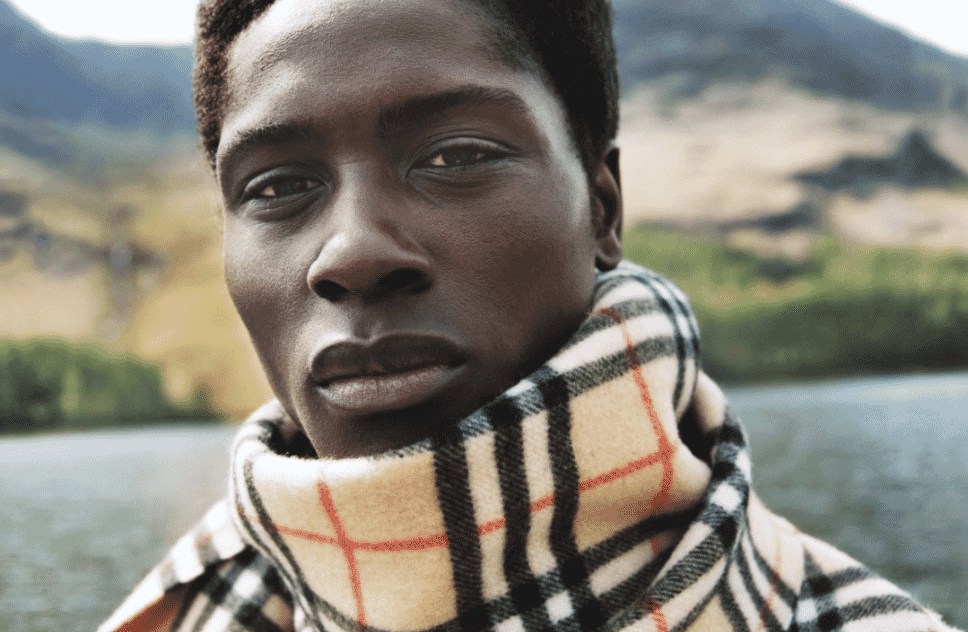
Burberry operates across three segments: accessories, ready-to-wear, and footwear. The beige, black, and red check pattern is recognisable anywhere in the world. The brand runs over 400 own-brand stores across markets including China, the United States, and Europe.
What sets Burberry apart is the combination of artisanal heritage and a strong digital presence. Burberry was one of the first luxury brands to livestream runway shows on social media, a move that helped reshape how high-end fashion connects with younger audiences.
Sourcing pattern
Burberry maintains UK production for its iconic trench coats at the Castleford factory in Yorkshire, but most ready-to-wear is produced in Italy and other EU countries. Portugal is part of Burberry's supply chain for select knitwear and accessories programs.
Citation Capsule: Burberry, founded in 1856, generates £2,000.5M (~€2,340M) in annual revenue and employs 8,450 people, positioning it as the UK's largest fashion brand by turnover (Burberry Annual Report, 2025).
2. Clarks: How Does a 200-Year-Old Brand Stay Relevant?
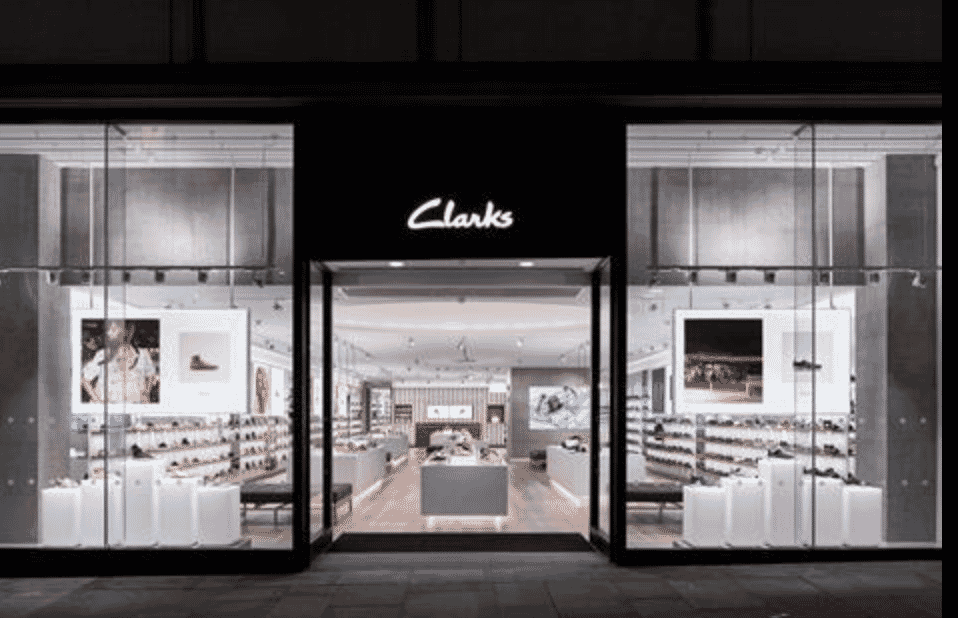
Clarks posts £901.3M (~€1,055M) in revenue and has 6,161 employees, making it the UK's second-largest fashion brand (Clarks Global, 2025). It's also the oldest on this list, founded in 1825 by Cyrus and James Clark in Street, Somerset.
The company started by making slippers from sheepskin. Over two centuries, it evolved into one of the world's biggest footwear brands. The Desert Boot, launched in 1950, remains a timeless classic.
What makes Clarks special
Clarks sells in over 100 countries. Its focus on comfort and durability appeals to a broad audience, from children to adults. In recent years, the brand has invested in more sustainable materials, aligning with the expectations of European consumers.
Is it a fashion brand or a functional footwear company? Both. Clarks manages to balance contemporary design with the practicality that made it famous.
Sourcing pattern
Clarks production sits primarily in Vietnam, India, and Cambodia, with selected European production for premium and heritage lines. UK manufacturing is limited to a small artisanal output for archive and limited-edition pieces.
3. Dr. Martens: What Explains the Cult Following?
Dr. Martens brought in £787.6M (~€922M) in revenue and employs 2,700 people, cementing its position as the UK's third-largest fashion brand (Dr. Martens PLC Annual Report, 2025). Founded in 1947 by Klaus Märtens, the brand was born in Germany but became a British cultural icon.
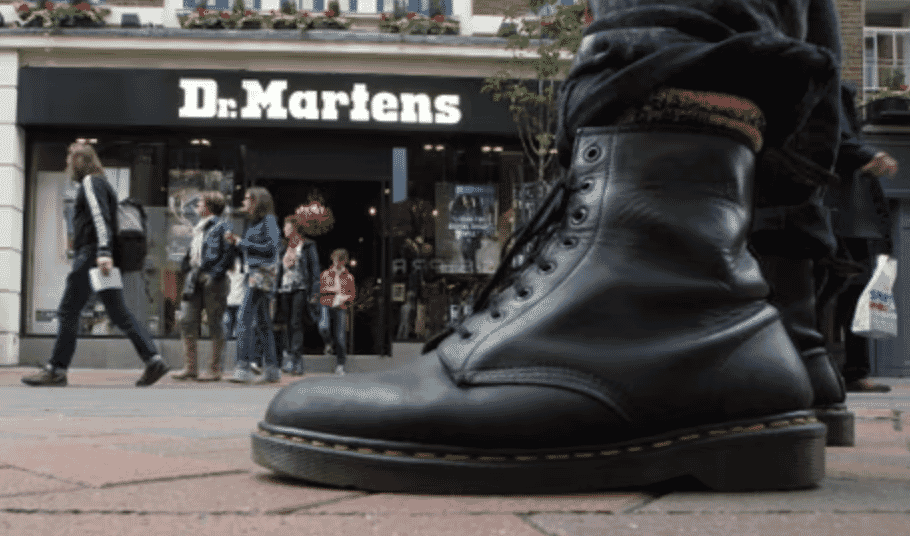
The backstory is fascinating: Märtens, a German doctor, designed a boot with an air-cushioned sole after injuring his foot while skiing. In 1960, the English company R. Griggs bought the patent and launched the iconic 1460, the eight-eyelet boot that changed everything.
Subcultures and identity
Dr. Martens have been adopted by punks, skinheads, grunge fans, and more recently, the mainstream fashion world. They're one of the best examples of how a utilitarian product can take on deep cultural meaning. The brand now sells boots, shoes, and sandals in over 60 countries.
The average price for a pair sits around £150 (~€175). Despite the premium positioning, demand stays high, especially among consumers aged 18 to 35.
Sourcing pattern
Dr. Martens production is primarily in Vietnam and China, with Made in England (MiE) lines produced at the original Cobbs Lane factory in Wollaston, Northamptonshire. The MiE collection commands a 30-50% premium and serves the heritage-conscious customer.
4. River Island: Affordable Fashion with a British Soul?
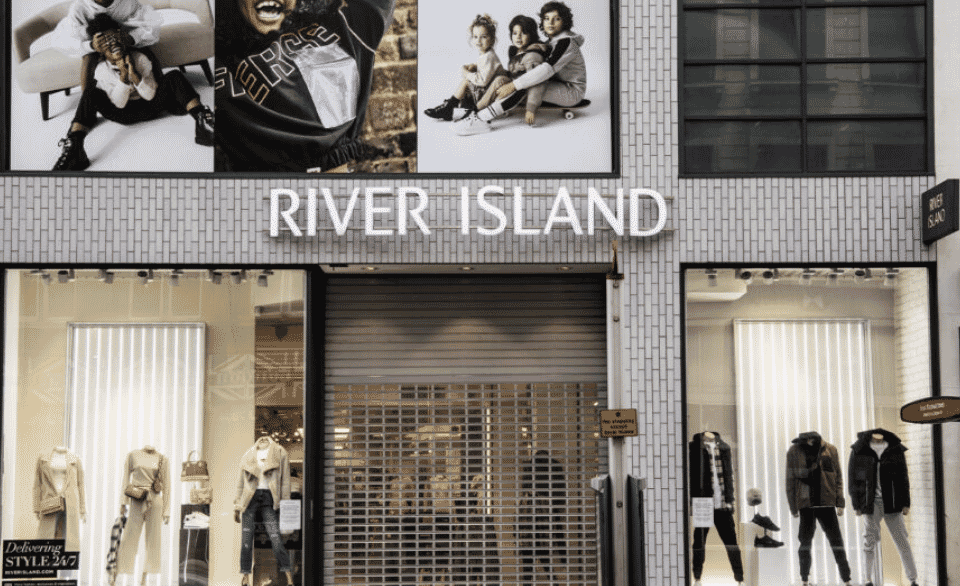
With £701.5M (~€821M) in revenue and 6,751 employees, River Island is the UK's fourth-largest fashion brand by turnover (Companies House UK, 2025). Bernard Lewis founded the chain in 1948, starting with a small shop in London.
River Island operates over 350 stores in the UK and internationally. The focus is fast, affordable fashion for men, women, and children. Unlike many competitors, the company remains owned by the founding family.
Audience and positioning
The brand sits between pure fast fashion (like Primark) and mid-range labels. Collections are refreshed frequently, keeping pace with runway trends. River Island also runs its own footwear and accessories line.
Family control is the differentiator. Since it's not publicly traded, the company can make long-term decisions without pressure from outside shareholders.
Sourcing pattern
River Island sources primarily from Bangladesh, China, Turkey, and Pakistan, typical for the affordable mid-market positioning. Portugal sourcing has grown for select premium collections and faster-cycle drops.
5. Alexander McQueen: Haute Couture with a Rebel Streak?
Alexander McQueen generates £670M (~€784M) in revenue and employs around 2,000 people, making it the UK's fifth-largest fashion brand (Kering Annual Report, 2025). Lee Alexander McQueen founded the label in 1992 in London and quickly became one of the most provocative designers of his generation.
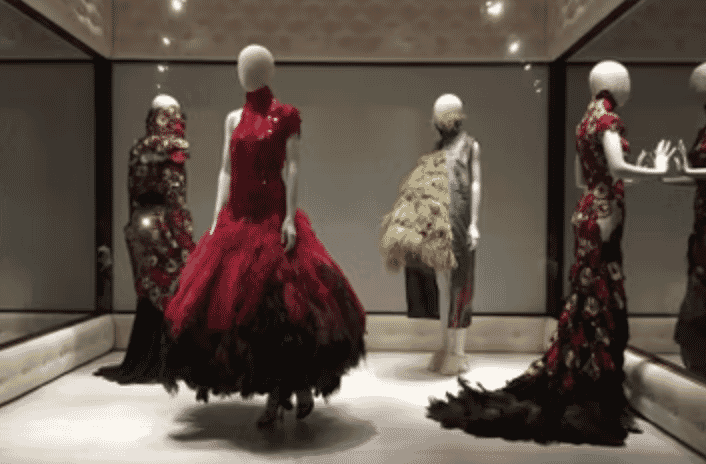
McQueen was known for theatrical runway shows and pieces that challenged convention. After his passing in 2010, creative direction passed to Sarah Burton, who preserved the brand's spirit. Since 2001, McQueen has belonged to the French group Kering.
Products and influence
The Oversized Sole trainers became a global phenomenon. The brand operates across ready-to-wear, accessories, and luxury footwear. Tailored pieces remain the heart of the collection.
Sourcing pattern
Alexander McQueen production is primarily Italian (Kering's preferred manufacturing geography), with select pieces produced in the UK and France. Portuguese production appears in selected knitwear and accessories programs across the broader Kering portfolio.
Citation Capsule: Alexander McQueen, founded in 1992 and part of the Kering group, generates £670M (~€784M) annually. The British brand is known for fusing haute couture with a rebellious attitude, with the Oversized Sole trainers as its signature product (Kering Annual Report, 2025).
6. Jimmy Choo: Luxury Shoes Made in Britain?
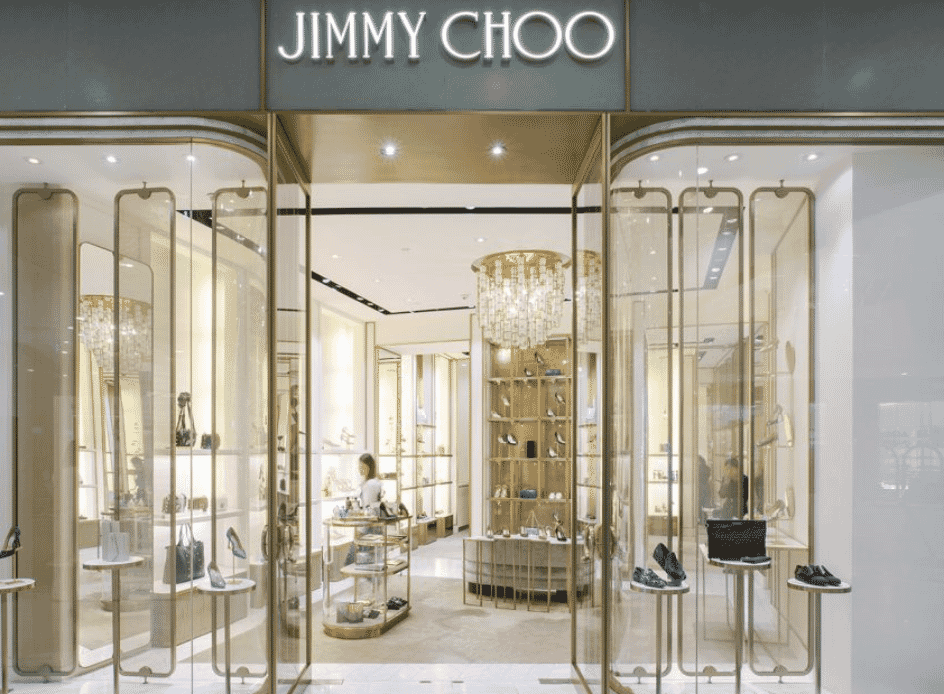
Jimmy Choo reports £618M (~€723M) in revenue and around 2,000 employees, placing it as the UK's sixth-largest fashion brand (Capri Holdings, 2025). Jimmy Choo and Tamara Mellon co-founded the brand in 1996 in London's East End.
Jimmy Choo, a Malaysian-born cobbler based in London, was already making bespoke shoes for Princess Diana. With Tamara Mellon, then an editor at British Vogue, he created one of the world's most coveted luxury footwear brands.
Expansion and products
Today, Jimmy Choo sells shoes, handbags, eyewear, and fragrances. The brand belongs to Capri Holdings (which also owns Versace and Michael Kors). Stilettos remain the house signature, but the luxury trainers line has grown significantly.
Three of the ten brands on this list (Clarks, Dr. Martens, and Jimmy Choo) are primarily footwear brands. This speaks to the historical weight of footwear in the British fashion industry.
Sourcing pattern
Jimmy Choo production is primarily Italian, in line with luxury footwear conventions. UK production is limited to bespoke and archive pieces.
7. Ted Baker: British Fashion with a Sense of Humour?
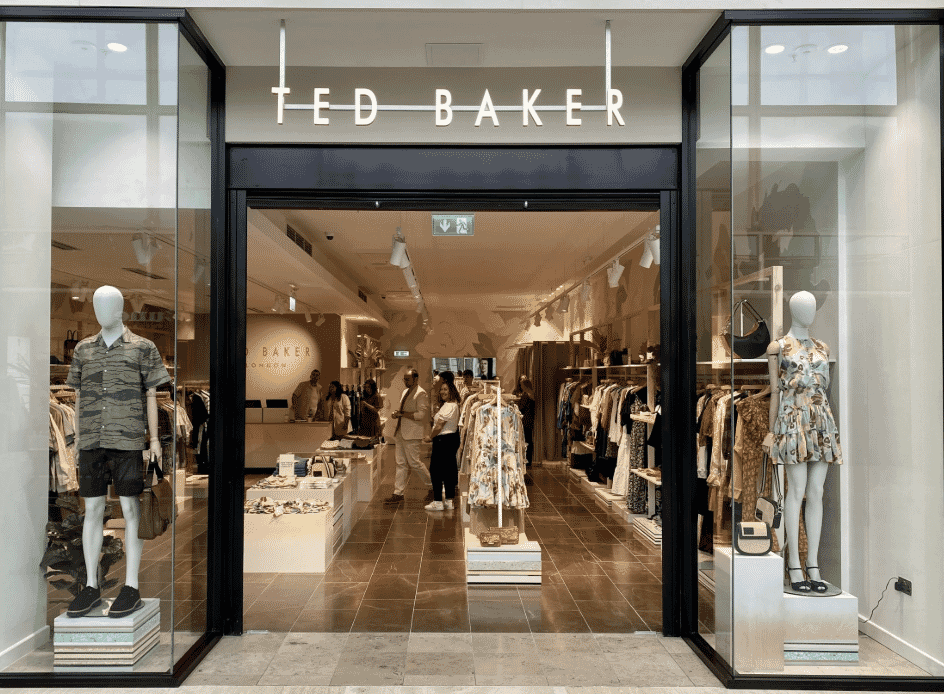
Ted Baker turns over £600M and employs 1,400 people, holding the seventh spot among the UK's largest fashion brands (Ted Baker Group, 2025). Ray Kelvin founded the brand in 1988 in Glasgow, starting as a men's shirt shop.
The name "Ted Baker" is entirely fictional. Kelvin chose it so he wouldn't risk his own name if the business failed. The brand is known for subtle humour in the details: hidden labels, unexpected patterns, and irreverent product descriptions.
Segments and markets
Ted Baker covers men's and women's ready-to-wear, accessories, fragrances, and homeware. The brand has expanded to over 50 countries, with a strong presence in the United States and the Middle East. The style blends British formality with eccentric touches.
Sourcing pattern
Ted Baker historically used Asian production for the bulk of its line, with European sourcing for premium pieces. Following a difficult 2023-2024 restructuring, the brand has shifted toward shorter supply chains where possible, including Portuguese production for select drops.
8. Superdry: Japanese Brand or British Brand?
Superdry posts £488.6M (~€572M) in revenue and has 2,200 employees, making it the UK's eighth-largest fashion brand (Superdry PLC, 2025). Despite the Japanese characters on the logo, the brand is 100% British, founded in 2003 by Julian Dunkerton and James Holder in Cheltenham.
The confusion around Superdry's origins is incredibly common. Many consumers assume it's a Japanese label. In reality, the Japanese-inspired aesthetic is purely a design choice, not an indication of where the company comes from.
Style and target audience
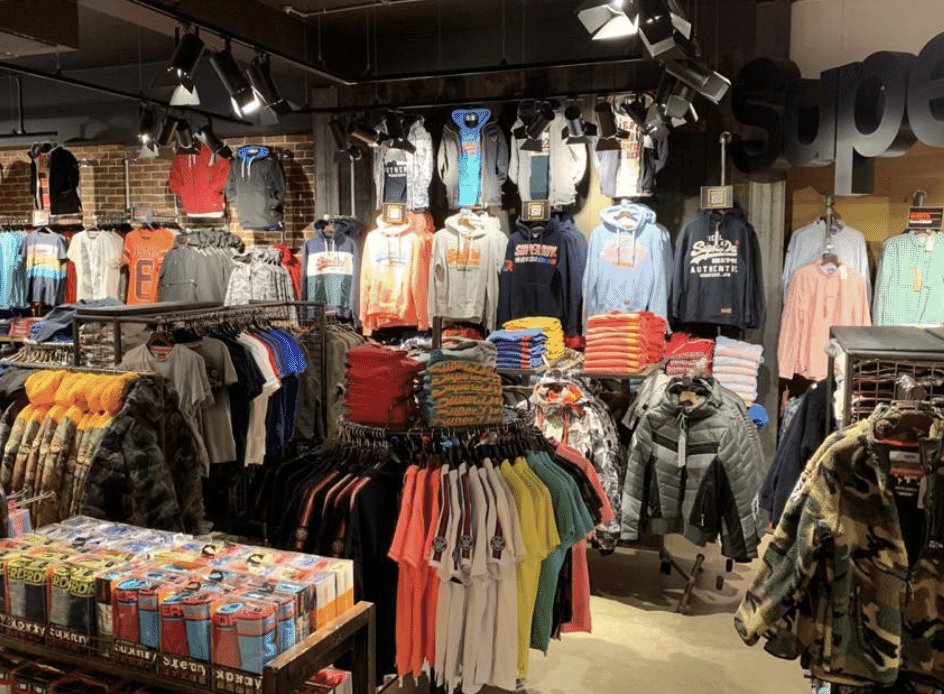
Superdry blends vintage American influences with Japanese-inspired graphics. Jackets and hoodies are the top sellers. The brand targets young adults, with prices ranging from £40 to £200.
In recent years, Superdry has doubled down on sustainability. The company has committed to becoming the most sustainable fashion brand on the planet by 2030, an ambitious goal for a company of this size.
Sourcing pattern
Superdry production has shifted toward Turkey and Eastern Europe over the past 5 years, with Portuguese production growing for organic cotton and certified-fabric programs as the sustainability strategy compounds.
9. AllSaints: Alternative Rock Meets Ready-to-Wear?
AllSaints brings in £459.5M (~€538M) in revenue and employs 2,400 people, sitting ninth in the ranking (AllSaints, 2025). Founded in 1994 in London, the brand started as a wholesaler before opening its own stores.
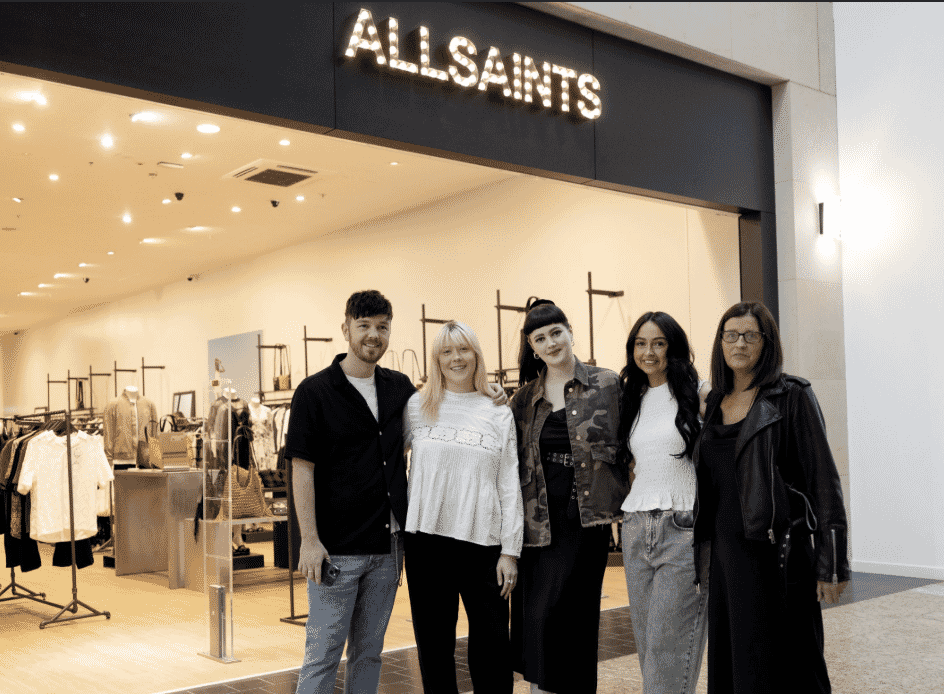
AllSaints shops are instantly recognisable thanks to the vintage sewing machines displayed in their windows, a visual touch that's become a trademark. The style mixes rock influences with relaxed tailoring. Leather jackets (and faux-leather alternatives) are the star product.
Market and expansion
AllSaints runs over 200 stores across 27 countries. The target audience falls between 20 and 40, with a mid-to-high price point. The brand has been steadily expanding its online presence, which now accounts for a significant share of total sales.
Sourcing pattern
AllSaints leather production is primarily in Turkey and Italy. Soft goods (tees, knitwear, sweatshirts) are sourced across Portugal, Turkey, and parts of Asia depending on price tier and certification requirements.
10. Barbour: Rural Heritage with Urban Appeal?
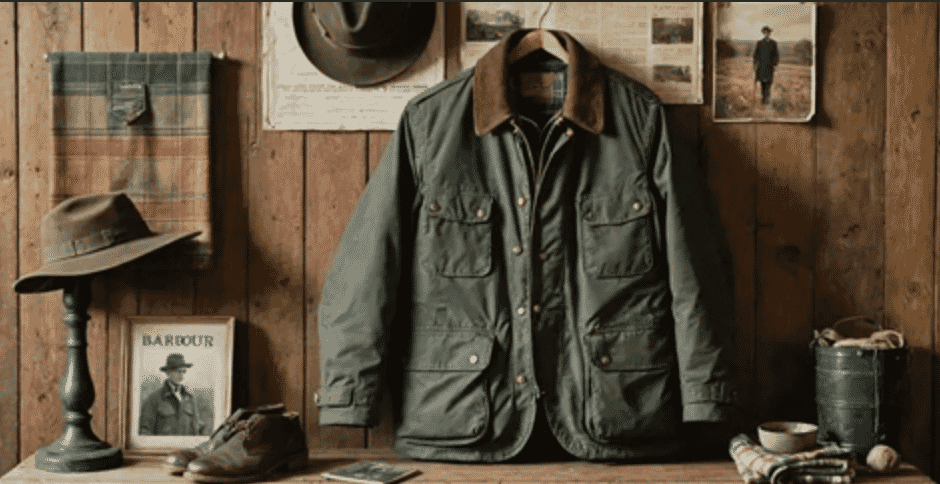
Barbour rounds out this ranking with £321.8M (~€376M) in revenue and 1,000 employees, but its cultural influence far exceeds those figures (Barbour, 2025). John Barbour founded the company in 1894 in South Shields, in the northeast of England, and it's become synonymous with waxed jackets.
Barbour originally supplied waterproof clothing to fishermen, sailors, and farmers. The British royal family has worn Barbour for decades, and the brand holds three Royal Warrants (from the King, the Queen, and the former Prince of Wales).
From countryside to city
What started as rural workwear has become an urban fashion staple. Barbour waxed jackets are worn on English country estates and city streets alike. The brand still manufactures many items at its original factory in South Shields.
Barbour is also a fascinating case of a family business. It's still owned and managed by the Barbour family, now in its fifth generation. That stability allows for a long-term vision that shows in the consistent quality of the products.
Sourcing pattern
Barbour is unusual on this list for retaining significant UK production. Iconic waxed jackets are still produced at South Shields, and the brand actively markets the British provenance. Soft goods (knitwear, shirts) are sourced internationally including Portugal.
What UK Brands Teach Emerging Founders About Portuguese Sourcing
The big UK brands above have collectively shaped how British fashion is produced and consumed. For emerging UK brands launching in 2026, the patterns they reveal are useful:
Pattern 1: Heritage brands keep some UK production
Burberry (Castleford), Dr. Martens (Wollaston), Barbour (South Shields). The brands with the strongest heritage-quality narratives retain UK production for hero pieces. The premium absorbs the higher cost.
Pattern 2: Premium-mid brands have shifted to Portugal and Italy
Premium-tier UK brands routinely source knitwear, soft goods, and accessories from Portuguese mills. The 5-day truck transit from Porto to London plus EU-tier quality and certifications make Portuguese production structurally favourable for premium-mid positioning.
Pattern 3: Mass-market remains in Asia and Turkey
River Island and similar mid-market chains still source primarily from Bangladesh, China, and Turkey. Portuguese production rarely competes economically below £40 retail (~€47).
Pattern 4: Sustainability-led brands moved earlier
Superdry's pivot to certified fabrics drove their Portuguese sourcing growth. The pattern repeats across UK premium brands: sustainability strategy → certified-fabric requirements → Portuguese mill partnerships.
Realistic Portuguese-produced costs for emerging UK brands
| Garment | CMT €/unit (200 units) | All-in cost €/unit | Typical UK retail (DTC) £ |
|---|---|---|---|
| Heavyweight tee (220 GSM) | €4-€6 | €8-€11 | £35-£70 (~€41-€82) |
| Heavyweight hoodie (350 GSM) | €11-€16 | €22-€32 | £85-£140 (~€100-€164) |
| Wool overshirt | €18-€28 | €35-€55 | £150-£250 (~€176-€293) |
| Tailored blazer | €28-€42 | €55-€85 | £250-£420 (~€293-€493) |
| Waxed jacket (Barbour-adjacent) | €35-€55 | €70-€110 | £280-£480 (~€328-€562) |
Sources: PCF aggregated factory quotes 2024-2026.
Brand Archetype: Which UK-Style Approach Fits Which Founder
Different founder types match different UK-fashion approaches. From our placement records:
| Founder archetype | Best UK-style approach | Why |
|---|---|---|
| Heritage / craft-focused | Barbour-style with UK or PT factory partnership | Quality-led narrative |
| Subculture-driven | Dr. Martens-style cultural alignment | Authenticity over hype |
| Premium contemporary | Burberry / McQueen-style premium positioning | Retail tier supports premium |
| Tailoring-led | Ted Baker / Filippa K hybrid | British formality with twist |
| Luxury footwear | Jimmy Choo-style premium positioning | Italian production preferred |
| Affordable fashion | River Island-style fast turnover | Asia + Turkey sourcing |
| Sustainability-led | Superdry-pivot-style certified materials | Portugal grows with this strategy |
| Streetwear-adjacent | AllSaints-style rock-influenced | Mid-tier €/£ retail |
| Provocative / avant-garde | McQueen-style theatrical | Fashion-week scheduling |
Source: see in-text citations in this section.
If you recognise yourself, lean toward your archetype's approach unless you have a specific reason not to.
Common Mistakes Emerging UK Brands Make
Five years of placement records surface a recurring set of mistakes for emerging UK brands sourcing internationally:
- Trying to compete with River Island on price. Mass-market UK pricing requires Asian-volume scale that emerging brands can't match. Compete on positioning, not price.
- Forgetting post-Brexit customs realities. UK to EU shipping requires customs declarations and VAT handling. Brands sourcing in Portugal need to factor 30-60 minute longer customs processing vs pre-Brexit.
- Skipping certifications for premium positioning. Above £80 retail, UK customers increasingly check for OEKO-TEX, GOTS, or B Corp. Brands without verifiable certifications face friction.
- Underestimating shipping cost from Portugal. UK delivery from Portugal: €0.80-€1.50 per unit on bulk freight, €4-€8 per unit on small consignments. Plan accordingly.
- Not registering trademark with UK IPO and EUIPO. Post-Brexit, UK and EU registrations are separate. UK IPO costs £170 minimum; EUIPO €850. Brands skipping one face exposure on either side.
- Choosing factory tier wrong. First UK launches at 100-200 units belong at Portuguese specialist factories. Large export-tier factories optimised for 1,000+ unit orders ignore or over-quote small briefs.
- Ignoring the August Portuguese factory shutdown. Most Portuguese factories close 2-3 weeks in mid-August. UK AW launches need fabric locked by mid-July.
- Imitating Burberry without resources. Heritage British brands have 100+ years of equity. Emerging brands attempting heritage positioning without distinctive product fail consistently.
Running into production issues? Get in contact and tell us what you're making. We're a group of Portuguese factories and we answer every serious brief within 24 hours.
The August Consideration for UK Brands
Most Portuguese factories close 2-3 weeks in mid-August. UK brands targeting AW season drops are particularly affected because production typically peaks in July-August. If your timeline crosses early-to-mid August:
- Lock fabric and trim sourcing by mid-July
- Sample rounds across August add 4-5 weeks vs October cycles
- AW drops shipping early September must clear bulk by late July
- Add 1-2 days for post-Brexit UK customs processing on bulk shipments
UK brand teams new to Portuguese sourcing routinely underestimate the August gap. Build it into your launch calendar from day one.
What the UK's Biggest Fashion Brands Teach Us
The 10 largest clothing brands in the United Kingdom collectively generate over £7.5 billion in revenue and employ more than 33,000 people. The numbers only tell part of the story.
What connects these brands is their ability to turn tradition into contemporary relevance. Burberry reinvented itself for the digital era. Dr. Martens went from a work boot to a cultural symbol. Barbour brought rural clothing into the city.
For anyone working in the textile industry, or anyone who simply appreciates quality fashion, these brands offer lessons in longevity, identity, and adaptation. Five of them are over 75 years old. Three have passed the century mark. They're all still growing.
Talk to a real person: Building a UK brand and considering Portuguese production? Get in contact and we'll route your brief to Portuguese factories that understand UK market expectations.
Frequently Asked Questions About British Clothing Brands
What's the biggest clothing brand in the UK?
Burberry is the largest British clothing brand by revenue, bringing in £2,000.5M (~€2,340M) annually (Burberry Annual Report, 2025). Founded in 1856, the brand operates in over 30 countries and is famous for its iconic check pattern and trench coats. Its revenue is more than double the runner-up, Clarks.
Do British fashion brands manufacture in the UK?
It depends on the brand. Barbour maintains significant production in South Shields, England. Burberry produces some items in British factories, including its trench coats. Dr. Martens has the Wollaston Made in England line. Most other brands, especially fast-fashion names like River Island, outsource production to factories in Asia, Turkey, and Eastern Europe.
Which of these brands sell internationally?
All of them have international reach, at minimum through e-commerce. Burberry, Dr. Martens, and Jimmy Choo have retail locations in major cities worldwide. River Island and Superdry sell through their online stores to global markets. Clarks has authorised multi-brand retailers in numerous countries.
What makes British fashion different from other European traditions?
British fashion combines three elements: a strong tailoring tradition (Savile Row), subcultural influence (punk, mod, grime), and unapologetic eccentricity. While Italian fashion favours understated luxury and French fashion leans toward elegance, British fashion tends to be bolder and more irreverent. According to the British Fashion Council, this diversity is the sector's greatest asset.
Are British brand pieces worth the investment?
In terms of durability, brands like Barbour, Dr. Martens, and Clarks offer products built to last for years. A Barbour waxed jacket can last over a decade with proper care. For luxury pieces, Burberry and Alexander McQueen hold strong resale value on the secondhand market.
Can a new UK brand realistically produce in Portugal?
Yes, easily. Portuguese factory MOQs of 100-300 units per style align well with first-collection UK brand volumes. The 5-day truck transit from Porto to London makes Portugal one of the most logistically convenient EU sourcing options for UK brands. Post-Brexit, customs processing adds 30-60 minutes per shipment but doesn't fundamentally change the economics.
What's the realistic launch budget for an emerging UK brand?
Production-only investment for a 6-piece UK-positioned capsule produced in Portugal: £15,000-£40,000 (~€17,500-€47,000). All-in (including branding, photography, e-commerce, launch marketing): £30,000-£75,000 (~€35,000-€88,000). Brands launching below £30,000 all-in typically have either marketing or production undercooked.
How does Brexit affect UK brand sourcing in Portugal?
UK to EU shipping now requires customs declarations and VAT handling. Practical impact: 30-60 minute processing delay, plus paperwork. Brands using established freight forwarders (DHL, FedEx, UPS) handle the customs side smoothly. Total Brexit-driven cost addition: €0.30-€0.80 per unit on bulk freight, manageable across most price tiers.
Should I copy the heritage strategy of Burberry or Barbour?
Heritage strategy works only with genuine heritage. Emerging brands without 50+ years of history cannot credibly claim heritage positioning. Better strategies: distinctive product (subcultural like Dr. Martens), category specialisation (technical like Barbour's waxed jackets), or community-led identity (modern like AllSaints). Heritage is the hardest moat to fake.
What's the certification requirement for UK retail?
For retail above £80 (~€94), expect customers to look for OEKO-TEX, GOTS, B Corp, or similar. Below £40 (~€47), certifications matter less but the Green Claims Directive (which applies in EU markets, increasingly mirrored by UK CMA) penalises vague sustainability claims regardless of price tier. Specific, certified language is the safe approach.
We're a group of 80 documented Portuguese clothing factories based in Porto and Guimarães. Tell us your product, volume, and timeline. We'll route your brief to the right factory in the group, usually within 24 hours. You work directly with the factory. No commissions, no pitch, no upsell.
Get in contact Download the directory (€39)Need a tech pack? Get a factory-ready single-style tech pack for €79. See what's included.
Sources
- British Fashion Council - UK Fashion Industry Reports
- Burberry Annual Report (2025)
- Clarks Global (2025)
- Dr. Martens PLC Annual Report (2025)
- Companies House UK (2025)
- Kering Annual Report (2025)
- Capri Holdings (2025)
- Ted Baker Group (2025)
- Superdry PLC (2025)
- AllSaints (2025)
- Barbour (2025)
- PCF internal placement data (2024-2026), aggregated across UK-based brand placements
Related reading
- Top 10 Portuguese clothing factories
- Nearshoring fashion production to Portugal
- Scandinavian fashion brands guide
- Top clothing brands from the Netherlands
- Top clothing brands from France
- Top clothing brands from Italy
- The best European clothing brands in 2026
- Common mistakes when starting a clothing brand