Athletic clothing manufacturers serve two businesses that look alike and behave very differently. One is performance apparel sold to individuals, where fabric and fit carry the product. The other is team and club kit, where the garment carries names, numbers and sponsor logos, and where the decoration method shapes almost everything about how the order runs. A factory that is excellent at one is not automatically good at the other.
This guide covers both. It explains what performance fabric has to do, why sublimation changes the production model, how printed and embroidered decoration compare, what makes team kit different, which construction details matter, what a tech pack should contain and how minimums behave. It also uses trade data to show where sports garments are made and what that means for a brand producing in Europe. For our own production page, see activewear and sportswear manufacturing in Portugal.
What to know
- Sublimation prints the fabric before cutting, which reverses the normal order of production and makes late changes expensive.
- Performance fabric is judged on moisture movement and recovery, not on how it feels in the hand.
- Team kit depends on numbering, squad sizing and identical reorders, more than on unit price.
- Flat, stretchy seams are required: flatlock and coverstitch machinery separates athletic specialists from general factories.
- China dominates tracksuit exports, at $224.7m of synthetic knitted tracksuits in 2024, while European exporters sell far fewer pieces at a much higher average value (WITS).
What does performance fabric have to do?
Move moisture, recover after stretching, survive repeated washing and not hold odour. Those four jobs decide whether an athletic garment works, and none of them can be judged by touching a swatch.
Moisture management is the core function
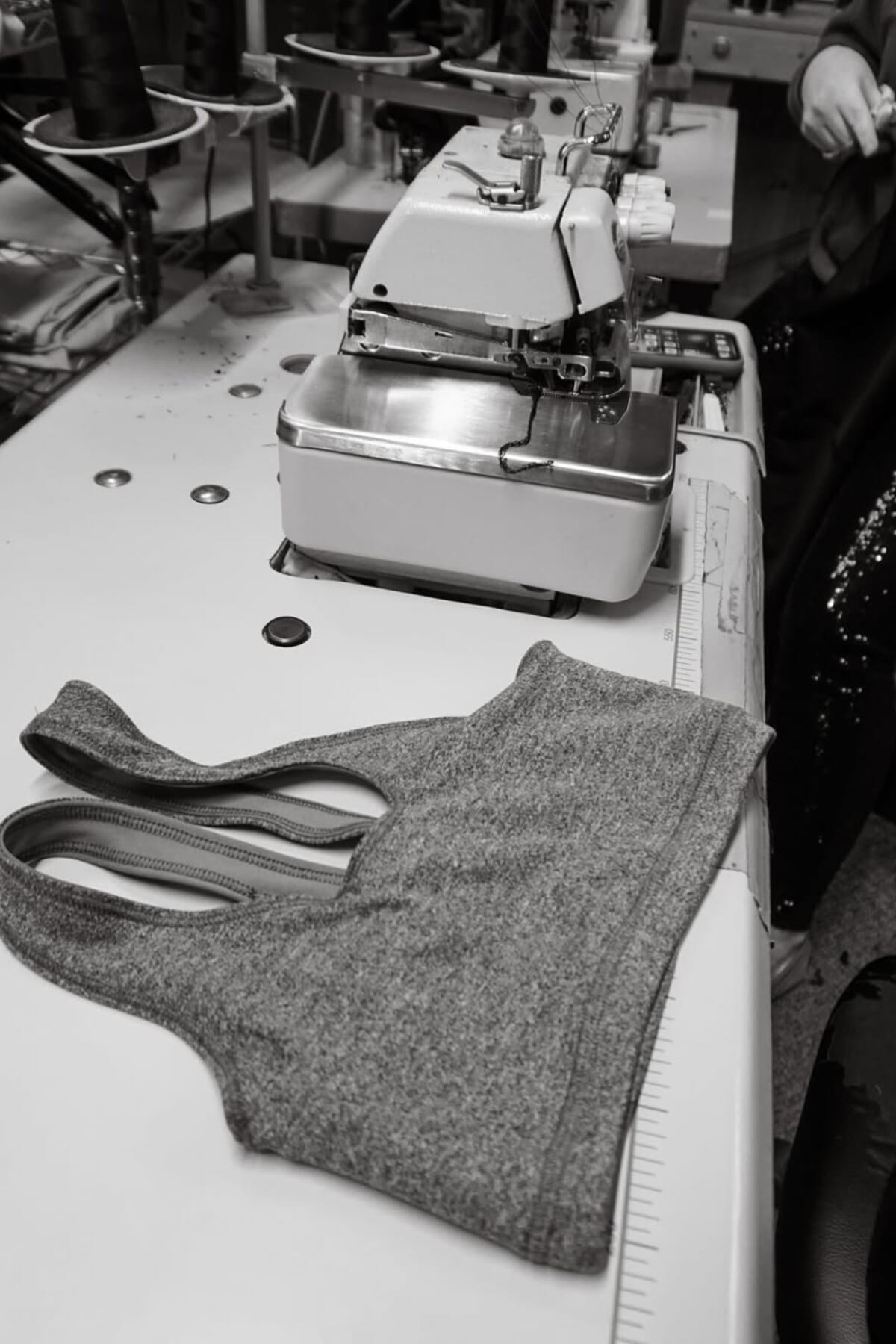
Performance fabric works by moving perspiration away from the skin and spreading it across a wider surface so it evaporates. That behaviour comes from fibre choice, knit construction and finishing together, not from any single property on a data sheet. A fabric that holds moisture makes the garment heavier and colder as it is worn, which is the failure athletes notice first and complain about most.
Recovery determines the fit over time
Stretch that does not return leaves a garment baggy at the knee, elbow and seat within a single session. Recovery is the property that decides whether athletic clothing still fits at the end of use, and two fabrics with the same elastane content can recover very differently. Ask the mill or the factory for recovery results after repeated stretching and washing, not only for the composition.
Odour is a real specification
Synthetic performance fabrics tend to retain odour more readily than natural fibres, which is why antimicrobial finishes and wool blends exist in the category. If a brand makes a claim about odour control, that claim needs the same evidence as any other product claim. Repeating a fabric supplier’s marketing line on a product page is not evidence.
Washing is aggressive and frequent
Athletic clothing is washed after almost every use, often warm and often with sports detergents. Colour fastness, print durability, elastic retention and fabric recovery all have to survive that cycle many times over. Testing it before production is the only way to know, because none of those failures is visible on a new garment.
How does sublimation change production?
It prints the fabric before it is cut, which reverses the normal order and removes most decoration limits. It is the reason team kit can carry full-colour designs at a sensible cost, and also the reason sublimated programmes are less forgiving of late changes.
The fabric is printed first
In sublimation, the design is printed onto transfer paper and then transferred with heat onto the fabric roll or onto cut panels before the garment is assembled. The dye goes into the fibre rather than sitting on its surface. The print therefore cannot crack, peel or stiffen the fabric however hard the garment is used, which is why the method is so common in team kit that takes abrasion and frequent washing.
Design complexity costs little extra
Because the whole panel is printed, full-coverage graphics, gradients and individual names and numbers add little cost compared with a plain printed panel. That turns the usual economics of decoration upside down. In screen printing, every extra colour and placement adds a screen and a set-up; in sublimation, the cost sits mostly in the printing and pressing, whatever the design looks like.
It only works on polyester
Sublimation dye bonds with polyester. It does not take on cotton, which limits the fabric choice absolutely. A brand that wants a cotton feel and full-coverage sublimated graphics is asking for two things that do not go together. Blends with a high polyester share can be sublimated, but colours come out paler as the cotton share rises, so test the exact fabric before committing.
Production is less flexible afterwards
Panels are printed for specific garments and sizes before cutting, so a sublimated programme is harder to change late and harder to move between sizes. A plain garment decorated after sewing can be reallocated until the last moment; a sublimated panel printed for a size large number seven cannot. The efficiency comes with an early commitment.
What about printed and embroidered decoration?
Screen print, heat transfer and embroidery all still have a place, with different durability and cost structures. The right choice depends on the fabric, the run length and how hard the garment will be used.
Screen printing on performance fabric
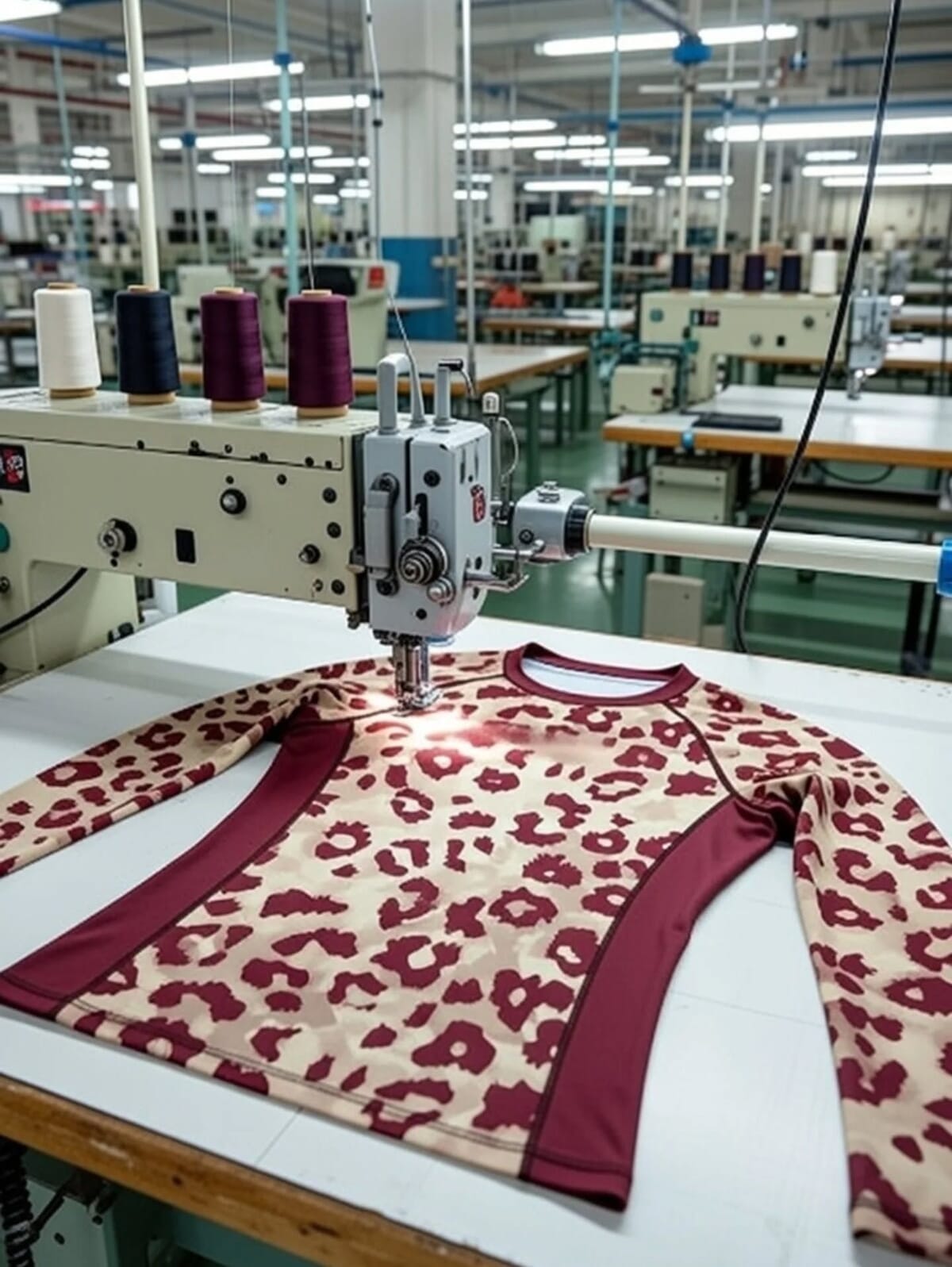
Screen print sits on the surface of the fabric. On stretch fabric it can crack, peel or stiffen with heavy use and frequent washing, because the ink film does not move as much as the cloth. Stretch inks reduce the problem, and a good printer will test adhesion on the actual fabric, but the limitation is real. That is why performance-heavy garments tend towards sublimation, while screen print works well for training tees, leisure pieces and cotton-rich garments.
Heat transfer for names and numbers
Transfers allow individual names and numbers on a plain garment without printing the fabric first. That suits small squads, late additions and garments bought as stock. Transfers are less durable than sublimation under abrasion, and the edge of the transfer is where peeling starts, so ask for wash test results on the fabric you will use.
Embroidery on knits needs backing
Embroidering onto a stretch knit needs the correct backing and tension, or the design puckers after the first wash and never recovers. Embroidery also adds weight and local stiffness, which matters far more in a garment worn during exercise than in a casual top. It suits crests on jackets, polos and leisurewear better than large placements on base layers.
Choose the method by use
A training top worn twice a week and a playing shirt worn in contact have different durability needs. Choosing decoration by unit cost alone, without asking how hard the garment will be used, is how a programme collects complaints in its first season. Write the use case into the brief, and let the factory and printer propose the method that fits it.
| Method | Works on | Durability under heavy use | Cost structure |
|---|---|---|---|
| Sublimation | Polyester and high-polyester blends, light base colours | Very high: dye is inside the fibre | Little extra cost for complex designs; artwork needed early |
| Screen print | Most fabrics; stretch inks for stretch fabric | Medium on stretch fabric; good on cotton | Set-up per colour and placement; cheaper on longer runs |
| Heat transfer | Most fabrics, including stock garments | Medium: edges can lift over time | Low set-up; suits names, numbers and late changes |
| Embroidery | Wovens and stable knits, with backing | High, but adds weight and stiffness | Digitising set-up plus stitch count |
What makes team kit different?
Sizing across a known squad, numbering that has to be right and reorders that have to be identical. Retail production plans for unknown customers; team kit is made for named people on a fixed date.
A squad is not a size curve
Team kit has to fit a defined group of individuals rather than a statistical spread of customers. The size split is known in advance and is often unusual, with more large sizes in some sports and more small ones in youth teams. Ordering a standard retail size curve for a specific squad produces the wrong garments in the wrong quantities.
Numbering has to be right
Names and numbers are unforgiving. An error is visible to every spectator, cannot be corrected on the garment and cannot be sold to anyone else. Checking the numbering list before production is a genuine process step, not an administrative formality, and it is the point where these programmes most often go wrong.
Reorders have to be identical
A player joining mid-season needs a garment that looks the same as the rest of the squad, so the fabric, the colour and the decoration all have to be repeatable. A programme built on a fabric that cannot be bought again, or a colour that was mixed for one run only, fails halfway through the season. Ask at the start how long the fabric will stay available and keep approved colour standards.
The date drives everything
Kit is needed for a season start, a tournament or an event that will not move for a factory. A delay in this category is a failure, not an inconvenience. That is one of the strongest arguments in apparel for producing close to the market rather than chasing the lowest unit price, because the cheapest kit that arrives after the season has started is worth very little.
What construction do athletic garments need?
Flat seams, stitches that stretch and reinforcement where the garment takes load. These are functional requirements, and they decide which factories can make the product at all.
Flatlock and coverstitch
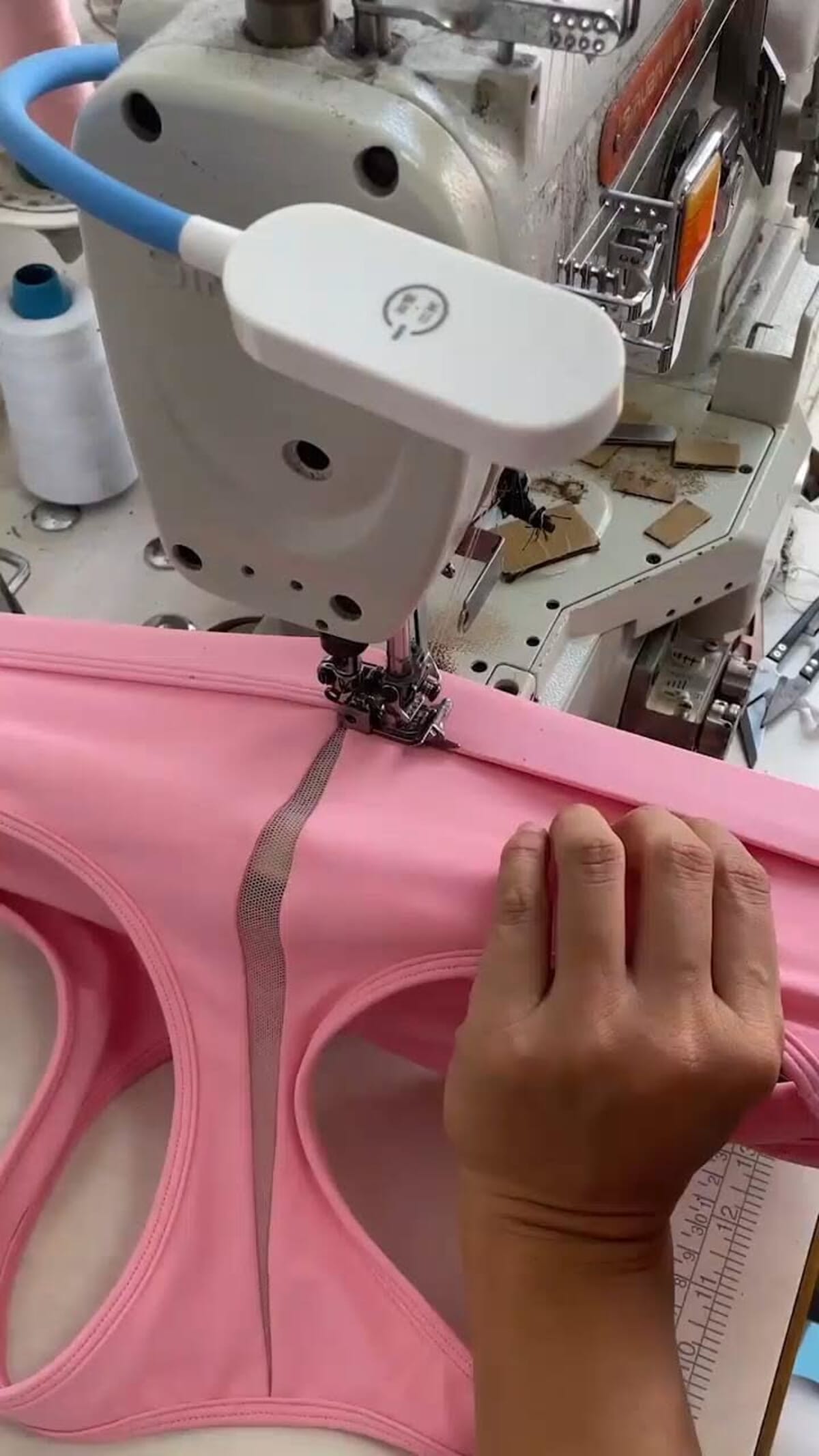
Close-fitting garments worn against the skin during movement need flat, low-bulk seams. A raised seam under a strap or at the inner thigh causes chafing, and chafing ends a garment’s use faster than any fabric fault. Flatlock and coverstitch machines are standard in knitwear factories and missing in many general ones, so ask about them in the first message.
Seams have to stretch
A seam that does not stretch with the fabric breaks under load. Stitch type, stitch density and thread choice matter as much as the fabric’s own elasticity. This is a common failure in garments made by factories used to woven construction, where a lockstitch seam is normal and works perfectly well.
Reinforce the stress points
Underarm, crotch and shoulder seams take the most load in athletic use. Reinforcement at those points, such as a gusset, a bartack or a taped seam, is functional rather than decorative. It costs little to add and it is exactly where garments fail when it is missing.
Elastic and binding
Waistbands, cuffs and hems rely on elastic or binding that has to keep its tension through heavy washing. Elastic is often the first component to fail and the one most often left unspecified. Name the elastic type, width and how it is applied in the tech pack, and include it in the wash test. Our guide to leggings manufacturers goes into waistbands and gussets in more depth.
Where are athletic clothes made?
Mostly in Asia, with Turkey and Europe supplying fewer pieces at higher values. Customs data has no single line for all athletic clothing, but it does have one for knitted tracksuits, which is a fair window into sports garment production. The figures below are export values reported to UN Comtrade and published by the World Bank’s WITS service, for synthetic knitted tracksuits (HS 611212).
In 2024 China exported $224.7m of synthetic knitted tracksuits, ahead of Germany ($66.6m), Turkey ($60.8m) and Cambodia ($42.0m). China’s figure was down from $285.9m in 2023, even though the number of items it exported rose to about 44.6 million. Turkey grew from $50.3m to $60.8m over the same two years. Germany’s position mostly reflects trade through European distribution hubs rather than large-scale sewing, which is a reminder that export statistics show where goods ship from, not always where they were sewn.
For cotton tracksuits (HS 611211) the order changes: Turkey was the largest exporter in 2024, at $80.3m, ahead of Germany at $61.1m. That fits what brands see in practice. Synthetic performance pieces are concentrated in large Asian factories, while cotton-rich leisure and training wear is a strength of Turkey and of European producers.
What the average value per piece shows
Dividing export value by the number of items gives an average value per tracksuit. It is a rough measure, because it mixes cheap and premium products and includes re-exports, but the gaps between countries are large enough to be meaningful.
On the 2024 figures, an average synthetic tracksuit exported from China was worth about $5.04, from Cambodia $5.84 and from Turkey $8.58, against $19.49 from Portugal. Portugal’s cotton tracksuits averaged $24.71. The difference is not only labour cost. Europe’s exports in this line are mostly smaller, branded and premium runs, while the Asian totals include very large volume programmes for global sportswear brands.
Where Portugal sells its tracksuits
In 2024 Portugal exported $1.71m of synthetic knitted tracksuits, with Spain taking $946k, followed by Ireland ($290k), the Netherlands ($92k), Germany ($52k) and Angola ($45k). Its cotton tracksuit exports were larger, at $2.65m, again led by Spain ($1.32m). Both lines are small next to the Asian totals, and that is the point: Portugal is not a volume source for athletic basics, but a place where European brands make smaller, better-specified runs close to their customers.
What should the tech pack contain?
Fabric with its performance properties, the decoration method, construction at each seam and the sizing basis. In athletic wear, every open question in the tech pack becomes a sampling round.
Specify fabric by property
State fibre content, weight, elastane share, knit construction and any finish, then describe the performance you need: moisture behaviour, recovery, opacity and pilling resistance. Describing a requirement lets a supplier respond; naming a competitor’s fabric that the supplier has never seen does not.
Name the decoration method
Sublimation, screen print, transfer or embroidery, with the placement and size of each design. Because sublimation is printed before cutting, this decision changes the production sequence and cannot be left open until after sampling.
Construction at each seam
Seam type, stitch type, stitch density and where reinforcement is required. In a garment worn under load these are functional specifications, and a factory will fill any gap with its own default, which may be a woven-style seam.
Sizing basis and the size list
For team kit, supply the actual quantities per size and the numbering list, not a curve. For retail product, supply a full measurement chart with tolerances at every fit point, measured after washing. If you do not have a tech pack yet, our tech pack service prepares one that a factory can quote from.
- Fabric: composition, weight, construction, stretch and recovery, shrinkage after washing.
- Decoration: method, artwork files, placement, size and colour references.
- Construction: seam and stitch types, reinforcement points, elastic and binding.
- Sizing: graded measurement chart with tolerances, or the squad size list and numbering list.
- Testing: the wash, colour fastness and seam strength checks you expect before bulk.
- Packing: labels, care instructions, folding and any per-player packing.
What are realistic minimums and costs?
Fabric and decoration method set the floor, and sublimation changes the arithmetic. Minimums attach per style and per colourway, and the fabric minimum is often the one that binds.
Fabric minimums apply as usual
Performance knit minimums are quoted per construction and per colour, and technical knits are less often held in stock than cotton jersey. A custom-engineered fabric can carry a mill minimum well above the garment minimum. Where a sublimated programme is printed on white base fabric, that constraint eases, because one base fabric serves every design.
Sublimation removes the colour penalty
Because the design is printed onto the cloth rather than dyed into it, a sublimated programme does not need a separate fabric commitment for every colourway. For a brand or club running many designs in small quantities, that is a decisive advantage over dyed fabric, and it is the reason the model is so widespread in team sport.
Decoration cost structures differ
Screen printing carries a set-up per colour and per placement, embroidery carries a digitising cost and a price per stitch count, and sublimation carries neither once the fabric is being printed anyway. Choose the method by run length as well as by durability.
Our minimums
On the athletic and activewear runs we place, minimums are 50 to 100 pieces per style and colour, and we can be flexible. A sample usually takes 2 to 3 weeks and production 7 to 9 weeks. For team kit, a single squad can be smaller than a sensible run, which is why club programmes are usually grouped across teams, age groups or a full season. Our page on minimum order quantities in Portugal explains how minimums work across sizes and colours.
Why produce athletic clothing in Portugal?
Knitting and sewing close together, the right machinery and short lead times into a deadline-driven category. The wider European picture also explains why smaller briefs get answered.
The EU-27 textile and clothing industry has about €166 billion in annual turnover, 1.2 million jobs and nearly 200,000 companies, according to EURATEX. Most of those companies are small and medium-sized, and many are used to runs far below the volumes the large Asian sportswear factories are built for.
Technical knitting exists in the cluster
The northern Portuguese textile region knits as well as sews, and performance constructions with stretch and moisture management are produced there as well as imported. The range is narrower than the global technical fabric market, so very specialised fabrics may still come from Italy, Asia or elsewhere, but the base is real and close to the sewing floor.
The machinery is standard
Flatlock and coverstitch machines are routine equipment in the region’s knitwear factories rather than a special request. That removes the first obstacle brands meet when they source athletic clothing from general apparel factories.
Deadlines are easier to protect
Season starts and event dates do not move. Production inside the EU, with road freight across the continent and a factory close enough to visit, makes it easier to protect the date the category depends on. It also keeps customs paperwork simple for brands selling inside the EU.
Reorders are fast
Mid-season replacements, new squad members and retail restocks all need to arrive quickly and look the same as the first run. Short lead times and a stable relationship with one factory make that practical. Our guide to sport clothing manufacturers covers the wider sportswear category.
What mistakes do brands make here?
Choosing decoration by cost, ordering team kit to a size curve, asking for cotton with sublimation and skipping wash tests. Each one is avoidable at the brief stage.
Picking the cheapest decoration
Screen print can be cheaper than sublimation on some runs and is less durable under abrasion and frequent washing on stretch fabric. Choosing by unit cost without asking how hard the garment will be used produces complaints in the first season.
Using a size curve for a squad
Team kit fits named people whose sizes are known. Ordering to a retail distribution produces garments that do not fit the people who will wear them, which is an entirely self-inflicted problem.
Asking for cotton and sublimation
Sublimation bonds with polyester and will not work on cotton. The combination is requested regularly and cannot be delivered, and finding out late costs a development round.
Not testing the wash cycle
Athletic clothing is washed after almost every use. Print durability, elastic retention, colour fastness and fabric recovery all have to survive that, and none of it shows on a new garment. Wash the approved sample several times before you sign off bulk.
How do you run a club or team programme?
Group the volume, lock the design early, check the name list twice and plan the mid-season stock before the season starts.
Group teams and seasons
A single squad rarely reaches a sensible production quantity on its own, so club programmes work by combining several teams, age groups or a whole season into one order. Planning that before approaching a factory turns a brief nobody wants to quote into a straightforward one.
Lock the design before production
Because sublimation prints panels before cutting, a design change after printing wastes fabric rather than adjusting a plan. Sponsor logos in particular tend to arrive late and change late, so build a hard cut-off date into the schedule and share it with sponsors early.
Check the name list twice, from two sources
A misspelled name or a duplicated number is visible to everyone, cannot be sold and has to be remade. Checking the list against a second source, such as the club’s registration records, before production starts is where these programmes are won or lost.
Order the mid-season stock at the start
Players join, garments get lost and sizes change during a season. Producing a small buffer of unnumbered garments in common sizes with the original run costs far less than a second production run for a handful of pieces, and it is the difference between serving a mid-season need and turning it down.
What does the development timeline look like?
Fabric and decoration decisions first, then samples, with the schedule built backwards from a date that will not move.
Work back from the date
Season starts, tournaments and events happen on fixed dates, which makes this one of the few categories where late delivery is a total failure. Build every schedule backwards from that date, with real slack rather than optimistic estimates for each stage.
Decoration method decides the sequence
A sublimated programme prints before cutting, so artwork has to be final much earlier than in a programme where garments are decorated after sewing. Brands used to the second model regularly underestimate how early the first needs artwork approval.
Sample in the real fabric and method
A sample made in a substitute fabric, or decorated by a different method from the production run, tells you little about the finished product. Sublimated colour in particular behaves differently from screen print, and approving the wrong version leads to a surprise at delivery.
Leave time for the last mile
Numbering, packing per player and distribution all happen after production and all take longer than expected. A schedule that ends at the factory gate has left out the stage where a programme most often runs out of time.
Working with Portugal Clothing Factory
Our team places and manages clothing production with factories in our group in the northern Portuguese textile cluster, including factories set up for stretch fabrics, flatlock and coverstitch work. We are not one of the large Asian sportswear groups, and we do not mill fabric. For an athletic brief, the first useful questions are which performance fabric is available in your quantity and which decoration method suits how hard the garment will be worn. We place the order with the factory in our group that fits it and stay involved through sampling, production and delivery. The activewear and sportswear page covers the pieces we take on.
Across our group, minimums are 50 to 100 pieces per style and colour, and we can be flexible. We agree our fee in writing, take no commission on production, and the factory invoices the production directly.
Get in contact with the item, fabric, decoration, quantity and date. Our team replies within 24 hours.
Frequently asked questions
What does an athletic clothing manufacturer make?
Performance garments such as training tops, shorts, leggings, tracksuits and base layers, and team kit such as playing shirts with names and numbers. Some factories specialise in one of the two; the decoration and sizing needs are very different.
What is sublimation printing?
A method where the design is printed onto transfer paper and moved with heat into the fabric before the garment is sewn. The dye goes into the fibre rather than sitting on the surface, so it does not crack or peel, which is why it is so common in team kit.
Can you sublimate onto cotton?
No. Sublimation dye bonds with polyester, and cotton will not hold it. A brand that wants a cotton feel and full-coverage sublimated graphics is asking for two things that do not go together.
How should team kit be sized?
To the actual squad, using known individual sizes, rather than to a standard retail size curve. Add a small buffer of unnumbered garments in common sizes for players who join mid-season.
What machinery does an athletic clothing factory need?
Flatlock and coverstitch machines for flat seams against the skin, plus stitch types that stretch with the fabric. A factory used to woven construction may produce seams that break under load.
Where are most tracksuits made?
For synthetic knitted tracksuits, China was by far the largest exporter in 2024 at $224.7m, ahead of Germany, Turkey and Cambodia, according to WITS trade data. For cotton tracksuits, Turkey led at $80.3m.
What minimum do you work to for athletic clothing?
For the athletic and activewear runs we place in Portugal, 50 to 100 pieces per style and colour, and we can be flexible. A sample usually takes 2 to 3 weeks and production 7 to 9 weeks.
What should I test before production?
Wash durability over repeated cycles for print, elastic and colour, plus recovery after stretching and moisture behaviour in real use. None of it is visible on a new garment.
Our team places and manages clothing production with factories in our group in northern Portugal, usually from 50 to 100 pieces per style and colour. Tell us your product, fabric, volume and timeline, and we reply within 24 hours. Fee agreed in writing, no commissions.
Send your brief Get a tech pack (€79)No tech pack yet? We prepare one style, factory-ready, for €79. What it includes.
Sources
- WITS (World Bank), UN Comtrade data, HS 611212 (track suits of synthetic fibres, knitted): top exporters 2024 and 2023; Portugal exports by partner, 2024.
- WITS (World Bank), UN Comtrade data, HS 611211 (track suits of cotton, knitted): top exporters 2024; Portugal exports by partner, 2024.
- EURATEX, Facts and key figures (EU-27 turnover, jobs and companies).
- Portugal Clothing Factory, activewear and sportswear manufacturer in Portugal (minimums, sample and production time).
Portugal Clothing Factory places and manages clothing production with factories in our group in the northern Portuguese textile cluster. We agree our fee in writing, reply within 24 hours, and stay involved through sampling, quality control and delivery. See how we work or get in contact.