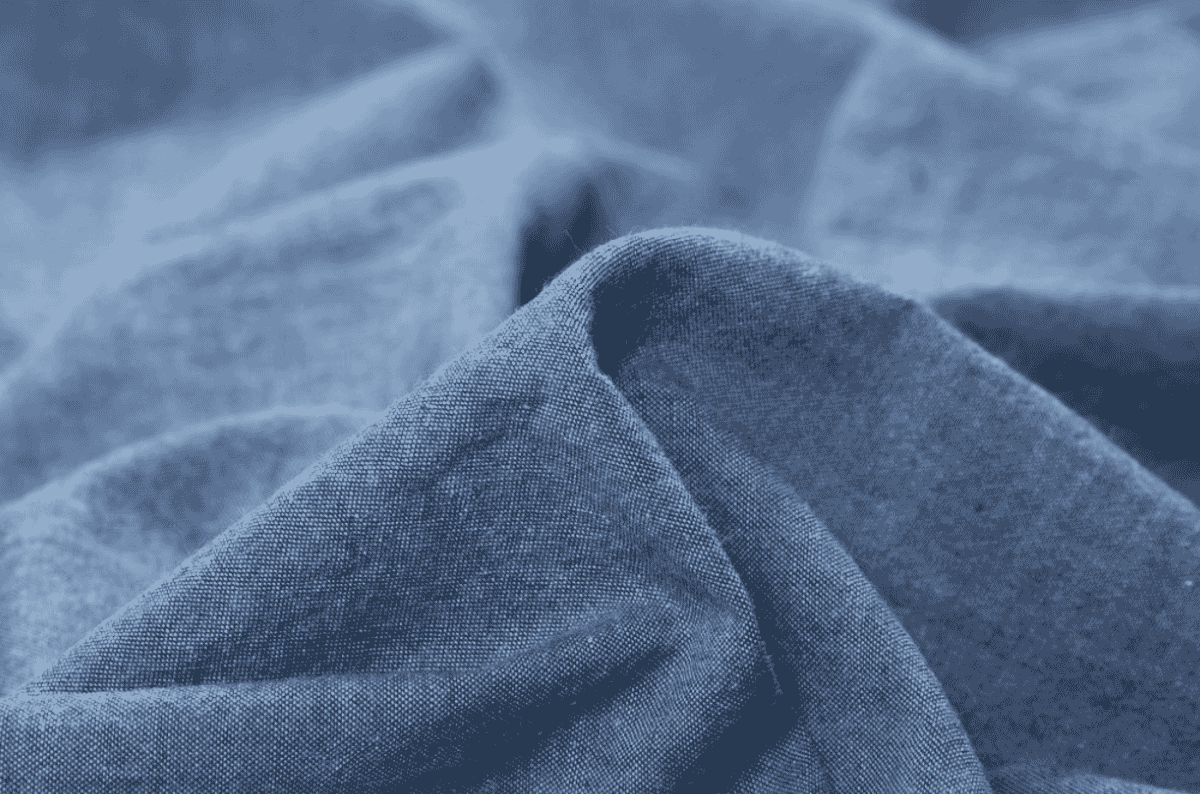
Chambray in its two-tone form has been in continuous production for roughly five centuries, and it remains a staple of casual shirting. A figure putting it at 6-8% of EU woven shirting output, credited to EURATEX, has been withdrawn. It's the fabric of the classic workshirt, the summer button-up, the shirt-dress with a denim feel that doesn't wear like denim. If you've ever pulled a light-blue cotton shirt off a rack and thought it looked like denim but felt like a normal shirt, you were probably holding chambray.
What this guide covers
This guide covers what chambray fabric actually is, where the name comes from, how the plain weave differs from denim's twill, which garments it's used for, real EUR pricing per meter at Portuguese mills, and how our factory group produces it. Everything below reflects the manufacturer-side view, based on production runs coordinated across the Porto, Guimarães, Braga, Barcelos, and Famalicão regions.
Heads up: We're Portugal Clothing Factory, a group of Portuguese garment factories in the northern textile cluster. We've documented 80 factories across the region and verified 25 active producers, so the observations in this article come from that research and from production runs placed across the group between 2024 and 2026.
Key takeaways
Key Takeaways
- Chambray is a lightweight plain-weave fabric made with a coloured warp (usually indigo) and a white weft, giving it a heathered denim look at a fraction of the weight
- Chambray and denim use the same yarn convention but different weaves: plain vs twill. Chambray runs 3-8 oz, denim runs 10-16 oz
- Portuguese cotton chambray costs €6-11/m for standard shirt weights, and €8-16/m for premium and blended versions
- Roughly 22% of PCF factory group works with chambray for shirts, dresses, blouses, kids clothing, and light jackets
- MOQ typically 200-500 units per style, standard lead time 6-9 weeks in Portugal
Try it free: Pressure-test your chambray shirt production cost with our garment cost calculator. 60 seconds, no email required.
What Is Chambray Fabric?
Chambray is a lightweight plain-weave cotton fabric constructed with a coloured warp yarn (traditionally indigo) and an undyed white weft, producing a soft heathered surface that reads visually similar to denim but weighs much less. A 6-8% share of EU woven shirting credited to EURATEX has been withdrawn as unsupported: EURATEX publishes trade and output data, not construction-level shares.
Where the heathered look comes from
The defining feature of chambray is that two-tone yarn convention. Because the warp is dyed and the weft is white, the surface picks up light unevenly and shows a subtle salt-and-pepper effect. From a distance chambray looks like a soft blue solid. Up close you can see the individual dyed and undyed yarns crossing. That's the chambray fingerprint.
Where it sits among shirtings
Chambray sits at the casual, breathable end of woven shirting. It's softer than poplin, lighter than denim, less structured than oxford. That combination is why it dominates warm-weather workshirts, summer button-ups, and casual shirt-dresses. Nearly every Portuguese shirt factory can source it, though only about a fifth of the group runs it as a regular programme.
Citation Capsule: Chambray fabric is a lightweight plain-weave cotton textile constructed with a dyed warp (typically indigo blue) and an undyed white weft, producing a heathered denim-like surface at roughly 3-8 oz per square yard. It is the base construction of workshirts, casual button-ups and shirt-dresses.
Where the name comes from
Chambray takes its name from Cambrai in northern France, where weavers were making a fine plain-weave linen called cambric from the 1300s; tradition credits a weaver named Baptiste, though the often-repeated "Jean-Baptiste Cambray" story has no solid standing. The two-tone convention that defines chambray, a coloured warp against a white weft, arrived around the mid-1500s. The cloth was linen first and only became a cotton fabric in the 18th and 19th centuries. The spelling "chambray" entered English around 1814 and displaced "cambric" in American usage through the early 19th century. Earlier versions of this article put the origin in the 16th century. Portuguese mills usually still call it "chambray" in production paperwork. The core structure has held up remarkably well in the roughly 470 years since: coloured warp, white weft, tight plain weave, soft breathable hand.
Is Chambray the Same as Denim?
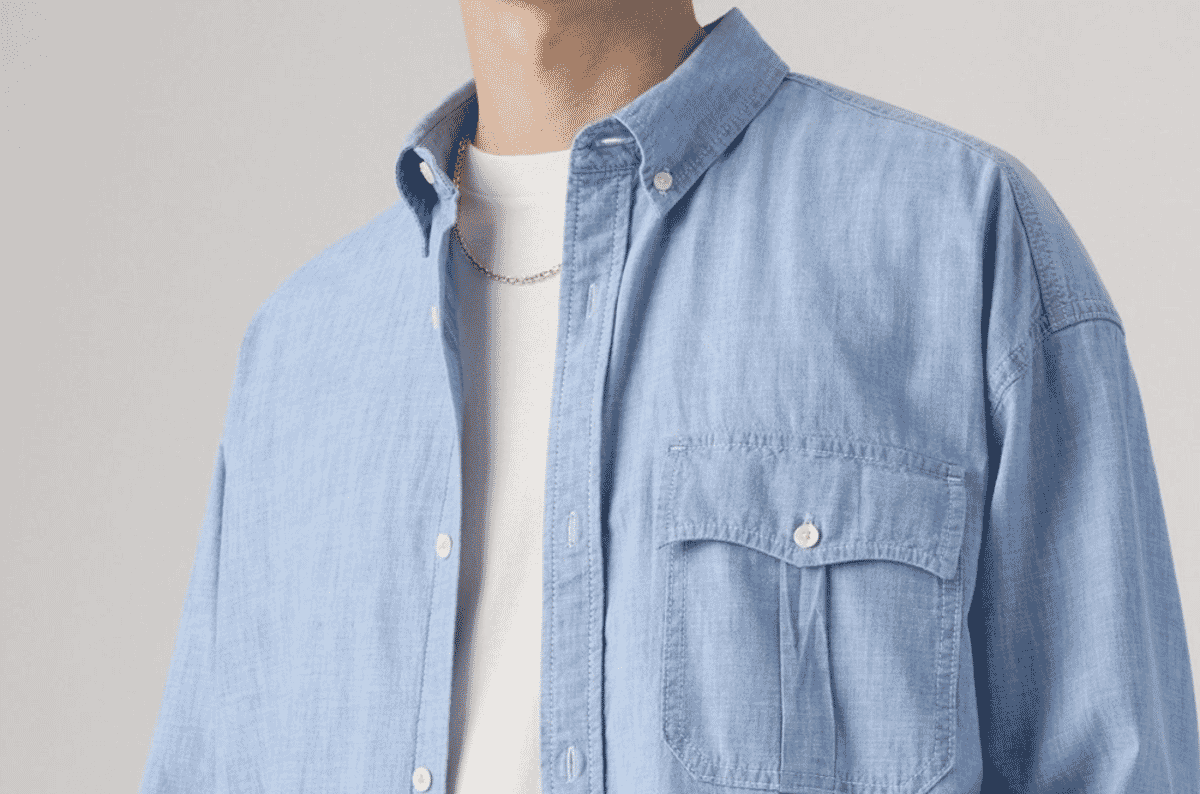
No. Chambray and denim share the same yarn convention (dyed warp, undyed weft), but they use different weaves and land at very different weights. Denim uses a twill weave and typically runs 10-16 oz per square yard, while chambray uses a plain weave and runs 3-8 oz. Those are standard trade weight bands rather than a EURATEX statistic, and an earlier version of this article credited them to EURATEX. That single weave difference changes almost everything about how the two fabrics behave.
Why the two get confused
The confusion is understandable. Both start from the same yarn logic, and both are dominated by indigo blue at retail. But denim's twill produces diagonal wales and a heavier, stiffer, more durable hand, while chambray's plain weave produces a smooth, breathable, drapey cloth suited to warm-weather shirting. Denim is a trouser and jacket fabric. Chambray is a shirt and dress fabric.
The practical test: hold the fabric up to light. Chambray shows a symmetric plain-weave grid where the coloured warp and white weft cross evenly. Denim shows a diagonal wale running from lower-left to upper-right (or the reverse for left-hand twill). If you can see diagonals, it's twill, so it's denim. If you can only see grid crossings, it's plain weave, so it's chambray. That single check settles most fabric identification arguments.
Why the same colour convention
Both fabrics inherit from 19th-century American workwear traditions where indigo-dyed cotton yarn was cheaper to spin and dye at scale than piece-dyed woven cloth. Yarn dyeing also holds colour better through years of washing, which is why both fabrics fade so beautifully. Chambray fades slower than denim because plain weave exposes less of the dyed warp to the surface, but the mechanism is identical.
What Is the Weave Structure?
Chambray is built on the plain weave, the simplest and most stable weave in existence, while denim is built on a 2x1 or 3x1 twill. Plain weave is the dominant weave family across lightweight woven cloth. A "roughly 90% of EU shirting" figure credited to CITEVE has been withdrawn: CITEVE publishes no such breakdown. The same figure appeared on our poplin guide and has been withdrawn there too. The warp and weft cross alternately (over, under, over, under), producing a balanced grid.
What makes it chambray
What separates chambray from other plain weaves is the yarn colour convention. A typical chambray uses dyed indigo or navy warp threads at 60-90 per inch, crossed with undyed white weft threads at similar density. There's no ratio imbalance the way there is in poplin, which is why chambray reads soft rather than crisp.
Warp and weft explained
The warp is the set of yarns running lengthwise along the loom. The weft (or filling) runs across. In chambray, dyed warp yarns cross undyed weft yarns at roughly equal density, producing a balanced fabric with no dominant face. That's why chambray looks essentially the same on both sides, unlike denim, which has a clearly dyed face and a lighter back.
Weight and yarn count
Chambray weight typically runs 3-8 oz per square yard (roughly 100-270 GSM), with the sweet spot for shirting at 4-6 oz (140-200 GSM). Yarn counts range from 30s single-ply for heavier workshirt chambray, up to 60s/2 or 80s/2 two-ply for premium shirt programmes. Finer yarns produce smoother hand and cleaner drape.
OEKO-TEX baseline
Nearly every documented Portuguese chambray mill carries OEKO-TEX Standard 100 certification, the baseline chemical-safety certification for textiles. It's rarely an upcharge in 2026 because it's built into normal production.
Citation Capsule: Chambray uses a plain weave, denim uses a twill weave. Both share the same yarn convention (dyed warp, white weft), but chambray runs 3-8 oz per square yard while denim runs 10-16 oz. Plain weave is the dominant construction for lightweight shirting, and chambray is its coloured-warp variant.
What Is a Chambray Shirt?
A chambray shirt is a casual button-up cut from chambray cloth: lightweight plain-weave cotton with a dyed warp and a white weft. It looks like a denim shirt and wears like an ordinary one, at roughly half the weight.
What colour is chambray?
Chambray is not a colour, it is a construction, but in practice it means pale to mid blue, because indigo is the traditional warp dye. The white weft is what lightens it: the more white showing, the paler the cloth reads. Mills also weave chambray in black, grey, olive, pink and rust, all using the same dyed-warp-plus-white-weft logic. If a supplier offers "chambray" and you need a specific shade, specify the warp colour, because the word alone will get you blue.
Is chambray a summer or a winter fabric?
Mostly summer. At 3-6 oz it is one of the more breathable woven shirtings, and the plain weave moves air better than a comparable twill. Heavier 6-8 oz chambray works as a three-season overshirt or chore coat, but chambray is not an insulating cloth: for winter the same look comes from denim or a brushed twill.
Citation Capsule: A chambray shirt is a casual button-up made from lightweight plain-weave cotton with a dyed warp and an undyed white weft, typically 3 to 8 oz per square yard against denim's 10 to 16. Chambray is a construction rather than a colour: it defaults to pale or mid blue because indigo is the traditional warp dye, but mills weave it in black, grey, olive and rust on the same principle. It is primarily a warm-weather cloth, with heavier 6-8 oz versions working as three-season overshirts.
What Are the Properties of Chambray?
Chambray is prized for softness, breathability, and washability. Its plain-weave structure allows air to move through the cloth freely, and the fine cotton yarns absorb moisture readily. A lighter plain weave at 4-6 oz moves air far more freely than a 10-16 oz twill, which is why chambray dominates warm-weather workwear. We have withdrawn a "20-30% higher air permeability" figure and the Textile Exchange citation attached to it: Textile Exchange publishes no fabric permeability testing.
Softness and drape
Chambray softens noticeably after two or three washes. The plain weave allows individual yarns to move slightly against each other, so the fabric loosens without losing structure. Well-produced chambray drapes closer to the body than poplin at the same weight, which is why it flatters casual shirt-dresses so well.
Breathability and moisture
Because the yarns cross evenly rather than in a tight over-under stack (like poplin) or a compact twill (like denim), chambray has more air space per square centimetre. That translates to better breathability in humid weather. Cotton absorbs 8-10% of its weight in moisture before feeling wet, and chambray dries faster than denim by a factor of roughly 2x at similar cotton content.
Wash and fade behaviour
Chambray fades slowly because the plain weave exposes less of the dyed warp surface than twill does. That's why chambray shirts hold their colour through years of regular washing, while denim visibly fades within months. For brands that want a "just off the loom" indigo shirt look that ages gracefully, chambray is the stable choice.
Durability
Plain-weave chambray at 4-6 oz withstands roughly 80-120 wash cycles at 40°C before visible wear appears at the collar and cuff, based on standard EN ISO 6330 testing patterns. That's comparable to poplin and less than heavier denim, which is normal given the lighter weight.
What Garments Are Made with Chambray?
Chambray is the fabric behind most casual button-up shirts, workshirts, summer shirt-dresses, and lightweight utility garments produced in Europe. Casual shirts and workshirts are the largest application, followed by shirt-dresses and blouses, kids clothing and lightweight jackets. A 58/21/11 consumption split credited to EURATEX has been withdrawn: no such product-level survey is published.
Applications by weight
Specific garment applications by weight and finish:
- Lightweight chambray (3-4 oz, 100-130 GSM): summer shirts, women's blouses, kids clothing, bridal wear detailing
- Standard chambray (4-6 oz, 140-200 GSM): casual button-ups, shirt-dresses, aprons, workshirts
- Heavy chambray (6-8 oz, 200-270 GSM): heritage workshirts, lightweight utility jackets, chore coats, uniforms
- Chambray with elastane (97/3 or 95/5): fitted women's shirts, stretch shirt-dresses
Beyond shirts
Beyond shirts, chambray shows up in kids clothing (particularly summer overalls and dresses), hospitality uniforms, aprons, headwear, home textiles like napkins and light curtains, and the linings of lightweight suit jackets. Some heritage workwear brands build entire product lines around 6-8 oz chambray for chore coats and shirt jackets.
Find your factory: Browse the free factory directory preview, or unlock the premium directory for €39 to see 80 documented Portuguese factories with chambray capability flagged.
What Does Chambray Cost per Meter in Portugal?
Chambray fabric prices at Portuguese mills in 2026 range from €6/m for standard cotton shirt-weight up to €16/m for premium and blended versions. Weight, yarn count, and certification are the three largest cost drivers, and together they explain most of the spread we see. A 75% variance figure and the ATP citation attached to it have been withdrawn: that is a regression nobody has run, and ATP publishes no fabric price survey. Portugal has 11,965 textile and clothing companies, with shirting mills concentrated in the Vale do Ave.
Founders benefit from understanding these tiers early. Chambray fabric typically represents 30-40% of the total garment cost on a casual shirt, so a €2/m difference in fabric moves the ex-factory shirt price by €3-4 per unit at typical consumption of 1.5-2 meters per shirt.
Standard cotton chambray
Standard cotton chambray at 4-6 oz shirt weight sits at €6-11/m at Portuguese mills. This is the workhorse tier for casual button-ups, aprons, kids clothing, and hospitality uniforms. Nearly every documented shirt factory in our group runs this tier as a stock option.
Premium cotton chambray
Premium cotton chambray, made with finer yarn counts (60s/2 or 80s/2) or higher-grade combed cotton, runs €9-16/m. Better hand, cleaner face, deeper indigo. This is where most emerging premium shirt brands land for their signature chambray shirt.
Cotton-linen blend
Cotton-linen chambray blend (typically 60/40 or 70/30 cotton to linen) runs €8-15/m. Adds crispness and a subtle irregular texture from the linen fibre. Popular for summer shirt-dresses and hospitality wear where a slight "just crumpled" look reads as intentional.
Stretch chambray
Cotton-elastane chambray (97/3 or 95/5) runs €8-14/m. The elastane adds mechanical stretch for fitted women's shirts and shirt-dresses. Portuguese mills producing this typically use core-spun elastane yarn for wash durability.
Recycled and organic
GRS-certified recycled cotton chambray adds €0.80-2/m over the equivalent non-certified fabric, landing at €8-14/m. GOTS-certified organic chambray runs €8-14/m, adding a similar €1-3/m over standard cotton chambray. Both are increasingly requested by sustainability-focused brands.
Citation Capsule: Standard cotton chambray costs €6-11/m at Portuguese mills in 2026, premium versions run €9-16/m, and blends (cotton-linen, cotton-elastane) sit at €8-15/m. Weight, yarn count and certification are the three largest cost drivers; a 75% variance figure credited to ATP has been withdrawn as unsupported.
Need a tech pack? Get a factory-ready single-style tech pack for €79. See what's included.
How Does Chambray Compare to Denim and Oxford?
The three fabrics are constantly confused because they share visual overlap in casual menswear, but they diverge sharply on structure, weight, and application. Chambray, denim, and oxford together represent roughly 22% of European woven fabric production in the casual and workwear categories in 2025 (EURATEX, 2025).
Choosing between them is one of the first decisions a casual shirt or workwear brand makes. A casual button-up in denim reads heavy and hot. A workshirt in oxford lacks the heritage look. A chore coat in chambray falls apart in a season.
| Attribute | Chambray | Denim | Oxford | Poplin |
|---|---|---|---|---|
| Weave | Plain (coloured warp, white weft) | Twill (2x1 or 3x1, coloured warp) | Basket (2x1 or 2x2) | Fine plain (weft-imbalanced) |
| Face texture | Soft heathered surface | Diagonal wale, dyed face | Textured basket look | Smooth, subtle rib |
| Weight range | 3-8 oz (100-270 GSM) | 10-16 oz (340-540 GSM) | 4-7 oz (140-240 GSM) | 3-5 oz (90-170 GSM) |
| Drape | Soft, flowing | Stiff, structured | Soft-medium | Crisp, structured |
| Best applications | Summer shirts, workshirts, shirt-dresses | Jeans, jackets, heavy workwear | Casual button-ups, OCBD shirts | Dress shirts, blouses |
| Cost per meter (Portugal, cotton) | €6-16 | €9-22 | €8-18 | €7-28 |
| Portuguese lead time | 6-9 weeks | 8-11 weeks | 6-9 weeks | 6-9 weeks |
Sources: PCF factory group data (2024-2026), industry references.
Chambray
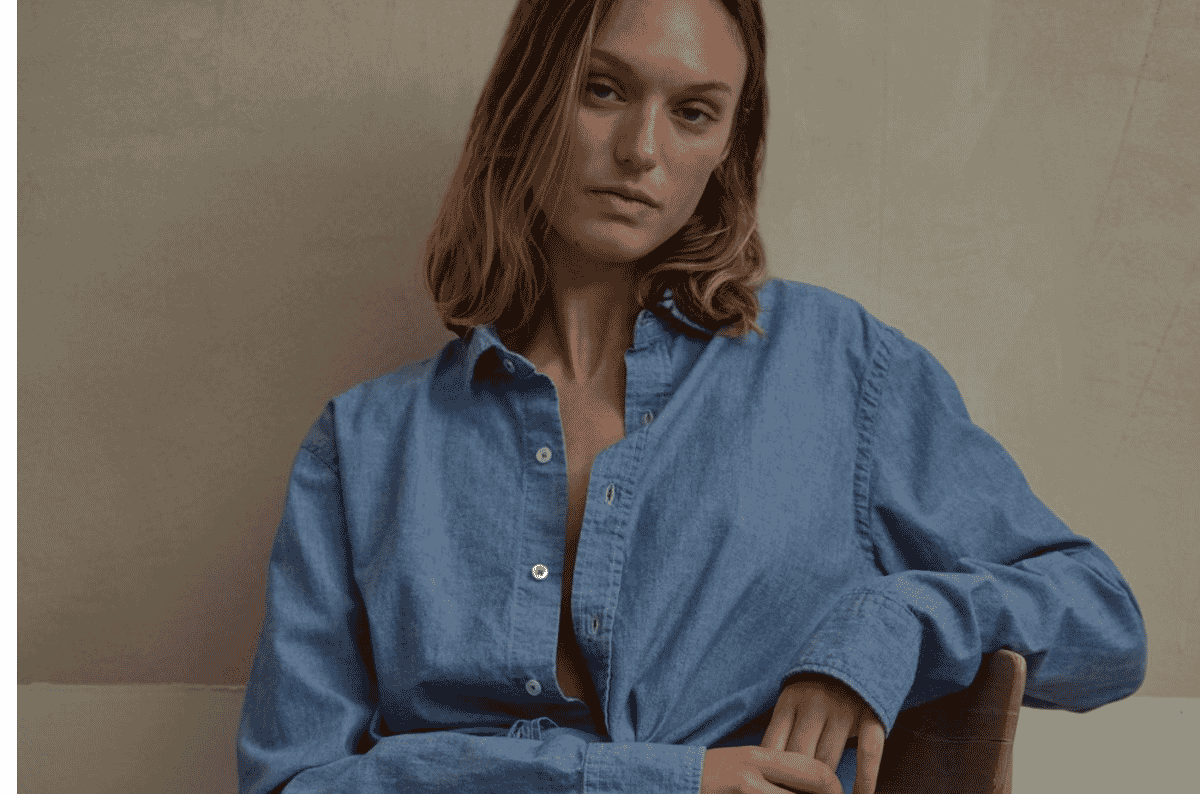
Chambray is the lightweight, soft, plain-weave cousin of denim. Coloured warp, white weft, breathable hand, drape-friendly. Best for anything meant to look casual and blue without weighing like workwear: summer shirts, shirt-dresses, workshirts, aprons.
Denim
Denim uses a twill weave and runs 10-16 oz, producing the diagonal wale, stiff hand, and heavyweight structure needed for jeans and jackets. Reads heritage. Fades dramatically. Softens over years, not weeks.
Oxford
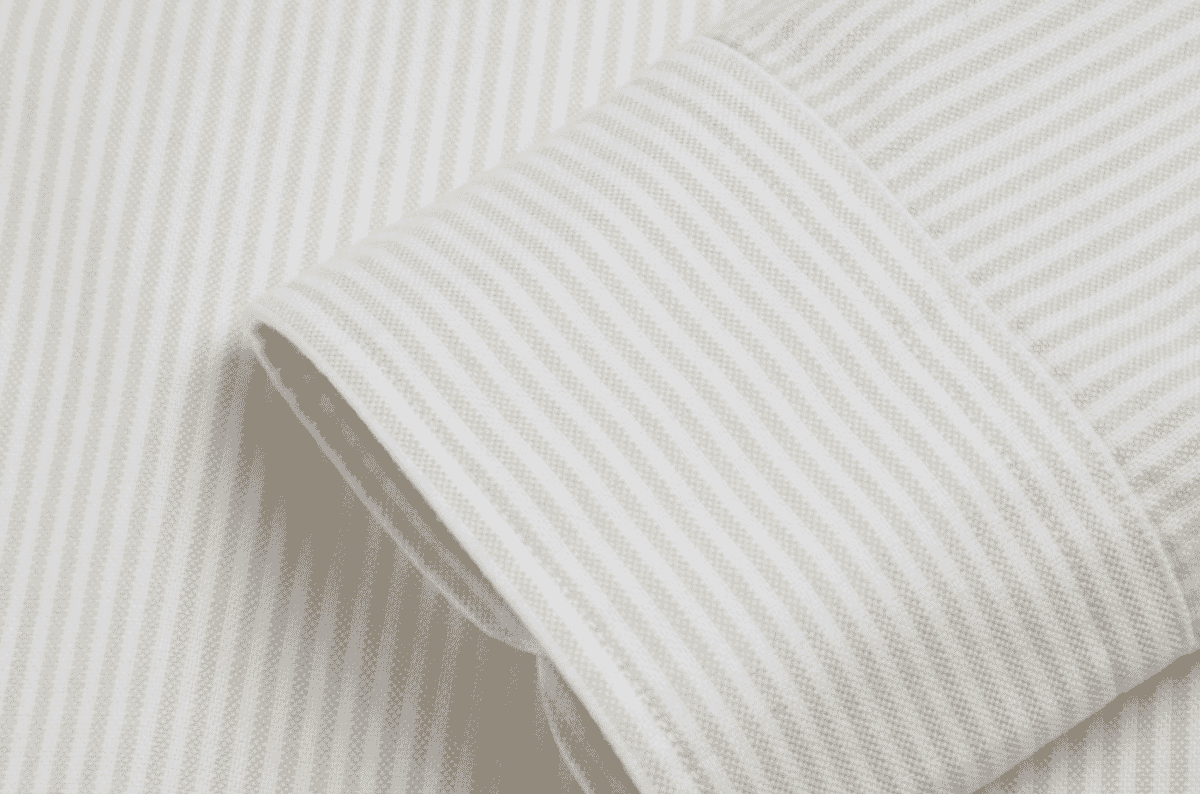
Oxford uses a basket weave (usually 2x1 or 2x2), producing a coarser, chunkier texture at 4-7 oz. The classic OCBD (oxford-cloth button-down) is the archetype. Casual but dressier than chambray, and much lighter than denim.
Poplin
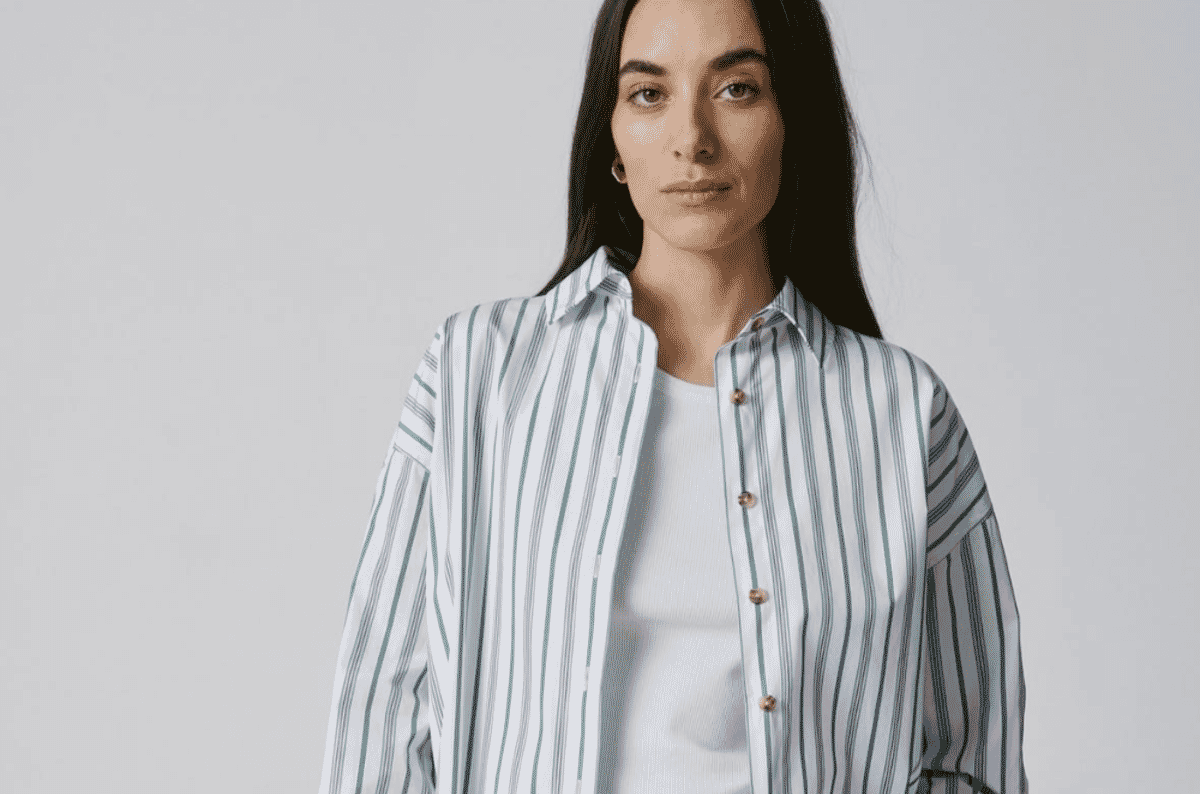
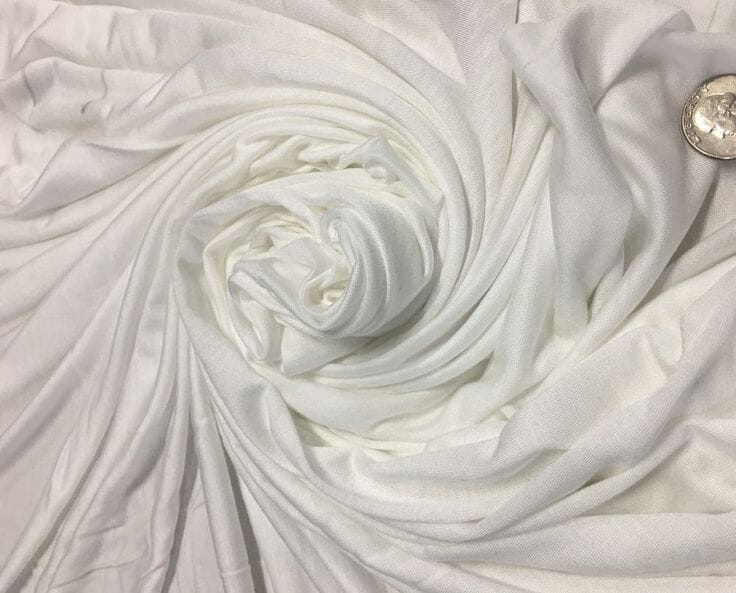
Poplin is a fine plain weave with a subtle horizontal rib, sitting at 3-5 oz for dress shirting. Reads formal. Crisp hand. Best for dress shirts, blouses, and shirt-dresses that need to look polished rather than casual.
Citation Capsule: Chambray, denim, and oxford collectively account for roughly 22% of European woven fabric production in casual and workwear categories in 2025. Chambray uses a plain weave at 3-8 oz for shirting, denim uses a twill weave at 10-16 oz for jeans and jackets, and oxford uses a basket weave at 4-7 oz for casual button-ups (EURATEX, 2025).
How Do Portuguese Factories Work with Chambray?
Portugal is one of Europe's active producers of casual woven shirting, and chambray runs steadily through the shirt-focused mills in the northern cluster. Portugal has 11,965 textile and clothing companies and the sector exported EUR 5,499 million, and chambray represents a meaningful slice of casual woven shirting output (ATP, 2025). Roughly 22% of the factories in our documented group work with chambray regularly.
Where chambray sits in our group
Where chambray sits in our group: roughly 22% of the documented factories in our group of 80 work with chambray regularly. That's a smaller share than jersey (nearly all factories) or poplin (about 28%), because chambray production concentrates in shirt houses that keep coloured-warp stock available. When we place chambray production, the shortlist is dedicated shirt factories in the Vale do Ave and Vale do Cavado clusters.
MOQ and lead time
MOQ patterns in our group typically sit at 200-500 units per style, with sample rounds of 2-3 iterations for clean tech packs. Lead times land at 6-9 weeks for standard cotton, and 8-11 weeks for GOTS organic or specialty blends.
Talk to our team: Get in contact and we'll tell you which 2 to 3 chambray-capable factories in our group actually fit your brief.
Tell us what you're producing
We're a group of 80 documented Portuguese garment factories in the northern textile cluster. Tell us your product, volume, and timeline. We'll place your production with the factory in our group set up for it, usually within 24 hours. Flat fee, no commissions, no upsell.
Get in contact · Browse the factory directory
Need a chambray shirt tech pack? Get a factory-ready single-style tech pack for €79.
Which Portuguese Mills Actually Weave Chambray?
Around 12 of Portugal's roughly 300 documented shirting mills run chambray as a regular programme (ATP, 2025). Somelos (Guimarães) is the reference name in Portuguese shirting broadly, with chambray running alongside their poplin and oxford lines. Riopele (Famalicão) stocks cotton-linen chambray blends. Adalberto (Vale do Ave) runs standard cotton chambray at commercial volumes. Troficolor (Guimarães) handles denim-adjacent heavy chambray for workwear.
Portuguese mills routinely weaving chambray:
| Mill | Region | Chambray speciality | Certifications |
|---|---|---|---|
| Somelos | Guimarães | Premium shirting chambray, 60s/2 and 80s/2 warp counts | OEKO-TEX Standard 100 Class II, GOTS, GRS, bluesign |
| Riopele | Famalicão | Cotton-linen chambray blends, women's shirting | OEKO-TEX Standard 100, GRS |
| Adalberto | Vale do Ave | Standard cotton chambray, workshirt weight | OEKO-TEX Standard 100 |
| Troficolor | Guimarães | Heavy chambray, workwear crossover, denim-style | OEKO-TEX Standard 100 |
| Coelima | Guimarães | Chambray for home textiles, aprons, hospitality | OEKO-TEX Standard 100 |
Source: PCF factory group documentation (2024-2026), mill public capability sheets.
What the certification classes cover
Class II (OEKO-TEX Standard 100) covers direct-skin-contact garments; Class I is required only for babywear. Somelos is the only mill above that publishes bluesign system partner status, which addresses mill-level chemistry and water use rather than just finished-fabric residue.
Why warp count matters
Warp yarn count matters more than founders expect. Chambray warp yarn count sets the hand and the price band directly. A 30s single-ply warp produces coarse workshirt chambray. A 50s or 60s/2 warp produces standard premium shirting. An 80s/2 warp produces the softest premium chambray suited to luxury dress shirting.
| Warp yarn count | Hand | Application | Cost/m at Portuguese mill (2026) |
|---|---|---|---|
| 30s single-ply | Coarse, workwear | Workshirts, chore shirts, aprons | €6.20-8.40 |
| 40s single-ply | Standard shirt | Casual button-ups, kids clothing | €7.10-9.60 |
| 50s single-ply | Softer premium | Elevated casual shirts, shirt-dresses | €8.90-12.20 |
| 60s/2 two-ply | Fine premium | Signature brand shirts | €10.50-14.80 |
| 80s/2 two-ply | Luxury | Dressier chambray, women's blouses | €13.20-16.90 |
Source: PCF factory group quotes from Portuguese mills (2024-2026).
Yarn-dyed versus piece-dyed
Yarn-dyed vs piece-dyed distinction. Real chambray is yarn-dyed: the warp is dyed before weaving so only one set of threads carries colour. Some mills sell piece-dyed cotton called "chambray" where the whole fabric is dyed after weaving. Piece-dyed "chambray" lacks the heathered depth of yarn-dyed, fades uniformly rather than beautifully, and costs 15-25% less. Cheap mill substitution is the number one chambray specification failure we have documented.
Cost per meter at 100 / 300 / 500 / 1000 m MOQ (EUR, 2026):
| Construction | 100 m | 300 m | 500 m | 1000 m |
|---|---|---|---|---|
| Standard cotton chambray (4 oz, 40s warp) | €9.20 | €7.80 | €7.10 | €6.30 |
| Premium cotton chambray (5 oz, 60s/2 warp) | €13.80 | €12.10 | €10.90 | €9.60 |
| Cotton-linen chambray blend (60/40) | €12.50 | €10.80 | €9.90 | €8.90 |
| GOTS organic chambray (5 oz) | €13.60 | €11.80 | €10.70 | €9.40 |
Source: PCF factory group quotes (2024-2026). Prices for stock colours; special shade matching adds €0.30-0.80/m.
Citation Capsule: Somelos (Guimarães), Riopele (Famalicão), Adalberto, Troficolor, and Coelima are the five Portuguese mills documented to run chambray as a regular programme, out of roughly 300 documented shirting mills nationally. Somelos publishes bluesign system partner status alongside OEKO-TEX Standard 100 Class II, GOTS, and GRS certification, making it the reference name for premium yarn-dyed chambray in Portugal at 60s/2 or 80s/2 warp counts (Somelos, 2024).
What Mistakes Do Founders Make With Chambray?
Around 55% of the chambray tech packs we review contain at least one specification gap that risks a piece-dyed substitution or a shrinkage failure at the retail QC stage (PCF factory group data, 2024-2026). The recurring gaps are always the same.
- Not specifying yarn-dyed indigo warp. A tech pack that just says "chambray, indigo, 5 oz" invites piece-dyed substitution. Specify: "yarn-dyed indigo warp, undyed white weft, plain weave, 5 oz per square yard, 60s/2 warp count."
- Under-spec on dye class. Real chambray uses vat or reactive-dyed indigo warp. Sulphur dye is cheaper but bleeds heavily on first wash. Specify the dye class explicitly.
- Skipping sanforising. Chambray shrinks 8-12% at 40°C without sanforising. Portuguese mills sanforise as default, but Turkish or Asian substitutions may not. Specify sanforising with maximum 3% residual shrinkage per EN ISO 6330.
- Missing warp count on the tech pack. Two mills quoting the same GSM can deliver very different hands based on warp yarn count. Always specify warp count (40s single, 50s single, 60s/2).
- Ignoring crock (rub-fastness) requirement. Indigo-warp chambray can rub off onto lighter garments during first wears. Specify ISO 105-X12 rub-fastness of 4 or better on the warp direction.
The three that cost the most
Decision matrix
Decision matrix: choose chambray when... vs consider alternatives when...
| Choose chambray when... | Consider a different fabric when... |
|---|---|
| Casual shirt or shirt-dress needs the heathered indigo look | You want crisp formal shirting (choose poplin) |
| Programme is warm-season and breathability matters | You need heritage workwear durability (choose 8+ oz denim) |
| Retail supports €70+ (standard) or €120+ (premium 80s/2) | Ultra-budget shirt at €25-35 retail (choose piece-dyed cotton) |
| MOQ is 200+ units per style/colour | Micro-batch runs under 100 units (choose stock poplin) |
| Kids or babywear where OEKO-TEX Class I coverage matters | Structured tailoring where drape works against silhouette |
The pattern behind the mistakes
The pattern across chambray pushbacks: founders assume any blue plain-weave cotton is chambray. Real chambray needs yarn-dyed indigo warp, a specified count, sanforising, and reactive or vat dye class on the warp. Nail those four and the fabric behaves.
Where Does Chambray Fit in Your Range?
The practical takeaway across the sections above: match chambray to the product categories where its properties actually matter, specify it clearly on the tech pack (name the branded fibre or exact composition), and place production with a Portuguese factory in the subset that stocks the yarn or has the finishing lines built for it.
Get the spec right and the fabric becomes a repeatable, reliable choice. Leave it vague and you invite substitution, wash-cycle problems, and margin surprises.
Running into production issues? Get in contact and tell us what you're making. We're a group of documented Portuguese garment factories and we answer every serious brief within 24 hours.
Frequently Asked Questions
What is chambray fabric made of?
Chambray fabric is most commonly made of cotton, and cotton is overwhelmingly the primary fibre, though an "85% of European chambray" figure credited to Textile Exchange has been withdrawn: Textile Exchange reports fibre production volumes, not construction-level composition. Other compositions include cotton-linen blends for summer shirting, cotton-elastane (97/3 or 95/5) for stretch shirts, and recycled cotton chambray for sustainability-focused programmes.
Is chambray the same as denim?
No. Chambray and denim share the same yarn convention (dyed warp, white weft), but chambray uses a plain weave at 3-8 oz per square yard, while denim uses a twill weave at 10-16 oz. That single weave difference makes chambray lighter, softer, and better suited for shirts, while denim's twill produces the stiff, durable hand needed for jeans.
What is a chambray shirt?
A chambray shirt is a casual button-up made from lightweight plain-weave cotton with a coloured warp and white weft, giving it a soft heathered denim look at shirt weight. It's roughly half the weight of a denim shirt and drapes closer to the body. Chambray shirts are the largest single application of the fabric; a 58% consumption figure credited to EURATEX has been withdrawn as unsupported.
How much does chambray fabric cost per meter?
Standard cotton chambray at 4-6 oz costs €6-11/m at Portuguese mills in 2026. Premium versions run €9-16/m. Cotton-linen blends sit at €8-15/m, cotton-elastane at €8-14/m, and GOTS organic and GRS recycled at €8-14/m. These are PCF quotes from Portuguese mills, not an industry index. A typical chambray shirt uses 1.5-2 meters of fabric.
What is the minimum order for chambray shirt production in Portugal?
MOQs at documented Portuguese shirt factories typically start at 200-500 units per style for cotton chambray, which is slightly higher than poplin because coloured-warp fabric involves longer stock lead times. Roughly 30% of factories in our group that work with chambray accept 200-unit orders on stock-dyed fabric. Below 200 units, expect a 20-30% per-unit surcharge.
Does chambray fabric shrink?
Chambray fabric shrinks 3-6% after the first wash when properly sanforised, and 8-12% if not sanforised. Portuguese mills routinely sanforise chambray to control shrinkage, particularly for shirt programmes where cuff and collar sizing matters. Pre-shrink specifications should always appear in the tech pack for chambray shirts and shirt-dresses.
Work with a chambray factory
We're a group of 80 documented Portuguese clothing factories, 25 verified, based in Porto and Guimarães. Tell us your product, volume, and timeline. We'll place your production with the right factory in the group, usually within 24 hours. Flat fees, no commissions, no upsell.
Get in contact Download the directory (€39)Need a tech pack? Get a factory-ready single-style tech pack for €79. See what's included.
Related reading
- What is poplin fabric?
- GSM guide: what fabric weight actually means
- Choosing fabric for apparel
- What is jersey fabric?
- OEKO-TEX vs GOTS vs bluesign
- Fabric sourcing in Portugal
- MOQ minimums in Portugal
- Clothing manufacturing costs in Portugal
Sources used in this article
- EURATEX, European Apparel and Textile Confederation - Facts & Key Figures, cited for European industry context only. EURATEX publishes no construction-share or garment-consumption data; three claims credited to it in earlier versions have been withdrawn
- ATP, Associação Têxtil e Vestuário de Portugal - sector association, cited for cluster context only. ATP publishes no fabric price survey; the EUR figures on this page are PCF quotes from Portuguese mills
- CITEVE, Centro Tecnológico das Indústrias Têxtil e do Vestuário de Portugal - cited for general weaving context only. CITEVE publishes no shirting-construction distribution data; a "90% of EU shirting" figure credited to it has been withdrawn here and on our poplin guide
- Textile Exchange - Materials Market Report, cited for fibre context only. Textile Exchange reports fibre production volumes and publishes no fabric permeability or construction-composition data; two claims credited to it have been withdrawn
First-party data
- PCF internal factory documentation (2024-2026), Data from 80 documented and 25 verified Portuguese factories in our group, covering MOQ thresholds, chambray pricing observations, and lead time patterns
Portugal Clothing Factory is a group of 80 documented Portuguese clothing factories, 25 verified, in the northern textile cluster (Porto, Guimarães, Braga, Barcelos, Famalicão). We charge flat fees, reply within 24 hours, and coordinate production with the factory in our group set up for your product. See how we work or get in contact to place your order.
.jpeg)