Leggings are one of the least forgiving garments in common production. Every fit error is visible, every fabric weakness shows under stretch, and the failures that matter most appear after a month of wearing rather than on arrival. They are also a category where brands often approach a general apparel factory and get something that looks right and does not work.
This guide covers what leggings production actually requires, which specifications decide the outcome, which lab tests to ask for, how customs classifies leggings, what the trade data says about Portugal, and what separates a factory that can make them from one that cannot. For the wider category, see our guide to activewear manufacturers.
What to know
- Recovery matters more than stretch. Fabric that stretches and does not return bags at the knee.
- Opacity under stretch is the failure other people see, so test it stretched, not flat.
- The gusset and waistband decide comfort more than anything visible.
- Flatlock or coverstitch construction is required, not a preference.
- Expect three or more fit rounds. Leggings grade badly by proportion.
- Ask for named lab tests: elasticity (EN ISO 20932-1), pilling (ISO 12945-2) and colour fastness to perspiration (ISO 105-E04).
- Portugal exported $24.4 million of knitted synthetic women's trousers, the customs heading for most leggings, in 2024 (WITS).
What makes leggings hard to produce?
Fabric behaviour under stretch, a fit that is graded rather than scaled, and failures that only appear in wear.
Everything shows
A legging sits directly against the body with no drape whatsoever to conceal anything, so a seam placed slightly wrong, a panel cut marginally off grain or a fabric that thins under tension is immediately and obviously visible. There is nowhere for an error to hide, which is why the category punishes a rushed development harder than most.
Fabric does most of the work
Four-way stretch, recovery, opacity and hand all come from the knit rather than the construction. A brand that specifies a fit carefully and leaves the fabric to the factory has left the more consequential decision to somebody else.
Grading is not scaling
Bodies do not change proportionally between sizes, and a legging pattern graded by uniform increments will fit at the sample size and poorly at both extremes of the range. This is where fit returns can build up without anyone identifying the cause, because each individual complaint reads as a fit preference rather than as a grading fault.
The failures are delayed
Bagging at the knee, waistband roll, seam failure and pilling all appear after repeated wearing and washing. None of them show in a fit session, which is why wear testing matters more here than in most categories.
What fabric do leggings need?
A four-way stretch knit with strong recovery, sufficient weight for opacity, and a finish that survives washing.
Four-way stretch, not two
Leggings need stretch across and along the fabric, which means an elastane content knitted for movement in both directions. Two-way stretch fabric in a legging restricts movement and distorts the fit as soon as the wearer bends. For a sense of real compositions, the three legging and capri styles described in US Customs ruling N302897 were knitted from 79% nylon and 21% elastane, 72% nylon and 28% elastane, and 73% nylon and 27% spandex.
Recovery is the real specification
Stretch is easy to achieve; returning to shape reliably after hours of wear is not. Recovery is what determines whether a legging still fits at the end of the day or bags visibly at the knee and seat. Two fabrics with identical elastane percentages can behave completely differently on this measure, which is exactly why the percentage on its own is not a specification.
Weight decides opacity
Thin fabric becomes transparent the moment it is stretched over a body, and this is a complaint that can damage a legging brand quickly, because it is visible to other people rather than only to the wearer. Test opacity on stretched fabric over a contrasting surface rather than flat on a table, because a flat test passes fabrics that fail completely in use.
Finish affects hand and durability
Brushing, peaching and performance finishes change how a fabric feels and how it wears. They also change how it behaves after washing, so any finish has to survive the laundering the garment will actually get. Our GSM guide explains how fabric weight is measured and quoted.
What construction decisions matter?
Gusset, waistband, seam type and panel layout. These decide comfort and durability.
The gusset
A gusset removes the four-way seam intersection at the crotch, which is the point of highest stress in the garment and a frequent source of both discomfort and seam failure. Whether it is a single piece or seamed, and what shape it takes, determines comfort more than any feature a customer can actually see.
The waistband
Waistband height, whether it is a folded self-fabric band, an elasticated one or a wide contoured panel, and exactly how it is constructed all determine whether it rolls down, digs in or simply stays where it was put. Waist roll, like opacity, is mostly a specification decision rather than bad luck.
Flatlock and coverstitch
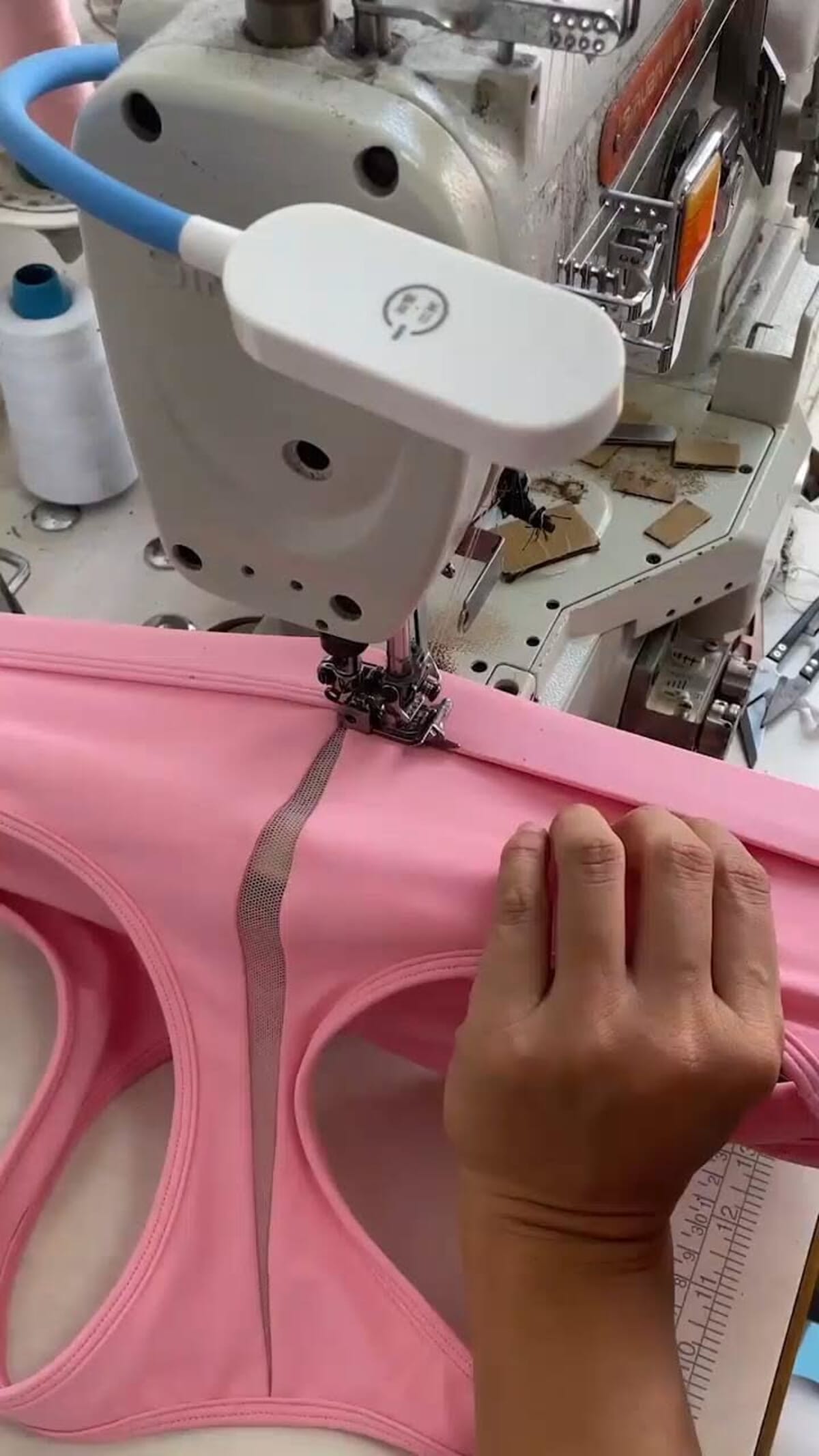
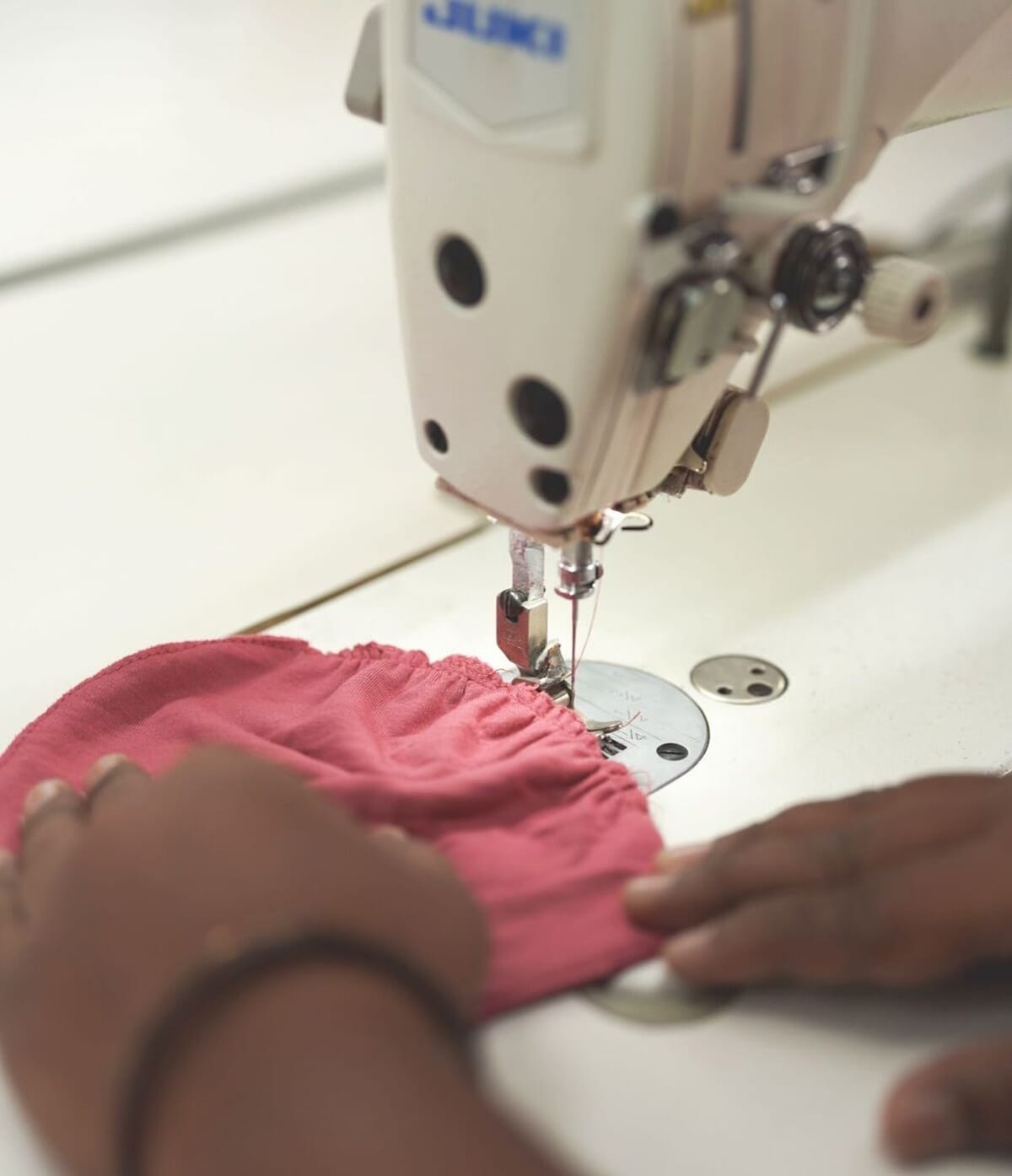
Flat, low-bulk seams are a requirement rather than a preference in a garment worn directly against skin under tension. A factory without adequate flatlock and coverstitch capacity will either subcontract those operations, adding cost and delay, or produce seams that chafe in wear, and both outcomes are visible in the finished product.
Panel layout
Where seams sit affects both appearance and comfort, and a seam placed across a high-movement area will fail sooner. Panel design is a functional decision as much as an aesthetic one in this category.
How many fit rounds should you plan?
Three or more, tested in movement and after washing, not on a form.
Fit on bodies, in motion
A legging that fits standing still can slide, gape at the waist or restrict at the knee the moment the wearer squats, runs or sits. Fit sessions have to involve movement, because that is the condition the garment exists for.
Grade with sessions at both ends
Running fit sessions only at the sample size produces a garment that fits in the middle of the range and badly at the extremes. Sessions at the smallest and largest sizes you intend to sell are what turn a good sample into a workable size run.
Test compression consistently
If the garment claims compression, the pressure has to be consistent across the size range, which means grading against the fabric's stretch behaviour rather than scaling measurements proportionally.
Judge after washing
Fabric behaviour changes after laundering, and a legging that fits perfectly when new and loosely after six washes has a recovery problem that only wash testing will ever reveal. Approve fit on washed samples rather than on fresh ones, or you are approving a garment your customer will never actually experience.
What are realistic minimums and costs?
Set per style and per colourway, with technical fabric usually the binding constraint.
Fabric sets the floor
Performance knit minimums are quoted per construction and per colour, and they are frequently higher than a brand's entire first order in units. When that happens the mill rather than the factory is the binding constraint, and negotiating with the factory changes nothing at all because the factory is not the party setting the limit.
Colours multiply the commitment
Each colourway carries its own dye lot, its own fabric commitment and its own setup at the factory, so colours multiply the total rather than dividing it. Reducing the colour count is the most effective lever available for bringing a first legging order down to a quantity a new brand can actually fund.
Our minimums: 50 to 100 pieces
Across the factories in our group, minimums are usually 50 to 100 pieces per style and colour. Designing toward a fabric the mill already runs is what keeps the fabric side proportionate to that. Our guide to minimum orders in Portugal explains how to read the number a factory gives you, and our low MOQ clothing manufacturer page covers small first runs.
Construction adds cost
Gussets, contoured waistbands, pockets and panel seams are each operations. A simple legging and a technical one with a wide waistband, side pockets and multiple panels are materially different products to produce.
What should you wear test for?
Bagging, roll, opacity, chafe and how all of them change over a month.
Bagging at knee and seat
The clearest sign of poor recovery, and it appears after hours of wear rather than minutes. Test by wearing the garment through a full day, repeatedly, not by stretching it by hand.
Waistband behaviour
Roll when seated, slide during movement and pressure at the waist all need testing on real bodies across the size range. This is where comfort complaints concentrate.
Opacity in use
Check opacity while stretched in the positions the garment will actually be in, on several body types. A fabric that passes a flat test can fail completely under tension at the seat.
Seam comfort over time
Chafe at the gusset seam and inner thigh appears through repeated wear rather than immediately. A week of actual use tells you what a fitting never will.
Why produce leggings in Portugal?
Knitting, finishing and close-fitting sewing in one region, with short road links into European markets.
Knitting sits close to sewing
Portugal's textile industry covers fibres, yarns and fabrics as well as clothing. GEE counted 999 companies in fibres, yarns and fabrics in 2022, and notes that the textile and clothing companies sit mostly in the North, concentrated in the Ave and Cávado regions. For leggings, that means stretch knits can be developed and finished near the factory that sews them, although the choice is narrower than the global technical fabric market and some constructions are still imported.
Flatlock and coverstitch are standard
Flatlock and coverstitch machines are normal equipment in factories that make knitwear, underwear and activewear, so a legging brief does not depend on finding a specialist machine. What still varies is how many of those machines a factory runs, which is a question to ask (see below). Our activewear manufacturer in Portugal page covers the activewear briefs we take.
Fit rounds run in days
Leggings need more sampling rounds than most garments, and a factory a short trip or courier day away lets you collect a sample, wear test it and return comments quickly. That compresses the part of the schedule that most often overruns.
Reordering into demand
Leggings sell continuously rather than in a single seasonal drop, which rewards a supply chain that can restock a selling size in weeks. Producing inside the EU single market makes that realistic.
What does the development timeline look like?
Longer than a simple knit garment, with the extra time concentrated in fit and wear testing.
Fabric first, always
Recovery, opacity and hand all have to be established before pattern development starts, because a fabric substitution later changes the fit as well as the performance. Confirm the construction, the quantity and the lead time in writing before anybody develops a pattern against it.
Each fit round takes real time
A sample is made, worn, assessed in movement, washed, assessed again and corrected. That cycle cannot be compressed into a fitting session, and with three rounds it occupies considerably more calendar than brands allow for. Planning for one round guarantees the schedule slips. Our guide to ordering a clothing sample covers how to run sample rounds.
Wear testing runs in parallel
While fit is being finalised, production fabric should already be on somebody's legs for a month to expose bagging and pilling. Running that alongside development rather than after it is what keeps the timeline sane, and brands routinely sequence it the wrong way round.
Then production is fast
Once fabric is in the building and the fit is approved, sewing a legging run is quick, because it is a small number of operations. As in every category, the calendar sits upstream of the sewing floor rather than on it.
Which lab tests should leggings pass?
Ask for named test methods, and agree the pass levels in writing before bulk fabric is cut. A wear test tells you how a legging feels. A lab test tells you, in numbers you can compare between fabrics and between batches, whether it will keep behaving that way. The standards below define how to test; they do not set the grade you need. Pass levels are agreed between brand, mill and factory, or set by the retailer you sell to.
| What you are checking | Standard (test method) | Why it matters for leggings |
|---|---|---|
| Stretch and recovery | EN ISO 20932-1 (strip tests) | Measures elasticity and related properties of fabric strips, including knits. Ask for results in both directions, since leggings stretch both ways. |
| Pilling | ISO 12945-2 (modified Martindale) | Rates resistance to pilling, fuzzing and matting. Inner thighs rub with every step, so this is where cheap fabric shows first. |
| Colour fastness to perspiration | ISO 105-E04 | Checks how the colour resists human perspiration. Relevant for anything worn for exercise, especially dark and bright shades. |
| Colour fastness to washing | ISO 105-C06 | Checks colour loss and staining in domestic or commercial laundering with a reference detergent. |
| Colour fastness to rubbing | ISO 105-X12 | Dry and wet rubbing tests. Dark leggings that mark a pale sofa or shoes fail here. |
| Shrinkage and size change | ISO 6330 with ISO 5077 | ISO 6330 sets the domestic washing and drying procedures; ISO 5077 measures the dimensional change that results. |
| Bursting strength | ISO 13938-2 (pneumatic) | Measures bursting strength and distension of knitted and other fabrics. A useful check on thin, high-stretch constructions. |
Recovery in numbers
EN ISO 20932-1 describes, in its own words, test methods "using strips of fabric in straight strip form or as loops" to measure elasticity, and it replaced the older EN 14704-1. That matters because a fabric quote that says "good recovery" is not a specification. A test report against a named method gives you a figure to put in the tech pack and to check against the bulk fabric when it arrives.
Pilling and rubbing
ISO 12945-2 uses a modified Martindale machine to rate pilling, fuzzing and matting. On leggings the inner thigh and the seat are the friction zones, so a fabric that pills early will look worn after a few weeks however well it fits. ISO 105-X12 covers the other side of friction: whether the colour rubs off onto other materials, tested with a dry and a wet rubbing cloth.
Sweat and washing
Leggings meet sweat and frequent washing more than most garments. ISO 105-E04 tests colour fastness to perspiration and ISO 105-C06 to laundering. For size stability, ISO 6330 sets the washing and drying procedures and ISO 5077 measures the dimensional change, which is the number to look at if a size medium comes out of the wash shorter in the leg.
Test the bulk, not only the sample
A report on the development fabric proves the construction can work. It does not prove the bulk lot does. Ask for at least the stretch, pilling and colour fastness results on the production fabric before cutting, and keep the reports with the order. If a batch behaves differently later, those reports are what let you show the difference.
How does customs classify leggings?
As trousers, not tights. There is no separate customs code for leggings. In ruling N302897 (2019), US Customs and Border Protection looked at three nylon and elastane legging and capri styles whose importer had proposed the tights subheading 6115.21 and answered: "These garments are not considered tights for tariff purposes, nor are they hosiery." It classified them under subheading 6104.63, knitted women's trousers of synthetic fibres.
Inside that subheading, the US schedule has a line for women's trousers "containing 5 percent or more by weight of elastomeric yarn or rubber thread", which is where most stretch leggings land. The ruling gave a duty rate of 28.2% ad valorem on that line in 2019, and noted that rates are subject to change. If you sell into the US, budget for duty as a real line in your landed cost, and check the current rate before you price.
Cotton-rich leggings sit in the cotton line of the same heading, 6104.62. The HS heading is shared worldwide at six digits; national schedules such as the US and EU add further digits and their own duty rates.
What does the trade data say about Portugal?
A small, steady export line that sells mostly within Europe. Because leggings share their customs heading with other knitted trousers, breeches and shorts, trade data cannot isolate leggings. It does show the size and direction of the wider category. According to WITS, which publishes UN Comtrade data, Portugal exported $24.4 million of knitted women's and girls' trousers of synthetic fibres (HS 610463) in 2024, or 1,739,870 items.
The value has moved in a band between $24.2 million (2023) and $33.2 million (2021) since 2019, when it was $29.6 million. Dividing value by items gives an average of about $14.04 per item in 2024, against about $12.53 in 2019. Treat that as a direction, not a price list: the figures are export values in current US dollars, and the heading mixes leggings with other trousers and shorts.
The cotton line of the same heading (HS 610462) is larger. WITS shows Portugal exporting $45.0 million of knitted cotton women's trousers in 2024, down from a peak of $82.5 million in 2021.
Spain took $6.93 million in 2024, about 28% of the synthetic total, followed by the United Kingdom ($2.75 million), Italy ($2.51 million), Germany ($2.51 million) and France ($2.33 million). The United States, the largest single destination outside Europe, took $1.10 million.
For a brand, the reading is simple. Portuguese legging production is a short-run, close-to-market proposition for European buyers, not a volume play on price per unit. Our page on the Portuguese textile industry in numbers gives a wider view of the sector.
What mistakes do brands make with leggings?
Specifying elastane percentage and nothing else, skipping wear testing, and starting with this category.
Treating elastane percentage as the spec
Two fabrics at identical composition can differ completely in recovery, opacity and hand depending on knit construction and finishing. The percentage describes one variable out of several and does not predict how the garment will behave.
Not testing opacity under stretch
A flat opacity check passes fabrics that become transparent on a body. It is among the most damaging failures in the category because it is immediately visible to other people and generates public complaints.
Skipping the wear test
Bagging, roll and chafe all appear after sustained wear. Brands that launch on a sample that looked correct new discover these through customer returns, in a category where returns are expensive and reputational.
Choosing leggings as a first product
Leggings are among the hardest common garments to get right and punish any shortcut taken during development. A brand new to production is usually better served proving its fabric source, its factory and its own processes on a simpler garment before attempting this one.
How do you build a leggings range that works?
Prove one fit, then extend by length and colour rather than by silhouette.
One fit, properly developed
A single legging fit, developed thoroughly and graded with sessions at both ends of the range, is worth more than three silhouettes each developed adequately. Fit is the entire proposition in this category, and a brand known for one legging that fits is in a far stronger position than one offering variety that fits nobody particularly well.
Extend by length before silhouette
Full length, seven-eighths and capri versions of a proven fit share the same block, the same fabric and most of the same development work. That is the cheapest possible range extension and it answers a genuine customer preference, whereas a second silhouette restarts the fit process from the beginning.
Add colours from evidence
Once a fit sells, colour is the lowest-risk variable to extend on, because it carries no new development and no new grading. Let the colour choices follow what sold rather than what looked appealing in a range plan, and remember that each one is a separate fabric commitment.
Resist the pocket temptation
Side pockets, phone pockets and waistband pockets all sound like obvious additions and each one changes the panel layout, adds operations, affects how the garment sits under load and adds a new way for the fit to fail. Add them deliberately on a proven base rather than in a first development.
What separates a good legging factory?
Adequate flatlock capacity, experience in the category, and a willingness to argue with your specification.
Ask how many flatlock machines
A factory with one flatlock machine can sample and will struggle to schedule a production run around it. Ask about the number and the type, because this determines whether your order runs as a normal job or waits for a single machine to become free.
Ask what leggings they made recently
Experience in knitwear does not automatically transfer to close-fitting performance garments, where the tolerances are tighter and the failure modes are different. Ask for recent comparable work and handle it, paying particular attention to the gusset construction and the waistband.
A good factory pushes back
A factory that looks at your specification and flags a panel seam in a high-stress position, or a waistband construction that will roll, is demonstrating exactly the experience you are paying for. One that accepts everything without comment has either made this precise garment many times or has not read it closely.
Consistency is the real test
Leggings expose variation more than most garments, because a small difference in tension or seam allowance changes how the whole thing sits. Ask how the factory controls variation within a run, and inspect across several cartons and sizes rather than from the top of the first one. Our guide to quality control in Portuguese clothing production shows what a final inspection should cover.
What should a leggings spec include?
Enough for a factory to quote and sample without guessing. A legging tech pack is short compared with a jacket, but each line carries weight. Before you ask for a quote, have these settled:
- Fabric: composition, weight, construction and finish, with the mill reference if you have one, plus the lab tests and pass levels you expect.
- Waistband: height, construction (folded, elasticated or contoured), elastic type and width, and whether it has a drawcord or pocket.
- Gusset: shape and size, one piece or seamed.
- Seams and stitches: flatlock or coverstitch by seam, thread type and stitch density.
- Lengths: full length, seven-eighths or capri, with the inside leg per size.
- Size range and grading: the sizes you will sell, the sample size, and the measurements that stay fixed between sizes.
- Trims and labels: heat transfer or sewn labels, care label wording, logo method and position.
- Quantity and colours: pieces per style and colour, and the delivery date you are working back from.
If you do not have a tech pack yet, our tech pack service builds a factory-ready one for a single style.
Working with Portugal Clothing Factory
Our team places and manages clothing production with factories in our group in the northern Portuguese textile cluster. For leggings the two questions that decide whether a programme works are which fabric has the recovery and opacity you need, and which factory has adequate flatlock and coverstitch capacity. We place a legging brief with a factory that runs that kind of work and manage it through sampling, testing and delivery. The activewear manufacturer in Portugal page lists the activewear styles brands brief us most.
Across our group, minimums are usually 50 to 100 pieces per style and colour. We agree our fee in writing, take no commission on production, and the partner factory invoices the production.
Get in contact with the item, the quantity and the timeline. Our team replies within 24 hours.
Frequently asked questions
What fabric are leggings made from?
A four-way stretch knit, usually nylon or polyester with elastane, chosen for recovery and opacity as much as for stretch. Recovery determines whether the garment holds shape through a day of wear.
Why do leggings go see-through?
Insufficient fabric weight or density for the amount of stretch applied. Test opacity on stretched fabric over a contrasting surface rather than flat, because a flat test passes fabrics that fail on a body.
What is a gusset and why does it matter?
A panel that removes the four-way seam intersection at the crotch, which is the highest stress point in the garment. It determines comfort and seam durability more than any visible feature.
How many fit samples do leggings need?
Three or more rounds is realistic, tested in movement and after washing. Leggings grade badly by proportion, so fit sessions at the extremes of the size range matter as much as at the sample size.
Which lab tests should I ask for on leggings?
At least elasticity (EN ISO 20932-1), pilling (ISO 12945-2), colour fastness to perspiration, washing and rubbing (ISO 105-E04, ISO 105-C06, ISO 105-X12) and dimensional change after washing (ISO 6330 with ISO 5077). The standards define the method; agree the pass levels in writing.
Are leggings classified as tights for customs?
No. In ruling N302897, US Customs classified nylon and elastane leggings as knitted women's trousers of synthetic fibres (subheading 6104.63), stating they are not tights or hosiery for tariff purposes.
What minimums should I expect?
Minimums attach per style and per colourway. Across our group they are usually 50 to 100 pieces per style and colour, and technical fabric minimums from the mill are often the binding constraint rather than the factory.
Are leggings a good first product?
Usually not. They are among the least forgiving common garments and demanding on fit and fabric. Proving a supply chain on something simpler first is generally the better sequence.
Our team places and manages clothing production with factories in our group in northern Portugal, usually from 50 to 100 pieces per style and colour. Tell us your product, fabric, volume and timeline, and we reply within 24 hours. Fee agreed in writing, no commissions.
Send your brief Portugal factory directory (€49)No tech pack yet? We prepare one style, factory-ready, for €79. What it includes.
Sources
- U.S. Customs and Border Protection, ruling N302897 (6 March 2019), the tariff classification of women's leggings from China: ruling text (official CROSS page: rulings.cbp.gov).
- WITS (World Bank), UN Comtrade data: Portugal exports of HS 610463 by partner, 2019, 2020, 2021, 2022, 2023, 2024; HS 610462, 2021 and 2024.
- Standard scopes (Estonian Centre for Standardisation, EVS): EN ISO 20932-1:2020, EN ISO 12945-2:2020, EN ISO 105-E04:2013, EN ISO 105-C06:2010, EN ISO 105-X12:2016, EN ISO 6330:2012, EN ISO 5077:2008, EN ISO 13938-2:2019.
- GEE, Estudos Setoriais 2030: Indústria Têxtil e do Vestuário (2024): companies in fibres, yarns and fabrics, 2022 data, and regional concentration.
Portugal Clothing Factory places and manages clothing production with factories in our group in the northern Portuguese textile cluster. We agree our fee in writing, reply within 24 hours, and stay involved through sampling, quality control and delivery. See how we work or get in contact.