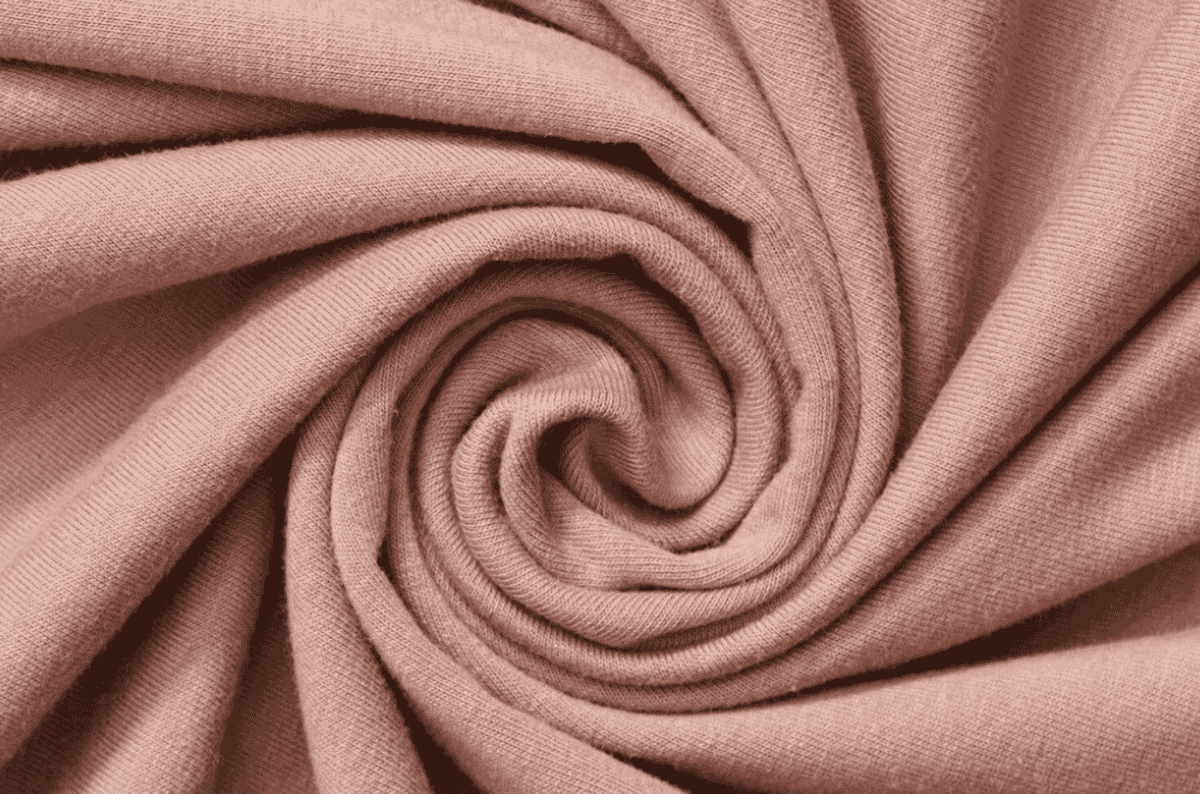
Cotton is the second most produced fibre in the world after polyester, and the first choice for most brands building basics. It breathes, it takes dye well, and customers understand it without explanation.
It is also the fibre where specification decisions carry the widest cost spread. Global cotton output was about 24.5 million tonnes in 2023/24, roughly 19% of all fibre produced (Textile Exchange, Materials Market Report 2025). This guide covers the constructions, the weights, the yarns, the certifications and what to write into a fabric order.
Heads up: We're Portugal Clothing Factory, a group of documented Portuguese clothing factories in the northern textile cluster. Weight ranges, minimums and production observations below come from factory quoting and production our team has handled between 2024 and 2026. Market figures come from published sources, named inline.
Key Takeaways
- Cotton is about 19% of global fibre output, roughly 24.5 million tonnes in 2023/24 (Textile Exchange, 2025).
- Construction matters more than fibre grade: jersey, French terry, poplin and twill are different products, made by different factories.
- Specify GSM as a range and always together with the construction.
- Check certificates, not logos. GOTS, OCS and OEKO-TEX certify different things; verify the certificate number in the issuer's database.
What Cotton Fabrics Are Used in Apparel?
Cotton reaches a garment through a handful of constructions, and the construction decides behaviour far more than the fibre grade does.
Single jersey is the standard t-shirt knit: it stretches, curls at raw edges and drapes well (see our jersey fabric guide). French terry has a looped back and is used for lighter sweatshirts. Fleece is brushed on the inside for warmth. Rib is used for cuffs, collars and fitted bodies.
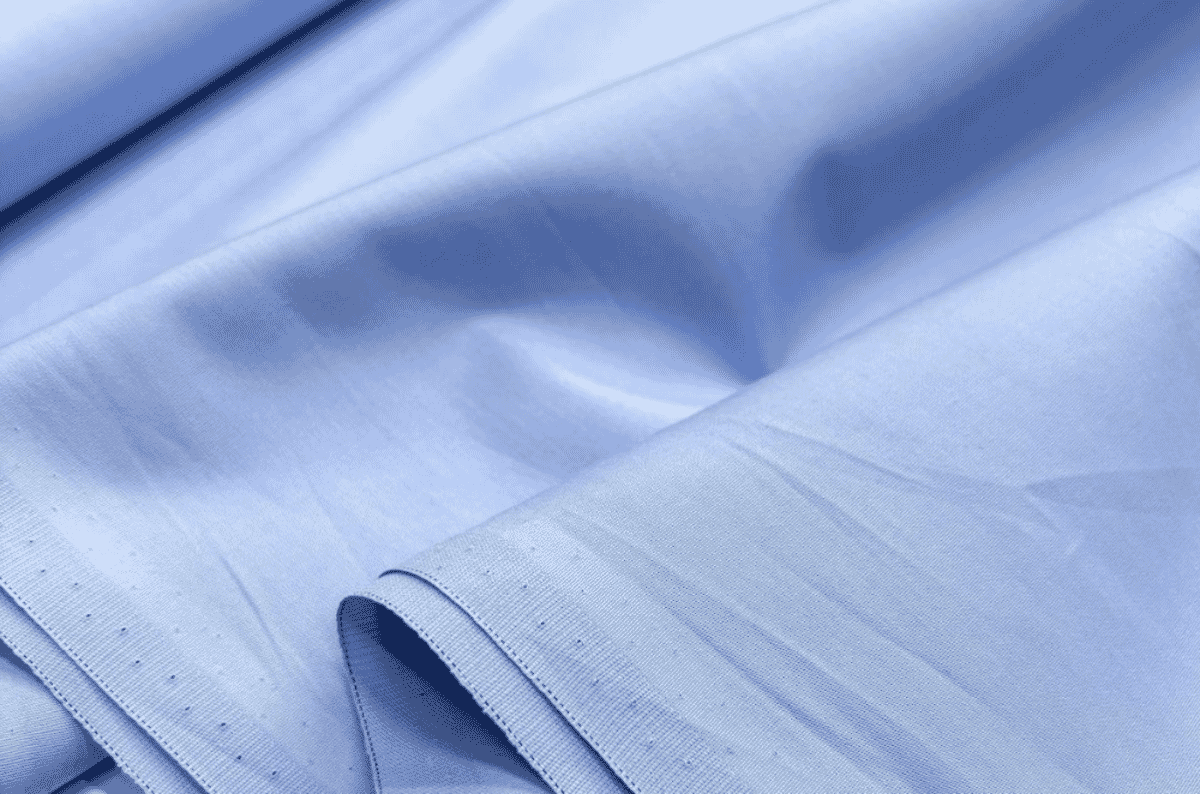
On the woven side, poplin is a plain weave for shirting, twill carries a diagonal line and more body, canvas is heavier and structural, and denim is a warp-faced twill in a class of its own.
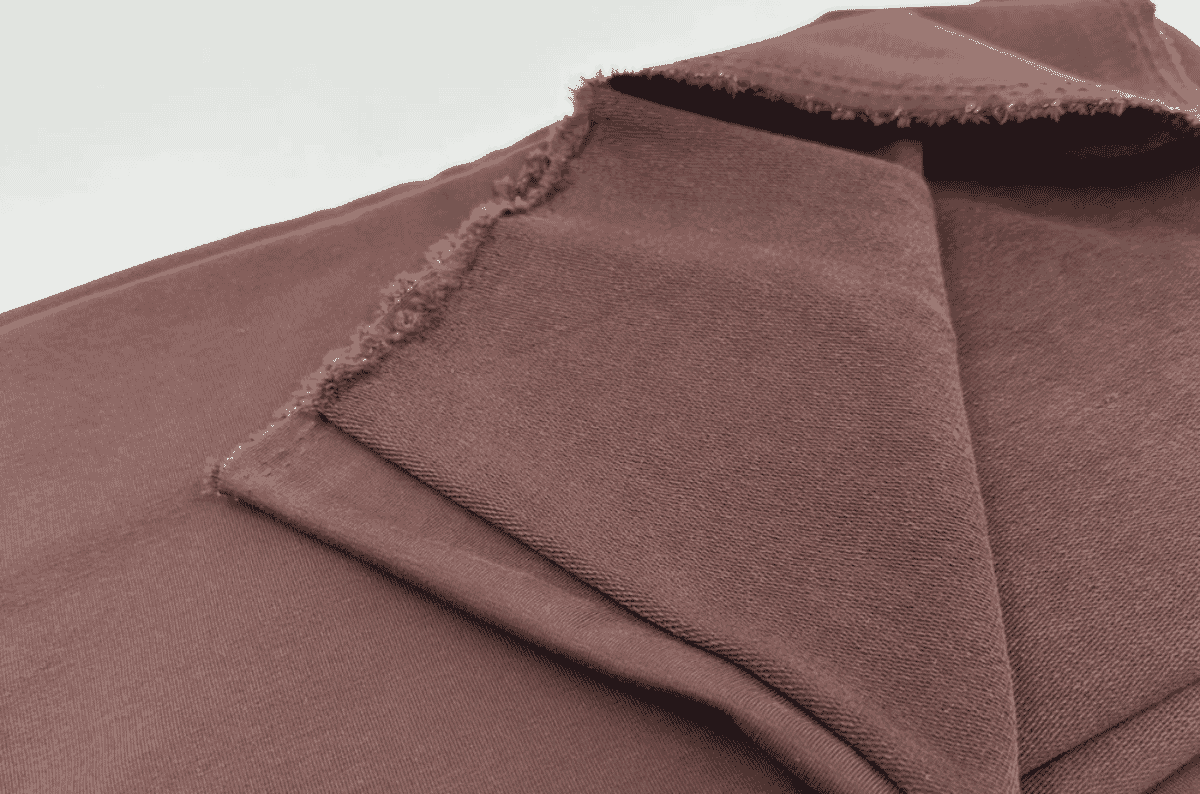
A factory set up for circular knit is not the factory for your poplin shirt. Knitwear, jersey and shirting are separate specialisms, so pairing the construction with the right factory comes before price enters the conversation.
Citation Capsule Cotton reaches apparel through distinct constructions that determine garment behaviour more than fibre grade does: single jersey, French terry and fleece on the knit side; poplin, twill, canvas and denim on the woven side. Factory capability follows construction rather than fibre, so a circular knit specialist is not the right place for woven shirting, whatever cotton is specified.
What GSM Should Cotton Apparel Be?
Weight decides whether a garment reads as premium or cheap, and it is specified in grams per square metre. Commercial cotton apparel spans roughly 100 GSM poplin shirting to 400 GSM brushed fleece, a fourfold range within one fibre.
| Garment | Cotton GSM | Behaviour |
|---|---|---|
| Lightweight tee | 120–150 | Drapes, semi-sheer in pale colours |
| Standard tee | 160–200 | Commercial default |
| Heavyweight tee | 220–260 | Boxy, structured, holds shape |
| French terry sweatshirt | 280–340 | Mid-weight, year-round |
| Brushed fleece hoodie | 320–400 | Winter weight |
| Poplin shirting | 100–140 | Crisp, light |
| Twill | 200–320 | Body and structure |
Typical commercial ranges from PCF factory quoting, 2024–2026. Indicative, not a published dataset.
A common specification error is copying a competitor's GSM without accounting for construction. A 300 GSM French terry and a 300 GSM brushed fleece weigh the same and feel entirely different.
Specify a range. Mills work to a tolerance (often around ±5%), and an absolute number either gets quietly rounded or priced as a custom knit. Our GSM guide goes deeper on fabric weight.
Try it free: Model your production cost in the garment cost calculator before you commit to a weight. 60 seconds, no email required.
How Do You Read a Cotton Yarn Specification?
Three variables describe any cotton yarn, and factories assume you know them.
Staple length. How long the individual fibres are. Longer staple spins finer, smoother and stronger yarn. Upland cotton runs short to medium; Pima and Egyptian run long to extra-long, at a premium.
Yarn count. Expressed as Ne, where a higher number means a finer yarn. A 20s yarn is coarse and heavy; a 40s is fine and light. Shirting typically runs 40s to 100s; jersey runs 20s to 40s.
Spinning method. Ring-spun aligns fibres for a smoother, stronger yarn. Open-end is faster and cheaper with a coarser hand. Combing removes short fibres before spinning, adding cost and quality.
What to ask for by name
For a premium tee: combed, ring-spun, 30s single jersey. That single phrase tells a mill exactly what you want and signals that you know what you are buying. For a value tee: carded, open-end, 20s. It will feel different and cost less.
Citation Capsule Cotton yarn specification comprises three variables: staple length, where longer fibres produce finer and stronger yarn; yarn count expressed as Ne, where higher numbers indicate finer yarn, from about 20s for jersey to 100s for fine shirting; and spinning method, where ring-spun produces a smoother, stronger yarn than open-end, and combing removes short fibres at additional cost.
How Do Cotton Blends Change the Garment?
Pure cotton is often not the commercial answer. Four blends are common, each solving a specific weakness of 100% cotton.
- Cotton and elastane, around 95/5. Adds stretch and recovery. Standard in fitted tees, polos and body-conscious cuts.
- Cotton and polyester, 60/40 or 50/50. Reduces shrinkage, speeds drying and cuts cost, but reduces breathability and changes the hand. The classic sweatshirt blend.
- Cotton and modal or TENCEL™ lyocell, around 50/50. Adds drape and a softer hand at a premium. Common in premium tees and loungewear; see our modal fabric guide.
- Cotton and linen, around 55/45. Adds texture and breathability for summer product, at the cost of more creasing.
The trade-off nobody states plainly
Blends that improve durability tend to reduce breathability, and blends that improve hand tend to reduce durability. No blend improves everything. Decide which failure you can least afford, then blend against that.
For a tee sold at volume, shrinkage and pilling are the failures that generate returns, so some polyester content helps. For a premium tee sold on feel, hand is the whole product, so stay closer to pure combed cotton and manage shrinkage in finishing.
Citation Capsule Cotton blends address specific weaknesses of pure cotton: around 5% elastane adds stretch and recovery, 40–50% polyester reduces shrinkage and drying time while lowering breathability, modal or lyocell at around 50% adds drape at a premium, and linen adds breathability with more creasing.
Which Cotton Certifications Should You Look For?
Four labels cover most commercial requirements, and they certify different things.
- GOTS covers organic fibre content plus processing, chemical and social criteria. It is the most demanding and the most recognised.
- OCS (Organic Content Standard, run by Textile Exchange) verifies organic content only, without the processing requirements.
- OEKO-TEX STANDARD 100 certifies that the finished article has been tested for harmful substances. It says nothing about organic status.
- Better Cotton (formerly BCI) is a farm-level programme that largely works on a mass-balance basis, so it does not guarantee that the cotton in a specific garment was grown to its standard.
Ask for the certificate number and verify it against the issuing body's public database. A logo is not a certificate, and for GOTS or OCS claims the chain of custody has to run unbroken from fibre to finished garment. For a side-by-side view, read OEKO-TEX vs GOTS vs bluesign.
Need certified cotton production? Get in contact and we'll place and manage your production with a certified factory in our group.
Is Organic Cotton Worth the Premium?
Organic cotton fibre trades at a premium over conventional cotton, and that premium has swung widely with supply in recent years. Whether it is worth paying depends on your channel more than on the fibre.
The premium does not scale linearly into retail price. Fibre is one input among several; labour, trims, finishing and freight do not change. As an illustration, if fibre were a fifth of a garment's cost, a 25% fibre premium would add about 5% to the unit cost. Brands often overestimate this and reject certification on a cost basis that is not real, so ask the mill to quote both versions of the same fabric.
- Selling wholesale into European retail. Retail buyers increasingly ask for certified content, and for some it is a listing condition rather than a differentiator.
- Selling direct to consumer at accessible prices. Expect the premium to compress your margin rather than lift your price.
- Selling premium direct to consumer. Certification supports a price position you were taking anyway, and the margin can usually carry it.
Citation Capsule Organic cotton fibre trades at a premium over conventional cotton. Because fibre is one input among several in a finished garment, the effect on unit cost is much smaller than the fibre premium itself. The commercial case for certification is strongest for brands selling wholesale into European retail, where certified content is increasingly requested.
What Drives Cotton Fabric Price?
Four variables, in roughly this order of impact:
- Construction complexity. A plain single jersey is cheaper to knit than a rib or a jacquard.
- Yarn count and quality. Longer staple cotton spins finer, smoother yarn at higher cost. This is where combed, ring-spun and Supima® designations sit.
- Finishing. Mercerising, brushing, enzyme washing and garment dyeing each add a process and a cost.
- Order size and colour count. Dye lots have their own minimums, commonly a few hundred metres per colour. Adding a colourway often costs more than adding units.
Underneath them sits the commodity price of raw cotton, which moves independently of all four. In its September 2026 outlook, the USDA projected 2026/27 world cotton production at 117.3 million bales, down 4%, against world mill use of 122.9 million bales, the highest in six years (USDA Economic Research Service). A deficit like that puts upward pressure on raw fibre, which reaches fabric prices with a lag.
Need a tech pack? Get a factory-ready single-style tech pack with full fabric specification for €79. See what's included.
What Goes Wrong With Cotton in Production?
Four failures, and all are predictable enough to write into a specification.
- Shrinkage. Untreated cotton commonly shrinks around 3–7% on first wash. Pre-shrinking, sanforising or compacting controls it, and it must be specified. If it is not in the tech pack, assume it has not been done.
- Colour bleeding. Deep indigo, red and black are the usual offenders. Reactive dyes generally bleed less than direct dyes and cost more.
- Pilling. Short-staple, open-end yarn pills fastest. If pilling matters, specify combed ring-spun and accept the cost.
- Twisting. Jersey knitted or finished with uneven tension can twist at the side seam after washing. It is a fabric fault, not a sewing fault, and a common reason a tee looks wrong after a few washes.
The clause to put in writing
Set a maximum shrinkage after a defined number of wash cycles at a defined temperature (for example, 3% after five washes at 30°C), measured per point of measure. That one sentence in a quality agreement gives you a basis to reject a delivery.
What Should Be in a Cotton Fabric Order?
Seven lines. A mill can quote from these within days, and anything missing becomes an assumption that may be wrong. Sending a photograph and asking for a quote produces a number that will change.
- Composition by percentage, including blend partners
- Construction: single jersey, French terry, poplin, twill
- Weight in GSM as a range, with tolerance
- Yarn: combed or carded, ring-spun or open-end, count in Ne
- Finish: pre-shrunk, mercerised, brushed, enzyme washed, or none
- Colour in Pantone TCX, the textile system, not the coated inks used for print
- Quantity in metres, split by colour
Add certification requirements explicitly if you have them, because certified and uncertified versions of the same fabric are different products at different prices.
Two lines brands forget
Width. Fabric comes in different widths, and width changes consumption. A 150 cm fabric and a 180 cm fabric at the same price per metre are not the same price per garment.
Shrinkage tolerance. State it as a maximum after a defined wash test. Without it, you have no basis to reject a delivery.
Traceability is also moving from a marketing choice to a commercial requirement. EU rules under the Ecodesign for Sustainable Products Regulation are heading toward digital product information for textiles, and retail buyers ask about fibre origin earlier than they used to. Ask your mill where the fibre is grown and whether it can evidence it. Our guide to fabric for apparel covers the other fibre families.
Conclusion: Cotton Decisions That Matter
Cotton is forgiving as a fibre and unforgiving as a specification. Get the construction and weight right and most other things can be adjusted. Get them wrong and the garment fails at fit stage, after you have paid for fabric.
Lock construction first, then weight, then yarn and finish. Treat organic certification as a commercial access question: it either opens a channel you want or it does not. And check certificate numbers rather than logos.
Talk to our team: Tell us the construction, the weight and the volume. Get in contact; every serious brief gets an answer within 24 hours.
Frequently Asked Questions About Cotton Fabric for Apparel
What is the best cotton fabric for t-shirts?
Single jersey at 160 to 200 GSM is the commercial standard for t-shirts. Combed, ring-spun cotton gives a smoother surface and a better print result than open-end yarn at a modest premium. Heavier boxy tees run 220 to 260 GSM, lightweight drapier styles 120 to 150.
How much more does organic cotton cost?
Organic cotton fibre trades at a premium over conventional cotton, and the size of that premium moves with supply and with the certification you need. Because fibre is only one input in a finished garment, the effect on unit cost is much smaller than the fibre premium itself. Ask the mill to quote the same fabric in organic and conventional versions and compare like for like.
What is the difference between GOTS and OEKO-TEX?
GOTS certifies organic fibre content alongside processing, chemical and social criteria. OEKO-TEX STANDARD 100 certifies only that the finished article has been tested for harmful substances and makes no organic claim. A garment can hold OEKO-TEX without containing any organic cotton at all.
What GSM is a good hoodie?
Brushed cotton fleece hoodies typically run 320 to 400 GSM, with 320 to 350 a common choice for year-round wear. French terry sweatshirts sit lighter at 280 to 340 GSM. Specify construction alongside weight, since the same GSM feels different across constructions.
Why does adding a colour raise my minimum order?
Dyeing works in lots with their own minimums, commonly a few hundred metres per colour. Each additional colourway triggers a separate lot, so a second colour can raise the total fabric commitment more than adding units in a single colour would.
What yarn count should I specify for a t-shirt?
For a premium tee, 30s combed ring-spun single jersey is a common specification. For a value tee, 20s carded open-end costs less and feels coarser. Higher Ne numbers mean finer yarn: shirting runs roughly 40s to 100s, jersey roughly 20s to 40s.
How much does cotton shrink?
Untreated cotton commonly shrinks around 3 to 7% on first wash. Pre-shrinking, sanforising or compacting controls it, but it must be specified explicitly. Write a maximum shrinkage after a set number of wash cycles into your quality agreement, measured per point of measure.
We're a group of 80 documented Portuguese clothing factories, 25 verified, based in Porto and Guimarães. Tell us your product, volume, and timeline. We'll place and manage your production with the right factory in the group, usually replying within 24 hours. Flat fees, no commissions, no upsell.
Get in contact Download the directory (€39)Need a tech pack? Get a factory-ready single-style tech pack for €79. See what's included.
Sources used in this article
- Textile Exchange, Materials Market Report 2025.
- USDA Economic Research Service, Cotton and Wool Outlook, September 2026 (CWS-26i).
- Global Organic Textile Standard (GOTS).
- OEKO-TEX STANDARD 100.
- Better Cotton.
- PCF quoting and production records, 2024 to 2026, for the weight ranges and production observations. Our own operational records, not survey data.
Not sourced. Weight ranges, dye-lot minimums and shrinkage figures in this article reflect factory quoting and production we have seen rather than a published dataset. Treat them as indicative, not measured.
Portugal Clothing Factory is a group of documented Portuguese clothing factories in the northern textile cluster (Porto, Guimarães, Braga, Barcelos, Famalicão). We charge flat fees, reply within 24 hours, and place and manage production with the factory in our group built for your product. See how we work or get in contact.