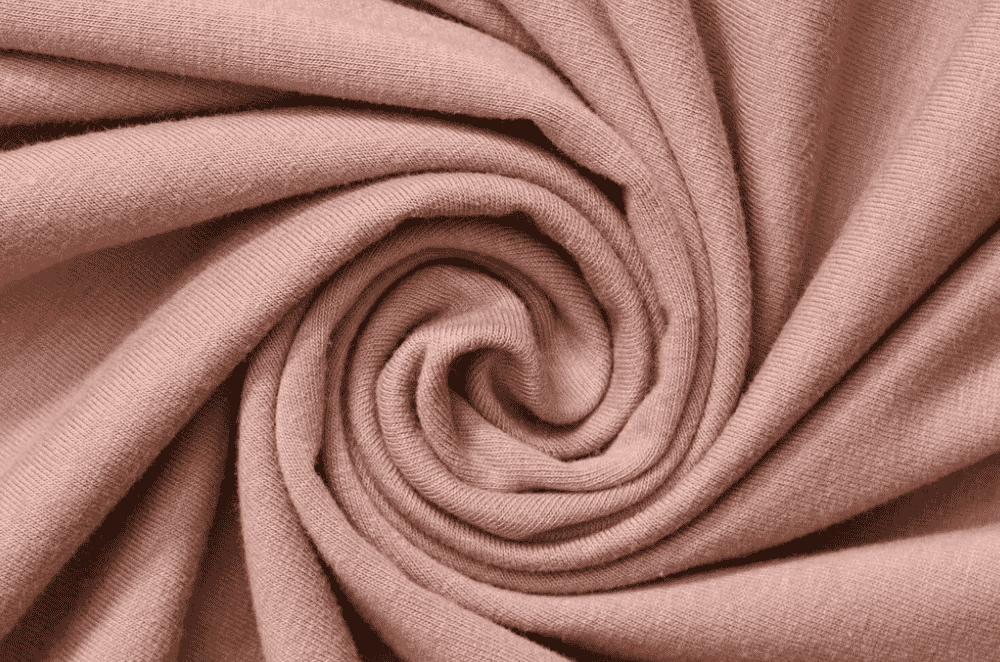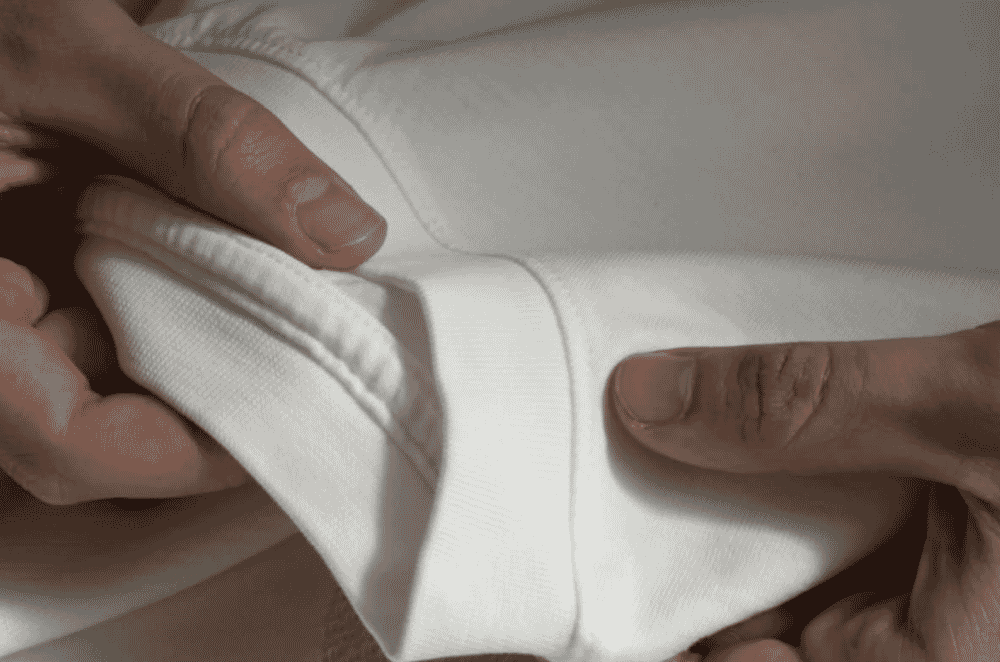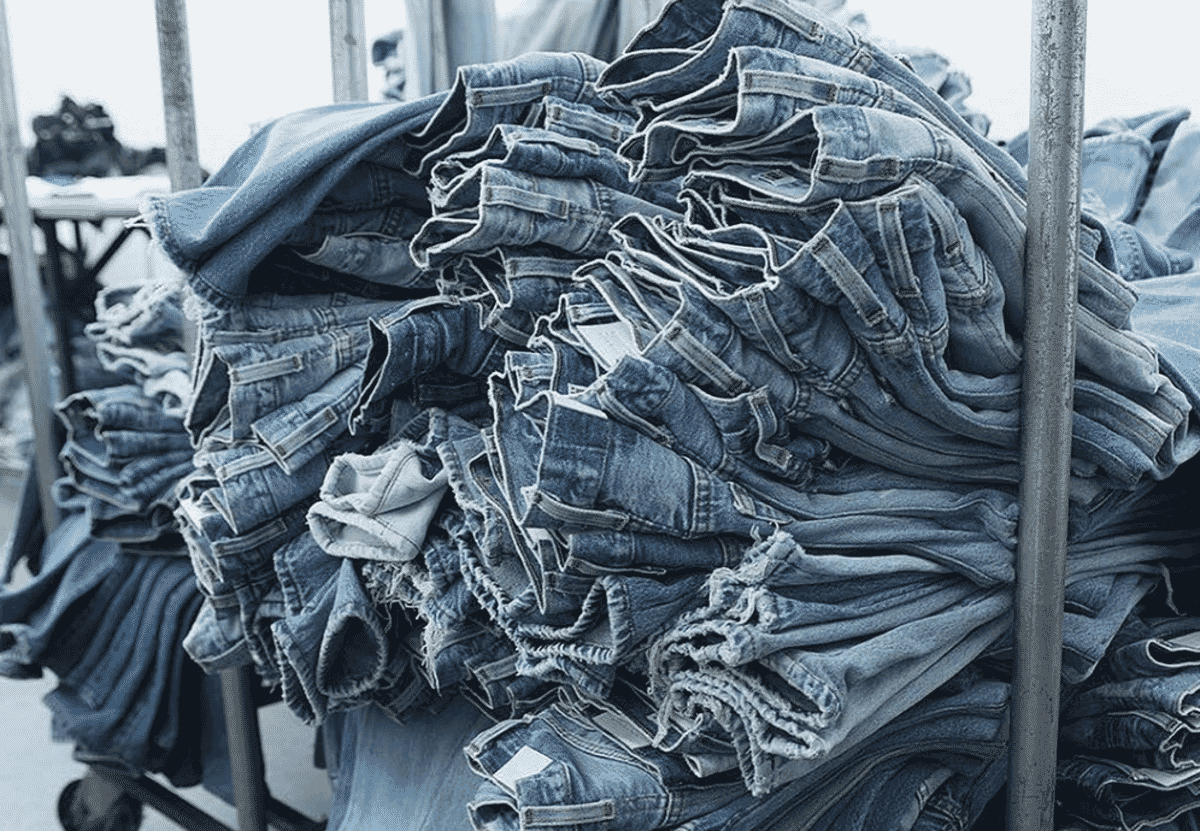
Fabric is the single largest variable in a garment. It decides how the piece drapes, how it wears, what it costs, and, more often than brands expect, whether a factory will take the order at all.
What this guide covers
Global fibre production reached 132 million tonnes in 2024, with polyester at 59% of output and cotton at 18% (Textile Exchange, 2025). Those two fibres account for close to four fifths of everything made. This guide covers how to choose between them and the rest, what weight to specify, what mills will actually sell you, and how fabric decisions cascade into your minimum order.
Heads up: We're Portugal Clothing Factory, a group of 80 documented Portuguese clothing factories, 25 verified in person. Minimums and lead times below come from that group. Market and fibre figures come from published sources, named inline.
Key takeaways
Key Takeaways
- Global fibre production hit 132 million tonnes in 2024; polyester holds 59% share, cotton 18% (Textile Exchange, 2025).
- Fabric roll minimums, not sewing capacity, set the floor on your order size in most cases.
- GSM is the specification factories care about most after composition. Get it wrong and the garment fails at fit stage.
- Fabric procurement adds four to eight weeks to a first order, running partly in parallel with sampling.
What Types of Fabric Are Used for Apparel?
Apparel fabric splits first by fibre, then by construction. Four fibre families cover almost all of the 132 million tonnes produced globally in 2024 (Textile Exchange, 2025). Fibre decides performance and cost; construction decides behaviour.
Four fibre families cover almost everything. Cotton for breathability and hand-feel. Polyester for durability, recovery and price. Cellulosics, viscose, modal, Tencel, for drape. Wool and animal fibres for insulation at a premium.
Construction then splits into knits and wovens. Knits stretch because the yarn loops; wovens do not because the yarn crosses at right angles. That single distinction decides which factory can make your garment. A jersey specialist cannot sew a tailored coat, and a tailoring house cannot run circular knit.
Citation Capsule: Global fibre production reached 132 million tonnes in 2024, up from 125 million in 2023. Polyester accounts for 59% of output, of which 88% is fossil-based, while cotton holds 18%, roughly 24 million tonnes. Recycled materials represented 7.6% of the fibre market in 2024, unchanged from the previous year.
How Do You Choose the Right Fabric Weight?
Fabric weight is measured in GSM, grams per square metre, and it is the specification that separates a garment that works from one that does not. Two fabrics of identical composition behave completely differently at 140 GSM and 280 GSM.
Weight ranges are reasonably standardised by garment type:
| Garment | Typical GSM | Notes |
|---|---|---|
| Lightweight tee | 120-150 | Drapes, semi-sheer in light colours |
| Standard tee | 160-200 | The commercial default |
| Heavyweight tee | 220-260 | Boxy, holds structure |
| Sweatshirt / hoodie | 280-400 | 300-350 is the commercial sweet spot |
| Shirting | 100-140 | Woven, poplin or twill |
| Denim | 300-450 | Measured in oz/yd² as often as GSM |
Specifying a range rather than a number is normal and sensible. Mills work in tolerances, and a demand for exactly 185 GSM will either be quietly ignored or priced as a custom knit.
The error we see most is copying a competitor's weight without accounting for fibre. A 300 GSM cotton fleece and a 300 GSM polyester fleece feel nothing alike. Our guide to cotton fabric for apparel covers cotton weights by construction.
Try it free: Model your landed cost in the garment cost calculator before you commit to a fabric. 60 seconds, no email required.
Why Does Fabric Decide Your Minimum Order?
Because mills sell by the roll, and rolls do not scale down. Dye lots commonly start at 300 to 500 metres per colour, which is why the median minimum across our 80 documented factories is 175 units per style rather than 50 (our MOQ guide breaks the distribution down). Brands routinely assume the constraint is sewing capacity. It is not.
Across the 80 documented factories in our group, the median stated minimum is 175 units per style, with only one factory quoting below 100. When you ask why, the answer is almost always fabric rather than machine time.
Why a second colour costs more than more units
A stock fabric held by the mill can often be bought in smaller quantities. A custom colour cannot: dye lots have their own minimums, frequently 300 to 500 metres per colour. That is why adding a second colourway can raise your total minimum more than doubling your quantity in one colour.
Citation Capsule: Fabric roll and dye lot minimums, rather than sewing capacity, are the primary constraint on apparel minimum order quantities. Across 80 documented Portuguese factories the median minimum is 175 units per style. Custom colourways trigger separate dye lot minimums, commonly 300 to 500 metres per colour, meaning an additional colour can raise total commitment more than an increase in units.
How Long Does Fabric Sourcing Take?
Fabric procurement runs four to eight weeks on a first order (our fabric sourcing guide covers how the Portuguese supply chain is organised), and it is the stage most likely to move your delivery date. Set against production windows of 7 to 10 weeks, it is roughly half your first-order timeline.
Stock fabric ships in days to two weeks. Custom dyeing adds two to four. A bespoke knit or weave developed for you can take six weeks or more before any garment is cut.
The good news is that procurement runs partly in parallel with sampling. The bad news is that it cannot start until composition and weight are locked, which means every week of indecision on fabric is a week added to delivery.
What that means for a first order
Production itself is 7 to 10 weeks across most of our group, 29 of 80 factories quote 8 to 10 weeks and 26 quote 7 to 9. Add fabric and sampling and a realistic first order lands at three to five months.
What Does a Factory Need to Quote on Fabric?
Four things, and none of them is a photograph. Supply these and a mill can quote within days; omit them and every number you receive will move.
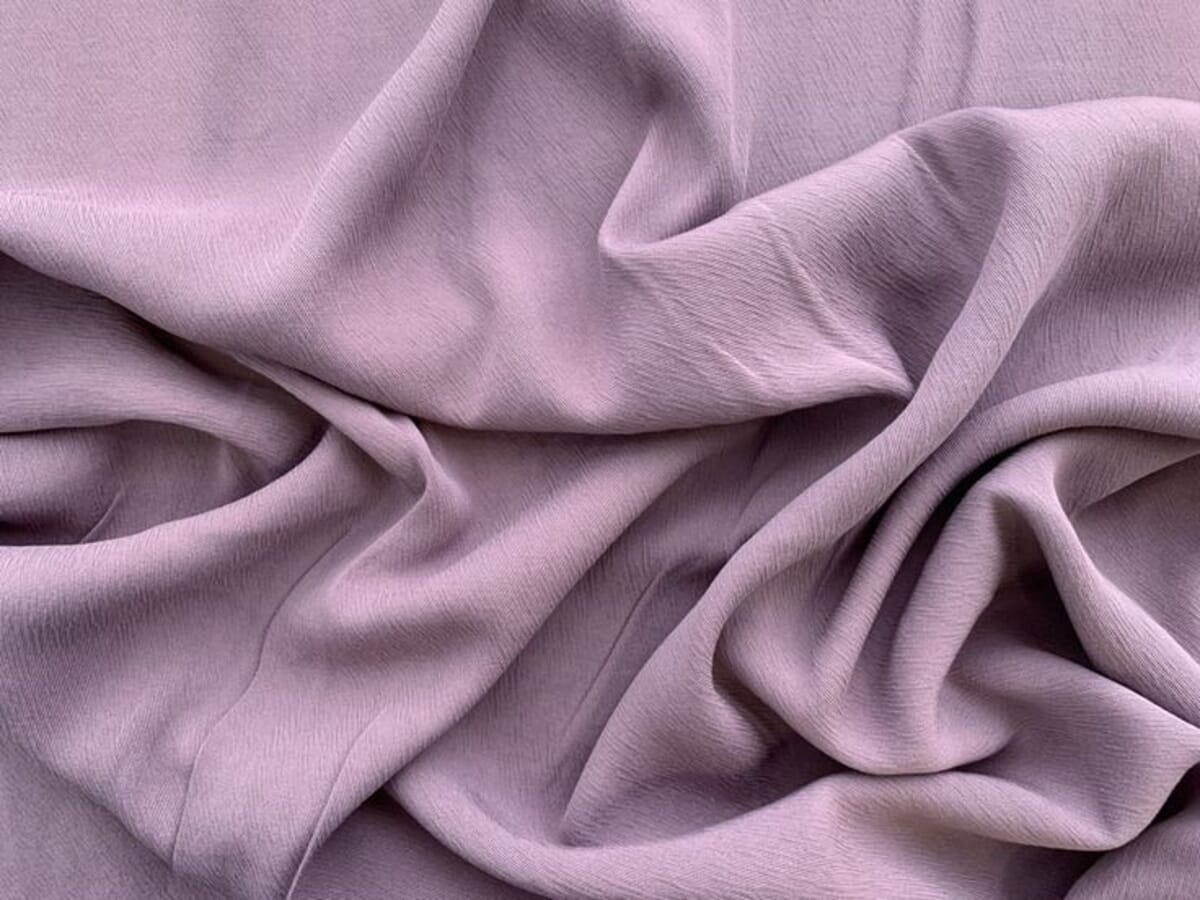
Composition by percentage, "95% cotton, 5% elastane", not "cotton-ish". Weight in GSM, ideally as a range. Construction, single jersey, French terry, twill, poplin. Finish, enzyme washed, brushed, mercerised, or none.
Add colour references in a recognised system, Pantone TCX for textiles rather than the coated inks used for print. A hex code is not a fabric colour.
With those five inputs a mill can quote in days. Without them, every number you receive is provisional and will move.
Need a tech pack? Get a factory-ready single-style tech pack, fabric specification included, for €79. See what's included.
Which Certifications Matter for Apparel Fabric?
Certification matters commercially when your buyer asks for it, and increasingly that is retailers rather than consumers. It is scarcer than factory websites suggest: across the group we document, 7 hold GOTS, 5 hold OEKO-TEX Standard 100, and 4 each hold OCS and RCS.
GOTS covers organic fibre content plus processing and social criteria. Our guide to OEKO-TEX, GOTS and bluesign covers what each one actually certifies. OEKO-TEX Standard 100 certifies the finished article contains no harmful substances. OCS and RCS verify organic and recycled content claims respectively. GRS adds social and environmental processing requirements to recycled content.
Across our documented group, 7 factories hold GOTS, 5 hold OEKO-TEX Standard 100, 4 hold OCS and 4 hold RCS. That distribution is typical: certification concentrates among factories serving European retail buyers who require it.
One practical warning. A certified fabric does not make a certified garment. Chain of custody has to run unbroken through every processing step, and that is a contractual question, not a fabric question.
Find your factory: Tell us the fabric, the weight and the volume. We'll place your production with the factories in the group set up for it. Get in contact.
How Do You Test Fabric Before Committing to Bulk?
Four checks, and only one of them needs a laboratory. Skipping them is the most expensive shortcut in sourcing, because fabric problems surface after you have paid for the roll.
Hand and drape. Order a swatch and handle it. Hang it. A fabric that photographs well can feel wrong in the hand, and no specification sheet captures that.
Shrinkage. Wash and dry a swatch five times to your intended care label, measuring before and after. Anything above 3% on a fitted garment produces returns. Anything above 5% means the fabric needs pre-shrinking, which is a cost line nobody quoted you.
Colour fastness. Rub a damp white cloth against the swatch. If colour transfers, it will transfer onto your customer's other clothes. Laboratory testing to ISO 105 covers this properly, but the cloth test catches the worst cases in thirty seconds.
Pilling. Rub the fabric against itself. Cheap polyester blends and loosely spun cottons pill within weeks, and it is the single most common complaint on knitwear.
The one test worth paying for
Dimensional stability after repeated laundering, done by an independent laboratory. It is the test that most often contradicts what a mill claims, and it is the one your buyer will ask for if you sell wholesale.
Budget it as a separate line on a first order. It is not included in a factory quote.
Citation Capsule: Fabric verification before bulk production requires four checks: hand and drape assessment on a physical swatch, shrinkage measured across five wash cycles, colour fastness tested by rubbing with a damp white cloth, and pilling resistance. Shrinkage above 3% on a fitted garment produces returns, and above 5% requires pre-shrinking, an unquoted cost line.
What Drives the Price of Apparel Fabric?
Five variables, in descending order of impact. Understanding them is the difference between negotiating and simply accepting a number.
Fibre. The raw material sets the floor. Polyester is the cheapest at scale, cotton sits above it, and cellulosics, wool and silk climb from there. Organic cotton carries a 20-30% fibre premium over conventional.
Yarn quality. Longer staple spins finer and smoother at higher cost. This is where combed, ring-spun and Supima designations sit, and the difference is visible in the finished garment.
Construction complexity. A plain single jersey knits faster than a rib, a jacquard or a double knit. Weaving follows the same logic: poplin is cheaper than twill, twill cheaper than a dobby.
Finishing. Mercerising, brushing, enzyme washing, garment dyeing and peaching each add a process, a cost and usually a week.
Order size and colour count. Dye lots carry their own minimums, commonly 300 to 500 metres per colour.
Where brands lose money without noticing
Not on the per-metre price. On consumption.
A poorly made marker, the cutting layout that determines how many garments come from a metre of fabric, wastes 5-15% of your material. On a 500-unit order that is real money, and it never appears as a line item. Ask the factory what marker efficiency they achieved. A factory that measures it will tell you. One that does not measure it is losing your fabric.
Which Fabrics Suit Which Garment?
Match construction to product before you look at fibre. The wrong construction cannot be rescued by the right fibre.
| Garment | Construction | Typical fabric | GSM |
|---|---|---|---|
| T-shirt | Knit | Single jersey | 160-200 |
| Sweatshirt | Knit | French terry | 280-340 |
| Hoodie | Knit | Brushed fleece | 320-400 |
| Polo | Knit | Pique | 180-220 |
| Shirt | Woven | Poplin, oxford | 100-140 |
| Chinos | Woven | Twill | 200-320 |
| Jeans | Woven | Denim twill | 300-450 |
| Blazer | Woven | Wool suiting | 240-320 |
| Legging | Knit | Poly or nylon elastane | 240-280 |
| Dress | Either | Viscose, crepe, jersey | 120-220 |
The pattern is consistent. Knits stretch and forgive fit; wovens hold structure and expose it. A garment that needs to move with the body wants knit. A garment that needs to hold a line wants woven.
The mistake that repeats
Brands copy a competitor's fabric specification without checking the construction. A 300 GSM French terry and a 300 GSM brushed fleece weigh the same and behave nothing alike. So do a 200 GSM jersey and a 200 GSM twill.
Always specify construction and weight together. Weight alone is meaningless.
Citation Capsule: Apparel fabric selection follows construction before fibre. Knit constructions including single jersey at 160-200 GSM, French terry at 280-340 GSM and brushed fleece at 320-400 GSM suit garments requiring stretch, while woven constructions such as poplin at 100-140 GSM and twill at 200-320 GSM suit structured garments. Identical GSM across different constructions produces materially different behaviour.
What Are the Sustainable Fabric Options?
Our sustainable fabrics guide goes deeper on each. Four routes, and they certify different things. Confusing them is common and commercially risky, because a buyer who asks for one will not accept another.
Organic fibre. GOTS and OCS verify organic content. GOTS additionally covers processing chemistry and social criteria; OCS covers content only.
Recycled content. RCS verifies recycled content, GRS adds environmental and social processing requirements. Recycled polyester grew to roughly 9.3 million tonnes in 2024, though recycled materials still represent only 7.6% of the total fibre market (Textile Exchange, 2025).
Responsible animal fibre. RWS for wool, RDS for down, RMS for mohair.
Chemical safety. OEKO-TEX Standard 100 certifies the finished article contains no harmful substances. It makes no organic or recycled claim whatsoever, which is the most frequently misunderstood point in apparel certification.
What certification does not do
It does not make a garment certified. Chain of custody has to run unbroken from fibre through spinning, knitting, dyeing, finishing and making up. A GOTS fabric sewn in an uncertified factory produces an uncertified garment.
Across the 80 factories we document, 7 hold GOTS, 5 hold OEKO-TEX Standard 100, and 4 each hold OCS and RCS. Ask for certificate numbers and check them against the issuing body's public database.
Should You Buy Fabric Yourself or Let the Factory Do It?
Three routes, and the right one depends on whether you have a sourcing function rather than on which is cheapest per metre.
Factory-sourced. The factory buys against your specification and quotes FOB, the finished garment including fabric. Simplest to manage, and the factory carries the material risk. You pay a margin on the fabric and lose visibility into what it actually cost.
Mill-direct. You buy from the mill and ship to the factory, who quotes CMT for labour only. Best unit economics and full control of quality. It also means you carry the cash, the risk and the logistics, and you need someone who can read a mill quotation.
Agent-sourced. An agent finds and buys the fabric. Useful in markets where you have no relationships, expensive as a permanent arrangement.
How to decide
Ask one question: can someone on your team evaluate a fabric quotation and chase a late mill delivery? If yes, mill-direct will save you money. If no, factory-sourced is not a premium, it is the only version that works.
Most brands start factory-sourced and move to mill-direct once volume justifies a sourcing hire. That transition usually happens somewhere between 2,000 and 5,000 units a season, when the fabric margin exceeds the cost of the person managing it.
The hybrid nobody mentions
You can nominate the mill and still let the factory buy. You choose the fabric and negotiate the price; the factory places the order and carries the risk. It costs slightly more than mill-direct and removes most of the management burden.
Factories generally accept this because the specification risk moves to you. Ask for it by name: nominated supply.
Citation Capsule: Apparel fabric procurement follows three routes: factory-sourced under an FOB quote where the factory carries material risk, mill-direct under a CMT quote offering better unit economics but requiring internal sourcing capability, and agent-sourced. A fourth hybrid, nominated supply, allows the brand to select and price the fabric while the factory places the order and carries the risk.
Why Does Fabric Have to Be Decided First?
Fabric is the decision that constrains every other decision. It sets your minimum, drives a large share of your cost, and determines which factories can even bid.
Lock composition and weight early. Accept mill stock where you can. Treat every additional colourway as a real cost, not a free variation. And specify properly. The difference between a quote you can rely on and one that moves is usually four lines of specification.
Talk to our team: Not sure which fabric suits your product and volume? Get in contact, every serious brief gets an answer within 24 hours.
Frequently Asked Questions
What is the most common fabric for apparel?
Polyester is the most produced apparel fibre at 59% of global output, followed by cotton at 18% (Textile Exchange, 2025). Together they account for roughly 77% of the 132 million tonnes produced in 2024. Cellulosics such as viscose and Tencel hold roughly 6%.
What GSM should I use for a t-shirt?
Standard commercial tees sit at 160 to 200 GSM. Lightweight, drapier tees run 120 to 150 GSM and can be semi-sheer in pale colours. Heavyweight boxy tees run 220 to 260 GSM. Specify a range rather than an exact figure, since mills work to tolerances.
Why does fabric affect minimum order quantity?
Mills sell fabric by the roll and dye by the lot, so quantity floors come from material rather than sewing. Custom colours trigger separate dye lot minimums, commonly 300 to 500 metres each. Choosing a fabric the mill already holds in stock is usually the fastest way to lower a minimum.
How long does it take to source apparel fabric?
Stock fabric ships within days to two weeks. Custom dyeing adds two to four weeks, and a bespoke knit or weave can take six weeks or more. On a first order, budget four to eight weeks for fabric, running partly in parallel with sampling.
What information does a factory need to quote fabric?
Composition by percentage, weight in GSM, construction type, finish, and colour references in Pantone TCX. With those five inputs a mill can quote within days. Without them any quote is provisional and will be revised once the specification is fixed.
We're a group of 80 documented Portuguese clothing factories, 25 verified, based in Porto and Guimarães. Tell us your product, volume, and timeline. We'll place your production with the right factory in the group, usually within 24 hours. Flat fees, no commissions, no upsell.
Get in contact Download the directory (€39)Need a tech pack? Get a factory-ready single-style tech pack for €79. See what's included.
Related reading
- GSM guide: what fabric weight actually means
- What is jersey fabric?
- What is French terry?
- What is poplin fabric?
- What is Tencel?
- Fabric sourcing in Portugal
- MOQ minimums in Portugal
- OEKO-TEX vs GOTS vs bluesign
- Clothing manufacturing costs in Portugal
Sources
- Textile Exchange, Materials Market Report 2025
- ATP, Associação Têxtil e Vestuário de Portugal, 2025
- Portugal Clothing Factory group documentation, 80 Portuguese factories, 2024-2026
Portugal Clothing Factory is a group of 80 documented Portuguese clothing factories, 25 verified, in the northern textile cluster (Porto, Guimarães, Braga, Barcelos, Famalicão). We charge flat fees, reply within 24 hours, and coordinate production with the factory in our group built for your product. See how we work or get in contact to place your order.