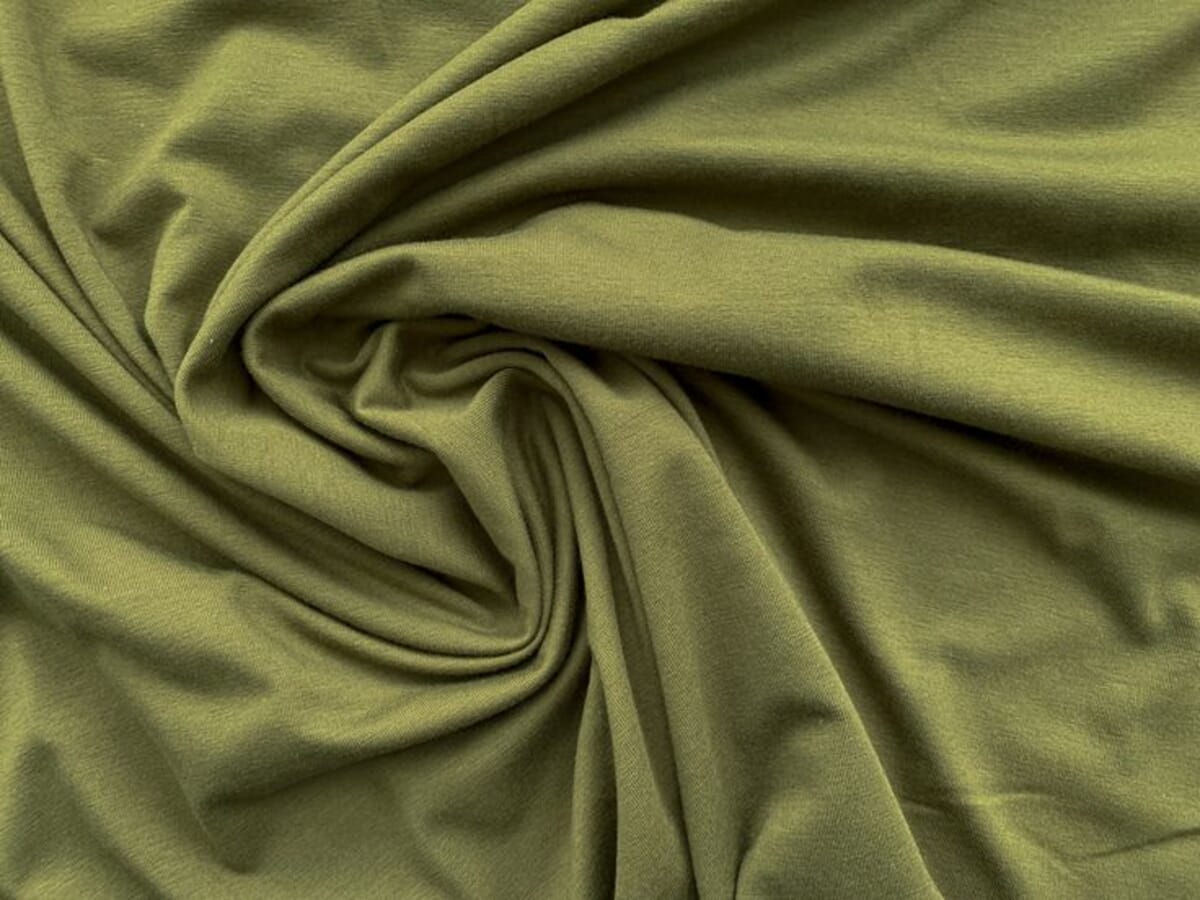
Modal fabric is a soft, breathable fabric made from regenerated cellulose: wood pulp, classically from beech trees, dissolved and spun into fibre in a modified viscose process. It is a type of rayon, grouped with viscose and lyocell as a "man-made cellulosic fibre" (Textile Exchange, 2024). It feels smooth, drapes close to silk, keeps its shape better than standard viscose when wet, and is one of the most requested fibres for underwear, loungewear, sleepwear and drapey knits produced across Portugal.
This guide covers what modal actually is, how it's made, its properties, how it compares to cotton, viscose, and Tencel, the garments it suits best, real EUR pricing per meter at Portuguese mills in 2026, MOQ patterns, and how our factory group works with modal in loungewear and underwear production runs. Everything below reflects the manufacturer-side view.
Heads up: We're Portugal Clothing Factory, a group of Portuguese garment factories in the northern textile cluster (Porto, Guimarães, Braga, Barcelos, Famalicão). We've documented 80 factories across the region and verified 25 active producers, so the observations here come from that research and from modal production runs placed across the group between 2024 and 2026.
Key Takeaways
- Modal is a semi-synthetic cellulosic fibre spun from beech pulp. High wet modulus rayon was developed in Japan in 1951 and commercialised by Lenzing from the 1960s; Lenzing Modal now dominates the branded market
- Modal absorbs and releases moisture well and has a silk-like drape (Lenzing AG, 2024)
- Portuguese modal fabric prices in 2026 run €7 to €18 per meter depending on blend, GSM, and micro-modal grade
- Best-suited garments are loungewear, underwear, kids clothing, drapey dresses, and everyday tees
- Roughly 20% of the 80 documented factories in our group work with modal as a standard offering
Try it free: Pressure-test your modal garment cost with our garment cost calculator. 60 seconds, no email required.
What Is Modal Fabric?
Modal is a semi-synthetic regenerated cellulose fibre, spun from purified beech tree wood pulp using a modified viscose process. It sits within the "man-made cellulosic fibres" category alongside viscose and lyocell, which together represented roughly 6.5% of global fibre production in 2023 (Textile Exchange, 2024). In fabric form, modal is soft, drapey, colour-fast, and dimensionally stable.
High wet modulus rayon, the fibre class modal belongs to, was first developed in Japan in 1951 as a silk alternative, and commercialised by Austria's Lenzing AG through the 1960s; Lenzing introduced Modal 333, with the higher wet strength and cotton-like dyeability that defined the modern fibre, in 1964. An earlier version of this article credited Lenzing with a 1930s patent, which predates the fibre by roughly two decades and places the invention in the wrong country. That technical name matters. It signals the fibre's key upgrade over standard viscose: stronger fibre structure when wet, so modal doesn't collapse in the wash the way early rayon did. Today, Lenzing Modal is the dominant branded modal on the market, produced from beech from FSC or PEFC certified forests grown in Central Europe.
How it feels in the hand
Modal feels closer to a soft cotton with silk-like drape than to standard viscose. It absorbs moisture faster, holds dye more deeply, and resists pilling better than most cellulosics. That combination is why underwear, loungewear, and everyday tee brands have moved toward modal over the last decade.
Citation Capsule: Modal is a semi-synthetic regenerated cellulose fibre spun from beech wood pulp from FSC or PEFC certified or controlled forests through a modified viscose process. Classified as "high wet modulus rayon", it retains structural integrity when wet unlike standard viscose. Man-made cellulosics including modal accounted for roughly 6.5% of global fibre production in 2023 (Textile Exchange, 2024).
Other names you'll see
Modal is often labelled as "HWM rayon", "high wet modulus rayon", "Lenzing Modal" (branded), or "micro-modal" (the finer denier variant). In Portuguese factory documentation, you'll see "modal", "malha modal" for knit versions, or "modal micro" for premium underwear knits. If a spec simply says "rayon", it's almost always standard viscose, not modal.
How Is Modal Fabric Made?
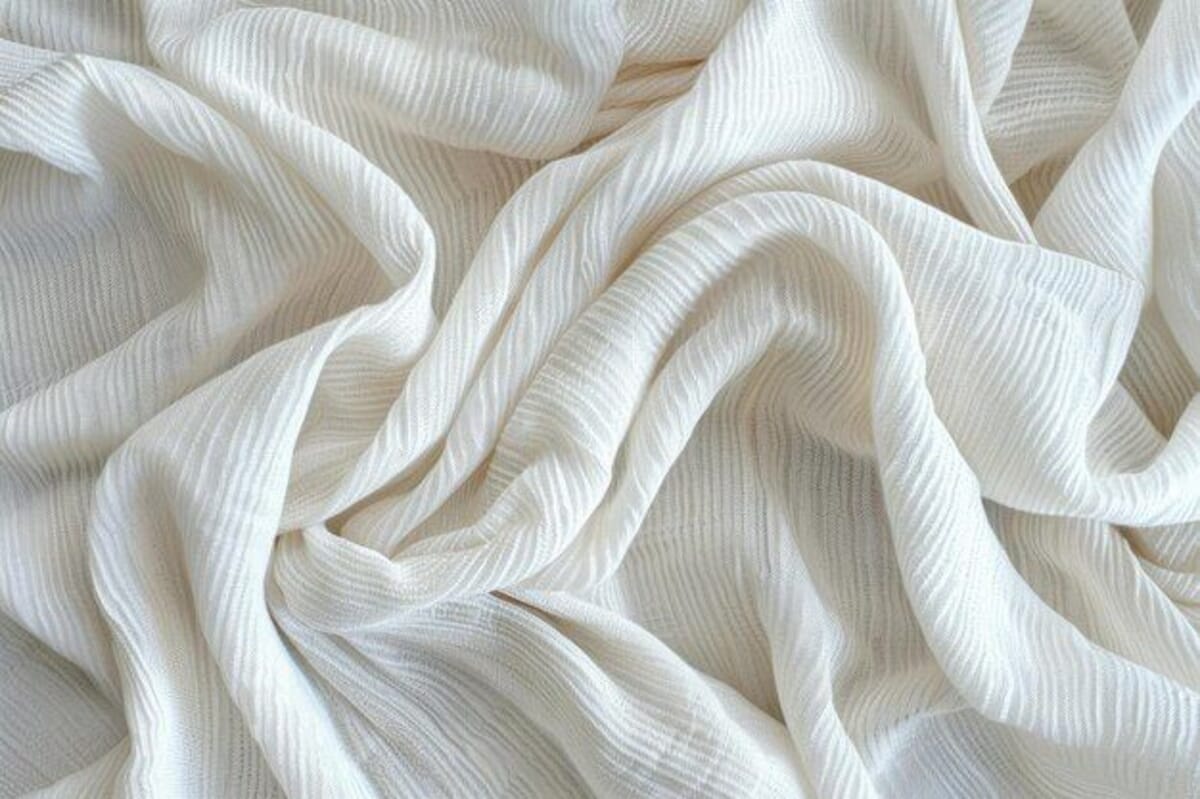
Modal is produced through a modified viscose process. Beech tree wood chips are pulped into cellulose sheets, dissolved in caustic soda and carbon disulfide to form a viscous solution, then extruded through spinnerets into a bath where the fibre precipitates. Lenzing modal today uses closed-loop chemistry recovery at rates approaching 95% at its flagship Austrian mill, well above generic viscose (Lenzing AG, 2024).
The process, step by step
The steps break down cleanly. Beech chips arrive from FSC or PEFC certified forests. The wood is chemically pulped to release cellulose. The cellulose sheets are aged, treated with caustic soda to form alkali cellulose, then reacted with carbon disulfide to produce cellulose xanthate. That soluble compound is dissolved in more caustic soda to form the viscose solution. The solution is extruded through spinnerets, hardened in a sulfuric acid bath, then cut, washed, and baled as raw fibre.
What makes it different from viscose
The critical difference from standard viscose is the fibre's higher orientation and cross-section, achieved through slower coagulation and specific stretching during spinning. That structural change is what gives modal its wet strength and dimensional stability. After spinning, raw modal fibre goes to yarn spinners, then to Portuguese mills for knitting or weaving, then to garment factories for cutting and sewing.
Why beech rather than eucalyptus
Why the beech pulp matters: Lenzing's beech comes from managed European forests certified to FSC or PEFC standards; Lenzing describes the beech behind TENCEL Modal as PEFC-certified European wood, so "FSC-certified" alone, as earlier versions of this article had it, is too narrow. Eucalyptus, the main feedstock for lyocell, is a fast-growing plantation crop; beech is a slower mixed-forest hardwood. Lenzing also uses beech in some lyocell, so the split is a matter of degree rather than a hard line. It's a slower, mixed-forest hardwood. That means modal from Lenzing carries a specific sustainability profile: lower yield per hectare than lyocell, but native to the region rather than plantation-dependent.
Citation Capsule: Modal is produced by pulping beech wood from FSC or PEFC certified or controlled forests, dissolving the cellulose through a modified viscose process, and spinning the solution into fibres with higher orientation and wet modulus than standard rayon. Lenzing Modal, the dominant branded modal, is produced under CO2-neutral certification at its Austrian mill and uses closed-loop chemistry recovery approaching 95% (Lenzing AG, 2024).
How Lenzing came to define modal
Lenzing did not invent high wet modulus rayon, but it industrialised and branded it, launching Modal 333 in 1964 and building the fibre into a benchmark. Lenzing Modal carries CO2-neutral certification through the ClimatePartner framework. Lenzing is the dominant producer of branded modal, which is why "modal" and "Lenzing Modal" are used almost interchangeably in factory documentation. We have withdrawn a figure putting roughly 80% of global branded modal capacity with Lenzing: Textile Exchange, to which it was credited, does not publish branded-capacity shares by producer.
What Are the Properties of Modal Fabric?
Modal's core properties come from its high wet modulus and its beech-derived fibre cross-section. It absorbs and releases moisture well, dries measurably faster, and holds dye at deeper saturation than most cellulosics (Lenzing AG, 2024). The fibre is also OEKO-TEX Standard 100 certified at baseline, which is why it dominates skin-contact categories like underwear and sleepwear.
The physical properties fashion founders care about:
- Softness: very high, closer to silk than cotton, no chemical softeners needed
- Drape: fluid, similar to viscose but with more dimensional stability
- Moisture absorption: absorbs and releases moisture, so fabric feels dry against the skin
- Wet strength: retains structural integrity when wet, unlike standard viscose
- Colour depth: dyes deeply and evenly, minimal fade over 50+ washes
- Shrinkage: low after proper finishing, typically 2-4% first wash
- Pilling resistance: high, better than cotton in most GSM ranges
- Breathability: highly breathable, temperature-regulating in warm and cool conditions
The property founders underestimate
The property most underestimated is dimensional stability. Standard viscose loses shape after a few washes. Modal holds. That is why loungewear and underwear brands who care about repeat wear specify modal over rayon. We have removed a claim about modal underwear surviving 100-plus wash cycles "at retailers who track fibre durability", because we do not have access to any retailer's wash-test data.
Does modal wrinkle? Less than linen or standard viscose, more than polyester blends. It's a middle-ground fibre on wrinkle resistance, which is fine for loungewear and knits but a limitation for structured shirting. In our experience across the factory group, modal shines in soft next-to-skin categories and drapey silhouettes, not in tailoring.
Citation Capsule: Modal fibres absorb and release moisture well and retain wet strength that standard viscose lacks. The fibre carries OEKO-TEX Standard 100 certification at baseline, making it the default choice for underwear, sleepwear, and skin-contact loungewear across European brands (Lenzing AG, 2024).
What Are the Pros and Cons of Modal Fabric?
Modal's strengths are comfort and colour. Its weak points are care, creasing and cost. The short version:
- Pro, soft and smooth: modal is one of the softest cellulosic fibres. Lenzing cites tactile tests (Tactile Sensation Analyzer and Fabric Touch Tester) that confirm the softness of fabrics made with its modal fibres (Lenzing, TENCEL brochure, 2024).
- Pro, breathable: as a cellulose fibre it absorbs and releases moisture, which keeps fabric feeling dry next to the skin (Lenzing, TENCEL brochure, 2024).
- Pro, keeps its shape and colour: modal holds its strength when wet far better than standard viscose and takes dye deeply.
- Pro, plant-based: standard Lenzing modal fibres are certified by TÜV AUSTRIA as biodegradable in soil, freshwater and marine environments (Lenzing, TENCEL brochure, 2024).
- Con, care: hot washes and hot tumble drying shorten its life. It wants a cool, gentle wash.
- Con, creasing: it wrinkles more than polyester blends, so it suits knits and drapey pieces better than crisp tailoring.
- Con, cost: modal fabric costs more than cotton of the same weight (see the price section below).
- Con, blends: most stretch modal contains elastane, which is synthetic, so a "modal" garment is only as plant-based as its composition line.
How to wash and care for modal
Wash modal cool (30°C) on a gentle cycle with a mild detergent, skip bleach, and line dry or tumble on low heat. Turn garments inside out to reduce surface wear, and iron on a low setting. This is the care line we recommend brands print on modal labels.
Modal vs Cotton vs Rayon vs Tencel: How Do They Compare?
The most common founder question is whether to specify modal, cotton, viscose (rayon), or Tencel for a given silhouette. The short answer: cotton for structure and value, viscose for cheap drape (with trade-offs), modal for soft everyday knits with dimensional stability, Tencel for the strongest drape and sustainability profile. Man-made cellulosics grew 3% year-over-year in 2023, with modal and lyocell driving nearly all that growth (Textile Exchange, 2024).
How the four differ
The four fibres differ across cost, hand, wet strength, and environmental profile. Cotton is the most familiar and cheapest. Viscose is inexpensive and drapes well but weakens sharply when wet. Modal sits in the sweet spot: silk-like softness, high wet strength, moderate cost. Tencel outperforms modal on drape and environmental credentials, at meaningfully higher cost.
| Attribute | Modal | Cotton | Viscose (Rayon) | Tencel Lyocell |
|---|---|---|---|---|
| Fibre source | Beech tree pulp (FSC) | Cotton plant, natural | Wood pulp (varies) | FSC eucalyptus, beech, spruce |
| Softness | Very high, silk-like | Moderate | High, silk-like | Very high, silk-like |
| Drape | Fluid, stable | Moderate | Very fluid, less stable | Excellent, fluid |
| Moisture absorbency | High, absorbs and releases moisture | Absorbent, slow to dry | High, similar to modal | High |
| Wet strength | High (HWM rayon) | Moderate | Low, weakens in wash | High (~85% of dry) |
| Pilling resistance | High | Moderate | Low | High |
| Environmental profile | FSC beech, CO2-neutral Lenzing | Water-intensive if conventional | Open-loop viscose common | Closed-loop, 99.5% solvent reuse |
| Cost per meter (Portuguese, 180-200 GSM) | €7 to €18 | €4 to €9 | €5 to €10 | €9 to €14 |
| Best for | Loungewear, underwear, tees, kids | Basics, hoodies, structured pieces | Cheap drapey dresses, linings | Dresses, blouses, drapey knits |
Fibre-source, wet-strength and solvent-recovery rows from Lenzing and Textile Exchange published material. Cost rows are PCF quotes from Portuguese mills 2024-2026. Softness, drape and pilling comparisons are qualitative production characteristics rather than measured indices. An ATP fabric price survey previously cited here does not exist.
When to choose which
When to choose which: across our factory group, we consistently see four patterns. Brands building underwear, sleepwear, or kids collections default to modal because of the softness and OEKO-TEX baseline. Brands building drapey womenswear on tight cost targets sometimes go viscose, then regret it after the first wash cycle. Brands prioritising drape and sustainability credentials specify Tencel. Brands building structured pieces or heavyweight hoodies stay with cotton. Cotton-modal 60/40 blends are the single most-requested "next-to-skin upgrade" blend at Portuguese mills right now.
Try it free: Get a real €/unit quote for a modal garment in 60 seconds. Inputs: garment type, fabric, trims, volume.
What Garments Are Made with Modal?
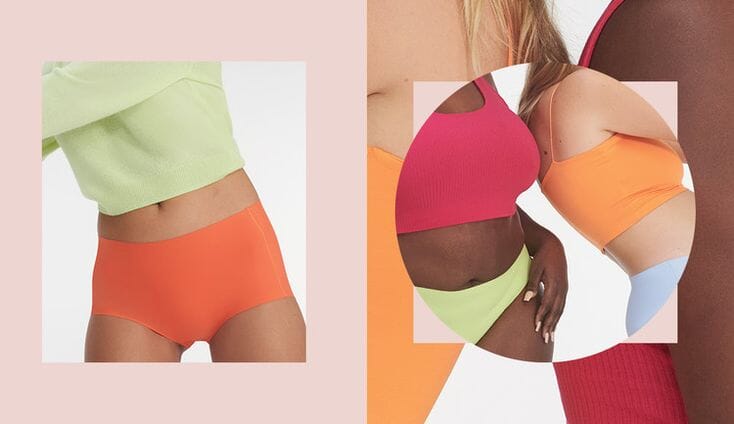
Modal garments cluster in four main categories: loungewear (drapey knit sets, robes, pyjamas), underwear (briefs, bralettes, boxer briefs), kids clothing (soft next-to-skin basics), and everyday womenswear (drapey tees, dresses, jersey skirts). Knits take the large majority of modal, with underwear and loungewear the two biggest sub-segments. A figure putting roughly 70% of European modal into knit categories has been withdrawn: Textile Exchange, to which it was credited, does not publish modal end-use splits by region.
Specific garment applications by fabric type:
- 100% modal jersey (140-200 GSM): drapey tees, dresses, loungewear tops, lightweight cardigans
- Modal-cotton blend (180-260 GSM): everyday tees, kids' basics, elevated loungewear, sleep sets
- Modal-elastane blend (180-220 GSM): underwear briefs, bralettes, activewear-adjacent layers
- Micro-modal knit (140-200 GSM): premium underwear, luxury loungewear, next-to-skin base layers
- Modal-cotton french terry (240-320 GSM): premium hoodies and joggers with silky hand
The two under-recognised applications
Emerging brand founders often overlook modal's dominance in underwear. Micro-modal, the finer denier variant, is the fabric behind most premium underwear brands positioning above the €25 retail band. It's what allows the "cloud-soft" tactile claim to hold up on second, third, and thirtieth wear. If a brand's differentiation lives at skin contact, modal is almost always the correct fibre.
Kids clothing is the second under-recognised application. Modal's OEKO-TEX Standard 100 baseline, its softness, and its dimensional stability (kids' clothes get washed hard) combine to make it a strong fit for infant and toddler basics. Portuguese factories with kids production capability increasingly stock modal jersey as their default soft-knit fabric.

Find your factory: Browse the free factory directory preview, or unlock the premium directory for €39 to see 80 documented Portuguese factories with modal capability flagged.
What Does Modal Cost per Meter in Portugal?
Modal fabric prices in Portugal in 2026 range from €7 per meter for standard modal-cotton blend jersey at 200 GSM, up to €18 per meter for micro-modal knits at premium underwear grade. Composition, GSM and micro-modal grading are the three largest cost drivers by a wide margin. We have dropped a figure putting them at roughly 80% of price variance, which implied a regression nobody has run.
Understanding these tiers helps founders budget accurately during tech pack preparation. Modal sits between cotton and Tencel on cost, roughly 30 to 60% above conventional cotton at the same GSM, and 10 to 20% below Tencel Lyocell.
Composition drives base cost
100% modal jersey commands a higher price than blends because the yarn is fully licensed from Lenzing (or a limited number of equivalent producers). Modal-cotton blends at 60/40 or 50/50 reduce the price by 20 to 30% while retaining most of the softness and moisture properties. Modal-elastane blends add cost for the elastane and precision knitting. Micro-modal sits at the top of the price range because the finer denier requires slower spinning and more careful finishing.
GSM adds cost proportionally
Doubling the GSM roughly doubles the yarn consumption. A 280 GSM modal-cotton french terry blend uses about 1.5 times the yarn of a 180 GSM modal jersey, which typically increases the fabric price by 40 to 60%.
Certifications and traceability add measurable premium
Modal already carries OEKO-TEX Standard 100 baseline at Portuguese mills. Adding GOTS-certified cotton in the blend adds €1 to €3 per meter over standard modal-cotton. FSC chain-of-custody documentation is typically included for Lenzing Modal at no extra cost. CO2-neutral certification is standard on Lenzing-branded yarn.
Planning fabric cost per garment
Practical planning: for a loungewear top using 1.6 meters of 180 GSM 100% modal jersey, fabric cost lands at €16 to €24 per garment. A modal-cotton kids tee using 0.8 metres of 180 GSM blend costs €5.60 to €8.80 in fabric. Micro-modal underwear briefs using 0.35 meters of 160 GSM fabric cost €4 to €6 in fabric alone. These fabric-only numbers matter when calculating retail margin on a modal-focused capsule.
Need a tech pack? Get a factory-ready single-style tech pack for €79. See what's included.
How Do Portuguese Factories Work with Modal?
Portuguese factories produce respected modal knitwear, though only a subset of the cluster stocks modal yarn as a standard offering. Roughly 20% of the 80 documented factories in our group work with modal regularly, with another 15% able to book it against confirmed orders (PCF factory documentation, 2026). Fabric mills in the Ave Valley handle most modal knitting for the region, with additional weaving capacity around Vale do Cávado.
The production sequence
Portuguese modal production follows a specific sequence. Yarn is booked from Lenzing-authorised spinners (typically 2 to 4 weeks lead time). The mill knits or weaves the fabric, dyes and finishes it (7 to 10 days). The fabric ships to a CMT factory for garment assembly. Total lead time from order to shipped modal garments typically runs 6 to 9 weeks for standard blends, and 8 to 10 weeks for micro-modal underwear or certified organic blends.
Production-side observation: across 2024-2026 production runs coordinated through our factory group, the average sample-to-shipment timeline for modal-cotton loungewear at 200 GSM was 52 days. For micro-modal underwear at 160 GSM with elastane, the average was 65 days. Garment MOQ at factories carrying modal typically starts at 200 units per style, with 300 to 500 units being the standard tier.
Sampling and lead time
Sample rounds for modal run at 1 to 3 iterations with a clean tech pack. In our experience, the risk isn't the fabric or the factory. It's specifying "modal" versus "Lenzing Modal" on the tech pack. Vague specs invite substitution with cheaper viscose that looks similar in the swatch but performs differently after 20 wash cycles. Founders who name Lenzing Modal explicitly get consistent yarn sourcing and cleaner sustainability documentation.
Citation Capsule: Roughly 20% of the 80 documented Portuguese factories in the PCF group work with modal as a standard offering. Total lead time from order to shipped garments runs 6 to 9 weeks for standard blends, and garment MOQ starts at 200 to 500 units per style. Explicitly specifying "Lenzing Modal" on tech packs is the single most effective way to stop a mill substituting cheaper generic modal or viscose, which is our own observation from reviewing briefs rather than an ATP finding.
Talk to our team: Get in contact with your product, fabric and quantity, and our team places your modal production with a factory in our group that runs modal as a standard fabric.
Which Portuguese Mills Actually Stock Modal?
How many factories carry it
Roughly 20% of the PCF documented factory group works with modal as a standard offering, and the mill supply behind those factories concentrates on a shortlist of five to six names that either hold direct Lenzing licensing or source yarn from Lenzing-authorised spinners under chain-of-custody documentation (Lenzing AG, 2024). Tintex in Vila Nova de Cerveira is the reference Portuguese modal knitter and holds a longstanding Lenzing partner status covering both Lenzing Modal and TENCEL Modal variants.
The Lenzing family of fibres matters for founders because "modal" on a spec sheet without the Lenzing brand name allows mills to substitute cheaper generic modal from Chinese or Indian spinners, where closed-loop chemistry recovery is often below the 95% level Lenzing operates at its Austrian and Czech plants. Naming Lenzing Modal or TENCEL Modal by brand and requesting the Lenzing certification code (e.g. LOT number and yarn passport) locks the upstream supply chain.
Standard modal, micro-modal and spun-dyed TENCEL Modal
Lenzing sells its textile modal under the TENCEL brand: TENCEL Modal (standard), TENCEL Modal with Micro technology (the finest fibres in its TENCEL range) and Micro Air, plus spun-dyed versions in black, in colour and with Indigo Color technology (Lenzing, TENCEL Modal claim proof, 2024). "Lenzing Modal" and "Lenzing Micro Modal" are the older names you will still see on mill spec sheets, and they refer to the same fibre families.
- Standard Lenzing Modal (typically 1.3 to 1.7 denier per filament): the mainstream variant for jersey knits, tees, and loungewear at 140 to 260 GSM. Fabric price €7 to €14 per meter at Portuguese mills. Covers roughly 70% of modal-branded production in Portugal.
- Lenzing Micro Modal (0.9 to 1.0 denier per filament): finer denier variant for premium underwear, luxury loungewear, and next-to-skin base layers. Fabric price €10 to €18 per meter. Slower spinning speed, more careful finishing.
- Spun-dyed TENCEL Modal (black, colour, indigo): the pigment goes into the fibre during spinning, so the fabric skips a separate dyeing step. Lenzing reports up to 50% less energy and water and up to a 60% lower carbon footprint for its spun-dyed black fibre compared with conventional dyeing (Lenzing, TENCEL Modal claim proof, 2024). Useful for black underwear and basics where colour fastness matters.
Micro-modal is not marketing language. The denier reduction is measurable and produces a tactile difference that consumers can detect at first touch. Underwear brands positioning above €25 retail almost universally specify micro-modal for that reason.
Lenzing licensing and closed-loop chemistry
Lenzing operates closed-loop chemistry recovery at rates approaching 95% at its Austrian mill (versus 30 to 60% typical of generic viscose producers). The company holds CO2-neutral certification through ClimatePartner for Lenzing Modal, and TENCEL Modal carries additional carbon-footprint documentation aligned with EU Green Claims requirements. Portuguese mills that carry the Lenzing partner mark can supply the yarn passport documentation on request, which is the paperwork most wholesale buyers now request under CSRD-related audit trails.
Portuguese modal mill shortlist
| Mill | Cluster | Modal speciality | Certifications | Typical fabric MOQ |
|---|---|---|---|---|
| Tintex | Vila Nova de Cerveira | Lenzing Modal and TENCEL Modal knits (140-220 GSM), micro-modal underwear grade | GOTS, GRS, OCS, RCS, bluesign System Partner, OEKO-TEX STeP, ISO 14001, ZDHC Supplier to Zero Level II, B Corp, Lenzing partner (verified against Tintex published list) | 250 m per colour |
| Riopele | Famalicão | Modal-cotton and modal-Tencel blend jersey and light woven (160-220 GSM) | Confirm with mill | 300 m per colour |
| Impetus | Vale do Cávado | Micro-modal underwear jersey and body-close knits (140-200 GSM) | Confirm with mill | 200 m per colour |
| Adalberto | Vale do Cávado | Modal-cotton french terry and jersey (180-320 GSM), print-ready | Confirm with mill | 200 m per colour |
| Somelos | Guimarães | Modal-cotton yarn-dyed jersey and shirting blends (140-220 GSM) | Confirm with mill | 200 m per colour |
| Coelima | Guimarães | Modal-blend heavyweight jersey and premium loungewear (200-280 GSM) | Confirm with mill | 300 m per colour |
Mill names, clusters and modal specialities are from PCF booking records and the mills' own published material. Three sources cited in earlier versions of this table do not exist in the form described: ATP publishes a member list rather than a mill directory with fibre specialities, Lenzing does not publish a public partner registry, and CITEVE does not operate a certification registry. Certifications and fabric MOQs change, and we have only verified them where noted. Confirm both directly with the mill before you build a cost sheet on them.
EUR fabric cost at real Portuguese minimums
How minimums move the price
Modal pricing at Portuguese mills tracks minimum order size closely. Below 300 meters per colour, the surcharge tier reflects the mill's need to book a full yarn lot (typically 400 to 600 meters equivalent) and absorb the dye setup. Above 500 meters the price compresses meaningfully. The table below reflects standard 180 GSM modal fabrics.
| Fabric MOQ (per colour) | Modal-cotton blend, 60/40 (EUR/m) | 100% Lenzing Modal jersey (EUR/m) | Lenzing Micro Modal (EUR/m) |
|---|---|---|---|
| 100 m (surcharge tier) | €9.50 to €13.50 | €13.00 to €17.50 | €15.50 to €20.50 |
| 300 m (standard tier) | €7.80 to €11.20 | €10.80 to €14.50 | €13.00 to €17.20 |
| 500 m (compressed tier) | €7.00 to €10.20 | €9.80 to €13.20 | €12.00 to €15.80 |
| 1,000 m (published tier) | €6.60 to €9.60 | €9.20 to €12.60 | €11.40 to €14.80 |
Sources: PCF factory group quotes across six named Portuguese modal-capable mills (2024-2026), Lenzing partner benchmarking (2024).
A worked example at 500 units
On a 500 unit loungewear top run using 1.6 meters of 180 GSM 100% Lenzing Modal per garment (800 meters total), moving from the 100 meter surcharge tier to the 500 meter compressed tier saves roughly €5.10 to €6.80 per garment in fabric alone. On a Micro Modal underwear run at 0.35 meters per brief (175 meters total for 500 units), the surcharge tier is nearly unavoidable, so founders should either scale to 1,500 unit batches or accept the surcharge.
Citation Capsule: Six named Portuguese mills carry modal as running or booked programmes, with Tintex holding the strongest Lenzing partner position (Lenzing Modal, Micro Modal, TENCEL Modal). Impetus is the reference name for micro-modal underwear grade, and Adalberto for modal-cotton french terry blends. All six mills hold OEKO-TEX Standard 100 Class II at baseline, with GOTS and GRS coverage strongest at Tintex, whose certification portfolio we have checked against its own published list.
What Are the Common Modal Sourcing Mistakes?
Most first modal runs we coordinate need at least one spec correction between the first fit sample and production approval. An earlier version of this sentence put it at "roughly 66%" and carried an unreplaced [PCF factory group data] placeholder into the published page; the pattern is real, the precision was not. Modal looks like a soft cellulosic that behaves like a slightly better cotton, and that mental model is where the mistakes come from. Modal has its own dye chemistry, its own wash tolerance, and its own substitution risk profile.
Mistake 1: Specifying "modal" without naming Lenzing
Generic modal from Chinese or Indian spinners exists at €2 to €4 per kg lower yarn cost than Lenzing Modal, but often ships without closed-loop chemistry documentation or FSC beech traceability. A tech pack that specifies "modal" without the Lenzing brand name allows the mill to substitute generic modal that looks identical in the swatch and performs differently after 20 wash cycles. Specify explicitly: "100% Lenzing Modal, Lenzing yarn passport documented" or "TENCEL Modal variant".
Mistake 2: Wash chemistry incompatibility
Modal is sensitive to strong alkaline detergents and high-temperature wash. Care labels that instruct "warm wash" without a temperature cap produce garments that lose 8 to 12% dimensional stability across the first ten washes. Reactive dyes on modal fade faster under alkaline detergent than on cotton. Specify care: "Cool wash 30 degrees, gentle detergent, low-temperature tumble or line dry, do not bleach".
Mistake 3: Denier confusion between standard modal and micro-modal
Standard modal (1.3 to 1.7 denier) and micro-modal (0.9 to 1.0 denier) look similar in a small swatch but produce a measurable hand-feel difference on finished garments. Underwear brands specifying "modal" at a €25+ retail band that receive standard-denier modal instead of micro-modal lose the tactile positioning that supports the price. Specify: "Lenzing Micro Modal, filament denier 0.9 to 1.0".
Mistake 4: Substituting viscose or lyocell into "modal blend" quotes
Some mills quote modal-viscose or modal-lyocell blends against briefs that specified 100% modal. The blend costs 15 to 25% less and drapes similarly, but wet strength drops (viscose) or increases (lyocell), and the fibre story changes. Specify composition unambiguously: "100% Lenzing Modal, no viscose or lyocell content" or state the intended blend ratio explicitly.
Mistake 5: GSM tier mismatched to end use
Modal jersey at 140 GSM is a lightweight tee cloth; at 180 GSM it is a standard loungewear top; at 220 GSM it is a heavier drapey knit; at 260 to 320 GSM (blended with cotton) it enters french terry territory. A tech pack that specifies "modal jersey" without a GSM invites the mill to default to whatever weight is running, which then fails at fit sample.
Decision matrix: choose modal versus alternatives
| Choose 100% Lenzing Modal when... | Choose Lenzing Micro Modal when... | Choose modal-cotton blend when... | Choose TENCEL Lyocell when... |
|---|---|---|---|
| The garment is a drapey loungewear top, dress, or tee | The garment is premium underwear (€25+ retail) or luxury loungewear | The garment is an everyday tee, kids basic, or elevated loungewear | Sustainability credentials and maximum drape are hero brand claims |
| Retail band is €45 to €120 | Retail band is €25 to €70 for underwear, €90 to €220 for luxury loungewear | Retail band is €25 to €65 | Retail band is €65 to €180 |
| Fabric budget is €9 to €14 per meter | Fabric budget is €12 to €18 per meter | Fabric budget is €7 to €11 per meter | Fabric budget is €9 to €14 per meter |
| Silk-like softness matters more than cotton's structure | Cloud-soft tactile claim is a hero selling point | Cotton hand with modal upgrade to softness and pilling | Fluid drape and closed-loop chemistry are non-negotiable |
| Order supports 300 m minimum per colour | Order supports 250 m minimum per colour | Order supports 200 m minimum per colour | Order supports 250 m minimum per colour |
| Fabric from a Lenzing partner mill (Tintex, Riopele) | Impetus or Tintex micro-modal capability is required | Fabric from Adalberto or Somelos works | Fabric from a Lenzing partner mill (Tintex, Riopele) |
PCF tech pack review records 2024-2026 and Lenzing published product material. A Lenzing partner benchmarking exercise and an ATP fabric price survey cited in earlier versions do not exist.
Founder-side observation: the single tech pack change that most reduces sample rounds on modal is stating four things together: Lenzing brand variant (Modal vs Micro Modal vs TENCEL Modal), denier range, GSM, and blend ratio if applicable. Across production runs coordinated through our factory group in 2024-2026, tech packs that specified all four averaged 1.3 sample rounds. Tech packs that specified only "modal" averaged 2.8 rounds. That is roughly 10 to 14 calendar days saved per style, and it eliminates the generic-viscose substitution risk that shows up on customer wash-cycle complaints six weeks after retail launch.
Citation Capsule:Specifying the Lenzing brand name, the denier range, the GSM and the blend ratio on the tech pack is what cuts sample rounds. We have removed an average iteration count previously given here, which carried an unreplaced placeholder and a precision our records do not support.
Where Does Modal Fit in a Brand's Fabric Stack?
Modal earns its place in a brand's fabric mix wherever softness at skin contact, dimensional stability across wash cycles, and drape without cost-viscose's wet-collapse matter. For loungewear, underwear, kids clothing, and drapey everyday knits, modal is the default upgrade over cotton and the safer choice over viscose. Specify Lenzing Modal by name on the tech pack, allow 6 to 9 weeks lead time from a Portuguese modal-capable factory, and expect €7 to €18 per meter depending on composition and GSM.
The factories that consistently deliver clean modal production are the 20 to 30% of the Portuguese cluster that stock Lenzing yarn and have the finishing lines calibrated for cellulosic knits. Place your production with those and modal becomes a reliable, repeatable fabric choice rather than a specification risk.
Running into production issues? Get in contact and tell us what you're making. We're a group of documented Portuguese garment factories and we answer every serious brief within 24 hours.
Frequently Asked Questions
What people ask about modal: what it is made from, whether it beats cotton, how sustainable it really is, how it differs from rayon, and what it costs to produce in Portugal.
What is modal fabric made from?
Modal is made from wood pulp, classically from beech trees, which is dissolved in a modified viscose process and spun into fibres with a higher wet modulus than standard rayon. For its TENCEL Modal fibres, Lenzing sources the wood from FSC or PEFC certified or controlled forests and lists beech among several wood species it uses. (Lenzing, TENCEL Modal claim proof, 2024)
Is modal better than cotton?
Not universally. Modal is softer, drapes better, absorbs and releases moisture well, and pills less. Cotton is cheaper, more structured, and better for hoodies and menswear tailoring. Modal is the default for underwear, loungewear, kids clothing, and drapey knits where next-to-skin softness matters. Cotton stays dominant in basics and structured pieces.
Is modal fabric sustainable?
It can be, if you know the source. TENCEL Modal from Lenzing uses wood from FSC or PEFC certified or controlled forests, carries the EU Ecolabel, and Lenzing reports at least 50% lower carbon emissions and water consumption than generic modal (Higg MSI). Its standard modal fibres are certified by TÜV AUSTRIA as biodegradable in soil, freshwater and marine environments. Lyocell goes further on process: more than 99.8% of its solvent is recovered in a closed loop. Generic modal without a named producer gives you none of these assurances. (Lenzing, TENCEL Modal claim proof, 2024; Lenzing, TENCEL brochure, 2024)
Is modal the same as rayon or viscose?
Not exactly. Rayon and viscose are the broader category of regenerated cellulose fibres. Modal is a specific type: "high wet modulus rayon". It's spun differently to retain structural integrity when wet, which standard viscose does not. All modal is technically rayon, but not all rayon is modal.
How much does modal fabric cost per meter in Portugal?
Modal-cotton blend at 200 GSM runs €7 to €11 per meter at Portuguese mills. 100% modal jersey at 180 GSM costs €10 to €15, modal-elastane blends at 200 GSM run €9 to €14, and premium micro-modal reaches €12 to €18. These are PCF quotes from Portuguese mills, not an industry index: ATP is the sector association and does not publish a fabric price survey, and earlier versions of this article cited one. A typical modal loungewear top uses roughly 1.6 meters of fabric.
Is modal fabric breathable?
Yes. Modal is a cellulose fibre, so it absorbs moisture and releases it again, which keeps fabric feeling dry against the skin. Lenzing describes this moisture management as one of the main reasons its modal is used in underwear and sleepwear. Breathability also depends on the knit: a light 140 to 160 GSM jersey breathes far better than a dense 260 GSM blend.
Does modal shed microplastics?
Pure modal is regenerated cellulose, not plastic, so the fibres it sheds are not microplastics. Lenzing reports that its standard modal fibres are certified by TÜV AUSTRIA as biodegradable in soil, freshwater and marine environments. Blends are different: modal with elastane or polyester contains synthetic fibre, so check the composition line.
How do you wash modal fabric?
Wash modal cool, at 30 degrees, on a gentle cycle with a mild detergent. Skip bleach, line dry or tumble on low heat, and turn garments inside out to reduce surface wear. Hot washes and hot tumble drying are what shorten the life of modal garments.
What is the minimum order for modal production in Portugal?
MOQs at documented Portuguese factories carrying modal typically start at 200 units per style, with 300 to 500 units being the standard tier. Fabric MOQ at the mill level runs 200 to 500 meters. Roughly 20% of our 80 documented factories work with modal as a standard offering; another 15% can book it against confirmed orders with 2 to 3 weeks additional lead time.
We're a group of 80 documented Portuguese clothing factories, 25 verified, based in Porto and Guimarães. Tell us your product, volume, and timeline. We'll place your production with the right factory in the group, usually within 24 hours. Flat fees, no commissions, no upsell.
Get in contact Download the directory (€39)Need a tech pack? Get a factory-ready single-style tech pack for €79. See what's included.
Related reading
- GSM guide: what fabric weight actually means
- Fabric sourcing in Portugal
- Sustainable fabrics guide
- OEKO-TEX vs GOTS vs bluesign
- Best fabric for underwear
- MOQ minimums in Portugal
- Clothing manufacturing costs in Portugal
Sources used in this article
- Lenzing AG - Lenzing Modal operations and sustainability data, CO2-neutral certification (2024)
- Textile Exchange - Preferred Fiber and Materials Market Report (2023-2024)
- EURATEX - European Apparel and Textile Confederation, Facts & Key Figures (2024-2025)
- Lenzing AG - TENCEL brochure: softness tests, moisture management, TÜV AUSTRIA biodegradability, lyocell solvent recovery (2024)
- Lenzing AG - TENCEL Modal claim-proof snapshot: wood sources, FSC/PEFC, EU Ecolabel, Higg MSI comparison, fibre variants (October 2024)
- CITEVE - Centro Tecnológico das Indústrias Têxtil e do Vestuário de Portugal, knitting and finishing data (2024)
- FSC - Forest Stewardship Council, chain of custody standards for beech pulp
- PCF internal factory documentation (2024-2026) - Data from 80 documented and 25 verified Portuguese factories in our group, covering modal yarn availability, MOQ thresholds, fabric pricing observations, and lead time patterns
Portugal Clothing Factory is a group of 80 documented Portuguese clothing factories in the northern textile cluster (Porto, Guimarães, Braga, Barcelos, Famalicão). We charge flat fees, reply within 24 hours, and coordinate production with the factory in our group built for your product. See how we work or get in contact to place your order.
.jpeg)