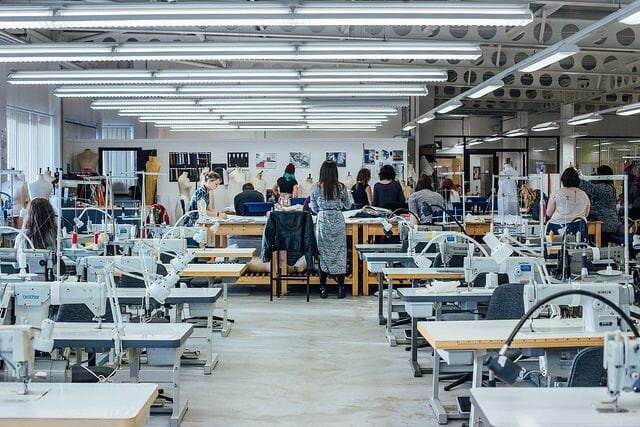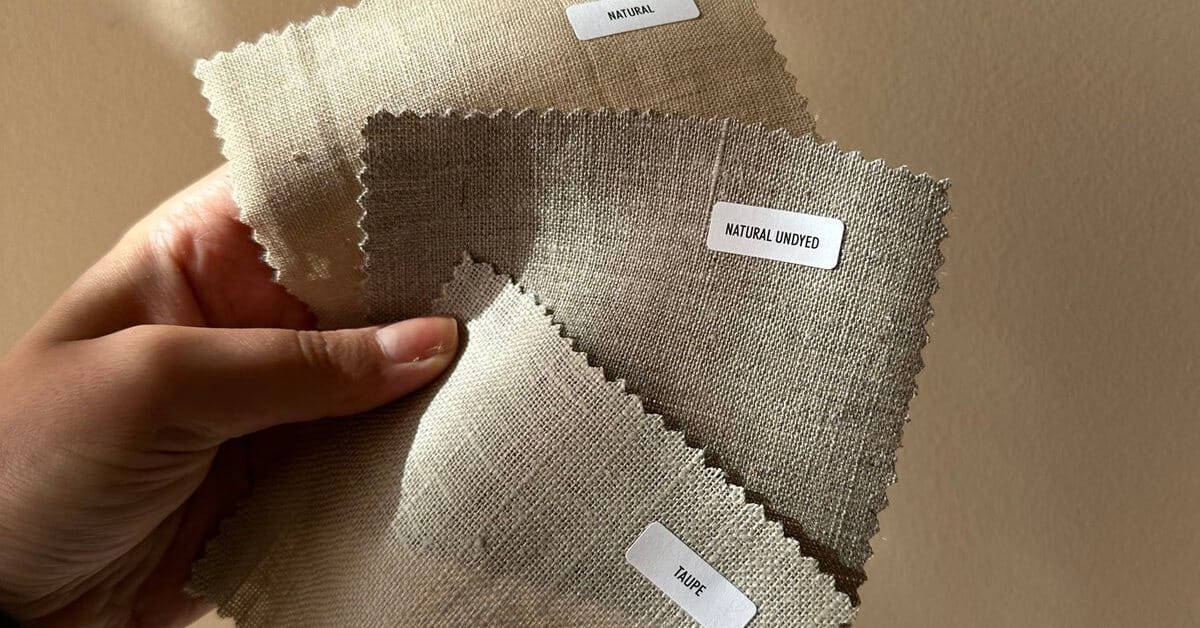
OEKO-TEX Standard 100 is a label for textiles that have been tested for harmful substances, from yarn to finished garment. Each certified article, including every thread, button and accessory, is tested against a list of more than 1,000 substances, with stricter limits the closer the product sits to the skin (OEKO-TEX).
This guide explains what Standard 100 covers and what it does not, the four product classes, the 2026 limit values and rule changes, how certification works, and how to check a certificate before you place an order. Every OEKO-TEX fact below is taken from OEKO-TEX's own documents, checked in October 2026.
Good to know: We're Portugal Clothing Factory. Our team places and manages clothing production with documented factories in northern Portugal, from 100 units per style. We are not an OEKO-TEX institute and we don't issue certificates. Certificates are issued by OEKO-TEX member institutes, and you can check every one yourself.
What to know
- It certifies articles, not factories. A certificate covers the products described in its scope; every component must meet the limits.
- Four product classes: I (babies up to 36 months, strictest), II (direct skin contact), III (little skin contact), IV (decoration material).
- Limits are reviewed every year. The 2026 limit values became binding on 1 June 2026, after a three-month transition (OEKO-TEX).
- A certificate is valid for one year and is issued by an independent OEKO-TEX institute after laboratory tests and, for first certifications, an on-site visit.
- Check the number, not the logo. The OEKO-TEX Label Check shows whether a certificate is valid and what it covers.
What Is OEKO-TEX Standard 100?
Standard 100 is one of the certifications run by OEKO-TEX, the International Association for Research and Testing in the Field of Textile and Leather Ecology, based in Zurich. It applies to textiles and accessories at every stage of production: fibres, yarns, fabrics, finished garments, and non-textile parts such as buttons and zips (OEKO-TEX Standard 100 standard document, Edition 01.2026).
Testing and certification are carried out by independent testing institutes. OEKO-TEX says it works with 17 testing institutes worldwide (OEKO-TEX, May 2026), and lists them on its member institutes page. One of them is CITEVE, the Technological Centre for the Textile and Clothing Industries of Portugal, so Portuguese mills and factories can certify with an institute based in Portugal.
What it tests for
According to the OEKO-TEX Standard 100 factsheet and the restricted substance list (RSL), the tests cover:
- Substances banned by law, such as banned azo colourants, pentachlorophenol, PFAS, cadmium and lead.
- Harmful chemicals that are not yet regulated by law, and substance classes relevant to the environment.
- The textile-relevant restrictions of REACH Annexes XIV and XVII, all textile-relevant substances on the ECHA SVHC candidate list, US CPSIA lead limits and the EU POPs regulation.
- pH value, formaldehyde, extractable heavy metals, pesticides and other substance groups listed in the RSL.
- Colour fastness (for example to water, perspiration and dry rubbing) and odour: a sample with a mould, petrol, fish or perfume smell is excluded.
What it does not cover
The standard document is explicit: the Standard 100 mark is not a quality label. It relates to the as-produced state of the textile and says nothing about fitness for use, performance, behaviour in cleaning, or other legal duties such as product safety and textile labelling, which stay with the company selling the product (Standard 100, section 3.1).
- Organic or recycled fibre content is a different claim, covered by schemes such as GOTS or GRS. Our guide to OEKO-TEX vs GOTS vs bluesign compares them.
- Working conditions and environmental performance of the factory are covered by facility certifications such as OEKO-TEX STeP, not by Standard 100.
- Leather parts are tested under the OEKO-TEX Leather Standard, and dyes and chemicals under ECO PASSPORT.
What Are the OEKO-TEX Standard 100 Product Classes?
The product class depends on the article's intended use, not on its fibre. The more intensive the skin contact and the more sensitive the skin, the stricter the requirements (OEKO-TEX).
| Class | What it covers | Examples given by OEKO-TEX |
|---|---|---|
| Class I | Articles, materials and accessories for babies and children up to 36 months | Diapers and all other articles for babies |
| Class II | Articles worn with a large part of their surface against the skin | Blouses, shirts, underwear, bed linen, mattresses |
| Class III | Articles worn with only a little of their surface against the skin | Jackets, stuffings |
| Class IV | Decoration material | Table cloths, wall coverings, curtains, upholstery fabrics, floor coverings |
Source: OEKO-TEX Standard 100, Edition 01.2026, section 4.4, and oeko-tex.com.
Two more choices appear on every certificate. The applicant chooses Annex 4, the standard criteria built to protect consumer health, or Annex 6, an expanded catalogue with additional and often stricter limits aimed at environmentally better production. The choice is noted on the certificate.
For a clothing range, that usually means: Class I for anything made for babies and toddlers up to 36 months; Class II for T-shirts, shirts, underwear, sleepwear and most activewear; Class III for outerwear shells with little skin contact (our OEKO-TEX clothing manufacturing in Portugal page covers how to brief each class). Where a jacket has a lining that touches the skin, ask how each component was classed. Our guide to the best fabrics for underwear covers the most skin-sensitive category.
Class I has rules that other classes do not. Biologically active products, such as antimicrobial finishes, are prohibited in all articles for babies. And products made from post-consumer or post-industrial material from unknown sources can only be certified in classes II to IV, with an exception for material made from recycled PET bottles and food-grade material (Standard 100, sections 5.3 and 5.6).
What Are the 2026 Limit Values?
OEKO-TEX reviews its limit values at least once a year. The full list is published as a separate Excel restricted substance list (RSL) from 2026 (OEKO-TEX RSL). A few of the parameters a clothing brand meets most often, under Annex 4:
| Parameter (Annex 4) | Class I | Class II | Class III | Class IV |
|---|---|---|---|---|
| pH value | 4.0–7.5 | 4.0–7.5 | 4.0–9.0 | 4.0–9.0 |
| Formaldehyde, free and partially releasable | Not detectable (below 16 mg/kg) | 75 mg/kg | 150 mg/kg | 300 mg/kg |
| Extractable lead | 0.2 mg/kg | 1 mg/kg | 1 mg/kg | 1 mg/kg |
| Extractable nickel | 1 mg/kg | 4 mg/kg | 4 mg/kg | 4 mg/kg |
| Extractable cadmium | 0.1 mg/kg | 0.1 mg/kg | 0.1 mg/kg | 0.1 mg/kg |
| Colour fastness to saliva and perspiration | Fast | Not applicable | Not applicable | Not applicable |
| Colour fastness to acidic and alkaline perspiration (staining) | 3–4 | 3–4 | 3–4 | 3–4 |
Source: OEKO-TEX RSL, Standard 100 sheet, version 03.2026. Exceptions apply, for example lower nickel limits for metallic accessories and different pH ranges for products that are wet-processed later. Always check the current RSL.
What changed in 2026
The 2026 updates were published on 3 March 2026 and became binding for all certifications on 1 June 2026 (OEKO-TEX new regulations 2026). For Standard 100 they include:
- New substances in the limit value catalogue, including the flame retardants DBDPE and Dechlorane Plus (1,000 mg/kg), n-hexane (100 mg/kg), vinyl chloride (1 mg/kg) and carbon disulphide (10 mg/kg), plus several pesticides.
- Tighter bisphenol limits: bisphenol B, F, S and AF are now limited to 200 mg/kg in Standard 100.
- Wet processes must be certified on renewal. Uncertified dyeing, washing, printing or finishing is accepted only for a first certification; for renewals, every wet process in the supply chain must be certified, with a transition until June 2027.
- Upstream certificates must come from the direct supplier on renewal, with second-tier supplier certificates still accepted for renewals until June 2027.
- Risk-parameter findings now trigger a second test series within the certificate's year of validity.
For brands, the June 2027 deadline matters most: a garment maker whose fabric was dyed or printed at an uncertified finisher may not be able to renew its certificate after that date. Ask now whether your supply chain's wet processes are certified.
In short: OEKO-TEX Standard 100 tests textile articles against more than 1,000 harmful substances in four product classes. Under the 2026 restricted substance list, free and partially releasable formaldehyde must be not detectable (below 16 mg/kg) in Class I baby articles, and is limited to 75 mg/kg in Class II, 150 mg/kg in Class III and 300 mg/kg in Class IV. The 2026 limit values became binding on 1 June 2026 (OEKO-TEX RSL version 03.2026; OEKO-TEX New regulations 2026).
How Does OEKO-TEX Standard 100 Certification Work?
The applicant is the company that makes or sells the article, often the mill, the trim supplier or the garment maker. OEKO-TEX describes six steps (OEKO-TEX):
- Application: register online, complete the application form and send a material sample to the OEKO-TEX institute of your choice.
- Verification: the institute checks the application and the sample.
- Definition and analytics: the institute sets the test criteria and a measurement plan, then tests the sample. All components of the article are tested.
- On-site visit: required for a first certification, and at least once every three years. Not needed if the facility holds OEKO-TEX STeP.
- Report: a detailed test report.
- Certificate: issued for one year, once the applicant has signed a Declaration of Conformity.
Renewal. The holder can apply three months before expiry. A seamless renewal keeps the same certificate number, and for most renewals the institute sets a reduced test programme if materials, chemicals and processes are unchanged (Standard 100, section 5.9).
Cost. OEKO-TEX does not publish a fixed fee: the institute quotes each application, and the testing scope depends on the product, its materials and components, the product class and the annex. The system is modular. Valid certificates for components are taken into account, and testing of the finished product is waived if all its components are already Standard 100 certified (OEKO-TEX). That is why garment makers buy certified fabrics and trims.
Controls after certification. About 25% of Standard 100 certificates are tested again each year, with samples pulled from retail shelves or collected during audits, sometimes by a different institute from the one that certified the product (OEKO-TEX, product control explained). Unannounced on-site visits are also possible, and a certificate can be withdrawn.
What Does a Standard 100 Certificate Actually Cover?
Only what its scope describes. The scope names the product category, the material composition, the processed state (for example dyed, printed or finished) and, for ready-made articles, the accessories (Standard 100, section 4.3). Some combinations cannot share a certificate: organic and conventional cotton, virgin and recycled material, or home textiles and garments.
Three rules catch brands out:
- A changed product is no longer certified. If materials, recipes or processes change, or the article is washed or chemically cleaned afterwards, it loses the right to the label until the institute confirms the certificate still applies.
- A certified fabric does not make a certified garment. The label may only be used for the exact certified product, and promoting Standard 100 certified components when the whole product is not qualified is never allowed (OEKO-TEX Labelling Guide).
- Commission certificates cover a process, not a product. A dye house or sewing unit with a commission business certificate cannot put the label on products, because only its process is certified.
So if you want the Standard 100 label on your hangtag, plan it before production: the finished garment needs a valid certificate, and the label must show its certificate number or QR code. To see which certificates individual Portuguese makers publish, our list of the top 10 clothing factories in Portugal shows them factory by factory. Distributors and retailers may use the label for products that carry a valid Standard 100 certificate.
How Do You Check an OEKO-TEX Certificate?
A PDF or a logo on a website proves nothing on its own. Five checks before you order:
If you want a second check on a supplier's certificates, our factory background check (€49) verifies them in the certifiers' databases, along with the company registry and other red flags, in a written report.
- Enter the number in the Label Check, or scan the QR code on the label. Numbers are case-sensitive. OEKO-TEX also lists withdrawn certificates and labels there.
- Read the scope. Does it describe your fabric or garment: the same composition, construction and processed state, such as dyed or printed?
- Check the product class against your product's use. A Class II fabric is not enough for babywear, which needs Class I (see our kidswear manufacturer in Portugal page).
- Check the annex if your customers ask for Annex 6.
- Check the expiry date against your delivery date, not just your order date.
To find certified suppliers, the OEKO-TEX Buying Guide lists certified products, manufacturers and brands. Our page on textile certifications covers how to check GOTS, GRS and other certificates the same way.
Standard 100, STeP and MADE IN GREEN: What Is the Difference?
| OEKO-TEX label | What it certifies | Level |
|---|---|---|
| Standard 100 | The article has been tested for harmful substances | Product |
| STeP | Environmental and social performance of a production site, from fibre making to finishing and making-up | Facility |
| MADE IN GREEN | The article is certified for harmful substances and made up in STeP-certified facilities, traceable through the Label Check | Product and supply chain |
| ECO PASSPORT | Chemicals, colourants and auxiliaries used in production | Chemical product |
| Leather Standard | Leather articles tested for harmful substances | Product |
Source: oeko-tex.com, standards pages, checked October 2026.
Standard 100 is the one most clothing brands meet first, because it is the easiest to request for a specific fabric or garment. If your positioning also covers how and where the product was made, MADE IN GREEN adds the production side.
What Should a Clothing Brand Do About OEKO-TEX Standard 100?
- Decide the class from the product's use. Class I for babies and toddlers up to 36 months, Class II for skin-contact garments, Class III for items with little skin contact.
- Decide whether you need the label on the garment, or only certified materials. The label needs a certificate for the finished product.
- Ask for certificate numbers for fabric, trims and garment before you approve the sample, and check each one in the Label Check.
- Write it into the purchase order: the certificate numbers, the product class and the requirement that they stay valid until delivery.
- Ask about wet processes (dyeing, printing, washing, finishing) ahead of the June 2027 renewal rule.
Our guides to ordering a clothing sample and quality control in Portuguese production cover where these checks fit in the timeline.
Producing in Portugal? Tell us in your brief whether your range needs OEKO-TEX Standard 100 and for which product class. Our team places and manages your production with a factory in our group that fits the product, from 100 units per style. Get in contact.
Conclusion: Use the Certificate, Not the Logo
OEKO-TEX Standard 100 is a useful baseline for chemical safety, but it is product-specific, class-specific and valid for one year. Choose the class from the product's use, ask for the certificate numbers that cover your exact fabric and garment, and check them yourself in the Label Check.
The 2026 rules make the supply chain matter more: from June 2027 renewals need every wet process certified. Ask the question early, and put the answer in writing in your purchase order.
Free calculator: Estimate a Portuguese unit cost in the garment cost calculator. About a minute, no email.
Frequently Asked Questions About OEKO-TEX Standard 100
What does OEKO-TEX Standard 100 certify?
That a specific textile article, including every thread, button and other component, has been tested for harmful substances and meets the limit values for its product class. It is a test for harmful substances, not a quality, performance, organic or social label. OEKO-TEX itself says the label is not a quality label and says nothing about fitness for use.
What are the four OEKO-TEX Standard 100 product classes?
Class I covers articles for babies and children up to 36 months. Class II covers articles worn with a large part of their surface against the skin, such as shirts, blouses and underwear. Class III covers articles with little skin contact, such as jackets. Class IV covers decoration materials such as curtains, table cloths and upholstery fabrics. The closer and more sensitive the skin contact, the stricter the limits.
How long is an OEKO-TEX Standard 100 certificate valid?
One year. The holder can apply for renewal three months before expiry. A seamless renewal keeps the same certificate number, and the new expiry date is exactly one year after the previous one.
How much does OEKO-TEX Standard 100 certification cost?
OEKO-TEX does not publish a fixed fee. The testing institute quotes each application, and the scope of testing depends on the product, its materials and components, the product class and the annex chosen. Components that already hold a valid Standard 100 certificate are taken into account, and testing of the finished product is waived if all its components are already certified.
Can my brand use the OEKO-TEX label if the fabric is certified?
Not on that basis alone. The Standard 100 label may only be used for the exact certified product, and promoting certified components when the entire product is not qualified is never allowed. If you want the label on your garment, the finished garment needs to be covered by a valid certificate, and the label must carry its certificate number or QR code.
How do I check whether an OEKO-TEX certificate is real?
Enter the certificate or label number in the OEKO-TEX Label Check (numbers are case-sensitive), or scan the QR code on the label. Then compare the result with your order: the product described in the scope, the product class, the annex and the expiry date.
Is CITEVE an OEKO-TEX institute?
Yes. CITEVE, the Technological Centre for the Textile and Clothing Industries of Portugal, is listed by OEKO-TEX as one of its member institutes, so Portuguese mills and factories can test and certify with an institute based in Portugal.
Does OEKO-TEX Standard 100 mean a product complies with REACH?
Its criteria are built to cover the textile-relevant restrictions of REACH Annexes XIV and XVII, the textile-relevant substances on the ECHA SVHC candidate list, US CPSIA lead limits and the EU POPs regulation. The standard itself says the brand remains responsible for other legal requirements, such as product safety and textile labelling.
Our team places and manages production with 80 documented factories in northern Portugal, 25 of them verified, around Porto and Guimarães. Send the product, the volume and the date you need it. We reply within 24 hours, then place and manage the order with the factory in the group that fits it. One flat fee, no commission.
Send your brief Portugal factory directory (€49)No tech pack yet? We prepare one style, factory-ready, for €79. What it includes.
Sources used in this article
- OEKO-TEX Standard 100 (oeko-tex.com): product classes, path to certification, modular system.
- OEKO-TEX Standard 100, standard document, Edition 01.2026: applicability, product classes, certificate scope, testing, renewal, changes to certified products.
- OEKO-TEX restricted substance list (RSL), Standard 100 sheet, version 03.2026.
- OEKO-TEX New regulations 2026 (3 March 2026): Standard 100 changes and limit value changes.
- OEKO-TEX product control explained (7 May 2026).
- OEKO-TEX Labelling Guide, Standard 100, and Label Check.
- OEKO-TEX member institutes, including CITEVE (Portugal).
- OEKO-TEX STeP and MADE IN GREEN.
Portugal Clothing Factory is a group of documented Portuguese clothing factories in the northern textile cluster (Porto, Guimarães, Braga, Barcelos, Famalicão). We charge flat fees, reply within 24 hours, and place and manage production with the factory in our group built for your product. See how we work or get in contact.