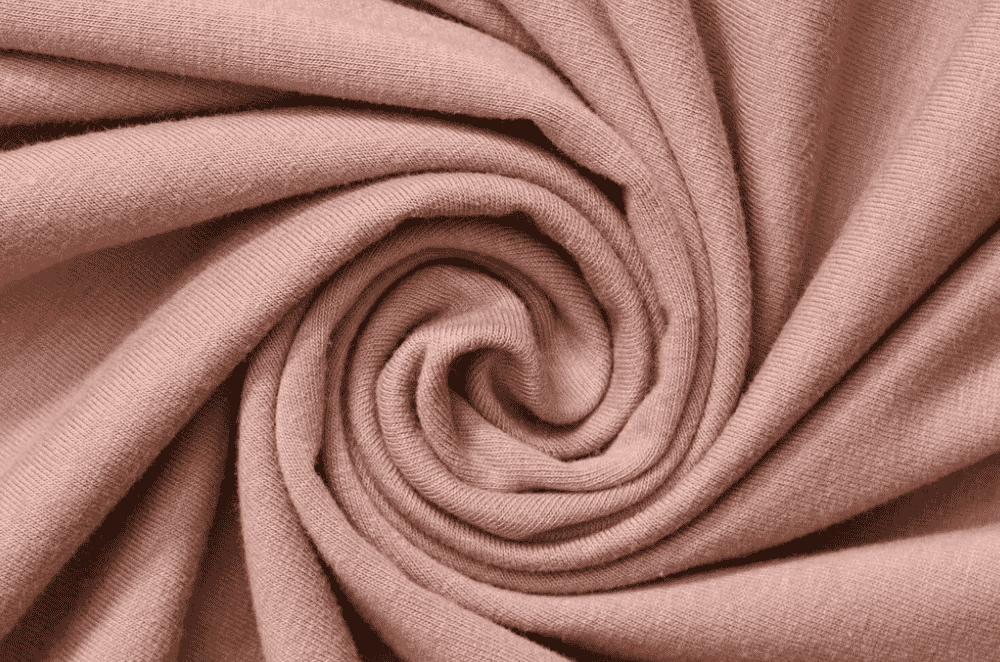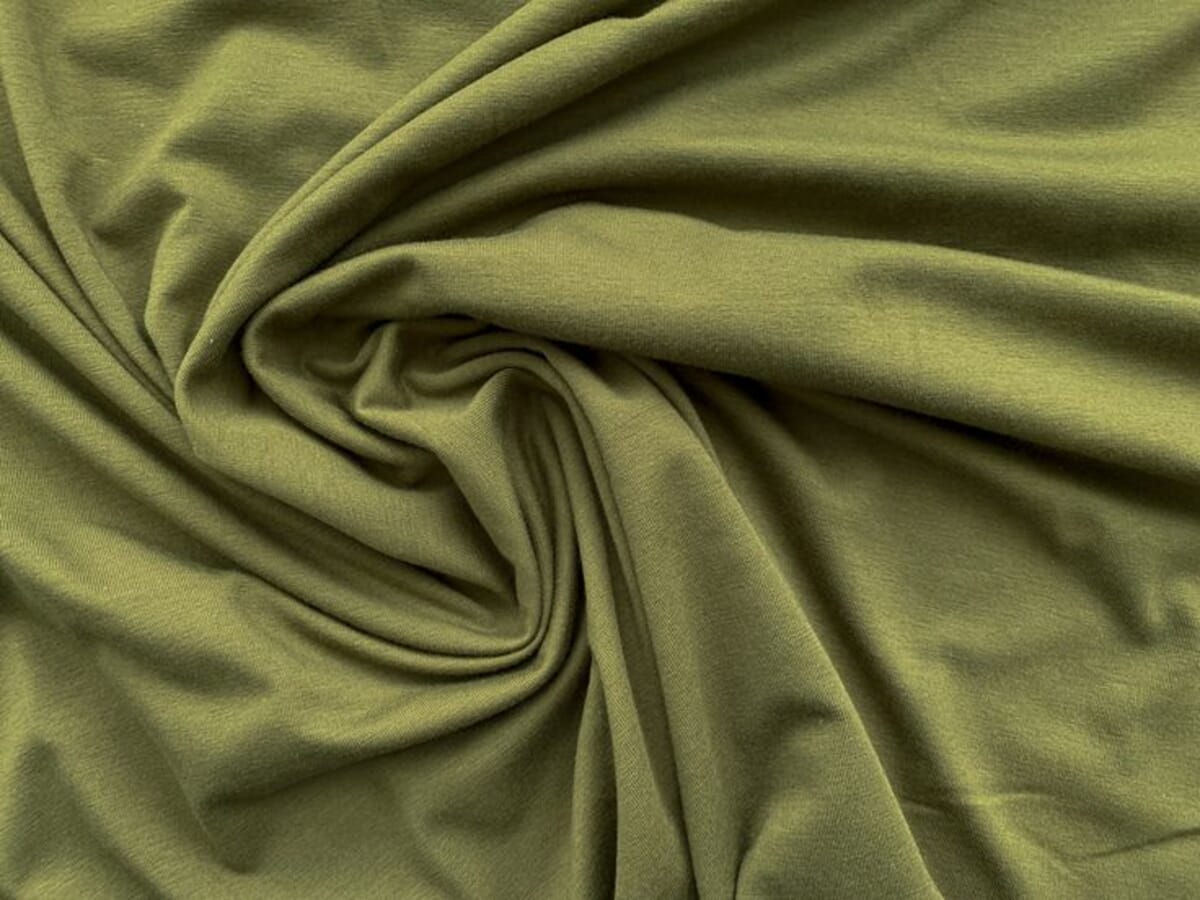
For most underwear, the best fabric is cotton with 5 to 8% elastane. It is absorbent, breathable, cheap enough to work at any retail price, and it is what roughly 60% of Portuguese underwear production actually uses. Above about €25 retail, micro-modal with 5 to 8% elastane takes over, because it is softer and holds its shape better over many wash cycles.
Where the real decisions are
Everything else is a specialty position: silk for luxury slips, bamboo viscose for sustainability positioning, lace and powernet for detail and shaping. The fibre matters less than two things founders routinely leave off the tech pack, which are the elastane percentage and the OEKO-TEX class.
What this guide covers
This guide breaks down the six fabric families that actually show up in Portuguese underwear production runs, the technical requirements that separate skin-contact-safe underwear from generic knitwear, real EUR pricing per meter at Portuguese mills in 2026, and what to specify on your tech pack so the factory delivers what you actually want.
Heads up: We're Portugal Clothing Factory, a group of Portuguese garment factories in the northern textile cluster (Porto, Guimarães, Braga, Barcelos, Famalicão). We've documented 80 factories across the region, 25 audited. The MOQ, fabric, and pricing observations here reflect underwear and intimate-apparel production runs coordinated across the group between 2024 and 2026.
Key takeaways
Key Takeaways
- OEKO-TEX Standard 100 Class II certification (direct skin contact) is the non-negotiable baseline for underwear at every Portuguese mill (OEKO-TEX Association, 2024)
- Micro-modal is the premium underwear standard, €12-18/m at Portuguese mills, supplied through Lenzing's authorised spinner network
- Cotton-elastane 95/5 at 160-190 GSM is the volume workhorse at €5-9/m, covering roughly 60% of Portuguese underwear production
- Approximately 15% of the 80 documented factories in the PCF group carry intimate-apparel capability with typical garment MOQ of 300 to 500 units per style
- Man-made cellulosics (modal, lyocell, viscose) reached 7.9 million tonnes in 2023, about 6% of the 124 million tonne global fibre market (Textile Exchange, 2024). The "fastest-growing fibre category in premium underwear" claim has been withdrawn as unsupported
Try it free: Pressure-test your underwear production cost with our garment cost calculator. 60 seconds, no email required.
What Are the Best Fabrics for Underwear?
The best fabric for underwear varies by product tier and function. Six fabric families cover nearly all underwear production placed through Portuguese factories: micro-modal, standard modal blends, cotton-elastane, silk, bamboo viscose, and technical stretch composites incorporating powernet or lace. Each family has a specific retail-price window and construction requirement.
Pick by retail price point
For a founder choosing a first underwear fabric, the practical filter is retail price point. Retail under €10 typically pushes cotton-elastane at 160-180 GSM. Our guide to manufacturing costs in Portugal covers how the rest of the cost sheet builds from there. Retail €10-25 opens up modal-cotton blends and higher-GSM cotton with softer finishing. Retail above €25 usually specifies micro-modal, silk, or lace-detail constructions. Retail above €50 is where French lace, silk satin, and Italian mill sourcing enter the picture.
What actually matters in the spec
The physical properties that matter for underwear are different from most other apparel categories. Moisture management, dimensional stability across many wash cycles, and skin-contact chemical safety dominate the specification. Drape and appearance matter less than for outerwear because underwear is worn close to the body under other clothing.
Citation Capsule: The six underwear fabric families used across Portuguese production are micro-modal (€12-18/m, premium), modal blends (€9-14/m, mid-market), cotton-elastane (€5-9/m, volume), silk (€35-55/m, luxury), bamboo viscose (€7-12/m, sustainable positioning), and lace or powernet constructions (€8-22/m, detail or shapewear). Every one of them requires OEKO-TEX Standard 100 Class II certification for skin-contact chemical safety (OEKO-TEX Association, 2024).
The chemical-safety baseline: OEKO-TEX Standard 100 Class II
Every underwear fabric produced for European retail sale carries OEKO-TEX Standard 100 Class II certification by default. Class II is the "direct skin contact" tier, one step less strict than Class I (which covers babywear up to age 3) but meaningfully stricter than Class III (no direct skin contact) or Class IV (decorative textiles). The certification tests for over 1,000 restricted substances, including azo dyes, formaldehyde, heavy metals, phthalates, and PFAS compounds.
For a brand producing at Portuguese mills, Class II is not a differentiator. It's the entry ticket. Essentially every intimate-apparel factory in our documented group holds Class II certification as a baseline offering, and specifying "OEKO-TEX Standard 100 Class II" on the tech pack is treated as standard rather than premium. Brands wanting to differentiate on chemical safety typically stack a second certification (GOTS organic, GRS recycled, or bluesign) on top of the Class II baseline; our guide to OEKO-TEX, GOTS and bluesign covers what each actually certifies.
How Is Micro-Modal Different from Standard Modal for Underwear?
Micro-modal is a finer denier variant of standard Lenzing Modal, spun from FSC-certified beech tree pulp at a fibre thickness that produces measurably softer hand and higher dimensional stability. It's the fabric behind most premium underwear brands positioning above €25 retail per unit (Lenzing AG, 2024). For fashion brands specifying underwear at that price tier, micro-modal is almost always the correct choice.
The technical difference
The technical difference matters. Standard TENCEL Modal runs at roughly 1.0 to 1.3 dtex, while MicroModal is around 0.9 dtex and MicroModal AIR finer still at about 0.8 dtex. Earlier versions of this article gave the range as "1.0-1.7 denier", which overstates the upper bound and mixes up denier with dtex, the unit Lenzing actually publishes. That difference sounds small but produces a noticeably softer hand, tighter knit consistency at low GSM, and better performance on delicate finishing operations like laser-cut hems and bonded seams. Micro-modal 160 GSM feels softer than standard modal 200 GSM in blind-touch tests.
How mills actually run it
In Portuguese production runs, micro-modal shows up in two configurations. First, 100% micro-modal jersey at 140-160 GSM for luxury brief and bralette bodies. Second, micro-modal blended with 5-8% elastane at 160-190 GSM for pieces that need shape retention and gentle stretch. The blended variant is more common because pure micro-modal at low GSM without any elastane can lose shape over long wear cycles.
Citation Capsule: Micro-modal is a sub-1.0 denier variant of Lenzing Modal that delivers noticeably softer hand and better dimensional stability than standard modal at the same GSM. It carries the same FSC-certified beech pulp origin and OEKO-TEX Standard 100 baseline (Lenzing AG, 2024). A "95% closed-loop chemistry recovery" figure has been withdrawn: Lenzing Modal is made by a modified viscose process with high recovery of process chemicals, not a closed loop in the lyocell sense, and the specific percentage was not published. Micro-modal is the standard underwear fabric for brands positioning above €25 retail.
Why "modal" alone gets you the wrong fibre
A tech pack that specifies "modal" without the "micro-" prefix can be substituted with standard modal at the mill's discretion. Standard modal is cheaper and interchangeable in most catalogues. If you specifically want the finer denier for softness, name it: "Lenzing Micro-Modal" or "micro-modal 0.9 denier" on the tech pack. See our full modal fabric guide for the difference between the two variants and how Lenzing brand licensing affects substitution risk.
Portuguese factories that stock micro-modal typically also stock modal-cotton blends and standard modal. They can substitute upward (deliver micro-modal instead of standard modal) at their discretion because the higher-priced fibre satisfies a lower-priced spec. They almost never substitute downward without approval, since that would fail the tech pack. In practice, being explicit on the tech pack removes ambiguity and reduces sample-round friction.
What About Cotton, Silk, and Bamboo?
Cotton-elastane, silk, and bamboo viscose serve distinct positions in the underwear fabric stack. Cotton-elastane is the volume workhorse for mid-market briefs and boxers. Silk sits at the luxury end for €50+ retail slip briefs and lingerie sets. Bamboo viscose occupies the sustainable-positioning middle ground at premium prices without the Lenzing licensing dependency.
Cotton-elastane, the workhorse
Cotton-elastane at 95/5 or 92/8 blend runs at €5-9 per meter for standard 160-180 GSM at Portuguese mills, making it the cheapest underwear fabric in commercial-grade quality. It covers roughly 60% of Portuguese underwear production by volume, dominating everyday briefs, mid-market bralettes, and men's boxer briefs. The 5-8% elastane content provides the stretch that underwear needs while cotton delivers the moisture absorbency and skin-contact comfort. Combed cotton with mercerised finishing feels noticeably nicer than open-end cotton and adds €1-2/m on top of the base price.
Silk at the luxury end
Silk enters the underwear picture in two forms. Silk crepe de chine at 16-19 momme runs €35-55/m and is used for slip briefs, camisole sets, and luxury lingerie. Silk satin at 22-30 momme runs €45-75/m and is reserved for the top of the luxury tier. The momme system measures silk weight: higher momme means a denser, more durable cloth, and 16 momme is roughly the floor for underwear that will survive regular wear. Silk underwear requires dry-clean or hand-wash care labels, which limits the market to consumers willing to accept that maintenance overhead.
Bamboo and its claims risk
Bamboo viscose sits in an interesting middle position. It is a regenerated cellulose fibre, chemically similar to standard viscose but marketed as sustainable because bamboo grows quickly (our bamboo fabric guide covers why most of it is legally rayon). In practice, most "bamboo" fabric is viscose produced from bamboo pulp using the standard CS2 open-loop chemistry, so the environmental profile depends heavily on the specific mill's chemistry recovery rates. Bamboo viscose costs €7-12/m at Portuguese mills, delivers softness comparable to modal, and offers reasonable moisture absorbency. The main risk is regulatory: EU Green Claims regulations tightening through 2026 increasingly restrict "bamboo fabric" marketing claims unless the specific closed-loop lyocell process from bamboo is used and audited.
Citation Capsule: Cotton-elastane 95/5 at 160-180 GSM is the volume workhorse of Portuguese underwear production at €5-9 per meter, covering approximately 60% of intimate-apparel output by volume in the documented factory group. Silk crepe at 16-19 momme runs €35-55/m for luxury applications. Bamboo viscose sits between at €7-12/m but carries EU Green Claims regulatory risk that tightens through 2026 (Textile Exchange, 2024).
Fabric composition summary
How Do Elastane and Powernet Fit In?
Elastane (branded as Lycra or Spandex depending on region) is the stretch fibre that makes underwear function as underwear. Portuguese underwear fabrics almost universally include 3-12% elastane by weight to deliver shape retention through daily wear and machine washing. Powernet is a specific type of high-tension stretch mesh used mainly in shapewear underwear at 220-280 GSM.
How much elastane
Standard underwear briefs and bralettes at Portuguese mills use 5-8% elastane in cotton or modal blends. That range gives enough stretch for comfort and shape retention without the compression feel of shapewear. Elastane content above 10% starts to feel shapewear-like and is typically reserved for control briefs, sports underwear, and post-natal ranges.
Powernet and shapewear
Powernet is a distinct fabric category with its own MOQ and finishing requirements. It's a warp-knit polyamide-elastane fabric engineered for high recovery and compression, running at €9-18/m at Portuguese mills. Shapewear brands use powernet for briefs and bodysuits designed to smooth or shape body contours. Powernet requires specialist knitting equipment and a different sewing setup than jersey knits, which is why the Portuguese factories that carry powernet are typically a subset of the intimate-apparel-capable factories. Roughly 10 of the 80 documented factories in the PCF group produce powernet garments regularly.
Lace as detail
Lace enters underwear as a decorative or structural element rather than a body fabric. Portuguese jacquard mills supply mid-tier lace at €8-14/m, suitable for bralette details, brief waistbands, and decorative panels. Premium French Calais or Caudry lace runs €18-45/m and is sourced through European agent networks with 2-3 week lead-time premiums over Portuguese lace. See our underwear manufacturing page for how we place intimate-apparel production through the group.
The composition decision most first-time underwear founders underestimate is elastane percentage. Under-specification (too little elastane, or "some elastane") leads to briefs that lose shape after 20-30 wash cycles. Over-specification (10%+ elastane in everyday briefs) creates a compression feel that reads as shapewear rather than comfort underwear. The 5-8% range for standard everyday underwear is where the volume production sits, and this is the range Portuguese factories default to when tech packs leave it undefined.
What Does Underwear Fabric Cost per Meter in Portugal?
Underwear fabric prices at Portuguese mills in 2026 range from €5 per meter for basic cotton-elastane blends up to €55 per meter for premium silk crepe. Composition, GSM and specialty finishes are the three largest cost drivers, and between them they account for most of the spread we see in quotes. An 80% variance figure and the ATP citation attached to it have been withdrawn: that is a regression nobody has run, and ATP publishes no fabric price survey. For a first-time underwear brand costing a capsule, cotton-elastane 95/5 is the practical entry point.
The three cost drivers
The three biggest cost drivers on underwear fabrics are fibre licensing (Lenzing Modal vs generic viscose vs unbranded cotton), GSM (fabric consumption scales roughly linearly), and specialty finishing (mercerised cotton, antimicrobial treatment, dye-lot precision). Certification stacks on top of the base price: OEKO-TEX Class II is baseline, GOTS organic cotton adds €1-3/m, GRS recycled synthetic content adds €0.50-1.50/m.
Real EUR pricing per meter across the six main underwear fabric families:
| Fabric | Composition | GSM | €/meter |
|---|---|---|---|
| Cotton-elastane 95/5 | Cotton + 5% elastane | 160-180 | €5-9 |
| Cotton-elastane 92/8 | Cotton + 8% elastane | 160-190 | €5.50-10 |
| Combed mercerised cotton-elastane | Premium cotton + 5% elastane | 170-200 | €7-12 |
| Modal-elastane blend | Modal + 5% elastane | 180-220 | €9-14 |
| Micro-modal jersey | 100% Lenzing Micro-Modal | 140-160 | €12-18 |
| Micro-modal + elastane | Micro-modal + 6% elastane | 160-190 | €12-18 |
| Bamboo viscose blend | Bamboo viscose + elastane | 160-190 | €7-12 |
| Powernet | Polyamide + elastane | 220-280 | €9-18 |
| Portuguese jacquard lace | Various | Light | €8-22 |
| French Calais or Caudry lace | Cotton or nylon | Light | €18-45 |
| Silk crepe de chine | 100% silk | 16-19 momme | €35-55 |
| Silk satin | 100% silk | 22-30 momme | €45-75 |
Source: PCF factory group quotes from Portuguese mills (2024-2026), intimate-apparel subset. ATP publishes no fabric price survey; that citation has been withdrawn.
Fabric cost per garment
For practical planning, a brief uses roughly 0.35-0.45 meters of 160 GSM fabric. That means a cotton-elastane brief lands at €2-4 in fabric alone, a micro-modal brief at €4-8, and a silk brief at €12-25. Bralettes use 0.55-0.80 meters depending on cup construction, roughly doubling fabric cost per unit. Full lingerie sets combining brief plus bralette use 1.0-1.4 meters total. These fabric-only numbers matter when calculating retail margin on an underwear capsule.
Across production runs coordinated through our factory group between 2024 and 2026, the average fabric cost per unit on premium micro-modal underwear briefs was €5.20, on modal-cotton briefs was €3.80, and on cotton-elastane briefs was €2.60. Bralettes averaged 1.9x the brief fabric cost across the same period. Lace-detail bralettes added another €0.80-2.40 per unit in lace consumption, depending on the placement and length of the lace panel.
Need a tech pack? Get a factory-ready single-style tech pack for €79. See what's included.
How Do Portuguese Factories Work with Underwear Fabrics?
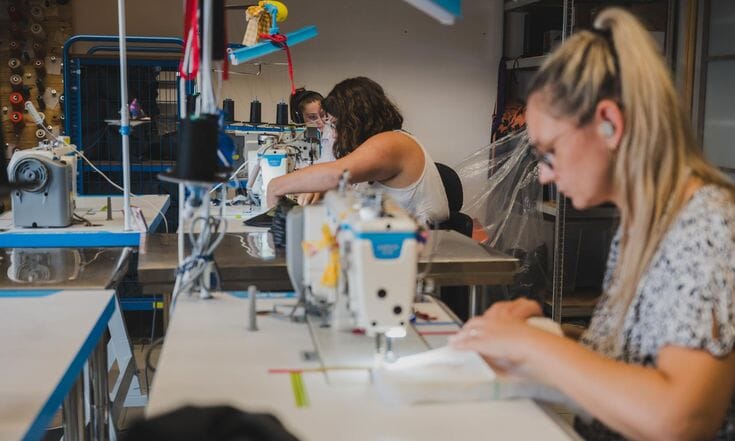
Portuguese factories produce underwear at meaningful scale, though only a subset of the cluster has the specialist equipment and finishing lines built for intimate apparel. Roughly 15% of the 80 documented factories in our group work regularly with underwear fabrics, with another 8% able to book intimate-apparel runs against confirmed orders. These are our own figures from the documented group; the ATP citation previously attached to them has been withdrawn, because ATP publishes no factory capability survey. Typical garment MOQ starts at 300 units per style, with 500-1,000 units unlocking the best CMT tier. Our MOQ guide and low-MOQ route cover the thresholds across the wider group.
The production sequence
Portuguese underwear production follows a specific sequence. Fabric is booked from the mill (typically 2-4 weeks for standard cotton-elastane, 4-6 weeks for micro-modal, 6-8 weeks for FSC-certified or GRS-certified stacks). The mill knits or weaves the fabric, dyes and finishes it (7-10 days for standard, 10-14 days for delicate lace or micro-modal). The fabric ships to a CMT factory for garment assembly, which typically runs 4-6 weeks for standard briefs and 6-8 weeks for bralettes or shapewear.
Sample cycles and fit
Sample cycles for underwear typically run 3-4 iterations with a clean tech pack because fit progression across cup and band sizes for bralettes, and rise variations for briefs, requires separate fit rounds. In our experience, brands that specify sizing at the graded-measurement level (rather than just "S/M/L") get consistent fit across the size run, and factories that skip the fit-model round consistently deliver bralettes that don't fit real bodies.
Citation Capsule: Approximately 15% of the 80 documented Portuguese factories in the PCF group work with underwear fabrics as a standard offering, with another 8% able to book runs against confirmed orders. Total lead time from PO to shipped underwear garments typically runs 6 to 10 weeks for standard cotton-elastane, and 8 to 12 weeks for micro-modal or lace-detail constructions. Garment MOQ starts at 300 to 500 units per style.
The specification that reduces sample-round friction
The tech pack specification that consistently reduces underwear sample rounds at Portuguese mills is precision on three fields: fabric composition (name the specific fibre and elastane %, not "modal blend"), OEKO-TEX Class II certification requirement (explicit), and graded measurements at every point (not just S/M/L). Founders who nail these three fields typically get first sample within 3 weeks of PO and hit approval by round 3. Founders who leave any of them ambiguous typically hit round 5 or 6 before approval.
Find your factory: Browse the free factory directory preview, or unlock the premium directory for €39 to see 80 documented Portuguese factories with underwear and intimate-apparel capability flagged.
Talk to our team: Get in contact and we'll tell you which 2 to 3 underwear-capable factories in our group actually fit your brief.
Which Portuguese mills actually work with underwear fabric?
Portuguese textile output is concentrated in the northern cluster, but intimate-apparel-capable capacity sits in a much smaller set of mills. A 55% output share credited to EURATEX has been withdrawn as unsupported. Fewer than 15% of the 80 documented factories in the PCF group carry standing underwear capability, and the shortlist below covers only companies whose own published material supports the description.
Impetus, Barcelos
Impetus is the clearest Portuguese name in technical underwear and bodywear, and the one mill on this page whose own published positioning is squarely intimate apparel. It runs seamless knitting alongside cut-and-sew for briefs, bralettes and boxers, and publishes OEKO-TEX Standard 100. The MOQ and certification specifics previously listed here were not verifiable from the company's own material and have been removed; confirm them directly.
Tintex, Vila Nova de Cerveira
Tintex is the reference Portuguese mill for regenerated-cellulose knits, publishing circular-knit programmes in lyocell, modal and mercerised cotton, plus bluesign system partner status, ISO 14001 and B Corp certification. That makes it the most plausible route to a modal or micro-modal underwear base cloth. The specific Lenzing spinner-network and GRS scope claims previously made here were not verifiable and have been removed.
Adalberto, Santo Tirso
Adalberto is a printing and finishing house working on knit and woven substrates, and publishes OEKO-TEX Standard 100. Relevant for the dye and finish stage of an underwear programme rather than as a base-cloth source. The "bluesign-aligned chemistry" and antimicrobial finishing claims previously made here were not verifiable and have been removed.
Two names removed from this list
Why these two were removed
Earlier versions of this section also listed Somelos as a knitter of cotton-elastane and modal-cotton jersey for briefs and bralettes. Somelos is a yarn-dyed woven shirting mill founded in 1958 and does not knit underwear jersey, so the entry has been removed rather than corrected.
And Riopele
Riopele was listed as running cotton-elastane jersey with bluesign partnership; Riopele is principally a woven fashion-fabric house and the certification claim was not verifiable, so that entry has gone too. A founder acting on either row would have contacted the wrong company.
Citation Capsule: Portuguese underwear-capable production concentrates in a small set of mills in the northern cluster. Impetus (Barcelos) is the clearest intimate-apparel specialist, Tintex (Vila Nova de Cerveira) the reference for modal and other regenerated-cellulose knits, and Adalberto (Santo Tirso) a printing and finishing house. Somelos and Riopele were previously listed here and have been removed: Somelos is a woven shirting mill and Riopele a woven fashion-fabric house, neither of which knits underwear jersey. Bluesign system partnership is held by only a small number of Portuguese mills, which is why bluesign-approved underwear fabric requires named-mill sourcing. A count of "fewer than 15 of roughly 6,000 textile firms" credited to EURATEX has been withdrawn: EURATEX publishes no such register, and Portugal has 11,965 textile and clothing companies rather than 6,000.
What certifications should each underwear tier actually carry?
OEKO-TEX Standard 100 Class II is the mandatory baseline for direct-skin-contact underwear at every Portuguese mill (OEKO-TEX, 2024). Above that, retail tier and marketing claim determine the stack. Skipping the Class II line is not a cost saving; it is a regulatory blocker for EU retail entry.
Value tier (€6-15): OEKO-TEX Class II baseline
The mandatory entry ticket. Essentially every intimate-apparel factory in our group holds Class II as standard. Nothing above this is needed at this price band.
Mid-market (€15-25): OEKO-TEX Class II + BCI or GOTS-in-conversion
BCI mass-balance cotton claim or GOTS-in-conversion cotton programmes add a light sustainability claim at €0.15-0.30 per kilo of yarn. Both work at 300-500 unit MOQ.
Premium (€25-50): OEKO-TEX Class II + GOTS or Lenzing licensing
At €25+ retail, either GOTS scope certification across the full chain or Lenzing Modal / Micro-Modal branded licensing becomes standard. Fewer than 40% of northern-cluster factories hold live GOTS scope, and Lenzing licensing requires named-spinner traceability from Austria through to the Portuguese knitter.
Luxury (€50+): OEKO-TEX Class I baseline plus EN durability standards
Class I (babywear tier) tests to stricter chemical limits than Class II and is increasingly specified at the €50+ luxury underwear band. Add EN ISO 105-E04 (colour fastness to perspiration grade 4+), EN ISO 12945-2 (pilling grade 4-5 required) and EN ISO 5077 (dimensional stability ±3% over 5 wash cycles) as measurable acceptance criteria on the tech pack.
What are the most common founder mistakes on underwear fabric specs?
Across the intimate-apparel subset of tech packs reviewed at the PCF factory group in 2025-2026, six spec errors account for the majority of first-round sample rejections. All are fixable at zero cost during tech pack writing.
Mistake 1: elastane percentage outside the 5-8% range for everyday briefs
Under 3% elastane loses shape after 20-30 wash cycles. Above 10% creates a compression feel that reads as shapewear rather than comfort. The 5-8% band is where Portuguese factories default when the tech pack leaves it undefined, and it is the correct spec for standard everyday briefs.
Mistake 2: "modal" without the micro- prefix
A tech pack specifying "modal" without "Lenzing Micro-Modal" or "micro-modal 0.9 denier" can be substituted with standard modal at the mill's discretion. Standard modal costs €9-14/m; micro-modal costs €12-18/m. The mill substitution defaults down to save cost. Name the denier.
Mistake 3: skipping OEKO-TEX Standard 100 Class II on the tech pack
The Class II line is not optional. EU Green Claims regulations tightening through 2026 treat unspecified skin-contact chemistry as a regulatory risk. Standard tech pack line: "OEKO-TEX Standard 100 Class II (direct skin contact) certification required at every stage."
Mistake 4: no dye-lot precision requirement
Underwear runs typically split across multiple dye lots because of low fabric MOQ per colour. Missing the dye-lot precision line (ΔE ≤1.5 across lots) creates visible colour drift on multi-pack SKUs.
Mistake 5: bamboo claims without lyocell chemistry callout
"Bamboo underwear" marketed to sustainability-conscious buyers usually means viscose from bamboo pulp using open-loop CS2 chemistry. Under EU Green Claims, sustainability claims on bamboo require closed-loop lyocell processing and named-mill audit. Cheaper safe alternative: spec Lenzing Micro-Modal or GOTS organic cotton-elastane.
Mistake 6: sizing at S/M/L rather than graded measurements
Underwear fit progression across cup and band sizes for bralettes, and rise variations for briefs, requires separate graded measurements. Speccing "S/M/L" without graded measurements typically pushes sample rounds from 3 iterations to 5-6.
Which Fabric Fits Which Garment and Retail Band?
The matrix below matches garment category to fabric family at each retail band. Read across your row, then confirm your Portuguese partner holds live certification for the cell you land in.
| Garment | €6-15 retail | €15-30 retail | €30-50 retail | €50+ retail |
|---|---|---|---|---|
| Everyday briefs | Cotton-elastane 95/5, 160 GSM | Combed mercerised cotton-elastane, 180 GSM | Micro-modal + 6% elastane, 160 GSM | Silk crepe 16 momme + elastane |
| Bralettes | Cotton-elastane 95/5, 180 GSM | Modal-elastane 5%, 180 GSM | Micro-modal + 6% elastane, 180 GSM | Silk satin 22 momme + French lace |
| Boxer briefs | Cotton-elastane 92/8, 180 GSM | Combed mercerised cotton-elastane, 190 GSM | Modal-elastane 8%, 200 GSM | Micro-modal + 8% elastane, 200 GSM |
| Shapewear briefs | Not practical at this tier | Powernet + cotton gusset, 220 GSM | Powernet 240 GSM + micro-modal gusset | Powernet 260 GSM + silk gusset |
| Slip briefs and camisoles | Cotton-elastane 92/8 with mesh | Modal-elastane with lace trim | Micro-modal with Portuguese jacquard lace | Silk crepe with French Calais lace |
| Sports underwear | Cotton-elastane 92/8, 180 GSM | Nylon-elastane 76/24 bluesign | Nylon-elastane + rPET blend, GRS | Merino-elastane 180 GSM |
Rows read: for everyday briefs at €30-50 retail, the correct spec is micro-modal plus 6% elastane at 160 GSM.
What does underwear fabric actually cost at 100, 300, 500 and 1,000 meter minimums?
Fabric price per meter drops as the minimum climbs, because Portuguese mills spread setup, dye-lot and finishing costs across more meters. Underwear pricing is more sensitive to minimum than tee or sweatshirt pricing because underwear fabric MOQ per colour runs 200-500 meters typical, meaning even 300m minimums often force multi-colour bundling. The table below reflects PCF factory group quotes across the northern cluster in July 2026.
| Fabric | 100m minimum | 300m minimum | 500m minimum | 1,000m minimum |
|---|---|---|---|---|
| Cotton-elastane 95/5, 180 GSM | €9.20/m | €7.60/m | €6.80/m | €5.80/m |
| Combed mercerised cotton-elastane | €12.50/m | €10.20/m | €9.00/m | €7.80/m |
| Modal-elastane 5%, 200 GSM | €14.80/m | €12.20/m | €10.80/m | €9.50/m |
| Micro-modal + elastane, 180 GSM | €18.60/m | €15.40/m | €13.80/m | €12.20/m |
| Powernet, 240 GSM | €17.20/m | €14.20/m | €12.80/m | €11.00/m |
| Silk crepe de chine, 16 momme | €58.00/m | €48.00/m | €42.00/m | €36.00/m |
Sources: PCF factory group quotes (2024-2026), 80 documented Portuguese factories, intimate-apparel subset.
Citation Capsule: Underwear fabric price per meter at Portuguese mills drops roughly 30-35% moving from 100m to 1,000m minimums across all fibre families, based on PCF factory group quotes (2024-2026). Micro-modal at 1,000m minimum still costs 2.1x cotton-elastane at the same minimum, which is why micro-modal underwear concentrates at the €25+ retail band. OEKO-TEX Standard 100 Class II certification is baseline across every serious Portuguese underwear-capable partner (OEKO-TEX, 2024), not a differentiator.
Where Does Fabric Choice Fit in Your Product Stack?
Underwear fabric choice sits closer to product-strategy decision than to designer preference. The right fabric is determined by retail price point (cotton-elastane below €15, modal-cotton €15-25, micro-modal €25-50, silk €50+), by wash-cycle expectation (100+ cycles requires modal or cotton with proper mercerisation), and by the sustainability position the brand can credibly claim (GOTS organic cotton, Lenzing Micro-Modal, or GRS recycled elastane blends).
Get the fabric right and construction becomes a secondary problem. Portuguese factories handle underwear construction to a consistent standard once the fabric spec is nailed. Get the fabric wrong and no amount of factory quality rescues the retail outcome. The three specifications that most consistently reduce sample-round friction are precise fibre naming (name the brand, name the denier, name the elastane %), explicit OEKO-TEX Class II requirement, and graded measurements across the full size run.
Running into production issues? Get in contact and tell us what you're making. We're a group of documented Portuguese garment factories and we answer every serious brief within 24 hours.
Frequently Asked Questions
What is the best fabric for underwear overall?
Micro-modal at 160-190 GSM is the best fabric for underwear across softness, wash durability, and skin-contact chemical safety at premium retail (€25+). Cotton-elastane 95/5 at 160-180 GSM wins for mid-market underwear at €8-18 retail. Both carry OEKO-TEX Standard 100 Class II baseline at Portuguese mills (OEKO-TEX Association, 2024).
Is bamboo fabric actually good for underwear?
Bamboo viscose is soft, absorbent, and reasonably priced at €7-12/m, but most "bamboo fabric" is standard viscose produced from bamboo pulp using open-loop chemistry. EU Green Claims regulations tightening through 2026 restrict "bamboo" marketing claims unless closed-loop lyocell processing from bamboo is used. For sustainability positioning, Lenzing Micro-Modal or GOTS organic cotton-elastane is a safer specification.
How much elastane should underwear have?
Standard everyday underwear at Portuguese mills runs 5 to 8% elastane blended with cotton, modal, or micro-modal. That range gives shape retention and stretch without the compression feel of shapewear. Above 10% elastane feels shapewear-like and is typically reserved for control briefs, sports underwear, and post-natal ranges. Under 3% elastane loses shape after 20-30 wash cycles.
What certification do I need for underwear fabric?
OEKO-TEX Standard 100 Class II is the mandatory baseline for underwear at every Portuguese mill. Class II covers direct skin contact and tests for over 1,000 restricted substances. Essentially every intimate-apparel factory in our group holds Class II as standard. GOTS organic cotton, GRS recycled synthetics, or Bluesign process certification stack on top for sustainability positioning (OEKO-TEX Association, 2024).
What is the minimum order for underwear production in Portugal?
Approximately 15% of the 80 documented Portuguese factories in the PCF group work with underwear fabrics, and garment MOQ typically starts at 300 units per style. 500-1,000 units unlocks best CMT tier and easier trim customisation. Bralettes with molded cups often carry higher MOQ (500+) because of mold booking economics. Fabric MOQ at the mill level runs 200-500 meters typical.
How much does a micro-modal underwear brief cost to make?
A micro-modal brief at 160 GSM using 0.40 meters of fabric lands at €4-8 in fabric alone. Add €0.50-1.20 for elastane trim, waistband, and thread. Add €2-4 CMT at 500-1,000 unit MOQ. Total garment cost lands at €7-13 per unit before packaging, which supports retail pricing at €25-40 with typical premium underwear margins (ATP, 2025).
We're a group of 80 documented Portuguese clothing factories, 25 verified, based in Porto and Guimarães. Tell us your product, volume, and timeline. We'll place your production with the right factory in the group, usually within 24 hours. Flat fees, no commissions, no upsell.
Get in contact Download the directory (€39)Need a tech pack? Get a factory-ready single-style tech pack for €79. See what's included.
Related reading
- Underwear manufacturing in Portugal
- What is modal fabric?
- What is bamboo fabric?
- What is viscose fabric?
- What is jersey fabric?
- OEKO-TEX vs GOTS vs bluesign
- MOQ minimums in Portugal
- Clothing manufacturing costs in Portugal
- Sustainable clothing manufacturing
Sources used in this article
- OEKO-TEX Association - OEKO-TEX Standard 100 product classes and skin-contact chemical safety criteria (2024)
- Lenzing AG - TENCEL Modal and MicroModal fibre specifications and FSC beech pulp sourcing. A "95% closed-loop chemistry recovery" figure credited to Lenzing has been withdrawn: Modal is produced by a modified viscose process rather than a closed loop, and no such figure is published
- Textile Exchange - Materials Market Report, used for the man-made cellulosic production figure (7.9 million tonnes, about 6% of a 124 million tonne global fibre market in 2023)
- ATP, Associação Têxtil e Vestuário de Portugal - sector association, cited for cluster context only. ATP publishes no fabric price survey or factory capability survey; three claims credited to it have been withdrawn and the EUR figures on this page are PCF quotes
- CITEVE, Centro Tecnológico das Indústrias Têxtil e do Vestuário de Portugal - cited for general technical context only
Certification bodies
- GOTS - Global Organic Textile Standard, organic fibre content and processing certification (2024)
- EURATEX, European Apparel and Textile Confederation - Facts & Key Figures, cited for European industry context only. EURATEX publishes no regional output share or bluesign register; two claims credited to it have been withdrawn
- FSC - Forest Stewardship Council, chain of custody standards for beech and eucalyptus pulp used in modal and lyocell production
First-party data
- PCF internal factory documentation (2024-2026), data from 80 documented and 25 audited Portuguese factories, covering underwear fabric availability, MOQ thresholds, fabric pricing, and lead time observations across the intimate-apparel subset
About Portugal Clothing Factory
Portugal Clothing Factory is a group of 80 documented Portuguese clothing factories in the northern textile cluster (Porto, Guimarães, Braga, Barcelos, Famalicão), 25 audited. Approximately 15% of the group carries intimate-apparel and underwear production capability. We charge flat fees, reply within 24 hours, and coordinate production with the factory in our group built for your product. See how we work or get in contact to place your order.