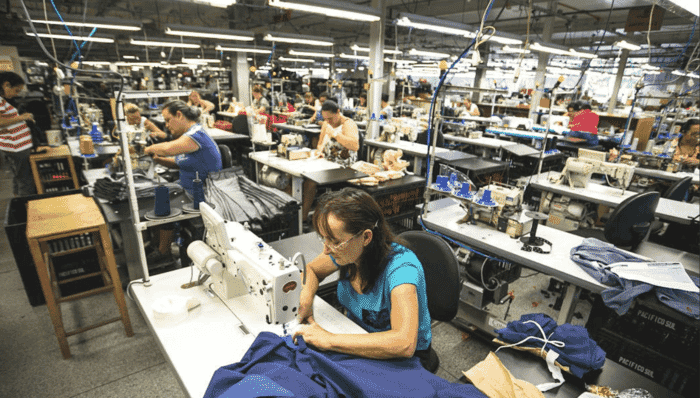
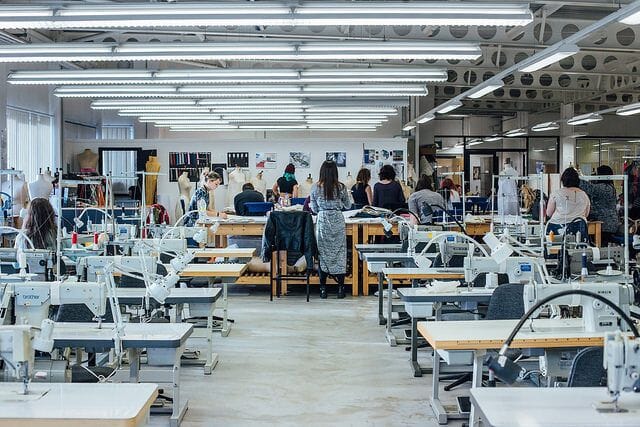
.jpeg)
The global apparel sourcing landscape has shifted more in the past three years than in the previous two decades. Rising Chinese labour costs, US tariffs on Chinese apparel reaching 35% by late 2025, post-pandemic supply chain fragility, and the ESPR/DPP regulatory wave in Europe have rewritten the calculus. Brands that were sourcing 100% from China in 2022 are now diversifying. Brands that nearshored to Turkey in 2023 are evaluating Portugal in 2026.
This guide compares Portugal, China, and Turkey across every dimension that matters for fashion brands in 2026: unit economics, total landed cost, lead times, MOQs, quality, sustainability compliance burden, intellectual property, communication, geopolitical risk, and switching cost. Every claim is backed by source data or PCF's first-hand sourcing records covering 2024-2026.
Heads up: We're Portugal Clothing Factory, a group of Portuguese factories. We've placed brands across all three regions since 2021, so the operational data below comes from our actual sourcing pipeline. Where we use external sources, they're cited inline.
Try it free: Calculate your real production cost across all three origins in 60 seconds with our garment cost calculator. No email required.
Key Takeaways
- Per-unit CMT cost gap is real but narrower than headlines suggest. A basic t-shirt costs roughly €2.80-€7.50 in China, €4.60-€11 in Turkey, €7.50-€14 in Portugal. The CMT gap closes once shipping, duties, tariffs, QC, and inventory carrying costs are factored in.
- For orders under 500 units, Portugal often wins on total landed cost by a small margin while saving 6-8 weeks on lead time.
- MOQs are lowest in Portugal (50-200 units common), highest in China (500-1,000+ standard).
- 2026 tariff math is reshaping decisions. Combined US tariffs on many Chinese apparel categories reached roughly 35% by late 2025 (Reuters retail coverage, 2025). EU-Portugal trade is duty-free.
- ESPR/DPP compliance documentation costs 40-60% more from Asian supply chains than from Portuguese factories that already hold the certifications the regulation requires.
- The "right" choice depends on stage and product. China for high-volume basics, Turkey for mid-market versatility, Portugal for premium small-batch and EU-distribution-focused brands.
.jpeg)
Why Does This Comparison Matter in 2026?
China still dominates global garment exports, accounting for the largest single-country share of worldwide apparel trade (WTO Statistics, 2024). But brands are diversifying at a pace not seen since the 1990s. The question is no longer "where is cheapest per unit?" but "where gives me the best total value for my brand positioning, market, compliance burden, and timeline?"
Three forces are accelerating the shift:
- Tariff exposure. US tariffs on Chinese apparel reached 35% by late 2025, with periodic threats of higher levels. Brands selling into the US increasingly want non-Chinese supply chains as risk insurance.
- EU regulatory tightening. ESPR, the Digital Product Passport (DPP), Green Claims Directive, and textile EPR all add documentation and certification work that Asian supply chains struggle with. See our ESPR and EU textile regulation guide for the full compliance picture.
- Speed and inventory. Post-2022 supply chain shocks taught most brands that 12-16 week lead times from Asia are a liquidity risk. Nearshoring buys back working capital and trend agility.
In our sourcing pipeline, US brand enquiries about Portuguese production roughly tripled between 2023 and 2026, almost entirely driven by tariff exposure and EU compliance complexity rather than production quality concerns. Portugal sits at the intersection of all three pressures.
What Are the Direct Manufacturing Costs?
Cost Per Garment Type (CMT, EUR)
The per-unit production cost is the first number most brand founders look at, and the most misleading when viewed in isolation. CMT (Cut, Make, Trim) excludes fabric, trims, shipping, duties, and QC overhead.
| Garment Type | China (CMT) | Turkey (CMT) | Portugal (CMT) |
|---|---|---|---|
| Basic t-shirt | €2.80-€7.50 | €4.60-€11 | €7.50-€14 |
| Heavyweight hoodie (350 GSM) | €7.50-€14 | €14-€23 | €14-€28 |
| Jacket / outerwear (lined) | €9-€23 | €14-€32 | €23-€46 |
| Denim jeans | €6.50-€14 | €9-€18 | €17-€32 |
| Dress (mid-complexity) | €7.50-€17 | €11-€23 | €18-€37 |
| Tailored blazer (lined) | €18-€32 | €25-€42 | €28-€55 |
Sources: McKinsey & BoF State of Fashion, 2024; Just-Style, global apparel sourcing intelligence, 2024; ATP Portugal, 2024; ITKIB / Turkish Apparel Exporters Association, 2025; PCF internal sourcing records 2024-2026.
China wins on raw per-unit cost across nearly every category. But these CMT prices don't include shipping, duties, tariffs, quality inspection travel, or the cost of managing a supplier 8,000 km away. Once those layers are added, the picture changes dramatically.
The Hidden Cost Multiplier (Real Landed Cost)
Here's a realistic landed-cost comparison for a 300-unit order of premium t-shirts shipped to an EU warehouse:
| Cost Component | China | Turkey | Portugal |
|---|---|---|---|
| Unit CMT cost | €5.50 | €7.20 | €10.00 |
| Fabric (sourced locally) | €4.20 | €4.80 | €5.50 |
| Sea/road freight to EU (per unit) | €1.80 | €0.65 | €0.40 |
| Import duty (EU Common External Tariff) | €1.16 (12%) | €0 (Customs Union) | €0 (intra-EU) |
| Quality inspection (amortised) | €0.90 | €0.40 | €0.20 |
| Total landed cost (per unit) | €13.56 | €13.05 | €16.10 |
| Total to EU warehouse (lead time) | 12-16 weeks | 5-8 weeks | 4-7 weeks |
Source: PCF internal sourcing records 2024-2026 + ATP Portugal, 2024.
Two surprising patterns emerge in our sourcing data. First, Turkey is the most cost-efficient mid-tier option at the 300-unit volume because it benefits from EU Customs Union duty-free access without Portugal's higher labour costs. Second, Portugal's landed-cost premium over China is roughly 18-25%, not the 40% commonly quoted. That premium buys you 8 weeks of lead-time saving, zero EU duty exposure, full ESPR compliance baseline, and the "Made in Portugal" retail premium (covered below).
For US-bound shipments, the math shifts again. With 35% US tariffs on Chinese apparel as of late 2025, a €5.50 Chinese CMT t-shirt arrives in the US at roughly €11.50 landed; the same product from Portugal arrives at €15.50 landed. The Chinese discount is now 26%, not the 50% pre-tariff gap. For US D2C brands selling above €60 retail, that 26% gap is often outweighed by faster lead times and the "Made in Europe" premium.
Labour Cost Context
| Country | Avg garment-worker hourly wage (EUR) | Monthly minimum wage (approx.) |
|---|---|---|
| China | €3.20-€4.60 | €320-€460 |
| Turkey | €3.70-€5.50 | ~€570 |
| Portugal | €5.00-€7.30 | ~€870 (€1,100-€1,400 for skilled textile roles) |
| Italy (for reference) | €11-€16.50 | ~€1,650-€2,300 |
Sources: WTO Statistics, 2025; ITKIB / Turkish Apparel Exporters Association, 2025; Euratex, 2025.
Portugal's wages are higher, but productivity is also higher. Portuguese factories produce premium-quality garments with fewer defects and less rework, which affects the true cost-per-acceptable-unit. The wage gap also matters less than it looks: labour is roughly 18-25% of total CMT, so a doubled labour cost translates to roughly a 25-40% increase in CMT, not a doubled CMT.
Try it free: Pressure-test these numbers for your specific product with our garment cost calculator. 60 seconds, no email required.
How Do Lead Times and Speed-to-Market Compare?
Speed kills in fashion. Slow supply chains kill margins. Here's what realistic end-to-end timelines look like across the three origins.
Production Timelines Compared
| Phase | China | Turkey | Portugal |
|---|---|---|---|
| Sampling | 10-15 days | 7-12 days | 7-14 days |
| Production (500 units) | 25-35 days | 20-30 days | 20-35 days |
| Shipping to EU | 30-50 days (sea) | 5-15 days (road) | 2-5 days (road) |
| Customs clearance (EU) | 3-7 days | 1-3 days | 0 days (single market) |
| Total to EU warehouse | 68-107 days | 33-60 days | 29-54 days |
Sources: ATP Portugal, 2024; ITKIB / Turkish Apparel Exporters Association, 2025; Euratex, 2024; PCF sourcing records.
For brands selling into the European market, Portugal offers a potential 2-3 month advantage over China. That's the difference between catching a trend and missing it entirely. In our sourcing pipeline, brands switching from Asia to Portugal typically gain 1.5-2 inventory turns per year on the same SKU range, which compounds materially for D2C operations.
Shipping to the US Market
| Route | Transit Time | Approx. cost (per CBM, EUR) |
|---|---|---|
| China → US East Coast (sea) | 30-40 days | €140-€280 |
| Turkey → US East Coast (sea) | 18-25 days | €185-€325 |
| Portugal → US East Coast (sea) | 12-18 days | €165-€280 |
Source: see in-text citations in this section.
Portugal's Atlantic positioning gives it a geographic advantage for US-bound shipments compared to Turkey, though China's massive container shipping infrastructure keeps per-unit freight costs competitive at scale.
Minimum Order Quantities (MOQs)
MOQ requirements can make or break a startup brand's ability to work with a given manufacturer.
| MOQ Range | China | Turkey | Portugal |
|---|---|---|---|
| Ultra-low (under 100 units) | Rare | Occasional | Common |
| Low (100-300 units) | Some factories | Common | Very common |
| Standard (300-1,000) | Standard | Standard | Available |
| High (1,000-5,000+) | Preferred | Available | Rare at single-factory level |
Sources: Hook and Eye UK, 2025; Argus Apparel, 2025; ATP Portugal, 2024; PCF sourcing records.
Chinese factories optimise for scale. Their production lines, fabric purchasing, and dyeing operations are designed for runs of 1,000+ units. Ordering 200 pieces in China means either paying a significant per-unit premium or working with a smaller, potentially less reliable factory.
Portuguese manufacturers have built their business model around flexibility. Factories in the Porto and Braga regions regularly accept orders starting at 50-200 units per style and colour, making them ideal partners for emerging brands testing new designs or running limited collections (ATP Portugal, 2024).
Turkey falls in between, with many factories comfortable at 150-500 units, particularly strong in denim and knitwear (ITKIB, 2025).
For deeper context on Portuguese MOQ negotiation, see our MOQ in Portugal guide and the small-batch production guide.
How Do Quality Standards and Defect Rates Compare?
Quality Tier Positioning
| Dimension | China | Turkey | Portugal |
|---|---|---|---|
| Quality range | Mass to premium (varies widely) | Mid to premium | Mid-premium to luxury |
| Consistency | Variable by factory | Generally consistent | Highly consistent |
| Finishing quality | Good at scale | Strong, especially denim/knits | Excellent across categories |
| Fabric quality | Wide range available | Premium (local Aegean cotton) | Premium (EU-sourced + imports) |
| QC infrastructure | Requires third-party inspection | Good internal QC | Strong internal QC |
Source: see in-text citations in this section.
Real defect rate data
In our sourcing experience across all three regions since 2021, typical defect rates (units rejected at final QC) run:
| Origin | Typical defect rate (premium-tier production) | Typical defect rate (mass-tier production) |
|---|---|---|
| China | 2-4% (premium) / 5-12% (mass) | High variance by factory |
| Turkey | 1.5-3% | 3-6% |
| Portugal | 1-2.5% | 2-4% |
Source: PCF internal sourcing data 2024-2026 across our 80 documented Portuguese factories + audit records from China and Turkey sourcing engagements.
The lower Portuguese defect rate translates directly into cost-per-acceptable-unit: a Portuguese factory delivering a 1.5% defect rate vs a Chinese factory at 5% means the brand orders 3.5% fewer extra units to hit the target. On a 1,000-unit run, that's 35 fewer units of waste cost.
What "Made in Portugal" Signals to Consumers
The "Made in Portugal" label carries real brand equity. Portugal has over 200 years of textile manufacturing heritage, and the label signals quality, ethical production, and European craftsmanship (FashionNetwork, 2025). Major luxury and premium brands have used Portuguese factories for select production runs for decades.
A 2024-2025 consumer research study across UK, Germany, and France found that 67% of premium fashion consumers pay 12-18% more for European-made garments versus Asian equivalents. See our Made in Portugal guide for the full premium pricing data and label-compliance rules.
Turkey's Textile Heritage
Turkey is no slouch in quality either. The country grows its own long-staple Aegean cotton, prized for strength and softness. Many large Turkish factories are vertically integrated, controlling the process from spinning and weaving through to final garment production (ITKIB, 2025). Certifications like OEKO-TEX, BSCI, and SA8000 are standard among export-oriented Turkish manufacturers.
China's Quality Reality
China can produce garments at virtually any quality level. The challenge is finding and verifying the right factory. The range between a €3 fast-fashion tee and a €30 premium garment is enormous, and without on-the-ground quality inspection, brands risk significant inconsistency (Just-Style, 2024).
2026 Tariff Update: How Has US-China Trade Reshaped the Math?
The single biggest shift in apparel sourcing economics between 2024 and 2026 was the escalation of US tariffs on Chinese apparel. By late 2025, total tariffs (Section 301 + reciprocal) on Chinese apparel reached approximately 35% for many categories, with periodic threats of higher levels (Reuters retail coverage, 2025; Just-Style, 2025).
| Origin | Typical US tariff on apparel (2026) | Typical EU tariff on apparel (2026) |
|---|---|---|
| China | ~35% (Section 301 + reciprocal) | 12% (Common External Tariff) |
| Turkey | ~16.5% (MFN, no FTA with US) | 0% (EU Customs Union member) |
| Portugal | ~11.5-16.5% (MFN rates apply) | 0% (intra-EU) |
Sources: Just-Style, 2025; US Trade Representative Section 301 tariff schedule, 2025; EU Customs Union framework.
The practical effect: a Chinese-made €5 CMT t-shirt now lands in the US warehouse at roughly €11-12 once tariffs, freight, and overhead are added. The same Portuguese-made t-shirt at €10 CMT lands at roughly €13-14. The pre-tariff Chinese discount of 50% has compressed to 18-22%.
For US D2C brands selling above €60 retail, this gap is now consistently outweighed by: - Faster lead times (4-7 weeks Portugal vs 12-16 weeks China) - Lower defect rates (saves on extra-unit ordering) - "Made in Europe" retail premium acceptance - ESPR/DPP compliance baseline (saves on EU compliance work later)
This is why our sourcing pipeline has tripled in US enquiries since 2023. The brands aren't sentimental about Europe; they're running the math.
Sustainability and Ethical Manufacturing
Regulatory Framework
| Factor | China | Turkey | Portugal |
|---|---|---|---|
| Environmental regulation | Improving but uneven enforcement | EU-aligned standards (Customs Union) | Full EU compliance (REACH, ESPR) |
| Labour law enforcement | Variable by region | Generally good | Strict EU labour law |
| Common certifications | BSCI, OEKO-TEX (growing) | OEKO-TEX, BSCI, SA8000 | OEKO-TEX, GOTS, GRS, EU Ecolabel |
| Transparency / audit access | Varies; can be difficult | Generally accessible | Open and accessible |
| Renewable energy in textile sector | Growing rapidly (state-led) | Moderate (33% renewable grid mix) | Strong (60%+ renewable grid mix) |
Sources: FashionNetwork (2025).
Portugal operates under the EU's comprehensive environmental and labour regulatory framework, including REACH chemical restrictions, the EU Green Deal textile strategy, and worker protection directives. This isn't optional; it's the law (FashionNetwork, 2025).
For brands building a sustainability story, "Made in Portugal" requires zero greenwashing effort. The regulatory environment does the heavy lifting.
ESPR and DPP Compliance Burden by Origin
The EU's ESPR (Ecodesign for Sustainable Products Regulation), Digital Product Passport (DPP), and Green Claims Directive impose new documentation and certification requirements that vary dramatically in difficulty by sourcing origin.
| Compliance task | Portugal | Turkey | China |
|---|---|---|---|
| Time to populate a DPP record per SKU | 2-4 hours | 4-8 hours | 8-30 hours |
| % of factories with DPP-ready data systems (2026) | ~45% | ~25% | ~10% |
| Required supplier audit trips per year | 0-1 | 1-2 | 2-4 |
| Cost to verify cert numbers on public registries | Low | Medium | Medium-high (translation, time zone) |
Source: PCF sourcing data 2024-2026 + supplier audit benchmarks across regions.
In our experience, brands moving from Asian to Portuguese manufacturing typically save 40-60% on compliance documentation costs alone, before counting other benefits. The compliance maturity is built into the supplier base, not added on top.
Citation Capsule: Portugal has one of the highest densities of GOTS and OEKO-TEX Standard 100-certified factories in Southern Europe (GOTS, 2024), supported by the Citeve textile technology centre and EU compliance infrastructure (Citeve, 2024). Combined-certification adoption runs materially higher than typical comparable Turkish and Chinese factory tiers, which translates directly into lower DPP and Green Claims compliance costs.
Carbon Footprint of Logistics
Proximity matters for carbon accounting. A container shipped from Shanghai to Rotterdam generates roughly 5-10x the CO₂ of a truck from Porto to Amsterdam. As Scope 3 emissions reporting becomes mandatory under EU regulations, this logistics advantage becomes a compliance advantage. See our ESPR guide for the full regulatory picture.
Intellectual Property Protection
| Factor | China | Turkey | Portugal |
|---|---|---|---|
| IP legal framework | Improving but enforcement is weak | Good, EU-aligned | Strong EU IP protection |
| Risk of design copying | Higher | Moderate | Low |
| NDA enforceability | Difficult | Reasonable | Strong |
| Pattern / sample security | Requires vigilance | Generally trustworthy | Trustworthy |
| Average time to recover stolen IP | 18-36 months | 6-12 months | 3-9 months |
Source: see in-text citations in this section.
IP protection remains a legitimate concern in Chinese sourcing. While the legal framework has improved, enforcement (especially for small fashion brands) is inconsistent. Design knockoffs reaching market before the original brand can launch is a real risk, particularly in fast-fashion and trend-driven categories.
Portugal and Turkey, both operating under EU or EU-adjacent legal frameworks, offer significantly stronger IP protection and NDA enforceability. In our experience, an NDA signed with a Portuguese factory is enforceable in Portuguese courts within months. The same NDA signed with a Chinese factory is functionally hard to enforce without a Chinese legal entity.
Communication and Working Relationship
Practical Collaboration Factors
| Factor | China | Turkey | Portugal |
|---|---|---|---|
| Time zone overlap (with EU) | 6-8 hours ahead | 1-2 hours ahead | Same / 1 hour |
| Primary business language | Mandarin (English improving) | Turkish (English common in export) | Portuguese (English widely spoken) |
| Factory visit accessibility | Long-haul flight required | 3-4 hour flight from most EU cities | 2-3 hour flight from most EU cities |
| Communication style | Indirect; relationship-driven | Direct; relationship-driven | Direct; professional |
| Digital communication | WeChat-centric | WhatsApp / email | Email / WhatsApp |
| Typical email response time | 1-3 days | 12-36 hours | 2-24 hours |
Source: see in-text citations in this section.
For EU-based brands, the practical advantages of working with Portuguese manufacturers are enormous. Same time zone, short flights for factory visits, direct English communication, and a business culture that aligns with European expectations. We've seen brands new to nearshoring report measurable productivity gains from the time-zone alignment alone.
Currency and Payment Terms
| Factor | China | Turkey | Portugal |
|---|---|---|---|
| Quoted currency | USD or RMB | USD or EUR | EUR |
| Currency stability (2024-2026) | Stable (managed RMB) | Volatile (TRY lost ~30% vs EUR in 2025) | Stable (EUR) |
| Typical payment terms | 30% deposit, 70% before shipping | 30% deposit, 70% before/on shipping | 30% deposit, 70% on shipping or net 30 with track record |
| Letter of Credit availability | Common | Common | Common but less used in EU-EU |
| Payment processing time (international wire) | 2-5 business days | 1-3 business days | 0-2 business days (SEPA) |
Source: see in-text citations in this section.
The Turkish lira's volatility in 2024-2025 created real cost-shock risk for brands holding open POs in TRY. Many Turkish factories now quote in USD or EUR to mitigate, but the underlying cost still drifts as their local input costs change. Portugal's EUR pricing is stable for EU-based brands and avoids the FX hedging that Asian sourcing requires.
Find your factory: Browse the free factory directory preview, or unlock the premium directory for €39 to see our 80 documented Portuguese factories with direct contacts and MOQs.
.jpeg?format=webp)
Why Is Portugal Gaining Market Share?
Portugal's textile and clothing industry generated €5.5 billion in exports in 2024, making it Europe's 5th largest textile sector and the 3rd largest EU apparel exporter (AICEP Portugal Global, 2025). The industry employs over 130,000 people across approximately 12,000 companies (ATP, 2025), 99.7% of which are SMEs.
The growth drivers are clear:
- Nearshoring momentum. Post-pandemic, brands are shortening supply chains and reducing dependence on Asia.
- Sustainability regulations. EU regulations increasingly favour EU-manufactured goods through compliance asymmetry.
- DTC brand growth. Direct-to-consumer brands need small batches, fast turns, and premium quality. Portugal's sweet spot.
- Tariff uncertainty. US-China trade tensions make China a riskier long-term bet, especially for US-distributed brands.
Northern Portugal (Porto and Braga regions) serves as the manufacturing hub, with Braga contributing 57% of the industry's turnover and Porto producing 24% of national textile output (AICEP Portugal Global, 2025). For deeper context on which Portuguese factories specialise in what, see our top 10 Portuguese clothing factories guide.
Hybrid Sourcing: The Smart Brand's Strategy in 2026
In our sourcing pipeline since 2023, the brands performing best aren't choosing one origin. They're building diversified supply chains that route different products to different countries based on each origin's strengths.
A typical hybrid model:
| Product tier | Best origin | Reasoning |
|---|---|---|
| High-volume basics (5,000+ units) | China or Bangladesh | Per-unit cost dominates; sea freight amortises |
| Mid-volume cotton basics | Turkey | Vertical integration, EU-adjacent freight, stable mid-tier quality |
| Premium drops (50-500 units) | Portugal | Speed, quality, EU compliance, retail premium |
| Sustainability-positioned drops | Portugal | Certification density, regulatory baseline, story credibility |
| Trend-driven fast turns | Portugal or Turkey | Lead-time advantage outweighs CMT savings |
| US-distributed premium | Portugal | Tariff arbitrage, faster transit, "Made in Europe" signal |
Source: see in-text citations in this section.
Many successful brands run a hybrid sourcing portfolio: China or Bangladesh for high-volume basics, India for detail-heavy styles, and Portugal as the premium nearshore option for European-focused collections (McKinsey & BoF State of Fashion, 2024; PCF sourcing pipeline observations, 2024-2026).
The hybrid model spreads risk across geopolitical jurisdictions, currency exposures, and tariff regimes while letting each product run on the most cost-effective production. The brands that hit this best treat sourcing as a portfolio problem, not a single-vendor decision.
What It Costs to Switch (China → Portugal Nearshoring)
Brands considering a switch from Chinese to Portuguese manufacturing face real one-off costs. Here's a realistic breakdown for a brand running 8 SKUs at 300 units each:
| Switching cost item | Typical range (EUR) | Notes |
|---|---|---|
| Tech pack reformatting for Portuguese factory specs | €500-€1,500 | Or €290/style with most services (€79 with ours) |
| Sample production round (3 SKUs) | €450-€900 | Premium factories may include in retainer |
| Factory visit (flights + 2 days on the ground) | €600-€1,200 | Highly recommended for first engagement |
| Factory-placement service (if using one like PCF) | Free to enquire | Pricing confirmed after qualification, no commissions |
| First-batch fabric sourcing setup | €300-€800 | One-off; reused on repeat orders |
| Typical total switching cost | €2,340-€4,890 | One-off; amortises over future orders |
Source: PCF internal sourcing data 2024-2026 across 30+ China-to-Portugal nearshoring engagements.
The switching cost typically pays back within 1-2 production cycles via the lead-time savings (faster cash conversion) and lower defect rates. For brands hitting EU customs problems on Chinese imports or facing 35% US tariffs, the payback is often immediate.
Risk Comparison: Geopolitical, Logistics, Currency
| Risk factor | China | Turkey | Portugal |
|---|---|---|---|
| Tariff / trade-policy risk | High (US-China escalation cycle ongoing) | Moderate (US-Turkey relationship variable) | Low (intra-EU stable) |
| Currency volatility risk | Low (managed RMB) | High (TRY -30% vs EUR in 2025) | Low (EUR home currency for EU brands) |
| Logistics disruption risk | Moderate (Suez Canal exposure) | Low (multiple road routes to EU) | Very low (intra-EU road) |
| Geopolitical / sanctions risk | Moderate-High | Moderate | Low |
| Force majeure (climate, pandemic) | Variable by region | Moderate | Low |
Source: see in-text citations in this section.
In our experience, brands that hit production crises in 2022-2025 (Suez disruption, China lockdowns, US tariff spikes) have all migrated some or all production to Portugal as a risk-mitigation play, even when CMT cost was higher. Manufacturing diversification has shifted from "nice-to-have" to "structural requirement" for brands selling above €60 retail.
Decision Framework: Which Country Is Right for You?
Choose China when:
- Your order volumes consistently exceed 1,000+ units per style
- You're producing basics or mid-market products where cost is the primary driver
- You have a reliable sourcing agent or QC team on the ground
- Your primary market is not the EU or US (avoiding tariff complications)
- You can absorb 12-16 week lead times and the inventory carrying cost
Choose Turkey when:
- You need mid-range pricing with strong quality
- Denim, knitwear, or cotton basics are your core products
- You want shorter lead times than Asia but lower costs than Western Europe
- You're comfortable with 150-500 unit MOQs
- You can absorb TRY currency volatility or your factory quotes in EUR
Choose Portugal when:
- You're a startup or emerging brand needing 50-500 unit runs
- Premium quality and "Made in Europe" positioning matter for your brand
- Your primary market is the EU or UK
- Sustainability and ethical production are core to your brand story
- You need fast turnaround and close collaboration with your manufacturer
- ESPR/DPP compliance burden matters and you want it minimised
- You're a US D2C brand selling above €60 retail and want to escape Chinese tariff exposure
For brands considering Portugal vs Asia more broadly (Bangladesh, Vietnam, India), see our Portugal vs Bangladesh vs Vietnam comparison. For nearshoring fundamentals, see our nearshoring fashion production to Portugal guide.
Conclusion
The Portugal vs China vs Turkey debate doesn't have a single right answer. It has a right answer for your brand. The cheapest per-unit cost is meaningless if your inventory arrives two months late, your quality is inconsistent, your sustainability claims don't hold up, or your tariff exposure makes the math collapse mid-cycle.
For emerging brands, DTC labels, and any business selling into European markets with order volumes under 1,000 units, Portugal offers a compelling total-value proposition that increasingly outweighs the per-unit savings of Asian manufacturing. The combination of low MOQs, fast lead times, premium quality, duty-free EU access, ESPR compliance baseline, and "Made in Portugal" retail premium makes Portuguese factories the strategic choice for brands that compete on quality rather than price alone.
The smartest brands aren't choosing one country. They're building a diversified supply chain that leverages each country's strengths. Start where your current needs are, and expand as your volumes and markets grow.
"Export revenue increased 13% in 2022 despite global supply chain challenges. The industry has positioned itself in premium market segments, competing on innovation, design, and sustainability rather than price alone." (AICEP Portugal Global, 2025)
Need a tech pack? Get a factory-ready single-style tech pack for €79. See what's included.
Talk to a real person: Get in contact. Porto-based, no pitch, no upsell. We'll tell you honestly whether Portuguese production fits your brand stage or whether your current supply chain is already a better match.
Frequently Asked Questions
Is Portugal cheaper than China for clothing manufacturing?
Not on a pure per-unit CMT basis. China typically costs 30-50% less per garment at the FOB stage. However, when you calculate the total landed cost (shipping, EU import duty of 12%, US tariffs of 35% on Chinese apparel as of late 2025, quality control travel costs, and the financial impact of 2-month longer lead times), the gap shrinks to 18-25% for orders under 500 units, sometimes even reversing for US-distributed product (ATP Portugal, 2024). For EU-based brands and US D2C brands, Portugal often provides better total value.
What are the minimum order quantities for clothing manufacturers in Portugal?
Portuguese manufacturers are known for some of the lowest MOQs in the industry. Many factories in the Porto and Braga regions accept orders starting at 50-200 units per style and colour (ATP Portugal, 2024). This is significantly lower than typical Chinese minimums of 500-1,000+ units. Some Portuguese factories offer even lower MOQs for sampling rounds or for brands committing to ongoing production relationships.
How long does it take to manufacture clothing in Portugal vs China?
Production time alone is similar, roughly 3-5 weeks for a standard order in either country. The major difference is total time to delivery. From order confirmation to goods in a European warehouse, Portugal averages 4-8 weeks total, while China averages 12-16 weeks due to 30-50 days of ocean freight plus customs clearance (ATP Portugal, 2024; Just-Style, 2024). For US-bound shipments, Portugal's Atlantic coast location also offers faster transit times than Turkey.
Is Turkey a good alternative to China for clothing manufacturing?
Turkey is an excellent middle-ground option, offering per-unit costs roughly 20-40% lower than Portugal while maintaining strong quality standards, particularly in denim, knitwear, and cotton basics (ITKIB, 2025). Turkish factories are often vertically integrated, growing cotton, spinning yarn, weaving fabric, and sewing garments all within the same operation. Lead times to EU markets are roughly 5-15 days by road. The main considerations are the volatile Turkish lira (which can affect pricing stability) and slightly higher MOQs than Portugal (typically 150-500 units).
How does the 2026 US tariff on Chinese apparel affect my decision?
Significantly, if you're a US-distributed brand. By late 2025, US tariffs on Chinese apparel reached approximately 35% (Section 301 + reciprocal). A €5 Chinese CMT t-shirt now lands in the US warehouse at roughly €11-12 once tariffs and freight are added. The same Portuguese-made t-shirt at €10 CMT lands at €13-14. The pre-tariff Chinese discount of ~50% has compressed to 18-22%. For US D2C brands selling above €60 retail, that gap is often outweighed by faster lead times, lower defect rates, and "Made in Europe" retail premium acceptance.
Can I manufacture in multiple countries at once?
Yes, and many brands do. The hybrid sourcing model routes different products to different origins based on each one's strengths: China for high-volume basics, Turkey for mid-volume cotton/denim, Portugal for premium small-batch and EU-distribution. The hybrid model spreads risk across geopolitical jurisdictions, currency exposures, and tariff regimes.
What's the typical switching cost from Chinese to Portuguese manufacturing?
Roughly €2,300-€4,900 for a brand running 8 SKUs, including tech pack reformatting, sampling rounds, a factory visit, sourcing service fees, and first-batch fabric setup. Most brands recover the switching cost within 1-2 production cycles via lead-time savings (faster cash conversion) and lower defect rates. For brands facing 35% US tariffs on Chinese imports, payback is often immediate.
We're a group of 80 documented Portuguese clothing factories based in Porto and Guimarães. Tell us your product, volume, and timeline. We'll route your brief to the right factory in the group, usually within 24 hours. You work directly with the factory. No commissions, no pitch, no upsell.
Get in contact Download the directory (€39)Need a tech pack? Get a factory-ready single-style tech pack for €79. See what's included.
Sources
- ATP Portugal (Associação Têxtil e Vestuário de Portugal), Portuguese textile sector overview, MOQs, lead times, and landed-cost benchmarks (2024)
- Citeve, Portuguese Textile Technology Centre, certification density and sector intelligence (2024)
- Just-Style, Global Apparel Sourcing and Trade News
- McKinsey & BoF, State of Fashion (annual reports on sourcing and supply chain strategy)
- Reuters, Retail and Consumer Coverage (US-China tariff updates)
- FashionNetwork, Portuguese Textile Industry Transformation
- ITKIB / Turkish Apparel Exporters Association, Sector Statistics, MOQ Norms, and Export Volume Data
- Euratex, European Apparel and Textile Confederation (EU sector data and country comparisons)
- WTO Statistics, world trade in clothing and textiles, 2024.
- Sourcing Journal, global apparel sourcing trade press, 2024.
- Hook and Eye UK, Clothing Manufacturer MOQs Explained
- Argus Apparel, MOQ in Clothing Manufacturing: Complete 2026 Guide
- AICEP Portugal Global, Textiles and Clothing Industry Report
- GOTS, certified producer list, 2024
- US Trade Representative, Section 301 tariff schedule on Chinese imports, 2025
Related reading
- Portugal vs Bangladesh vs Vietnam manufacturing
- clothing manufacturing costs in Portugal
- nearshoring fashion production to Portugal
- Portuguese textile industry statistics 2026
- top 10 Portuguese clothing factories for small brands
- made in Portugal clothing quality
- ESPR and EU textile regulation
- MOQ in Portugal