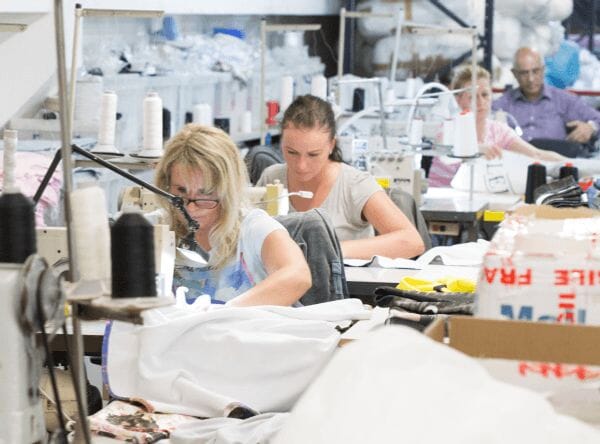
The fashion supply chain is changing direction. After decades of Asian dependency, European brands are rediscovering Portugal as a production partner. This isn't just about geographic proximity. It's about speed, quality, working capital efficiency, regulatory alignment, and a financial equation that surprises many procurement directors when analysed in full landed cost terms.
Portugal exported €5.499 billion in textiles and apparel in 2025 (INE, 2026). This record figure reflects a structural shift: brands such as Kering, LVMH, and dozens of independent labels have increased orders in the country. Nearshoring is no longer a trend. It's a strategy, and the numbers underpinning it have only strengthened through 2025-2026 with the US-China tariff escalation, the impending Bangladesh LDC graduation, and the EU's accelerating regulatory framework around traceability and Green Claims.
In our sourcing pipeline since 2021, we've watched the nearshoring conversation move from "should we consider Portugal?" to "what percentage of our volume should we move to Portugal?" The brands that started early in 2022-2023 are now established with mature supplier relationships, and the brands that waited are scrambling to onboard during what's becoming peak demand on Portuguese capacity. The window is still open, but it's narrowing as factories increasingly choose which new accounts to take.
In this article, we analyse the concrete numbers, compare real total landed costs, calculate ROI scenarios, explain how the hybrid model actually works, and walk through the step-by-step process for an international brand to start production in Portugal.
Heads up: We're Portugal Clothing Factory, a group of 80 documented Portuguese clothing factories in Porto and Guimarães. Since 2021, we've placed dozens of brands with these factories, so the practical observations in this article are based on first-hand sourcing experience.
Key Takeaways
- Portugal offers lead times of 4-8 weeks, compared to 16-24 weeks in Asia
- McKinsey estimates that 15-20% of European textile production will be reshored to Southern Europe by 2030 (McKinsey, 2023)
- EU customs duties of 9.6-12% on non-EU textiles disappear with Portuguese production
- MOQs starting at 50 pieces make Portugal accessible for emerging brands
- Bangladesh LDC graduation (expected 2026-2029) will close 30-40% of Bangladesh's CMT cost advantage
- Hybrid model (Portugal premium + Asia volume) is dominant strategy among brands €5M-€50M revenue
- Working capital efficiency: 60-90 days less inventory tied up vs Asian sourcing
Portugal vs Asia: Quick Comparison
| Factor | Portugal | Asia (Bangladesh/Vietnam) |
|---|---|---|
| Production lead time | 4-8 weeks | 16-24 weeks |
| Replenishment lead time | 2-3 weeks | 12-16 weeks |
| Typical MOQ | 50-300 pieces | 500-3,000 pieces |
| EU customs duty | 0% (single market) | 9.6-12% (rising for Bangladesh post-LDC) |
| Carbon footprint (transport) | Low (overland) | High (sea/air) |
| Freight to Europe | €200-550/pallet (2-6 days) | €1,800-3,500/container (25-35 days) |
| Working capital tied in transit | Minimal | 25-35 days × order value |
| Sample iteration speed | Days | Weeks |
| ESPR/DPP compliance burden | Low (EU-native) | High |
Source: see in-text citations in this section.
Why are European brands moving production to Portugal?
McKinsey estimates that 15-20% of European textile production will be reshored to Southern Europe by 2030 (McKinsey, 2023). Portugal leads this wave because it combines mature industrial infrastructure, skilled labour, and direct access to the European single market without customs barriers. Three macro forces are converging in 2025-2026 to accelerate the shift.
Citation Capsule: McKinsey projects that 15-20% of European textile production will be reshored to Southern Europe by 2030. Portugal, with textile exports of €5.5 billion in 2025, positions itself as the leading nearshoring destination for brands seeking to reduce supply chain risk.
The Post-Pandemic Effect on Supply Chains
The pandemic exposed severe vulnerabilities. Containers held at ports for months. Asian factories closed without notice. Brands ran out of stock during peak selling seasons. These experiences accelerated a deep reassessment. Even after pandemic disruption normalised, Red Sea shipping disruption (2024-2025) and continued Suez/Panama bottlenecks have reinforced the lesson: long supply chains are fragile by definition.
But does proximity offset the cost differential? The short answer: for many segments, yes. And the numbers we'll present explain why.
Sustainability and Consumer Demand
The environmental factor carries increasing weight. Around 67% of European consumers say they're willing to pay more for locally produced goods (McKinsey, 2023). Producing in Portugal reduces the transport carbon footprint by up to 90% compared with sea freight from Asia. European regulation is also tightening. The Corporate Sustainability Due Diligence Directive (CSDDD) obliges brands to guarantee labour conditions across the entire supply chain. Portugal, with labour legislation aligned to EU standards, simplifies this compliance materially.
The Tariff and Regulatory Tailwinds
Three regulatory shifts specifically favour Portugal in 2025-2030:
- Bangladesh LDC graduation (2026-2029): Bangladesh currently benefits from 0% EU duties under EBA. Post-graduation, textiles will face 9.6-12% EU tariffs, closing 30-40% of the basics CMT cost advantage Bangladesh has held for two decades.
- US-China tariff escalation (2024-2026): US imports from China face 35%+ tariffs on most apparel categories, pushing US brands to Vietnam and Mexico. Vietnam's capacity has tightened, raising prices. Some US brands are now exploring Portugal as a Vietnam alternative.
- EU ESPR and Digital Product Passport (2026-2030): Compliance costs run €1-3 per piece for Asian-sourced product vs €0.40-€1.20 for Portugal-sourced product. Across a 10,000-piece annual programme, that's €6,000-€18,000 of compliance overhead that disappears with EU production.
These tailwinds don't appear in headline CMT prices but they're rapidly changing the total cost equation in Portugal's favour.
.jpeg?format=webp)
How Much Do You Save on Logistics and Lead Times with Nearshoring?
The average production lead time in Portugal sits between 4 and 8 weeks, compared to 16 to 24 weeks in Asia (ATP, 2025). This difference of 12 to 16 weeks transforms how a brand plans collections, manages inventory, and responds to the market. We've watched brands cut their seasonal markdown rate by 8-15% specifically because they could replenish winners and stop losers within a single selling window.
Citation Capsule: Nearshoring to Portugal reduces lead times from 16-24 weeks (Asia) to 4-8 weeks, enabling faster replenishment cycles. Overland freight from Portugal to Paris costs €200-400 per pallet and takes just 2-5 days, eliminating the uncertainty of intercontinental sea transport.
Compared Transport Costs
The numbers speak for themselves:
| Route | Cost | Time | Risk |
|---|---|---|---|
| Bangladesh-Lisbon (sea) | €1,800-€3,500/20' container | 25-35 days | High (port delays) |
| Vietnam-Rotterdam (sea) | €2,200-€4,000/20' container | 28-35 days | Medium-high |
| Portugal-Paris (overland) | €200-400/pallet | 2-5 days | Low |
| Portugal-Berlin (overland) | €350-550/pallet | 3-6 days | Low |
| Portugal-London (mixed) | €450-700/pallet | 3-7 days | Low |
| Portugal-NY (sea) | €1,500-€2,800/20' container | 12-18 days | Low-medium |
Sources: Freightos (2025).
Sea freight from Bangladesh to Lisbon fluctuates between €1,800 and €3,500 per 20-foot container (Freightos, 2025). On top of this, add insurance, port fees, and frequently, storage costs due to delays. The headline freight number understates the true cost.
The Hidden Advantage: Fast Replenishment
Many brands calculate only the cost of the first order. But the real gain from nearshoring reveals itself in replenishment. When a product sells well, a Portuguese factory can deliver a restock in 2-3 weeks. In Asia, that restock arrives when the season is already over.
This fast response capability reduces two invisible costs: excess stock (overproducing "just in case") and stockouts (losing sales due to lack of product). In our experience, brands transitioning to nearshoring reduce dead inventory by 25-40% within 12-18 months. For a brand with €1M annual revenue and a typical 30% inventory-to-revenue ratio, that's €75-€120K of working capital freed up annually, on top of the direct margin improvement from better sell-through.
Running into production issues? Get in contact and tell us what you're making. We're a group of Portuguese factories and we answer every serious brief within 24 hours.
What Are the Real Production Costs in Portugal vs Asia?
EU customs duties on non-EU textiles range between 9.6% and 12% (TARIC/European Commission, 2025). When you add freight, insurance, and currency risks, the unit price gap between Portugal and Asia narrows considerably. The Asian FOB price is lower, but the landed cost at a European warehouse reduces that advantage to just 10-15% in many product categories. For small orders (50-500 pieces), Portugal can be competitive or even cheaper, because Asian factories penalize low volumes with elevated minimums and per-piece premiums.
For a detailed comparison with real cost tables, see our article Portugal vs Bangladesh vs Vietnam.
Total Landed Cost Comparison: Three Concrete Scenarios
Headline FOB prices mislead. Here's what total landed cost looks like for three real product scenarios in 2026:
Scenario A: 500 basic T-shirts
| Cost | Portugal | Bangladesh | Vietnam |
|---|---|---|---|
| CMT | €1,500 | €500 | €800 |
| Fabric | €1,000 | €600 | €700 |
| Freight to EU | €50 | €300 | €350 |
| EU customs duties | €0 | €0 (current LDC, changing) | €0 (post-EVFTA) |
| Sampling cost | €300-600 | €600-1,200 | €500-1,000 |
| Capital tied up (35 days) | minimal | €80-150 | €70-130 |
| Total landed | ~€2,850-3,150 | ~€2,080-2,750 | ~€2,420-2,980 |
Sources: European Commission (2025).
Bangladesh wins on headline at this scale, but the margin is much narrower than CMT alone suggests. Portugal is essentially competitive on total landed cost for 500-piece orders.
Scenario B: 200 hoodies (mid-complexity)
| Cost | Portugal | Bangladesh | Vietnam |
|---|---|---|---|
| CMT | €1,600 | €800 | €1,100 |
| Fabric | €1,200 | €800 | €950 |
| Freight to EU | €40 | €200 | €240 |
| Customs (where applicable) | €0 | €0 (changing) | €0 (post-EVFTA) |
| Sampling | €500-900 | €900-1,800 | €800-1,500 |
| Capital tied up | minimal | €80-150 | €70-130 |
| Total landed | ~€3,340-3,740 | ~€2,780-3,750 | ~€3,160-3,920 |
Sources: European Commission (2025).
Portugal effectively ties Bangladesh and beats Vietnam at this volume.
Scenario C: 5,000 basic T-shirts (volume scenario)
| Cost | Portugal | Bangladesh | Vietnam |
|---|---|---|---|
| CMT | €13,500 | €4,500 | €7,500 |
| Fabric | €9,000 | €5,500 | €6,500 |
| Freight to EU | €350 | €1,200 | €1,400 |
| Customs | €0 | €0 (changing soon) | €0 |
| Sampling + audit | €600 | €1,200-2,500 | €1,000-2,000 |
| Working capital lockup | minimal | €1,000-2,000 | €900-1,800 |
| Total landed | ~€23,450 | ~€13,400-15,700 | ~€16,800-19,200 |
Sources: European Commission (2025).
At 5,000 pieces of basics, Bangladesh genuinely wins by €8,000-€10,000 on landed cost. This is the volume scenario where Asia economics dominate. It's also where the hybrid model becomes the rational answer.
Citation Capsule: EU customs duties on textiles imported from outside the bloc range from 9.6% to 12% (European Commission, 2025). Combined with freight, insurance, sampling friction and capital lockup, these costs reduce the Asian price advantage to just 10-15% in many product categories under 1,000 pieces.
Working Capital Efficiency
A factor most cost comparisons miss: nearshoring fundamentally improves working capital. Asian sourcing locks up cash for the entire 25-35 day sea freight period, plus 30-60 days from order placement to factory completion, plus inventory holding once goods land. Total cash conversion cycle: 90-120 days typical.
Portuguese sourcing compresses this to 30-50 days total. For a brand running €500K of annual production, the working capital reduction is roughly €60-€90K of cash freed up. That's growth capital, not just cost savings.
Try it free: Pressure-test these numbers for your specific product with our garment cost calculator. 60 seconds, no email required.
What Does Nearshoring Actually De-Risk?
Beyond cost, nearshoring fundamentally changes the risk profile. From our pipeline, here are the concrete risks that drop materially with Portuguese production:
| Risk type | Asia exposure | Portugal exposure |
|---|---|---|
| Geopolitical / trade tariff | High (US-China, LDC graduation) | Low (EU-native) |
| Currency volatility | Medium-high (USD invoicing typical) | Low (EUR throughout) |
| Climate / weather (cyclones, monsoon) | Medium-high | Low |
| Port congestion / logistics | High (Suez, Red Sea, capacity) | Low (multimodal road) |
| Labour disruption (strikes, hartals) | Medium-high | Low |
| Fabric mill failure / substitution | High (long chain) | Low (short chain) |
| ESG audit risk | High (verification overhead) | Low (EU framework) |
| ESPR/DPP compliance gaps | High (data assembly cost) | Low (data exists) |
Source: see in-text citations in this section.
Each of these risks has dollar-equivalent costs that rarely show in headline budgets. We've seen brands take 8-12 week delivery hits from a single hartal in Bangladesh, or fabric substitution issues that cost 15-25% of order value in returns and discount sales. Portugal doesn't eliminate risk, but the structural risk profile is materially lower.
What Product Types Are Ideal for Nearshoring to Portugal?
Portugal excels particularly in knitwear, denim, technical outerwear, swimwear and tailoring, segments where decades of accumulated know-how translate into superior quality. With exports of €5.499 billion in 2025 (INE, 2026), the country covers virtually the entire textile value chain, from spinning to finishing.
Citation Capsule: With €5.5 billion in textile exports in 2025 (INE, 2026), Portugal has the industrial capacity to produce everything from basic knitwear to technical outerwear. The country is especially competitive in value-added products where quality justifies the price positioning.
High Value-Added Products
Portugal shines when the product requires:
- Complex finishes (washes, special dyeing, digital printing)
- Technical fabrics (waterproof, stretch, thermoregulation)
- Small runs with variations (colours, sizes, customisations)
- Demanding certifications (GOTS, OEKO-TEX, GRS)
- Heritage and craftsmanship (tailoring, knitwear, premium tailoring)
- Fast iteration (replenishment cycles, capsule drops)
Less Competitive Products in Portugal
Let's be honest. Portugal doesn't compete on everything. High-volume basics, such as plain T-shirts in orders of 50,000+ units, remain cheaper in Asia. The same applies to simple accessories and articles where labour represents more than 70% of the total cost. Performance activewear with high-MOQ specialty fabrics often sources better in Vietnam.
The smart strategy? Many brands opt for a hybrid model. Volume basics in Asia, value pieces and fast replenishment in Portugal.
How Does the Hybrid Portugal + Asia Model Work?
The most rational sourcing strategy for brands above €3M revenue is rarely "all Portugal" or "all Asia." It's a deliberate split that uses each region's strengths. According to McKinsey (2023), about 40% of mid-sized European brands operate with at least two source countries.
How the Split Typically Works
Portugal handles:
- Capsule collections and seasonal drops
- New styles with uncertain demand
- Premium positioning lines
- Replenishment of validated winners
- Hero products with brand-identity weight
- Anything requiring sub-300-piece runs
Asia handles:
- High-rotation basics (250+ pieces per style per season)
- Mass-market price points
- Fashion items with predictable demand
- Continuous replenishment of established SKUs
- Technical performance items where Vietnam's specialty fabric base wins
Operating a Two-Source Supply Chain
Managing suppliers across two geographies requires clear processes:
- Shared technical sheets with version control across both source factories
- Detailed specifications that translate cleanly across origins (specify GSM, fibre composition, finish, not "soft cotton")
- Unified quality management system with single AQL standard across both origins
- Consistent labelling and packaging so SKUs from both origins look identical to the customer
- Calendar discipline: Asia track requires 20-26 weeks forward planning; Portugal track accommodates 8-12 week cycles
- Time zone handling: Asia communications block scheduled in your morning; Portugal is real-time
Quality consistency is the main challenge. A customer who buys a "Made in Portugal" piece and a "Made in Bangladesh" piece from the same brand expects equivalent quality. This requires regular audits at both sources. We typically advise brands to do annual factory visits in Portugal and biannual visits in Asia, plus pre-shipment QC inspections on every Asian order.
In our pipeline, the brands that scaled successfully through €5M-€20M revenue almost universally adopted this hybrid model in year 2-3 of their growth. The capital efficiency gains and risk reduction usually justify the operational complexity by year 3.
What Are the Common Nearshoring Mistakes?
Across our pipeline since 2021, here are the seven most frequent mistakes we see brands make when nearshoring to Portugal:
- Comparing only CMT, not total landed cost. Brands quote the Bangladesh CMT and conclude Portugal is "too expensive" without including freight, customs, sampling friction, working capital lockup, and DPP compliance burden.
- Trying to source everything in Portugal in year 1. The volume basics often genuinely belong in Asia. Force-fitting them into Portugal creates margin pressure that hurts the brand's ability to invest in the categories where Portugal genuinely wins.
- Going to the wrong cluster. Routing tailored outerwear to a Vale do Ave knit specialist (or vice versa) wastes Portugal's structural advantage.
- Underestimating the calendar advantage. Brands that don't capitalise on Portugal's 4-8 week lead time keep ordering 6+ months out as if they were still in Asia. The real ROI of nearshoring requires changing your planning rhythm.
- Failing to renegotiate Asian sourcing after adding Portugal. Asian factories sometimes lose share when brands diversify; this is a renegotiation moment that brands miss.
- Skipping the factory visit. Portuguese factories quietly price the absence of a visit at 3-7% above visited-buyer rate. The visit pays back many times over.
- Not capturing the DPP/ESPR compliance benefit. Brands that nearshore but don't update their compliance infrastructure miss the regulatory tailwind. The full ROI requires updating both sourcing and compliance simultaneously.
The pattern: nearshoring is a system change, not a swap. Brands that treat it as "Portugal instead of Asia" capture maybe 40% of the upside. Brands that treat it as a holistic supply chain redesign capture the full 100%.
.jpeg?format=webp)
Brand Archetypes That Benefit Most from Nearshoring
Not every brand benefits equally from nearshoring. From our pipeline, the archetypes that capture the most value are:
| Archetype | Why nearshoring works | Typical Portugal share |
|---|---|---|
| DTC premium brand (€500K-€5M revenue) | Speed to test, low MOQ, brand premium captures cost | 80-100% |
| Sustainable / certified brand | EU regulatory alignment, traceability, certifications | 90-100% |
| Heritage / craft brand | Cultural fit, heritage manufacturing, "Made in Portugal" premium | 95-100% |
| Fashion-forward small brand | Fast iteration, low MOQ, replenishment | 80-100% |
| Mid-market growth brand (€5-20M) | Hybrid model, Portugal for premium + Asia for volume | 35-55% |
| Mass market basics brand | Limited fit; Portugal for hero pieces only | 10-25% |
| Outdoor / technical brand | Mixed; Portugal for premium, Vietnam for technical performance | 25-50% |
Source: see in-text citations in this section.
Brands at the top of this list typically achieve 12-24 month payback on nearshoring transition costs. Brands at the bottom often find limited fit and stay primarily Asian-sourced with selected Portuguese hero pieces.
How to Phase a Nearshoring Transition
Most brands don't switch entirely on day one. The realistic transition follows a phased pattern:
Phase 1 (Month 0-6): Pilot
- Identify 1-2 hero styles that fit Portuguese strengths
- Source 2-3 Portuguese factory candidates per style
- Place pilot orders of 100-300 pieces per style
- Validate quality, lead time, communication, payment terms
- Investment: typical €15K-€40K including sampling
Phase 2 (Month 6-12): Scale Validated Styles
- Reorder pilot styles at higher volume (300-800 pieces)
- Add 2-4 new styles to Portugal track
- Begin building relationship depth with 1-2 preferred factories
- Renegotiate Asian sourcing volume on basics that stay there
- Investment: typical €40K-€120K incremental
Phase 3 (Month 12-24): Operational Integration
- Hybrid model fully operational
- 25-50% of total volume in Portugal (depends on category mix)
- Fabric supplier relationships established for CMT migration
- DPP/ESPR compliance infrastructure built
- Working capital benefits visible in financial statements
Phase 4 (Month 24+): Strategic Anchor
- Portugal becomes primary source for premium and seasonal lines
- Asian sourcing optimised for what it genuinely does best
- Reorder cycles compressed to 8-12 weeks for Portuguese repeats
- Frame agreements with priority capacity slots negotiated
The phased approach reduces transition risk and lets the brand learn what categories really do work better in Portugal vs in Asia. Most brands discover they can shift more to Portugal than they originally thought, but only after pilot validation.
How Do You Start Production in Portugal as an International Brand?
The startup process typically takes 3 to 6 months, from first contact to delivery of the first order. Portugal has more than 12,000 textile and clothing companies (ATP, 2025), which means ample choice but also the need for careful selection to find the right partner.
Citation Capsule: Portugal has over 12,000 active textile and clothing companies (ATP, 2025), with MOQs starting at 50 pieces. The startup process for international brands takes 3-6 months and follows clear stages: factory selection, prototype development, sample approval, and first production run.
Step 1: Define Requirements and Budget
Before contacting factories, prepare a detailed tech pack. Include fabric specifications, measurements, finishes, colours, and estimated quantities. Portuguese factories value professionalism in the approach. A clear briefing accelerates the entire process and signals seriousness.
Step 2: Select and Contact Factories
There are several ways to find factories:
- Trade fairs (Modtissimo in Porto twice yearly, Texprocess)
- Associations (ATP, ANIVEC, CENIT directories)
- B2B platforms and industrial directories
- Sourcing agents specialising in Portugal (like Portugal Clothing Factory)
- LinkedIn for direct outreach to factory ownership
We recommend contacting 5-8 factories to compare capacity, specialisation, and pricing. Visit at least 2-3 before making a decision.
Step 3: Prototype and Sample Development
Prototype development typically costs €100-€500 per piece, depending on complexity. This investment is essential. Don't skip this step. Approve every detail before moving to production. We've seen brands skip the PPS to "save time" and end up with 100-piece bulk orders with 3mm fit issues across all sizes; the bulk discount disappeared in rework cost.
Step 4: Negotiate Terms and Start Production
Negotiate prices, payment conditions (typically 30-50% deposit, balance on delivery), timelines, and quality criteria. Formalise everything in writing. What are the most sensitive points in the negotiation? Delivery deadlines and penalties for delays. Get them on paper.
For more detail, see our guides on negotiating with a Portuguese factory and the broader Portuguese textile market.
Frequently Asked Questions About Nearshoring Fashion to Portugal
What is the typical MOQ for textile production in Portugal?
The MOQ (minimum order quantity) in Portugal ranges from 50 to 300 pieces per reference, depending on the factory and product type (ATP, 2025). Many factories accept 50 pieces for first orders, allowing emerging brands to test the market without a large initial investment. Larger export-oriented factories typically want 300-1,000 pieces. See our MOQ in Portugal guide for category-specific ranges. small quantities Portugal
How long does the first production order take in Portugal?
The full cycle, from first contact to delivery, takes 3-6 months. This includes factory selection (2-4 weeks), prototype development (3-6 weeks), sample approval (2-3 weeks), and production (4-8 weeks). Subsequent orders are significantly faster, typically 4-8 weeks total because preparation, sampling and most coordination compress dramatically.
Does producing in Portugal eliminate customs duties for EU sales?
Yes. Products manufactured in Portugal circulate freely within the European single market without customs duties. Importing from Asia incurs taxes of 9.6-12% on textiles (TARIC/European Commission, 2025). On an order worth €100,000, that represents savings of €9,600-€12,000 in duties. Bangladesh's pending LDC graduation will introduce these duties on Bangladesh imports between 2026-2029, materially closing one of the historical tariff advantages.
Is nearshoring worth it for small brands or only for large companies?
Nearshoring to Portugal is especially advantageous for small and medium brands. Low MOQs (starting at 50 pieces), proximity for factory visits, and easier communication reduce barriers. Around 67% of European consumers value locally produced goods (McKinsey, 2023), which strengthens the positioning of emerging brands. In our pipeline, brands launching at 100-300 pieces per style hit better unit economics in Portugal than in Asia after factoring in Asia's higher MOQ floors.
How do you ensure quality when producing remotely in Portugal?
Portugal offers several guarantees: international certifications (GOTS, OEKO-TEX), affordable pre-shipment inspections (€300-800 typical), and the ability to make frequent visits thanks to direct and affordable flights from most European capitals (€80-200 round trip from London, Paris, Madrid, Berlin). Many factories send photographic reports and videos during production. Hiring a local quality agent is another effective option (typical €500-1,500 per inspection).
Is nearshoring more expensive than producing in Asia?
The Asian FOB price is lower, but the landed cost at a European warehouse reduces that gap to just 10-15% in many categories. When you add customs duties of 9.6-12% (TARIC/European Commission, 2025), freight, insurance, sampling friction, working capital lockup, and dead stock costs, Portugal becomes competitive or even cheaper for orders of 50-500 pieces. For 5,000+ piece runs of basics, Asia genuinely wins on landed cost.
What product types are ideal for nearshoring to Portugal?
Portugal excels in knitwear, denim, technical outerwear, swimwear and tailoring, segments where decades of know-how ensure superior quality. Value-added pieces with complex finishes, technical fabrics, or demanding certifications (GOTS, OEKO-TEX) are the most competitive. High-volume basics (50,000+ units) remain cheaper in Asia, which is why most brands run a hybrid model.
How does the hybrid Portugal + Asia model actually work?
Brands typically split: Portugal for capsule collections, premium lines, fast replenishment and seasonal drops; Asia for high-volume basics and continuous replenishment of established SKUs. The split is usually 25-55% Portugal for mid-market brands (€5-20M revenue), 80-100% Portugal for premium small brands. The operational complexity is real (two timelines, two communication patterns, dual quality systems) but most successful mid-size brands run it successfully by year 3.
What's the working capital benefit of nearshoring?
Asian sourcing has 90-120 day cash conversion cycles (production + sea freight + warehouse holding). Portuguese sourcing compresses this to 30-50 days. For a brand running €500K of annual production, the working capital reduction is roughly €60-€90K of cash freed up annually. This is on top of dead inventory reduction (typical 25-40% over 12-18 months) and faster reorder cycles that improve sell-through.
How will Bangladesh's LDC graduation affect nearshoring economics?
Bangladesh currently benefits from 0% EU duties under EBA. Post-graduation (2026-2029), textiles will face 9.6-12% EU tariffs. This closes 30-40% of the basics CMT cost advantage Bangladesh has held for two decades. Brands building 2027-2029 supply chains should model Bangladesh sourcing both with and without LDC benefits, and choose only where the lower-case scenario still works. This regulatory shift is making Portugal materially more competitive for basics in 2027+ planning.
Does nearshoring reduce ESPR/DPP compliance burden?
Significantly. Compliance costs run €1-3 per piece for Asian-sourced product (data assembly, supplier audit, lab testing) vs €0.40-€1.20 for Portugal-sourced product. Across a 10,000-piece annual programme, that's €6,000-€18,000 of compliance overhead that disappears with EU production. Portuguese factories already operate under REACH, EU labour law, and traceability standards that the DPP requires.
Conclusion
Nearshoring fashion production to Portugal is not a passing trend. It's a rational response to unstable supply chains, more demanding consumers, growing European regulation, and shifting tariff landscapes (US-China escalation, Bangladesh LDC graduation). The numbers confirm it: lead times 3-4 times shorter, elimination of 9.6-12% in customs duties, MOQs that open doors to brands of any size, and working capital efficiency that can free 12-18% of annual production cost in cash terms.
The question is no longer "why Portugal?" It's "why not start now?" With over 12,000 textile and clothing companies, available capacity (though tightening), and an ecosystem prepared to receive international brands, the conditions are in place. In our sourcing pipeline since 2021, the brands that started in 2022-2023 are now established with mature relationships and stable cost structures. The brands that wait until 2027 will face tighter capacity and potentially higher pricing as demand pressure builds.
If you're considering relocating production or diversifying your supply chain, start by defining your needs and contacting 5-8 factories. Run a small pilot. Validate. Scale what works. The phased approach is what separates the brands that capture the full nearshoring value from the brands that abandon the effort midway.
Want help finding the right Portuguese factories for your nearshoring transition? Submit your enquiry at portugalclothingfactory.com/contact or get in contact. We check every brief against the factories in our group and reply within 24 hours. No commissions.
We're a group of 80 documented Portuguese clothing factories based in Porto and Guimarães. Tell us your product, volume, and timeline. We'll route your brief to the right factory in the group, usually within 24 hours. You work directly with the factory. No commissions, no pitch, no upsell.
Get in contact Download the directory (€39)Need a tech pack? Get a factory-ready single-style tech pack for €79. See what's included.
Sources
- INE, Instituto Nacional de Estatística (2026). International trade statistics, Portuguese textile and apparel export figures.
- McKinsey & Company, The State of Fashion 2023. European nearshoring projections and consumer sustainability preference data.
- ATP, Associação Têxtil e Vestuário de Portugal (2025). Sector report: lead times, factory counts, MOQ benchmarks.
- European Commission / TARIC (2025). Integrated Customs Tariff for textile and apparel categories.
- Freightos Baltic Freight Index (2025). Container shipping rates Bangladesh / Vietnam to Europe.
- UN LDC Portal (2025). Bangladesh LDC graduation timeline and post-graduation tariff implications.
- European Commission ESPR (2024). Ecodesign for Sustainable Products Regulation and Digital Product Passport requirements.
Related reading
- What 'Made in Portugal' actually means
- Portugal vs Bangladesh and Vietnam
- Portugal vs China and Turkey manufacturing
- Clothing manufacturing costs in Portugal
- How to find a clothing manufacturer in Portugal


.jpeg)
