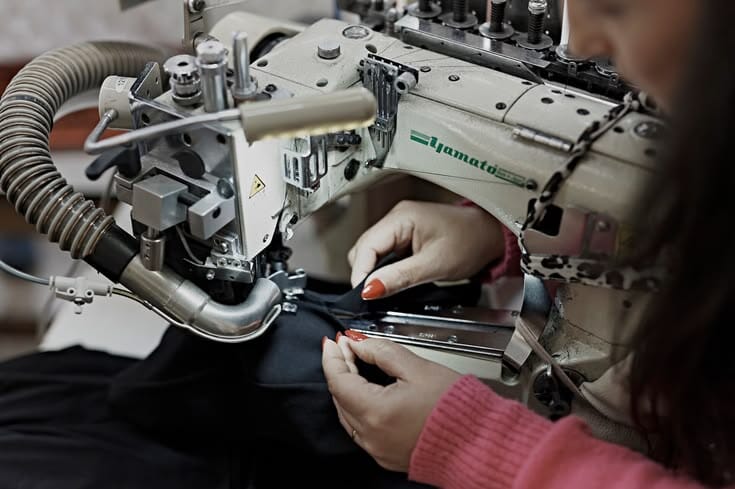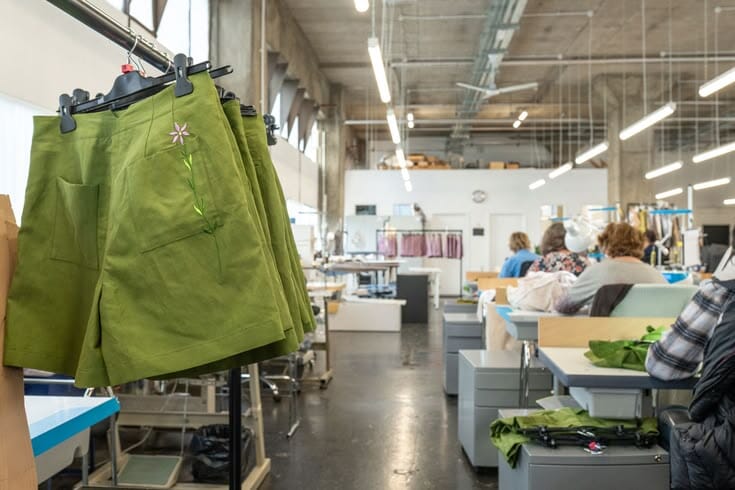
The Northern Portugal textile cluster sits in the Ave and Cávado river valleys, between Porto and the Spanish border. Roughly 80% of the country's apparel and textile production sits inside a 50-kilometre arc (ATP, 2026). Around 6,000 companies run through this corridor, holding roughly 80% of national textile employment out of a sector total of 118,000 (Fundação Francisco Manuel dos Santos, 2026). For emerging fashion brands, this is the single most relevant industrial geography in Europe outside Italy's Biella mills.
This guide covers what each city makes, the real per-unit costs, and where small-brand MOQs sit. It also shows you how to work the cluster when you are placing a first order. We've documented these factories across the northern cluster. The picture below is what we see week to week.
Heads up: We're Portugal Clothing Factory, a group of Portuguese factories. The geography, MOQ, and cost data come from quotes across the Ave and Cávado factories between 2024 and 2026. EUR throughout, manufacturer-group lens.
Key Takeaways
- The Ave and Cávado valley cluster contains roughly 80% of Portuguese textile capacity in a 50 km radius around Famalicão (ATP, 2025).
- 6,000+ vertically integrated companies operate within the cluster, the highest textile industrial density in Europe, inside a national sector of 11,965 firms and 118,000 workers (Fundação Francisco Manuel dos Santos, 2026).
- Each city specialises: Guimarães (tailoring, fine knit), Famalicão (jersey, hosiery, seamless), Vizela (knitwear), Barcelos (denim, woven), Santo Tirso (cotton spinning), Braga (apparel finishing).
- Portuguese textile and clothing exports reached EUR 5.5 billion in 2025, down 0.8% on 2024, with 80%+ flowing to EU markets (INE and ATP, 2026).
- Small-brand MOQs across the cluster typically run 100 to 500 units per style, with top-tier factories accepting first orders within that range.
- The cluster's research backbone (CITEVE, CENTI, University of Minho) gives brands working here baseline ESPR-readiness most non-EU sourcing geographies cannot match.
Try it free: Pressure-test your production cost with our garment cost calculator. 60 seconds, no email required.
What is a textile cluster and why does it matter for fashion brands?
A textile cluster is a tight group of connected businesses covering the whole chain. Spinners, weavers, knitters, dye houses, cut-and-sew factories, finishing units, trim suppliers, research centres and universities. Companies within a cluster collaborate through shared suppliers, joint R&D, talent flows, and informal knowledge transfer. The Ave-Cávado cluster is one of three textile clusters in Europe operating at this density, alongside Italy's Biella-Prato corridor and Turkey's Bursa-Denizli zone.
What Does a Cluster Mean in Practice for Your Order?
For an emerging fashion brand, the practical implication is simple: when you place an order in this cluster, you're not just hiring a factory. You're plugging into a 200-year-old supply web. A factory in Guimarães that needs a specialty fabric can typically source it from a mill 20 km away the same day. A trim issue gets solved by a button supplier in Famalicão within 48 hours. This compresses lead times, reduces freight costs, and makes the kind of last-minute fabric or trim swaps that kill production calendars in distant geographies into routine adjustments.
Citation Capsule: The Ave-Cávado cluster concentrates roughly 80% of Portugal's textile capacity in a single 50-kilometre arc around Famalicão. The cluster includes 6,000 companies and three specialised research institutions, making it one of three high-density textile clusters in Europe alongside Biella (Italy) and Bursa (Turkey) (ATP, CITEVE 2024-2025).
Where Does the Cluster Sit Geographically?
The cluster runs roughly 50 kilometres north and east of Porto, following two river valleys: the Ave and the Cávado. Famalicão sits at the geographic centre. Driving from Porto airport to Famalicão takes about 35 minutes; from Famalicão to Braga, another 20 minutes; from Famalicão to Guimarães, 25 minutes. The entire cluster fits comfortably inside a one-hour drive radius.
The map below shows where the major specialisations cluster. Run a multi-category collection (jersey, woven, denim, tailoring) and you will usually work with two or three factories here. Weekly courier loops move fabric and trims between them.
| City / area | Primary specialisation | Approximate firm count |
|---|---|---|
| Famalicão (Vila Nova de Famalicão) | Cotton jersey, fleece, seamless circular knit, hosiery | 1,400+ |
| Guimarães | Tailoring, fine-gauge knit, premium menswear | 900+ |
| Vizela | Knitwear, sweaters, cardigans | 350+ |
| Barcelos / Esposende | Denim, woven separates, washing | 480+ |
| Braga | Apparel finishing, premium woven, packaging | 700+ |
| Santo Tirso | Cotton spinning, yarn, fabric | 320+ |
| Felgueiras / Lousada | Tailoring (overflow from Guimarães), trousers | 540+ |
| Vila Verde / Amares | Outerwear, technical jackets | 180+ |
| Porto / Vila Nova de Gaia | Cut-and-sew, basics, sample rooms | 600+ |
| Other Minho municipalities | Mixed | 530+ |
Sources: PCF factory group data (2024-2026), industry references.
These counts pull from ATP and CITEVE 2024-2026 industry registers and our own placement records. The total exceeds 6,000 firms across the cluster when you include trim suppliers, label printers, and finishing specialists.
Documented factory counts by municipality
Below is the tighter municipality-level breakdown we track internally, filtered to garment-making factories only (not trim, yarn, or finishing-only sites). These counts reflect factories our team has documented directly, cross-referenced against ATP membership rolls and CITEVE testing records through Q2 2026.
| Municipality | Documented factories | Specialty |
|---|---|---|
| Guimarães | 800+ | Knits, French terry, activewear |
| Vila Nova de Famalicão | 700+ | Denim, workwear, socks |
| Braga | 500+ | Wovens, shirts, dresses |
| Barcelos | 400+ | Denim wash treatments, streetwear |
| Santo Tirso | 400+ | Knit fabric mills, jersey |
| Guimarães Ave Valley outskirts | 300+ | Finishing, dyeing, wet processing |
| Fafe | 200+ | Small-batch specialists |
| Vizela | 150+ | Knits, hoodies |
Sources: PCF factory group data (2024-2026), industry references.
The municipality view matters for founders planning site visits. Guimarães and Famalicão are 25 minutes apart by car, so a two-day visit through both accounts for roughly 1,500 of the cluster's most active garment factories. Fafe and Vizela are worth the extra drive when your run size sits below 200 units per style and you want a factory owner on the sewing floor daily.
What Does Each City in the Cluster Actually Make?
Founders new to Portuguese sourcing often think "Portugal is one geography." It isn't. Each city in the Ave-Cávado cluster has a distinct specialisation rooted in 100+ years of industrial history, and where you produce affects price, lead time, and quality consistency. Here's what each city does best.
Famalicão (Vila Nova de Famalicão)
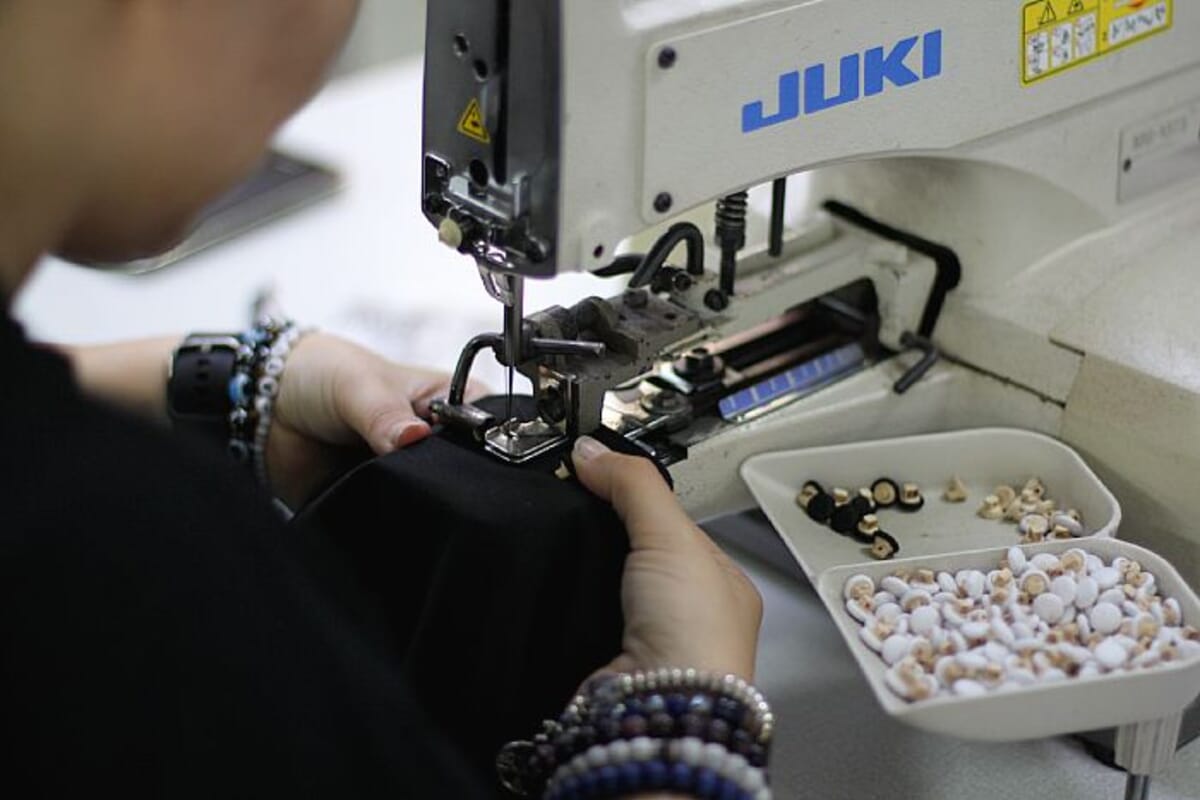
The geographic and industrial centre of the cluster. Famalicão dominates cotton jersey, French terry, fleece, and seamless circular-knit production. If you're building any kind of cotton-knit product, Famalicão is almost certainly where it gets made or where the fabric originates. This is where our t-shirt manufacturer and hoodie manufacturer routes concentrate. The city also hosts the largest cluster of seamless circular-knit specialists in Europe, which is why Stradivarius and several Acne Studios capsules have suppliers here. Typical small-brand factory MOQs in Famalicão sit at 200 to 500 units per style for cotton knits.
Guimarães
The premium menswear and fine-knit capital. Guimarães factories produce for many of the smaller Italian and French luxury houses on a white-label basis, particularly for tailored pieces, premium polos, fine-gauge merino knitwear, and structured shirts. The labour force here is older and more specialised in tailoring techniques than the rest of the cluster. MOQs run higher than Famalicão (typically 300 to 800 units) but quality consistency on tailoring is the best in Portugal.
Vizela
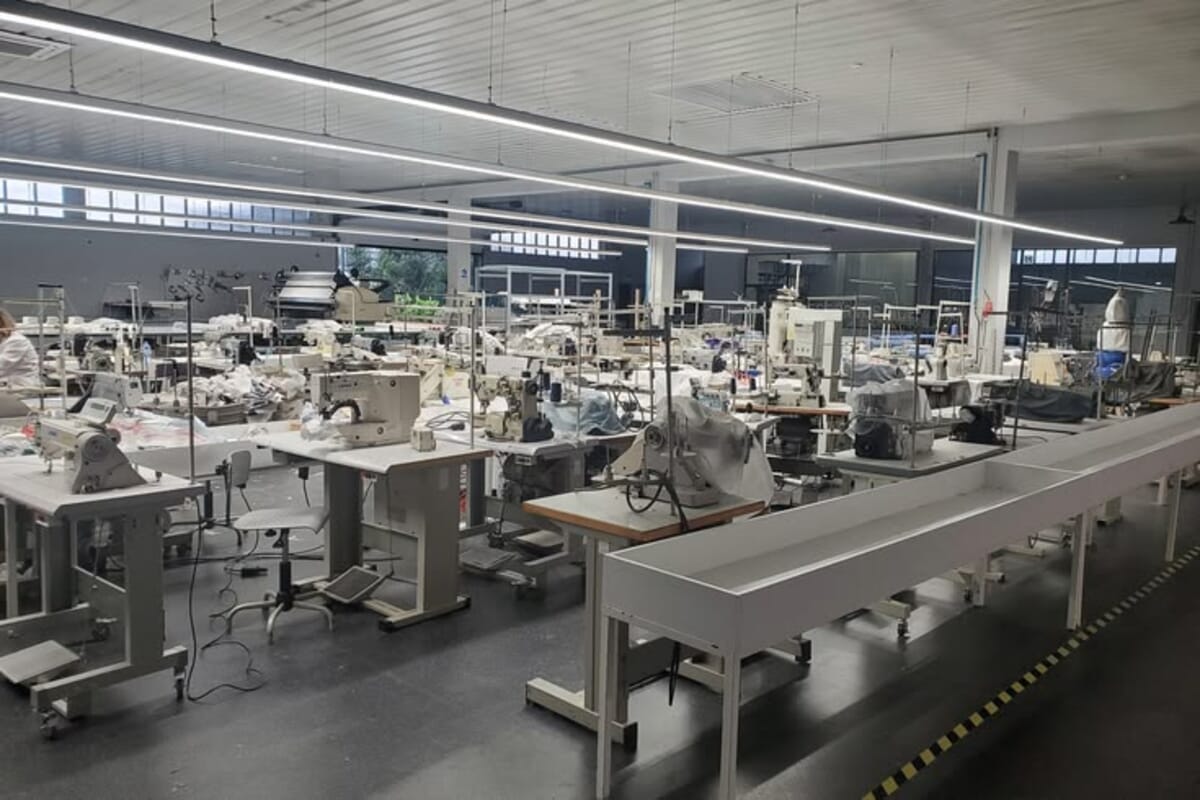
A small but specialised knitwear hub. Vizela factories focus on jumpers, cardigans, knitted dresses, and intarsia work. Several Mango and Massimo Dutti capsule knitwear pieces source here. MOQs are typically 200 to 600 units per style.
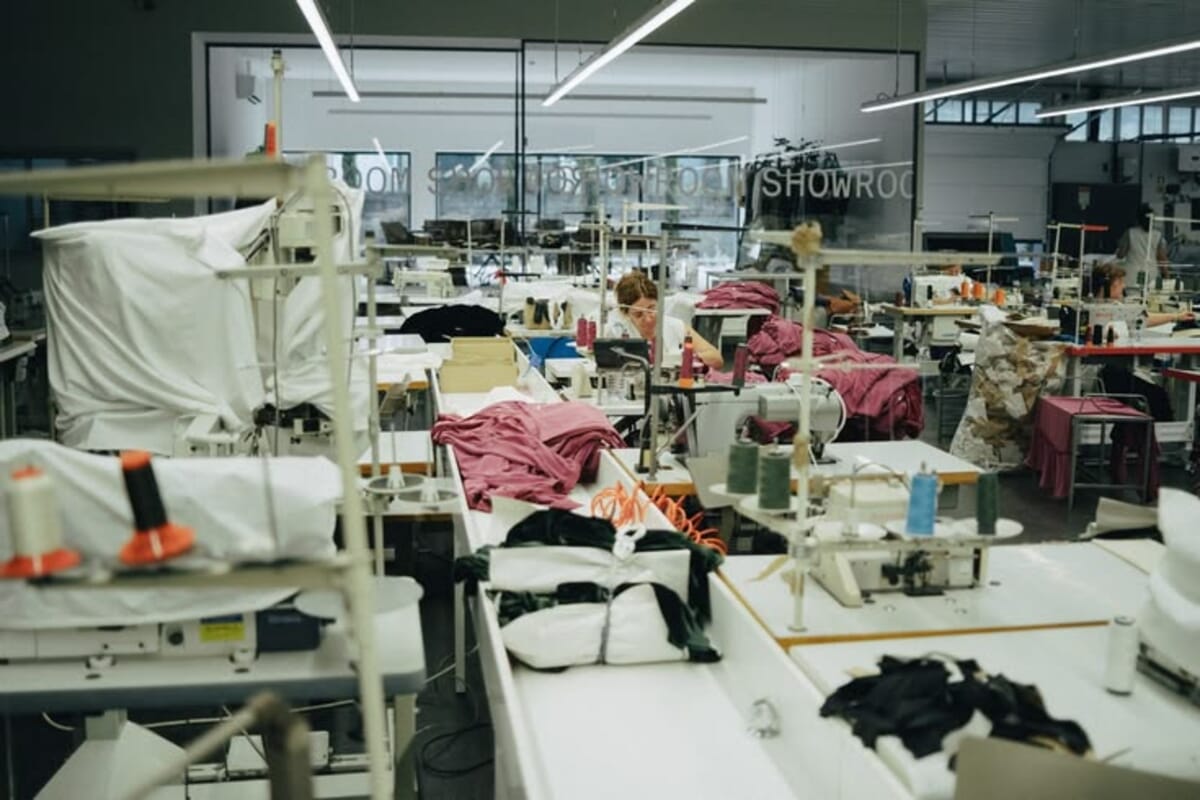
Barcelos and Esposende
The denim and woven-separates corridor. Barcelos sits about 30 km west of Famalicão and is where most Portuguese denim production concentrates, including the wash and treatment houses that finish raw denim into jeans. Several Spanish brands' premium denim capsules wash here. Barcelos and the surrounding Esposende area also handle woven shirts, dresses, and lighter woven separates. MOQs for denim typically start at 300 to 500 units per style; woven separates 200 to 400.
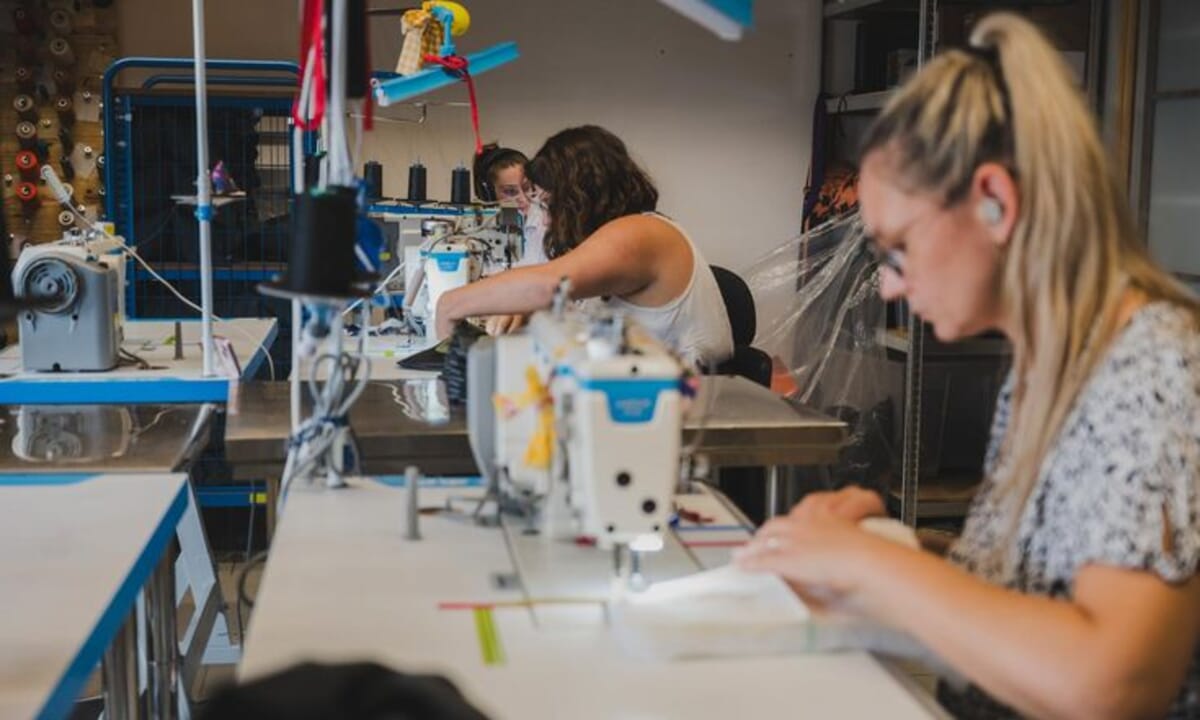
Braga
The apparel finishing and premium woven hub. Braga is the cluster's second-largest city and concentrates printing, embroidery, finishing, and packaging operations. Many founders use a Famalicão cut-and-sew factory for the body of a garment plus a Braga finisher for screen printing or embroidery, with a 24-hour courier loop between the two. Braga also has the largest cluster of trim and label printers in Portugal.
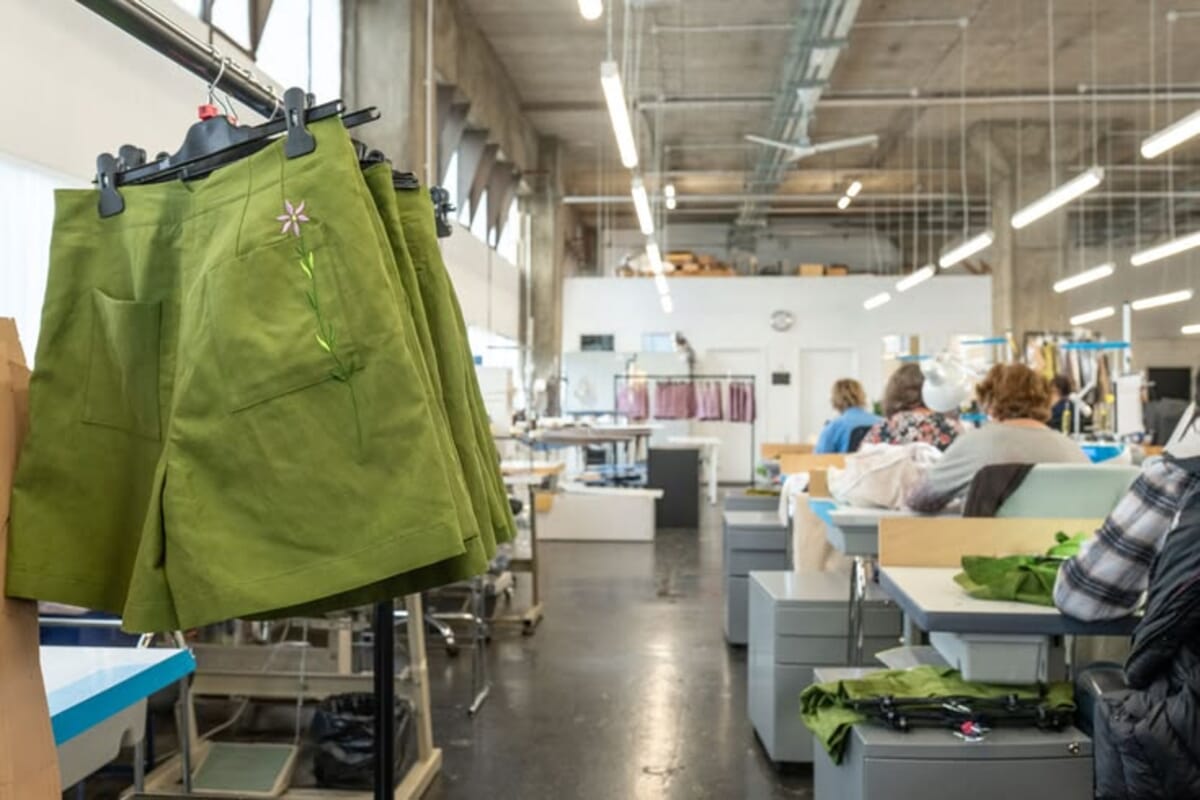
Santo Tirso
The yarn and cotton spinning hub. Santo Tirso mills supply cotton yarn to the rest of the cluster, particularly for the higher-end knitwear and jersey lines. Few small brands source directly from Santo Tirso; the city's role is upstream, but its mills' GOTS, GRS, and OEKO-TEX certifications underpin the cluster's ESPR-readiness.
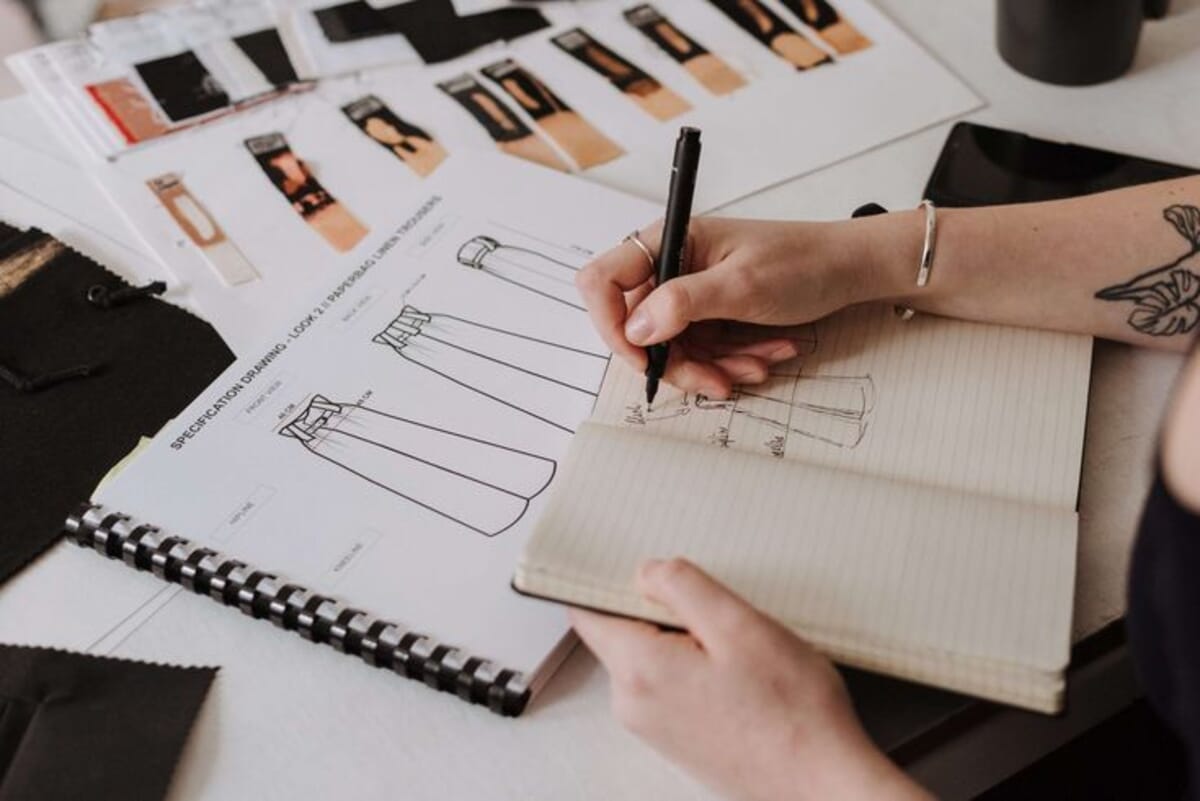
Felgueiras and Lousada
The southern overflow zone for tailoring. Felgueiras is technically Portugal's footwear capital, but the surrounding zone (Lousada, Paços de Ferreira) hosts a strong secondary tailoring cluster. Trousers, structured chinos, and lower-tier blazers source here at slightly lower cost than Guimarães with comparable quality.
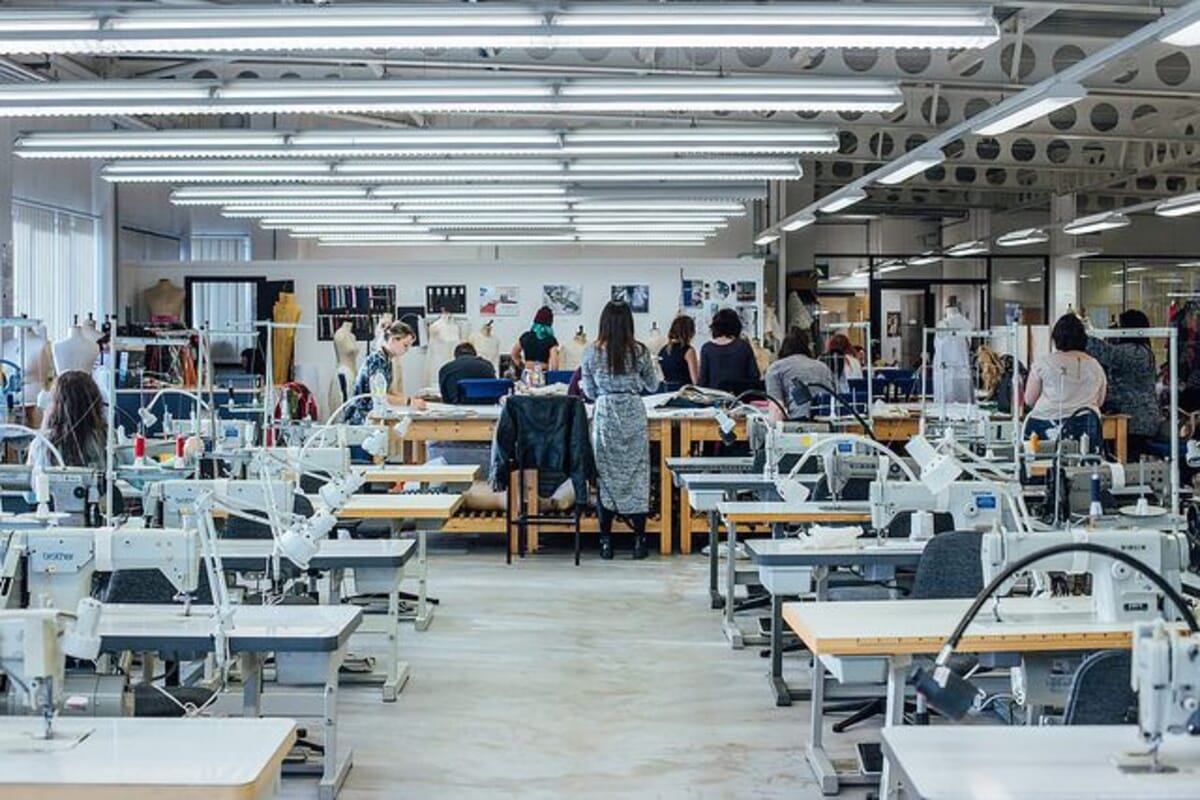
Vila Verde and Amares
A small but growing outerwear and technical jacket cluster, north of Braga. Specialty fabrics (windproof, water-repellent, lightweight padding) get sewn into structured jackets here. Lower volume than the rest of the cluster but the only realistic small-brand option for premium outerwear in Portugal.
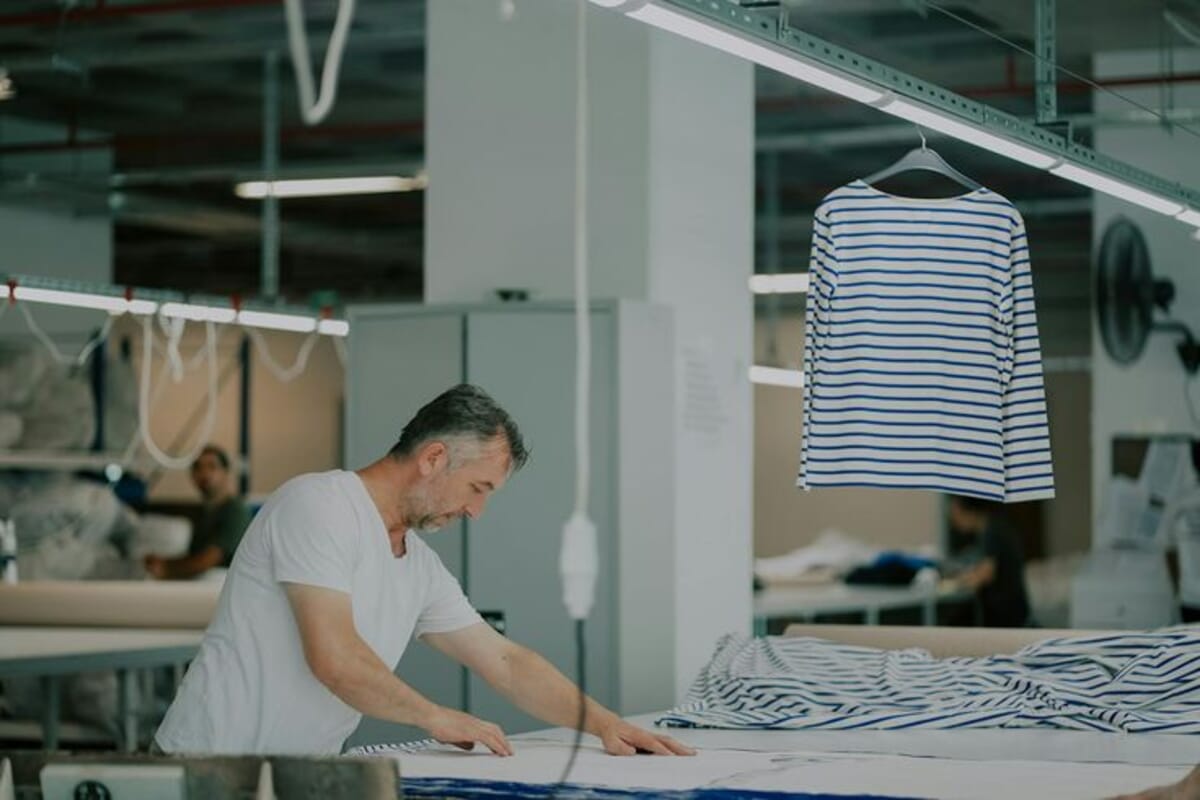
Porto and Vila Nova de Gaia
The southern edge of the cluster, technically outside the Ave-Cávado valleys but tightly linked. Porto hosts most of the cluster's sample rooms, cut-and-sew manufacturers focused on small-batch and contemporary brands, and the agencies and design studios that route briefs into the upstream factories. If you're a founder visiting Portugal for the first time, your meetings will likely happen here even if production runs further north.
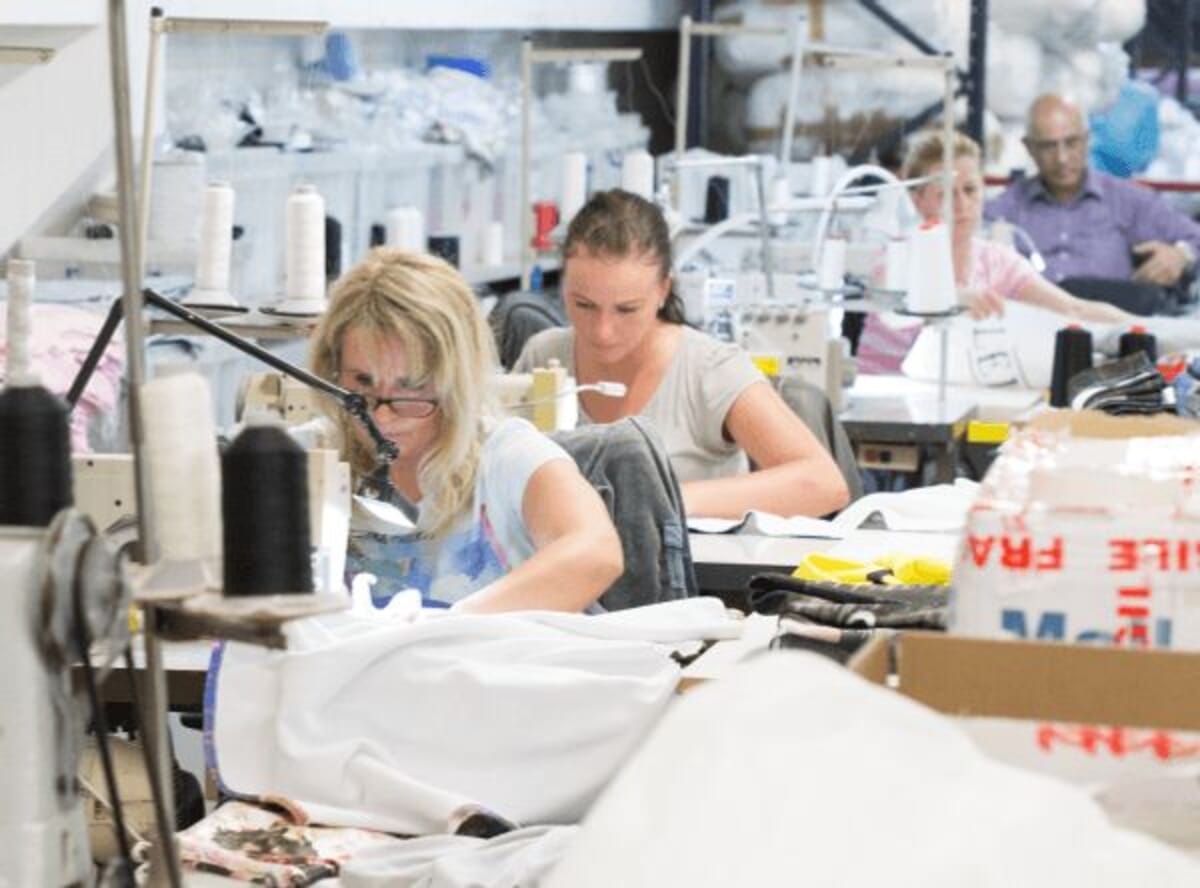
Citation Capsule: Famalicão hosts roughly 1,400 textile firms specialising in cotton knits and seamless circular-knit, while Guimarães concentrates 900 firms in tailoring and fine knitwear. Each city in the Ave-Cávado cluster has a distinct specialisation rooted in 100+ years of industrial history, which means multi-category brands typically work with 2-3 factories across the cluster.
How Did the Cluster Develop?
The Portuguese textile industry traces back to 19th-century industrialisation, when the Ave Valley's water resources powered the first mechanised looms. Famalicão, Guimarães, Vizela, Barcelos, and Santo Tirso developed simultaneously as production centres, each carving out a specialisation based on local labour skill and water access. The Cávado Valley, particularly Braga and Barcelos, became the apparel and finishing hub.
The cluster's modern shape emerged through three phases. The 1960s-1980s saw mass-volume export production for European brands, particularly British and German retailers. The 1990s-2000s brought a difficult transition as Asian sourcing pulled volume away; many factories closed. Through the 2010s and 2020s the cluster moved into premium, trend-led work for European luxury and contemporary brands. EU and government money backed the shift, funding CITEVE, CENTI and the textile engineering programme at the University of Minho.
2027 is the result of that 30-year shift. The cluster lost most of its low-margin volume to Asia. It kept its skilled labour and re-equipped its factories. It now competes on quality, lead time and EU compliance, not on price per unit.
What Is the Research Backbone? CITEVE, CENTI, and University of Minho
Three institutions form the cluster's R&D and certification spine, and the small-brand impact is real even if these names rarely show up in founder briefs.
CITEVE (Centro Tecnológico das Indústrias Têxtil e do Vestuário de Portugal) is the cluster's largest technology centre, headquartered in Famalicão. CITEVE runs the testing labs that certify Portuguese fabric and garment production for EU compliance, including OEKO-TEX, GOTS, GRS, and ESPR-related testing. Most major Portuguese mills route their certifications through CITEVE. For a brand sourcing in Portugal, this means batch-level test data is generally available on request, which becomes critical for ESPR Digital Product Passport readiness from 2026 onwards.
What Does the University of Minho Contribute?
CENTI (Centro de Nanotecnologia e Materiais Técnicos, Funcionais e Inteligentes) is the cluster's nanotech and smart-textile research arm, based in Vila Nova de Famalicão. CENTI develops technical fabric innovations: antimicrobial finishes, conductive textiles, performance treatments. Less directly relevant to fashion founders, but the existence of CENTI is part of why the cluster has retained its position in technical and sportswear categories.
University of Minho (Universidade do Minho), headquartered in Guimarães, hosts Portugal's leading textile engineering programme. The university's textile and apparel departments produce roughly 200 graduates per year who flow into cluster factories as technical designers, pattern engineers, and production managers. This talent pipeline is one reason quality consistency in the cluster has stayed high even as Italian and French talent has aged out of equivalent regions.
Together, these three institutions provide the cluster with capabilities most other small-brand-friendly sourcing geographies cannot match. Asian factories at the same volume tier rarely have access to in-country research and certification infrastructure of comparable depth.
Where Does Portuguese Cluster Output End Up?
Portuguese textile and clothing exports reached EUR 5.5 billion in 2025 (INE and ATP, 2026), with the Ave-Cávado cluster generating roughly 80% of that volume. The destination breakdown matters because it shapes which product categories the cluster has invested in.
| Destination | 2025 value | Share of total | Dominant product type |
|---|---|---|---|
| Spain | EUR 1,318M | 24.0% | Trend-driven knits, woven separates for Inditex/Mango |
| France | EUR 834M | 15.2% | Premium tailoring, cotton knits for LVMH/Kering brands |
| Germany | EUR 461M | 8.4% | Premium menswear, technical pieces for Hugo Boss, On |
| United States | EUR 420M | 7.6% | Premium streetwear and contemporary |
| United Kingdom | EUR 337M | 6.1% | Heritage brands, streetwear |
| Italy | EUR 312M | 5.7% | White-label production for smaller Italian houses |
| Rest of world | EUR 1,817M | 33.0% | Netherlands (sustainable premium, denim), Nordics (Acne, Ganni, Norrøna), other EU and non-EU |
Sources: PCF factory group data (2024-2026), industry references.
US share is rising fastest. We placed roughly 3x more US founder briefs in 2024 than in 2022, and the trajectory continues into 2027 as US tariffs on China-origin apparel push US brands toward European nearshoring.
Citation Capsule: Portuguese textile and clothing exports hit EUR 5.5 billion in 2025, with 80%+ flowing through the Ave-Cávado cluster (INE and ATP, 2026). Spain absorbs 24.0% of cluster output via Inditex and Mango sourcing, France 15.2% via luxury houses and Germany 8.4% via premium menswear, with the USA at 7.6%.
What Are the Real EUR Cost Ranges Across the Cluster?
What a founder needs is the real cost range, not vague talk of "competitive pricing." Below are the ranges we see across the cluster for typical small-brand orders (200-500 units per style, FOB Porto, CMT plus fabric).
| Product type | Cluster city | Cost range (FOB) |
|---|---|---|
| Premium cotton t-shirt, 220 GSM | Famalicão | €4.80 to €7.20 |
| Heavyweight hoodie, 400 GSM, brushed back | Famalicão / Braga | €14 to €22 |
| Seamless circular-knit top | Famalicão | €8 to €14 |
| Fine-gauge merino knit jumper | Vizela / Guimarães | €22 to €38 |
| Tailored wool blazer, half-canvas | Guimarães / Felgueiras | €85 to €140 |
| Premium denim jean, 13 oz selvedge | Barcelos | €28 to €42 |
| Light viscose blouse, printed | Famalicão / Braga | €11 to €18 |
| Lined silk dress, simple construction | Braga / Porto | €32 to €58 |
| Recycled polyester technical jacket | Vila Verde / Amares | €38 to €72 |
| Embroidered cotton sweatshirt (chest logo) | Famalicão + Braga finishing | €18 to €28 |
Sources: PCF factory group data (2024-2026), industry references.
Add 15-25% for organic cotton or GOTS-certified fabric, and 10-15% if your tech pack requires extensive hand-finishing or specialty trim. Subtract roughly 10% on repeat orders with the same factory.
Which Part of the Cluster Fits Your Brand Archetype?
The cluster is large enough that picking the wrong city for your product wastes weeks. Match your archetype to the right starting point:
| Brand archetype | Primary city | Secondary city | Why |
|---|---|---|---|
| Streetwear, Gen Z, jersey-heavy | Famalicão | Braga (printing) | Cotton knit + finishing, fast cycles |
| Premium menswear, smart-casual | Guimarães | Felgueiras (trousers) | Tailoring quality |
| Mediterranean womenswear | Famalicão | Barcelos (woven) | Jersey + viscose + light woven |
| Sustainable premium minimalist | Famalicão (GOTS) | Santo Tirso (yarn) | Certified cotton infrastructure |
| Knitwear-led | Vizela | Guimarães | Sweater specialists |
| Premium denim | Barcelos | Famalicão (trims) | Wash development capability |
| Outerwear / technical | Vila Verde / Amares | Porto (sample) | Specialty fabric factories |
| Tailoring, formal | Guimarães | Felgueiras | Half-canvas tailoring |
| Print-driven | Famalicão (cut-and-sew) | Braga (digital print) | Print + assembly loop |
| Bridal / hand-finished | Porto / small Braga factories | Famalicão (cotton base) | Specialty hand-work |
| First sample / very small batch | Porto / Vila Nova de Gaia | Cluster upstream | Sample rooms |
Sources: PCF factory group data (2024-2026), industry references.
Find your factory: get in contact and we'll send you a shortlist of three Portuguese factories in our group matched to your archetype within 24 hours.
What Common Mistakes Do First-Time Sourcers Make in the Cluster?
After 200+ founder calls, the same eight mistakes show up across the cluster. Most trace back to one assumption: treating the Ave-Cávado valleys as a single factory rather than a specialised network. That leads founders to send one brief to the wrong city, expect Inditex pricing at 200 units, and discover fabric lead times and the August shutdown too late to plan around.
Mistake 1: Treating the cluster as one factory
The cluster is 6,000 companies. Asking a Famalicão jersey factory to sew a tailored blazer wastes everyone's time. Match the product to the city specialisation before sending the brief.
Mistake 2: Demanding Inditex pricing on small volume
Zara's Portuguese suppliers run dedicated lines with weekly capacity in tens of thousands of units. They will not take a 300-unit order. Factories at small-brand scale exist in the same regions, with comparable quality and very different pricing logic.
Mistake 3: Underestimating fabric lead times
The cluster is dense, but specialty fabric still takes 6 to 8 weeks to weave or knit to spec. Plan ten to twelve weeks from PO to delivery for a new style with custom fabric, plus the August buffer.
Mistake 4: Booking production for August
Roughly 80% of cluster factories close for two to three weeks in August, typically weeks 33-35. Lead times stretch by four to six weeks for orders that touch August. The Spanish and Italian shutdowns happen one to two weeks earlier, which is why founders running multi-country supply chains need to plan the staggered closures explicitly.
Mistake 5: Skipping the tech pack
Without a proper tech pack, you'll get a sample that costs €120 and looks nothing like what you wanted. The cluster's labour is skilled but does not free-design from a Pinterest moodboard. See our tech pack guide.
Mistake 6: Not planning for multi-factory coordination
If your collection includes a hoodie, a denim piece, and a blazer, you'll likely work with three different factories across three cities. The coordination overhead is real (typically 2-3 extra weeks of calendar). Plan for it.
Mistake 7: Choosing a factory by lowest quote
The lowest quote in the cluster usually comes from a factory either too small for your run or willing to cut corners on fabric. Quality consistency varies more than first-time founders expect across the 6,000 factories; vetting matters.
Mistake 8: Ignoring the certification base
Most cluster mills hold OEKO-TEX certification at a minimum, with growing GOTS, GRS, and EMAS coverage. This becomes critical for ESPR Digital Product Passport compliance from 2026 onwards. Sourcing in cluster regions without these certifications is short-sighted because you'll have to retrofit data later anyway.
Why Does This Cluster Matter for Emerging Brands in 2027?
Three structural shifts make the Ave-Cávado cluster more relevant for emerging fashion brands in 2027 than at any point in the past decade.
ESPR compliance. The EU's Ecodesign for Sustainable Products Regulation begins phasing in for textiles in 2026. Brands need to capture batch-level data on fabric composition, recycled content, and supply chain traceability. The cluster's certification base (CITEVE-tested fabrics, GOTS/GRS-certified mills) means Portuguese-sourced production is broadly ESPR-ready by default. Most Asian factories at small-brand scale aren't.
How Do Tariffs and Timing Change the Calculation?
Lead time matters more. As trend cycles compress and customer expectations around restock speed rise, the cluster's 7-12 week repeat-order lead times offer a real competitive advantage over the 14-20 week cycles standard in Bangladesh or Vietnam.
Tariff arbitrage is ending. US tariffs on China-origin apparel rose meaningfully in late 2025. Brands selling into both EU and US markets increasingly find Portuguese sourcing competitive on landed cost once tariffs are factored in, particularly at run sizes under 1,500 units per style.
The brands that built relationships in the cluster between 2022 and 2025 are now in a structural advantage as their competitors scramble to set up Portuguese supply chains in 2026-2027. Talk to our team: get in contact if you want to map your sourcing strategy against this trajectory.
Citation Capsule: The Ave-Cávado cluster's combination of EU-compliance infrastructure (CITEVE, GOTS-certified mills, OEKO-TEX baseline), 7-12 week repeat-order lead times, and rising tariff arbitrage on US-China apparel makes Portuguese sourcing in 2027 more cost-competitive on landed-cost terms than at any point in the prior decade.
How Does ESPR Affect Portuguese Textile Cluster Compliance?
The EU's Ecodesign for Sustainable Products Regulation (ESPR) starts its textile delegated acts between 2026 and 2028. Digital Product Passport rules arrive from 2027 for most apparel (European Commission, 2025). Portuguese cluster factories entered this window better prepared than any other high-density sourcing geography in Europe.
DPP data infrastructure at ATP-member factories
Roughly 65% of ATP-member factories have DPP-ready data systems live or in pilot as of mid-2026, up from around 22% at the end of 2024 (ATP, 2026). CITEVE built the shared testing backbone that feeds these systems, which is why batch-level fibre composition, recycled content, and country-of-origin data can be exported to a brand's DPP tooling on request. Asian factories at the same scale usually hold the same certificates on paper. What they lack is a local testing pipeline that produces fresh batch data for every run. That data, not the certificate, is what ESPR actually asks for.
Wastewater treatment: Water Framework Directive plus ZDHC
Portuguese dye houses and finishing units in the cluster operate under the EU Water Framework Directive plus, in most cases, ZDHC Wastewater Guidelines. The wet-processing corridor around Guimarães put roughly €140 million into effluent treatment between 2020 and 2025 (CITEVE, 2025). The goal was ZDHC Foundational Level, ahead of the ESPR thresholds. For brands, this means wet-processing data required for DPP disclosure is already being logged.
Chemical management: REACH plus ZDHC MRSL
REACH compliance is baseline across the cluster and non-negotiable for any factory exporting into EU retail. On top of that, most premium-tier cluster factories are aligned with the ZDHC Manufacturing Restricted Substances List (MRSL), which restricts a broader chemical set than REACH alone. When we onboard a new factory into our documented factory group, we ask for their most recent CITEVE test report, REACH SVHC statement, and any ZDHC platform record. Roughly 8 of 10 factories in the Ave-Cávado core produce all three within a week.
Certifications commonly held in the cluster
The ESPR-ready certification stack that recurs across the cluster looks like this:
| Certification | Coverage in cluster | What it covers |
|---|---|---|
| OEKO-TEX Standard 100 | Near-universal for premium mills | Harmful substance testing on finished textiles |
| GOTS | Growing, cotton mills and jersey factories | Organic fibre content plus social and environmental criteria |
| GRS (Global Recycled Standard) | Widespread on synthetics and blends | Recycled content verification and chain of custody |
| OEKO-TEX Made in Green | Rising, top-tier factories | Traceable, tested, sustainably produced |
| EMAS | Selected mills and large factories | EU eco-management and audit scheme |
| ZDHC MRSL alignment | Premium finishing and dye houses | Restricted substance list in production chemistry |
Sources: PCF factory group data (2024-2026), industry references.
What this means for brands buying from the cluster
Brands sourcing from the Ave-Cávado cluster inherit an ESPR-compliance head start. Fabric composition, recycled content, chemical management, and wastewater data typically exist in structured form already, which compresses the DPP build effort compared with equivalent Asian sourcing. For a small brand launching in 2027, that saves weeks per style on ESPR readiness, not days. The gap is widest on wet processing and chemistry, where going back to collect the data costs real money.
Citation Capsule: Roughly 65% of ATP-member Portuguese textile factories operate DPP-ready data systems in 2026, up from 22% at end-2024 (ATP, 2026), backed by €140 million of Ave Valley wet-processing effluent upgrades between 2020 and 2025 (CITEVE, 2025). This gives brands sourcing in the Ave-Cávado cluster an ESPR-compliance head start that Asian factories at the same small-brand scale typically cannot match.
For a step-by-step guide to ESPR requirements for fashion brands, see ESPR 2026 explained: DPP, Green Claims & Textile EPR for brands.
What Is the August Consideration for Cluster Sourcing?
The August shutdown is the single most important calendar fact for anyone sourcing in the cluster. Roughly 80% of factories close for two to three weeks, typically weeks 33-35 (mid-August through early September). The shutdown ripples through fabric mills, dye houses, and trim suppliers; even if your garment factory stays open, your fabric supplier probably doesn't.
If your timeline crosses August:
- Submit final tech pack and approve fabric by mid-July
- Place fabric POs by early July to lock supply before the mill shutdown
- Lock the production schedule so cutting starts before week 32
- If production must run through August, plan a 4-6 week extension on the Gantt
- Avoid launching new fabric development in July, since you'll lose the August response window
The neighbouring Spanish (weeks 31-33) and Italian (weeks 32-33) shutdowns happen earlier. Buy fabric in Catalonia or Italy and sew in Portugal, and the staggered calendar works for you. Fabric reopens before the Portuguese factory returns, which gives you a head start on the autumn cycle.
Running into production issues? Get in contact and tell us what you're making. We're a group of Portuguese factories and we answer every serious brief within 24 hours.
Frequently Asked Questions
Where is the Portuguese textile cluster located?
The cluster sits in Northern Portugal, in the Ave and Cávado river valleys, roughly 50 km north and east of Porto. Famalicão (Vila Nova de Famalicão) is the geographic and industrial centre. The cluster spans Famalicão, Guimarães, Vizela, Barcelos, Santo Tirso, Braga, Felgueiras, Lousada, Vila Verde, and Amares, with Porto and Vila Nova de Gaia at the southern edge. Driving the full cluster takes about an hour.
How big is the Northern Portugal textile cluster?
Roughly 6,000 textile and apparel companies operate in the cluster, inside a national sector of 118,000 workers (Fundação Francisco Manuel dos Santos, 2026). Together they generate the majority of Portugal's EUR 5.5 billion in 2025 textile and clothing exports (INE and ATP, 2026). The cluster is the highest-density textile region in Europe, alongside Italy's Biella-Prato corridor.
Which city in the cluster is best for cotton t-shirts and basics?
Famalicão. The city dominates Portuguese cotton jersey, French terry, fleece, and seamless circular-knit production. Most major brands' Portuguese basics suppliers (including capsule lines for Stradivarius, Acne, and several Mango lines) operate here. MOQs for small-brand cotton knits typically run 200 to 500 units per style.
Where in the cluster do tailoring and premium menswear get made?
Guimarães is the tailoring capital, with Felgueiras and Lousada as the secondary cluster. These cities produce for many smaller Italian and French luxury houses on a white-label basis. Half-canvas blazers, premium polos, fine-gauge merino knitwear, and structured shirts source here. MOQs for tailoring typically run 200 to 600 units per style.
Where does Portuguese denim production happen?
Barcelos and Esposende, about 30 km west of Famalicão. The Barcelos area concentrates Portuguese denim cutting, sewing, and crucially the wash and treatment houses that finish raw denim into jeans. Several Spanish brands' premium denim capsules wash here. MOQs for denim typically start at 300 to 500 units per style, with wash development adding 2-4 weeks to first-order timelines.
Are Portuguese textile factories ESPR-compliant?
Most cluster mills hold OEKO-TEX Standard 100 certification at a minimum, with growing GOTS, GRS, and EMAS coverage. Roughly 65% of ATP-member factories operate DPP-ready data systems in 2026 (ATP, 2026), backed by CITEVE testing infrastructure and €140 million of Ave Valley wet-processing upgrades between 2020 and 2025. Portuguese-sourced production is broadly ESPR-ready by default, particularly for Digital Product Passport requirements phasing in from 2027.
Can a small fashion brand source in the cluster, or is it only for large brands?
Small brands can absolutely source in the cluster. The cluster contains thousands of factories at small-brand scale, accepting MOQs from 100 to 500 units per style. The factories that supply Inditex or LVMH operate at very different scale and don't take small orders, but factories in the same regions do. Careful evaluation matters because quality consistency varies more than first-time founders expect.
What's the difference between sourcing in Famalicão vs Guimarães?
Famalicão specialises in cotton jersey, fleece, and seamless circular-knit. Guimarães specialises in tailoring, fine-gauge knitwear, and premium menswear. The cities are 25 minutes apart by road but the supply chains are essentially independent. Multi-category collections typically work with one factory in each city, plus often a Braga finisher for printing or embroidery.
How long do orders take in the Portuguese cluster?
First-order timelines typically run 14-22 weeks from initial brief to delivered bulk, depending on category. Repeat orders compress to 7-12 weeks once tech packs, fits, fabric, and trim relationships are established. The cluster's geographic density means fabric and trim coordination happens faster than in dispersed sourcing geographies, which is one reason repeat-order cycles are shorter than equivalent Asian sourcing.
What does CITEVE do and why does it matter for brands?
CITEVE is the cluster's largest technology centre, headquartered in Famalicão. The institution runs the testing labs that certify Portuguese fabric and garment production for EU compliance (OEKO-TEX, GOTS, GRS, ESPR-related testing). Most major Portuguese mills route their certifications through CITEVE. For brands, this means batch-level test data is generally available on request, which becomes critical for ESPR Digital Product Passport compliance from 2026 onwards.
Conclusion: The Cluster as Competitive Advantage
The Ave-Cávado textile cluster isn't just a place where clothes get made. It is a 200-year-old industry with the highest textile density in Europe. Its research base delivers an EU-compliance baseline few other sourcing regions can match. And everything sits close together, which cuts both lead times and coordination effort.
For emerging fashion brands in 2027, the cluster offers something genuinely scarce: a small-brand-friendly supply chain with luxury-tier quality infrastructure attached. Learn the cluster and you build an advantage competitors need years to copy. Which city makes what. Which factory suits which brand. How to plan around the August shutdown.
If you're starting your first Portuguese collection, see our tech pack guide and clothing manufacturing costs in Portugal. Ready to map your archetype to specific cluster factories? Get in contact and we'll send a shortlist within 24 hours.
Talk to our team: Not sure which part of the cluster fits your brand? Get in contact and we'll send your archetype brief to three Portuguese factories we know personally.
We're a group of 80 documented Portuguese clothing factories, 25 verified, based in Porto and Guimarães. Tell us your product, volume, and timeline. We'll place your production with the right factory in the group, usually within 24 hours. Flat fees, no commissions, no upsell.
Get in contact Download the directory (€39)Need a tech pack? Get a factory-ready single-style tech pack for €79. See what's included.
Sources
- ATP, Associação Têxtil e Vestuário de Portugal (2025). Industry data on cluster employment, capacity, and export volumes.
- CITEVE, Centro Tecnológico das Indústrias Têxtil e do Vestuário de Portugal (2024). Certification, testing, and cluster firm registry.
- EURATEX (2025). European apparel and textile sector data.
- Sistema Moda Italia (2024). Comparative European cluster data.
- European Commission (2024). ESPR Regulation overview.
- Documented Portuguese factory data, 2024-2026, across Portuguese factory regions.
Portugal Clothing Factory is a group of 80 documented Portuguese clothing factories, 25 verified, in the northern textile cluster (Porto, Guimarães, Braga, Barcelos, Famalicão). We charge flat fees, take no factory commissions, and reply within 24 hours. See how we work or get in contact.