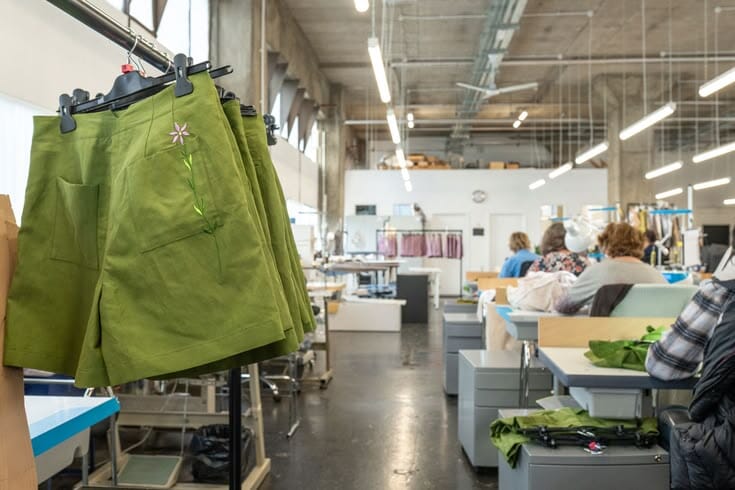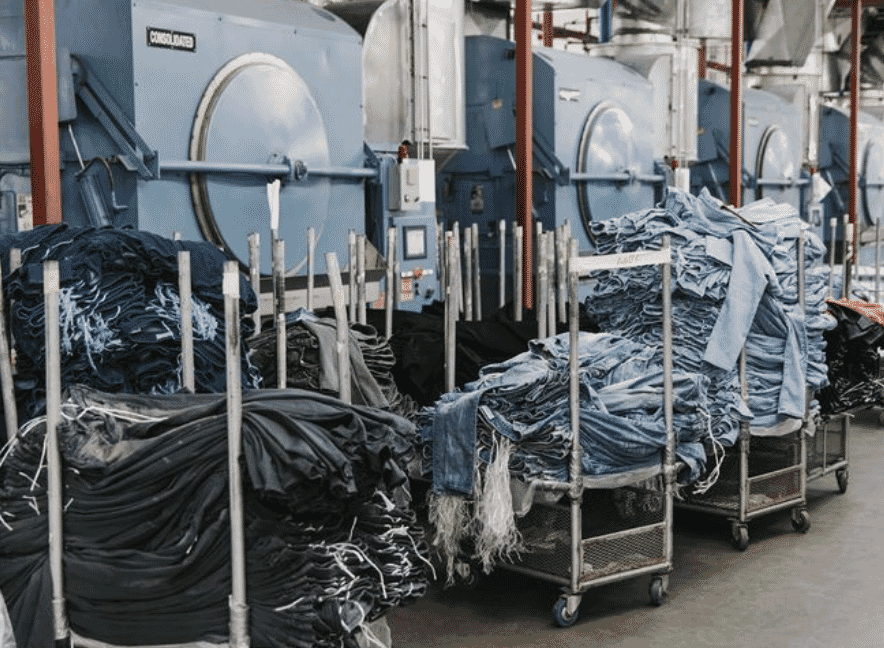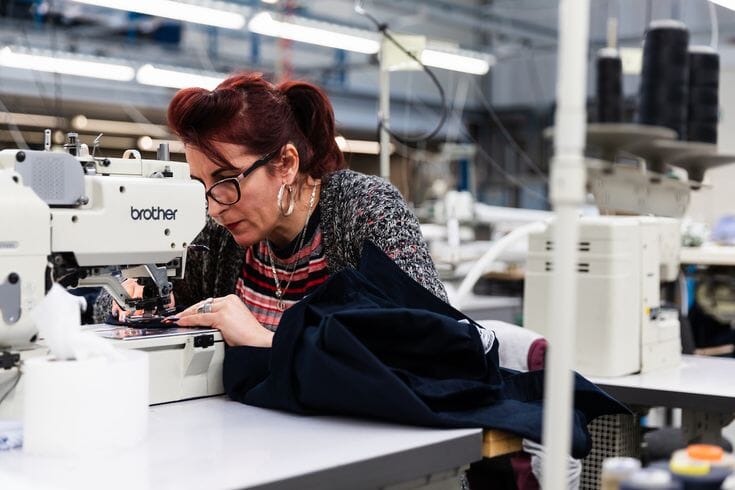
Portugal has approximately 12,000 textile and clothing companies and exported €5.5 billion in 2025, making it the 5th largest textile producer in Europe and the 3rd largest EU apparel exporter (ATP, 2025). For small and emerging fashion brands, the country offers a rare combination: EU-made quality, MOQs starting at 50 to 100 units per style, lead times of 4 to 8 weeks to European customers, and factories operating under EU labour and environmental rules.
This guide profiles 10 Portuguese clothing factories worth knowing about in 2026. Each one covers a distinct specialization (knitwear, woven goods, premium tailoring, technical apparel, activewear, streetwear) so you can match your product type to the right partner instead of cold-emailing 30 names from a Google search.
Heads up: We're Portugal Clothing Factory, a group of Portuguese factories. We've placed brands with most of the factories below since 2021, so the data on MOQs, capacity, and lead times is first-hand. Where it isn't, we say so.
Key Takeaways
- Portugal's textile sector employs 130,000+ workers across approximately 12,000 companies (ATP, 2025)
- Typical MOQs range from 50 units (specialist factories) to 2,000+ units (export-oriented factories)
- Basic tee CMT pricing in Portugal runs €2.20 to €7.00 per unit depending on volume tier
- Lead times of 4 to 8 weeks to European customers vs 12 to 16 weeks from Asian producers
- The "Made in Portugal" label requires the last substantial transformation (cut-and-sew) to happen in Portugal under EU Regulation 1007/2011
- Most Portuguese factories close for 2 to 3 weeks in mid-August. Plan around it.
Try it free: Pressure-test your production cost with our garment cost calculator. 60 seconds, no email required.
Why Choose Portugal for Clothing Production?
Portuguese garment makers rank high on a combination rarely available elsewhere: EU labour and environmental compliance, lead times of 4 to 8 weeks vs 12 to 16 from Asia (ATP Portugal, 2024), small-batch flexibility (50 to 200 units per style), and certified mills concentrated inside a 100-km radius. Roughly 7 in 10 mid-size Portuguese factories hold at least two of OEKO-TEX, GOTS, GRS, ISO 9001, SA8000, or Bluesign. The Ave Valley and Guimarães region account for more than 70% of national textile production, which makes factory visits realistic in a single trip.
The trade-off is per-unit pricing. A basic t-shirt costs roughly €3 to €7 CMT in China, €4 to €11 in Turkey, and €4.50 to €8 in Portugal at small-brand volumes. Total landed cost narrows once you factor in shipping, duties, lead-time-driven inventory carry, and quality-control overhead. See our full Portugal vs China vs Turkey manufacturing comparison for the breakdown.
Citation Capsule: Portugal's textile cluster in Braga, Porto, Guimarães, and Vila Nova de Famalicão exports over 80% of its output to EU markets (ATP, 2025), making it the dominant EU-origin clothing production hub for emerging brands needing small-batch quality at competitive cost.
The Top 10 Portuguese Clothing Factories
1. Lopes & Carvalho
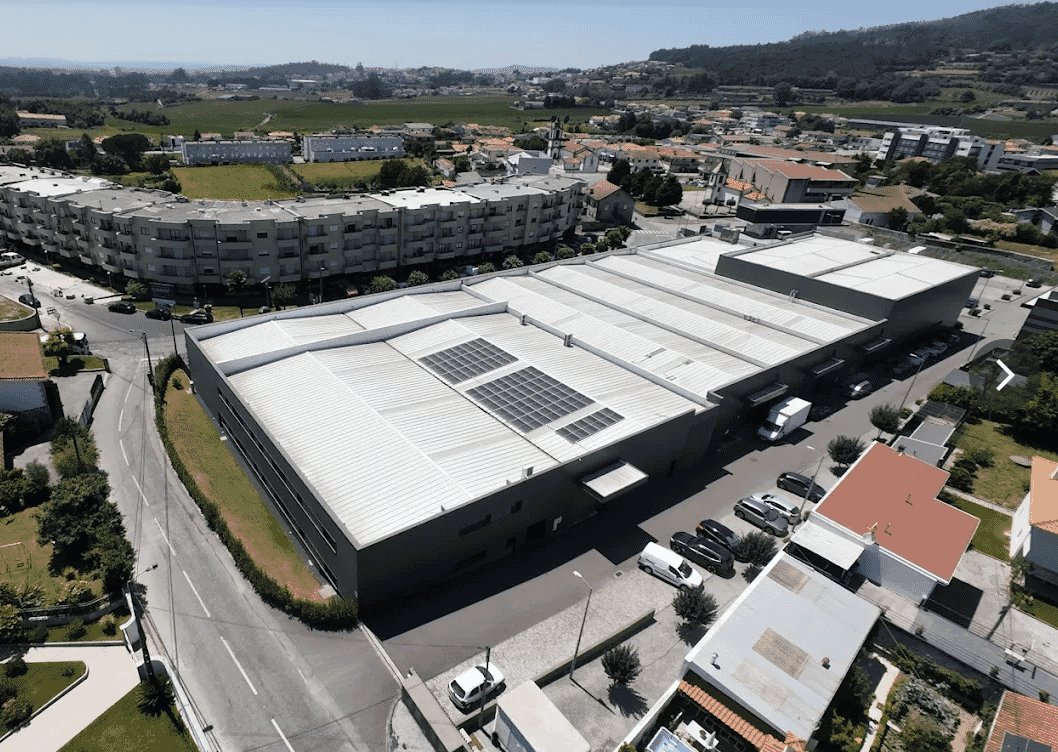
- Location: Ave Valley, Northern Portugal
- Specialty: Circular knit, jersey, and fleece garments. Core categories: t-shirts, polos, hoodies, sweatshirts, blouses, dresses.
- Typical MOQ: 100 to 300 units per style for jersey basics; 150 to 500 for fleece and heavier knits
- Capacity: Mid-size operation, run sizes from 200 to 5,000 units per style; estimated 80,000 to 120,000 garments per month at peak
- Production capability: Circular knitting integration with adjacent dye partners, garment-dye lines, screen and DTG printing on-site, embroidery via short-haul partners
- Certifications commonly held: OEKO-TEX Standard 100, GOTS for organic programs (verify per project)
- Best for: Small-to-mid volume brands producing jersey and fleece basics with tight color and fit tolerances. Strong on garment-dyed work.
- What makes them different: Located inside Portugal's densest knit cluster, which means short fabric-sourcing distances and easy coordination with adjacent dyehouses. We've placed multiple D2C streetwear brands here since 2023 with consistent first-piece approval rates.
- PCF route note: We send heavy-knit and garment-dye briefs here when the brand cares about repeatable color across reorders. We don't send tailored woven or denim work.
2. Calvelex
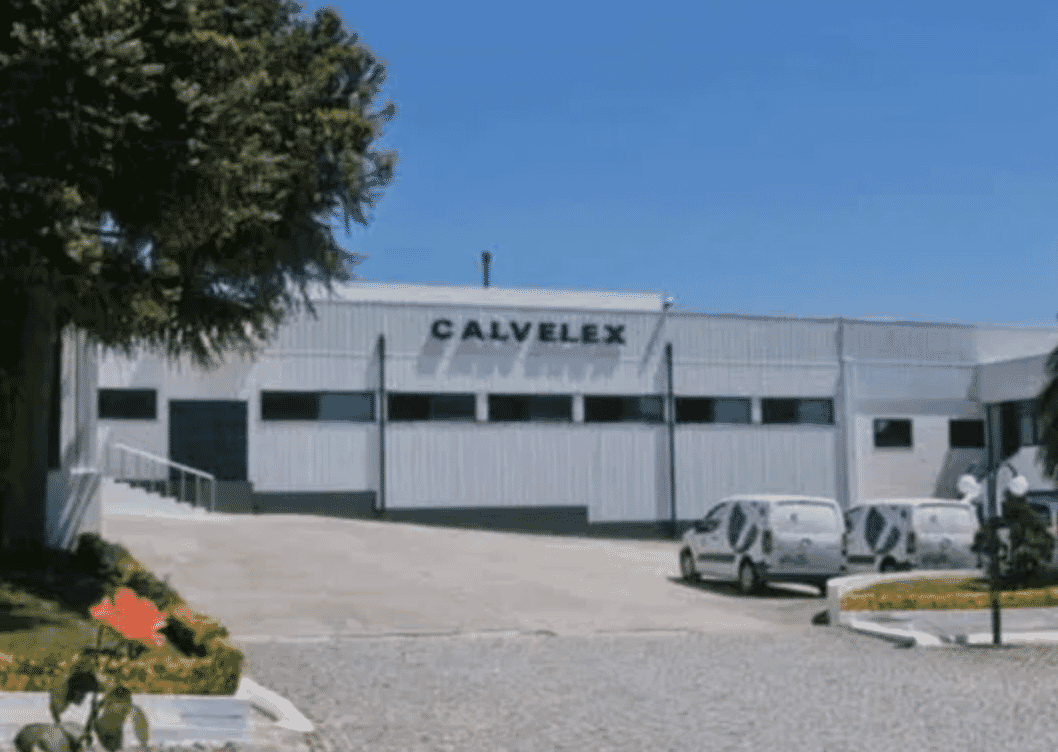
- Location: Northern Portugal
- Year founded: Mid-1980s
- Specialty: Premium woven goods. Blazers, tailored jackets, structured dresses, sophisticated tailoring.
- Typical MOQ: 300 to 800 units per style for blazers and tailoring; 500+ for woven dresses
- Capacity: Larger operation, geared toward mid-to-high volume export brands; multiple tailoring lines running in parallel
- Production capability: Half-canvas and full-canvas blazer construction, fused-front tailoring, structured outerwear, lined skirts and trousers
- Certifications commonly held: ISO 9001 quality systems, SA8000 social compliance frequently in place
- Best for: Brands focused on tailored, structured, higher-priced pieces aimed at the €200+ retail tier. Less suited for basic jersey, streetwear graphics, or short knit runs.
- What makes them different: One of the few Portuguese factories with dedicated tailoring lines and the pattern-making depth required for half-canvas blazers and structured outerwear. The trade-off is volume floor: under 300 units, expect either a refusal or a 30 to 50% premium.
- PCF route note: We route tailoring briefs here when the brand can clear 400+ units per style. Below that, we point them to specialist tailoring factories in Porto.
3. Confetil
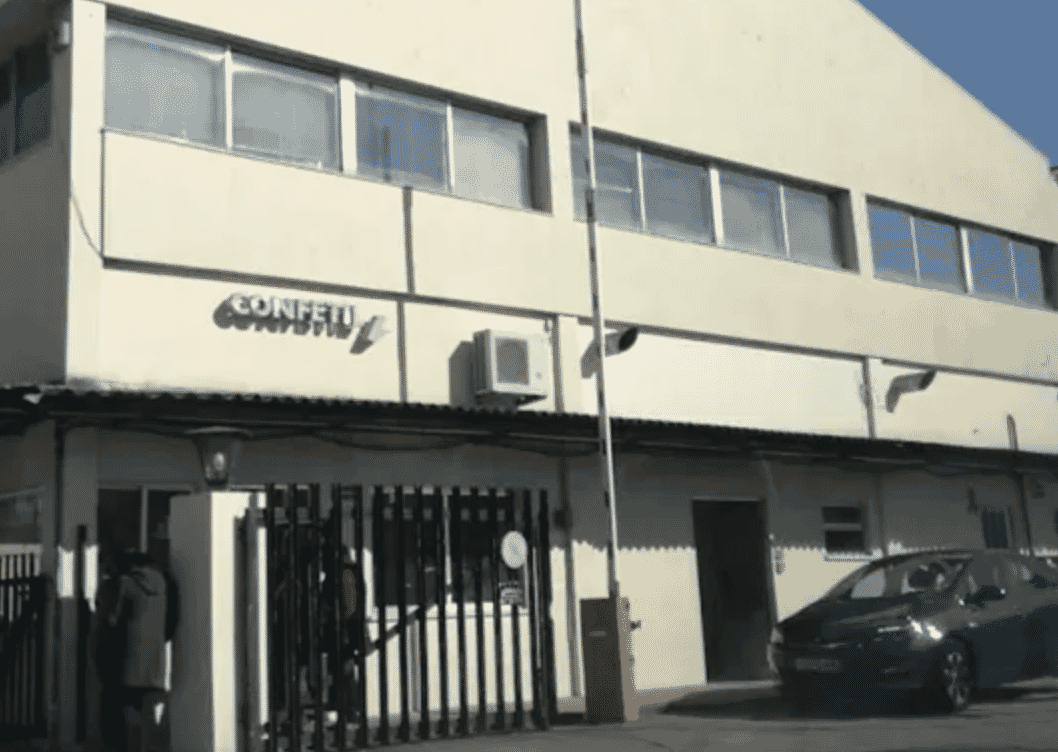
- Location: Northern Portugal
- Year founded: Approximately 50 years of operating history
- Specialty: Knitwear, basic pieces, technical and functionally complex items. Vertically integrated: fabric development, dyeing, embroidery, printing, cutting, and sewing all handled in-house.
- Typical MOQ: 200 to 600 units per style; lower negotiable on repeat programs
- Capacity: Significant production scale with multiple specialized lines; estimated 200,000+ garments per month across categories
- Production capability: In-house circular knitting, fabric R&D, garment dye, sublimation, screen and rotary printing, automated cutting, embroidery
- Certifications commonly held: OEKO-TEX Standard 100, GOTS for organic programs, ISO 9001
- Best for: Brands needing one-stop-shop vertical integration rather than coordinating multiple specialist suppliers. Particularly useful when fabric development is part of the brief.
- What makes them different: Vertical control means fewer handoffs, which means tighter timelines and clearer accountability when something goes wrong. The trade-off is higher per-unit cost vs CMT-only factories.
- PCF route note: We route brands here when fabric development matters more than €/unit optimization, or when the brand wants a single point of accountability across knitting, dyeing, and sewing.
4. Ribeiro & Campos

- Location: Barcelos, Northern Portugal
- Year founded: 1979
- Specialty: Private-label production for men's, women's, and children's segments. Circular knitwear and woven garments.
- Typical MOQ: 200 to 500 units per style
- Capacity: Mid-size with established multi-segment lines; multiple cut-and-sew teams running men's, women's, and kid's volumes in parallel
- Production capability: Circular knit cut-and-sew, woven cut-and-sew, in-house QC stations at four stages (fabric inspection, in-line, end-of-line, packing)
- Certifications commonly held: ISO 9001, OEKO-TEX Standard 100, periodic SA8000 audits
- Best for: Brands wanting full-service private-label production with established QC processes and multi-category capacity (e.g., a brand that wants men's jersey + women's woven from the same partner).
- What makes them different: Almost five decades of continuous operation gives them institutional knowledge that newer factories don't have. They've seen production cycles through multiple downturns, which translates into reliable lead-time estimates and conservative capacity promises.
- PCF route note: Our default partner for brands that want one factory across multiple categories. Communication is steady and English-fluent at the project-manager level.
5. Carmafil
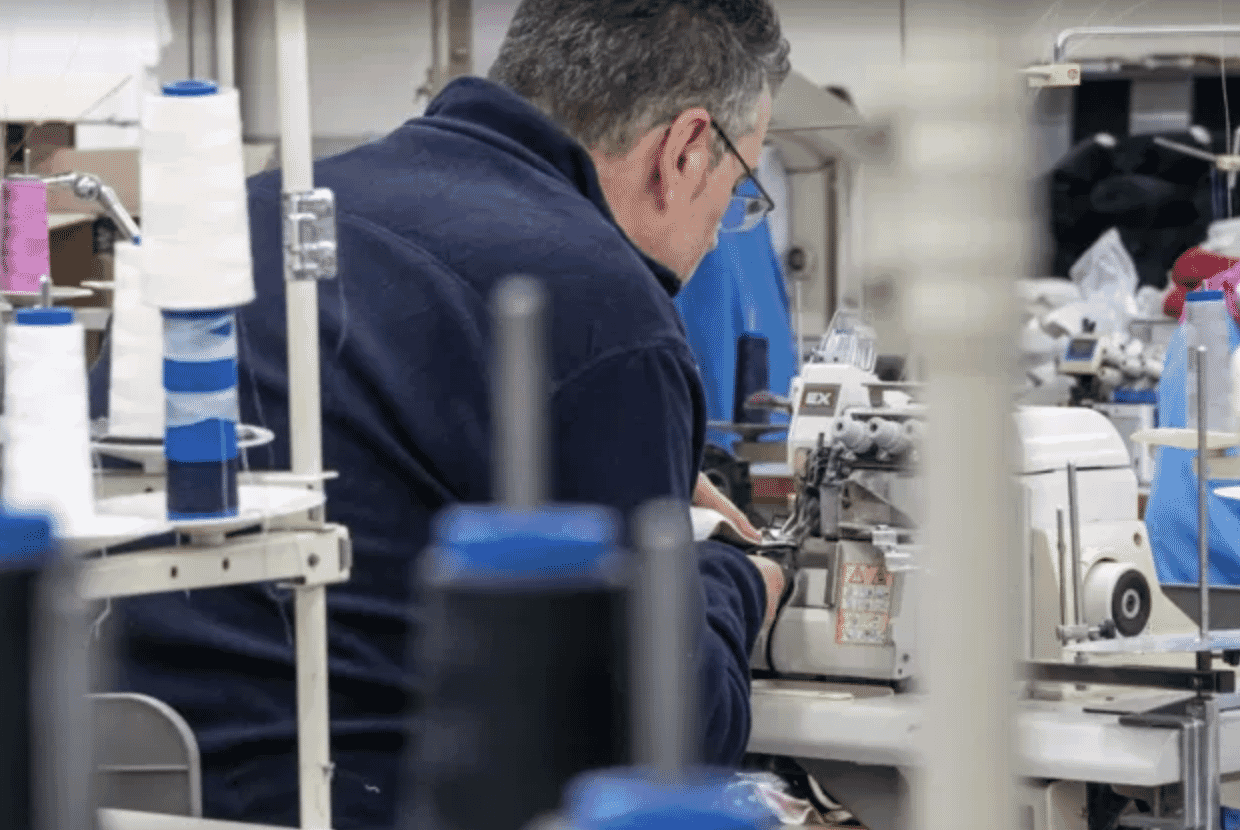
- Location: Northern Portugal
- Year founded: 1990s
- Specialty: Jersey garments and blended fabrics. Luxury streetwear, premium casualwear, loungewear.
- Typical MOQ: 150 to 400 units per style
- Capacity: Mid-size, focused on quality-tier rather than volume; typical run sizes 200 to 2,000 units
- Production capability: Heavyweight cotton and cotton/Tencel jersey, French-terry construction, garment dye, brushed-back fleece, premium finishing (overlocked seams, bartacked stress points)
- Certifications commonly held: OEKO-TEX Standard 100, increasingly GRS for recycled programs
- Best for: Elevated streetwear and premium casualwear brands. Particularly strong on heavier-weight jerseys (350 GSM+) and blended cotton/Tencel programs.
- What makes them different: Quality-tier positioning makes them a natural fit for D2C brands selling hoodies and tees in the €60 to €150 retail range. Less competitive on basic-tier jersey where price-per-unit dominates.
- PCF route note: We send brands here when their retail price point is above €60 per unit and they need a factory that won't cut corners on yarn weight.
6. Cunha & Ribeiro

- Location: Northern Portugal (family-run)
- Specialty: Circular knitwear production across the full chain: yarn and fabric development, dyeing, printing, cutting, and sewing.
- Typical MOQ: 100 to 300 units per style; flexible on first runs
- Capacity: Smaller, family-scale operation with tight owner-operator involvement; capacity ceiling around 1,500 units per style
- Production capability: Circular knitting, in-line dyeing, screen printing, embroidery; full vertical chain on the small-batch end
- Certifications commonly held: OEKO-TEX Standard 100; sustainability certifications added per project
- Best for: Brands wanting close owner-operator relationships and vertical control without going to a large factory. Good first partner for emerging brands that want hands-on attention.
- What makes them different: Family ownership translates into faster decision-making and better communication on the small-batch end. The trade-off is capacity ceiling: scaling beyond 1,500 units per style typically requires a second partner.
- PCF route note: We route first-collection brands here when sample velocity and direct owner contact matter more than absolute lowest €/unit.
7. Anglotex

- Location: Two production units in Northern Portugal
- Experience: 30+ years in Portuguese textile production
- Specialty: High-quality jerseywear, activewear, and lightweight fabrics. Strong on technical finishes (moisture-wicking, anti-microbial, four-way stretch).
- Typical MOQ: 300 to 600 units per style for performance fabrics; 200+ for basic jersey
- Capacity: Two units allow parallel production runs; combined capacity estimated at 150,000+ technical garments per month
- Production capability: Polyester and recycled-polyester knitting, four-way stretch fabrics, bonded seams, taped seams, sublimation printing, technical finishing
- Certifications commonly held: OEKO-TEX Standard 100, Bluesign for performance programs, GRS for recycled-poly
- Best for: Activewear and lightweight jersey programs needing technical finishing. Particularly strong on yoga, running, and athleisure cuts that need stretch recovery and seam durability.
- What makes them different: Genuine activewear expertise is rare in Portugal (most factories specialize in cotton-based knits). Anglotex is one of the few that handles polyester blends, recycled performance fabrics, and bonded seams to a high standard.
- PCF route note: Default Anglotex for any technical or performance brief. Cotton-jersey basics go to Lopes & Carvalho or Carmafil instead.
8. AAC Têxteis
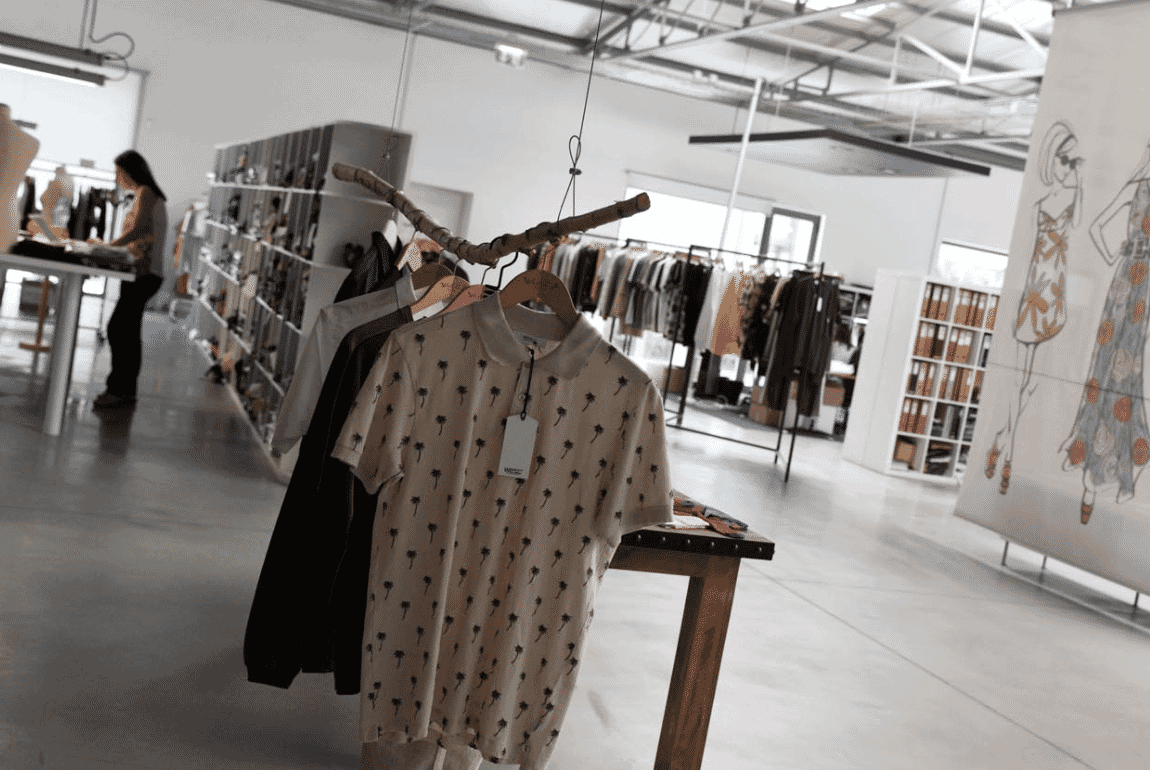
- Location: Vila Nova de Famalicão, Braga. Founded 1984 in Vilarinho das Cambas.
- Specialty: Couture-level small-series production for European luxury houses. Womenswear and menswear where finish quality matters more than unit price.
- Typical MOQ: From 150 units per style
- Capacity: Coordinates production across 30 to 35 partner factories, which lets them place a style with the specialist best suited to it rather than forcing every product through one line
- Lead time: 7 to 9 weeks
- Production capability: Cut-and-sew across knit and woven, small-series luxury construction, hand-finishing on garments that need it, complex pattern work
- Best for: Brands producing at genuine luxury quality in short runs, and brands whose product mix is varied enough that a single-line factory would be the wrong fit.
- What makes them different: Most factories quoting 150-unit runs are small operations with one set of machines. AAC runs a coordinated network instead, so a 150-unit tailored jacket and a 150-unit fine-gauge knit can both be placed correctly. Four decades of couture work sets the finish standard.
- PCF route note: We route luxury-positioned briefs here, especially varied collections at low volume per style. Volume basics go elsewhere; this is not the cheapest CMT in the group and is not meant to be.
9. SILSA

- Location: Barcelos, Braga, Northern Portugal
- Year founded: 1974 (51 years in operation)
- Specialty: Custom-made garment manufacturing across jersey, knitwear, and outerwear. 231 staff, capacity of approximately 180,000 garments per month.
- Typical MOQ: 150 to 500 units per style
- Lead time: 7 to 9 weeks
- Certifications: OEKO-TEX Standard 100
- Notable: Operates a Digital Product Passport platform, enabling brands to track traceability and sustainability data per garment, increasingly required under EU ESPR regulation from 2026-2027.
- Best for: Brands scaling into higher volumes that need production reliability and documented traceability.
- Differentiator: Over five decades of uninterrupted operation and one of the highest production capacities among Portuguese custom manufacturers (180k garments/month). The DPP platform removes significant compliance overhead for brands entering EU markets.
10. Etfor
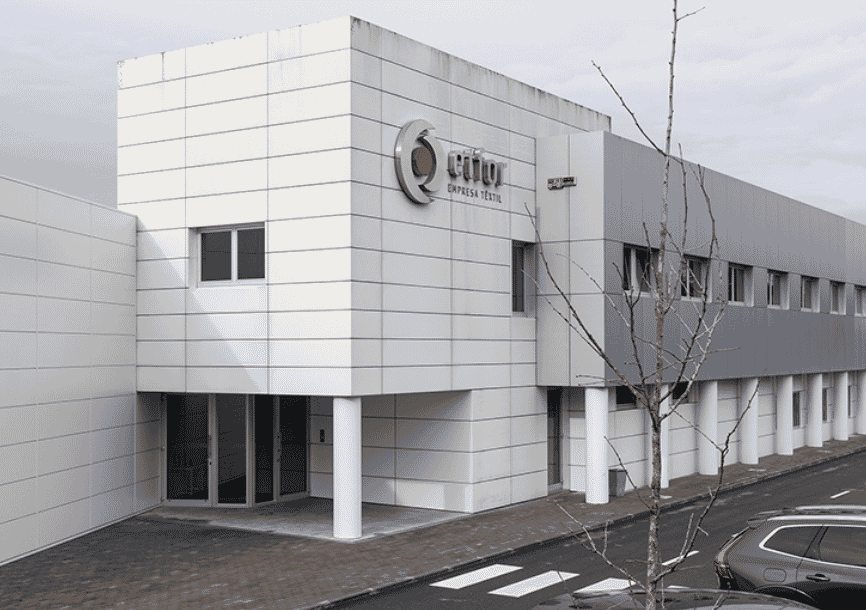
- Location: Forjães, Esposende, Braga, Northern Portugal
- Year founded: 1988 (family-owned)
- Specialty: Vertically integrated jersey and circular knit. Core categories: knitwear, babywear, kidswear, casualwear. Handles the full chain from fabric development through finished garment.
- Typical MOQ: 100 units per style
- Lead time: 6 to 8 weeks
- Certifications: GOTS (Global Organic Textile Standard)
- Reference clients: Inditex, Tom Tailor, among others
- Best for: Brands producing GOTS-certified knitwear, particularly babywear, kidswear, or organic casualwear. The 100-unit MOQ is one of the lowest for a vertically integrated GOTS factory in Portugal.
- Differentiator: GOTS certification at a 100-unit MOQ is genuinely rare. Most GOTS-certified factories in Portugal require 300+ units. Etfor's vertical integration compresses lead times compared to brands coordinating separate fabric and CMT suppliers. Reference clients include major European retailers.
How Do the Top 10 Portuguese Clothing Factories Compare at a Glance?
| Factory | Specialty | Typical MOQ | Approx. monthly capacity | Best fit | Founded |
|---|---|---|---|---|---|
| Lopes & Carvalho | Jersey, fleece, knit basics | 100-300 | 80k-120k garments | D2C jersey brands | n/a |
| Calvelex | Premium tailoring, blazers | 300-800 | 100k+ garments | Mid-tier tailoring | mid-1980s |
| Confetil | Vertical knitwear + technical | 200-600 | 200k+ garments | Brands needing fabric dev | ~1975 |
| Ribeiro & Campos | Multi-category private label | 200-500 | 150k+ garments | Established mid-volume | 1979 |
| Carmafil | Premium jersey, luxury streetwear | 150-400 | 60k-100k garments | €60-€150 retail tier | 1990s |
| Cunha & Ribeiro | Family-run vertical knit | 100-300 | 30k-50k garments | Hands-on emerging | n/a |
| Anglotex | Activewear, technical jersey | 300-600 | 150k+ technical | Performance/yoga | ~1990 |
| AAC Têxteis | Couture-level small-series luxury | from 150 | 30-35 partner factories | Luxury short runs, varied collections | 1984 |
| SILSA | High-capacity custom manufacturing | 150-500 | 180k garments | Scaling brands, DPP compliance | 1974 |
| Etfor | GOTS knitwear, babywear, kidswear | from 100 | vertically integrated | Organic/certified knitwear brands | 1988 |
Sources: ATP 2025, public factory websites, PCF internal production records 2023-2026. Capacity figures are PCF estimates based on placement experience; verify with each factory for your specific brief.
Real CMT Pricing: What You'll Actually Pay (€/unit)
The factory list is one half of the equation. The other half is what you'll actually pay. These ranges come from PCF's internal production records covering 2024-2026 quotes across our 80 documented Portuguese factories. Prices vary by fabric grade, complexity, MOQ, certification requirements, and whether you're CMT or full package.
| Garment | Volume tier | Typical CMT range (€/unit) | Likely factory tier | Notes |
|---|---|---|---|---|
| Basic cotton t-shirt (180 GSM) | 50-100 units | €4.50-€7.00 | Specialist factories | Premium for low volumes |
| Basic cotton t-shirt (180 GSM) | 300-500 units | €2.80-€4.50 | Lopes & Carvalho, Cunha & Ribeiro | Sweet spot for D2C |
| Basic cotton t-shirt (180 GSM) | 1,000+ units | €2.20-€3.50 | Confetil, Ribeiro & Campos | Export-tier pricing |
| Heavyweight hoodie (350 GSM) | 100-300 units | €11-€16 | Carmafil, Lopes & Carvalho | Drawcord, eyelets, simple print |
| Heavyweight hoodie (350 GSM) | 500-1,000 units | €8.50-€12 | Confetil, Anglotex | Sub-€10 at proven runs |
| Tailored blazer, half-canvas (lined) | 200-400 units | €28-€42 | Calvelex | Blazer-specialist pricing |
| Tailored blazer, half-canvas (lined) | 500+ units | €22-€32 | Calvelex | FPP adds €8-€15 for fabric |
| Selvedge denim jeans (14 oz) | 150-300 units | €18-€28 | Denim specialists | Excludes fabric (€12-€18/m) |
| Selvedge denim jeans (14 oz) | 500-1,000 units | €14-€22 | Larger denim partners | Volume leverage kicks in |
| Performance leggings (4-way stretch) | 300-500 units | €9-€14 | Anglotex | Includes technical finishing |
| Performance leggings (4-way stretch) | 1,000+ units | €7-€11 | Anglotex | Bonded seams add €1-€2 |
Sources: PCF internal data (2024-2026), aggregated across our 80 documented Portuguese factory quotes.
CMT prices exclude fabric, trims, packaging, and shipping. For full package production where the factory sources everything, add roughly 35 to 65% to the CMT figure depending on fabric specification. Detailed breakdown in our clothing manufacturing costs in Portugal guide.
Try the calculator: Get a real €/unit quote for your specific product in 60 seconds. Inputs: garment type, fabric, trims, volume.
For detailed context on negotiating minimums and which Portuguese factories accept small-batch production, see our guide to MOQ in Portugal and the complete small-batch production guide.
Find your factory: Browse the free factory directory preview, or unlock the premium directory for €39 to see 80 documented Portuguese factories with direct contacts and MOQs.
Citation Capsule: CMT pricing for Portuguese factories ranges from €4-€8 per tee (specialist factories, 50-100 unit MOQs) to €15-€32 for outerwear specialists. Volume tier determines factory fit: under 150 units favours specialist factories; 300-1,000 units suits mid-size factories; 1,000+ units suits export-tier factories.
When to Choose Which Factory: Decision Matrix
Match your product, volume, and stage against the factories above.
By product category
- Jersey basics (tees, polos, sweatshirts): Lopes & Carvalho first. Carmafil if quality-tier matters. Cunha & Ribeiro for small-batch hands-on.
- Heavyweight hoodies and fleece (300-450 GSM): Lopes & Carvalho or Carmafil. Both handle 350 GSM+ well.
- Tailored woven (blazers, structured pieces): Calvelex is the default. Most other factories will refuse or mark up significantly.
- Activewear and performance fabrics: Anglotex. Genuine technical-fabric expertise is rare in Portugal.
- Luxury short runs and couture-level finish: AAC Têxteis. Four decades of small-series work for European luxury houses, from 150 units per style.
- Vertically integrated (you want fabric developed too): Confetil, Cunha & Ribeiro, or Etfor.
- Multi-category programs (mixed knits + wovens): Ribeiro & Campos for established brands. SILSA for higher-volume multi-category runs.
- GOTS-certified or organic programs: Etfor. GOTS at 100 units is rare in Portugal.
- Children's wear: Ribeiro & Campos has dedicated lines. Etfor for organic/GOTS kidswear.
- High-volume scaling (100k+ units/year): SILSA. One of the largest production capacities on this list.
- Denim: Specialist denim partners. We typically route serious denim work to denim-specific factories outside this top-10 list.
By volume
- 50-100 units per style: Specialist factories. Contact us and we'll route your brief to the right one.
- 100-300 units: Lopes & Carvalho, Cunha & Ribeiro, Carmafil, Etfor. AAC Têxteis from 150.
- 300-500 units: Most factories. The fullest selection.
- 500-1,000 units: Confetil, Calvelex, Anglotex, Ribeiro & Campos, SILSA.
- 1,000+ units: Calvelex, Confetil, Ribeiro & Campos, SILSA. Volume becomes a leverage point.
By brand stage
- First collection (50-150 units): Cunha & Ribeiro or Etfor for small-batch, hands-on production. You need flexibility, not scale.
- Second-third collection (200-500 units): Lopes & Carvalho or Carmafil. Sweet spot for D2C streetwear.
- Scaling (500-2,000+ units): Confetil, Calvelex, Ribeiro & Campos, SILSA. Now you need capacity and process maturity.
- Mature brand with multi-category needs: Ribeiro & Campos for breadth, Confetil for vertical, Anglotex for performance, SILSA for volume.
For a full factory-evaluation framework, see our red flags when choosing a Portuguese clothing manufacturer and the first-meeting checklist.
What's the Difference Between CMT and Full Package Production in Portugal?
Most Portuguese factories offer one of two models.
CMT (Cut, Make, Trim). The brand supplies fabric and trims; the factory cuts, sews, and finishes. Typical CMT pricing ranges from €2 to €50 per unit depending on complexity. Best for brands with existing fabric sourcing relationships.
Full Package Production (FPP). The factory sources fabric, trims, and packaging from preferred mills. FPP pricing runs 35 to 65% higher than CMT, but compresses lead times because fabric sourcing isn't the brand's bottleneck. Best for newer brands without supplier networks.
See our full CMT vs full package production guide to decide which fits your stage.
Citation Capsule: PCF's 8-step factory vetting process covers physical site visits, certification verification, sample-quality benchmarking, MOQ confirmation, communication-cycle testing, contract review, payment-terms negotiation, and post-production support assessment. It's a structured filter that excludes roughly 70% of factories from final placement consideration.
How PCF Vets a Portuguese Factory: The 8-Step Process
Anyone can publish a factory list. The harder question is whether the factories on it have actually been verified. Here's the process we use before adding a factory to our network or recommending it to a brand.
- Public-record check. Verify the factory's CAE (industrial activity code) registration, NIF (tax number), and ATP membership where applicable. Factories without verifiable registration are out.
- Certifications audit. Pull each claimed certification from the certifying body's public registry: GOTS database, OEKO-TEX certificate verification, ISO 9001 issuer, SA8000 audit reports. We've found that roughly 1 in 8 factories overstate their certifications.
- Site visit. Walk the production floor. Check actual machinery, line organization, fabric storage conditions, and finished-goods QC area. Factories that won't allow visits or stage them with notice are flagged.
- Sample production test. Place a small sample order against a real tech pack with deliberate complexity (POM precision, color matching, label placement). Time the response, count revisions, evaluate first-piece accuracy.
- Reference checks. Speak with at least 2 brands the factory has produced for in the last 12 months. Ask about lead-time accuracy, communication quality, and willingness to fix QC issues.
- Capacity verification. Confirm stated capacity against actual production schedule. Some factories quote optimistic volumes they can't deliver during peak season.
- Compliance review. Check labour-law compliance, working hours, minimum wage adherence (€870/month national minimum in 2026), and environmental permits. Portuguese factories are largely compliant by EU baseline, but specific issues surface in audits.
- Communication test. Email response time, English fluency at the project-manager level, and willingness to deal with brand-side delays. A factory that takes 5 days to reply to a sample request will take 5 days to reply mid-production.
What typically gets a factory rejected: opaque ownership, no verifiable certifications when claimed, refusal to allow site visits, communication delays beyond 48 hours during sourcing, or any reference call that surfaces unresolved disputes. Roughly 30% of Portuguese factories we initially evaluate fail one or more of these steps.
How Does the August Production Slowdown Affect Portuguese Clothing Factories?
One thing brand founders learn quickly: most Portuguese factories close for 2 to 3 weeks in mid-August for the traditional summer break. The shutdown is cultural, not negotiable, and it ripples through fabric mills, dye houses, and trim suppliers. Typical closure windows run from the first Monday of August to the third or fourth Monday of August. If you miss the window, your production effectively pauses until early September.
Practical implications:
- Lock fabric and trims by mid-July for any production targeting September delivery. Mills close before factories.
- Avoid scheduling first-piece approvals for the last week of July. The factory will be checked out mentally even if technically open.
- Plan around it for AW drops. A drop intended to ship in early September needs to clear bulk by late July or you're sliding into October.
- September restart is slow. Expect the first week back to be administrative cleanup, not production. Real momentum returns mid-September.
- Asia-veteran founders get hit twice. Brands moving from Asian sourcing often hit August once trying to start production and once trying to ship. Build August out of your timeline from day one.
For a full timeline reference, see our clothing production lead times in Portugal guide.
Running into production issues? Get in contact and tell us what you're making. We're a group of 80 documented Portuguese clothing factories and we answer every serious brief within 24 hours.
Frequently Asked Questions
What's the minimum order quantity for Portuguese clothing factories?
It varies by factory size and product type. Specialist factories accept 20-100 units per style. Mid-size factories typically require 100-500. Large export-oriented factories want 500-2,000+. The 50-unit floor exists, but only at small factories or with longer lead times. The Portugal Clothing Factory group can route sub-100 briefs to specialist factories in the network. See our MOQ in Portugal guide for negotiation tactics.
How long does clothing production take in Portugal?
Total production from tech pack to shipped order runs 16 to 24 weeks for a new style with a new factory, across 5 phases: preparation, quoting, sampling, bulk production, and shipping. Established brands with familiar partners compress this to 10 to 14 weeks. Add 2 to 3 weeks for the August slowdown if your timeline crosses it. See our clothing production lead times in Portugal guide.
Are Portuguese clothing factories more expensive than Asian manufacturers?
Per-unit CMT pricing is higher: roughly €4.50 to €8 for a basic tee in Portugal vs €3 to €7 in China at small-brand volumes. Landed cost narrows once you factor in shipping, duties (apparel tariffs on China imports into the US tightened by late 2025), QC travel, and inventory carrying costs. For orders under 500 units, Portugal often comes out ahead on total cost. See our full Portugal vs China vs Turkey comparison.
Do Portuguese factories provide fabric sourcing?
FPP factories do; CMT factories typically don't. Portugal has strong fabric-sourcing infrastructure: knit mills concentrated in the Ave Valley, wool specialists in Covilhã, woven mills around Porto. Many factories have preferred mills and can route the sourcing on your behalf for an FPP premium. See our fabric sourcing in Portugal guide.
What certifications should I look for?
For sustainability: GOTS (organic), GRS (recycled), OEKO-TEX Standard 100 (no harmful substances), Bluesign (process-focused). For social compliance: SA8000 or BSCI/amfori. For quality systems: ISO 9001. Always verify on the certifying body's public registry, not just the factory's website. See our OEKO-TEX vs GOTS vs Bluesign comparison.
Can I visit these factories before placing an order?
Yes, and you should. Portugal is accessible from any major European city in under 4 hours. A factory visit reveals what a website and quote can't: line organization, machinery condition, fabric storage, communication quality. We recommend visiting any factory before placing an order over €5,000. See the first-meeting checklist.
Do Portuguese factories work with US or UK brands?
Yes, regularly. UK brands have sourced from Portugal at scale since before Brexit, and US brands accelerated in 2022-2025 as Asian tariff exposure increased. Most factories communicate fluently in English at the project-manager level. Typical payment terms: 30% deposit, 70% before shipping. Incoterms are usually EXW or FOB Lisbon.
What about "Made in Portugal" labelling rules?
Under EU Regulation 1007/2011, a garment qualifies for "Made in Portugal" only if the last substantial transformation (cut-and-sew) occurred in Portugal. Importing semi-finished pieces and finishing them in Portugal does not qualify. See our Made in Portugal guide for the full regulatory picture.
How do I know if a factory is the right fit?
Sample-round velocity is the single best predictor. A first sample produced accurately within 4-6 weeks, with clear comments and 1-2 revision rounds, predicts smooth bulk production. A first sample that takes 8+ weeks or comes back with multiple defects predicts production trouble. Don't ignore sampling friction.
We're a group of 80 documented Portuguese clothing factories based in Porto and Guimarães. Tell us your product, volume, and timeline. We'll route your brief to the right factory in the group, usually within 24 hours. You work directly with the factory. No commissions, no pitch, no upsell.
Get in contact Download the directory (€39)Need a tech pack? Get a factory-ready single-style tech pack for €79. See what's included.
Sources
- ATP, Associação Têxtil e Vestuário de Portugal (2025). Reference for Portuguese factory ecosystem composition, regional clusters, and EU-export production statistics.
- CITEVE, Quality Report on Portuguese Textile Production (2024). Reference for Portuguese textile quality benchmarks and certification ecosystem.
- PCF internal placement data (2024-2026), aggregated across our documented Portuguese factory network for the 8-step vetting process, CMT pricing benchmarks, MOQ thresholds, and decision-matrix per factory profile.
Related reading
- how to find a clothing manufacturer in Portugal
- CMT vs full package production in Portugal
- clothing manufacturing costs in Portugal
- Made in Portugal clothing quality
- Portuguese textile cluster
- how to create a tech pack
- Portugal vs China vs Turkey manufacturing
- small batch clothing production in Portugal