Textile trade fairs remain the essential meeting point for anyone working in the sector. Portugal has approximately 12,000 active textile companies according to the ATP (2025), and the country participates in dozens of fairs per year, both as host and as exhibitor. From Modtissimo in Porto to Premiere Vision in Paris, each fair serves a distinct buyer profile and a distinct cost tier.
This guide brings together every fair relevant to the Portuguese textile industry in 2026. Confirmed dates, realistic budget ranges, buyer profiles, preparation checklists, and the mistakes we've watched brands make at every event we've attended since 2021.
Heads up: We're Portugal Clothing Factory, a group of 80 documented Portuguese clothing factories, not an exhibitor or fair organiser. We attend Modtissimo every edition and walk Premiere Vision and Munich Fabric Start most years as buyer-side observers. The notes below reflect what we've actually seen.
Key Takeaways
- Modtissimo is the largest Portuguese textile fair, with around 200 exhibitors per edition (ATP, 2025)
- Over 80% of Portuguese textile manufacturers export to the EU (AICEP, 2025), which makes international fairs a strategic channel
- Stand costs range from €1,500 (Modtissimo entry) to €15,000+ (Premiere Vision premium), excluding travel
- Total all-in cost per international fair typically runs €8,000 to €25,000 once travel, samples, and prep are included
- Visitors who pre-schedule meetings get up to 3x more qualified contacts (UFI Global, 2024)
- 70 to 80% of fair-driven business actually closes during follow-up, not at the stand
Try it free: Pressure-test your production cost with our garment cost calculator before you start booking fair tickets. 60 seconds, no email required.
What are the main textile trade fairs in Portugal in 2026?
Portugal hosts two benchmark national textile fairs, both with biannual editions. Modtissimo, held at EXPONOR in Porto, attracts around 200 exhibitors and several thousand professional visitors per edition (ATP, 2025). Portugal Fashion is a designer-and-brand event split between Porto and Lisbon. The two cover different segments, so most active sourcing professionals attend both.
Modtissimo: the sector's anchor event
Modtissimo runs twice a year at EXPONOR in Matosinhos, just outside Porto. The March 2026 edition took place on the 19th and 20th. The September edition is scheduled for the 17th and 18th. The fair concentrates fabrics, knits, trims, and value-chain solutions in a single hall, which is why international buyers use it as a one-stop discovery event for Portuguese supply.
What makes Modtissimo relevant is the density of national suppliers in one space. We've placed brands with mills first contacted at Modtissimo within 8 weeks of the fair, which is unusual for a trade event. For smaller manufacturers, it's frequently the first opportunity for European buyer exposure. For brands sourcing from Portugal for the first time, the cost-to-value ratio outperforms every international event on this list. We've seen first-time visitor brands generate 6 to 12 qualified factory shortlists from a single two-day Modtissimo trip.
Portugal Fashion: where fashion meets industry
Portugal Fashion isn't a fabric fair in the traditional sense. It's a fashion event built around Portuguese designers and emerging brands, held twice a year (typically April and October) and split between Porto and Lisbon. For brands looking for production partners, Portugal Fashion is useful as a creative ecosystem read rather than a sourcing event. You'll meet designers, design studios, and industry press. You won't typically meet mid-volume cut-and-sew factories.
iTechStyle and Tecnotêxtil
Two smaller, more specialised events also belong on the Portuguese calendar. iTechStyle showcases technical textiles, smart fabrics, and innovation projects from CITEVE and ATP-affiliated mills. Tecnotêxtil, when it runs, focuses on textile machinery and technology. Both are niche and worth a half-day visit if your brief involves performance fabrics, recycled-poly programs, or fabric R&D.
Citation Capsule: Modtissimo, Portugal's largest textile fair, gathers around 200 exhibitors per edition at EXPONOR in Porto, functioning as the central meeting point for European buyers and Portuguese manufacturers (ATP, 2025).
Which international fairs are relevant for Portuguese manufacturers?
Over 80% of Portuguese textile manufacturers export to the European Union (AICEP, 2025), so international fairs are not optional for most exporting mills and contract manufacturers. Premiere Vision Paris alone receives more than 1,800 exhibitors from 50 countries, and Portugal consistently ranks among the top 10 represented countries (Premiere Vision, 2025). For brand-side teams sourcing from Portugal, attending the same fairs as your potential factory partners is the fastest way to see who actually shows up internationally.
Premiere Vision Paris
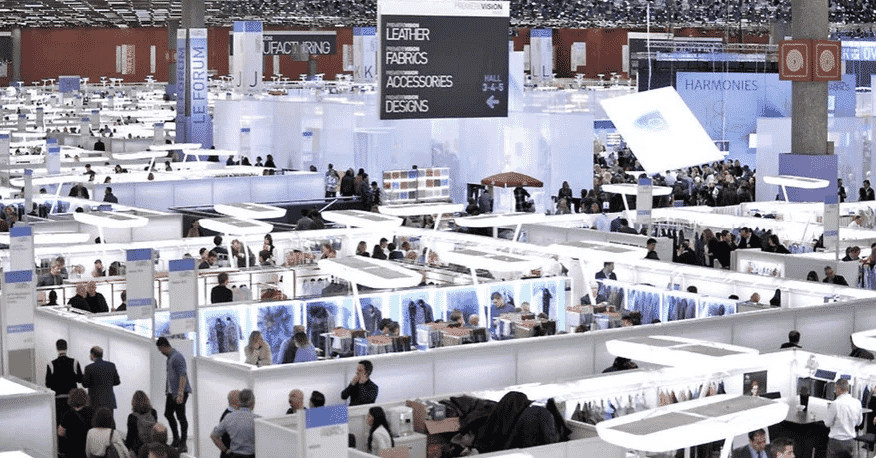
Premiere Vision is the world's most influential fabric fair. February and September editions at Paris Nord Villepinte. The event covers fabrics, leather, trims, accessories, and design solutions, with a clearly premium positioning. Portuguese mills that exhibit here are typically targeting the €100+ retail-tier brand segment.
For Portuguese exporters, presence is close to mandatory if the customer base sits in luxury or contemporary fashion. Stand costs start around €8,000 and climb past €15,000 for prime positions inside the Maison d'Exceptions hall. Total all-in budgets including travel, accommodation, materials, samples, and team travel typically run €18,000 to €30,000 per edition. The buyer profile justifies it for many companies. For brand-side visitors, Paris in February or September is the single best place to read the next 18 months of fabric direction.
Texworld Paris
Texworld occupies a parallel positioning. Mid-to-high volume fabrics, more accessible pricing, and a buyer base that leans toward retail chains and mid-market brands. The fair runs at the same time as Premiere Vision, which means visitors typically combine both inside a single 3-day Paris trip. For Portuguese manufacturers working at 1,000+ unit-per-style volumes, Texworld brings in a buyer profile Premiere Vision doesn't.
Munich Fabric Start
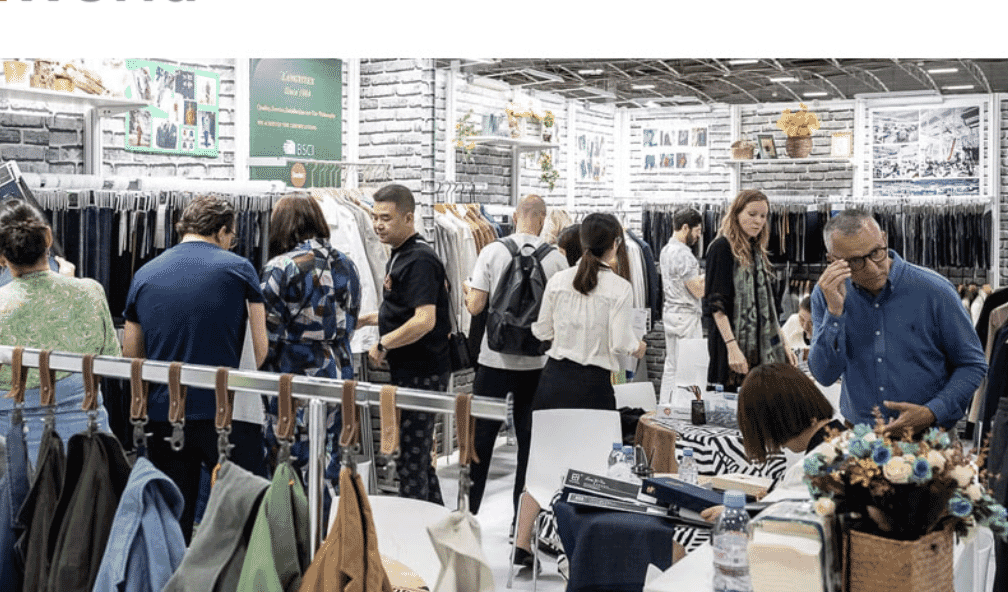
January and September in Munich. The event is particularly strong on innovative fabrics, sustainability programs, and denim. Germany is the second-largest destination for Portuguese textile exports after Spain (INE, 2025), so Munich Fabric Start is strategic for Portuguese mills serving the German market. The Bluezone denim section is the strongest denim-focused fair in continental Europe.
For brand-side visitors, Munich is also the cheapest international fair on this list to visit when you account for flights, hotels, and on-the-ground costs. We typically spend €1,400 to €1,800 per person for a 3-day Munich Fabric Start visit including flights from Porto, vs €2,400 to €3,200 for the equivalent Paris trip during Premiere Vision week.
ITMA and Heimtextil
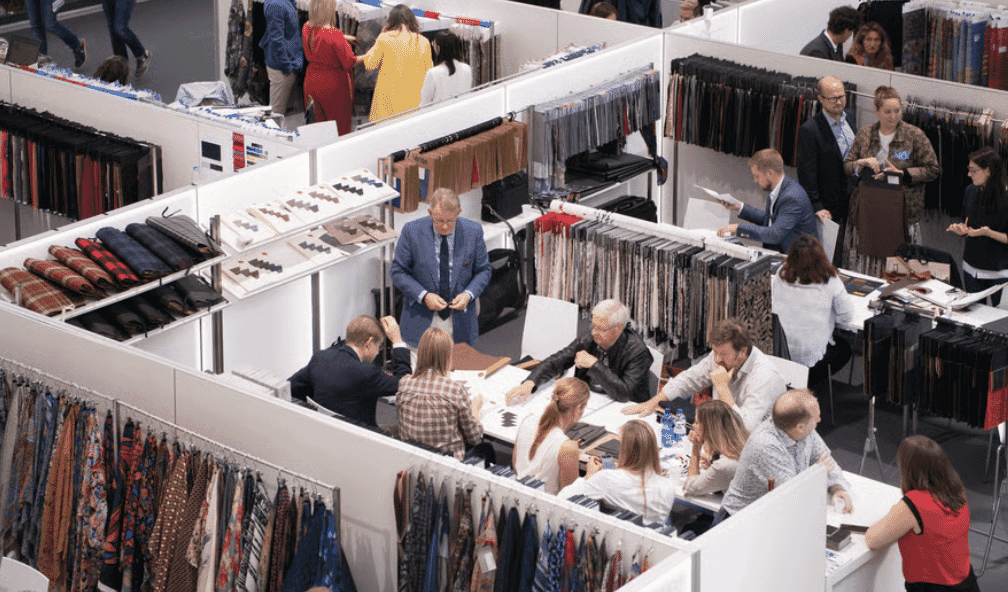
ITMA is the main textile machinery and technology fair, held every four years. The next edition is in 2027, but satellite events run in 2026 and are worth following if your operation is investing in CapEx. Heimtextil Frankfurt in January is the global benchmark for home textiles, with over 3,000 exhibitors (Messe Frankfurt, 2025). Portugal has a strong presence here through home-textile clusters in the Vale do Ave and around Guimarães specialising in bed linen, towels, and decorative textiles.
Other events worth knowing
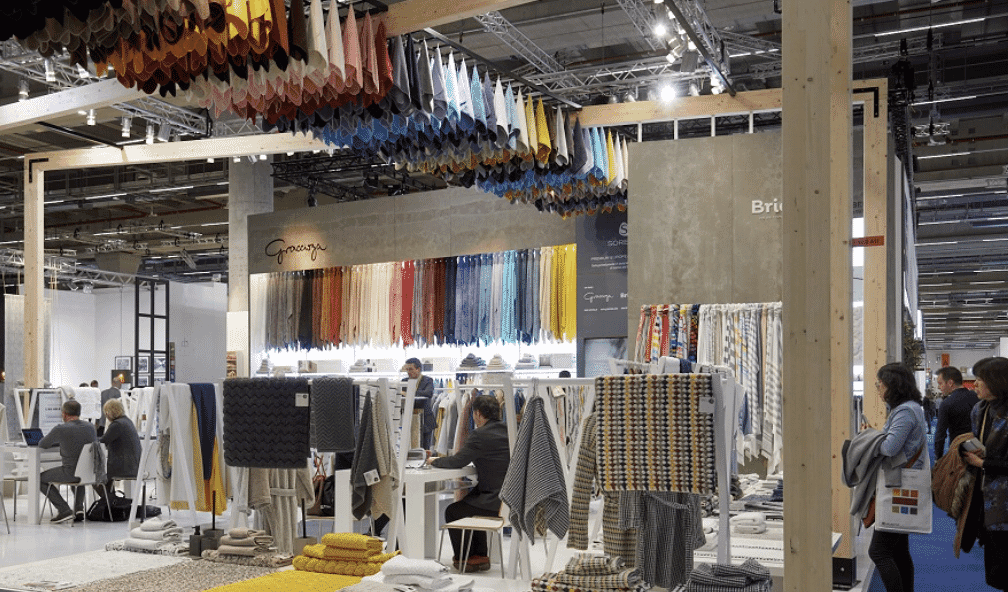
Smaller events worth a single-day visit when relevant: Pitti Filati in Florence (yarn-focused, January and July), Performance Days in Munich (technical performance fabrics, April and October), and Denim Premiere Vision (denim-focused, May and November). None are mandatory, but each owns a niche.
Citation Capsule: Over 80% of Portuguese textile manufacturers export to the EU (AICEP, 2025), making fairs like Premiere Vision Paris and Munich Fabric Start essential channels for generating international business.
How do you choose the right fairs for your brand?
The average cost of a stand at national fairs sits between €1,500 and €5,000 (ANIARP, 2025), excluding travel, accommodation, and materials. Total event budgets typically run 2.5x to 4x the stand cost once everything is included. With limited budgets, choosing well matters more than being present everywhere. The decision should cross three criteria: buyer profile, available budget, and commercial objectives.
Criterion 1: Who do you want to reach?
Start by identifying your target buyer profile. The fair-to-buyer mapping below reflects what we've seen from 5 years of attendance.
| Target buyer | Best fair | Why |
|---|---|---|
| European luxury / contemporary brands | Premiere Vision Paris | Where global luxury sources fabric |
| Mid-volume European retail | Texworld Paris | Volume-oriented buyer base |
| German market specifically | Munich Fabric Start | Largest German-market access |
| Iberian and Portuguese SMB | Modtissimo | National supplier density |
| Home textiles export | Heimtextil Frankfurt | Global home-textile benchmark |
| Performance and activewear | Performance Days Munich | Pure-play technical-fabric event |
| Denim brands | Munich Fabric Start (Bluezone) | Continental Europe's denim hub |
| Yarn-led knit brands | Pitti Filati Florence | Yarn-specific buyer concentration |
Ask yourself: do the buyers I'm looking for actually visit this fair? It's a simple question, but one that many companies fail to answer before booking a stand.
Criterion 2: What is your real budget?
Don't consider only the stand cost. Add travel, accommodation, promotional materials, sample shipping, on-stand catering for buyer meetings, and the team time spent in preparation. The realistic all-in budgets we've seen Portuguese mills spend per fair break down roughly as follows:
| Cost line | Modtissimo | Premiere Vision | Munich Fabric Start | Heimtextil |
|---|---|---|---|---|
| Stand (small / standard) | €1,500-€5,000 | €8,000-€15,000+ | €4,000-€8,000 | €5,000-€12,000 |
| Travel (2-person team) | €0-€400 | €1,400-€2,200 | €1,000-€1,600 | €1,200-€1,800 |
| Accommodation (3 nights, 2 rooms) | €0-€600 | €1,200-€2,400 | €700-€1,400 | €900-€1,600 |
| Materials, samples, catalogues | €600-€1,500 | €1,500-€3,500 | €1,000-€2,000 | €1,500-€3,000 |
| Sample shipping | €100-€300 | €400-€900 | €300-€700 | €400-€900 |
| Local transport, meals, miscellaneous | €200-€400 | €800-€1,500 | €500-€1,000 | €700-€1,200 |
| Realistic all-in total | €2,400-€8,200 | €13,300-€25,500+ | €7,500-€14,700 | €9,700-€20,500 |
Sources: ANIARP 2025 stand-cost data; PCF observations from Portuguese exhibitor budgets shared with us between 2022 and 2026.
The return depends on the quality of contacts generated, not the number. We've seen brands close more business from 8 high-fit Modtissimo conversations than from 40 Premiere Vision badge scans.
Criterion 3: Visitor or exhibitor?
You don't always need a stand. Attending a fair as a visitor or buyer-side observer costs a fraction of the exhibitor investment. For brands exploring new sourcing markets, a first visit without a stand allows you to evaluate the event before committing budget. Many experienced Portuguese exporters alternate between years as visitors and years as exhibitors. The companies that get the best return are the ones that walk the fair as visitors first, identify the buyers and competitors, and only commit to a stand once they know exactly what segment they're going after.
Criterion 4: Set concrete objectives before you go
The brands that get the best return from textile fairs set concrete objectives before the event. Examples:
- "Schedule 15 meetings with German buyers at Munich Fabric Start"
- "Identify 3 new mills supplying recycled fabrics at Premiere Vision"
- "Validate 6 cut-and-sew partners across knit, woven, and tailoring at Modtissimo"
- "Get a fabric quote on 4 specific recycled-poly compositions"
Without clear goals, the fair becomes professional tourism. We've watched brand founders spend €18,000 on a Premiere Vision trip and come home with 3 fabric swatches and zero scheduled follow-ups. Set the objectives in writing two weeks before departure.
Citation Capsule: The average cost of exhibiting at a Portuguese textile fair ranges from €1,500 to €5,000 (ANIARP, 2025), excluding travel and materials, which demands careful event selection and clear pre-trip objectives.
What should you bring and how do you prepare for a textile trade fair?
Professionals who prepare visits with pre-scheduled meetings obtain up to 3 times more qualified contacts than visitors without a plan (UFI Global, 2024). Preparation is the single largest determinant of fair ROI, more than stand size, location, or even product quality. The framework below is the one we use ourselves before each fair.
Before the fair: 8 weeks out
Book accommodation and transport at least 8 weeks in advance. Premiere Vision and Heimtextil sell out nearby hotels quickly, and the late-booking penalty is roughly 2x the early-booking rate. Check the exhibitor list on the event's website as soon as it publishes (typically 6-10 weeks before the event) and identify the stands you want to visit. If possible, schedule meetings before you arrive.
8-week checklist:
- Book flights and hotels
- Register for visitor badge (or confirm exhibitor logistics)
- Build a target stand list from the exhibitor directory
- Email priority stands requesting a 20-minute meeting at the fair
- Block calendar windows for unscheduled discoveries
Before the fair: 2 weeks out
Two-week checklist:
- Confirm scheduled meetings; resend invitations to non-responders
- Prepare materials: updated catalogues, physical samples, business cards, one-page company sheet
- For exhibitors: stand layout, sample displays, badge printing, on-stand snacks and water
- For visitors: a notebook (paper, not a laptop), a structured question list, and a portable battery for your phone
- Review three competitor brand decks so you can speak to differentiation when asked
During the fair: maximise every hour
Time at a fair is limited and exhausting. Arrive early when the aisles are less crowded and exhibitors are more available. Take photographs (with permission) of fabrics and materials that interest you. Record notes immediately after each conversation while the details are fresh. Don't try to see everything. Focus on priority stands and reserve at least 90 minutes per day for unexpected discoveries. Some of the best partnerships start in unplanned conversations.
A typical fair-day rhythm we use:
- 9:00 to 11:00: priority scheduled meetings
- 11:00 to 13:00: walk priority halls without scheduled meetings
- 13:00 to 14:00: lunch (off-floor, write notes)
- 14:00 to 16:30: secondary meetings and discovery walking
- 16:30 to 17:30: revisit 2 to 3 best stands of the day, ask deeper questions
- Evening: write up notes, send same-day thank-you emails to top contacts
After the fair: the follow-up that closes business
Send follow-up emails within 48 hours of the event. Include a specific reference to the conversation you had. This detail distinguishes your contact from the hundreds of other emails each exhibitor receives. Organise the contacts you collected and classify them by priority. The experience of regular Modtissimo participants suggests that 70% to 80% of fair-driven business actually closes during follow-up, not at the stand.
A simple post-fair workflow:
- Day 0-2: thank-you emails to all priority contacts
- Day 3-7: send sample requests, fabric specs, or quote requests to top 5 contacts
- Week 2-4: schedule follow-up calls with shortlisted partners
- Week 4-12: place sample orders, run pilot productions, validate fit
- Quarter 2-3: place first commercial orders or sign supplier contracts
Citation Capsule: Professionals who pre-schedule meetings before textile fairs obtain up to 3 times more qualified contacts than visitors without prior preparation (UFI Global, 2024).
What is the complete textile trade fair calendar for 2026?
Portugal and Europe combined offer more than 12 relevant textile fairs throughout the year. The table below gathers confirmed events for 2026 with dates, venues, and primary focus areas. September and October dates are provisional and should be confirmed on the official websites before booking.
| Fair | 2026 Dates | Venue | Focus | Stand cost (small) |
|---|---|---|---|---|
| Heimtextil | 13-16 January | Frankfurt, Germany | Home textiles and decoration | €5,000-€12,000 |
| Munich Fabric Start | 20-22 January | Munich, Germany | Innovative fabrics and denim | €4,000-€8,000 |
| Premiere Vision (Feb.) | 10-12 February | Paris, France | High-end fabrics and trims | €8,000-€15,000+ |
| Texworld (Feb.) | 10-12 February | Paris, France | Mid-to-high volume fabrics | €4,000-€9,000 |
| Modtissimo (Mar.) | 19-20 March | EXPONOR, Porto | Portuguese textiles, fabrics, trims | €1,500-€5,000 |
| Portugal Fashion (spring) | April (TBC) | Porto / Lisbon | Portuguese fashion and design | By invitation/selection |
| Performance Days | April (TBC) | Munich, Germany | Performance and technical fabrics | €4,000-€7,000 |
| Pitti Filati | July (TBC) | Florence, Italy | Yarn-specific event | €4,000-€8,000 |
| Munich Fabric Start (Sep.) | September (TBC) | Munich, Germany | Fabrics and sustainability | €4,000-€8,000 |
| Modtissimo (Sep.) | 17-18 September | EXPONOR, Porto | Portuguese textiles, fabrics, trims | €1,500-€5,000 |
| Premiere Vision (Sep.) | September (TBC) | Paris, France | High-end fabrics and trims | €8,000-€15,000+ |
| Texworld (Sep.) | September (TBC) | Paris, France | Mid-to-high volume fabrics | €4,000-€9,000 |
| Portugal Fashion (autumn) | October (TBC) | Porto / Lisbon | Portuguese fashion and design | By invitation/selection |
Note: ITMA takes place every 4 years. The next edition is scheduled for 2027. September and October dates are provisional.
A practical observation: there are no major textile fairs in August. That overlaps with Portugal's August production slowdown, when most factories close for 2 to 3 weeks. If you're sourcing from Portugal, August is a no-go for both fair attendance and factory visits. Plan around it.
Citation Capsule: The 2026 textile trade fair calendar relevant to Portugal includes more than 12 events from January through October, spread across Porto, Paris, Frankfurt, Munich, and Florence, covering home textiles, premium fabrics, performance, denim, and yarn.
ROI Framework: How to Measure Fair Return
Most brands measure fair ROI by counting business cards collected. That's a vanity metric. Real ROI measures pipeline-to-revenue conversion across 6 to 12 months post-fair.
The 4-stage pipeline measurement
| Stage | Definition | Realistic conversion benchmark |
|---|---|---|
| Stage 1: Initial contact | Cards exchanged, brief conversation | 60-100 contacts per attendee per fair |
| Stage 2: Qualified follow-up | Reply to follow-up email with intent | 15-30% of Stage 1 contacts |
| Stage 3: Sample request | Sample order placed or quote requested | 30-40% of Stage 2 contacts |
| Stage 4: First order | Commercial PO placed within 6-12 months | 10-25% of Stage 3 contacts |
For an exhibitor at Modtissimo with 80 conversations: roughly 16-24 qualified follow-ups, 5-10 sample requests, and 1-3 first commercial orders within 12 months. The arithmetic justifies the €4,000-€8,000 stand investment when first-order values are €5,000+.
Cost-per-acquired-relationship
A practical metric: total fair cost divided by the number of qualified Stage 3+ relationships established.
- Modtissimo exhibitor: €4,000-€8,000 / 5-10 sample requests = €400-€1,600 per qualified relationship
- Premiere Vision exhibitor: €18,000-€28,000 / 8-15 sample requests = €1,200-€3,500 per qualified relationship
- Modtissimo visitor: €2,000-€4,000 / 2-4 sample requests = €500-€2,000 per qualified relationship
- Premiere Vision visitor: €2,400-€3,500 / 3-6 sample requests = €400-€1,200 per qualified relationship
The pattern: visitor-side cost-per-relationship is consistently lower than exhibitor-side because visitor budgets compress faster. For brands not yet ready to commit to exhibitor-tier investment, walking as a visitor is the rational economic choice for the first 1-2 attendances.
Pre-Fair Email Script (the one we use)
Generic outreach gets ignored. The structure below consistently lands meeting requests at major fairs:
Hi [Name],
I'm [your name], [role] at [brand], a [category] brand based in [country].
We're attending [Fair] from [date] to [date] and would like to meet briefly.
About us:
- [Category, positioning, target customer]
- [Volume tier or stage]
- [Specific interest in this fair / your stand]
What we're looking for at the fair:
- [Specific need 1: e.g., GOTS-certified jersey at 200-500 unit MOQ]
- [Specific need 2: e.g., custom embroidery on heavyweight hoodies]
- [Specific need 3: optional]
Could you reserve 20 minutes during the fair? Times that work:
- [Day 1, slot 1]
- [Day 1, slot 2]
- [Day 2, slot 1]
If a meeting isn't possible, please let me know what would make a stand visit most useful.
Best,
[Your name] · [Brand] · [Phone]
This format gets reply rates roughly 3-4x higher than generic enquiries. The specific-need enumeration is the key element. Exhibitors are buried in vague enquiries; specificity stands out.
Buyer-Side vs Exhibitor-Side: Different Frameworks
Most fair guides treat preparation as if everyone is an exhibitor. In practice, brand-side buyers attending fairs operate on a completely different framework.
Brand-side buyer preparation
Goal: identify 2-5 priority suppliers, qualify them on-site, transition to sample requests within 30 days. Focus areas:
- Pre-fair shortlist of 15-25 stands to visit, ranked by priority
- Tech pack ready to share with priority suppliers (compresses sample lead time by 2-3 weeks)
- Specific SKU specs prepared (composition, weight, certifications, MOQ) for instant supplier qualification
- Phone or laptop with photo + voice-note workflow for stand documentation
- Currency-converted budget if travelling from non-EUR market
Exhibitor-side preparation
Goal: maximise qualified buyer conversations, convert to follow-up, build pipeline. Focus areas:
- Stand layout that supports 4-6 simultaneous conversations
- Sample range covering 3-5 best-selling reference SKUs
- Capacity availability statement (how much volume in next 6-12 months)
- Pricing tier sheets ready (wholesale, full package, CMT options)
- Multi-language sales support (English minimum, German for Munich, Italian for Pitti)
- Lead-capture system (digital, with email + phone + need)
The hybrid attendee
Some brands attend fairs as visitors with a small stand "presence" via an aggregator pavilion (ATP, ANIVEC). This works for emerging brands wanting exposure without the full €15,000+ exhibitor commitment. The hybrid posture is increasingly common at Modtissimo and Heimtextil.
Common mistakes brands make at textile fairs
Five years of attendance and over a hundred follow-up debriefs with brands have surfaced a small set of mistakes that recur across almost every event. Avoiding these is worth more than any "top 10 fair tips" list.
Mistake 1: Treating the fair as the goal
The fair isn't the deliverable. Sample orders, factory placements, and signed agreements are. Brands that treat fair attendance as a milestone in itself ("we exhibited at Premiere Vision") rarely convert it into business. Brands that treat the fair as the beginning of a 12-week pipeline do.
Mistake 2: Skipping the visitor year
Going as an exhibitor before you've ever attended as a visitor is expensive learning. The fair-as-visitor experience tells you who's there, what the booth presentations look like, what buyers ask, and which halls actually matter. We recommend at least one visitor year before any first exhibitor commitment.
Mistake 3: Underestimating the fatigue tax
Trade fairs are physically punishing. A Premiere Vision day means 25,000+ steps, 8 hours on hard concrete floors, and dozens of high-context conversations. Teams that don't budget for rest, food, and recovery time end day 2 incoherent. Bring comfortable shoes. Eat lunch sitting down. Schedule a 30-minute reset window after midday.
Mistake 4: No same-day note-taking
The single most common post-fair regret we hear: "I can't remember what was special about that supplier." Memory degrades fast. Photos of fabrics without notes are nearly useless. The fix: 5 minutes of structured notes after each conversation, or a phone voice memo if writing is slow.
Mistake 5: Generic follow-up emails
A follow-up email that doesn't reference the actual conversation is a cold email by definition. The exhibitor remembers your face for 24 hours and your conversation for maybe 6 hours. Reference something specific: a fabric you discussed, a question they asked, a sample they handed you. Generic follow-ups go to inbox graveyard.
Mistake 6: Going alone
Solo attendance limits the meetings you can take and the stands you can cover. Two people can split halls, double scheduled meetings, and cross-check observations afterwards. The marginal cost of a second team member (flights and hotel) is usually outweighed by the marginal value of doubled coverage.
Running into production issues? Get in contact and tell us what you're making. We're a group of Portuguese factories and we answer every serious brief within 24 hours.
Real Trip Case Studies (anonymised)
Five anonymised examples from brands and mills we've supported show how fair outcomes vary sharply with preparation:
Case A: The unprepared first-time exhibitor. Portuguese mill commits €18,000 to first-time Premiere Vision Paris exhibition. Stand designed last-minute, no pre-fair outreach, English-only sales contact for a Paris fair. Result: 22 conversations, 4 follow-up replies, 0 sample requests within 6 months. Effective cost per qualified relationship: undefined (no qualified relationships). Lesson: international fair commitment without preparation is the most expensive way to attend.
Case B: The disciplined visitor. Brand-side founder visits Modtissimo Porto for €1,800 all-in (flights from London, 2 nights, materials). 12 priority stands pre-shortlisted from exhibitor directory, 6 meetings pre-booked, tech pack ready. Result: 14 stand visits, 8 qualified follow-ups, 4 sample orders placed within 30 days, 2 commercial orders by month 6. Effective cost per relationship: €450. Lesson: preparation compresses ROI dramatically.
Case C: The hybrid pavilion approach. Emerging Portuguese knitwear brand joins ATP-coordinated Portugal pavilion at Premiere Vision for €4,500 instead of €18,000 standalone stand. Result: 35 conversations through pavilion traffic, 12 qualified follow-ups, 4 sample requests, 1 first-tier wholesale account secured. Effective cost per relationship: €375. Lesson: pavilion participation lowers entry cost dramatically while preserving exposure.
Case D: The Munich-specialist approach. German-market-focused Portuguese mill skips Premiere Vision Paris entirely and concentrates entire fair budget on Munich Fabric Start. Three consecutive editions of disciplined attendance generated 11 commercial accounts in Germany worth €280,000+ in year 1. Lesson: focused single-market fair strategy outperforms scattered attendance for brands with specific geographic targets.
Case E: The post-fair follow-up failure. Brand exhibitor at Modtissimo collects 65 cards across 2 days. Sends generic thank-you template to all 65 within 48 hours. Receives 4 replies. Sends one follow-up. Drops the pipeline. Lesson: fair revenue is built in the 12 weeks of follow-up, not the 2 days of stand work. Without disciplined follow-up, fair attendance returns near-zero ROI regardless of stand quality.
The pattern: the brands that consistently extract value from fairs share three traits: pre-fair preparation, focused geographic strategy, and structured 12-week follow-up discipline. Stand size and fair prestige matter less than these three operational factors.
Post-Fair Pipeline Tracking
The single biggest determinant of fair ROI is post-fair follow-up discipline. The 12-week pipeline tracker:
| Week | Activity | What to track |
|---|---|---|
| Week 0 (fair end) | Initial contact log compiled | Number of cards, priority tier (A/B/C) |
| Week 1 | Personalised follow-up emails to all A-tier | Reply rate, scheduled calls |
| Week 2-3 | Follow-up calls with A-tier, second outreach to B-tier | Sample requests, quote requests |
| Week 4-6 | Sample orders placed with top targets | Sample lead times, payment processed |
| Week 7-9 | Sample evaluation, tech pack alignment | Approvals, revisions |
| Week 10-12 | Commercial PO placement | Orders booked, value |
| Week 13+ | Production handoff and ongoing relationship | Reorder triggers |
A simple spreadsheet with these columns prevents the most common post-fair mistake: pipeline drift. Brands that treat the post-fair period with the same discipline as the fair itself consistently generate 3-5x the long-term value of brands that batch follow-up casually.
Follow-up email structure
The follow-up email that consistently re-engages contacts:
Hi [Name],
Great meeting you at [Fair] last week. I appreciated our conversation about [specific topic discussed: their fabric range, your project, etc.].
To recap what we discussed:
- [Specific point 1]
- [Specific point 2]
- [Action item with owner]
Next step from our side: [what you committed to send/do, with date]
Could you share [specific document/sample/quote you discussed]?
Looking forward to keeping this moving.
Best,
[Your name]
The reference to a specific conversation point is the single highest-leverage element. Generic "thanks for stopping by" emails get 5-10% reply rates; reference-specific emails get 30-50%.
Public funding and support for fair attendance
Portuguese exporters have access to public co-financing for international fair attendance. The Portugal 2030 program and AICEP run rolling internationalisation support that can cover 50 to 70% of stand, travel, and material costs for qualifying SMEs (AICEP, 2025). ATP and ANIVEC also coordinate sector-specific Portugal pavilions at Premiere Vision, Munich Fabric Start, and Heimtextil, which reduce per-company costs by sharing stand and infrastructure investment.
Practical points:
- Applications typically need to be submitted 4 to 6 months before the fair
- Co-financing is reimbursed after the event with documented receipts
- Sector pavilion participation is curated; not every applicant is accepted
- AICEP can also fund market-research trips and buyer-mission travel separately from fair stands
If your operation is eligible, factor this into the budget calculation. A €15,000 Premiere Vision stand co-financed at 60% lands at roughly €6,000 net to the company, which fundamentally changes the ROI calculation.
Frequently Asked Questions About Textile Trade Fairs in Portugal
How much does it cost to exhibit at Modtissimo?
Stand costs at Modtissimo range from €1,500 to €5,000 for a standard entry-level stand (ANIARP, 2025). Once you add travel (minimal from most of Portugal), accommodation, materials, samples, and shipping, the realistic all-in total runs €2,400 to €8,200 per edition. This makes it the most cost-accessible fair on this list for Portuguese manufacturers and the best starting point for first-time exhibitors.
Is it worth visiting Premiere Vision as a small Portuguese company?
Yes, as a visitor, not necessarily as an exhibitor in year one. A visitor trip to Premiere Vision runs €2,400-€3,200 all-in from Porto (flights, 3 nights, registration). That's roughly 15% of a standalone stand budget. Walking the fair as a visitor first lets you identify the specific halls, buyer profiles, and competitor positioning before committing €18,000+ to a stand. Many Portuguese mills do 2-3 visitor years before their first exhibitor commitment at Premiere Vision.
Which fairs are best for home textiles?
Heimtextil Frankfurt in January is the global benchmark for home textiles, with over 3,000 exhibitors (Messe Frankfurt, 2025). For Portuguese mills specifically (particularly those in the Vale do Ave and Guimarães clusters specialising in bed linen, towels, and decorative textiles), Heimtextil is the priority international event. The stand cost runs €5,000-€12,000 with total all-in budgets of €9,700-€20,500.
How do I register to visit these fairs?
Each fair has its own visitor registration portal. Modtissimo registration is free for professionals and opens 6-8 weeks before the event at modtissimo.pt. International fairs (Premiere Vision, Munich Fabric Start, Heimtextil) charge visitor registration fees ranging from €25 to €80 for early registration, rising to €100-€150 on the door. Register early: Premiere Vision visitor badges sell out for certain session slots. Most fairs accept online registration with a company VAT number for professional verification.
Are there public subsidies for attending international fairs?
Yes. Portugal 2030 and AICEP run internationalisation support programs that can cover 50-70% of stand, travel, and material costs for qualifying SMEs (AICEP, 2025). Applications typically need to be submitted 4-6 months before the fair. ATP and ANIVEC also coordinate sector pavilions at Premiere Vision, Munich Fabric Start, and Heimtextil that allow Portuguese companies to share stand costs. A €15,000 Premiere Vision stand co-financed at 60% nets out at approximately €6,000, a very different ROI calculation.
When are the textile fairs in Portugal in 2026?
The two main Portuguese textile fairs in 2026 are Modtissimo (March 19-20 and September 17-18, both at EXPONOR in Porto) and Portugal Fashion (April and October, split between Porto and Lisbon). iTechStyle and Tecnotêxtil run on schedules announced through CITEVE and ATP. Check their websites for 2026 dates. The full international fair calendar runs from January (Heimtextil, Munich Fabric Start) through October (Portugal Fashion autumn edition).
What is the best fair for small brands looking for manufacturers?
Modtissimo Porto is the best starting point for brands looking for Portuguese manufacturers. It concentrates ~200 suppliers in one hall over two days, costs €1,500-€2,500 for a visitor trip from most European cities, and has a density of cut-and-sew factories, fabric mills, and trim suppliers unmatched in Portugal. We've seen first-time visitor brands leave Modtissimo with 6-12 qualified factory shortlists from a single edition. Register as a professional visitor (free) at modtissimo.pt.
Can I source from Portuguese factories at international fairs instead of visiting Portugal?
Yes, and it's a common approach. Portuguese mills that exhibit at Premiere Vision, Munich Fabric Start, and Heimtextil are typically the most internationally oriented and experienced in working with foreign brands. Meeting them at international fairs can shorten the onboarding process since these factories are accustomed to remote client relationships. That said, a factory visit in Portugal at some point in the first year is still advisable: it compresses communication, clarifies capacity, and typically unlocks a 3-7% pricing improvement over purely remote sourcing.
What's the typical fair-to-first-order timeline?
From fair contact to first commercial order: 6-12 months is typical. The pipeline usually runs: fair conversation (day 0) → personalised follow-up (week 1) → sample request (week 4-8) → sample approval (week 10-16) → first commercial order (month 4-12). This can compress to 3-4 months if the brand comes to the fair with a tech pack and clear brief, and the factory has available capacity. Brands that arrive without specifications typically add 6-10 weeks to the timeline.
Do these fairs serve US and UK brands or only EU?
Both Premiere Vision and Munich Fabric Start attract significant US and UK buyer traffic. Premiere Vision in particular has dedicated US buyer programs. For UK brands, Portugal's combination of EU regulatory alignment, English-speaking factory contacts, and straightforward logistics makes it practical to source from Portuguese mills found at international fairs. US brands typically use Premiere Vision as their primary European sourcing fair, with Modtissimo increasingly on the radar as a dedicated Portugal-sourcing visit. We regularly work with UK and US brands who first encountered our factory network at Premiere Vision or Munich Fabric Start.
Conclusion
Textile trade fairs remain one of the most effective channels for generating business in the sector. Portugal, with its 12,000 companies and 80%+ EU export orientation, is well positioned on the European event circuit. The factor that separates good fair ROI from bad isn't budget or stand size. It's the discipline of choosing the right event, preparing rigorously, and following up consistently for 12 weeks afterwards.
If you're starting out, visit Modtissimo as a first step. It's accessible, concentrates the national offering, and lets you test the format before investing in international events. For brands already exporting, the combination of Premiere Vision plus Munich Fabric Start covers the two largest European fabric markets. For home textiles, Heimtextil is the only event that matters at scale.
Check the calendar above, mark the dates in your diary, and start preparing your participation in advance. Success at a textile fair isn't decided on event day. It's decided in the 8 weeks of preparation that precede it and the 12 weeks of follow-up that follow.
We're a group of 80 documented Portuguese clothing factories based in Porto and Guimarães. Tell us your product, volume, and timeline. We'll route your brief to the right factory in the group, usually within 24 hours. You work directly with the factory. No commissions, no pitch, no upsell.
Get in contact Download the directory (€39)Need a tech pack? Get a factory-ready single-style tech pack for €79. See what's included.
Sources
- ATP, Associação Têxtil e Vestuário de Portugal (2025). Sector statistics: exhibitor count, export orientation.
- AICEP Portugal Global (2025). Internationalisation support programs, EU export share data.
- INE, Instituto Nacional de Estatística (2025). Portuguese textile export destinations by country.
- ANIARP, Associação Nacional dos Industriais de Artigos de Roupa e Publicidade (2025). Stand cost benchmarks for national fairs.
- Premiere Vision (2025). Exhibitor statistics: 1,800+ exhibitors, 50 countries, Portugal ranking.
- Messe Frankfurt / Heimtextil (2025). Exhibitor count: 3,000+ exhibitors for Heimtextil.
- UFI, The Global Association of the Exhibition Industry (2024). Pre-scheduled meetings and qualified contact benchmarks.