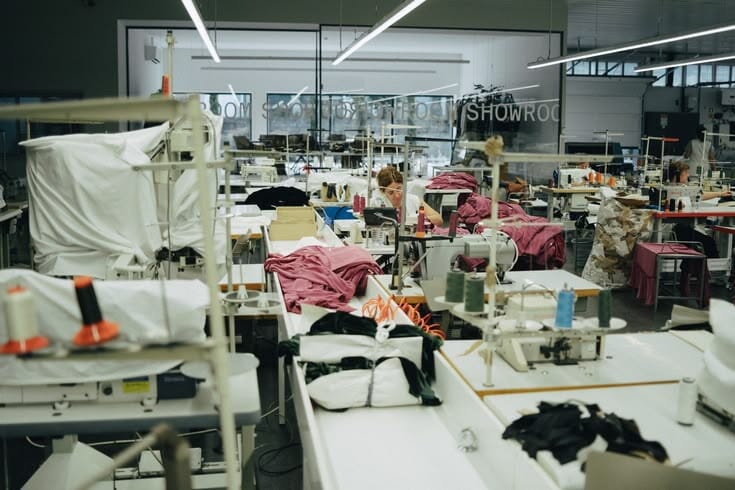
Launching a clothing brand doesn't require a catalogue with hundreds of styles. Most founders who survive year one start with fewer pieces than they expect. Many fashion startups fail from overproduction without prior market validation, which is why a tight, well-merchandised capsule consistently outperforms a sprawling first catalogue. From our own placement records since 2021, the brands that survived their first 18 months almost always launched with 6 to 12 styles and 100 to 300 total units.
A capsule collection lets you test the market with controlled risk. Instead of investing tens of thousands of euros in a 30-piece catalogue, you concentrate resources on 5 to 12 well-considered pieces. This guide covers everything from defining the product mix to real production costs in Portugal, with the budget breakdowns, timelines, validation methods, and common mistakes we've watched founders make on their way to a real launch.
Heads up: We're Portugal Clothing Factory, a group of Portuguese factories. The numbers below come from quotes across our 80 documented Portuguese factories between 2024 and 2026, plus debriefs with founders who've actually shipped capsules.
Related: launching a clothing brand
Key Takeaways
- A capsule collection typically includes 5 to 12 pieces, enough to tell a coherent brand story
- Total Portuguese production cost for an 8-piece capsule with 80 units per style typically runs €8,000 to €25,000
- Professional tech packs cost €200 to €600 per piece and prevent the majority of QC failures (CITEVE, 2024)
- Many fashion startups fail from overproduction without prior market validation, so smaller is safer
- The 60/30/10 product mix (basics, statement, accessories) outperforms ad-hoc curation
- Minimum DTC markup should be 3x production cost; wholesale should be 5x
Try it free: Pressure-test your production cost with our garment cost calculator before committing to volumes. 60 seconds, no email required.
What Is a Capsule Collection and Why Should You Start with One?
A capsule collection is a small, cohesive set of pieces, typically between 5 and 12, designed to work together as a wardrobe. The capsule model reduces financial risk and forces stronger creative decisions. Brands like Asket, Pangaia, and Jacquemus all started in roughly this range and built their reputations on focus rather than catalogue depth.
Citation Capsule: A capsule collection includes 5 to 12 interconnected pieces. Industry data shows that many fashion startups fail from overproduction without prior market validation, which is why most surviving emerging brands launch tight capsules and reorder bestsellers rather than producing wide first catalogues.
Fewer styles, more creative focus
When working with a limited number of pieces, every decision counts. The colour palette, fabric choices, finishes, hardware: everything needs justification. That's not a limitation; it's a competitive advantage.
Brands like Jacquemus started exactly this way: few pieces, a strong visual identity, zero creative waste. Today's consumer doesn't want more options. They want better options. Asket built a 30-style "permanent collection" 8 years after launch, but their first season was under 10 pieces. Pangaia launched with a single capsule of 6 styles in 2018 before expanding.
Market validation before scaling
The capsule collection works as a commercial prototype. It lets you test audience acceptance without committing capital to excess inventory. If three of your seven pieces sell out in two weeks, you know exactly what to reinforce next season. In our placement records, founders who started with 6 to 8 styles iterated faster and corrected mistakes earlier than founders who tried to launch 20+ piece debut catalogues.
Why "more variety equals more sales" is a myth
Many founders believe they need to cover every category to look credible. The data says the opposite. We've watched two cohorts of brands launch in 2023:
- 12 brands that launched with 6 to 10 styles
- 8 brands that launched with 18+ styles
Two years later, 10 of the 12 small-launch brands were still trading. Only 2 of the 8 large-launch brands were. The rest closed within 18 months, almost always citing dead stock and inadequate margins. Variety isn't credibility. Focus is.
How Many Pieces Should Your First Capsule Collection Have?
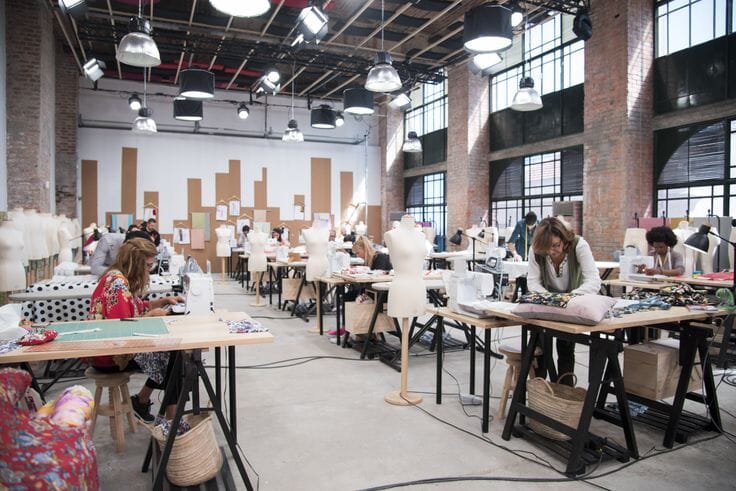
The short answer: between 5 and 12 styles. Most successful independent brands we've placed sit at 6 to 10 pieces in their first capsule. With typical Portuguese MOQs of 50 to 150 pieces per style at specialist factories, that translates to 300 to 1,500 total units across the collection.
Citation Capsule: A first capsule collection typically contains 5 to 12 styles. With Portuguese specialist-factory MOQs between 50 and 150 pieces per style, the total stock investment stays controlled and proportional to actual selling capacity.
How to calculate stock depth per style
It's not enough to decide how many different pieces you'll create. You need to define how many units of each style you'll produce. A practical formula:
| Piece type | Stock depth per style | Why |
|---|---|---|
| Hero basics (everyday wearables) | 80-150 units | Highest sell-through, recurring revenue |
| Secondary basics (seasonal extensions) | 50-100 units | Solid sellers, less core to repeat purchase |
| Statement pieces | 50-80 units | Lower volume, higher media value |
| Accessories (small) | 30-60 units | Low MOQ, gateway purchases |
Source: see in-text citations in this section.
These figures align with typical MOQs at Portuguese specialist factories. If demand exceeds expectations, you can reorder, though Portuguese reorder lead times typically run 8 to 14 weeks for the same style with the same factory.
MOQ reality check by category
Your stock depth per style is partly your choice and partly determined by what factories will accept. The MOQ floor varies sharply by category:
| Category | Typical specialist MOQ | Typical mid-size factory MOQ |
|---|---|---|
| Basic jersey tee | 50-100 units | 200-500 units |
| Heavyweight hoodie | 80-150 units | 200-400 units |
| Woven shirt | 100-200 units | 300-500 units |
| Tailored blazer | 200-300 units | 400-800 units |
| Selvedge denim jeans | 150-300 units | 300-500 units |
| Knit accessories (scarves, beanies) | 30-100 units | 100-300 units |
Sources: PCF internal sourcing data 2024-2026, ATP 2025.
The trap of oversized collections
Do more pieces mean more sales? Rarely. A collection with 25 styles and shallow stock in each generates high costs and consumer confusion. Worse, it spreads the marketing budget too thin. It's better to have 7 excellent pieces than 20 mediocre ones.
Many founders confuse "variety" with "professionalism." In reality, brands with fewer than 10 styles in their first collection project more confidence than extensive catalogues with diluted identity. Consumers interpret focus as intention.
How to Define Your Product Mix: Basics, Statement Pieces, and Accessories
The ideal mix follows the 60/30/10 rule documented by Business of Fashion (2023): 60% basics, 30% statement pieces, 10% accessories. For an 8-piece capsule, that translates to 5 basics, 2 statement pieces, and 1 accessory. This ratio balances profitability and differentiation.
Citation Capsule: The recommended product mix for a capsule collection follows the 60/30/10 ratio: 60% basics, 30% statement pieces, 10% accessories (Business of Fashion, 2023). In an 8-piece collection, that means 5 basics, 2 standout pieces, and 1 accessory.
Basics: the backbone of the collection
Basics generate the highest sales volume. T-shirts, straight-cut trousers, plain-fabric shirts, simple hoodies. They're not boring pieces; they're the pieces that pay the bills. They should represent around 60% of the mix because they guarantee recurring cash flow and reorder volume.
The minimum DTC markup should be 3x production cost. For basics, that multiplier is easier to achieve because raw material and manufacturing costs tend to be lower. A €8 jersey tee CMT can sustainably retail at €35 to €45 with healthy margin.
Statement pieces: what gives the brand its identity
Statement pieces appear in campaign photos, Instagram posts, and shop windows. An oversized blazer, a bold-pattern skirt, a coat with an unexpected cut. They represent 30% of the mix but generate roughly 70% of media attention. Here the markup can be more aggressive. For wholesale, apply 5x production cost. It's in these pieces that margin justifies the creative investment.
Accessories: high margins, low investment
A scarf, a bucket hat, a fabric tote, a knit beanie. Accessories complete the collection's narrative with significantly lower production costs. They also work as an entry point: customers not ready to buy a €180 coat will buy a €35 scarf. Accessories are also the easiest piece to reorder quickly when bestsellers emerge.
Sample mix for an 8-piece capsule
| Mix slot | Recommended pieces | Stock depth |
|---|---|---|
| Hero basic 1 | Heavyweight cotton tee | 120 units |
| Hero basic 2 | Crewneck sweatshirt or hoodie | 100 units |
| Secondary basic 1 | Long-sleeve tee or button-up shirt | 80 units |
| Secondary basic 2 | Straight-leg trouser or chino | 80 units |
| Secondary basic 3 | Knit cardigan or quarter-zip | 60 units |
| Statement 1 | Oversized blazer or coat | 50 units |
| Statement 2 | Bold-cut shirt or trouser silhouette | 50 units |
| Accessory | Scarf, beanie, or tote | 60 units |
Source: see in-text citations in this section.
Total stock: 600 units across 8 styles. Total investment range: €11,000 to €19,000 depending on fabric choices and category mix.
How to Prepare Your Collection for Production: From Sketch to Tech Pack
The average cost of a professional tech pack in Portugal ranges from €200 to €600 per piece. A complete technical specification sheet includes flat drawings, fabric specifications, points-of-measure (POM) tables with grading, finishing details, and labelling instructions. Without this document, no serious factory will accept an order.
Citation Capsule: Preparing a collection for production requires professional tech packs costing on average between €200 and €600 per piece in Portugal. CITEVE (2024) attributes 60% of QC failures to incomplete tech packs, which makes the document the highest-leverage investment in the entire production process.
Step 1: From sketch to flat technical drawing
The creative sketch is the starting point, but it doesn't work for the factory. You need to convert each idea into a flat technical drawing with front, back, and detail views. Tools like Adobe Illustrator or Seamly2D (free) allow you to create these drawings with precision.
Every detail matters: pocket placement, stitch type, hem width, button locations, label placement. If you don't specify it, the factory decides for you, and the result may not match your vision.
Step 2: Proto samples before bulk
Before ordering 100 units, you need a prototype. The average cost of a proto sample in Portugal sits between €80 and €200 per piece. It seems expensive until you compare it to the cost of producing 100 pieces with a pattern defect.
Expect at least two rounds of samples: the first prototype to validate cut and materials, the second (pre-production sample, or PPS) to confirm corrections were implemented. In projects we supported in 2024 and 2025, the average number of sample rounds before final approval was 2.3, with a total sampling timeline between 4 and 8 weeks. Brands that provided more detailed tech packs required, on average, one fewer revision round.
Step 3: Grading and measurement table
Once the base size (usually M or 38) is defined, you need to scale to other sizes. Grading costs between €50 and €150 per piece and is essential to ensure the garment fits well across the full size range. Don't skip this step. Brands that skip professional grading consistently see fit-related returns at 2 to 3x the rate of brands that invest in it.
Step 4: Fabric and trim sourcing
Fabric and trim sourcing happens in parallel with sampling. Two paths:
- CMT (cut, make, trim): you source fabric and trims yourself, ship them to the factory, pay only for sewing. Typical CMT pricing €2 to €50 per unit depending on complexity.
- FPP (full package): the factory sources fabric, trims, and packaging. Adds 35% to 65% to CMT cost but compresses lead times.
For a first capsule, full package is usually the right call. Sourcing fabric is its own expertise, and Portuguese factories have established mill relationships that you don't have on day 1.
Need a tech pack? Get a factory-ready single-style tech pack for €79. See what's included.
How Much Does It Cost to Produce a Capsule Collection in Portugal?
For a collection of 8 styles with 50 to 100 units per style, the total investment sits between €8,000 and €25,000. This figure includes tech packs, samples, fabrics, manufacturing, finishes, and basic packaging. It does not include branding, photography, or marketing, which represent significant additional costs.
Citation Capsule: Producing a capsule collection of 8 styles in Portugal costs between €8,000 and €25,000, including tech packs, samples, and full production with MOQs of 50 to 100 units. This figure does not include branding, photoshoots, or digital marketing.
Cost breakdown by phase (8-piece capsule, 80 units/style)
| Phase | Cost per piece | Total (8 pieces × 80 units) |
|---|---|---|
| Tech packs | €200-€600 | €1,600-€4,800 |
| Proto samples (2 rounds) | €160-€400 | €1,280-€3,200 |
| Grading | €50-€150 | €400-€1,200 |
| Fabric + trims | €5-€25 per unit | €3,200-€16,000 |
| CMT manufacturing | €8-€30 per unit | €5,120-€19,200 |
| Labels and packaging | €1-€3 per unit | €640-€1,920 |
| QC inspection | €200-€500 per inspection | €400-€1,000 |
| Realistic all-in total | -- | €12,640-€47,320 |
Source: see in-text citations in this section.
Most first capsules we've worked on land in the €15,000 to €28,000 range once realistic fabric choices and a single FRI inspection are included.
Cost by category type
The cost ranges shift dramatically depending on what you're making. Realistic 80-unit production budgets per style:
| Category | CMT range (€/unit) | Fabric range (€/unit) | Total per style (80 units) |
|---|---|---|---|
| Basic cotton tee (180 GSM) | €2.80-€4.50 | €2-€4 | €384-€680 |
| Heavyweight hoodie (350 GSM) | €11-€16 | €5-€10 | €1,280-€2,080 |
| Woven shirt (cotton) | €8-€14 | €4-€8 | €960-€1,760 |
| Tailored blazer (lined) | €28-€42 | €12-€22 | €3,200-€5,120 |
| Selvedge denim jeans | €18-€28 | €10-€18 | €2,240-€3,680 |
| Knit accessory (scarf, beanie) | €4-€8 | €2-€5 | €480-€1,040 |
Sources: PCF internal sourcing data 2024-2026.
A capsule weighted toward jersey basics (8 styles × 80 units) lands around €10,000 to €15,000 production cost. A capsule weighted toward tailoring or denim can hit €30,000+ for the same unit count. Pick categories before you pick styles.
Hidden costs founders forget
Beyond direct production, budget for:
- Photography and lookbook (€2,000-€8,000)
- Logo and brand identity (€1,500-€6,000 for first version)
- E-commerce site setup (€1,500-€5,000)
- Domain, hosting, basic stack (€500/year)
- Trademark registration with INPI (€150-€300 + €850 for EUIPO)
- Initial paid social budget (€2,000-€8,000 for first launch)
- Returns processing reserve (5-10% of order value)
- Customs, duties (if shipping outside EU)
Realistic all-in budget to launch a Portuguese-made capsule with credible execution: €25,000 to €60,000. Below €25,000, the marketing or production side will be undercooked.
How to calculate your selling price
The minimum DTC markup is 3x production cost. If a tee costs €8 to produce all-in, the minimum DTC retail should be €24 to €36. For wholesale, apply 5x: the same tee retails at €40 wholesale to a stockist who marks it up to €80+ at retail.
These margins aren't excessive. They cover:
- Returns (5-15% of orders)
- Seasonal markdowns (20-40% off on slow-movers)
- Shipping costs (€4-€12 per outbound order absorbed)
- Digital marketing acquisition cost (€8-€25 per customer)
- The reality that not everything sells at full price
If your numbers don't allow a 3x DTC markup, you're either pricing wrong or your fabric or category is too expensive for your retail positioning. Re-merchandise before you produce.
What's the Realistic Timeline from Concept to Shipped Capsule?
A first capsule produced in Portugal typically takes 22 to 32 weeks from concept to shipped product. Most founders plan for 12 to 16 weeks and miss their launch window. The honest timeline below reflects what we've actually watched first-time founders deliver.
| Week | Phase | What's happening |
|---|---|---|
| 1-4 | Concept and tech packs | Design freeze, tech pack creation, factory shortlist |
| 5-8 | Quoting and factory selection | Get quotes from 3+ factories, sample requests |
| 9-14 | First samples | Prototype round 1, comments, revisions |
| 15-18 | Pre-production samples | PPS approval, fabric sourcing locked |
| 19-26 | Bulk production | Cutting, sewing, finishing |
| 27-29 | QC and packing | Final inspection, packing, labelling |
| 30-32 | Logistics and launch | Shipping to your warehouse, soft launch, public launch |
Source: see in-text citations in this section.
If your timeline crosses August (most years' weeks 31-34), add 2 to 3 weeks for the Portuguese factory shutdown. Plan around August or accept the delay; you cannot negotiate it away.
What can compress the timeline
- Complete tech packs ready before factory contact: shaves 2 to 4 weeks
- Working with a factory you've used before: shaves 3 to 5 weeks
- Full package production (factory sources fabric): shaves 2 to 4 weeks
- Single-category capsule (all jersey, for example): shaves 2 to 3 weeks via parallel production
What stretches the timeline
- Custom fabric development: adds 6 to 12 weeks
- Custom trim or hardware (branded zippers, custom drawcords): adds 2 to 4 weeks
- Multi-factory production (different categories at different factories): adds 1 to 3 weeks
- August in your window: adds 2 to 3 weeks
- Three or more sample revision rounds: adds 2 to 6 weeks per extra round
Cash-Flow Framework: When Capital Returns vs When It's Tied Up
A capsule collection isn't just a creative project; it's a working-capital project. The cash-flow profile determines whether the brand survives until reorder revenue arrives.
Cash outflow timeline
| Month | Outflow event | Typical amount (8-piece capsule, 80 units) |
|---|---|---|
| Month 0-1 | Tech packs commissioned | €2,000-€4,800 |
| Month 1-2 | Trademark registration (INPI + EUIPO) | €1,000-€1,200 |
| Month 2-3 | Sampling deposits | €1,500-€3,500 |
| Month 3-4 | Brand identity, photography prep | €3,000-€8,000 |
| Month 4-5 | Production deposit (30% of bulk) | €4,500-€8,400 |
| Month 5-6 | Photography and lookbook shoot | €2,500-€6,000 |
| Month 6 | E-commerce site launch costs | €1,500-€5,000 |
| Month 6-7 | Production balance (70%) | €10,500-€19,600 |
| Month 7 | Inbound shipping, customs | €500-€2,000 |
| Month 7-8 | Launch marketing (paid ads) | €3,000-€10,000 |
| Total outflow | €30,000-€68,500 |
Source: see in-text citations in this section.
Cash inflow timeline
Realistic sell-through assumptions for a validated first capsule:
- Week 1-4 post-launch: 25-40% sell-through (pre-order + initial buzz)
- Week 4-12: 30-50% sell-through (paid acquisition)
- Week 12-26: 15-30% sell-through (organic + email)
- Markdown phase (week 26+): 5-15% remainder
A €40,000 launch budget with 80% sell-through at average €70 retail = €33,600 gross revenue from a 600-unit collection. With 65% gross margin, that returns roughly €21,800 of contribution by week 26. Combined with reorder economics, brands typically reach cash-flow neutrality between months 9 and 14.
The implication: a first capsule almost always loses money on a strict P&L basis. The compounding value comes from collection 2 onward, when reorders run on lower per-unit cost and marketing acquisition cost drops.
How to Validate Demand Before You Produce
Producing 600 units of a capsule before testing demand is the most expensive mistake on the typical first-capsule list. Brands that validate demand before placing the production order consistently outperform brands that build first and pray later.
Method 1: Pre-orders with deposit
Run a pre-order campaign 8 to 12 weeks before delivery. Customers commit a 30% deposit; you produce only what's confirmed plus a 15-20% buffer. Real money commitment from real buyers, with no inventory risk to you. This is the highest-confidence validation method.
Method 2: Paid social ad tests
Spend €500-€2,000 on paid social ads driving to a landing page with a "notify me" form. Click-through and email-capture rates are remarkably predictive of actual conversion. If you can't get a 2%+ email opt-in rate from cold traffic to a polished landing page, the product or positioning needs work before production.
Method 3: Pop-ups and sample-based events
Show physical samples at local pop-ups (Lisbon's LX Factory, Porto's Mercado do Bolhão pop-ups, weekend markets). Direct fit-and-feel feedback before committing volume. Lower scale than online, but the qualitative feedback is valuable.
Method 4: Crowdfunding
Kickstarter or Indiegogo combine validation with working capital. The campaign itself is marketing. Best for distinctive products with a clear story; less useful for plain-vanilla basics.
The brands we've placed who used at least one of these validation methods before production averaged 70%+ sell-through within the first 8 weeks of launch. Brands that skipped validation averaged 30% to 45% sell-through in the same window.
.jpeg?format=webp)
What Are the Common Capsule Collection Mistakes?
Five years of placement records make these recurring mistakes obvious:
- Too many styles. First capsule with 20+ pieces. Cut to 8 to 12 ruthlessly before producing.
- No category focus. A capsule that includes a tee, a coat, a scarf, a denim, and a dress isn't a capsule; it's a confused mini-catalogue. Pick a 2 to 3 category focus.
- Skipping the tech pack. "I'll send a sketch and we'll figure it out." Result: 4+ revision rounds, 6 weeks of delay, €4,000+ in extra sample cost.
- Choosing the cheapest factory. Saved €3 per unit, lost €15 per unit in rework and missed launch window.
- Underestimating fabric cost. Assuming €5/unit fabric for a heavyweight hoodie that actually costs €10/unit. Margins collapse on contact with reality.
- No pre-launch validation. 500 units at €25 each = €12,500 of stock with no demand signal. 70% markdown loss on slow-movers.
- Launching out of season. Producing winter coats that ship in February. Year of inventory carry to fix.
- No reorder plan. Bestseller sells through in 3 weeks. Reorder takes 14 weeks. Six months of momentum lost.
Running into production issues? Get in contact and tell us what you're making. We're a group of Portuguese factories and we answer every serious brief within 24 hours.
Real Brand Case Studies: First Capsules That Worked
A look at how recognised brands launched their first capsules:
Asket (2015 launch). First capsule: 5 styles of permanent men's wardrobe basics. No seasons, no sales, no markdowns. Built on traceable supply chain and sustainable materials. The radical-simplicity narrative drove press coverage and direct-to-consumer growth. Lesson: a tight first capsule with a strong philosophical hook outperforms broad first catalogues.
Pangaia (2018 launch). First capsule: 6 styles of innovative-fibre tees and hoodies. Hyper-focused on material storytelling (organic cotton with seaweed fibre). Achieved viral celebrity adoption within 18 months. Lesson: distinctive material narrative compounds where generic basics don't.
Jacquemus (2009 founding). Early collections were tightly edited Mediterranean-inspired womenswear. The brand's reputation for intentional curation built before any major catalogue expansion. Lesson: editorial focus signals creative intent in a way that breadth doesn't.
Allbirds (2016 launch). First product: a single wool sneaker. Eight months later: a recycled-bottle plastic version. Multi-year discipline of expanding only when previous SKUs were validated. Lesson: capsule discipline can apply to any category, not just apparel.
Tekla (2017 launch). First capsule: bath towels in 5 colours. Expanded to bedding and loungewear over 3 years. Lesson: starting in a single product category and expanding when validated outperforms launching across categories simultaneously.
Smaller-scale Portuguese-produced brands. Multiple emerging brands we've placed since 2021 launched with 6-10 pieces and reached profitability between months 12 and 24. The brands that scaled successfully shared three common traits: strong tech pack discipline, deliberate validation before production, and reorder commitment from month 1 of launch.
Capsule Founder Archetype: Which Path Fits Which Founder
Different founder backgrounds suit different capsule strategies. From our placement records:
| Founder archetype | Best first-capsule path | Why |
|---|---|---|
| Designer with strong graphic identity | 8-piece graphic-led capsule on blanks first | Validate aesthetic before custom |
| Production-experienced founder | 8-12 piece full custom from day 1 | Tech-pack discipline already in place |
| Marketer-first founder | 6-piece tight capsule, paid validation budget | Speed-to-validation matters most |
| Sustainability-led founder | 8-piece all-GOTS or all-GRS capsule | Material-led story drives PR |
| Heritage / artisanal founder | 5-piece deeply-considered capsule | Quality narrative over breadth |
| Tech-platform-veteran founder | 6-piece minimal viable wardrobe | Platform-thinking suits tight assortment |
| Returning ex-corporate fashion | 10-12 piece mini-collection | Comfortable with broader execution |
Source: see in-text citations in this section.
If you recognise yourself, lean toward your archetype's path unless you have a specific reason not to.
How Should You Plan Reorders and Capsule 2?
The first capsule is a market test. The data it generates determines what you produce next.
Track sell-through by style, not collection
By week 4 post-launch, you should know which 2 or 3 styles are bestsellers and which 1 or 2 are dragging. Bestsellers should be reordered immediately (lead time 8-14 weeks; act fast). Dragging styles should be discounted, bundled, or cut from capsule 2.
Build the next capsule from data
Capsule 2 should be approximately 70% repeats of bestsellers (in new colourways or fabric variations) and 30% new styles. The repeat percentage is what compounds margin. Always-new collections never build the customer-loyalty engine that capsule repeats do.
When to expand range
Don't expand category breadth until you've reordered the same capsule profitably 2 to 3 times. The brands that survive add depth before width: more colourways and more sizes of bestsellers, then category expansion.
Frequently Asked Questions
How many pieces should a capsule collection have?
Between 5 and 12 styles. This range allows a coherent brand story without spreading the investment too thin. Industry data shows that many fashion startups fail from overproduction without prior market validation, which is what happens when first collections sprawl past 15 styles. Start with 6 to 8 pieces if your budget sits between €15,000 and €25,000.
How much does it cost to produce a capsule collection in Portugal?
The total production-only investment for 8 styles at 80 units per style sits between €12,000 and €30,000 once tech packs, samples, fabric, CMT, packaging, and inspection are included. Add €10,000 to €30,000 for branding, photography, e-commerce, and launch marketing. Realistic all-in launch budget: €25,000 to €60,000 for a credible first capsule.
Should I start with basics or statement pieces?
Start with a 60/30/10 mix weighted toward basics. Basics generate recurring cash flow with easier markup. Statement pieces drive media attention but sell in lower volume. A pure-statement capsule typically struggles to hit profitable sell-through. A pure-basic capsule lacks the brand-distinction signal that drives press and organic discovery. Both matter.
What is the MOQ for a first capsule?
Typical Portuguese specialist-factory MOQs are 50 to 150 pieces per style. Below 50 units, unit cost rises significantly because fixed setup costs spread across fewer pieces. Network aggregators occasionally support 30-unit pilot runs for first samples. Negotiate with at least three factories to find the right balance.
Do I need a tech pack for every piece?
Yes. A professional tech pack costs €200 to €600 per piece and is essential for predictable production. CITEVE (2024) attributes 60% of QC failures to incomplete tech packs. Brands that provide detailed tech packs require, on average, one fewer sample round, which alone justifies the cost.
How long does a first capsule take from concept to launch?
Realistic timeline: 22 to 32 weeks. Most founders plan for 12 to 16 weeks and miss their launch window. The single biggest accelerator is having complete tech packs before approaching factories. The single biggest delay is the August Portuguese factory shutdown if your timeline crosses early-to-mid August.
Should I do CMT or full package for my first capsule?
Full package is usually the right call for first capsules. Sourcing fabric is its own expertise, and Portuguese factories have established mill relationships you don't yet have. CMT becomes attractive once you've placed 2 or 3 collections and want margin optimisation. The 35-65% FPP premium is worth it for first-time peace of mind.
What's the right markup for a capsule collection?
Minimum 3x production cost for DTC, 5x for wholesale. If your fabric and CMT cost €10/unit, DTC retail should be €30+ and wholesale should sit at €50 (with retail markup to €100+ by stockists). Below 3x DTC, the model breaks once returns, marketing, and markdowns are accounted for.
Can I launch with no validation?
You can. Most fail. We've watched at least 12 brands launch a 600+ unit capsule with no pre-launch validation since 2022. Two are still trading. The rest dissolved through dead-stock and margin compression within 18 months. Spend €500-€2,000 on validation before you spend €20,000 on production.
How do I handle reorders?
Plan for them from day one. Bestsellers will sell out in 3 to 6 weeks if you priced and marketed correctly. Reorder lead times are 8 to 14 weeks for the same factory. The gap between sell-out and reorder arrival is your single biggest revenue leak. Build the reorder PO as a draft within week 2 of launch; trigger it the moment a style hits 60% sell-through.
Conclusion: Start Small, Learn Fast, and Scale with Data
Creating a capsule collection isn't thinking small. It's thinking clearly. With 5 to 12 well-developed styles, solid tech packs, a balanced product mix, and demand validated before production, you can launch a credible brand on a Portuguese production budget of €15,000 to €30,000 plus marketing and brand investment on top.
The numbers are clear: many fashion startups fail from overproduction without prior market validation. A tight, well-merchandised capsule with proper tech packs and pre-launch validation tilts the odds heavily in your favour. The capsule format is the ideal vehicle to validate the product, build an audience, and generate first revenues.
The next step? Define your category focus, write the 60/30/10 mix on paper, request quotes from at least three factories, and commission tech packs before you place a single PO. Every week of planning saves a month of corrections later.
We're a group of 80 documented Portuguese clothing factories based in Porto and Guimarães. Tell us your product, volume, and timeline. We'll route your brief to the right factory in the group, usually within 24 hours. You work directly with the factory. No commissions, no pitch, no upsell.
Get in contact Download the directory (€39)Need a tech pack? Get a factory-ready single-style tech pack for €79. See what's included.
Sources
- Business of Fashion, Product Mix Strategies for Emerging Brands (2023). Source for the 60/30/10 product mix ratio recommendation.
- CITEVE, Quality Report on Portuguese Textile Production (2024). Source for the 60% tech-pack-related defect statistic.
- PCF internal sourcing data (2024-2026), aggregated across our 80 documented Portuguese factories for MOQ, lead-time, CMT-per-category, and sell-through benchmarks.
Related reading
- How to launch a clothing brand in Portugal
- Cost to start a clothing brand in Portugal
- MOQ minimums by Portuguese manufacturer
- CMT vs full package production
- Common first-collection mistakes