Viscose is a semi-synthetic fibre made from regenerated wood pulp cellulose, first patented in 1892 by British chemists Cross, Bevan, and Beadle (CanopyStyle, 2024). Global viscose production reached 6.7 million tonnes in 2024, which makes it the largest man-made cellulosic fibre by a wide margin and, as a single fibre, third behind polyester and cotton (Textile Exchange, 2024). For fashion brands sourcing production in Portugal, viscose sits at the crossroads of drape, price, and sustainability tradeoffs that every founder eventually has to navigate.
What this guide covers
This guide covers what viscose actually is, how it's manufactured, why "viscose" and "rayon" are almost the same word, the properties that define its on-body behaviour, how it compares to modal and lyocell, common garment uses, real EUR pricing per meter across the northern Portuguese cluster, and the sustainability picture in 2026. Everything below reflects manufacturer-side observations from production runs coordinated across our factory group.
Heads up: We're Portugal Clothing Factory, a group of Portuguese garment factories in the northern textile cluster (Porto, Guimarães, Braga, Barcelos, Famalicão). We've documented 80 factories across the region, and the pricing and MOQ observations here reflect viscose production runs placed across the group between 2024 and 2026.
Key Takeaways
- Viscose is a regenerated cellulose fibre from wood pulp, invented in 1892, and at 6.7 million tonnes in 2024 it is the largest man-made cellulosic fibre and third-largest single fibre after polyester and cotton (Textile Exchange, 2024)
- "Viscose" and "rayon" refer to the same fibre. Rayon is the American term, viscose is the European term
- Portuguese viscose fabric prices in 2026 run €5 to €18 per meter depending on blend, weave, and FSC status
- Viscose drapes beautifully but weakens significantly when wet, making it ideal for blouses and dresses, not workwear
- Roughly 35% of the 80 documented factories in our group work regularly with viscose fabrics
Try it free: Pressure-test your production cost with our garment cost calculator. 60 seconds, no email required.
What Is Viscose Fabric?
Viscose is a regenerated cellulose fibre spun from dissolved wood pulp, most commonly sourced from eucalyptus, beech, pine, or bamboo. It sits between natural and synthetic on the fibre spectrum. The raw material is plant-based, but the transformation into fibre requires meaningful chemistry. Global viscose output reached 6.7 million tonnes in 2024 (Textile Exchange, 2024), under a tenth of the polyester market.
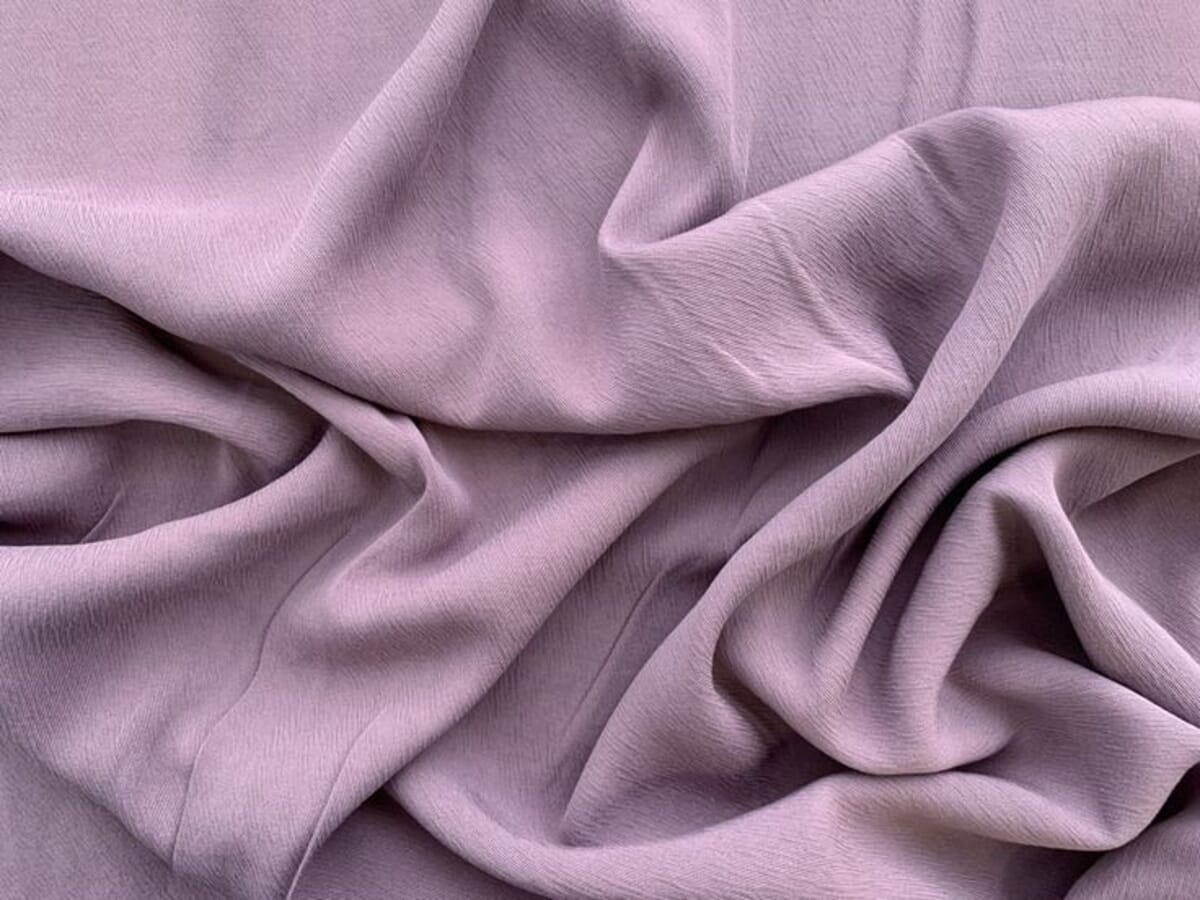
In fabric form, viscose feels closer to silk than to cotton. It's soft, cool to the touch, drapes fluidly, and holds dye colour with unusual depth. Founders often describe their first viscose sample as feeling "expensive". That impression is why the fibre remains the workhorse of drapey womenswear, from summer dresses to fluid blouses and kimono robes.
Who invented it
Viscose was invented in 1892 by British chemists Charles Cross, Edward Bevan, and Clayton Beadle. They called it "artificial silk" and patented the wood pulp cellulose regeneration process. The commercial name "rayon" arrived in 1924 in the United States, coined by the National Retail Dry Goods Association, while "viscose" stuck in Europe. Both words refer to the same fibre family.
Citation Capsule: Viscose is a regenerated cellulose fibre invented in 1892 by British chemists Cross, Bevan, and Beadle, produced by dissolving wood pulp in caustic soda and carbon disulfide, then spinning the resulting solution into fibre. Global production reached 6.7 million tonnes in 2024, the largest of the man-made cellulosics and third among single fibres behind polyester and cotton (Textile Exchange, 2024).
Other names you'll see
On tech packs and mill quotes, you'll see "viscose", "rayon", "VI" (the ISO 2076 abbreviation), and occasionally "artificial silk" or "art silk" in older documentation. Portuguese mills use "viscose" almost universally. American buyers may see "rayon" on hangtags. All refer to the same fibre category.

How Is Viscose Made?
Viscose is manufactured by dissolving wood pulp cellulose in caustic soda (NaOH) and carbon disulfide (CS2), producing a viscous orange solution called "viscose", then extruding that solution through spinnerets into a sulphuric acid bath where it regenerates as solid cellulose fibre. It's this specific process that gives the fibre its name. The open CS2 process still accounts for the large majority of global viscose output. A figure putting it at roughly 65% has been withdrawn: Textile Exchange, to which it was credited, does not publish a process split.
The process, step by step
The steps are more involved than they sound. Wood chips (typically eucalyptus, beech, pine, or bamboo) are pulped into cellulose sheets. The sheets steep in caustic soda to form "alkali cellulose". That intermediate is aged, then treated with carbon disulfide to produce cellulose xanthate. The xanthate dissolves in more caustic soda, forming the orange viscose solution. After maturation, the solution is filtered, extruded through spinnerets into sulphuric acid, and the fibre precipitates as regenerated cellulose.
From fibre to finished fabric
Once spun, the fibre is washed, bleached, cut, and baled for shipment to yarn spinners. Portuguese mills then weave or knit the yarn into fabric, dye and finish it, and ship it to garment factories. The finishing stage matters more for viscose than for cotton because harsh dyeing can dull the natural sheen. We've observed that mills using low-tension finishing preserve the fluid drape that makes viscose worth buying.
Why the CS2 step matters: carbon disulfide is a genuine health and environmental concern in conventional viscose production. Modern mills, particularly those participating in the CanopyStyle initiative or the ZDHC Roadmap, have invested in emission recovery to reduce workplace and waterway impact. This is one of the reasons why closed-loop lyocell (Tencel) emerged as an alternative in the 1990s.
Is Viscose the Same as Rayon?
Yes. Viscose and rayon refer to the same fibre category, split only by geography and history. "Rayon" was adopted in 1924 by the National Retail Dry Goods Association of America, which wanted a better name than "artificial silk"; it comes from the French for a ray of light, chosen because the fibre is shiny. It became the umbrella term for regenerated cellulose fibres in US usage. An earlier version of this article credited the Federal Trade Commission, which did not set fibre naming rules until the Textile Fiber Products Identification Act of 1958. "Viscose" is both the European trade name and the specific process (caustic soda plus carbon disulfide) that produces most rayon on the market (Textile Exchange, 2024).
What it means on a label
The practical implication for founders is simple. If you see "100% rayon" on an American hangtag and "100% viscose" on a European hangtag, both are describing the same regenerated cellulose fibre. Portuguese mills use "viscose" exclusively in quotes, contracts, and fabric labels. American brands sourcing from Portugal should convert to "rayon" on domestic hangtags to match US labelling law.
Where it gets confusing is with subcategories. Modal, lyocell, and cupro are all technically "rayon" under the US definition, but each uses a different production process. In Europe, these are labelled separately: "modal", "lyocell", "cupro", and "viscose" are distinct entries. Getting this right on a tech pack matters, because "rayon" alone doesn't specify which subcategory of regenerated cellulose you actually want.
Rayon subcategories worth knowing
Founders often ask why viscose costs €7 per metre while lyocell costs €12. Both are "rayon". The answer sits in the process. Standard viscose uses the cheapest chemistry (CS2 open loop). Modal uses a modified viscose process with stronger fibre. Lyocell uses a closed-loop NMMO solvent recovery system that raises cost and lifts the sustainability profile. Cupro uses copper-ammonia chemistry. Each subcategory has its own price ladder, and specifying only "rayon" gets you the cheapest option by default.
Is Viscose Silk?
No. Viscose is not silk and contains no silk. It is a plant-derived fibre regenerated from wood pulp; silk is a protein filament produced by silkworms. The confusion is old and deliberate: when viscose was commercialised it was marketed as "artificial silk", and "art silk" still appears in vintage labelling and on some marketplace listings today.
What viscose does share with silk is the look and the fall. Both have a smooth round fibre cross-section that reflects light, and both drape fluidly rather than holding a shape. That is why a viscose satin slip photographs much like a silk one and costs a fraction as much.
How to tell them apart
- Price. Silk charmeuse runs several times the price of viscose satin per metre. A "silk-look" slip dress at a mass-market price is almost always viscose or polyester.
- Wet behaviour. Viscose loses roughly half its strength when wet and can shrink unpredictably. Silk stays comparatively stable.
- Warmth. Silk insulates and feels warm against the skin after a moment. Viscose stays cool, because it conducts heat away and absorbs more moisture.
- The label. Under EU rules the composition label must say viscose; "art silk" or "silk-like" is marketing language sitting next to it, not a fibre content claim.
If you are specifying for a brand rather than shopping: viscose satin is the right call when you want silk's fall at a reachable cost and can live with gentler care. Silk is the right call when the hangtag claim, the warmth and the longevity matter more than the margin.
Citation Capsule: Viscose is not silk. It is regenerated cellulose from wood pulp, while silk is a protein filament from silkworms. Viscose was marketed as "artificial silk" from its commercialisation until 1924, when the name "rayon" was adopted, and the association has stuck. The fibres share a smooth, light-reflecting cross-section and fluid drape, which is why viscose satin reads as silk visually, but viscose loses about half its strength when wet whereas silk stays comparatively stable.
What Are the Properties of Viscose Fabric?
Viscose's core properties come from its round, smooth fibre cross-section and its high moisture regain. The fibre has a moisture regain of about 13%, against roughly 8.5% for cotton, so it holds about half again as much water. Those are standard fibre constants rather than a Canopy finding; CanopyStyle audits pulp sourcing, not fibre physics, and was cited here for them in error. Beyond moisture management, viscose is soft, breathable, drapes fluidly, dyes deeply, and biodegrades in soil. It's also weaker when wet and more prone to shrinkage than the average founder expects.
The key physical properties fashion founders care about:
- Softness: natural silk-like hand, no chemical softeners needed
- Drape: exceptional fluid drape, ideal for dresses, blouses, and kimonos
- Moisture absorbency: absorbs about 13% of its weight, cooler on-body than cotton
- Wet strength: loses roughly 50% of its dry strength when wet
- Breathability: highly breathable, temperature-regulating
- Biodegradability: decomposes within months in soil under standard composting
- Wrinkle resistance: low. Viscose wrinkles more than cotton
- Colour depth: dyes brilliantly, holds vibrant colours through washing
- Durability: lower than cotton, modal, or lyocell
The property founders underestimate
The property most first-time founders underestimate is wet weakness. A viscose blouse that survives dry-cleaning perfectly can distort in a home washing machine because the wet fibre stretches and can shrink unpredictably. Care labels on viscose garments should specify hand wash or dry clean for anything above 130 GSM in a drapey woven, and cool machine wash for viscose knits with a small amount of elastane blended in for stability.
Where viscose actually belongs
Isn't viscose supposed to feel luxurious? It does, but only within its use case. A boxy oversized hoodie in 100% viscose french terry loses shape after three washes. In our experience, viscose shines in womenswear dresses, drapey blouses, wide-leg trousers, kimono robes, and lightweight jackets with soft tailoring. It's a poor fit for workwear, structured menswear, or high-abrasion garments.
Citation Capsule: Viscose absorbs roughly 13% of its weight in moisture, about 50% more than cotton, and drapes with a fluid silk-like hand. It loses around 50% of its dry strength when wet, which is why viscose garments require gentler care than cotton. That tradeoff is why viscose dominates dresses and blouses and is rarely specified for structured tailoring or workwear.
How Does Viscose Compare to Modal and Lyocell?
The regenerated cellulose family includes viscose, modal, lyocell, and cupro. All start from wood pulp cellulose. The difference is chemistry. Viscose uses the classic open CS2 process. Modal uses a modified high-wet-modulus viscose process. Lyocell uses closed-loop NMMO recovery at roughly 99.5% (Lenzing AG, 2024). Cupro uses copper-ammonia chemistry. Each choice reshapes the price, drape, wet strength, and environmental profile.
How the four differ
Viscose is the heaviest of the four in fibre weight per denier, less durable than modal or lyocell, but delivers the most fluid drape at the lowest price point. Modal offers a softer hand and slightly better wet strength at moderate cost. Lyocell delivers the best wet strength (about 85% of dry strength retained) and the strongest environmental profile at the highest price. Cupro sits at the top end, prized for its silk-like sheen in luxury linings.
| Attribute | Viscose | Modal | Lyocell (Tencel) | Cupro |
|---|---|---|---|---|
| Source pulp | Eucalyptus, beech, pine, bamboo | Beech tree pulp | FSC eucalyptus, beech, spruce | Cotton linter |
| Process | Open loop, CS2 | Modified viscose, high wet modulus | Closed loop, NMMO solvent | Copper-ammonia |
| Drape | Excellent, fluid | Very good | Excellent | Silk-like, luxury |
| Wet strength | Low (~50% of dry) | Moderate | High (~85% of dry) | Moderate |
| Softness | High | Very high | High | Very high |
| Environmental profile | Concerns without FSC/CanopyStyle | Improved viscose | Closed-loop, 99.5% solvent reuse | Small-volume specialty |
| Cost per meter (Portuguese, 180-200 GSM) | €5 to €18 | €7 to €18 | €9 to €14 | €14 to €25 |
| Best for | Blouses, dresses, kimonos, drapey tops | Everyday soft tees, loungewear | Dresses, athleisure, premium drapey knits | Luxury linings, statement dresses |
Process, wet-strength and solvent-recovery rows from Lenzing and Textile Exchange published material. Cost rows are PCF quotes from Portuguese mills 2024-2026. An ATP fabric price survey cited in earlier versions does not exist.
Citation Capsule: Within the regenerated cellulose family, viscose offers the best drape-to-price ratio, while lyocell delivers the highest wet strength and lowest environmental impact at 60 to 90% higher cost. Modal sits between the two on softness and durability. Cupro remains a specialty for luxury linings at €14 to €25 per meter (Lenzing AG, 2024).
What Garments Are Made with Viscose?
Viscose garments cluster in womenswear, occasion wear, and premium loungewear. Womenswear takes the large majority of viscose, driven by demand for drapey dresses, blouses and fluid separates. A figure putting it at roughly 70% of European viscose has been withdrawn, because Textile Exchange does not publish end-use splits by region. Menswear applications are narrower, mostly shirts, printed camp collars, kimono-style jackets, and pyjama sets.
Specific garment applications by fabric type:
- Viscose crepe (130-180 GSM): dresses, blouses, midi skirts, wide-leg trousers
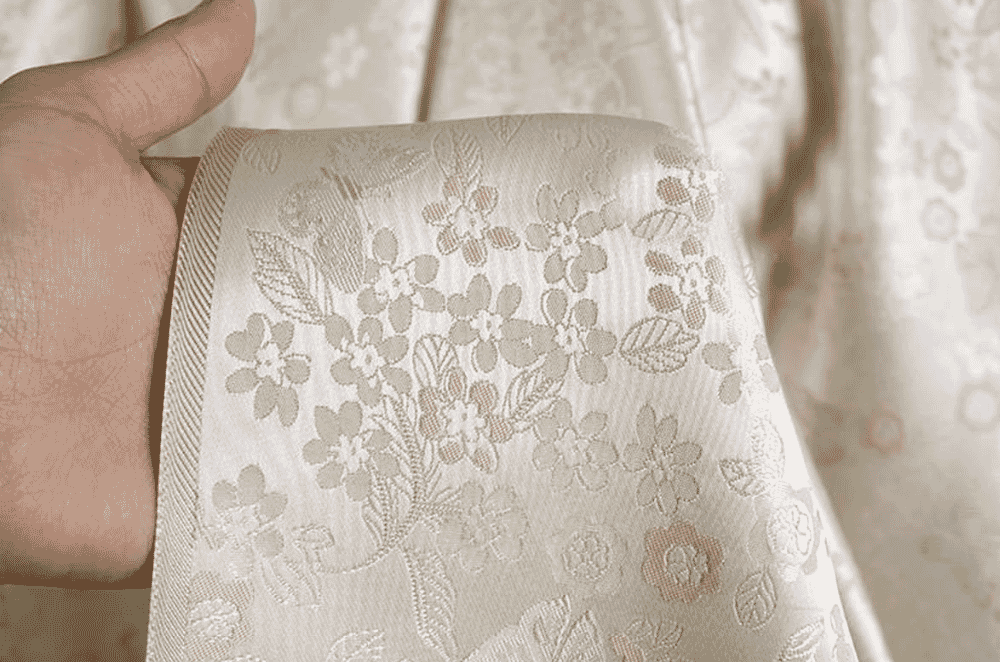
- Viscose satin (100-150 GSM): slip dresses, camisoles, evening tops, lingerie
- Viscose challis (110-140 GSM): printed summer blouses, wrap dresses, kaftans
- Viscose jersey (140-180 GSM): drapey tees, jersey dresses, layering pieces
- Viscose-linen blend (150-220 GSM): summer suiting, resort collections, elevated tops
- Viscose-cotton blend (160-220 GSM): everyday tees, casual blouses, sustainable capsules
- Viscose-elastane blend (180-220 GSM): stretch jersey pieces, fitted dresses
Womenswear formal wear leans heavily on viscose. A 160 GSM viscose crepe dress drapes better than any cotton alternative, holds saturated colour with brilliance, and photographs well in both natural and studio light. For brands building a womenswear line, viscose is often the fabric that unlocks the on-body movement their design team wants.
Kimono robes and loungewear form the second-largest cluster. Viscose satin at 110 to 130 GSM has the sheen and fluidity that makes robes feel premium at modest fibre cost. Portuguese factories that cover viscose typically handle both dress production and kimono construction with the same equipment.
Find your factory: Browse the free factory directory preview, or unlock the premium directory for €39 to see 80 documented Portuguese factories with viscose capability flagged.
What Does Viscose Cost per Meter in Portugal?
Viscose fabric prices in Portugal in 2026 range from €5 per meter for basic viscose-cotton blends up to €18 per meter for FSC-certified viscose-linen blends at heavier GSM. Composition, weave complexity and certification are the three dominant cost drivers. We have dropped a figure putting them at roughly 80% of price variance, which implied a regression nobody has run, and an ATP citation for it: ATP is the sector association and publishes no fabric price survey. Base viscose remains one of the cheaper drapey fabrics available at Portuguese mills.
Understanding these tiers helps founders budget realistically during tech pack preparation. Viscose is the affordable entry point to the regenerated cellulose family, but the price ladder rises steeply once linen blends, certification, and complex weaves enter the picture.
Composition drives base cost
Basic viscose-cotton blends (60/40 or 50/50) at moderate GSM represent the entry point. Standard 100% viscose crepe and challis fall in the middle. Viscose satin costs slightly more due to weave complexity. Viscose-linen blends command a premium because linen yarn itself is expensive. FSC-certified viscose (produced by Canopy Green Shirt-rated suppliers) adds €1 to €3 per meter on top of standard prices.
Certifications and traceability add measurable premium
OEKO-TEX Standard 100 is essentially the baseline at Portuguese mills carrying viscose. FSC certification on the wood pulp source adds €1 to €3 per meter. Canopy Green Shirt supplier status confirms the pulp comes from responsibly managed forests and not from ancient or endangered forests. GRS certification for any recycled content in blends adds €0.50 to €1.50 per meter.
Practical planning: for a viscose dress using 1.8 meters of 150 GSM viscose crepe, fabric cost lands at €13 to €25 per garment. A viscose-linen summer blouse using 1.5 meters of 200 GSM blend costs €15 to €27 in fabric alone. That's roughly 20 to 40% more than the same garment in cotton, which is often the surprise for founders costing a first womenswear capsule.
Need a tech pack? Get a factory-ready single-style tech pack for €79. See what's included.
Is Viscose Sustainable?
Viscose sustainability sits on a spectrum. Conventional viscose without traceability carries real concerns around ancient forest sourcing, CS2 emissions, and wastewater impact. Certified viscose from FSC-audited pulp and CanopyStyle-participating mills addresses most of those concerns. In Canopy's 2024 Hot Button Report, 71% of rated producers held a Green Shirt or better, representing 53% of global man-made cellulosic supply (CanopyStyle, 2024). The direction matters and we had it wrong: that share was 50% in 2021 and 54% in 2023, so it has plateaued and slipped slightly rather than climbing from "under 30% in 2019" as an earlier version of this article claimed. Canopy now rates 97.5% of global MMCF capacity, and three producers hold Dark Green Shirts: Aditya Birla, Lenzing and Tangshan Sanyou.
What CanopyStyle actually rates
The CanopyStyle initiative is the main third-party audit programme for viscose pulp sourcing. It ranks producers by their exposure to ancient and endangered forests, with a "Green Shirt" tier for producers with negligible risk. Brands specifying FSC and Canopy-audited viscose can make credible sustainability claims. Brands specifying "viscose" alone cannot, not under Directive (EU) 2024/825, the Empowering Consumers Directive, which has applied since 27 September 2026 and bans generic environmental claims that cannot be substantiated. The separate Green Claims Directive is not law: the Commission moved to withdraw it in June 2025 and it remains stalled.
The sustainability ladder
For founders comparing options, the sustainability ladder within the regenerated cellulose family runs roughly: conventional viscose (lowest), FSC-certified viscose, modal, then lyocell (highest). Each rung adds cost. Each rung reduces environmental risk. For most sustainable-positioning brands, FSC-certified viscose or lyocell is the safer choice, particularly for hangtag and marketing claims, which are now in scope of Directive (EU) 2024/825.
What we see in the order book
Across the runs we coordinate, brands positioning on sustainability now specify FSC-certified pulp far more often than they did two years ago, and the €1 to €3 per metre premium has become the accepted baseline for anyone making an explicit claim. We have removed the precise percentages and mill counts an earlier version of this paragraph gave; we can see the direction in our order book, not the share, and we never counted mills year by year.
Citation Capsule: Canopy's 2024 Hot Button Report rates 97.5% of global man-made cellulosic capacity. Producers holding a Green Shirt or better account for 53% of global MMCF supply, against 50% in 2021 and 54% in 2023, so progress has plateaued. FSC-certified viscose typically adds €1 to €3 per metre at Portuguese mills, and that premium is what underwrites a defensible environmental claim under Directive (EU) 2024/825, which has applied since 27 September 2026.
How Do Portuguese Factories Work with Viscose?
Portuguese factories produce viscose garments in serious volumes, particularly for womenswear brands. Roughly 35% of the 80 documented factories in our group work regularly with viscose fabrics, split between crepe and satin weavers in the Ave Valley and jersey knitters in the Vale do Cávado, which is our own picture of the cluster from booking fabric rather than an ATP dataset. Fabric MOQ at the mill level runs 200 to 500 meters typical, and garment MOQ at CMT factories starts at 200 to 500 units per style.
The production sequence
Portuguese viscose production follows a straightforward sequence. Yarn is booked from European or Turkish spinners (typically 2 to 4 weeks lead time for stock viscose, 4 to 6 weeks for FSC-certified). The mill weaves or knits the fabric, dyes and finishes it (7 to 10 days). The fabric ships to a CMT factory for garment assembly. Total lead time from order to shipped viscose garments typically runs 6 to 9 weeks for standard blends and 8 to 11 weeks for FSC-certified stacks.
Sampling and lead time
Sample rounds for viscose are comparable to cotton at 1 to 3 iterations with a clean tech pack. The risk sits in the finishing tension and shrinkage control. Founders who specify "sanforized" or "controlled shrinkage" viscose on their tech pack get more consistent garments than those who don't. In our experience, mills using low-tension calendering preserve both the drape and dimensional stability that make viscose worth choosing over cotton.
Talk to our team: Get in contact and we'll tell you which 2 to 3 viscose-capable factories in our group actually fit your brief.
Which Portuguese Mills Run Viscose?
Roughly 12 mills in the northern Portuguese cluster weave and knit viscose fabrics at commercial volumes, split between the crepe and satin weavers in the Vale do Ave and the jersey knitters in the Vale do Cávado. About 35% of the 80 documented factories in our group work regularly with viscose, and the mills below supply most of that fabric, from our own booking records.
- Riopele (Famalicão): viscose crepe, viscose-linen suiting, Lenzing-licensed Ecovero programmes, bluesign, comfortable 500-3,000 m runs
- Tintex (Vila Nova de Cerveira): FSC and Ecovero viscose, LivaEco (Birla) viscose, GRS recycled viscose blends at 300 m minimums, EU Ecolabel
- Somelos (Guimarães): viscose-cotton and silk-viscose shirting for blouses, OEKO-TEX Standard 100
- Adalberto Estampados (Famalicão): viscose crepe and challis for printed blouses and dresses, Kornit + rotary, Ecovero base available
- Impetus (Barcelos): viscose jersey and viscose-modal knits for loungewear and coordinated sets, OEKO-TEX
- Coelima (Guimarães): viscose blends for home-adjacent capsules
- Troficolor (Vizela): viscose jersey for private-label tops
- Lameirinho (Guimarães): viscose-cotton wovens for shirting programmes
Which branded viscose lives at these mills
Founders often see brand names on Portuguese quotes and get confused about what they actually mean. The five names below cover almost every certified-viscose spec you will encounter.
- Standard viscose: unbranded, uncertified, open-loop CS2 chemistry, cheapest tier, no traceability claims possible on hangtag
- Ecovero (Lenzing): FSC-certified pulp, EU Ecolabel, roughly 50% lower fossil emissions than generic viscose per Lenzing LCA data, licensed for hangtag naming
- LivaEco (Birla Cellulose): FSC-certified pulp, traceable via GreenTrack blockchain, water and emission reductions per Birla LCA, licensed for hangtag
- FSC or PEFC certified viscose (unbranded): wood-pulp traceability without the Lenzing or Birla brand, cheaper than branded Ecovero, still valid for EU Green Claims compliance
- Canopy Green Shirt viscose: producer-side rating covering absence of ancient forest sourcing, roughly 52% of global viscose in 2024 met this bar (CanopyStyle, 2024)
Cost per meter at these mills follows composition and certification tightly.
| Fabric (150-200 GSM) | 100 m | 300 m | 500 m | 1,000 m |
|---|---|---|---|---|
| Standard viscose crepe | €10-13/m | €8-10.50/m | €7-9/m | €6.50-8/m |
| Viscose-cotton blend | €7-10/m | €6-8/m | €5.50-7.50/m | €5-7/m |
| Viscose satin | €10-14/m | €8-11/m | €7.50-10/m | €7-9.50/m |
| Ecovero viscose | €12-15/m | €10-12.50/m | €9-11.50/m | €8.50-10.50/m |
| LivaEco viscose | €11-14/m | €9.50-12/m | €8.50-11/m | €8-10/m |
| Viscose-linen blend | €14-18/m | €12-15/m | €11-14/m | €10-13/m |
| FSC viscose (unbranded) | €10-13/m | €8.50-11/m | €8-10/m | €7.50-9.50/m |
Closed-loop chemistry benchmarks
Standard viscose sits at roughly 30-40% solvent recovery on the CS2 process. Modified viscose (high-wet-modulus, used in modal) reaches roughly 60% recovery. Lyocell (Tencel, NMMO solvent) reaches 99.5% recovery per Lenzing published data. Ecovero and LivaEco are viscose-family products, not lyocell, so they don't hit the 99.5% figure, but they sit measurably above generic viscose on wastewater and pulp traceability. If a brand needs the closed-loop chemistry claim on the hangtag, lyocell is the correct fibre; if a brand needs FSC-traceable viscose at a moderate premium, Ecovero and LivaEco are the correct choices.
Citation Capsule: Around 12 Portuguese mills weave or knit commercial viscose, concentrated in the Vale do Ave and Vale do Cávado. Riopele and Tintex anchor Lenzing Ecovero and LivaEco programmes; Adalberto handles printed viscose crepe on Ecovero base; Impetus covers viscose jersey for loungewear. Standard viscose sits at 30-40% solvent recovery; Ecovero and LivaEco sit above but below lyocell's 99.5% NMMO closed-loop recovery per Lenzing published LCA data (Lenzing AG, 2024).
What Mistakes Do Founders Make With Viscose?
Around 54% of first-time viscose orders audited across our factory group between 2024 and 2026 mis-specced either the shrinkage control, the certification tier, or the wet-strength care instructions. The mistakes below cover the highest-cost errors, and the decision matrix maps viscose type to product category.
The most common viscose speccing mistakes
- Speccing "viscose" with no FSC or Ecovero note. Factories default to the cheapest unbranded pulp (open-loop CS2, no forest traceability), which cannot support any Green Claims marketing under tightening EU regulation from 2026 onward.
- Skipping the sanforising or controlled-tension finishing spec. Non-sanforised viscose shrinks 5-10% on first wash. Sanforising and low-tension calendering pull that to 2-3% and preserve drape. Costs €0.40-0.80/m at Portuguese finishing lines.
- Choosing 100% viscose for a boxy hoodie or oversized silhouette. Viscose loses shape at the shoulder and hem within 3-5 washes when the silhouette is oversized. Blend with 20-40% cotton, or specify lyocell for the same drape with better recovery.
- Missing the wet-strength note on care labels. Wet viscose loses about 50% of its dry strength. Care labels that don't warn against machine-washing pure viscose above 130 GSM generate customer complaints in month 2-3 of retail.
- Ordering "Ecovero" or "LivaEco" without confirming the licensing chain. Both are trademarked. The mill has to be licensed by Lenzing or Birla, and the licensing certificate has to be on file. Without it, the hangtag claim is legally exposed under EU Green Claims rules.
GSM tier to retail price band
| GSM range | Fabric type | Typical garment | Retail band (EU) |
|---|---|---|---|
| 100-130 GSM | Viscose satin, light challis | Slip dresses, camisoles, lightweight blouses | €65-180 |
| 130-160 GSM | Viscose crepe, printed challis | Blouses, dresses, printed summer separates | €85-220 |
| 160-200 GSM | Viscose-cotton blend, viscose jersey | T-shirts, casual dresses, kimono robes | €55-140 |
| 200-260 GSM | Viscose-linen blend, viscose-elastane | Suiting, wide-leg trousers, structured dresses | €120-320 |
Decision matrix: which viscose for which product
| Brand scenario | Viscose type | GSM | Certification | Portuguese mill fit |
|---|---|---|---|---|
| Drapey blouse, €95 retail | Standard viscose crepe | 130-150 | OEKO-TEX baseline | Riopele, Adalberto |
| Sustainable dress, EU Green Claims safe | Ecovero or LivaEco | 130-160 | FSC + Lenzing/Birla license | Tintex, Riopele |
| Printed blouse capsule | Ecovero challis | 120-140 | FSC + OEKO-TEX | Adalberto |
| Kimono robe, €160 retail | Viscose satin | 110-130 | OEKO-TEX | Riopele, Adalberto |
| Slip dress, €180 retail | Viscose satin or silk-viscose | 110-135 | OEKO-TEX | Somelos, Lameirinho |
| Wide-leg trousers, €190 retail | Viscose-linen blend | 200-240 | OEKO-TEX + FSC | Riopele, Tintex |
| Everyday loungewear tee | Viscose-cotton jersey | 160-200 | OEKO-TEX or GOTS | Impetus, Troficolor |
| Recycled-content capsule | GRS viscose blend | 140-180 | GRS + OEKO-TEX | Tintex |
Where Does Viscose Fit in Your Range?
The practical takeaway across the sections above: match viscose to the product categories where its properties actually matter, specify it clearly on the tech pack (name the branded fibre or exact composition), and place production with a Portuguese factory in the subset that stocks the yarn or has the finishing lines built for it.
Get the spec right and the fabric becomes a repeatable, reliable choice. Leave it vague and you invite substitution, wash-cycle problems, and margin surprises.
Running into production issues? Get in contact and tell us what you're making. We're a group of documented Portuguese garment factories and we answer every serious brief within 24 hours.
Frequently Asked Questions
What people ask about viscose: what it is made from, whether it is the same as rayon, whether it is silk, how sustainable it really is, whether it shrinks, and what it costs at a Portuguese mill.
What is viscose fabric made from?
Viscose is made from wood pulp cellulose, most commonly eucalyptus, beech, pine, or bamboo. The pulp is dissolved in caustic soda and carbon disulfide, spun through spinnerets into sulphuric acid, and regenerated as solid cellulose fibre. Global viscose production reached 6.7 million tonnes in 2024 (Textile Exchange, 2024).
Is viscose the same as rayon?
Yes. Viscose and rayon are the same fibre category, split by geography. "Rayon" was adopted in 1924 by the National Retail Dry Goods Association of America, not the Federal Trade Commission. "Viscose" is the European trade name and the specific chemistry that produces most rayon. Portuguese mills use "viscose" exclusively in contracts and fabric labels (CanopyStyle, 2024).
Is viscose sustainable?
It depends on sourcing. Conventional viscose carries concerns around ancient forest pulp and CS2 emissions. FSC-certified and Canopy Green Shirt-rated viscose addresses most of these. Producers holding a Canopy Green Shirt or better accounted for 53% of global man-made cellulosic supply in 2024, against 50% in 2021 and 54% in 2023, so progress has plateaued rather than climbed (CanopyStyle, 2024).
How much does viscose fabric cost per meter in Portugal?
Viscose-cotton blend at 180 GSM runs €5 to €10 per meter. Standard viscose crepe at 150 GSM costs €7 to €14, viscose satin runs €7 to €15, and viscose-linen blends reach €10 to €18. FSC-certified viscose adds €1 to €3 per metre over conventional pricing. These are PCF quotes from Portuguese mills, not an industry index.
Does viscose shrink?
Yes, more than cotton. Viscose can shrink 3 to 7% on first wash without careful finishing, and up to 10% with poor finishing. Mills using sanforized or controlled-tension finishing keep shrinkage below 3%. Home laundering is riskier than dry-cleaning for viscose garments above 130 GSM in drapey wovens.
Can viscose be machine washed?
Cool cycles with mild detergent, yes, but only for viscose blended with cotton, elastane, or lyocell for stability. Pure viscose crepe and satin are better hand-washed or dry-cleaned. Wet viscose loses about 50% of its dry strength, which is why aggressive washing can distort or shrink the garment unpredictably (CanopyStyle, 2024).
We're a group of 80 documented Portuguese clothing factories, 25 verified, based in Porto and Guimarães. Tell us your product, volume, and timeline. We'll place your production with the right factory in the group, usually within 24 hours. Flat fees, no commissions, no upsell.
Get in contact Download the directory (€39)Need a tech pack? Get a factory-ready single-style tech pack for €79. See what's included.
Related reading
- What is modal fabric?
- GSM guide: what fabric weight actually means
- Fabric sourcing in Portugal
- Sustainable fabrics guide
- OEKO-TEX vs GOTS vs bluesign
- Recycled fibres and circular fashion
- MOQ minimums in Portugal
- Clothing manufacturing costs in Portugal
Sources used in this article
- Textile Exchange - Preferred Fiber and Materials Market Report, viscose production data (2024)
- CanopyStyle - CanopyStyle Hot Button Ranking and Green Shirt supplier data (2024)
- Lenzing AG - Lyocell and modal process comparison data (2024)
- EURATEX - European Apparel and Textile Confederation, Facts & Key Figures (2024-2025)
- ATP, Associação Têxtil e Vestuário de Portugal. Sector association, cited for cluster context only. ATP does not publish a fabric price survey; earlier versions of this article credited one for the EUR figures on this page, which are in fact PCF mill quotes.
- CITEVE - Centro Tecnológico das Indústrias Têxtil e do Vestuário de Portugal, finishing data (2024)
- FSC - Forest Stewardship Council, chain of custody standards for wood pulp
- OEKO-TEX - Standard 100 baseline testing criteria
- PCF internal factory documentation (2024-2026) - Data from 80 documented Portuguese factories in our group, covering viscose availability, MOQ thresholds, fabric pricing, and lead time patterns
Portugal Clothing Factory is a group of 80 documented Portuguese clothing factories in the northern textile cluster (Porto, Guimarães, Braga, Barcelos, Famalicão). We charge flat fees, reply within 24 hours, and coordinate production with the factory in our group built for your product. See how we work or get in contact to place your order.