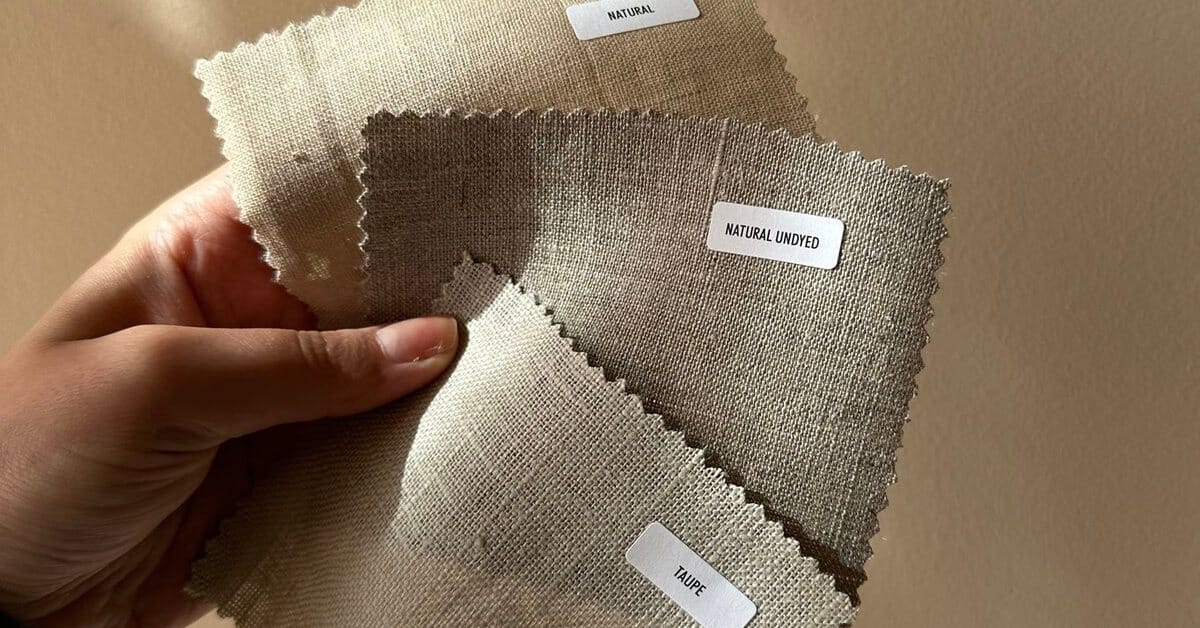
"Fashion manufacturer" is not one kind of business. The phrase covers at least six, and they do different work, price differently and set minimums in different ways. Asking the wrong one for a garment quote is a common reason a first sourcing attempt goes nowhere.
The six are the mill, the converter, the CMT factory, the full-package factory, the private-label supplier and the sourcing agent or production manager. Only two of them cut and sew a garment from your own design.
The sector is large. The EU-27 textile and clothing industry counts nearly 200,000 companies, according to EURATEX, with €166 billion in annual turnover and 1.2 million jobs.
Key Takeaways
- Six business types answer to "fashion manufacturer". Only CMT and full-package factories cut and sew your own design.
- A mill sells fabric, not garments. Its minimums are counted in metres per colour, not pieces per style.
- CMT is cheaper per unit, but you buy the fabric yourself at the mill's minimum. Full package is usually simpler for a first collection.
- Private label is not custom manufacturing: you brand an existing style instead of producing your own pattern.
- EU clothing output is still falling: production was 6.2% lower year on year in Q2 2026 (EURATEX).
Heads up: We're Portugal Clothing Factory. Our team places and manages clothing production with selected partner factories in northern Portugal. We don't own a factory, so of the six types below we are closest to the last one, and we say so plainly because the distinction is the point of this page.
What Are the Six Types of Fashion Manufacturer?
Each type owns a different slice of the process. Read the "makes your garment?" column first, because it decides whether an email is worth sending.
| Type | What it sells | Makes your garment? | How its minimum is set |
|---|---|---|---|
| Mill | Fabric it knits or weaves, by the metre or roll | No | Metres per colour |
| Converter | Finished fabric it has had made and dyed | No | Metres per colour, often lower than a mill |
| CMT factory | Cut, make and trim: labour on your fabric | Yes | Pieces per style |
| Full-package factory | The finished garment, including fabric and trims | Yes | Pieces per style and colour |
| Private-label supplier | Its own existing styles with your label | No, the style already exists | Pieces per style, often low |
| Sourcing agent or production manager | Access to factories and management of the order | No, a factory does | The factory's minimum |
How each type works in general. Actual minimums depend on the product, fabric and factory, so ask each one.
The distinction brands miss most often is CMT versus full package. CMT means you supply the fabric and trims and the factory supplies the labour. Full package means the factory buys the fabric too and prices the finished garment.

Why Does a Mill Keep Saying No?
Because you are asking it for work it doesn't do. A mill knits or weaves fabric and sells it by the metre, with a minimum per colour. It has no cutting tables and no sewing lines.
The mix-up is easy to make. Mills appear in searches for "textile manufacturer", they have impressive factories, and their websites show cloth that looks like the start of a garment. It is, but not by them.
The exception is a vertically integrated business that knits, dyes, cuts and sews under one roof. Those exist, but they are a minority. If a company's product pages are measured in metres and GSM rather than styles and sizes, it is a mill.
Citation Capsule A mill knits or weaves fabric and sells it by the metre, with a minimum per colour, and does not cut or sew garments. Only CMT factories and full-package factories produce a finished garment from your specification. Private-label suppliers sell their existing styles with your label, and sourcing agents or production managers place your order with a factory rather than producing it themselves.
CMT or Full Package: Which Should a New Brand Use?
Full package, in most cases, for a first collection. CMT is cheaper per unit, but you take on the fabric: you source it, buy it at the mill's minimum, buy trims separately, get everything delivered to the factory and carry the risk if the cloth is wrong.
Run the fabric arithmetic before you compare quotes. As an example, if your order needs about 400 metres of fleece and the mill sells that colour from 600 metres, you buy 50% more fabric than the order uses, in one colour, with no second order to absorb it. With full package the factory buys the fabric and that problem is priced into the garment.
| CMT | Full package | |
|---|---|---|
| Price per unit | Lower (labour and trims only) | Higher (includes fabric) |
| Who sources the fabric | You | The factory |
| Exposed to mill minimums | Yes | No |
| Who carries a fabric fault | You | The factory |
| Development support | Limited | Usually included |
How the two models usually divide the work.
CMT earns its place once you reorder a known fabric at volume, where the mill's minimum is no longer dead stock. For a worked comparison, see CMT vs full package production.

Is a Private-Label Supplier a Manufacturer?
Not in the sense most brands mean. A private-label supplier sells its own existing styles with your label in them. You choose from a catalogue, pick colours and add branding. Nothing is made to your pattern.
That is a legitimate option, and often a sensible one for testing a market: minimums are usually low, lead times short and there is no development cost. What you give up is the product. You cannot change the fit, construction or fabric beyond what is offered, and another brand can buy the same style.
A simple test: if your brand's claim is a specific fit or an unusual construction, private label cannot deliver it. If your claim is a point of view, a market or a community, it can. Our private label vs custom manufacturing guide compares the two paths in more detail.
What Does a Sourcing Agent or Production Manager Do?
It places your order with a factory and manages it, without owning the machines. We are in this category, so here is what to ask any business in it, us included.
- Which factory will make this? You should know who is producing your order.
- How are you paid, and by whom? If the factory pays the agent a commission, its interest and yours can diverge on price.
- What do you actually manage? Sampling, quality control during the run and communication should be named, not implied.
- What happens if something goes wrong? The answer should be specific.
Our answers: our team places and manages production with selected partner factories in northern Portugal, through development, sampling, quality control and communication. Our fee is quoted in writing before any work starts, we take no commission on your order, and the partner factory invoices the production. Our services page sets this out.
The value of this layer is access and judgement: a busy factory may not answer a small brief from an unknown brand, and a first-time brand often cannot tell whether a quote is reasonable or a tech pack complete. The cost is a fee, so ask for it in writing.
Is Europe's Clothing Industry Shrinking?
Clothing output still is. In its economic update for the second quarter of 2026, EURATEX reports that EU clothing production was 6.2% lower than a year earlier and textile production 3.1% lower. Clothing turnover fell 3.9%, while textile turnover returned to growth (+0.3%) for the first time in over two years.
Portugal follows the same flat line. Portuguese textile and clothing exports fell 0.8% to €5.499 billion in 2025, RTP reported citing provisional INE data. Our Portuguese textile industry in numbers covers the Portuguese sector in more detail.
For a small brand, a softer order book can make some factories more open to smaller briefs than they were a few years ago. Don't count on it, though: a complete brief is still what gets answered.

Which Type Do You Need?
Find your situation below, then send one email rather than fifty.
| Your situation | The type you need |
|---|---|
| First collection, your own designs, a small run | Full-package factory, or a production manager who places you with one |
| Reordering a known fabric at volume | CMT factory |
| Testing a market fast, branding is the product | Private-label supplier |
| You already have the fabric and only need sewing | CMT factory |
| You need a few hundred metres of a specific jersey | Mill, or a converter |
| Factories are not replying at your volume | Sourcing agent or production manager |
A starting point, not a rule.
Be sceptical about the last row, including with us. If factories ignore you because your brief is incomplete rather than because your volume is small, a middle layer is an expensive way to avoid writing a tech pack. Our guide to finding a clothing manufacturer covers the search itself.
What Should You Send Before Asking for a Price?
A price request without a specification gets a guess, and a guess is usually high because the factory is pricing its own uncertainty. Send the garment type, the target fabric with a weight, the number of colourways, the size run, the quantity per style and your target cost if you have one.
A quote against a clear brief is a commercial conversation; a quote against "a hoodie, good quality" is not. Once quotes come back, check them against our list of red flags when choosing a manufacturer.
Making clothing in Portugal? Our team places and manages knitwear, jersey, wovens, dresses and outerwear from 100 units per style. Get in contact and we reply within 24 hours, or browse the factory directory (€49).
Frequently Asked Questions
What is the difference between a fashion manufacturer and a mill?
A mill makes fabric and sells it by the metre, usually with a minimum per colour. A garment manufacturer cuts and sews garments. A mill will normally decline a garment order because it has no cutting tables or sewing lines, unless it is a vertically integrated business that also makes garments.
Is CMT cheaper than full package?
Cheaper per unit, not always cheaper in total. A CMT price covers cutting, sewing and trimming, so you buy the fabric yourself at the mill's minimum and carry the risk if it is wrong. On a small first run, the fabric minimum can leave you paying for far more cloth than the order uses.
Can I use a private-label supplier and still have my own brand?
Yes, but not your own product. Private label puts your label in the supplier's existing styles. You can usually choose colours and branding, but not change the fit, construction or fabric beyond the catalogue, and another brand can buy the same style.
Is the European clothing industry shrinking?
Clothing output is still falling. EURATEX reports that EU clothing production was 6.2% lower year on year in the second quarter of 2026 and clothing turnover 3.9% lower, while textile turnover returned to slight growth (+0.3%) for the first time in over two years.
What does Portugal Clothing Factory do?
Our team places and manages clothing production with selected partner factories in northern Portugal: development, sampling, quality control and communication. We do not own a factory. The partner factory invoices the production, and our own fee is quoted in writing before any work starts.
Our team places and manages clothing production with selected partner factories in northern Portugal, from 100 units per style (sometimes 50 per style and colour, decided with the partner factory). Tell us your garment, volume and timeline; we reply within 24 hours. Fee quoted in writing, no commissions.
Get in contact Download the directory (€49)Need a tech pack? Get a factory-ready single-style tech pack for €79. See what's included.
Sources used in this article
- EURATEX, Facts and key figures: EU-27 textile and clothing industry, €166 billion turnover, nearly 200,000 companies, 1.2 million jobs.
- EURATEX, Economic update, second quarter 2026: clothing production -6.2%, textile production -3.1%, clothing turnover -3.9%, textile turnover +0.3% year on year.
- RTP (Lusa), 2025 exports: Portuguese textile and clothing exports down 0.8% to €5.499 billion in 2025.
Portugal Clothing Factory places and manages clothing production with selected partner factories in the northern Portuguese textile cluster. We quote our fee in writing, reply within 24 hours, and stay involved through sampling, quality control and delivery. See how we work or get in contact.