Garment manufacturing is not one business. It is a chain of separate businesses, each performing one stage and handing over to the next, and most of the problems brands experience happen at the handovers rather than inside any single stage.
This guide walks the whole chain from fibre to finished goods, explains who actually performs each stage, sets out what a brand has to supply, and identifies where the schedule reliably goes wrong.
What to know
- Manufacturing spans fibre, yarn, fabric, finishing, cutting, sewing and finishing again.
- Each stage is usually a different company, and the handovers are where delays originate.
- Fabric sits at the front of the schedule and is the least compressible stage.
- Sewing is the fast part. Getting to the point where sewing can begin is not.
- Trims stop runs as surely as fabric does, because they are small, cheap and often ordered late.
- In Portugal, 8,564 of the sector's 12,222 companies make fashion and clothing, against 999 in fibres, yarns and fabrics (GEE, 2022 data).
What are the stages of garment manufacturing?
Fibre, spinning, fabric formation, dyeing and finishing, cutting, sewing, garment finishing and packing.
Fibre and yarn
Natural fibre is grown, harvested and ginned; synthetic fibre is produced chemically. Either way it is then spun into yarn, which is a separate industry from both fibre production and fabric formation and is usually a separate company again. For a brand, yarn choices show up later as pilling, hand feel and how a fabric takes dye, so they are worth asking about even when you never meet the spinner.
Fabric formation
Yarn becomes fabric by knitting or weaving. These are different machines producing materials with completely different behaviour, and a mill generally does one or the other rather than both.
Dyeing and finishing
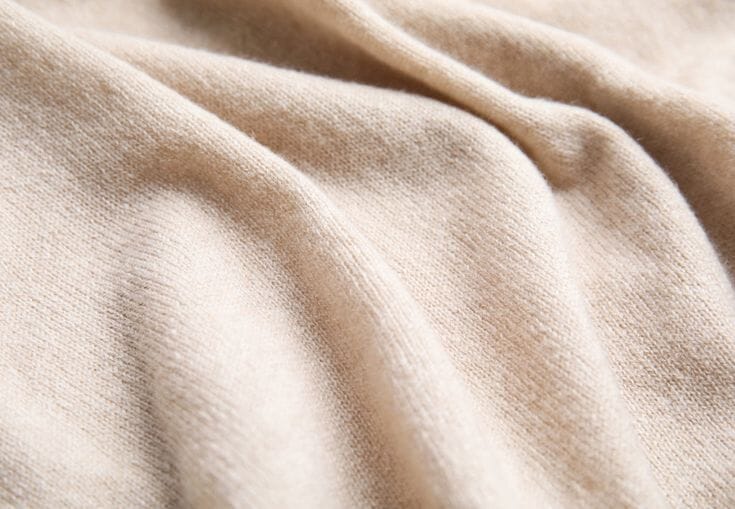
Colour and hand are applied at this stage, frequently by a commission house rather than by the mill. Finishing determines softness, shrinkage, surface and performance, and two fabrics from the same greige cloth can feel entirely unalike after different finishing treatments.
Cut, sew and finish
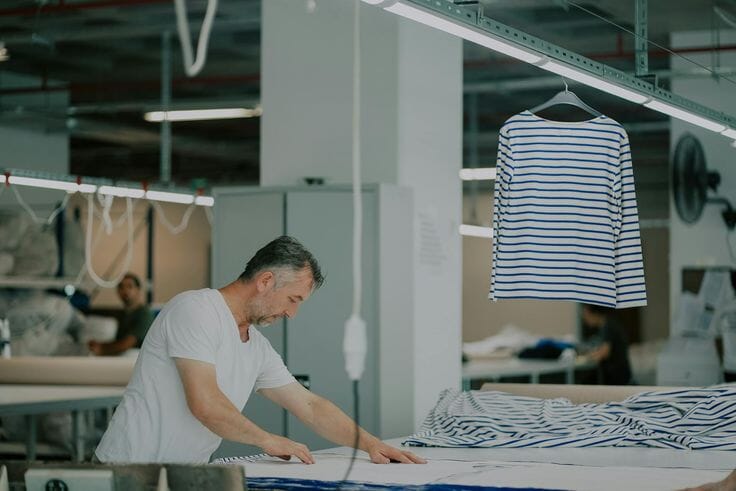
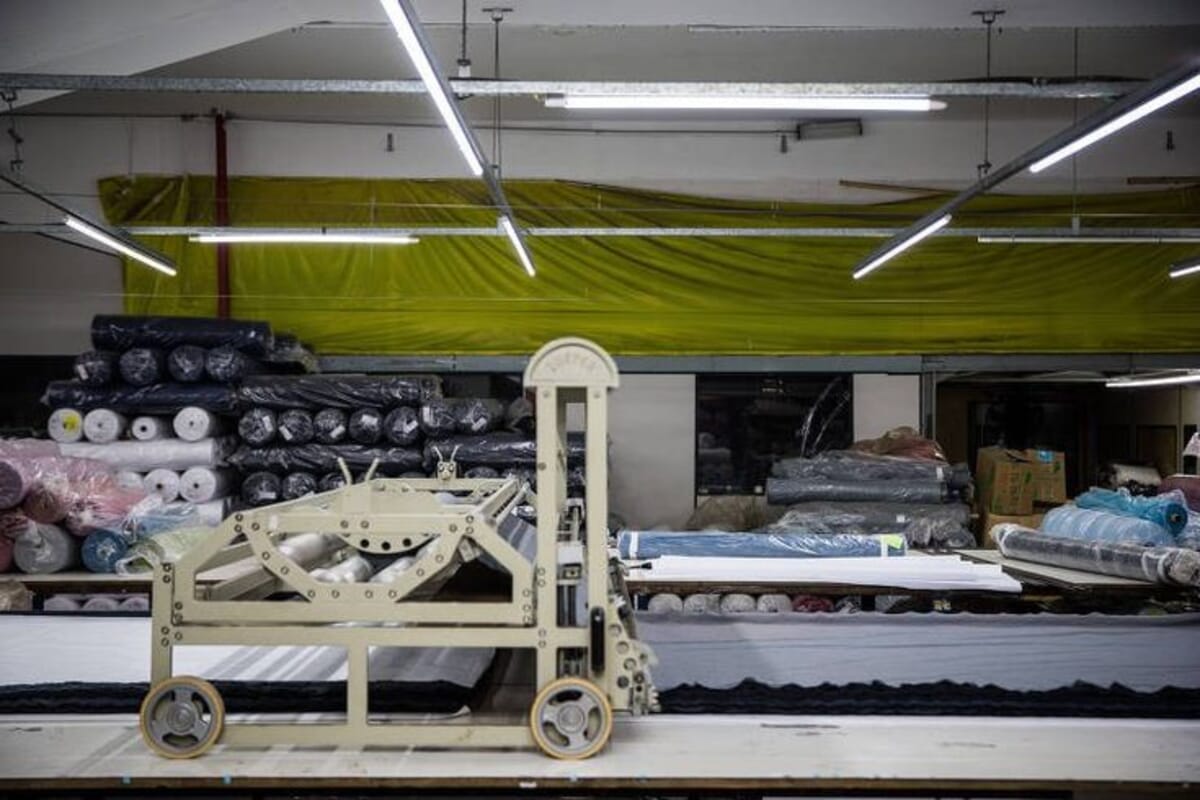
The garment factory spreads and cuts fabric, assembles it through a sequence of operations, then presses, inspects, labels and packs. This is the stage most people mean by manufacturing and it is the last part of a long chain.
Who actually performs each stage?
Different companies, usually, which is why supply chain visibility stops where most brands' knowledge does.
Brands know tier one
Almost every brand can name the factory that sews its garments. Considerably fewer can name the mill that made the fabric, very few can name the spinner who made the yarn, and almost none can name the fibre source. Visibility thins rapidly with each tier upstream, and it thins in exactly the direction that origin claims and compliance questions run.
The mill is not the finisher
Commission dyeing and finishing arrangements change more often than mill relationships, and they are rarely mentioned to the customer because for commercial purposes they do not matter. They matter a great deal for origin claims and for consistency.
Vertical integration is the exception
Some producers hold several stages in house, which shortens the chain, simplifies origin documentation and reduces the number of separate parties who have to cooperate when something goes wrong. It is uncommon across the industry and it is genuinely valuable where it exists, particularly for a brand that needs to evidence where its materials came from.
Full package hides the chain
A full-package supplier manages the upstream stages on your behalf, which is convenient and means the brand may not know who performed them. Convenient is not the same as invisible, and you can always ask. Our guide to CMT versus full package production explains where that line sits and how it changes a quote.
Where does the schedule actually go?
Mostly upstream. Sewing occupies a small fraction of the elapsed time.
Fabric sits at the front
Where fabric has to be made rather than bought from stock, mill scheduling, knitting or weaving, dyeing and finishing consume the part of the calendar brands mentally allocate to production. Any timeline built backwards from a launch date without a confirmed fabric commitment is a guess. Our fabric sourcing guide covers how mills book that work.
Development runs longer than planned
Pattern making, a fit sample, corrections, a second sample and approval is a sequence with waiting built into every step, because the factory slots development between paying production jobs. Brands that allow two weeks for it usually need much longer. Our guide to ordering a clothing sample walks through each round.
Sewing is quick
Once fabric and trims are in the building and the style is approved, the production run is usually the shortest stage in the whole process. This surprises brands who imagine manufacturing as the long pole and explains why pressure applied at the end rarely recovers time lost at the start.
Finishing and packing take longer than expected
Pressing, inspection, thread trimming, tagging, folding, bagging and cartoning are all labour performed after the last seam is closed, and retail-ready presentation adds further operations on top. A run that is sewn is not a run that is ready to ship, and the gap between those two states is routinely left out of brand timelines.
What happens in the cutting room?
Spreading, marker making and cutting, and the decisions here set your fabric cost.
Marker making decides consumption
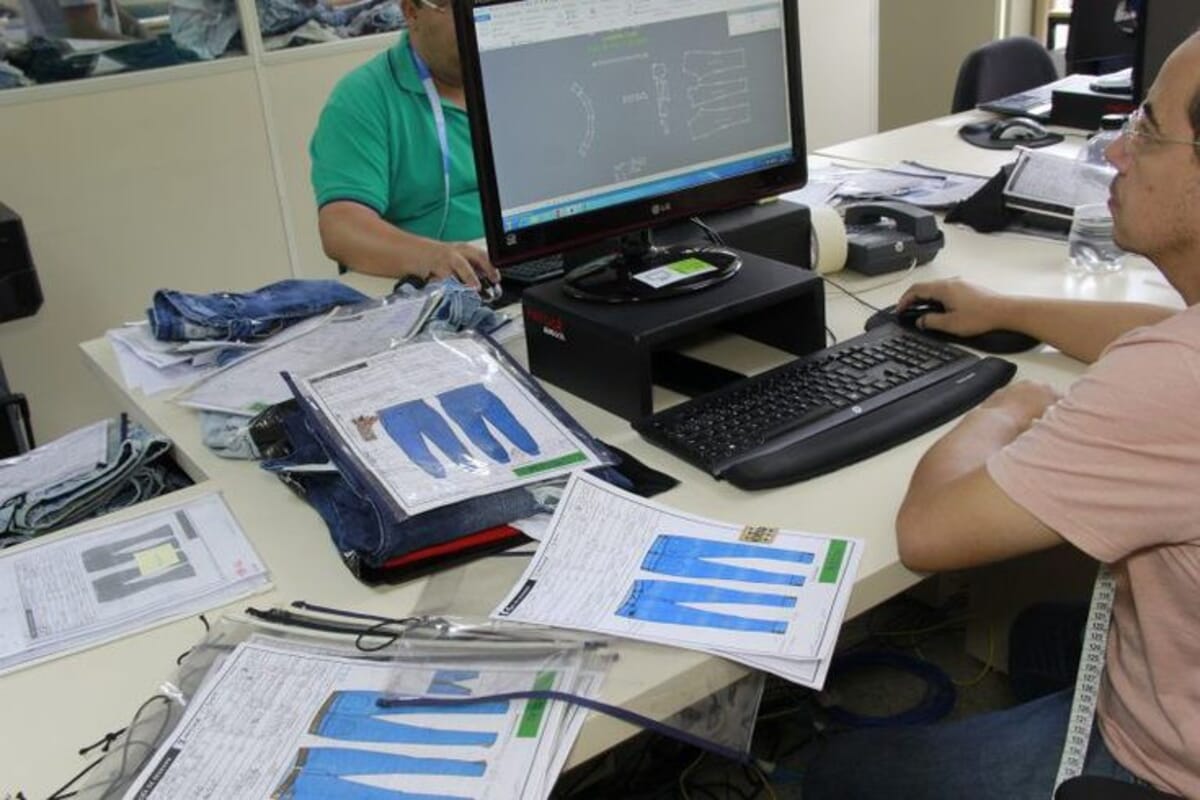
A marker is the layout of pattern pieces across the fabric width, and how efficiently it is made determines how much fabric each garment consumes. Since fabric is usually the largest material cost, a good marker genuinely saves money.
Spreading adds its own losses
Fabric is laid in plies, and the ends, the edges and any faults produce waste. This is why a fabric order needs an allowance above the calculated requirement, and why supplying exactly the calculated yardage usually results in a shortfall.
Faults have to be worked around
Mills supply fabric within an agreed fault tolerance, and the cutting room works around flaws rather than cutting through them. This is normal and it consumes fabric, which is another reason the allowance matters.
Bundling organises the sewing
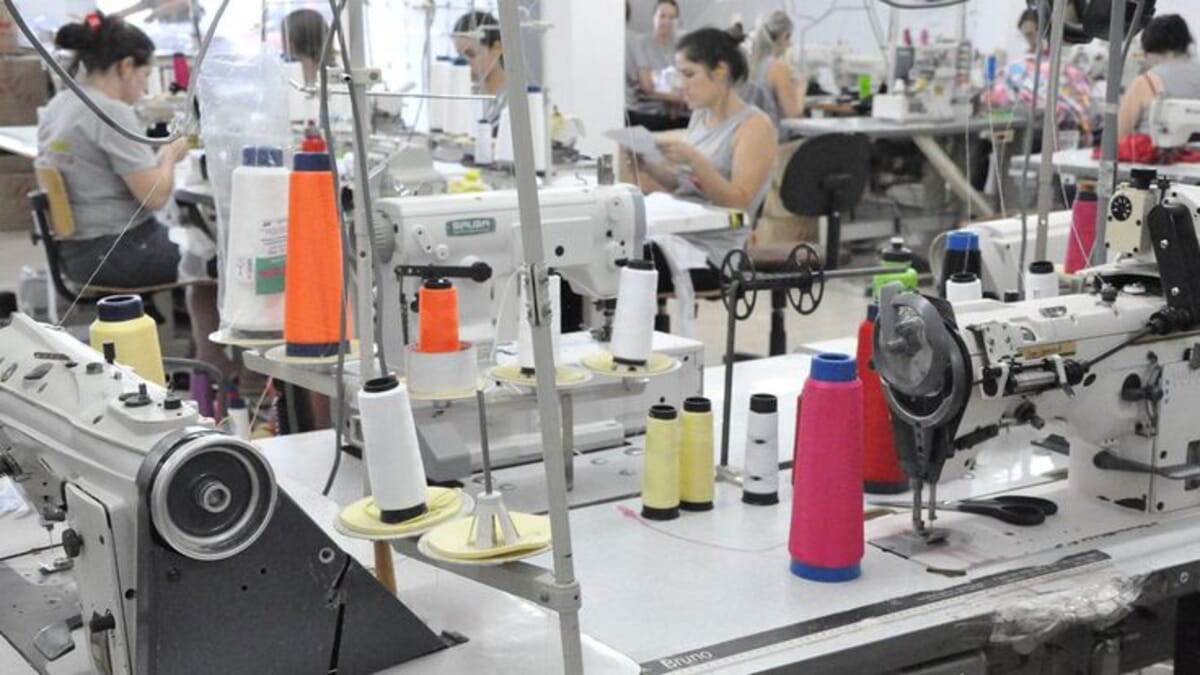
Cut pieces are bundled by size and colour, ticketed and released to the sewing line in a planned order. How well this is organised affects throughput directly, and it is one of the reasons two factories sewing an identical garment can take materially different amounts of time to do it.
How does the sewing line work?
As a sequence of operations, each performed by an operator specialising in it.
Operations are the unit of cost
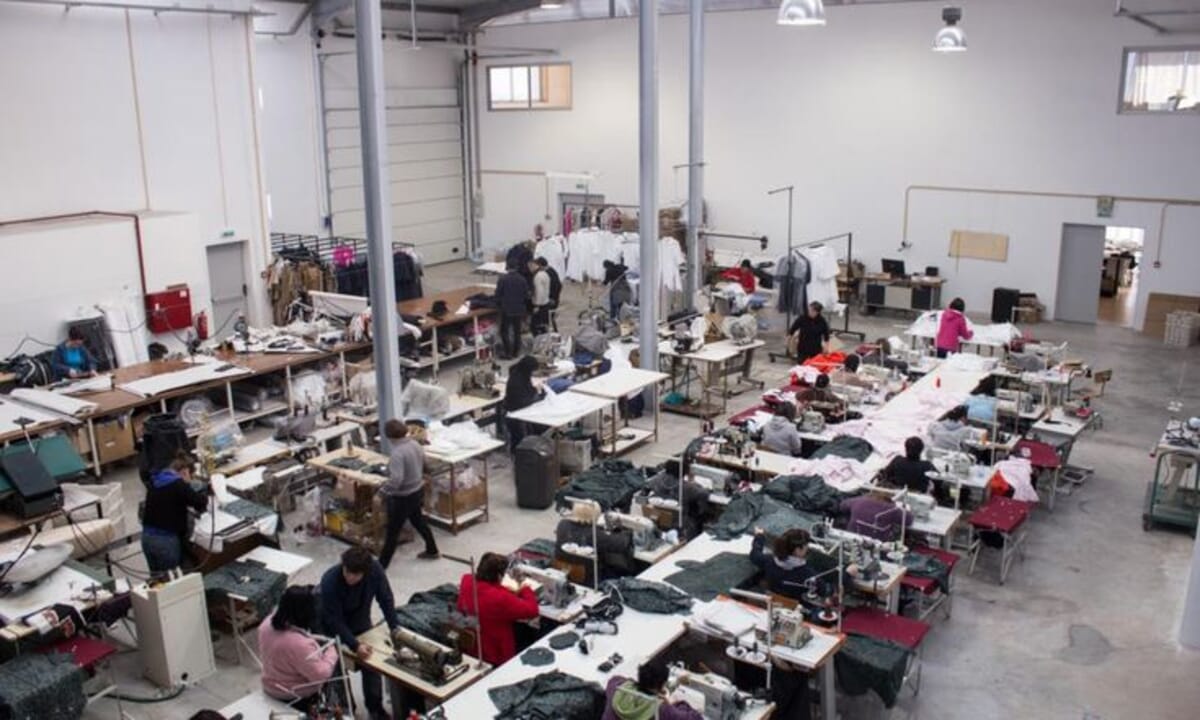
A factory prices a garment by walking through its construction, counting the operations and estimating the time each takes. More seams, topstitching, linings, pockets and closures all add minutes, which is why two garments that look similar can be priced very differently and why simplifying construction reduces cost far more reliably than negotiating does. The Garment Costing Guide from the International Trade Centre describes the traditional cost sheet the same way: fabric, trim and CM, which covers labour, overhead and profit.
Setup happens before output
Threading machines, adjusting tension and training operators on a new construction produces no garments. That setup costs about the same whether the run is small or large, which is where minimums come from. Our guide to minimum orders in Portugal explains how to read a factory's number.
Line balance determines throughput
A line runs at the speed of its slowest operation, and balancing it is a skill. This is largely invisible to a brand and it is a real difference between factories producing identical garments at different costs.
The first units are the worst
Operators improve on a new style as they repeat it, which means the earliest garments off a line are the least consistent. Inspection should account for that rather than judging a run from the first carton.
What quality control actually happens?
In-line checks during production and a final inspection before shipment, against a standard you defined.
Standards have to be written
Measurement tolerances, seam quality, colour consistency and packing should all be agreed in writing before goods are made, with an approved sealed sample as the physical reference both sides hold. Unstated expectations are a weak position however reasonable they sound after the fact, because a dispute comes down to what was documented.
In-line beats end-line
Catching a problem on the line means correcting the remaining units. Catching it at final inspection means the whole run already has it. Factories that check during production rather than only at the end produce materially better outcomes.
Inspect across the run
A common production problem is variation within a batch rather than a uniform fault. Inspecting from several cartons and several sizes catches drift that a check of the top carton will pass. Final inspections are usually sampled under ISO 2859-1, the standard behind AQL levels, which sets the sample size by lot size and inspection level rather than by which cartons are easiest to reach.
Inspect before the balance clears
Arrange to see the goods before final payment and before they ship somewhere awkward to return from. This is the point at which problems are cheapest to fix and the point at which you still have leverage. Our guide to quality control in Portuguese clothing production shows what a final inspection covers.
Where do the handovers go wrong?
At every point where one company hands to another, because nobody owns the gap.
Fabric arriving late or short
One of the most common failures in the whole chain. A mill delay moves every stage downstream of it, and fabric that arrives short stops a cut entirely rather than partially. Both are largely avoidable with a written commitment on the date and a proper allowance above the calculated requirement.
Trims not arriving at all
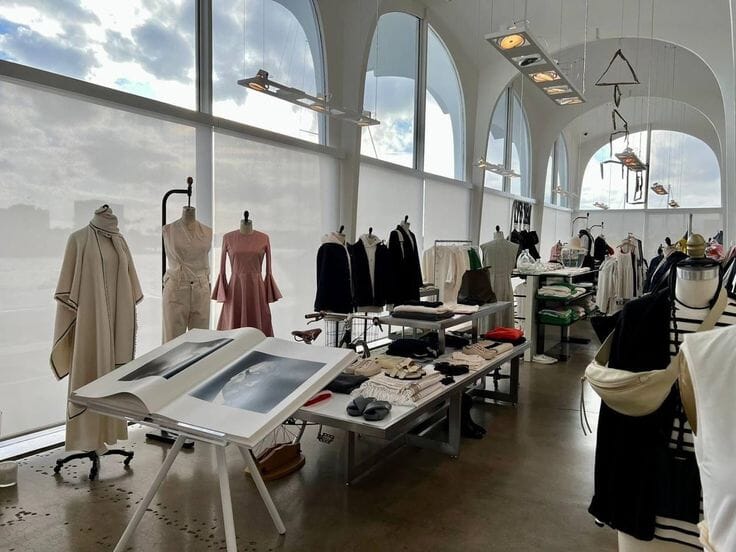
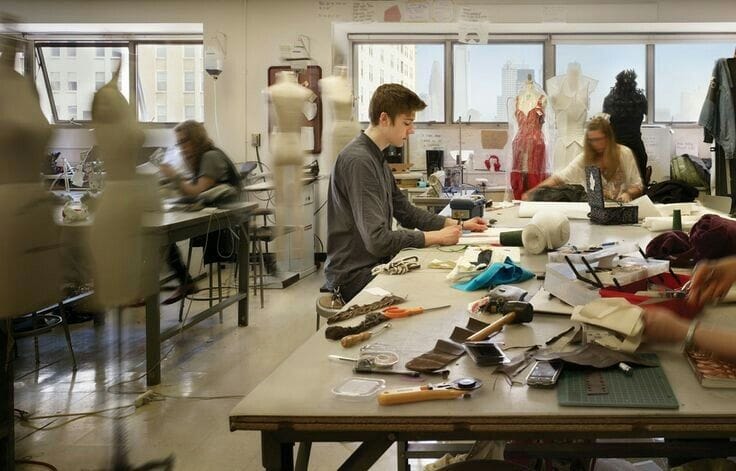
Thread, labels, zips, elastic and interlining are cheap, small and easy to leave until the end, and a run cannot start without every one of them present. A missing trim can halt a run as completely as missing fabric, and unlike a fabric problem there is rarely anything to substitute at short notice. The International Trade Centre's Garment Costing Guide notes that a garment may require anywhere between five to 25 trim items, and that trims require considerable advance planning.
Approval sitting with the brand
Factories reserve line time in advance, and a sample awaiting a brand's decision for a fortnight can lose that slot to a customer who is ready. The delays brands most often attribute to their factory frequently originated on their own desk, and the factory rarely says so.
Finishing subcontracted without notice
Where washing, printing or specialist finishing leaves the building, it is another company with its own queue. Asking which operations are subcontracted, and where, is how a brand learns where its real risk sits.
What varies between factories making the same garment?
Line balance, marker efficiency, finishing standards and how early problems get raised.
Efficiency is invisible from outside
Two factories quoting the same garment can have genuinely different costs because one balances its line better, makes tighter markers and loses less fabric. None of that appears in a capability list, and it is why a lower quote is not automatically a worse factory or a better deal.
Finishing standards differ most
Pressing, thread trimming, final inspection and how a garment is presented vary enormously between factories and are immediately visible in the hand. Premium operations spend meaningfully more time here, and it is the difference a customer notices without being able to name it.
Communication is a real variable
A factory that flags a fabric shortage in week one gives you options; one that flags it in week four gives you a problem. How early and how clearly a factory raises issues is among the most consequential differences between suppliers and among the least visible before you have placed an order.
Consistency across a run separates them
Producing one good garment is not difficult. Producing several hundred that are consistent with each other, and repeating that on a reorder six months later, is the actual test, and it is where the gap between factories is widest.
How does the process run in Portugal?
The stages sit close together, which shortens the handovers where most problems originate.
The cluster holds the whole chain
Spinning, knitting, weaving, dyeing, finishing, cut-and-sew, printing and embroidery all exist within the northern region around Porto, Guimarães, Braga, Barcelos and Famalicão. Materials do not cross borders between stages, which removes the delays that accumulate in a dispersed chain.
Problems get solved in days
When a fabric issue appears at cutting, an alternative finisher or a replacement trim is a short drive rather than a shipment. That is the practical value of density and it is invisible until something goes wrong.
Development rounds are short
Being able to collect a sample, fit it and return comments within a week rather than a month compresses the part of the schedule that most often overruns. On a garment that needs three rounds, that difference adds up to weeks.
The chain is short enough to document
Because the number of businesses between fibre and finished garment is small and local, origin evidence is easier to assemble and keep current than in a chain spread across several countries. Our page on the Portuguese textile industry in numbers gives a wider view of the sector.
How many companies work at each stage in Portugal?
Mostly small clothing makers, fed by far fewer mills. According to GEE, the strategy and studies office of Portugal's economy ministry, the textile and clothing sector had 12,222 companies in 2022. Of those, 8,564 were in fashion and clothing, about 70%.
The upstream end looks different. Fibres, yarns and fabrics had only 999 companies but employed 23,029 people, which works out at about 23 people per company. Fashion and clothing employed 81,193 people across its 8,564 companies, about 9.5 per company. Home textiles and technical textiles sit close to the clothing figure.
In plain terms, there are far fewer spinning, weaving and knitting companies than sewing units, and each one is larger. Many garment makers draw on the same mills, so a small fabric order joins a queue that the sewing factory cannot shorten for you. That is the same pattern described above: fabric sits at the front of the schedule and is the hardest stage to compress.
The same GEE study reports that 79.9% of the sector's companies are micro-enterprises and 99.7% are small or medium-sized. It also says the companies are mostly in the North, concentrated in the Ave and Cávado regions. For a brand, that means two things: most of the units that will touch your garment are small businesses, and they sit close enough together that a handover is a drive rather than a shipment.
What does a brand actually have to supply?
A specification, fabric or a fabric decision, trims, approvals on time and a committed quantity.
A specification a stranger could work from
The test of a tech pack is whether somebody who has never seen your product, and cannot ask you a question, could make it correctly. Construction, measurements with tolerances, seam types, stitch density, trims, labels and finishing all belong in it, because anything omitted becomes a decision made on a sewing floor by somebody guessing what you wanted.
Fabric, or a clear decision about who buys it
In a cut-and-sew arrangement you supply fabric, delivered, inspected and accounted for with an allowance above the calculated requirement. In full package the factory sources it. Which of the two applies is the single line that changes a quote most, and leaving it ambiguous produces numbers that cannot be compared.
Every trim, decided and ordered
Thread, labels, zips, elastic, buttons, interlining and packaging each need a decision, a supplier and a lead time. They are cheap enough to feel unimportant and they are collectively the most common reason a production run cannot start on the day it was scheduled.
Decisions when they are asked for
A factory holding a line slot needs approvals returned promptly, and a sample sitting on a brand's desk for a fortnight can cost the slot entirely. The delays brands most often attribute to factories frequently began as an unanswered email.
How do you read a production timeline?
Backwards from delivery, with the fabric commitment as the fixed point and slack built in deliberately.
Start from a confirmed fabric date
Everything downstream depends on fabric arriving, so the schedule should be built from a written mill commitment rather than from a hoped-for delivery. A timeline anchored to anything softer than that is a projection rather than a plan, and it will move. Our lead times post sets out typical stages for production in Portugal.
Count the approval rounds honestly
Each sample round involves production, shipping, review and a decision, and almost nobody gets fit right the first time. A schedule allowing for one round is a schedule that will slip, because the second round was always going to happen and simply had no time allocated to it.
Add the finishing stages
Pressing, inspection, tagging, folding, bagging and cartoning all take time after the last seam is sewn. Brands that count their timeline to the end of sewing rather than to the end of packing consistently lose a week they did not know they needed.
Build slack you do not intend to use
Something will be late somewhere, and a plan with no buffer between promised delivery and launch has no tolerance for the one thing that is certain to happen. A few weeks of slack costs little and removes the choice between launching late and accepting goods you are not satisfied with.
Working with Portugal Clothing Factory
Our team places and manages clothing production with factories in our group in the northern Portuguese textile cluster. Most of what goes wrong in garment manufacturing happens at the handovers between stages, so that is where we put our attention: fabric dates in writing, trims checked before the cut, samples turned round quickly and an inspection before the goods leave. Before you send a brief, our supplier vetting guide lists the questions worth asking any supplier.
Minimums in our group are usually 50 to 100 pieces per style and colour, and the fabric often sets the real floor. We agree our fee in writing, take no commission on production, and the partner factory invoices the production.
Get in contact with the item, the quantity and the timeline. Our team replies within 24 hours.
Frequently asked questions
What are the stages of garment manufacturing?
Fibre production, spinning, fabric formation by knitting or weaving, dyeing and finishing, cutting, sewing, garment finishing and packing. Each stage is usually performed by a different company.
Which stage takes the longest?
Fabric, where it has to be made rather than bought from stock. Mill scheduling, knitting or weaving, dyeing and finishing sit at the front of the calendar and are the least compressible part of the process.
Why do production runs get delayed?
Most often at the handovers between companies: fabric arriving late or short, trims not arriving at all, and approvals sitting with the brand while a factory holds a line slot.
How much fabric should I supply for a cut?
The cut quantity plus an allowance for spreading loss, fabric faults and error. Supplying exactly the calculated yardage usually produces a shortfall, and a short cut stops the run.
What is a marker and why does it matter?
The layout of pattern pieces across the fabric width. Its efficiency determines how much fabric each garment consumes, and since fabric is usually the largest material cost, marker making has a direct effect on your unit price.
When should quality be checked?
During production rather than only at the end. Catching a problem in line means correcting the remaining units; catching it at final inspection means the whole run already has it.
How many textile and clothing companies are there in Portugal?
GEE counted 12,222 textile and clothing companies in Portugal in 2022, employing 128,089 people. Fashion and clothing was the largest segment with 8,564 companies, and 79.9% of all companies in the sector were micro-enterprises.
Our team places and manages clothing production with factories in our group in northern Portugal, usually from 50 to 100 pieces per style and colour. Tell us your product, fabric, volume and timeline, and we reply within 24 hours. Fee agreed in writing, no commissions.
Send your brief Portugal factory directory (€49)No tech pack yet? We prepare one style, factory-ready, for €79. What it includes.
Sources
- GEE, Estudos Setoriais 2030: Indústria Têxtil e do Vestuário (2024) (PDF), Table 1 and section 4.1.1: companies, people employed and company size, 2022 data.
- International Trade Centre, The Garment Costing Guide: how a garment cost is built up from fabric, trims, labour and overheads.
- ISO 2859-1: sampling procedures for inspection by attributes (AQL).
Portugal Clothing Factory places and manages clothing production with factories in our group in the northern Portuguese textile cluster. We agree our fee in writing, reply within 24 hours, and stay involved through sampling, quality control and delivery. See how we work or get in contact.