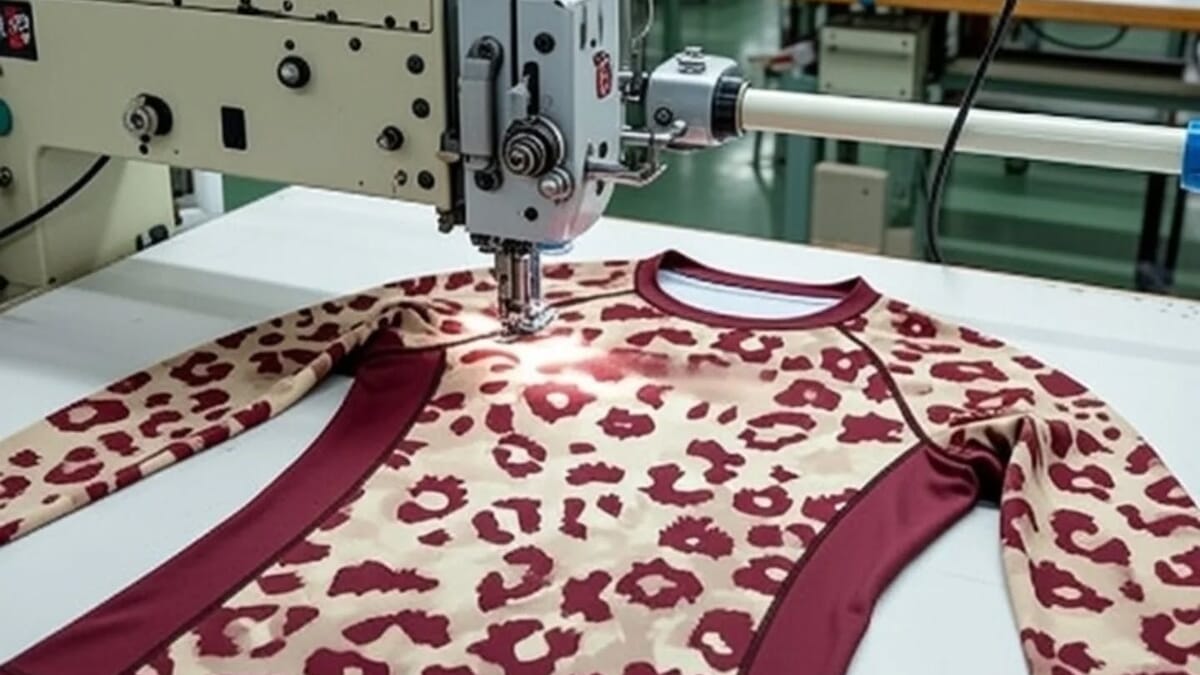
Activewear has moved well beyond the gym: training pieces are now worn as everyday clothing, and the fabric, fit and sustainability claims on a legging or sports bra carry real weight with customers. Choosing the right workout clothing manufacturer is where an emerging activewear brand either builds that quality in or spends its first season fixing it.
This guide covers what brands need from a workout clothing manufacturer: performance fabric families, minimum orders, indicative CMT prices in euros, sample rounds, certifications, and how Portugal compares with larger Asian producers.
Heads up: We're Portugal Clothing Factory, a group of documented Portuguese garment factories in the northern textile cluster (Porto, Guimarães, Braga, Barcelos, Famalicão). The ranges and observations below come from factory quoting and production our team has handled between 2024 and 2026. They are indicative, not a published dataset.
Key Takeaways
- Two fabric families lead. Recycled polyester-elastane and nylon-elastane cover most workout clothing; nylon gives the softer premium hand, recycled polyester the easier sustainability story.
- MOQs start at 100 units per style at some Portuguese sportswear factories; around 300 units per style is where pricing becomes competitive.
- Indicative CMT at 300 units: €7–11 for performance tees, €13–19 for compression leggings, €8–13 for training shorts.
- Test, don't trust hand feel. Moisture management can be measured to AATCC methods, and stretch recovery should be checked after repeated washing before fabric is locked.
Try it free: Pressure-test your production cost with our garment cost calculator. 60 seconds, no email required.
What Should Workout Clothing Brands Look For in a Manufacturer?
The four non-negotiables for a workout clothing factory are 4-way stretch expertise, tested moisture management, access to recycled-content fabrics, and flatlock and coverstitch precision. Moisture management can be measured with AATCC Test Method 195 (liquid moisture management), which gives a consistent benchmark across mills, so ask for third-party test data before you make performance claims on the hangtag.

Look for factories that:
- Have dedicated flatlock and coverstitch machines (standard lockstitch lines leave raised seams that chafe in training)
- Test moisture management and stretch recovery to standard methods rather than judging by hand feel
- Work with named premium knit mills (Italian mills such as Carvico, Sitip and Eurojersey are common references) or Portuguese equivalents
- Understand seamless construction if your positioning requires it
- Can show bluesign or equivalent wet-processing credentials for any dyeing and finishing partner
A common sample-round failure on workout clothing is poor 4-way stretch recovery. A fabric can stretch well on the first sample and still bag out after repeated washing. Test wash-cycle recovery on samples before you lock in the fabric, not after 500 units are already sewn.
What Fabrics Do Workout Clothing Manufacturers Use?
The main workout clothing fabric families are warp-knit polyester-elastane, warp-knit nylon-elastane and bonded technical wovens, with compression knits, ribs and mesh used for specific pieces and panels.
| Fabric | Composition | Weight | Cost per metre | Use case |
|---|---|---|---|---|
| Recycled polyester-elastane (GRS) | about 84/16 | 180–240 GSM | €8–14 | Everyday training gear, leggings, tops |
| Nylon-elastane (soft hand) | about 88/12 | 220–280 GSM | €12–18 | Premium leggings, high-hold compression |
| Warp-knit polyester-elastane | about 82/18 | 160–220 GSM | €7–12 | Basic training tops, shorts |
| Bonded technical woven | Polyester + membrane | 140–200 GSM | €14–22 | Wind vests, running shells |
| Compression knit | 78/22 or 80/20 | 240–320 GSM | €10–15 | High-hold leggings, compression tops |
| Ribbed polyester-elastane | about 92/8 | 200–260 GSM | €10–16 | Ribbed tanks, tops, bralettes |
| Brushed-back warp knit | about 84/16 | 220–280 GSM | €10–14 | Cool-weather leggings and tops |
| Mesh (ventilation insert) | Polyester or nylon | 90–140 GSM | €6–10 | Ventilation panels |
Indicative ranges from PCF factory quoting, 2024–2026. Not a published dataset.
Nylon or polyester? Nylon-elastane gives the soft, cool "second skin" hand that premium leggings are known for. Polyester-elastane costs less and recycled versions are easier to source with certification. Choose nylon for a premium price point and recycled polyester for a sustainability-first line. Our guide to recycled fibres covers the trade-offs in more depth.
What Are the MOQs for Workout Clothing Production?
Minimum orders at Portuguese sportswear factories start at 100 units per style at the smaller, specialist workshops; most factories quote their baseline price from around 200 units and improve it from 500.
| MOQ tier | Who accepts it | Cost impact |
|---|---|---|
| 50–100 units | Specialist small-batch workshops only | +20–40% per piece |
| 100–200 units | A good share of sportswear factories | Baseline pricing |
| 200–500 units | Most sportswear factories | About 8–15% below the 100-unit price |
| 500–1,500 units | Nearly all | About 15–25% below the 100-unit price |
| 1,500+ units | All | Best pricing tier |
Indicative ranges from PCF factory quoting, 2024–2026. Not a published dataset.
What Does Workout Clothing Cost to Manufacture in Portugal?
Indicative CMT (cut, make and trim) prices at Portuguese sportswear factories run from about €7 per unit for basic performance tops to €20 and more for premium soft-hand leggings at 300 units per style.
| Product | CMT at 100 | CMT at 300 | CMT at 1,000 | Full package at 300 |
|---|---|---|---|---|
| Performance training tee | €9–14 | €7–11 | €5–9 | €12–22 |
| Training tank top | €8–13 | €6–10 | €5–8 | €10–19 |
| Training shorts | €10–16 | €8–13 | €6–11 | €14–24 |
| Compression leggings | €16–24 | €13–19 | €11–15 | €25–42 |
| Premium soft-hand leggings | €18–28 | €14–22 | €12–18 | €28–48 |
| Sports bra (medium impact) | €10–16 | €7–12 | €6–10 | €13–24 |
| Sports bra (high impact, moulded) | €14–22 | €11–16 | €9–13 | €19–35 |
| Track jacket (bonded woven) | €18–28 | €14–22 | €12–18 | €28–48 |
| Windbreaker (light woven) | €14–22 | €11–16 | €9–13 | €22–38 |
Indicative ranges from PCF factory quoting, 2024–2026. Not a published dataset.
Need a tech pack? Get a factory-ready single-style tech pack for €79. See what's included.
What Certifications Do Workout Clothing Brands Need?
Activewear customers pay close attention to sustainability and chemical-safety claims. A sensible base stack:
- GRS (Global Recycled Standard). Traceability for recycled polyester or nylon. Essential if recycled content is part of your marketing.
- OEKO-TEX STANDARD 100. The baseline harmful-substance test for fabrics and trims that touch the skin.
- bluesign. Chemical management in dyeing and finishing; it carries most weight at premium price points.
- PFAS-free water repellency. The EU is restricting PFAS chemicals in consumer textiles, so specify fluorine-free DWR on any water-repellent piece.
Ask every factory and mill for certificate numbers and check them in the certifier's public database. Certificates cover specific sites and products, so confirm the one you are shown covers the fabric you are buying. For a side-by-side view, read OEKO-TEX vs GOTS vs bluesign.
What Sample Cycle Should Workout Clothing Brands Plan For?
Workout clothing usually takes 3 to 5 sample rounds because fit tolerances are tight. Compression pieces and sports bras often add one or two extra rounds.
| Sample stage | Timeline | What is approved |
|---|---|---|
| Round 1: proto sample | Weeks 1–3 | Silhouette and basic construction |
| Round 2: fit sample (correct fabric) | Weeks 4–6 | Fit, fabric hand and wash-cycle recovery test |
| Round 3: pre-production sample | Weeks 7–9 | Colour, trims and care label |
| Round 4 (if needed): approval sample | Weeks 10–12 | Final sign-off before bulk |
| Bulk production | Weeks 12–20 | Typical bulk window |
Indicative ranges from PCF factory quoting, 2024–2026. Not a published dataset.
Total from first sample to shipped goods: roughly 16–24 weeks for a first programme, and 12–16 weeks for repeat orders on proven fit blocks. Our guide on how to order a clothing sample walks through each round.
Transparency is also a selling point in this category. Activewear customers increasingly ask where and how their clothes are made, and brands that can name their factory and fabric mill give those customers a concrete answer instead of a vague "responsibly made" line.
Which Portuguese Regions Produce Workout Clothing?
Portuguese sportswear production is concentrated in the north: the Ave Valley (Guimarães, Vila Nova de Famalicão, Santo Tirso), the Porto region and the Barcelos–Braga area. This is the historic knitting, dyeing and finishing heartland of the Portuguese textile industry (ATP, Associação Têxtil e Vestuário de Portugal).
| Area | Municipalities | Typical strength | MOQ posture |
|---|---|---|---|
| Ave Valley (Vale do Ave) | Guimarães, Vila Nova de Famalicão, Santo Tirso | Knitting, dyeing and finishing; performance knits; seamless | 100–300 units in sewing; dye houses often set a per-colour fabric minimum |
| Porto region | Porto, Vila do Conde, Póvoa de Varzim | Cut and sew, flatlock and coverstitch assembly | 100–200 units |
| Barcelos and Braga | Barcelos, Braga | Knit garments, training and athleisure pieces | 100–200 units |
Regional overview from PCF factory documentation, 2024–2026.
The practical point for emerging brands: if your programme relies on custom dyeing, sublimation prints or garment-dyed pieces, the dye house minimum often sets the real floor (frequently several hundred units per colour) even when the sewing factory quotes 100 units. Ask the factory to confirm the dye-house minimum separately.
Citation Capsule Portuguese sportswear production is concentrated in the Ave Valley, the Porto region and the Barcelos–Braga area. Sewing factories there can quote from about 100 units per style, but dye-house minimums per colour often set a higher real floor for custom-coloured programmes.
How Do You Shortlist a Workout Clothing Factory in Portugal?
A workable shortlist is 2 to 3 factories per programme, not 10. Casting too wide burns sampling budget and slows your first order. The checklist below is the one our team uses when placing activewear production.
- Fabric specialism. Check the factory has run your fibre family (nylon-elastane, warp-knit polyester, bonded woven) recently. A generic cut-and-sew shop may accept the brief and then subcontract, which adds weeks and a layer of quality drift.
- Machine list, in writing. Ask how many flatlock, coverstitch and bartack machines they run. A factory with only one or two flatlocks will struggle with a 500-unit legging order on a tight window.
- Certification stack. OEKO-TEX STANDARD 100 as a baseline, GRS if recycled content is in the brief, bluesign or STeP by OEKO-TEX if dyeing and finishing need to carry an environmental claim.
- Stretch-recovery test protocol. Ask how they validate 4-way stretch recovery. If the answer is "hand feel", keep looking.
- Sample-round track record. Ask how many rounds their last few activewear programmes took. Factories that close in 3 to 4 rounds usually have reliable pattern makers.
- August shutdown. Portuguese factories usually close for part of August. Ask how they protect orders that straddle the break.
- References. Ask for two recent brands at a volume similar to yours, and permission to contact them.
One quick test: ask the factory to send a swatch card of the performance fabrics it runs most, with certificate numbers attached. Factories with real technical-knit access can usually send this quickly; generic cut-and-sew shops tend to take longer and send stock jersey.

What Are the Common Mistakes in Activewear Production?
Four mistakes cause most of the budget and timeline overruns we see on activewear programmes.
- Locking in fabric before the Round 2 wash test. If the fabric fails recovery later, a fabric swap between Round 2 and Round 3 costs weeks and a fresh set of samples.
- Treating polyester and nylon as interchangeable for premium leggings. A polyester legging sold on a "buttery soft" promise disappoints customers and drives returns. Specify nylon-elastane at 220 GSM or more for that positioning.
- Spreading a first order too thin. 100 units each across 8 styles keeps every style below the price tier that gets a factory's full attention. 300 units across 3 hero styles is usually the better allocation.
- Booking fabric only after the order is placed. Certified recycled performance fabrics can take several weeks to book at premium mills. Book fabric at Round 2 approval, not at order issue.
| Mistake | Typical impact | Prevention |
|---|---|---|
| Skipping the wash test on Round 2 | Extra sample round, several weeks lost | Wash-test the approved fabric before Round 3 |
| Polyester on a premium soft-hand promise | Customer disappointment and returns | Specify nylon-elastane 88/12 at 220+ GSM |
| Over-fragmented first order | Higher price tier per piece | Consolidate to 3–4 hero styles at 300+ units |
| Fabric booked after the order | Later first shipment | Book fabric at Round 2 approval |
Based on activewear programmes our team has handled, 2024–2026.
Citation Capsule Four mistakes cause most activewear programme overruns: skipping the Round 2 wash-cycle test, using polyester on a premium soft-hand promise, spreading a first order across too many styles, and booking fabric only after the order is placed.
Portuguese Activewear Production vs Alternatives
Portugal is not the right answer for every activewear brand. Use this to pressure-test the sourcing decision before you commit to a factory.
Portugal fits when:
- Your order sits between about 100 and 3,000 units per style
- Sustainability claims (GRS, bluesign, PFAS-free) are part of the brand
- Most of your customers or stockists are in Europe, so nearshore lead times matter
- You value fast sample turnarounds over the lowest unit cost
- Retail prices sit above roughly €55 per legging or €40 per training tee
Consider Turkey, Vietnam or Sri Lanka when:
- Volumes are 5,000+ units per style per season
- Retail prices for compression leggings sit below about €35, so unit cost dominates
- The range depends heavily on seamless knitting at very high volume
- Your market is US-only and nearshore freight brings no advantage
Portugal's activewear cluster suits the middle tier: emerging direct-to-consumer brands, premium wholesale and sustainability-led programmes at roughly 100–3,000 units per style.
Talk to our team: Get in contact and we'll tell you which 2 to 3 factories in our group fit your brief.
Conclusion: What This Means for Your Brand
Choose a workout clothing manufacturer for the construction your product needs: stretch handling, flat seams, tested fabrics and certification you can verify. Specify the fabric clearly on the tech pack (composition, weight and, where it matters, the branded fibre), test recovery before you lock it in, and keep your first order focused on a few hero styles.
Get the spec right and the fabric becomes a repeatable, reliable choice. Leave it vague and you invite substitutions, wash-cycle problems and margin surprises.
Frequently Asked Questions About Workout Clothing Manufacturers
What's the minimum order to launch a workout clothing brand?
A workable launch is about 300 units per style across 3 to 5 styles, so 900 to 1,500 units in total. Some Portuguese sportswear factories accept 100 units per style, but expect a per-piece surcharge below 200 units, and remember that the dye house or fabric mill can set a higher real floor per colour.
How much does workout clothing cost to manufacture?
As an indicative range at 300 units per style, CMT runs about €7–11 for training tops, €13–19 for compression leggings and €11–16 for high-impact sports bras in Portugal. Full-package prices including fabric and trims are roughly €12–22 for tops and €25–42 for leggings. Fabric choice and construction move these numbers more than anything else.
What fabric should I use for my workout clothing line?
For a soft, premium hand, nylon-elastane at roughly 220–280 GSM is the usual choice. For a sustainability-led line, recycled polyester-elastane at roughly 180–240 GSM with GRS certification is easier to source and costs less. Ask for wash-cycle recovery results on whichever fabric you shortlist.
Where can I find sustainable workout clothing manufacturers?
Portugal's northern textile cluster has sportswear factories and mills that work with GRS-certified recycled fibres and OEKO-TEX tested materials, often at lower minimums than large Asian producers. Ask every factory for its certificate numbers and check them in the certifier's public database before you place an order.
What lead time should I plan for workout clothing production?
Plan roughly 16–24 weeks from first sample to shipped goods for a first-time programme with 3 to 5 sample rounds, and about 12–16 weeks for repeat orders on proven fit blocks. Add time for booking certified recycled fabric and for bonded or laminated wovens.
We're a group of 80 documented Portuguese clothing factories, 25 verified, based in Porto and Guimarães. Tell us your product, volume, and timeline. We'll place and manage your production with the right factory in the group, usually replying within 24 hours. Flat fees, no commissions, no upsell.
Get in contact Download the directory (€39)Need a tech pack? Get a factory-ready single-style tech pack for €79. See what's included.
Sources used in this article
- AATCC, Test Method 195, Liquid Moisture Management Properties of Textile Fabrics.
- Textile Exchange, Global Recycled Standard (GRS).
- OEKO-TEX STANDARD 100 and STeP by OEKO-TEX.
- bluesign, chemical management in textile production.
- European Chemicals Agency, PFAS restrictions.
- ATP, Associação Têxtil e Vestuário de Portugal, industry information.
- PCF quoting and production records, 2024 to 2026, for the minimum-order bands, price ranges, sample timelines and production observations. Our own operational records, not survey data.
Not sourced. Minimum-order bands, lead times and price points in this article reflect factory quoting we have seen rather than a published dataset. Treat them as indicative, not measured.
Portugal Clothing Factory is a group of documented Portuguese clothing factories in the northern textile cluster (Porto, Guimarães, Braga, Barcelos, Famalicão). We charge flat fees, reply within 24 hours, and place and manage production with the factory in our group built for your product. See how we work or get in contact.
.jpeg)
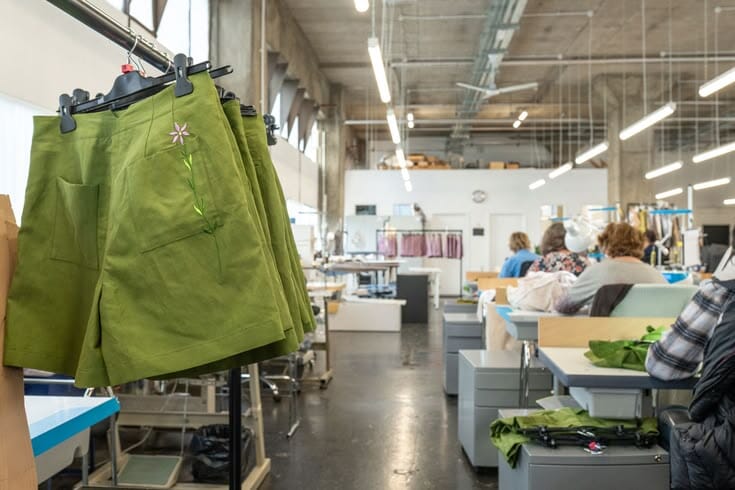
.jpeg)