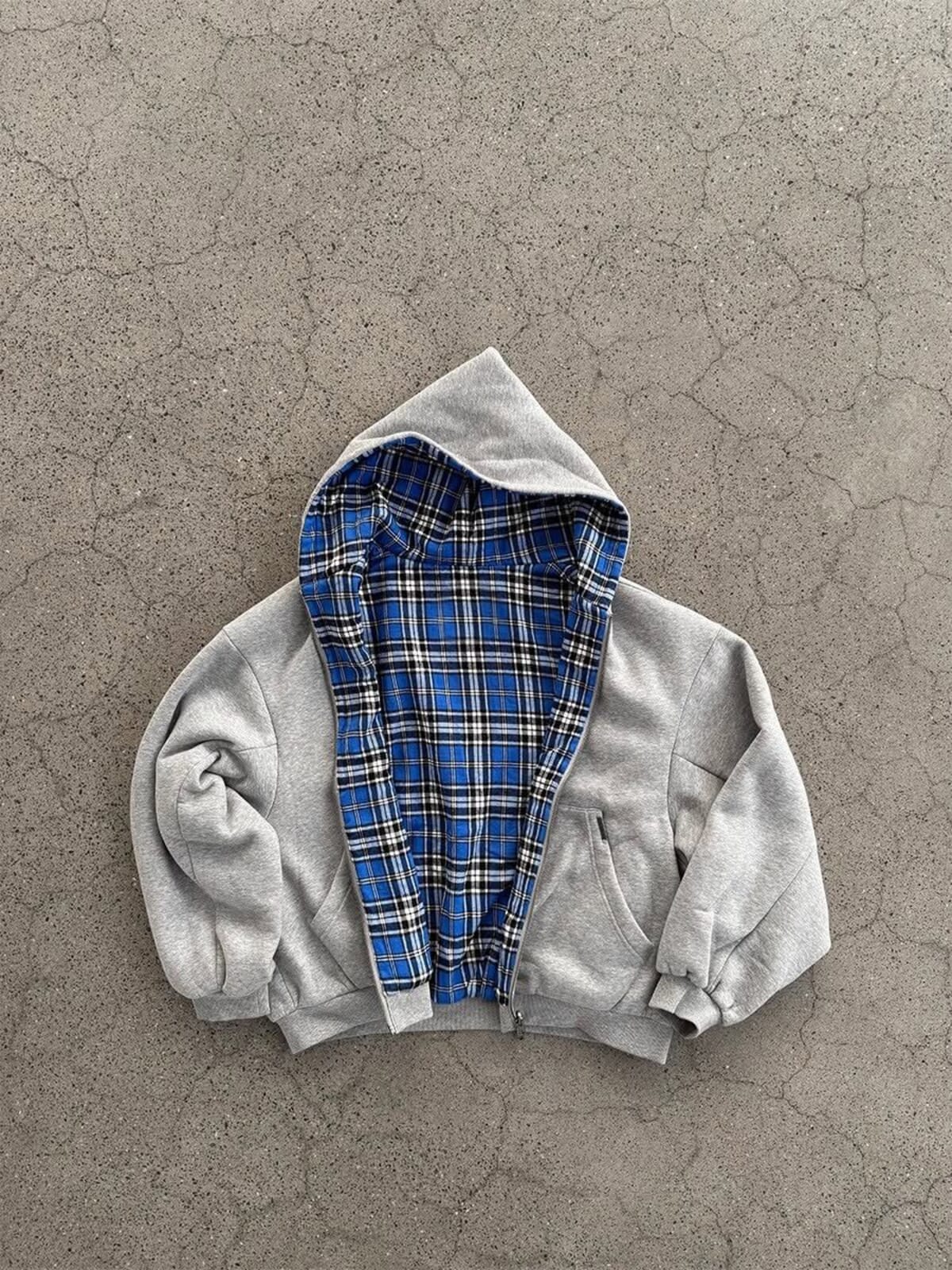
Streetwear manufacturers make the heavyweight hoodies, sweatshirts, boxy T-shirts, joggers and sets that streetwear labels sell. On the surface these are simple garments. In practice the category is unforgiving: the fabric is heavier than standard basics, the fit is the brand, washes and garment dye change the size of the garment, and the business model of limited drops punishes late deliveries and leftover stock.
This guide explains what a streetwear manufacturer actually does, what separates a capable one from a general jersey factory, which questions to ask before you send a tech pack, how minimums, cost and timing behave, and what trade data says about where these garments are made. If you are still deciding between decorating stock garments and building your own, read our comparison of cut and sew versus blanks first. For our own production page, see hoodie and sweatshirt manufacturing in Portugal.
What to know
- There are two kinds of streetwear supplier: blank makers sell finished garments to decorate, cut-and-sew factories build your own pattern.
- The pattern and the fabric are the product. Boxy blocks, dropped shoulders, heavy terry or fleece and rib quality are what customers notice.
- Washes and garment dye shrink the garment, so the pattern has to be graded for the finish, and the wash has to be sampled before bulk.
- Minimums are set by fabric and colour as much as by the sewing line: plan a drop by colourway, not only by style.
- China dominates the trade, exporting $6,008m of cotton knitted sweatshirts and hoodies in 2024, while European exporters ship fewer pieces at a much higher average value (WITS).
What does a streetwear manufacturer do?
Either sells you a finished garment to decorate, or builds your garment from your own pattern. Both are called streetwear manufacturers, and confusing them is the most common reason a brand contacts the wrong supplier.
Blank makers sell a finished base
Blank makers design and stock their own range of plain garments, which brands then print, embroider or label. Two examples, described from their own websites: AS Colour was established in 2005 in Auckland, New Zealand. It now operates six distribution facilities across Europe, the United States, the United Kingdom, Australia and New Zealand. Stanley/Stella describes itself as a pioneer and leader in sustainable blank apparel. The advantage of buying blanks is speed and low commitment: the garment already exists, so the work is artwork, printing and labelling. The limit is that the fit, fabric and construction belong to the blank maker, and so does the look your competitors can buy too.
Cut-and-sew factories build your pattern
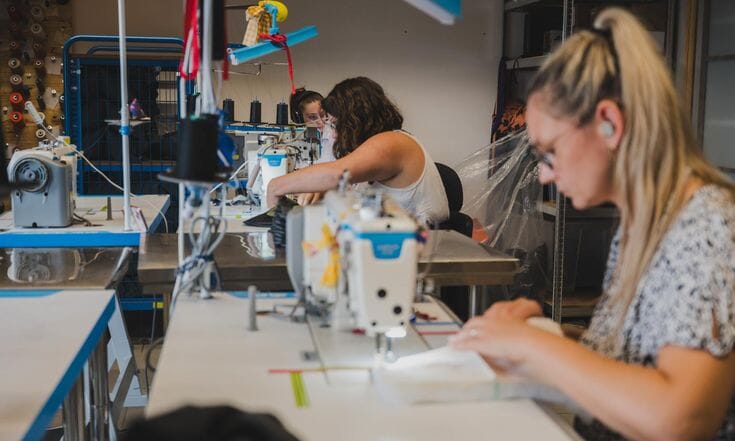
A cut-and-sew factory makes the garment from your own pattern and specification: your block, your fabric weight, your rib, your trims and your finish. This is where streetwear brands go once the garment itself, not only the graphic on it, is what makes them different. It is slower to start, carries a real minimum and needs a proper tech pack, but it is the only way to own the product.
Most good factories are not brands
Strong cut-and-sew factories rarely market themselves under a consumer name. They work under private label for the brands they produce for, which is why lists of named streetwear manufacturers online are dominated by blank makers and marketplaces. Finding the right factory is less about a famous name and more about checking the capabilities set out in the rest of this guide.
Who does what in a production run
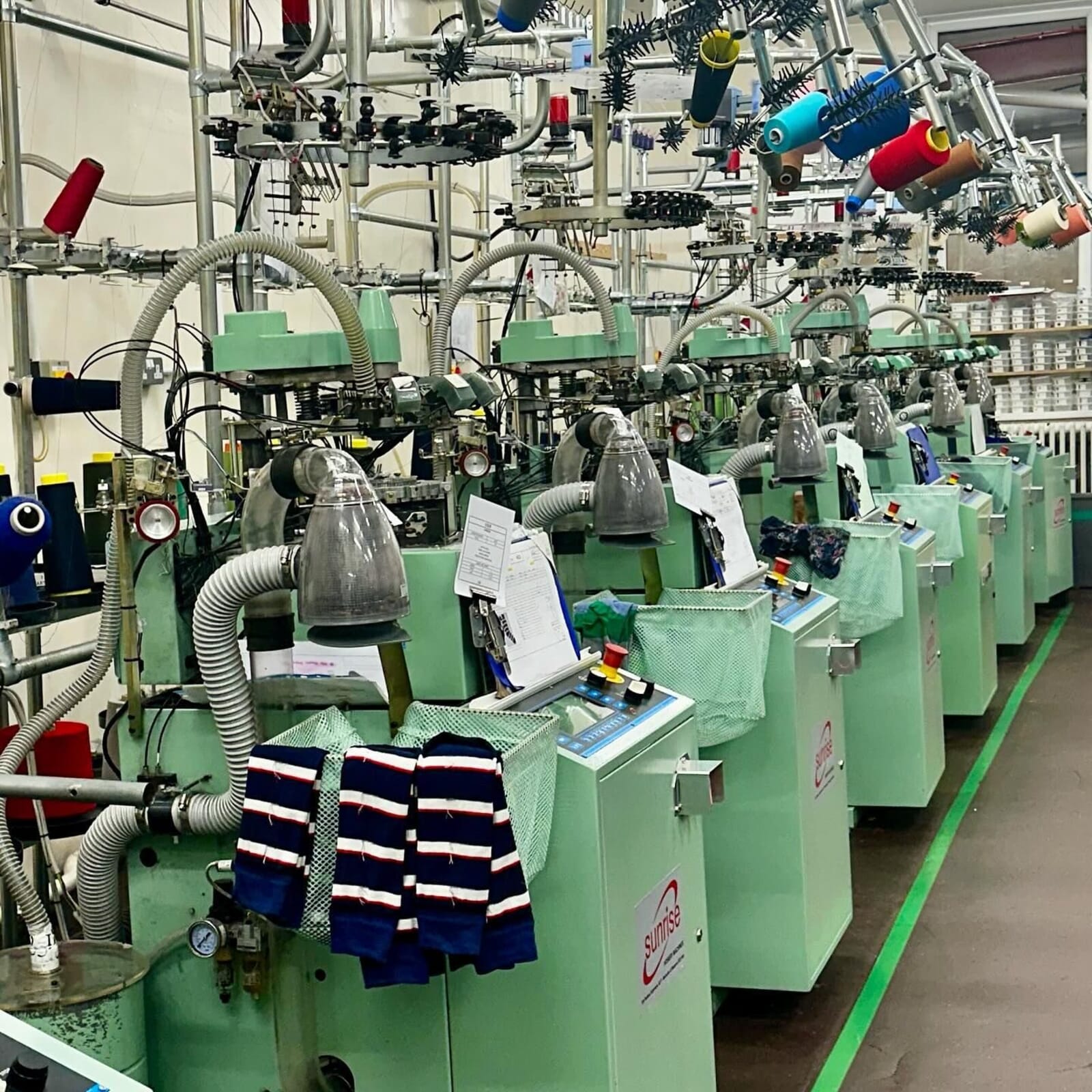
Even a single hoodie order often involves several businesses: a knitter that makes the terry or fleece, a dye house, the cut-and-sew factory, a printer or embroiderer and sometimes a separate laundry for washes. A capable streetwear manufacturer either does these in house or manages the partners close by. Ask which steps happen under the factory’s own roof and which are sent out, because every handover adds time and a chance for colour or size to drift.
What makes streetwear production different?
Heavier fabric, oversized patterns, visible rib and trims, washes that move the size, and a drop calendar that does not wait. A factory that sews good standard basics is not automatically good at any of these.
Heavyweight fabric is the feel of the brand
Streetwear hoodies and sweatshirts are usually made from heavy French terry or brushed fleece, and T-shirts from dense, heavier jersey. Weight is part of the product: customers judge it in the hand within seconds. Heavy fabric also behaves differently on the line. It needs the right needles and machine settings, it is harder to fold into a neat collar or hood seam, and it shrinks in its own way when washed. Our GSM guide explains how weight is measured and what different weights feel like.
The pattern is the brand
Boxy bodies, dropped shoulders, short wide T-shirts and stacked joggers are not standard blocks with a bigger size label. They are drafted patterns with their own shoulder slope, sleeve angle and balance between front and back. A dropped shoulder that is drafted badly pulls at the neck or twists the sleeve. Our guide to drop shoulder hoodie manufacturing covers how these patterns are cut and what drives their price.
Rib and trims are visible
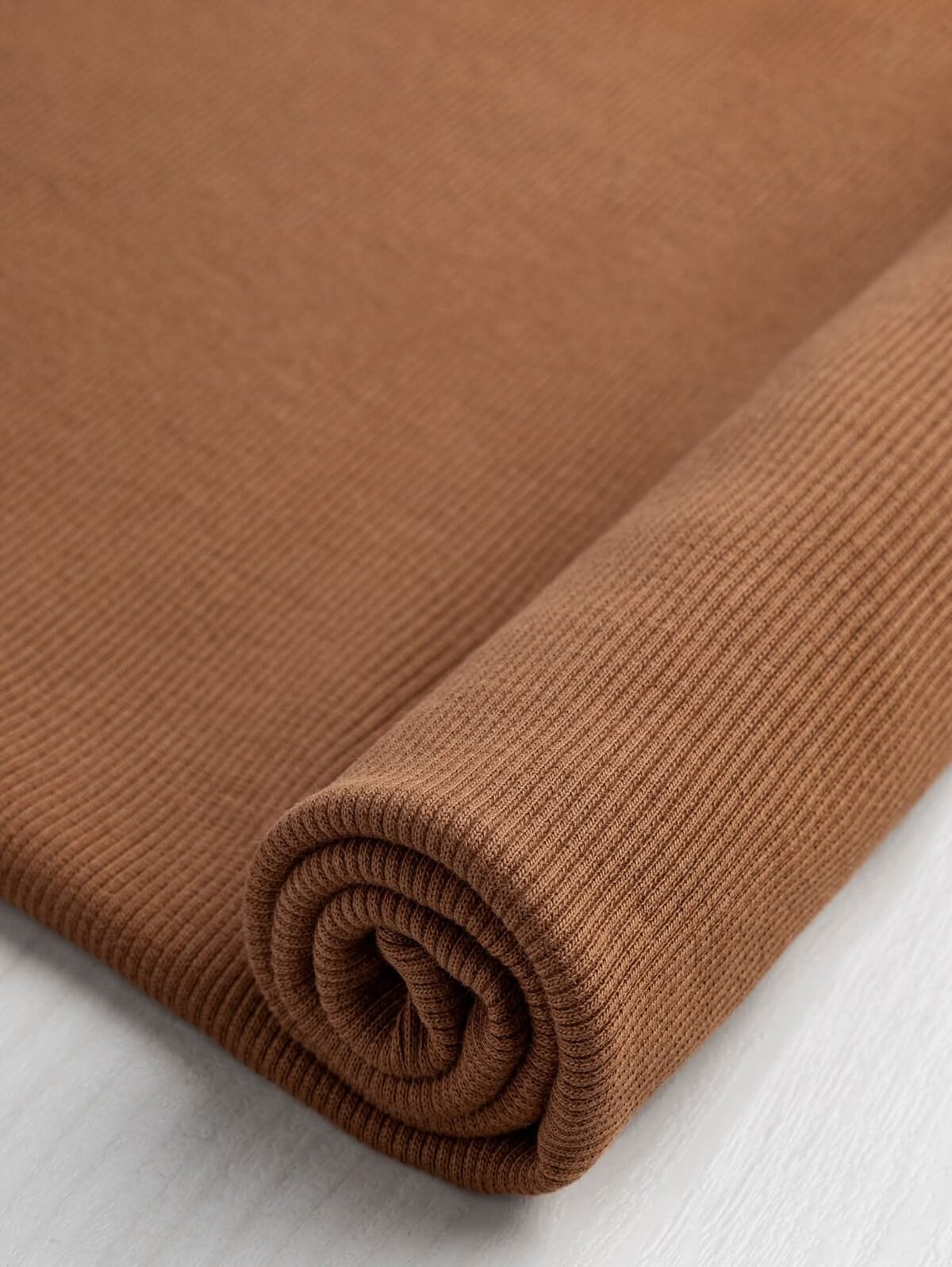
On a heavyweight hoodie the rib cuffs, hem band and neck rib carry a lot of the look. Rib that is too light collapses next to heavy terry; rib that does not recover leaves cuffs flared after a few wears. The rib also has to come out the same colour as the body after dyeing, which is harder than it sounds when the two fabrics are knitted differently. Drawcords, eyelets, aglets, zips and woven labels are part of the design and need to be specified, not left to the factory’s default.
Washes and garment dye move the size
Garment dye, enzyme washes, stone washes and acid washes give streetwear its worn-in look, but they also shrink the garment and change its hand. The pattern has to allow for the shrinkage of the specific finish, and the measurements in the tech pack must say whether they are before or after washing. Our guide to acid wash hoodies covers how one of these finishes is done and what it adds to the cost.
Decoration is part of the garment
Screen print, puff print, embroidery, appliqué and patches are central to most streetwear ranges. The decoration method has to suit the fabric: large prints on heavy fleece, fine embroidery on loopback terry, and prints on garments that will be washed afterwards all need testing. Our comparison of screen printing and direct-to-garment printing for streetwear explains when each method is the right choice.
Drops punish late delivery
Many streetwear brands sell in limited drops announced in advance. A drop that arrives late loses its moment and its marketing, and a run that is too large ends up discounted, which damages the brand more than a sell-out does. That makes reliability on dates and the ability to produce sensible quantities more valuable than the lowest unit price.
How do you choose a streetwear manufacturer?
Check the specific capabilities your product needs, then prove them with a sample. A general clothing factory can say yes to almost any brief; the questions below show whether it can actually make yours well.
Ask what they already make
A factory that sews heavyweight hoodies every week has the machines, the settings and the operators for it. One that mostly sews light T-shirts or wovens will learn on your order. Ask to see current production in a similar fabric and weight, not a portfolio of photos.
Ask where the fabric comes from
Most streetwear quality problems start in the fabric: weight that varies between rolls, terry that pills, fleece that sheds, colour that differs from the approved lab dip. A factory with a close relationship with a knitter and a dye house can fix those problems before cutting. Ask which mills they buy from, whether you can choose the fabric, and how they check each lot before it is cut.
Ask who does washes and decoration
If the garment is washed, dyed, printed or embroidered, find out who does it and where. Finishing close to the sewing floor means faster tests and fewer weeks lost moving garments between partners. It also means one party can be held responsible when a print cracks after washing or a dye lot comes out uneven.
Ask how they control shrinkage
A good streetwear factory washes test garments, measures them and adjusts the pattern before bulk. Ask what shrinkage they expect for your fabric and finish, how they test it and whether the measurement chart you approve is before or after washing. If the answer is vague, expect sizes to move in production.
Ask about reorders
A drop that sells out often needs a repeat. Ask whether the same fabric and colour can be bought again, whether the factory keeps your pattern and approved sample, and how they keep a second run consistent with the first. A product that cannot be repeated cannot grow.
| What to check | Why it matters in streetwear | A good answer sounds like |
|---|---|---|
| Heavyweight experience | Heavy terry and fleece need different settings and skills | Shows current production in a similar fabric and weight |
| Fabric source | Weight, pilling and colour problems start at the mill | Names the knitter and dye house and checks each lot |
| Pattern making | Boxy and drop-shoulder fits are drafted, not resized | Has a pattern maker who adjusts the block after the first sample |
| Washes and dye | Finishes shrink garments and change colour | Tests the finish on samples and measures after washing |
| Decoration | Prints and embroidery must suit the fabric and survive washing | Samples the decoration on the real fabric before bulk |
| Reorders | Sold-out drops need identical repeats | Keeps the pattern and sample, and can rebuy the fabric |
Where are streetwear hoodies and sweatshirts made?
Mostly in Asia by volume, with European exporters shipping fewer pieces at much higher average values. Customs data has no line for streetwear as such, but it does have one for cotton knitted jerseys, pullovers, sweatshirts and hoodies (HS 611020), which is the core of most streetwear ranges.
In 2024 China exported $6,008m of these garments, ahead of Germany ($1,571m), Italy ($1,491m) and Turkey ($1,277m), according to WITS trade data. China’s figure was up from $5,757m in 2023. Germany and some other European countries are partly distribution hubs, so their exports include garments sewn elsewhere: export statistics show where goods ship from, not always where they were made. Countries that did not report data for a year are also missing from that year’s list, so read the ranking as indicative.
Cambodia exported $971.8m and Portugal $314.6m in the same line. Portugal is a small exporter by value next to China, but, as the next chart shows, it sits at a very different point in the market.
What the average value per piece shows
Dividing export value by the number of items exported gives an average value per garment. It is a rough measure: it mixes cheap and premium products, and it includes re-exports. The gaps between countries are still large enough to show where each sits in the market.
By this measure, a cotton sweatshirt or hoodie exported from Cambodia averaged $4.83 in 2024 and one from China $6.36, against $9.28 from Turkey. Portugal averaged $20.15 and Italy $41.33. Those figures are not prices a brand would pay a factory, but they confirm what most brands find when they compare quotes: Asian volume production competes on cost, and European production competes on quality, shorter lead times and smaller runs.
The pattern is similar for T-shirts. Using the same method on cotton T-shirts (HS 610910) in 2024, China averaged $3.31 per item and Turkey $3.87, while Portugal averaged $8.62. Portugal exported $683.3m of cotton T-shirts that year, about 79.2 million items.
Where Portugal sells
Portugal’s largest markets for these garments in 2024 were Spain ($59.7m), France ($55.6m), Italy ($38.0m), the United Kingdom ($36.9m) and Germany ($34.1m). Most of the volume goes to nearby markets that can be reached by road in days, which is exactly the advantage a brand selling in Europe or the UK is buying when it produces there.
How much does it cost to make streetwear?
Fabric weight, finish and decoration decide the cost more than the sewing does. A heavy garment-dyed hoodie with embroidery and custom trims costs far more than a plain mid-weight one, even from the same factory.
As a base range for our own production in Portugal, a hoodie costs about €14 to €24 per piece and a sweatshirt €12 to €20, ex-factory and excluding VAT, at 300 to 500 units with mid-range fabric and standard complexity. Embroidery adds about €1.80 a unit, screen print €1.40 and a wash or dye treatment €2.50. Your tech pack sets the final quote, and you can price a style in our garment cost calculator.
Adding embroidery and a wash to that base gives roughly €18.30 to €28.30 per hoodie, before any custom trims, special packaging or freight. The table shows where the money goes.
| Cost driver | What raises it | How to control it |
|---|---|---|
| Fabric | Heavier weight, organic or specialty yarn, small fabric runs per colour | Choose fewer colours, or a fabric the mill already stocks |
| Pattern and fit | Complex panels, oversized blocks that use more fabric | Settle the fit on the sample, not in bulk |
| Finish | Garment dye, enzyme or acid wash, special handfeel treatments | Use one wash across a drop rather than one per style |
| Decoration | Many colours, large placements, puff or high-density print, dense embroidery | Simplify artwork and keep placements consistent |
| Trims and labels | Custom drawcords, metal tips, branded zips, woven labels | Specify them early so they arrive with the fabric |
For a full breakdown by garment and quantity, see our guide to clothing manufacturing costs in Portugal.
What minimums do streetwear manufacturers ask for?
Blank makers sell by the piece or by the box; cut-and-sew factories set a minimum per style and colour. The second number is the one that shapes a streetwear launch.
Why colour matters as much as style
In cut and sew, the minimum is usually set per style and per colour, because each colour is a separate fabric run at the dye house. A drop of one hoodie in four colours is, for the factory, four small runs. Brands that plan by style and then add colours late are often surprised by the total quantity and the cost of the extra fabric.
Fabric minimums come first
Mills and dye houses have their own minimums for knitting and dyeing a fabric to your colour. Using a fabric the mill already stocks in your colour lowers that barrier; asking for a custom colour or weight raises it. Ask early which fabrics are available in small quantities, because that answer decides how small your first drop can be.
Plan the drop by colourway
A first drop is usually better served by fewer colours with real depth in sizes than by many colours with two or three pieces per size. It sells through more predictably, it keeps the fabric order sensible and it tells you more clearly which colour to repeat. Our guide to minimum order quantities in Portugal goes deeper into how minimums are set.
For the streetwear runs we place in Portugal, minimums are 50 to 100 pieces per style and colour, and we can be flexible.
How long does streetwear production take?
Sampling first, then bulk, with the schedule built backwards from the drop date. For hoodies and sweatshirts we place in Portugal, a sample takes around 2 to 3 weeks and production around 5 to 7 weeks.
Work back from the drop
Start from the date the drop goes live and work backwards through shipping, production, sample approval, sampling and the tech pack. Leave slack at every stage. Most delays come from late decisions on fit, colour or artwork, not from the sewing itself.
Sample in the real fabric and finish
A sample sewn in a substitute fabric, or without the wash, tells you little about the finished product. Ask for the first sample in the production fabric and finish, wash it more than once, and measure it against the chart before approving. That one step prevents most size complaints after a drop.
Approve a pre-production sample
Once the fit is right, a pre-production sample in the approved fabric, colour, decoration and labels is the reference the bulk order is checked against. Keep one for yourself. Without it, there is nothing objective to compare production with when something looks different.
Leave time for the last steps
Final inspection, folding, swing tags, polybags and shipping all happen after sewing and all take longer than expected. A schedule that ends when the last garment leaves the sewing line has left out the stage where drops most often run late.
What should a streetwear tech pack include?
Everything that makes the garment yours, written down so the factory does not have to guess. A clear tech pack shortens sampling and makes quotes comparable between factories.
- Flat sketches of front, back and details, with every seam, panel and stitch type marked.
- Fabric: composition, construction (French terry, brushed fleece, jersey), weight and colour references for body and rib.
- Measurement chart for every size, stating whether measurements are before or after washing.
- Finish: garment dye, wash type and the expected handfeel, with a reference sample if you have one.
- Decoration: method, artwork files, size and placement for each print or embroidery.
- Trims and labels: drawcords, tips, eyelets, zips, main label, care label and swing tags.
- Packing: folding, polybags, size stickers and carton instructions.
If you do not have one yet, our team prepares a factory-ready single-style tech pack for €79, ready in 3 to 5 working days with 2 to 3 revision rounds. See what the tech pack includes.
What mistakes do streetwear brands make with factories?
Most of them come from deciding too late or assuming too much. The same handful of problems appear again and again in first orders.
Approving a sample without washing it
A heavy hoodie can look perfect on the table and lose length and width after its first wash. Wash every sample the way a customer will before approving it, and measure it again.
Adding colours after the quote
Each extra colour is an extra fabric run and often a minimum of its own. Fix the colourways before asking for the quote, or ask for the quote per colour so the effect is visible.
Leaving trims to the factory
Drawcords, eyelets and labels left unspecified will be whatever the factory has in stock, which is rarely what the designer imagined. Name every trim in the tech pack, with a supplier or a reference sample where possible.
Ordering too many sizes in too many styles
Spreading a small budget across many styles and colours gives thin size runs that sell out unevenly. A tight first drop with depth in the core sizes teaches you more and leaves less stock behind.
Choosing on unit price alone
The cheapest quote is often for a lighter fabric, a simpler finish or a longer lead time than the brief asked for. Compare quotes on the same specification, and include freight, duties and the cost of a late drop when deciding.
Working with Portugal Clothing Factory
Our team places and manages clothing production with factories in our group in the northern Portuguese textile cluster, including jersey cut-and-sew factories that work in French terry and brushed fleece, with washes, prints and embroidery done near the sewing floors. We are not a blank maker and we do not sell stock garments. For a streetwear brief, the first useful questions are which fabric weight and finish you want, how many colours the first drop needs and when it has to land. We place the order with the factory in our group that works in your fabric and stay involved through sampling, quality control and delivery.
Across our group, minimums are 50 to 100 pieces per style and colour, and we can be flexible. We agree our fee in writing, take no commission on production, and the factory invoices the production directly.
Get in contact with the garment, fabric, finish, decoration, quantity and drop date. Our team replies within 24 hours. If you are earlier in the process, our guide on how to start a streetwear brand covers the steps before production.
Frequently asked questions
What is a streetwear manufacturer?
A business that makes streetwear garments such as heavyweight hoodies, sweatshirts, T-shirts and joggers. Some are blank makers that sell finished plain garments to decorate; others are cut-and-sew factories that build garments from a brand's own pattern and specification.
Should I start with blanks or cut and sew?
Blanks suit brands whose product is the graphic, because there is almost no minimum and no sampling. Cut and sew suits brands whose product is the fit, fabric and finish, and it needs a tech pack, samples and a real minimum per style and colour.
What fabric is used for streetwear hoodies?
Usually heavy cotton French terry or brushed fleece, sometimes with a small share of polyester, plus rib in the same colour for cuffs, hem and collar. The weight and handfeel are part of the product, so they should be specified in the tech pack and checked on the sample.
Why does my garment-dyed hoodie come out smaller?
Garment dye and washes shrink the garment after it is sewn. The pattern has to be made larger to allow for the shrinkage of that specific finish, and the measurement chart should say whether it is before or after washing.
Where are most hoodies and sweatshirts made?
For cotton knitted sweatshirts and hoodies (HS 611020), China was by far the largest exporter in 2024 at $6,008m, ahead of Germany, Italy and Turkey, according to WITS trade data. Portugal exported $315m at a much higher average value per piece.
What minimum do you work to for streetwear?
For the hoodies, sweatshirts and T-shirts we place in Portugal, 50 to 100 pieces per style and colour, and we can be flexible. A hoodie sample usually takes 2 to 3 weeks and production 5 to 7 weeks.
How do I check a streetwear factory before ordering?
Ask to see current production in a similar fabric and weight, ask where the fabric, washes and decoration are done, ask how shrinkage is tested, and approve a washed sample in the real fabric before bulk.
Can a streetwear factory repeat a sold-out drop?
Yes, if the fabric and colour can be bought again and the factory keeps your pattern and approved sample. Ask about reorders before the first run, not after it sells out.
Our team places and manages clothing production with factories in our group in northern Portugal, usually from 50 to 100 pieces per style and colour. Tell us your product, fabric, volume and timeline, and we reply within 24 hours. Fee agreed in writing, no commissions.
Send your brief Get a tech pack (€79)No tech pack yet? We prepare one style, factory-ready, for €79. What it includes.
Sources
- WITS (World Bank), UN Comtrade data, HS 611020 (jerseys, pullovers, sweatshirts of cotton, knitted): exporters 2024 and 2023; Portugal exports by partner, 2024.
- WITS (World Bank), UN Comtrade data, HS 610910 (T-shirts of cotton): exporters 2024; Portugal exports by partner, 2024.
- AS Colour, About us.
- Stanley/Stella, home page.
- Portugal Clothing Factory, hoodie manufacturer in Portugal (minimums, sample and production time, base cost ranges, tech pack).
Portugal Clothing Factory places and manages clothing production with factories in our group in the northern Portuguese textile cluster. We agree our fee in writing, reply within 24 hours, and stay involved through sampling, quality control and delivery. See how we work or get in contact.