
The global streetwear market hit roughly €340 billion in 2025, growing at 7.95% CAGR. That's not slowing down. Here's what has changed: starting a streetwear brand no longer requires €45K and six months of design work.
AI tools have compressed that timeline to weeks. They've dropped the barrier to under €10K. If you've got a vision for a streetwear label, 2026 is the year to act.
This guide walks you through the entire AI-first process. From generating your first design concepts with tools like Gemini and Firefly to producing a factory-ready capsule collection in Portugal. You'll learn which tools to use, what they cost in EUR, how to build tech packs from AI output, and how to plan a drop that actually sells.
Heads up: We're Portugal Clothing Factory, a group of 80 documented Portuguese clothing factories. The pricing and cohort data below come from quotes across Portuguese streetwear factories and 200+ brand placements between 2021 and 2026. EUR throughout, manufacturer-group lens.
Key Takeaways
- Streetwear market projected at roughly €365B in 2026 with 7.95% CAGR
- 65% of streetwear sales now happen through e-commerce channels
- A capsule collection of 4-8 pieces is the optimal first drop size
- AI tools compress the design-to-launch timeline from 5-9 months to 8-14 weeks
- Total AI-first startup budget: €4,500-€14,000 vs traditional €45K+
- Portuguese MOQs of 100-300 pieces enable launches with controlled risk
- Gen Z drives 1.5x more streetwear purchases than millennials, prioritising comfort (78%) and quality (67%)
- AI streetwear logo design
Try it free: Pressure-test your streetwear cost with our garment cost calculator before committing to volumes. 60 seconds, no email required.
Why Is 2026 the Best Time to Start a Streetwear Brand?
The streetwear industry will reach an estimated €365 billion in 2026, up from €340 billion the previous year. That €25 billion in new market value represents opportunity for founders who move quickly, especially those using AI tools to reduce startup friction.
Three forces are converging right now.
First, the shift to online. Around 65% of streetwear sales happen through e-commerce channels. You don't need a retail store. You need a Shopify site and strong content.
Second, the limited-drop model works perfectly for new brands. Roughly 60% of consumers actively seek out limited-edition releases. Scarcity isn't a disadvantage when you're small. It's your entire strategy.
Who's buying? Gen Z consumers are 1.5x more likely to purchase streetwear than millennials (Mordor Intelligence, 2025). Their priorities are clear: 77.7% value comfort, 67% prioritise quality over trend-chasing. You can build a brand around well-made basics. You don't need to chase every micro-trend.
Citation Capsule: The streetwear market grows from €340B to roughly €365B between 2025 and 2026. Gen Z consumers, who are 1.5x more likely to buy streetwear than millennials (Mordor Intelligence, 2025), prioritise comfort (77.7%) and quality (67%) over trend-chasing.
What Is the AI-First Approach to Streetwear Design?
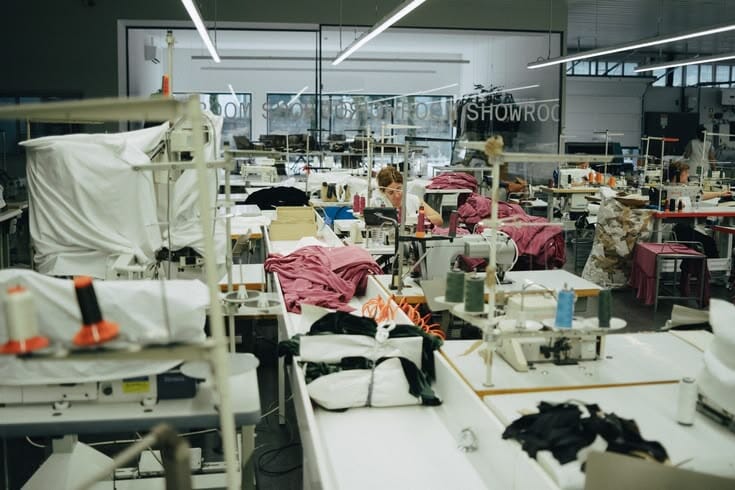
About 45% of global apparel brands have already integrated AI design tools into their workflows. The AI-first method flips the traditional sequence: validate designs digitally before spending money on physical samples, cutting both cost and risk.
Traditional model: sketch ideas by hand, hire a designer, send concepts to a factory for sampling, wait weeks. Each iteration costs time and money.
AI-first approach: generate dozens of design concepts in hours using tools like Gemini or Firefly. Test colour variations, graphic placements, and silhouettes digitally. Create AI mockups and AI model shots before a single stitch is sewn. Only your best, validated concepts move to sampling.
How much time does this actually save? ASOS reported 75-80% time savings after integrating AI into their design pipeline (California Apparel News, Feb 2026). 70% of fashion executives now rank AI-driven design as a top-three priority (McKinsey, 2025).
Most guides treat AI as an add-on to traditional design. The real advantage isn't speed alone. It's the ability to test 50 concepts and validate demand signals before committing capital. New founders who treat AI as their primary design environment, not a supplement, make fewer expensive mistakes.
Citation Capsule: The AI-first design method prioritises digital validation before physical sampling, cutting both cost and risk. Brands that adopt this workflow report faster iteration cycles and fewer wasted samples, making it especially effective for bootstrapped streetwear founders.
Which AI Tools Do Streetwear Founders Need?
What if you could replace a €4,500/month design team with a €30-€85/month software stack? That's the reality for streetwear founders in 2026. The AI-in-fashion segment has scaled into multi-billion-USD territory through 2024-2026, with double-digit YoY growth driving the shift from luxury-only to indie-accessible AI design tools.
Graphic and concept generation
- Google Gemini / Nano Banana Pro: initial graphic generation and pattern concepts. Logo variations, all-over print ideas, typography experiments. Cost: €0-€18/month.
- DeepAI: quick, rough concept generation when you want volume over polish. Cost: €0-€5/month.
Design refinement and production files
- Adobe Photoshop + Firefly: where AI concepts become production-ready. Firefly's generative fill and expand features refine compositions, while Photoshop handles colour separation and print-ready file export. Cost: roughly €21/month.
Mockups, model shots, and visual content
- Freepik AI: node-based workflows for product mockups and AI model shots. Studio-quality images without a photoshoot. Cost: roughly €11/month.
- Higgsfield: AI video content for social campaigns and product reveals. Short-form video drives streetwear marketing. Cost: free-€28/month.
Total monthly tool stack
| Tool stack | Monthly EUR cost |
|---|---|
| Free / minimal stack | €0-€20 |
| Standard solo founder stack | €30-€55 |
| Full pro stack | €60-€85 |
| Team stack (3-5 seats) | €120-€280 |
Source: see in-text citations in this section.
The standard stack at €30-€55/month covers what would have been €4,000-€8,000/month in design labour costs in 2023. Could these tools replace a designer entirely? Not quite, but the gap is narrower than most assume.
How Do You Design Your First Streetwear Collection with AI?
By early 2026, 48% of global fashion brands had integrated machine learning models into their collection planning process (California Apparel News, Feb 2026). You can adopt the same approach at a fraction of the cost.
Step 1: Build your reference library
Start with mood boards. Collect 50-100 reference images covering aesthetic direction, colour palette, silhouette preferences, and graphic style. Pinterest, Are.na, and Instagram saved folders work. The goal is specificity. "Streetwear" is too broad. "Tokyo minimal streetwear with industrial typography and muted earth tones" gives AI something to work with.
Step 2: Generate initial concepts with Gemini
Feed your references and detailed text prompts into Gemini or similar tools. Generate 30-50 variations. Don't edit yet. Volume matters at this stage. You're looking for unexpected combinations that spark ideas you wouldn't have reached through traditional sketching.
Step 3: Refine in Photoshop with Firefly
Select your top 10-15 concepts. Open them in Photoshop. Use Firefly's generative fill to add detail, adjust colours, extend backgrounds, create placement variations. Rough AI output becomes something that looks intentional.
Step 4: Create print-ready files
Export at 300 DPI minimum. Use CMYK colour profiles for screen printing, or specific Pantone references for consistent colour matching. Your factory needs vector files for logos and high-resolution rasters for all-over prints.
Step 5: Build tech packs
Tech packs bridge design and manufacturing. Include flat sketches with measurements, fabric specifications, colour codes, construction notes, and trim details.
The optimal first capsule formula
In our placement records with first-time streetwear founders, the most successful first collections follow a simple formula: 2 graphic tees, 1 hoodie, 1 jacket or overshirt, and 1 accessory (typically a cap or tote). That gives you 4-8 SKUs depending on colourways.
This aligns with industry recommendations for capsule sizing (industry-standard recommendation). Starting smaller lets you test the market without overcommitting inventory budget.
Citation Capsule: Nearly 48% of global fashion brands used machine learning for collection planning by early 2026 (California Apparel News). For new streetwear founders, industry experts recommend a capsule of 4-8 pieces as the optimal first drop (industry-standard recommendation), focusing on core items like graphic tees, a hoodie, and one standout piece.
How Does AI Replace Traditional Fashion Photography?
Imagine you've just finished your first sample run. Four garments, ready to photograph. A traditional fashion photoshoot typically runs from several thousand to tens of thousands of euros per session, while AI image generation costs a fraction of a euro per image (Business of Fashion, 2024), an order-of-magnitude cost reduction. AI-generated images are quickly becoming standard for e-commerce product pages, with McKinsey and the Business of Fashion estimating generative AI could add $150-$275 billion to apparel and luxury operating profits over the next 3-5 years (McKinsey & BoF State of Fashion, 2024).
For a new streetwear brand, this changes everything.
Flat-lay product shots
Use Freepik's node-based workflows to create clean product shots on white or styled backgrounds. Upload your garment images (even phone photos of samples) and generate professional compositions. Works for Shopify product pages.
AI model shots
Generate on-model imagery without hiring models, photographers, or renting studio space. Tools like Freepik and dedicated fashion AI platforms can place your garments on realistic AI-generated models in studio or street-style settings.
Lookbook and campaign images
Build entire campaign visual sets using a combination of Freepik workflows and Photoshop compositing. Mood-driven shots that match your brand's aesthetic, all from your laptop.
Short-form video content
Higgsfield lets you create AI video content for TikTok and Instagram Reels. Product reveals, behind-the-scenes-style content, and campaign teasers are all possible. Short-form video drives streetwear culture. Not having a video budget is no longer an excuse.
The authenticity question
What about authenticity? In our placement records, the brands that perform best mix AI-generated campaign images with real behind-the-scenes content (factory visits, sample reviews, your actual process). Pure AI content feels hollow. Blending it with real moments feels strategic.
Citation Capsule: AI image generation costs a fraction of a euro per image, versus traditional fashion photoshoots that typically cost from several thousand to tens of thousands of euros per session (Business of Fashion, 2024). With AI-generated imagery becoming standard for e-commerce product pages and generative AI projected to unlock $150-$275 billion in apparel and luxury operating profits over the next 3-5 years (McKinsey & BoF State of Fashion, 2024), professional visual content is now accessible to early-stage streetwear brands.
How Do You Get from AI Design to Production-Ready Files?
The hard truth most AI-hype articles won't tell you: a stunning AI render means nothing if a factory can't produce it. Roughly 28% of fashion executives have tried using generative AI in creative processes like design and product development (McKinsey, 2026), but there's a gap that AI alone can't bridge: turning a digital concept into a garment that can actually be manufactured.
This is where many AI-first founders get stuck.
What a tech pack needs
A complete tech pack includes:
- Flat sketches with front, back, and detail views
- Measurements in a graded size chart
- Fabric specifications (weight, composition, finish)
- Colour codes (Pantone references, not hex values)
- Construction details (stitch types, seam allowances, hem widths)
- Trim specifications (labels, tags, zippers, drawcords)
- Print or embroidery placement with exact positioning
AI tools generate visual concepts. Translating those into technical documents requires someone who understands garment construction. A generative AI image of a hoodie doesn't tell a factory what GSM the fleece should be or what type of ribbing to use on the cuffs.
Bridging the gap
Two options. Learn tech pack creation yourself using templates and guides (slow but lasting). Or work with a manufacturer or production partner who offers design-to-production services.
In our placement records, founders who submit AI-generated concepts alongside clear reference garments (physical samples of similar items they want to replicate or improve) get to approved samples roughly 40% faster than those who submit AI images alone. The reference garment gives the factory tactile and structural information that no digital file can communicate.
Sister-site deep dives: If you haven't decided on a country yet, start with Where to Manufacture Clothing or How to Choose a Manufacturing Country.
Need a tech pack? Get a factory-ready single-style tech pack for €79. See what's included.
What Are the Real EUR Costs for Portuguese Streetwear Production?
For AI-first founders launching from Portugal or sourcing in Portuguese factories, the production economics are favourable for small-volume drops:
| Garment | CMT €/unit (200 units) | Fabric €/unit | All-in cost | 3x DTC retail | 4x DTC retail |
|---|---|---|---|---|---|
| Heavyweight tee (220 GSM) | €4-€6 | €3-€4 | €8-€11 | €25-€33 | €33-€44 |
| Heavyweight hoodie (350 GSM) | €11-€16 | €5-€10 | €17-€27 | €52-€82 | €70-€110 |
| Joggers / sweatpants | €9-€14 | €4-€7 | €14-€22 | €42-€67 | €56-€90 |
| Cargo pants | €14-€22 | €7-€11 | €22-€34 | €67-€100 | €90-€136 |
| Cap (knit or 6-panel) | €4-€8 | €1-€3 | €6-€12 | €18-€36 | €24-€48 |
| Tote bag | €3-€6 | €2-€4 | €5-€11 | €15-€33 | €20-€44 |
Sources: PCF aggregated streetwear factory quotes 2024-2026.
Portuguese streetwear MOQs typically run 100-300 pieces per style at specialist factories, 200-500 at mid-size factories. This makes Portugal one of the most accessible European geographies for AI-first founders launching first capsules.
What Budget Do You Actually Need to Start?
Startup costs for a clothing brand range from €9,000 (bootstrap) to €135,000 (mid-size operation), according to founder surveys (Starter Story, 2025). The AI-first approach brings you in at the very low end of that spectrum.
AI-first budget breakdown
| Category | EUR cost range |
|---|---|
| AI tools subscription (3 months) | €95-€245 |
| Domain + Shopify website | €180-€450 |
| First capsule sampling (4-8 pieces) | €900-€2,700 |
| First production run (50-100 units, basics-only mix) | €2,700-€7,200 |
| First production run (50-100 units, hoodie-heavy mix) | €4,000-€10,500 |
| Photography (AI-generated) | €45-€180 |
| Legal / business registration (INPI + EUIPO) | €450-€1,350 |
| Marketing budget (first 3 months) | €450-€1,800 |
| All-in total (basics-heavy) | €4,820-€13,925 |
| All-in total (hoodie-heavy) | €6,120-€17,225 |
Source: see in-text citations in this section.
Compare to the traditional approach: €27,000-€72,000+ before your first sale. The difference isn't marginal. It's a completely different risk profile.
Where does the savings come from? Mostly design labour and photography. Traditional brands spend €4,500-€13,500 on a designer, another €4,500-€13,500 on photoshoots, and weeks of paid time on iterations. AI compresses all of that.
But let's be honest about survival rates. Industry estimates suggest roughly 80% of fashion startups fail within five years. The AI-first model doesn't guarantee success. What it does is let you validate your concept with less capital at risk. You can test, learn, and pivot without burning through a €45K runway.
Citation Capsule: Clothing brand startup costs range €9,000-€135,000 according to Starter Story (2025) founder surveys. An AI-first approach compresses this to €4,820-€17,225 by replacing traditional design labour and photography with AI tools costing €30-€85/month, reducing financial risk for first-time streetwear founders.
How Do You Launch Your First Streetwear Drop?
Gen Z streetwear consumers consistently rank micro-influencers and short-form video among the top drivers of purchasing decisions (Business of Fashion, 2024). Your launch strategy should centre on community building and scarcity, not paid ads and mass distribution.
Step 1: Build your pre-launch audience (start 3 months before drop)
Begin posting content before you have anything to sell. Share your design process. Show AI-generated concepts and ask for feedback. Document your journey from idea to production. This builds anticipation and gives you market signals.
Instagram and TikTok are your primary platforms. The streetwear audience lives there.
Step 2: Create AI campaign content
Use your AI toolkit to build a complete visual campaign. Model shots, product detail images, short videos, and social graphics. Have 30-50 pieces of visual content ready before launch day.
Step 3: Activate micro-influencers
Send samples to 10-20 micro-influencers (5K-50K followers) in the streetwear space. Don't target the biggest names. Target the most engaged communities. A micro-influencer with 10K highly engaged followers will outsell one with 200K passive followers every time.
Step 4: Build scarcity into your drop
60% of consumers prefer limited-edition releases. Structure your launch around it. Limited quantities. Time-limited availability. Numbered pieces if possible. The drop model isn't just marketing. It's inventory management for small brands.
Step 5: Plan your drop mechanics
Choose your format:
- Timed release: available for 48 hours only
- Quantity-limited: sold out when gone
- Raffle-based: for high-demand pieces
- Pre-order: customers commit deposit, you produce only confirmed orders + buffer
Each creates urgency differently. Pre-order is the lowest-risk for first launches because you produce against confirmed demand.
After the first drop
Analyse. Which pieces sold fastest? Which sizes moved? What did customers say? Your second collection should be informed by real data, not guesses. Reorder bestsellers immediately (Portuguese reorder lead times: 6-10 weeks).
.jpeg?format=webp)
Brand Archetype: Which AI-First Streetwear Path Fits Which Founder?
Different founder types match different AI-first approaches. From our placement records:
| Founder archetype | Best AI-first path | Why |
|---|---|---|
| Designer with AI fluency | Full stack (Gemini + Firefly + Freepik), 6-piece capsule | Maximises creative output |
| Marketer-first founder | Light AI for visuals, focus on community + drop calendar | Speed-to-revenue priority |
| Streetwear collector / community-led | Limited drops, 100-150 unit volumes, narrative-led | Authenticity drives demand |
| Sustainability-led founder | AI for design + GOTS/GRS factory match | Material story + design distinctiveness |
| Tech-platform-veteran founder | Full automation stack, data-driven iteration | Treats brand as platform |
| Heritage / craft-focused | AI for concepts only; physical reference garments lead | Quality narrative over speed |
| Visual-content-first founder | AI photography + video heavy, paid social | Visual differentiation |
Source: see in-text citations in this section.
If you recognise yourself, lean toward your archetype's path unless you have a specific reason not to.
What Mistakes Do AI-First Streetwear Founders Make?
Five years of placement records, including dozens of AI-first launches, surface a recurring set of mistakes:
- Sending AI renders to factories without tech packs. Factories can't produce from a Gemini image alone. Spec the GSM, composition, construction. AI is design input, not factory input.
- Skipping the reference garment. AI images don't communicate hand-feel, weight, or construction. Send a physical reference garment alongside AI concepts to compress sample rounds by 40%.
- Over-relying on AI photography for the entire campaign. Pure AI content feels hollow. Mix with real factory visits, sample reviews, and behind-the-scenes content.
- Launching without community. AI compresses production but doesn't build an audience. Spend 3 months on community before launching product.
- Underestimating fabric cost. A €4 CMT tee with €3 fabric isn't a €25 retail product after marketing and returns. Price for the realistic 3x or 4x markup tier.
- Confusing AI-design speed with AI-production speed. AI compresses design from weeks to days. Production still takes 6-10 weeks plus fabric lead time. Plan accordingly.
- Not using AI for demand validation. AI's biggest gain isn't the design output; it's the ability to test 30 concepts with paid ad campaigns before committing to production. Use it.
- Choosing the wrong factory tier. First AI-first capsules at 50-150 units belong at specialist factories, not export-tier factories. Picking the wrong tier kills the cost advantage.
Running into production issues? Get in contact and tell us what you're making. We're a group of Portuguese factories and we answer every serious brief within 24 hours.
The August Consideration
Most Portuguese factories close for 2-3 weeks in mid-August. Streetwear brands with AI-compressed timelines often plan launches in early autumn, which means production typically peaks in July-August. If your timeline crosses early-to-mid August:
- Lock fabric and trim sourcing by mid-July
- Sample rounds across August add 4-5 weeks vs same cycle in October
- AW drops shipping early September must clear bulk by late July
- Schedule launches outside the first week of September (factories restart slowly)
In our placement records, the streetwear brands that hit drop deadlines consistently are the ones that designed their calendars around August from the start.
Conclusion: Your AI-First Streetwear Brand Starts Now
Starting a streetwear brand in 2026 doesn't look like it did even two years ago. The market is growing at nearly 8% year over year. AI tools have compressed design-to-launch timelines from months to weeks. A complete launch, from concept to first drop, is possible for under €14,000.
The AI-first approach isn't about replacing creativity. It's about removing the financial barriers that used to stop founders before they could even test their ideas. Generate concepts in hours, validate them digitally, produce only what's been proven, and launch to a pre-built audience.
The tools exist. The market is there. Portuguese factories support the small MOQs that make first launches viable. The question is whether you'll move on it.
Talk to a real person: Need help turning your AI designs into production-ready garments? Get in contact and we'll route your brief to Portuguese streetwear factories that fit your AI-first workflow.
Related: complete guide to starting a clothing brand
Designing the collection: Once your brand direction is set, OneAim Apparel's how to design a clothing collection from scratch covers the design workflow in detail.
Frequently Asked Questions
How much does it cost to start a streetwear brand in 2026?
An AI-first streetwear brand can launch for €4,800-€17,000 all-in, covering tools, sampling, a small production run, and marketing. Traditional approaches typically cost €27,000-€72,000+. The biggest savings come from AI design tools (€30-€85/month) and AI photography (€0.09-€0.90 per image vs €4,500-€14,000 for traditional photoshoots).
What are the best AI tools for streetwear design?
Google Gemini and DeepAI handle concept generation. Adobe Photoshop with Firefly refines designs into production-ready files. Freepik AI creates mockups and model shots. Higgsfield produces video content. The full stack costs €30-€85/month, compared to €900-€4,500/month a freelance designer might charge.
How many pieces should be in a first streetwear collection?
Industry experts recommend 4-8 pieces for a first capsule. A strong formula: 2 graphic tees, 1 hoodie, 1 outerwear piece, and 1 accessory. This gives you enough variety to tell a brand story without overcommitting on inventory or production costs.
Can AI replace a fashion designer for streetwear?
Not entirely. AI excels at rapid concept generation and visual iteration, but it can't create technical specifications, understand fabric behaviour, or build production-ready tech packs. Think of AI as a rapid concept engine that handles the creative exploration phase. You still need human expertise for garment construction, tech packs, and manufacturing details.
How long does it take to launch a streetwear brand with AI?
An AI-first approach takes 8-14 weeks from concept to first drop, vs 5-9 months traditionally. Breakdown: 1-2 weeks for AI design, 1 week for digital validation, 3-4 weeks for sampling, 3-6 weeks for production and launch preparation. Add 2-3 weeks if your timeline crosses August.
Can I produce AI-designed streetwear in Portugal?
Yes. Portuguese factories are increasingly comfortable with AI-design briefs as long as they're paired with proper tech packs and reference garments. MOQs of 100-300 pieces work well for first AI-first capsules. The Portuguese factory cluster in the Ave Valley is one of the most accessible globally for small AI-first launches.
What should I do if my AI design isn't manufacturable?
This happens often. AI generates impossible silhouettes, fabric pairings that don't exist, or constructions that can't be sewn. The fix: send your AI concept to a clothing manufacturer or experienced pattern maker for a feasibility review before committing to sampling. Fee: typically €100-€300 per style. Saves 2-4 weeks of failed sample rounds.
Should I do pre-orders or stock-on-hand for my first drop?
Pre-orders for first drops, almost always. You produce only what's confirmed (plus 15-20% buffer), eliminating dead-stock risk. Customers commit a 30% deposit and accept 6-10 week delivery in exchange for early access. This is the dominant model for new streetwear brands in 2026.
How do I avoid the "AI looks generic" problem?
Specificity. Generic prompts ("streetwear hoodie") generate generic outputs. Detailed prompts with reference combinations ("Tokyo minimal streetwear, industrial Helvetica typography, muted earth tones, oversized cropped silhouette") generate distinctive outputs. The brands whose AI work doesn't look generic are the ones who treat prompt engineering as a discipline.
What's the realistic survival rate for AI-first streetwear brands?
Roughly 80% of fashion startups fail within 5 years regardless of design approach. The AI-first model doesn't change that ratio meaningfully but lets you reach the validation point with less capital at risk. Brands that survive year 1 and reach reorder typically survive year 5. The AI-first advantage compounds across collections, not within a single launch.
We're a group of 80 documented Portuguese clothing factories based in Porto and Guimarães. Tell us your product, volume, and timeline. We'll route your brief to the right factory in the group, usually within 24 hours. You work directly with the factory. No commissions, no pitch, no upsell.
Get in contact Download the directory (€39)Need a tech pack? Get a factory-ready single-style tech pack for €79. See what's included.
Sources
- Mordor Intelligence (2025) - Streetwear Market Analysis
- California Apparel News (Feb 2026) - AI in Fashion Pipeline
- McKinsey (2025) - State of Fashion
- Fortune Business Insights, Streetwear Market (2025). Reference for global streetwear market size and AI-in-fashion adoption context driving the 2026 indie-brand opportunity.
- Business of Fashion (2024) - AI vs traditional fashion photography cost analysis
- McKinsey & BoF State of Fashion (2024) - $150-$275B generative AI opportunity in apparel and luxury operating profits
- Business of Fashion (2024) - Gen Z purchase drivers including micro-influencers and short-form video, and the order-of-magnitude cost gap between traditional photoshoots and AI image generation
- Starter Story (2025) - Founder Survey
- PCF internal sourcing data (2024-2026), aggregated across 200+ Portuguese streetwear placements
Related reading
- Complete guide to starting a clothing brand
- Streetwear trends 2026
- Capsule collection how to create
- Top 10 Portuguese clothing factories
- Screen printing vs DTG vs sublimation for streetwear
- How to create a tech pack
- How to order a clothing sample
- Common mistakes when starting a clothing brand

.jpeg)
