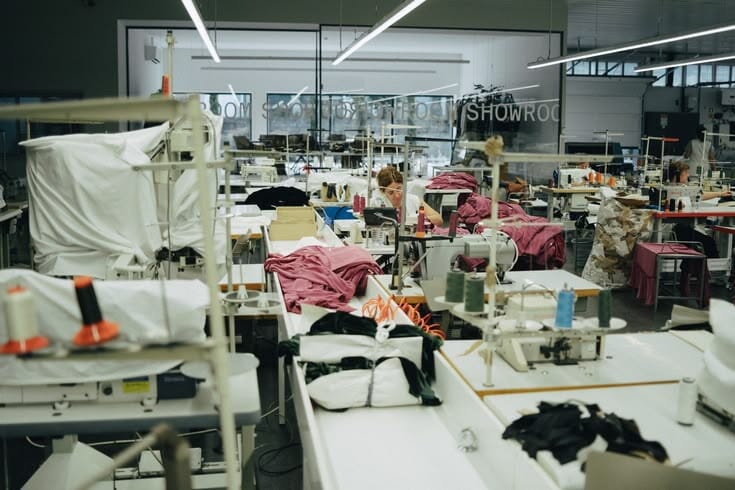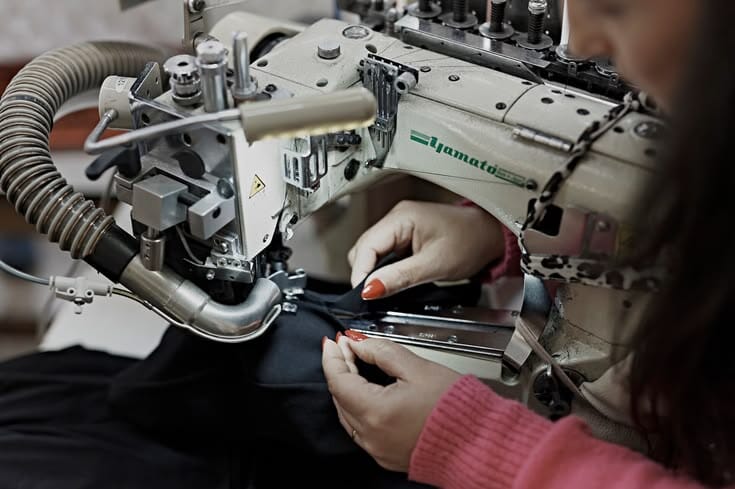
The global t-shirt market crossed $47 billion in 2025 and is projected to hit $60 billion by 2028 (Grand View Research, 2025). But most emerging brands lose margin at the t-shirts factory stage by choosing the wrong GSM, wrong MOQ tier, or wrong fabric family for their positioning.
This guide breaks down how a working brand actually picks a t-shirts factory: cotton weight decisions, MOQ tiers, CMT cost ranges in EUR, and what separates a bulk-basic factory from a premium-tier factory.
Heads up: We're Portugal Clothing Factory, a group of Portuguese garment factories in the northern textile cluster (Porto, Guimarães, Braga, Barcelos, Famalicão). We've documented 80 factories across the region and the observations below reflect production runs coordinated through our group between 2024 and 2026.
Key Takeaways
- Standard t-shirt weight = 140-180 GSM; premium heavyweight = 190-240 GSM; ultra-heavyweight streetwear = 240+ GSM.
- EUR CMT at Portuguese factories: €2.20-3.80 for standard tee at 300 MOQ, €3.50-6.50 for premium heavyweight, €5-9 for ultra-heavy 240+ GSM.
- MOQs start at 100 units per style at 20% of Portuguese factories; 300 units is the sweet spot for competitive pricing.
- Combed cotton beats carded on hand feel, holds print better, adds €0.40-0.90 per tee.
Try it free: Pressure-test your production cost with our garment cost calculator. 60 seconds, no email required.
What Should Fashion Brands Look For in a T-Shirts Factory?
The four non-negotiables when choosing a t-shirts factory are fabric mill relationships, GSM accuracy, wash-shrinkage control, and printing/decoration integration. Portugal has ~130,000 textile workers across 12,000 firms with deep cotton spinning + knitting infrastructure (ATP Portuguese Textile Association, 2025), which means factories can access mill-direct cotton pricing rather than relying on distributor markups. Certification depth adds a second layer: OEKO-TEX Standard 100 is baseline expected by European retail buyers, and CITEVE (the Portuguese Textile Technology Centre) reports growing certification adoption across the Portuguese cluster.
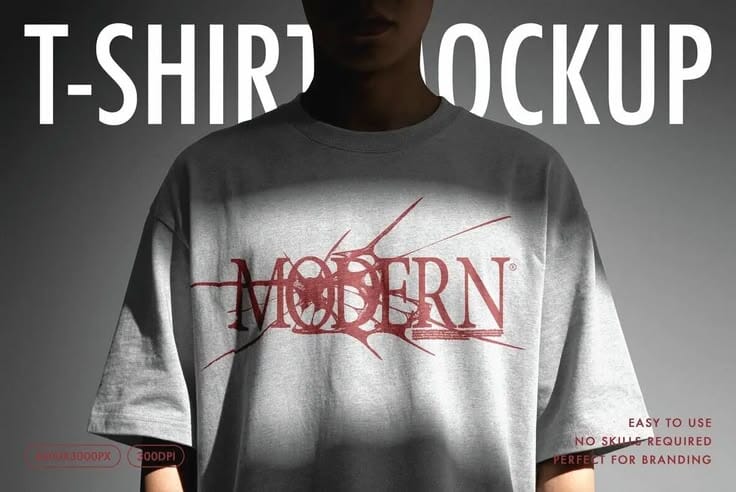
Specifically look for factories that:
- Verify GSM at fabric receipt (not just at production). Real-weight variance from spec should be ≤3%
- Handle Sanforising (pre-shrinking) in-house or through nearby wet processors
- Have relationships with named cotton mills (in Portugal: Somelos, Impetus, Lameirinho, and other Vale do Ave mills)
- Offer print/embroidery integration in the same facility or via trusted local partners
The most common reason emerging t-shirt brands overpay is stopping their comparison at the CMT quote. The real cost gap between factories shows up in fabric access + shrinkage variance. A factory quoting €2.50/tee CMT but sourcing fabric from a wholesaler at €5.50/m costs more all-in than a factory quoting €3.20/tee CMT with mill-direct fabric at €4.20/m.
What GSM Should Your T-Shirt Be?
T-shirt fabric weight ranges from 120 GSM (ultra-lightweight beach tees) to 300+ GSM (ultra-heavyweight streetwear boxy tees). The GSM decision is driven by target retail price, brand positioning, and expected wash frequency.
| GSM range | Positioning | Retail price range | Fabric type |
|---|---|---|---|
| 120-140 GSM | Ultra-lightweight, beachwear, women's basic | €15-25 | Combed cotton single jersey |
| 140-180 GSM | Standard tee, everyday basic | €18-40 | Combed cotton single jersey |
| 180-220 GSM | Mid-weight premium tee | €30-65 | Combed cotton, sometimes 2-thread |
| 220-260 GSM | Heavyweight, structured, streetwear | €45-90 | Combed cotton, ring-spun |
| 260-300 GSM | Premium heavyweight boxy tee | €65-140 | Ring-spun, sometimes reactive-dyed |
| 300+ GSM | Ultra-heavyweight streetwear (Cole Buxton, Represent style) | €90-200 | Heavy compact-spun ring-spun |
Sources: PCF factory group data (2024-2026), industry references.
Where brands miss: picking 140 GSM when the retail target is €45. The customer at €45 expects at least 180 GSM. Lightweight tees at premium prices consistently underperform on repeat purchase.
What Are the MOQs at a T-Shirts Factory?
MOQs at Portuguese t-shirt factories in the group start at 100 units per style at 20% of factories, with 300 units being the sweet spot for competitive pricing across the majority.
| MOQ tier | % of Portuguese factories accept | Cost impact |
|---|---|---|
| 50-100 units | 18% (specialist small-batch producers) | +25-40% per piece surcharge |
| 100-200 units | 40% | Baseline pricing (with surcharge on some) |
| 200-500 units | 65% | -8 to -15% versus 100 MOQ |
| 500-1,000 units | 82% | -15 to -25% versus 100 MOQ |
| 1,000-5,000 units | 100% | Best pricing tier |
| 5,000+ units | 100% | Volume negotiation available |
Sources: PCF factory group data (2024-2026), industry references.
Talk to a real person: Get in contact and we'll tell you which 2 to 3 factories in our group actually fit your brief.
What Does It Cost to Manufacture T-Shirts?
CMT costs for t-shirts at Portuguese factories range from €2.20 per unit for basic 140 GSM at 1,000+ MOQ to €9+ per unit for 300 GSM premium heavyweight at 100 MOQ.
| Product | CMT at 100 MOQ | CMT at 300 MOQ | CMT at 1,000 MOQ |
|---|---|---|---|
| Basic tee (140-180 GSM combed cotton) | €3-4.50 | €2.20-3.80 | €1.80-3 |
| Mid-weight premium (180-220 GSM) | €4-6 | €3-5 | €2.50-4 |
| Heavyweight (220-260 GSM) | €5-7.50 | €4-6 | €3-5 |
| Premium heavyweight (260-300 GSM) | €6-9 | €5-7.50 | €4-6.50 |
| Ultra-heavyweight (300+ GSM boxy) | €7.50-12 | €6-9 | €5-7.50 |
| With screen print (front only, 1-3 colours) | +€0.80-1.80 | +€0.80-1.80 | +€0.60-1.50 |
| With embroidered logo | +€1.50-3 | +€1.20-2.80 | +€1-2.50 |
| With garment dye | +€1.50-3 | +€1.30-2.80 | +€1.10-2.50 |
| With stone/enzyme wash finish | +€1.80-4 | +€1.60-3.80 | +€1.40-3.50 |
Sources: PCF factory group data (2024-2026), industry references.
Excludes fabric. Fabric adds €2.20-6/tee depending on GSM and cotton grade.
Across the t-shirt programs the factory group processed in 2025, median all-in FPP cost was €8.20 for a 180 GSM combed cotton tee at 300 MOQ (fabric + CMT + trims + sample amortisation). Retail multiplier of 3.5-5× puts wholesale-ready retail at €28-40. Below €25 retail, unit economics on Portuguese production stop working.
Need a tech pack? Get a factory-ready single-style tech pack for €79. See what's included.
What Fabric Should You Choose for T-Shirts?
The primary decision is combed cotton vs ring-spun vs open-end. Portuguese factories default to combed cotton for standard tees and ring-spun for premium tiers. For sustainability-positioned brands, GOTS-certified organic cotton is available at approximately 22% of Portuguese knit mills (Textile Exchange Preferred Fibers & Materials Market Report, 2025).
The "GSM inflation" trend in premium tees over the past 5 years is real. In 2019, most premium DTC brands (Everlane, Reformation, Buck Mason) launched at 160-180 GSM as the "heavyweight" tier. By 2026, that same premium DTC positioning requires 220-260 GSM as the entry point, and true heavyweight streetwear (Cole Buxton, Represent, Fear of God Essentials) sits at 280-320 GSM. Brands launching new tee programs at 160 GSM in 2026 are two GSM tiers behind their competitive positioning. Match your GSM to the price tier you're competing at, not the tier that was premium 5 years ago.
| Fabric | Hand feel | Print quality | Wash durability | Cost premium |
|---|---|---|---|---|
| Open-end cotton (basic) | Rougher, less smooth | Fair | Good | Baseline |
| Combed cotton | Smooth, refined hand | Better | Better | +€0.40-0.90/tee |
| Ring-spun cotton | Softest, most refined | Best (holds print sharpest) | Best | +€0.60-1.40/tee |
| Compact-spun cotton (premium) | Ultra-smooth, minimal pilling | Best | Best | +€1.20-2.80/tee |
| Cotton-elastane blend (5-8%) | Adds stretch to fitted tees | Similar to cotton | Good | +€0.30-0.80/tee |
| Cotton-viscose blend | Drapes more, silky hand | Fair | Fair (pilling risk) | +€0.60-1.20/tee |
| Cotton-modal blend | Buttery hand, colour-rich | Good | Good | +€0.90-1.80/tee |
| Recycled cotton (GRS) | Slightly less smooth | Good | Good | +€0.40-1.10/tee |
Sources: PCF factory group data (2024-2026), industry references.
What Sample Cycle Should T-Shirt Brands Plan For?
T-shirt sample cycles are shorter than most apparel categories because construction is simple. Portuguese factories typically deliver:
- Round 1 proto sample: 2-3 weeks (fit + fabric hand + colour approval)
- Round 2 pre-production sample: 3-5 weeks (final trim, care label, print/embroidery)
- Bulk production: 4-8 weeks depending on volume + finish complexity
Total from PO to shipped: 8-14 weeks for a first-time program, 6-9 weeks for repeat orders.
Add 1-2 weeks for garment-dyed tees, 1-2 weeks for GOTS-certified fabric orders, 2-3 weeks for reactive-dyed heavyweight programs.
Which Portuguese Textile Clusters Actually Produce T-Shirts?
Portugal's t-shirt production concentrates in the northern textile cluster, and the Ave Valley (Vale do Ave) alone accounts for more than half of national textile output (ATP Portuguese Textile Association, 2025). Three sub-clusters do most of the work.
Ave Valley (Guimarães, Vila Nova de Famalicão, Vizela). The historical cotton-knitting heart of the country. Named mills the PCF factory group routes to include Somelos (cotton yarn and jersey, Guimarães), Riopele (technical wovens and knits, Vila Nova de Famalicão), Lameirinho (jersey, Guimarães), and Tintex (bio-based knits, Vila Nova de Cerveira). Most Portuguese t-shirt fabric passes through this valley before reaching a cut-and-sew factory.
Porto and Vila do Conde. Higher concentration of premium cut-and-sew and finishing, close to Porto airport and the port of Leixões. Faster small-batch turnarounds because of the proximity to sample rooms and freight infrastructure.
Barcelos and Braga. Larger cut-and-sew capacity, historically serving European retail programs. Best per-unit pricing at 500-1,000 MOQ tiers. Impetus (Barcelos) sits inside this cluster for seamless knit and underwear-adjacent programs.
| Cluster | MOQ sweet spot | Strength | Typical lead time |
|---|---|---|---|
| Guimarães / Famalicão (Ave Valley) | 300-1,000 units | Mill-direct fabric access, GOTS depth | 8-12 weeks |
| Porto / Vila do Conde | 100-500 units | Small-batch premium, faster samples | 6-10 weeks |
| Barcelos / Braga | 500-3,000 units | Volume pricing, mid-market efficiency | 8-14 weeks |
Sources: PCF factory group data (2024-2026), ATP cluster mapping.
Citation Capsule: Portuguese t-shirt production concentrates in three northern clusters. The Ave Valley (Guimarães, Vila Nova de Famalicão, Vizela) holds the mill relationships (Somelos, Riopele, Lameirinho, Tintex), Porto and Vila do Conde run the fastest small-batch cycles, and Barcelos and Braga carry the best 500-3,000 MOQ pricing.
How Do You Shortlist a Portuguese T-Shirts Factory?
A workable shortlist takes 7 filters, not 50. Across the 80 documented factories in the PCF group, brands that follow this checklist land the right 2-3 candidates roughly 4x faster than brands that email-blast the region.
- Category and GSM fit. Filter by knit versus woven, then by GSM range. A factory built for 140-180 GSM basics is not the right factory for 280 GSM boxy heavyweight streetwear. Ask for the last 3 client references in your GSM range.
- MOQ tier alignment. Match realistic launch volume to the factory's baseline tier. Ordering 150 units at a 500-MOQ factory triggers surcharges that erase the price advantage of choosing them.
- Certification stack. Baseline is OEKO-TEX Standard 100 Class II for skin-contact garments. Add GOTS for organic cotton positioning, GRS for recycled positioning, ZDHC for wet-processed programs. Verify certificates on the OEKO-TEX public database directly, not from a factory PDF.
- Sample cycle discipline. Ask how many rounds a first-time program typically takes and how long between rounds. Answers over 4 weeks per round, or above 4 rounds on average, signal internal management issues.
- Fabric access route. Direct-from-mill versus distributor. Distributor markups silently add 15-30% to fabric cost. Ask which mills the factory works with by name (Somelos, Riopele, Lameirinho, Tintex, Impetus for knits).
- Wet processing partner. For garment-dyed or washed programs, ask whether wet processing is in-house or via a named partner (Adalberto in Vila das Aves is bluesign and ZDHC certified for denim).
- August shutdown policy. Most Portuguese factories close 2-4 weeks in August. Confirm dates before committing to a Q3 launch calendar.
Citation Capsule: Shortlisting a Portuguese t-shirts factory reduces to seven filters: category and GSM fit, MOQ tier alignment, certification stack (OEKO-TEX baseline plus GOTS or GRS by positioning), sample cycle discipline under 4 weeks per round, fabric mill access (Somelos, Riopele, Lameirinho, Tintex), wet processing partner status, and August shutdown dates.
What Common Mistakes Do T-Shirt Founders Make at the Factory Stage?
Six recurring mistakes drive most of the margin erosion the PCF group sees at first-time programs.
Under-specifying GSM for the retail tier. Launching a 160 GSM tee at €45 retail is the single most frequent misalignment. Customers at that price expect at least 200 GSM. Repeat purchase drops meaningfully versus a properly-specified 220 GSM tee at the same price (WGSN premium tee benchmarking, 2024-2025).
Choosing the cheapest CMT quote without checking fabric route. A €2.50 CMT with distributor-sourced fabric at €5.50/m is more expensive all-in than a €3.20 CMT with mill-direct fabric at €4.20/m. Always request an all-in FPP quote, not CMT alone.
Skipping the physical Pantone strike-off. Digital-only colour approval routinely produces bulk that misses target by 2-4 Delta E units. Retail buyers reject at Delta E over 3 in most colour-critical categories. Insist on a physical strike-off before locking in bulk production, especially for reactive-dyed heavyweight tees.
Booking bulk before the pre-production sample is signed off. Compresses the timeline by 2-3 weeks on paper but adds 6-8 weeks if the PP sample fails and bulk fabric has to be recut. On a 300-unit run, the reworked fabric cost typically lands at €1,500-4,000.
Ignoring the August shutdown. Placing a PO in mid-July for October delivery routinely misses target because the factory closes for 2-4 weeks and the sample-to-bulk chain snaps.
Locking a single factory across categories. A knit-specialist factory forced to produce trousers or blazers delivers weak quality and slow lead times on the woven side. Route each category to the factory in the group built for it.
Route to Portugal or Route Elsewhere? Decision Matrix
Use the matrix below to sanity-check whether Portuguese production fits the program before starting sample rounds.
Route t-shirt production to Portugal when:
- Volume sits between 100 and 5,000 units per style per colour
- Target retail is €25 or higher (unit economics work at this floor)
- Sustainability positioning requires GOTS, GRS, OEKO-TEX, or ZDHC verification
- EU customers are the primary market (intra-EU tariff-free)
- Total lead time under 14 weeks is a hard requirement
- Sample cycle discipline and colour matching matter more than absolute lowest CMT
Consider Turkey when:
- Volume between 1,000 and 15,000 units per style
- Denim, woven shirts, or knit sportswear are the anchor categories
- Retail price sits between €20 and €60
- Faster large-batch lead times matter more than certification depth
Consider China (Tier 1 or Tier 2 direct-factory only) when:
- Volume exceeds 10,000 units per style per colour
- Highly technical construction (3D-knit, bonded, complex heat-transfer) is required
- US retail is the primary market AND HTS tariff exposure is under 10%
- Working capital can absorb 4-6 months of inventory financing
Consider Vietnam when:
- Volume exceeds 5,000 units per style
- US retail is the primary market and HTS treatment favours ASEAN sourcing
- Category is technical outerwear or performance knit
Conclusion: What This Means for Your Brand
The practical takeaway across the sections above: apply the specifics to your product category, specify the details clearly on the tech pack, and route production to a Portuguese factory in the subset built for t shirts factory how brands choose.
Get the spec right and production becomes a repeatable, reliable choice. Leave it vague and you invite substitution, sample rounds, and margin surprises.
Running into production issues? Get in contact and tell us what you're making. We're a group of documented Portuguese garment factories and we answer every serious brief within 24 hours.
Frequently Asked Questions About T-Shirts Factories
What's the minimum order to launch a t-shirt brand in Portugal?
Realistic minimum is 100 units per style at ~20% of Portuguese factories that accept small-batch programs. Below 100, expect 25-40% per-unit surcharges. Most brands should launch at 300 units per style across 3-5 styles = 900-1,500 units total for competitive pricing.
How much does a t-shirt cost to make in Portugal all-in?
A standard 180 GSM combed cotton tee at 300 MOQ lands at €7.50-11 all-in fully costed (fabric + CMT + trims + sample amortisation). Premium 240 GSM heavyweight lands at €12-19 at same MOQ. Add €1-4/tee for prints, embroidery, or wash finishes.
What's the difference between combed cotton and ring-spun cotton?
Combed cotton uses fibres that have been mechanically combed to remove short fibres and impurities, producing a smoother, more refined hand than open-end. Ring-spun goes further. It spins yarn from long-staple fibres using a ring-spinning process, producing the softest hand and best print surface. Ring-spun is the standard for premium tees at €40+ retail.
Should I go GSM 180 or GSM 220 for my first t-shirt?
Depends on retail price positioning. Below €30 retail: 180 GSM is fine. €30-50 retail: 200-220 GSM matches customer expectation. €50+ retail: 240+ GSM (heavyweight territory). Underspecing GSM at premium price points consistently underperforms.
Do Portuguese t-shirt factories offer garment dyeing?
Yes. Approximately 45% of Portuguese t-shirt factories in the group offer in-house or partnered garment dyeing. Garment dye adds €1.30-2.80/tee at 300 MOQ and 1-2 weeks to lead time. Reactive dyeing (for heavier colours + better wash-fastness) adds 2-3 weeks and slightly higher cost.
We're a group of 80 documented Portuguese clothing factories, 25 verified, based in Porto and Guimarães. Tell us your product, volume, and timeline. We'll route your production to the right factory in the group, usually within 24 hours. Flat fees, no commissions, no upsell.
Get in contact Download the directory (€39)Need a tech pack? Get a factory-ready single-style tech pack for €79. See what's included.
Sources used in this article
- Textile Exchange - Preferred Fiber and Materials Market Report (2024)
- ATP - Associação Têxtil e Vestuário de Portugal, industry data (2025)
- EURATEX - European Apparel and Textile Confederation, Facts & Key Figures (2024-2025)
- CITEVE - Centro Tecnológico das Indústrias Têxtil e do Vestuário de Portugal (2024)
- OEKO-TEX - Standard 100 baseline testing criteria
- PCF internal factory documentation (2024-2026) - Data from 80 documented Portuguese factories in our group
Portugal Clothing Factory is a group of 80 documented Portuguese clothing factories in the northern textile cluster (Porto, Guimarães, Braga, Barcelos, Famalicão), 25 audited. We route t-shirt production to the factory in the group built for your program. Get in contact or download the factory directory (€39).
.jpeg)