The leading activewear manufacturers are large, mostly Asian groups that make both fabric and garments. We checked eight of them against their own annual reports and websites: Shenzhou International, Eclat Textile, Crystal International, Makalot, MAS Holdings, Brandix, Regina Miracle and Far Eastern New Century. This guide shows what each one states, how much of its business is really sports product, and what a smaller brand can do instead.
Most lists of activewear factories repeat the same names and client logos with no source. So we did something simple: we opened each company's own material, kept what it says, and removed what we could not confirm. Two names that often appear on such lists did not survive that check. One of them filed for winding up in August 2026, which is a useful lesson in its own right.
Heads up: We're Portugal Clothing Factory. Our team places and manages clothing production with factories in our group in northern Portugal. None of the companies below belong to our group, and we have no commercial link with them. Where we mention our own numbers, they come from our activewear manufacturing page.
Key Takeaways
- Fabric and garment under one group is the common trait. Shenzhou, Eclat and Crystal all describe vertical development from fabric to finished garment in their own material.
- "Activewear maker" can mean very different things. Sports products are 67.7% of revenue at Shenzhou, 37.4% at Regina Miracle and 22.7% at Crystal.
- A few customers carry these companies. Five customers bring in 86.48% of sales at Shenzhou and 64.2% at Crystal, which explains why a small first order rarely gets far.
- Check the company's health, not just its client list. Hela Apparel, often listed among activewear makers, filed for court-ordered winding up in August 2026.
- Smaller brands have a real option. We place activewear with factories in our group from 50 to 100 pieces per style and colour, with fabric usually setting the real floor.
How Did We Check These Activewear Manufacturers?
We started from ten names that appear again and again on activewear lists, and read each company's own material on 6 November 2026. For listed groups, that meant the latest annual report. For private groups, it meant their website. We kept a client name only if the maker states it, or if the brand itself lists the factory. adidas publishes its global factory list, so we used its July 2026 file as an outside check.
We did not rank these eight from one to eight, because the right one depends on your category, your volume and your market. Three things came out of that check:
- Hela Apparel came off the list. It filed for court-ordered winding up in August 2026, as covered below.
- Ramatex came off the list. Its website did not load when we checked. Malaysia's investment agency describes it as fully integrated from yarn to garment, but we found no first-hand confirmation of an activewear focus.
- Many client names were removed. Lists naming Nike, Lululemon or Under Armour as customers are common online. We kept them only where we could trace them to a first-hand source.
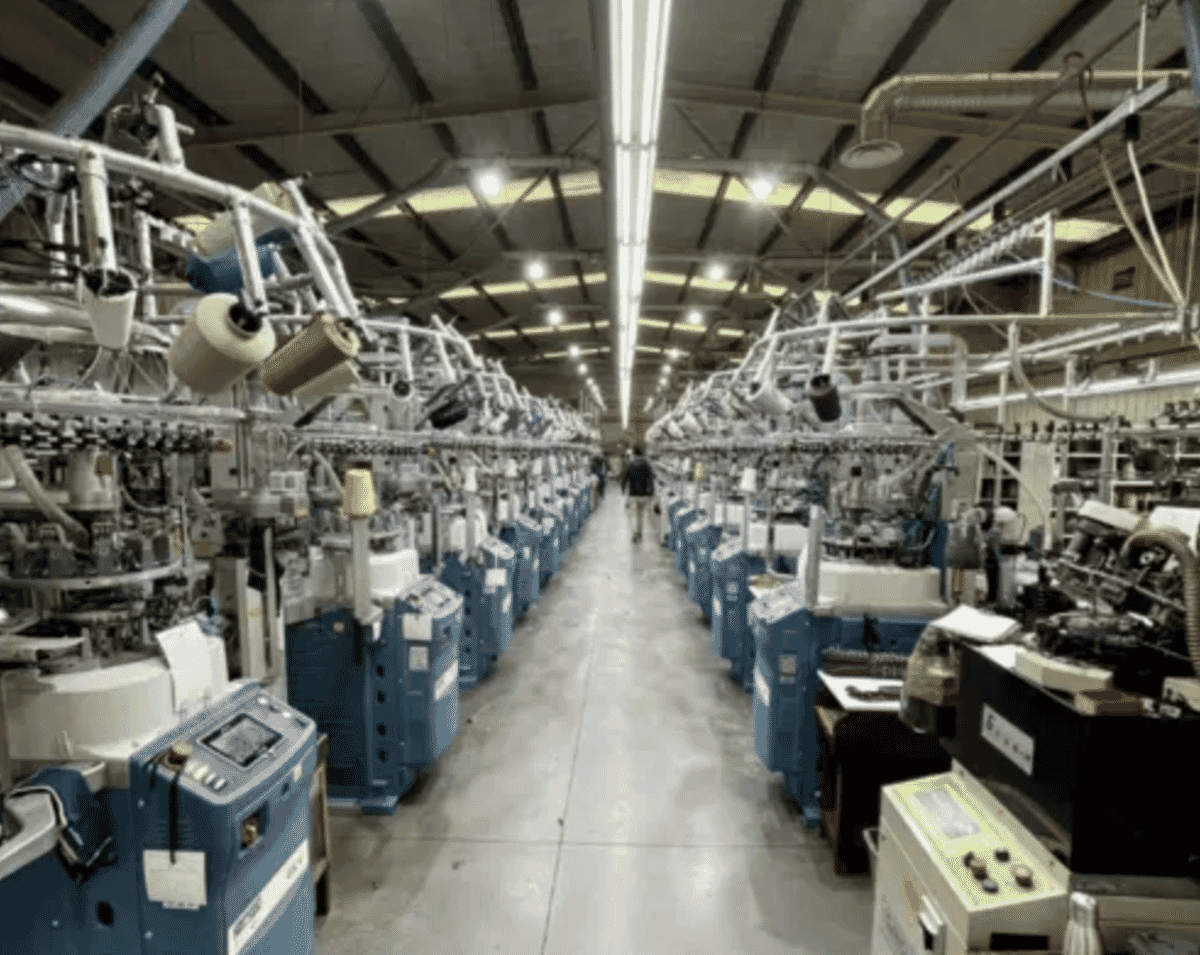
Who Are the 8 Leading Activewear Manufacturers?
Each profile below gives what the company states about itself, then who it suits. Figures are from the latest report or page we could read.
Shenzhou International (China)
Shenzhou's 2025 annual report describes a vertically integrated apparel manufacturer with fabric and garment bases in China, Cambodia and Vietnam. It reports 108,680 employees and annual capacity of 280,000 metric tons of fabric and 600 million garments. Sportswear brought in about RMB 20.97 billion in 2025, or 67.7% of revenue of about RMB 30.99 billion. The report does not name its main customers, but the adidas list includes Ningbo Shenzhou Knitting as a primary supplier. Best for: global brands with very large, long-term knit programmes.
Eclat Textile (Taiwan)
Eclat says it designs, engineers and manufactures athletic knitwear materials and garments, and it lists 19 factories and R&D centres. Its quick facts state 20,000+ employees, while its About text says over 16,000, so ask if headcount matters to you. Its 2025 annual report reports net revenue of NT$37.99 billion, with 66.39% from garments, and monthly capacity above 15 million yards of fabric and 13.45 million garments. The report hides customer names behind letters. Its garment categories include pro sportswear, athleisure, seamless and stitch-free. Best for: brands whose product depends on developed performance fabric, at large volume.
Crystal International (Hong Kong)
Crystal's 2025 annual report says it was founded in 1970, is headquartered in Hong Kong, and runs garment factories and fabric mills in Vietnam, China, Cambodia, Bangladesh and Sri Lanka. Total revenue was about US$2.64 billion in 2025, across five segments. Sportswear and outdoor apparel was US$599 million, or 22.7%, behind lifestyle wear at 28.2%. Companies with Crystal as the stated parent appear on the adidas list as primary suppliers. Best for: established brands buying across several categories, not only sport.
Makalot Industrial (Taiwan)
Makalot's 2026 shareholder handbook reports consolidated revenue of about NT$34.43 billion for 2025 and manufacturing in six countries: Indonesia, Vietnam, Cambodia, Bangladesh, El Salvador and China. It presents itself as a strategic partner to global brands on fabric, styles and capacity planning, and says its R&D team works on high-end sports and functional apparel. It is not an activewear specialist in the way Eclat is, and the document does not name customers. Best for: large programmes that want a spread of production countries and development support.
MAS Holdings (Sri Lanka)
MAS calls itself the largest apparel tech company in South Asia, and on its About page it describes a company of about US$2 billion that grew from lingerie into sportswear, swimwear and athleisure. It is the one maker here that names its customers in public: its products page lists NIKE, lululemon, Athleta, Gymshark, Speedo, New Balance, Patagonia and others, and it says it serves both global groups and startups. Its sustainability programme is now called Plan for Change. Best for: performance and intimates brands that want deep engineering and a documented ethics record.
Brandix (Sri Lanka)
Brandix is based in Colombo and describes itself as a leader in the South Asian apparel industry. Its products page lists activewear next to bras, underwear, lounge and sleep, woven and knit apparel. On its home page, it states net-zero carbon apparel manufacturing in Sri Lanka and claims purchase order to delivery in 11 days for up to 600,000 pieces. Those are the company's own claims, so ask for evidence on your product. It names no customers on the pages we read. Best for: mid to large programmes where speed and a net-zero story matter.
Regina Miracle International (China and Vietnam)
Regina Miracle's 2024/25 annual report names three core technologies: computer-aided mould design, 3D compression moulding and seamless bonding. It runs R&D and production bases in China and a major production base in Vietnam, in place since 2016. In the year to March 2025, sports products, including sports bras, leggings and functional sportswear, brought in HK$2,934.1 million, up 26.9% and 37.4% of revenue. It names Victoria's Secret as a joint venture partner in China. The adidas list shows 11,306 workers at its Vietnam site. Best for: bonded, moulded and seamless products, especially sports bras.
Far Eastern New Century (Taiwan)
Far Eastern sits further up the chain than the others. In an October 2026 press release, it calls itself a globally integrated polyester and textile manufacturer. It says it is a key supplier in the apparel value chain for national teams at the 2026 World Cup, and it is building textile-to-textile recycling on top of its recycled polyester from used PET bottles. The adidas list also shows Far Eastern New Apparel in Vietnam as a primary garment supplier. Best for: large programmes where recycled polyester and fibre-level development come first.
Here is how the eight compare at a glance.
| Company | Base | Focus | Best for |
|---|---|---|---|
| Shenzhou International | China, Vietnam, Cambodia | Fabric to garment, sportswear 67.7% of revenue | Very large knit programmes |
| Eclat Textile | Taiwan-based | Athletic knit fabric and garments | Fabric-led performance at volume |
| Crystal International | Hong Kong-based, five countries | Five segments, sportswear and outdoor 22.7% | Multi-category brands |
| Makalot Industrial | Taiwan-based, six countries | Broad apparel, sports and functional R&D | Large, multi-country programmes |
| MAS Holdings | Sri Lanka | Intimates, athleisure, performance, swim | Engineering and ethics record |
| Brandix | Sri Lanka | Intimates, activewear, knit and woven | Speed and net-zero focus |
| Regina Miracle | China, Vietnam | Bonded and seamless, sports 37.4% | Sports bras, seamless |
| Far Eastern New Century | Taiwan-based | Polyester, recycled fibre, fabric, garments | Recycled polyester programmes |
Source: company annual reports, websites and press material listed at the end of this article, read 6 November 2026.
How Much of Each Maker Is Really Activewear?
Less than most lists suggest. The three listed groups that report a sports category show a wide spread. Shenzhou is mainly a sportswear maker. Regina Miracle grew out of intimate wear, and sports products are now over a third of its sales. At Crystal, sportswear and outdoor is the second-largest of five segments, and denim is close behind it.
Why does this matter when you shortlist? A factory group can be enormous and still have only one sports division. So ask which division would handle your order, which sites it runs, and how many of those sites sew stretch fabric every day. Eclat, MAS, Brandix and Makalot do not report a sports share we could compare, which is one more reason to ask.
Why Do Big Activewear Makers Rarely Answer Small Brands?
Their sales are concentrated in a few very large customers. That is visible in their filings, and it explains the silence better than any guess about minimum orders. The largest customer alone is 36.9% of Crystal's sales and 29.30% of Shenzhou's.
Shenzhou's report says that its major customers are world-famous brands with long-term relationships. It is reasonable to expect capacity and development time to go to those programmes first. Regina Miracle and Eclat are less concentrated, though Eclat's largest customer still grew from 14.12% to 16.44% of sales in a year. A new label with a few hundred pieces per style has little to offer a commercial team built around that kind of account.
How Big Is the Activewear Market, Really?
Nobody agrees, so treat any single figure with care. Three publishers put the 2025 global sportswear market at very different levels, and all three count footwear as well as clothing. If you see "a $400 billion market" in a pitch deck, it is one estimate, and much of it is shoes.
The practical point is this: market size tells you nothing about whether a factory will take your order. Fortune Business Insights puts the 2025 market at $220.34 billion, Ken Research at $399.4 billion and Arizton at $419.05 billion. Your plan should rest on your own landed cost and sell-through, not on those totals.
How Do You Choose the Right Activewear Manufacturer?
Start with your category and your volume, then test the factory on these five points. Our supplier vetting framework goes deeper on each kind of check.
Can they sew what you are making?
Activewear needs flat seams, controlled elastic tension and fabric handling that many general garment lines do not have. Leggings need a gusset. Sports bras are closer to lingerie, and they may need a different factory. Our guides to sport clothing manufacturers and fitness clothing manufacturers cover these requirements. Ask to see the machines on a video call, and ask for a sample of a similar product, not a brochure.
Who controls the fabric?
Fabric decides fit, opacity, recovery and most of your timeline. This is why the giants invest in their own mills. A smaller factory usually buys from a knit mill, which is fine if the mill and the composition are named in writing. Ask for test reports on your exact fabric, including stretch recovery after washing, rather than a generic swatch card.
Who will actually sew your order?
Ask for the site name and address, and ask if any step is subcontracted. The adidas list shows why: it separates primary suppliers from subcontractors, and it records a parent company for many sites. A big group can have many factories under different names, and printing, embroidery or sewing may happen elsewhere. A social audit of one site tells you nothing about a different one.
Do the certificates cover your product?
Check that the certificate names the company supplying your material and that it is still valid. OEKO-TEX STANDARD 100 covers harmful substances. bluesign covers chemical inputs in textile production. GRS covers recycled content. Any performance or recycled claim on your label needs paperwork behind it, so collect it for each order.
Is the company financially healthy?
This check is often skipped, and it matters more than a client list. Hela Apparel Holdings, a listed Sri Lankan group that made activewear and appears on many factory lists, filed for court-ordered winding up in Colombo on 5 August 2026. The company said it could not pay its debts after restructuring and investment options ran out. Two subsidiaries, Hela Clothing and Foundation Garments, filed too. If you pay a deposit, search recent news, read the latest accounts if they exist, and keep your deposit in proportion to what you can afford to lose.
What Is the Minimum Order at These Activewear Manufacturers?
None of the eight publishes one in the pages and reports we read, so be wary of any article that gives a precise number for them. What we can say is that their published capacity and customer concentration point to programmes far beyond a first collection. Ask each company directly, and ask whether the minimum applies per style, per colour or per fabric.
Fabric often sets the real floor. Performance knit may need its own dye lot for a custom colour, so a factory that can sew 100 pieces may still have to buy much more fabric than that. Stock colours from a mill can lower that floor, at the cost of choice. Our guide to minimum orders in Portugal explains how to read a factory's number.
For scale, we place activewear with factories in our group from 50 to 100 pieces per style and colour, as stated on our activewear page. Fabric can raise that. That is a different kind of production from the companies above, and for a large global programme they will be the better answer. Telling you so is part of the job.
What Does Activewear Cost and What Duty Applies?
Price depends on fabric, construction, quantity and destination. The ITC Garment Costing Guide is a useful way to split a price into fabric, trims, labour and overheads. In activewear, technical fabric is often the largest line. So a panelled legging with a gusset and a high waistband costs far more than a simple training tee from the same factory.
As one reference point, our garment cost calculator shows a base range of €12 to €24 per piece ex-factory for an activewear piece in technical knit in Portugal, at 300 to 500 units with mid-range fabric and standard complexity, excluding VAT. Your tech pack sets the final quote.
Duty is the cost that surprises new US brands most. Here are general rates from the US Harmonized Tariff Schedule, read on 6 November 2026, for three common synthetic products:
| Product | HTS code | General rate |
|---|---|---|
| T-shirts and similar knit tops, man-made fibres | 6109.90.10 | 32% |
| Women's knit trousers and shorts, synthetic fibres (often used for leggings) | 6104.63.20 | 28.2% |
| Bras of cotton or man-made fibres | 6212.10.50 and 6212.10.90 | 16.9% |
General rates only. Additional country-specific US tariffs can apply and change often. Crystal and Makalot both discuss tariffs in their latest reports. Confirm your code and total duty with a customs broker before you price.
For a brand selling inside the EU, goods made in Portugal move inside the single market with no customs duty between member states. Goods imported from Asia pay EU duty at the border, unless a trade preference applies. So compare landed cost per piece, not factory price.
How Do You Work With an Activewear Factory?
Most delays come from missing information, so the order of work matters. A simple path looks like this:
- Prepare a tech pack. Include measurements, seam types, elastic, fabric composition and weight, and size grading. Stretch product leaves little room for guesswork. We make factory-ready tech packs for €79 if you do not have one.
- Lock the fabric first. Confirm construction, quantity and lead time in writing before pattern work. A late fabric change alters fit and performance together.
- Sample and wear test. Squat, stretch and wash it. Opacity and recovery problems show up fast, and our workout clothing guide lists the tests worth running before you sign off.
- Agree terms in writing. Deposit, balance trigger, delivery terms and defect handling should all be on paper. Terms vary, so question a request to pay into an account in another company's name or country.
- Inspect before the balance. Ask for a final inspection using an ISO 2859-1 sampling plan, or send an inspector of your own, before the goods leave.
On timing, plan from the fabric. We quote 2 to 3 weeks for a sample and 7 to 9 weeks for production on activewear in Portugal. A custom-developed fabric, or a long sea freight leg from a distant factory, adds time on top of that, so ask every factory for its own dates in writing.
Planning a smaller run? See our activewear manufacturing page, or get in contact with your styles, fabric and quantity. Our team replies within 24 hours and tells you plainly if it is not a fit.
Can Activewear Be Made in Portugal?
Yes, within limits. Portugal is not a home for the volumes above, and technical fabric range is narrower than in Asia. It suits European and premium brands that want shorter runs close to their customers.
Specialists are scarce
In our documented group of 80 Portuguese factories, 4 factories specialise in sportswear. Many more can sew jersey, but stretch product needs the right machines and experience. So factory choice matters here, and we place activewear only with factories set up for 4-way stretch and technical finishing.
The knit base is real
Activewear starts as technical knit, and northern Portugal knits. Guimarães and Barcelos are known for jersey and knitwear, Braga and the Cávado area for technical garments, and Famalicão is home to the CITEVE textile lab. Recycled and bluesign-approved fabric options are available when your brand needs the paperwork.
Reorders are the commercial case
Activewear sells continuously rather than in one seasonal drop, which rewards a supply chain that can restock a selling size. Producing in the EU can lower your opening stock risk, though a higher unit price than large-scale Asian production is the trade-off. Run the numbers for your own product before you decide. Our swimwear manufacturers post covers a related decision if your range also includes swim.
Frequently Asked Questions About Activewear Manufacturers
Who is the largest activewear manufacturer in the world?
We found no neutral ranking, so we would not name one with certainty. By its own 2025 report, Shenzhou International is the biggest of the makers we checked: 108,680 employees, capacity for 600 million garments a year, and sportswear at 67.7% of revenue. Its report calls it a vertically integrated apparel manufacturer. It does not claim to be the world's largest.
Are these activewear manufacturers good for small brands?
Mostly no, at least not directly. None of the sources we read publishes a minimum order, but the scale tells you a lot. Shenzhou gets 86.48% of sales from five customers, and Crystal gets 64.2%. A brand ordering a few hundred pieces is usually better served by a smaller knit factory or by a team that places and manages production at that size.
Where is most activewear manufactured?
We have no reliable global share figure to quote, but the makers here are concentrated in Asia. Their own reports and sites place production in China, Vietnam, Cambodia, Indonesia, Bangladesh, Taiwan and Sri Lanka. Makalot also lists El Salvador. Smaller specialist production exists elsewhere, including Portugal.
Which manufacturer is best for sustainable activewear?
That depends on the claim you need to prove. MAS publishes its Plan for Change, Brandix states net-zero carbon apparel manufacturing in Sri Lanka, and Far Eastern New Century runs recycled polyester and textile-to-textile programmes. Ask for the certificate or report behind the claim, and check that it names the legal entity on your quote.
Can I order directly from Shenzhou or Eclat?
You can contact them, and Eclat has a public contact page, but expect a hard conversation about volume. Eclat's capacity is above 13.45 million garments a month, and Shenzhou's is 600 million a year. Neither source publishes a minimum, so ask directly, and be ready to share your annual volume and fabric plan.
How much does activewear manufacturing cost?
There is no single price, because fabric, construction and quantity change it. As a base range, our calculator shows €12 to €24 per piece ex-factory for technical knit activewear made in Portugal, at 300 to 500 units with mid-range fabric. Add duty and freight for your market, and use your tech pack to get a final quote.
How do I verify an activewear manufacturer is real?
Check the legal entity, then ask which site will sew your order and whether any step is subcontracted. Ask for test reports on your exact fabric, and check certificates with their issuer. For listed companies, read the latest annual report. Then search recent news too, since Hela Apparel filed for winding up in August 2026.
What Should You Do Next?
Write down your category, your volume per style and your main market. Those three answers tell you which of these paths is yours.
- Thousands of pieces per style with an annual plan: approach the makers above, and start with the one whose division fits your product.
- A seamless or bonded product at scale: look at Regina Miracle, Eclat or MAS first.
- A few hundred pieces, sold mostly in Europe: a smaller factory with real stretch experience will serve you better, and that is where our team works.
Whichever path you choose, run the same checks: who sews it, who makes the fabric, what the certificates cover, and whether the company will still be there when your balance falls due.
Our team places and manages clothing production with factories in our group in northern Portugal, including activewear from 50 to 100 pieces per style and colour. Tell us your styles, fabric, volume and timeline, and we reply within 24 hours. Fee agreed in writing, no commissions.
Get in contact Download the directory (€49)Need a tech pack? Get a factory-ready single-style tech pack for €79. See what's included.
Sources Used in This Article
- Shenzhou International, Annual Report 2025: 108,680 employees, capacity, sportswear 67.7%, top five customers 86.48%, largest 29.30%.
- Eclat company page, garment page and Annual Report 2025: revenue, capacity, customer shares.
- Crystal International, Annual Report 2025: countries, segments, sportswear and outdoor 22.7%, five largest customers 64.2%, largest 36.9%.
- Makalot Industrial, 2026 Annual Shareholders' Meeting Handbook: 2025 revenue, six countries, sports and functional apparel R&D.
- MAS Holdings, Who We Are and Products: scale, categories, named customers.
- Brandix home page and Our Products: categories, net-zero and delivery claims.
- Regina Miracle International, Annual Report 2024/25: technologies, bases, sports products 37.4%, five largest customers 47.7%, largest 16.5%.
- Far Eastern New Century, press release, 15 October 2026.
- adidas, Supplier Lists: global factory list, July 2026.
- Daily Mirror (Sri Lanka), Hela Apparel winding-up filing, August 2026.
- Malaysian Investment Development Authority, Ramatex.
- Fortune Business Insights, Ken Research and Arizton: 2025 market estimates, read 6 November 2026.
- US Harmonized Tariff Schedule: general duty rates, read 6 November 2026.
- OEKO-TEX STANDARD 100, bluesign, ISO 2859-1 and the ITC Garment Costing Guide.
- Our own figures: activewear manufacturing page and sport clothing manufacturers guide on this site.
Portugal Clothing Factory places and manages clothing production with factories in our group in the northern Portuguese textile cluster. We agree our fee in writing, reply within 24 hours, and stay involved through sampling, quality control and delivery. See how we work or get in contact.