Underwear looks like the simplest garment in a range and is among the least forgiving to produce. The pattern pieces are small, the fabric is stretch knit, every seam sits against skin, and the component that fails first is the one brands most often leave unspecified. A seam that would pass without comment on a t-shirt is a returned product here.
This guide covers what underwear production actually involves, which specifications decide the outcome, which laboratory tests to name in your brief (with the standards described by the bodies that publish them), what EU rules apply to a garment worn against skin, what official trade data says about underwear made in Portugal, and what a realistic first order looks like. If you are still choosing the cloth itself, start with our guide to the best fabric for underwear, then come back here for everything that happens after the fabric is chosen.
What to know
- Elastic fails first, and it is the component brands most often leave to the factory. Specify it by construction, width, composition and a recovery requirement.
- Every seam touches skin, so flat, low-bulk seams and deliberate gusset construction matter more than any visible feature.
- Name the tests in the brief: elastic tension and elongation (ASTM D4964 or EN ISO 20932-3), shrinkage (ISO 5077 with ISO 6330 wash procedures), colourfastness to perspiration (ISO 105-E04) and harmful substances (OEKO-TEX STANDARD 100).
- Trims, not fabric, usually set the minimum. A pair of briefs uses little cloth; custom waistbands carry their own minimums and lead times.
- Underwear is a replenishment category: comfort drives the repeat purchase, so wear testing is worth more than a perfect photo sample.
What does underwear production actually involve?
Cutting small stretch-knit pieces accurately, joining them with seams that do not irritate, and attaching elastic that survives washing. Each of those steps is simple to describe and easy to get slightly wrong, and in underwear slightly wrong is visible.
Small pieces, tight tolerances
Because the pattern pieces are small, a cutting inaccuracy that would be absorbed in a larger garment shows up directly as a fit problem. A few millimetres at a leg opening or a gusset seam changes how a pair sits on the body. Cutting accuracy and marker efficiency therefore matter disproportionately in this category, and they also determine fabric consumption, which is a meaningful share of the unit cost on a garment that contains very little cloth.
Every seam is against skin
There is no lining, no drape and no distance between the construction and the wearer, which is why flat, low-bulk seams such as flatlock and coverstitch are the norm in this category. Bulky seams chafe, and a construction decision that looks minor on a specification sheet is the difference between a garment customers buy again and one they wear once.
Elastic does the structural work
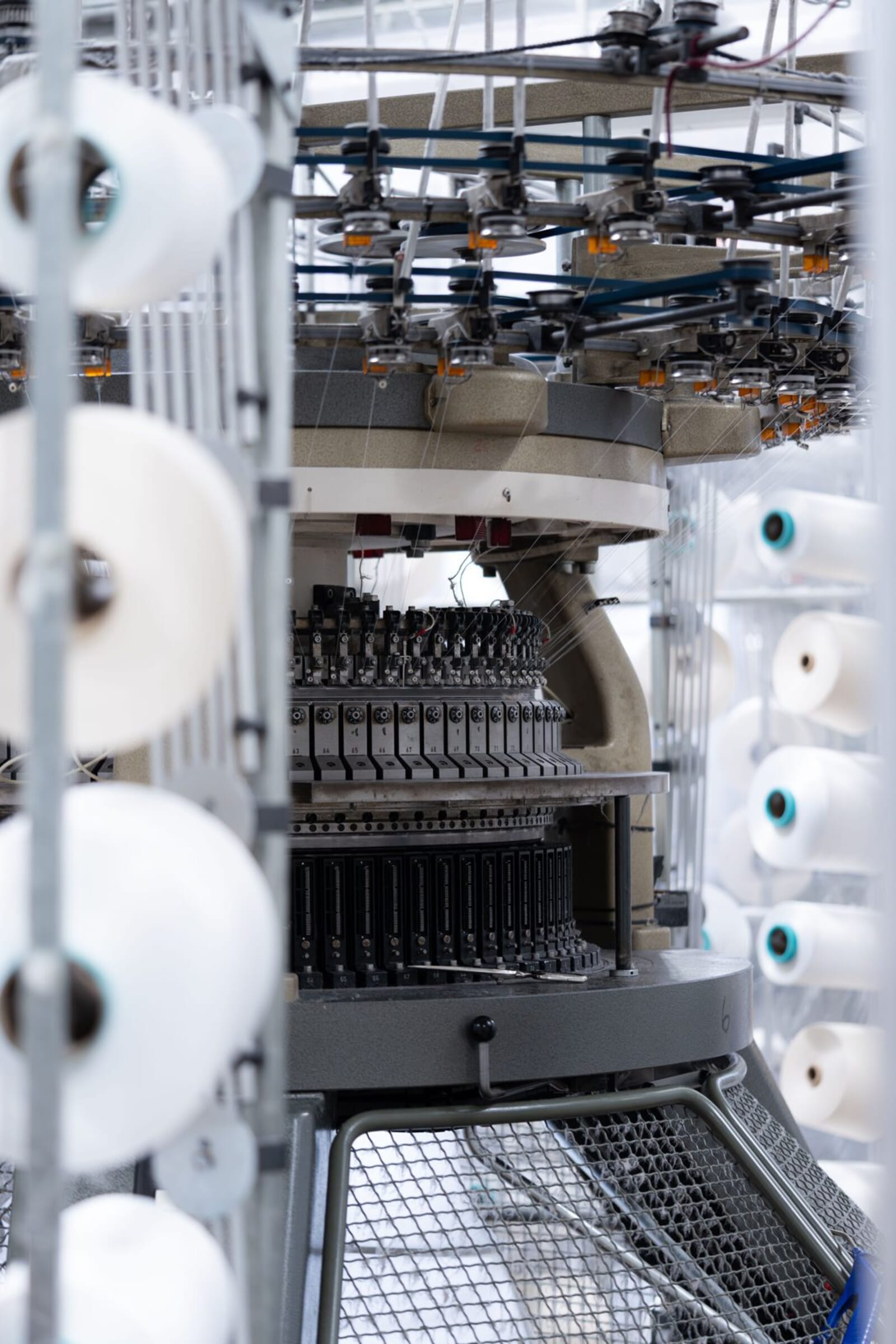
Waistbands and leg openings are elasticated, bound, or finished with a raw-edge cut that relies on the fabric itself, and each behaves differently over time. Elastic is what holds the garment in position through wear and laundering, which makes it the structural component even though it is rarely treated as one.
Finishing is minimal and visible
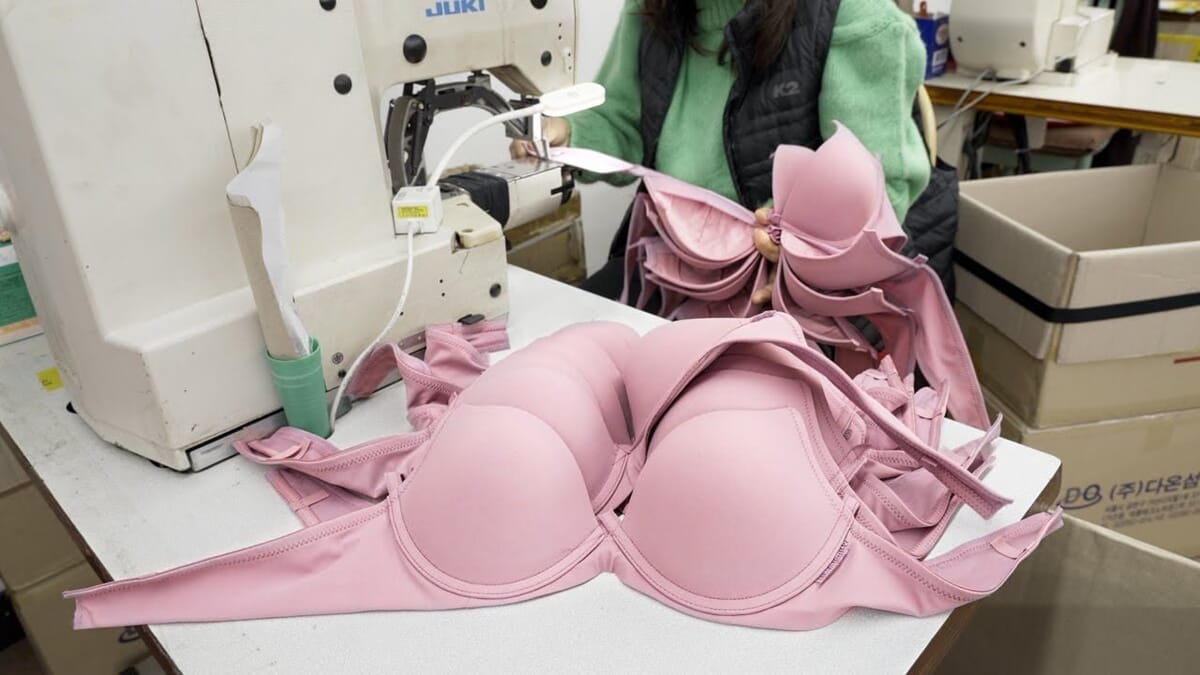
There is very little finishing work to hide behind: a trimmed thread, a neat bartack and a clean binding are most of what a customer sees. Factories that make the category every week handle this as standard. Factories adapting from outerwear or wovens often do not, so ask to see underwear they have produced, not just their machine list.
What fabric does underwear need?
A stretch knit with good recovery, chosen for comfort against skin and for how it behaves after repeated washing. Our separate guide to the best fabric for underwear compares cotton, modal, micromodal, viscose and synthetic knits in detail, and our page on modal fabric explains the fibre most premium basics use. Here we only cover what the fabric choice means for production.
Specify the fabric completely
Write down fibre content, elastane percentage, knit construction and fabric weight rather than leaving the choice open. Two fabrics with the same composition can feel different because of yarn, knit structure and finishing, so the most useful thing you can give a factory is a physical swatch of the fabric you approved, with the mill reference if you have it.
Recovery matters more than stretch
A fabric that stretches easily and returns poorly produces a garment that fits when new and sags within weeks. Recovery is the property that decides whether underwear holds its position through a day of wear, and two fabrics with identical elastane content can differ substantially on it depending on knit construction and finishing. Ask for it to be measured, not described.
Better fabric is comparatively cheap
Because a pair of briefs uses very little cloth, upgrading to a good modal or long-staple cotton adds far less to the unit cost than the equivalent upgrade would in a hoodie. This is one of the few categories where specifying better fabric is affordable, and it is the upgrade customers notice first.
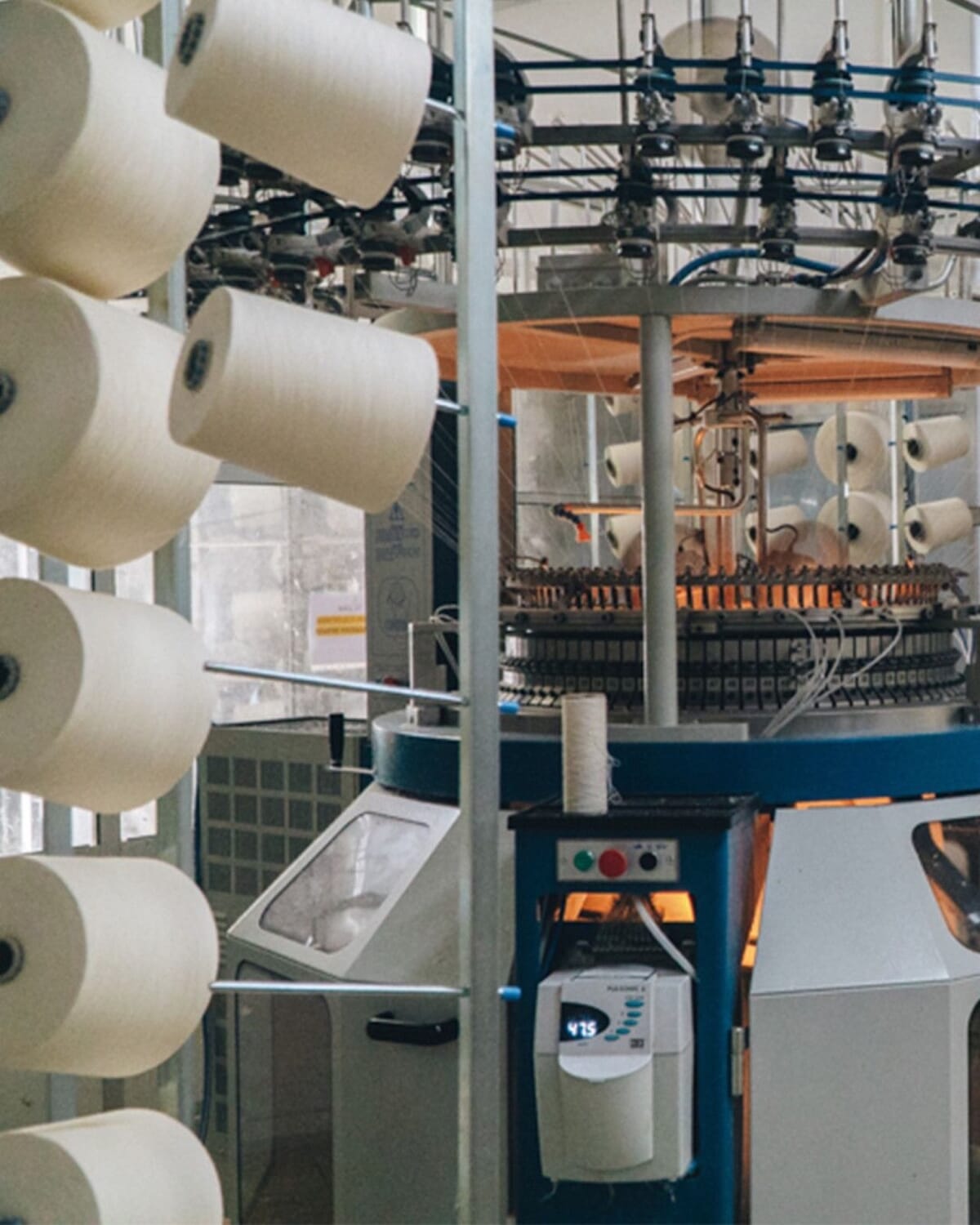
Why is elastic the component that fails?
Because it does the structural work, it is bought on price, and almost nobody specifies it properly.
In short: elastic fails before fabric does because it carries repeated extension and recovery through every wear and wash, and because it is usually a bought-in trim rather than something the garment factory makes. Specifying elastic by width alone is the recurring error: the specification needs composition, construction and a recovery requirement with stated test conditions, or the elastic gets substituted on price.
Tension loss is the common failure
Elastic that loses tension after a few washes is the most familiar underwear complaint, and it is usually a specification problem rather than a sewing fault. Specify the type, width, composition and expected recovery, and test it through laundering before committing to a production quantity.
What to write on the elastic specification
- Construction: knitted, woven or braided, plain or jacquard, with or without a plush (brushed) back for the side that touches skin.
- Width and weight: in millimetres, with the tolerance you accept.
- Composition: the elastomer and the covering yarns, and whether a latex-free elastic is required.
- Colour: dyed to the body fabric, a stock colour, or a contrast, and whether it must be tested for colourfastness with the body fabric.
- Performance: the elongation and load at which tension is measured, new and after a stated number of washes (the test standards below leave these values to you).
- Attachment: enclosed, flat with a coverstitch, or bound, written into the construction notes.
Attachment method matters as much as the elastic
Elastic can be enclosed in a fold, attached flat with a coverstitch, or bound, and each affects comfort, appearance and durability differently. The attachment is an operation with a cost and a visible result, so it belongs in the specification alongside the component itself. The tension at which elastic is fed during sewing also changes the finished measurement, which is why a sample made by one operator can differ from bulk sewn by another.
Waistbands carry their own lead time
A branded jacquard waistband is woven to order with its own minimum and lead time, and on a first programme it often dictates the order quantity more than the fabric or the factory does. Order it at the start of development rather than when production is scheduled, or use a stock elastic for the first run.
Leg openings deserve the same attention
Whatever is used at the waist, the leg opening decides whether a garment rides up, digs in or sits comfortably through movement. Raw-edge finishes, bindings and elastics all behave differently, and the choice should be made deliberately and wear-tested rather than inherited from the last style the factory made.
What construction details decide comfort?
Gusset shape and construction, seam placement, and how the edges and labels are finished.
The gusset is the product
Gusset shape, whether it is one piece or seamed, whether it is lined and with what, and how the panels meet decide comfort more than anything visible from outside. It is the most consequential part of an underwear specification and the part most often left undefined, which means a factory decides it and the brand discovers the result in wear testing. Draw it, measure it and state the lining fabric.
Seam placement follows the body
Seams placed across areas of movement or pressure will chafe however flat they are, so panel layout is a comfort decision rather than a styling one. This is where experience in the category shows: a factory that has made underwear before will flag a seam in the wrong place before sampling, not after.
Edge finishing sets the appearance
Bound edges, folded elastic and raw-edge finishes each produce a different look and a different wear life, and the choice interacts with fabric weight. A raw-edge finish on a fabric that curls looks clean in a sample and fails in a customer's drawer, so ask for a washed sample of any raw-edge style before approving it.
Labels belong out of the way
A stiff woven label at the back of a waistband is a common reason a garment gets worn once. Printed (tagless) labels and soft side-seam labels are common in the category and worth specifying deliberately. The fibre composition still has to be on the garment, as the EU rules below explain, so decide where and how it is printed rather than dropping it.
Which lab tests should underwear pass?
At minimum: elastic tension and elongation, dimensional change after washing, colourfastness to perspiration and washing, and harmful substances. The standards below are described from the pages of the bodies that publish or sell them. A standard defines the method; your brief has to define the pass mark.
Elastic: tension and elongation
ASTM D4964 covers the measurement of tension and elongation of wide or narrow elastic fabrics made from natural or man-made elastomers, tested on a constant-rate-of-extension tensile testing machine. Its scope says the loop tensions and elongations at which results are reported must be selected or agreed, and that laundering needs agreement on the temperature and the number of washing and drying cycles. That second point is the useful one for a buyer: if your brief does not state the elongation, the load and the number of washes, the elastic has no pass mark and cannot fail.
For European standards, cite the current one. BS EN 14704-1, the old strip test for the elasticity of fabrics, was withdrawn on 5 May 2020. EN ISO 20932-1 describes strip and loop tests for the elasticity of fabrics, excluding narrow fabrics, so it suits the body fabric rather than the waistband. For the elastic itself, EN ISO 20932-3 covers narrow fabrics, with one method for product quality assurance (method A) and one for performance in use (method B); BSI defines narrow fabrics as not more than 45 cm wide with two selvages.
Ask for the elastic test to be run on elastic from the bulk lot, cut from the rolls that will be sewn, and keep the results with your approved sample. Sample elastic and bulk elastic can come from different lots or different suppliers.
Shrinkage after washing
ISO 5077 specifies a method for determining the dimensional change of fabrics, garments or other textile articles after a specified combination of washing and drying procedures, and ISO 6330 specifies the domestic washing and drying procedures used for textile testing (the BSI page for the 2012 edition shows it withdrawn on 21 Dec 2021, so ask the lab which edition it applies). Name both in the brief, along with the wash procedure, the number of cycles and the dimensional change you accept in length and width. Underwear that loses a size in the first wash is a return.
Colourfastness to perspiration and washing
ISO 105-E04 specifies a method for determining the resistance of the colour of textiles of all kinds and in all forms to the action of human perspiration. ISO 105-C06 covers resistance of colour to domestic or commercial laundering, using a reference detergent. Ask for results as grey-scale grades for colour change and staining, and state the minimum grade you accept. For light underwear with dark elastic or trims, ask for the trims to be tested with the body fabric, because staining from a dark waistband onto a white body is a common failure.
Harmful substances: OEKO-TEX STANDARD 100
OEKO-TEX STANDARD 100 has 4 product classes based on intended use, with stricter requirements the more intensive the skin contact: Product Class 1 is for babies and children up to 3 years and has the strictest limits, and Product Class 2 covers products with direct skin contact. Adult underwear sits in Product Class 2; baby and toddler underwear in Product Class 1. The certificate should cover the elastic, thread and labels as well as the fabric, because every component touches skin. Our OEKO-TEX STANDARD 100 guide explains how to read a certificate and check it.
| What to test | Standard to name | What your brief must add |
|---|---|---|
| Elastic tension and elongation | ASTM D4964 or EN ISO 20932-3 | Elongation, load and number of wash cycles; tested on bulk elastic |
| Body fabric stretch and recovery | EN ISO 20932-1 | Direction, elongation and the recovery you accept |
| Dimensional change | ISO 5077 with ISO 6330 procedures | Wash and dry procedure, cycles, accepted change in length and width |
| Colourfastness to perspiration | ISO 105-E04 | Minimum grey-scale grade for change and staining |
| Colourfastness to washing | ISO 105-C06 | Test conditions and minimum grade; trims tested with body fabric |
| Harmful substances | OEKO-TEX STANDARD 100 | Product Class 2 (adults) or Class 1 (babies), covering all components |
Standards as described by ASTM, BSI, the Estonian Centre for Standardisation and OEKO-TEX, read 19 November 2026. Your market's rules apply on top.
Wear testing is a test too
Laboratory results do not tell you about ride-up at the leg opening, waistband roll when seated, chafing at the gusset seam or bunching under clothing. Those appear only when several people wear the garment for several days and wash it between wears. Treat wear testing across different body types as a development stage with written feedback, not an optional extra.
What do EU rules require for underwear?
Two sets of rules matter most for a small brand selling underwear in the EU: fibre labelling and chemical restrictions on clothing.
Fibre composition labelling
The EU's Your Europe guidance says every textile product must be labelled or marked to show its fibre composition when it is marketed in the EU, with labels firmly attached, for example sewn in, for products made up of at least 80% textile fibres by weight. The composition must be written in decreasing percentage order, and "100%", "pure" or "all" may only be used for a product made exclusively of one fibre type. National authorities can check products against the label at any stage of the marketing chain, and the text must be translated into the official languages of each country where the product is sold to consumers.
Two practical consequences for underwear. First, a tagless printed label still has to carry the composition, legibly. Second, blends with elastane drift from their stated composition more readily than single-fibre fabrics, so verify the content of the bulk fabric rather than copying the roll label onto the garment label.
Chemicals in clothing: REACH entry 72
Commission Regulation (EU) 2018/1513 added entry 72 to Annex XVII of REACH: listed substances shall not be placed on the market after 1 November 2020 in clothing or related accessories, or in other textiles that come into contact with human skin to an extent similar to clothing, above set concentrations. Intertek's summary of the regulation notes that it restricts 33 substances classified as CMR, category 1A or 1B. For a brand, the practical step is to ask the factory and the fabric and trim suppliers for test reports or certificates that cover the restricted substances, and to keep them with the order. An OEKO-TEX STANDARD 100 certificate for every component is one common way of documenting it.
What are realistic minimums for underwear?
Minimums are set per style and colour, and on a first underwear programme the trims rather than the fabric are usually the binding constraint.
Fabric goes a long way
Because each unit uses very little cloth, a mill minimum yields a large number of garments. This is the opposite of the problem a hoodie presents, and it means fabric is rarely what blocks a first underwear order.
Trims set the floor instead
Custom jacquard waistbands and specialist elastics carry their own minimums and lead times, set by the trim supplier rather than the garment factory, and on a first programme they often decide the quantity. Using a stock elastic on a first order removes that constraint almost entirely. Ask for the trim supplier's minimum in writing before you design around a custom band.
The size range spreads the order
Underwear usually carries more sizes than outerwear, and each needs its own grading and its own share of the run. A modest quantity split thinly across a full size range produces very few units per size and colour, which sells out unevenly and looks thin on the shelf.
Our minimums
Across the factories in our group, minimums are 50 to 100 pieces per style and colour, and we can be flexible. The practical advice is the same at any minimum: concentrate the first quantity into fewer colours and weight the size run, so it becomes a stock position you can sell through rather than a scattered one. Our guide to minimum order quantities in Portugal explains how minimums are set and what changes them.
What does trade data say about underwear made in Portugal?
Official export figures give a sense of scale and positioning. World Bank WITS, which republishes UN Comtrade data, records four codes that cover most knitted briefs: HS 610711, men's and boys' briefs of cotton; HS 610712, men's and boys' briefs of man-made fibres; HS 610821, women's and girls' briefs of cotton; and HS 610822, women's and girls' briefs of man-made fibres.
Across those four codes, Portugal exported $42.4 million of briefs in 2024, about 11.7 million pieces, against $49.2 million and about 20.8 million pieces in 2019. That is fewer pieces at a higher average value: about $3.61 a piece in 2024 against $2.37 in 2019, calculated from the same figures.
Men's cotton briefs are the largest code. Their export volume fell from about 10.5 million pieces in 2019 to 5.2 million in 2024, and the average value per piece rose every year until 2023 before easing in 2024.
France took $5.9 million of Portugal's men's cotton briefs in 2024, about 32.1% of the total, and the top five destinations, all European, took about 80.5%. Average values per piece by destination differ widely, which says more about what each market's buyers order (basics, branded multipacks, premium single pairs) than about any price a factory would quote.
Read these figures as context, not as a cost guide. An export value per piece is an average across very different products and order sizes, it is recorded at the border rather than quoted by a factory, and it says nothing about your style. What the data does show is that underwear made in Portugal is sold mainly to nearby European markets and is not competing on the lowest price per piece.
Why does comfort matter more than design here?
Because underwear is a replenishment category and the repeat purchase is the business model.
Repeat purchase carries the economics
A customer who likes a pair buys the same product again, in multiples, for years. That changes how a brand should think about unit cost: the cost of winning the customer is spread across many orders, and a comfortable garment at a higher cost can outperform a cheaper uncomfortable one.
Nobody repurchases an uncomfortable product
A garment that photographs well and irritates after a few hours generates one sale and no second one. Where a construction decision trades appearance against comfort, comfort is almost always the commercially correct answer, and brands arriving from outerwear or streetwear often get this the wrong way round because their instincts were formed in categories where looks sell.
Fit problems are silent
Customers rarely write to explain that underwear was uncomfortable; they simply stop buying. That makes wear testing before launch more valuable than customer feedback afterwards, because the feedback loop in this category barely exists.
Consistency protects the relationship
A customer reordering expects the identical garment, and a fabric or elastic substitution that changes the feel breaks a relationship that was otherwise open-ended. Seal a reference garment and hold every reorder to it.
Why produce underwear in Portugal?
Because knit fabric, knitwear factories and their suppliers are concentrated in one region, and that region is close enough to visit.
GEE, the strategy and studies office of Portugal's economy ministry, counted 12,222 textile and clothing companies in Portugal in 2022, employing 128,089 people. It reports that they are mostly in the North, concentrated in the Ave and Cávado regions. Knitting, dyeing, finishing and cut-and-sew businesses operate in that northern cluster, which makes it practical to see the fabric and the sewing in one trip.
Knit fabric close to the sewing
For a category built on comfort against skin, being able to approve the fabric, see it after dyeing and finishing, and then see it sewn is a practical advantage. It shortens the gap between a fabric problem and the person who can fix it.
Sampling you can collect
Underwear development depends on physical wear testing over several rounds. Producing within Europe means samples travel in days by courier rather than by sea, and that a visit to check a fit problem is a short trip. Ask any factory for its sampling time per round in writing, because it varies with workload and trims.
Check the machines yourself
Not every factory that sews knits is set up for underwear. Ask to see the flat-seam machines, the elastic attachment set-up and garments of the same type they have produced, and ask which operations, if any, are done by another business. Our guide to ordering a clothing sample explains what to ask for at each round.
What should an underwear tech pack include?
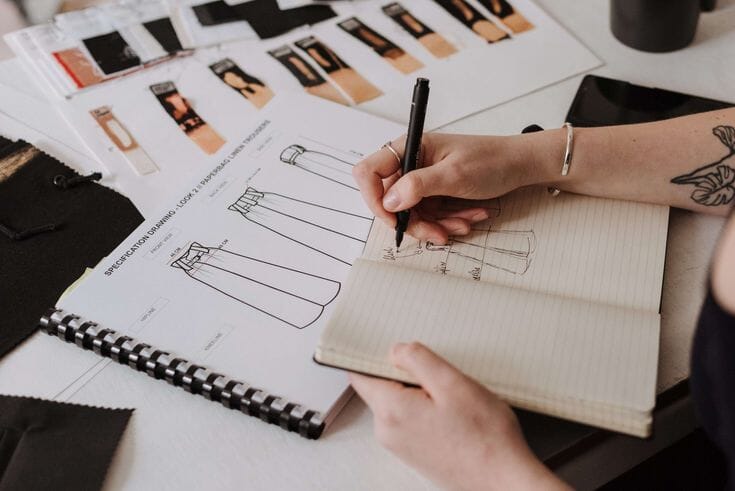
Everything a factory would otherwise decide for you. For underwear that list is longer than the garment's size suggests:
- Flat sketches front and back, with the gusset drawn separately and its lining stated.
- Fabric: composition, elastane percentage, knit construction, weight and an approved swatch reference.
- Elastic and trims: construction, width, composition, colour and supplier reference for every elastic, binding and label.
- Construction notes: seam type for every seam, stitch density, elastic attachment method and feeding tension, bartack positions.
- Measurement chart: points of measure for waist relaxed and extended, leg opening relaxed and extended, rise, gusset length and width, with tolerances.
- Grading: the increment between sizes for each point of measure.
- Labels: printed or sewn, position, fibre composition and care text in the languages of the markets you sell in.
- Tests: the standards and pass marks from the table above.
- Packing: folding, multipack configuration and carton marks.
If you do not have one yet, our tech pack service builds a factory-ready tech pack from your sketches and references, so the factory quotes and samples the garment you mean.
What mistakes do brands make with underwear?
Leaving elastic unspecified, skipping wear testing, spreading a first run too thin and copying a fabric specification.
Treating elastic as a commodity
Elastic is the component that fails first and the one most often left to the factory to choose. Specify the type, width, attachment method and expected recovery with test conditions, and wash-test it, because the alternative is finding out through customer complaints.
Inspecting instead of wearing
Underwear passes inspection and fails in use. Ride-up, chafing, waistband roll and slack elastic require the garment to be worn for days by several people rather than examined flat by one.
Splitting a small run across everything
A modest first order divided across five sizes and four colours produces a handful of units per combination. Concentrating on fewer options and weighting toward the sizes you have evidence for produces a stock position that can actually sell.
Copying a competitor's composition
Fibre content and elastane percentage are two variables out of several, and knit construction and finishing produce most of the difference in how a fabric feels. A specification lifted from a product page will not reproduce that garment, and brands who try it conclude the factory underdelivered.
Forgetting the label rules
Going tagless does not remove the fibre composition requirement, and a composition copied from a roll label can be wrong. Verify the bulk fabric and print the label in every language you need before the first delivery, not after a marketplace or retailer asks.
What should a first underwear order look like?
One style, two colours, a weighted size run, stock trims, named tests and a sealed reference garment.
Prove one block before adding a second
Briefs, trunks, boxer briefs and shorts are different blocks with different fit problems, and developing three at once multiplies the development cost and the ways a launch can disappoint. Prove one properly, sell it, and extend the range once the fabric, the elastic and the factory are known quantities.
Use stock elastic and waistbands first
A custom jacquard waistband is the component most likely to dictate a first order quantity and the one with the longest lead time. Running the first production on a good stock elastic removes that constraint, and the branded version can be added on the second order once the product is proven.
Weight the size run to evidence
Splitting a modest first order evenly across a full size range produces a handful of units per size and sells badly at both ends. Use whatever evidence you have about your customers, even from adjacent products, and weight the run accordingly.
Seal a reference garment and keep it
An approved pre-production sample, kept by both sides with its test results, is what makes elastic tension, measurement tolerance and seam quality enforceable on a reorder. In a category where customers expect the identical garment every time, that reference protects the relationship the business depends on.
Working with Portugal Clothing Factory
Our team places and manages underwear production with factories in our group in the northern Portuguese textile cluster. For underwear, the two questions that decide whether a programme works are which factory has the right flat-seam and elastic attachment set-up for your style, and where the elastic and waistband are coming from, so we settle both before sampling. Our underwear manufacturing in Portugal page describes the products we work on.
The factory invoices the production directly, so you always know which company makes your goods. Across our group, minimums are 50 to 100 pieces per style and colour, and we can be flexible. We agree our fee in writing and take no commission on production.
Get in contact with the garment, fabric, elastic and trims, quantity and timeline. Our team replies within 24 hours.
Frequently asked questions
What fabric is underwear made from?
A stretch knit, commonly cotton, modal or a viscose blend with elastane, chosen for comfort against skin and for recovery after repeated washing rather than for appearance.
Why does underwear elastic go slack?
Tension loss through laundering, which is usually a specification problem rather than a sewing fault. Specify the elastic's construction, width, composition and attachment, and state the elongation, load and number of washes it must be tested at.
Which tests should underwear pass?
Name elastic tension and elongation (ASTM D4964 or EN ISO 20932-3), dimensional change (ISO 5077 with ISO 6330 wash procedures), colourfastness to perspiration (ISO 105-E04) and washing (ISO 105-C06), and harmful substances (OEKO-TEX STANDARD 100), each with a pass mark.
Which OEKO-TEX product class applies to underwear?
Adult underwear has direct skin contact, which is Product Class 2. Baby and toddler underwear falls under Product Class 1, which has the strictest limits.
Does tagless underwear still need a fibre composition label?
Yes. In the EU every textile product must be labelled or marked with its fibre composition when it is marketed, so a printed label must still show it, legibly and in the languages of the countries where it is sold.
What usually sets the minimum order for underwear?
Trims rather than fabric. Each unit uses little cloth, so a mill minimum yields many garments, while custom waistbands and specialist elastics carry their own minimums and lead times.
Does the gusset really matter that much?
Yes. Gusset shape, construction and lining decide comfort more than any visible feature, and the gusset is the part of an underwear tech pack most often left unspecified.
Our team places and manages underwear and clothing production with factories in our group in northern Portugal, usually from 50 to 100 pieces per style and colour. Tell us your product, fabric, elastic, volume and timeline, and we reply within 24 hours. Fee agreed in writing, no commissions.
Send your brief Get a tech pack (€79)No tech pack yet? We prepare one style, factory-ready, for €79. What it includes.
Sources
- ASTM International, ASTM D4964, tension and elongation of elastic fabrics.
- BSI Knowledge, BS EN 14704-1:2005 (withdrawn); BS EN ISO 20932-1; BS EN ISO 20932-3.
- BSI Knowledge, BS EN ISO 105-E04; BS EN ISO 5077; BS EN ISO 6330 (check the current edition).
- Estonian Centre for Standardisation, EVS-EN ISO 105-C06:2010.
- OEKO-TEX, STANDARD 100 and its product classes.
- European Union, Your Europe, Textile label.
- Commission Regulation (EU) 2018/1513, Annex (REACH Annex XVII entry 72); Intertek, summary bulletin.
- GEE (Gabinete de Estratégia e Estudos), Estudos Setoriais 2030: Indústria Têxtil e do Vestuário (2024).
- World Bank WITS (UN Comtrade), Portugal exports of HS 610711, 2019.
- World Bank WITS (UN Comtrade), Portugal exports of HS 610711, 2020.
- World Bank WITS (UN Comtrade), Portugal exports of HS 610711, 2021.
- World Bank WITS (UN Comtrade), Portugal exports of HS 610711, 2022.
- World Bank WITS (UN Comtrade), Portugal exports of HS 610711, 2023.
- World Bank WITS (UN Comtrade), Portugal exports of HS 610711, 2024.
- World Bank WITS (UN Comtrade), HS 610821, 2019, HS 610821, 2024, HS 610712, 2019, HS 610712, 2024, HS 610822, 2019, HS 610822, 2024.
Portugal Clothing Factory places and manages clothing production with factories in our group in the northern Portuguese textile cluster. We agree our fee in writing, reply within 24 hours, and stay involved through sampling, quality control and delivery. See how we work or get in contact.