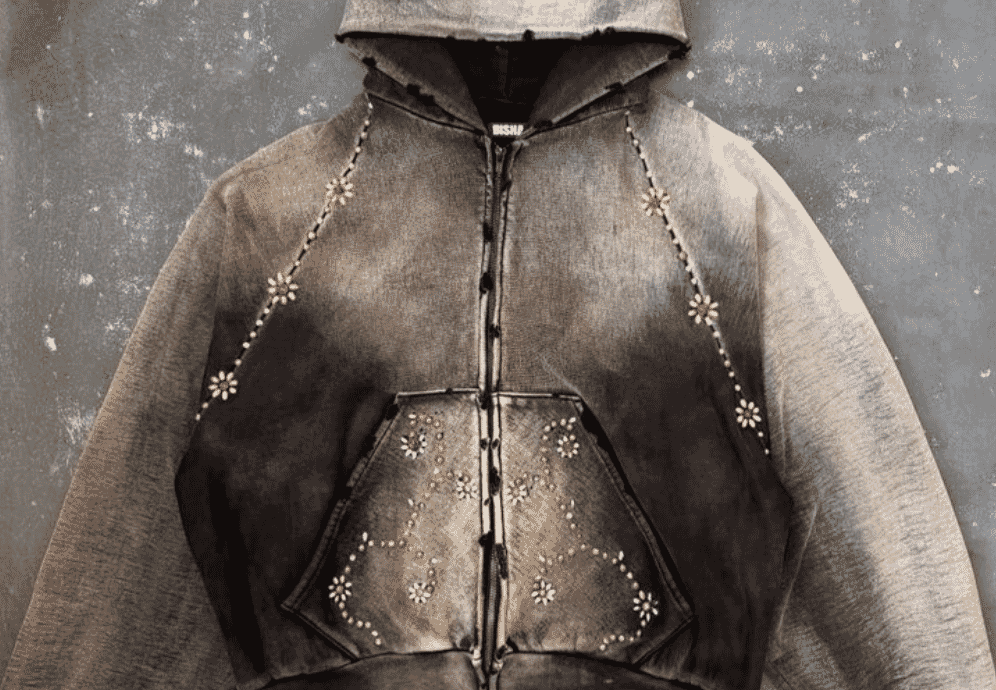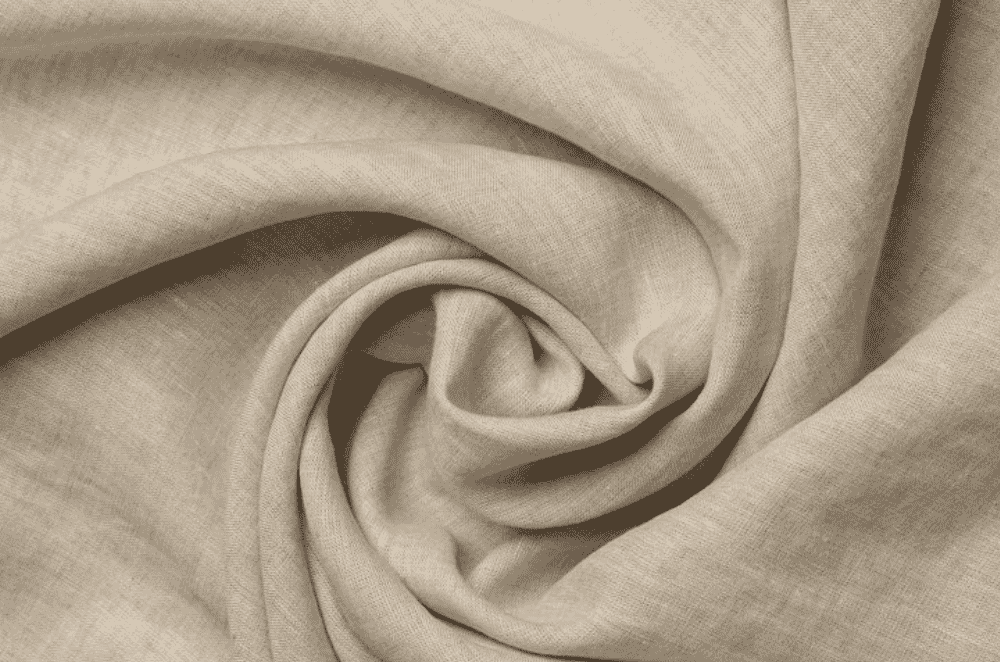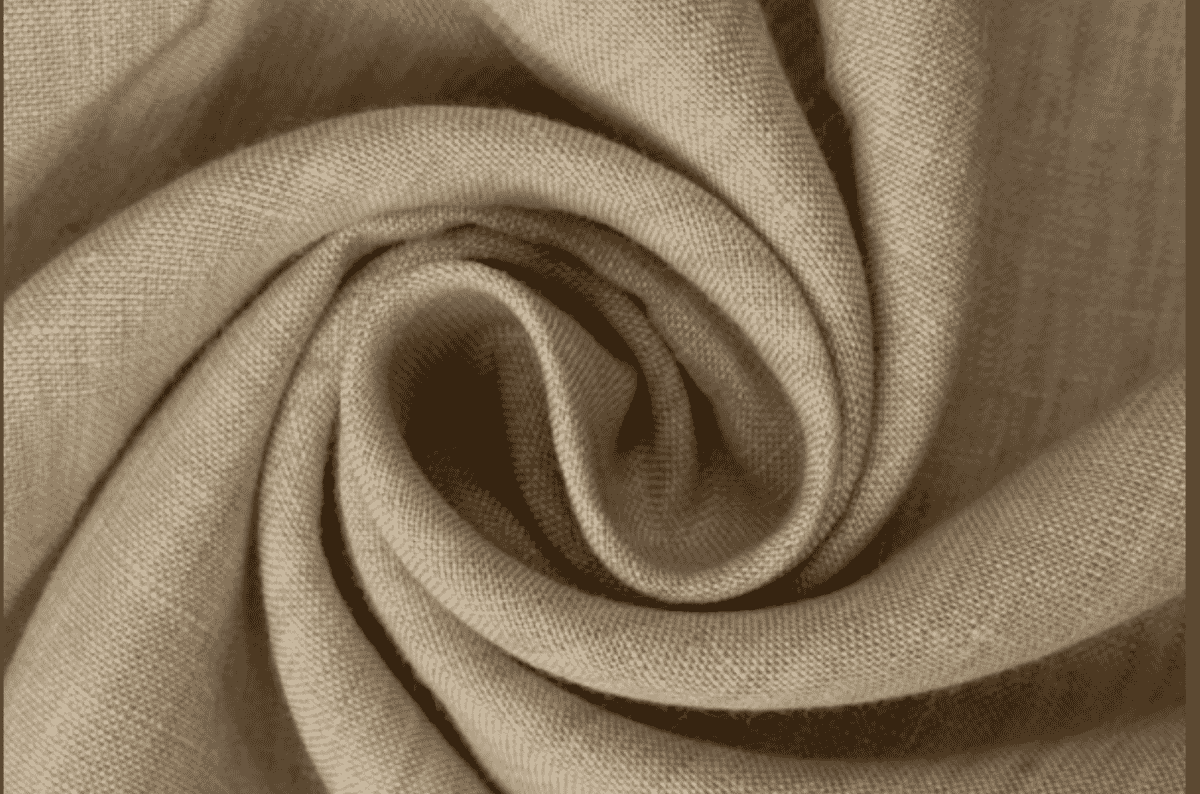
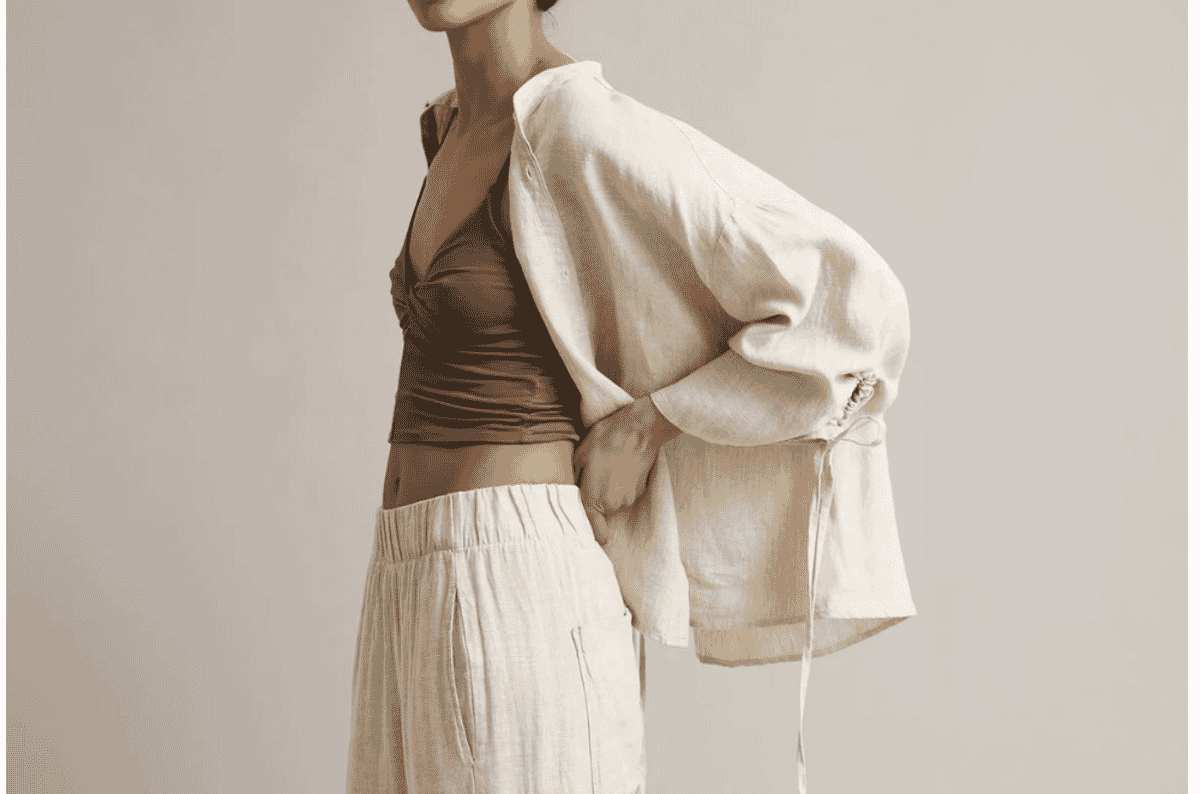
Image note: a drape reference, not a bamboo sample. The cloth shown reads as woven linen rather than bamboo viscose, and is being replaced.
Bamboo fabric is a regenerated cellulosic textile made from the pulp of bamboo grass, most commonly produced through the same chemical viscose process used for rayon. A €3.5 billion market size and 6% growth rate credited to Textile Exchange have been withdrawn: Textile Exchange reports fibre production volumes, not fabric market valuations. For fashion brands sourcing production, the important detail is that most "bamboo" clothing is technically bamboo viscose, and how it's processed matters more than the fibre source.
What this guide covers
What this guide covers
This guide covers what bamboo fabric actually is, how it's made, the difference between bamboo viscose, bamboo lyocell, and mechanically processed bamboo, its real properties, the greenwashing questions raised by the US FTC 2010 ruling, common garment applications, and EUR pricing per meter at Portuguese mills in 2026. Everything below reflects the manufacturer-side view from production coordinated across our factory group.
Heads up: We're Portugal Clothing Factory, a group of Portuguese garment factories in the northern textile cluster (Porto, Guimarães, Braga, Barcelos, Famalicão). Roughly 12% of our documented factory group works with bamboo, mostly in loungewear, activewear, and kidswear. The observations here come from that production and from mill research across 2024-2026.
Key takeaways
Key Takeaways
- Most bamboo fabric on the market is bamboo viscose, a chemically regenerated cellulose that must be labelled "rayon" or "viscose" in the US under the Textile Fiber Products Identification Act, enforced by the FTC through warning letters in 2010 and USD 1.26 million in fines in 2013
- Bamboo lyocell (sold as Monocel, from the Norwegian company Monocel AS) uses a closed-loop process similar to Tencel and offers a much stronger environmental profile
- Portuguese bamboo fabric prices in 2026 range from €6 to €18 per meter depending on processing method and blend
- Bamboo is a strong fit for loungewear, baby clothes, and activewear, but the sustainability claim depends on which process was used
- Around 12% of the 80 documented factories in our group work regularly with bamboo yarn
Try it free: Pressure-test your production cost with our garment cost calculator. 60 seconds, no email required.
What Is Bamboo Fabric?
Bamboo fabric is a category of regenerated cellulosic textile spun from bamboo grass pulp. Bamboo itself grows fast, absorbs high volumes of CO2, and needs almost no irrigation, which is why it earned an eco-friendly reputation. But the pulp has to be chemically dissolved and reformed into fibre, and the overwhelming majority of bamboo fabric on the market is bamboo viscose, functionally identical in structure to rayon, or viscose. A 90% share credited to Textile Exchange has been withdrawn: Textile Exchange reports fibre production volumes and publishes no bamboo process split.
What it feels like
The finished fabric is soft, breathable, and drapey, with a hand somewhere between cotton and modal. It dyes well, feels cool against skin, and has natural moisture-wicking properties. What it isn't, in most cases, is a "natural" fibre in the same sense as cotton or linen. The bamboo plant is natural. The fabric coming off the loom is a regenerated cellulose product.
The three fibre types
Within the bamboo family, three fibre types matter for founders: bamboo viscose (the mass-market default), bamboo lyocell (produced in closed-loop chemistry, mainly under the Monocel brand from the Norwegian company Monocel AS), and mechanically processed bamboo (bamboo linen). Only a tiny fraction of what's sold as "bamboo" is mechanically processed. The rest is chemistry.
Citation Capsule: Bamboo fabric is a regenerated cellulosic textile spun from bamboo pulp. The overwhelming majority of bamboo clothing sold globally is bamboo viscose, structurally identical to rayon; a 90% figure credited to Textile Exchange has been withdrawn as unsupported. In the United States the labelling requirement comes from the Textile Fiber Products Identification Act, not from a single ruling: fabric made by the viscose process must be labelled "rayon" or "viscose", with "from bamboo" permitted as an addition. The FTC has enforced this in stages, warning 78 companies in January 2010 and fining four national retailers USD 1.26 million in January 2013 (Federal Trade Commission, 2013).
Other names you'll see
Bamboo fabric goes by several names on labels and tech packs: "bamboo viscose", "bamboo rayon", "rayon from bamboo" (the FTC-required term in the US), "bamboo lyocell", "Monocel", and "bamboo linen" for the mechanical version. In Portuguese factory documentation you'll see "viscose de bambu" for the viscose version and "Monocel" for lyocell types.
What Is Bamboo Fabric Called?
On a label, bamboo fabric is usually called viscose, rayon, bamboo viscose or rayon from bamboo. In the United States it cannot legally be called just "bamboo" unless the fibre was mechanically processed, because the viscose process produces rayon regardless of what plant the pulp came from.
The names you will see on a label
- Rayon from bamboo or viscose from bamboo: the compliant US wording for the chemically regenerated version, which is nearly all of it
- Bamboo viscose: the same fabric, the wording common in Europe and in mill paperwork
- Bamboo lyocell or Monocel: the closed-loop version, which may be labelled lyocell
- Bamboo linen: the mechanically processed version, which may legitimately be called bamboo
- Viscose de bambu: what Portuguese mills write on production paperwork
Why the name changes by process
The naming rule tracks the chemistry rather than the plant. Dissolve bamboo pulp in sodium hydroxide and carbon disulfide and you get rayon, which is the same fibre you get from dissolving beech or eucalyptus pulp the same way. Crush and ret bamboo mechanically, the way flax is processed into linen, and the fibre is still structurally bamboo.
That is why two garments can both say "bamboo" on a product page and sit in completely different regulatory positions. The word on the swing tag tells you about marketing. The word on the composition label tells you about the fibre.
Citation Capsule: Bamboo fabric is most often called viscose, rayon, bamboo viscose or rayon from bamboo. Under the US Textile Fiber Products Identification Act, fabric made by the viscose process must be labelled rayon or viscose even when the pulp came from bamboo, with "from bamboo" allowed as an addition. Only mechanically processed bamboo, sometimes sold as bamboo linen, may be called bamboo outright. Closed-loop bamboo lyocell, sold as Monocel, may be labelled lyocell.
How Is Bamboo Fabric Made?
Bamboo fabric is made through one of two processes: the chemical viscose process, which accounts for nearly all production, or the mechanical process, which accounts for a very small remainder. A 90/10 split credited to Textile Exchange has been withdrawn as unsupported. A newer closed-loop lyocell method, commercialised under the Monocel name by Monocel AS of Oslo, has emerged as a third path with a significantly better environmental profile.
The chemical viscose process
The chemical viscose process is straightforward but chemistry-heavy. Bamboo stalks are cut, chipped, and pulped into cellulose sheets. The sheets are dissolved in sodium hydroxide and carbon disulfide to form a viscous solution. That solution is extruded through spinnerets into a sulfuric acid bath, where the fibre precipitates. The fibre is then washed, dried, and spun into yarn. Carbon disulfide is toxic, and open-loop viscose mills historically released it into wastewater and air.
The mechanical process
The mechanical process is closer to how linen is made from flax. Bamboo is crushed, treated with natural enzymes to break down the woody material, and combed into fibre bundles. The result is a coarser, more textured fabric sometimes called "bamboo linen". It has a stronger environmental profile than viscose but is labour-intensive and rarely produced at commercial scale.
The closed-loop lyocell process
The bamboo lyocell process, offered under the Monocel brand by Monocel AS, dissolves bamboo pulp in NMMO solvent through a closed-loop system similar to Tencel, with solvent recovery above 99%. Earlier versions of this article attributed Monocel to Tanatex Chemicals, a Dutch textile-chemicals company with no connection to the brand, and cited Tanatex as a source; both have been withdrawn. Monocel is the version we'd point brands toward when the sustainability claim needs to hold up under regulatory scrutiny.
Practical view from the factory floor: Portuguese mills carrying bamboo yarn stock bamboo viscose as the default. Bamboo lyocell is booked to order, with a 4 to 6 week yarn window. Mechanical bamboo is almost never available in Portugal at commercial scale. Brands wanting mechanical bamboo usually source from Asia and have the fabric shipped in.
Bamboo Viscose vs Bamboo Lyocell vs Mechanical Bamboo: What's the Difference?
The three processing methods produce visibly and materially different fabrics at very different environmental costs. Bamboo viscose is soft and cheap but chemically intensive. Bamboo lyocell is soft, closed-loop, and premium priced. Mechanical bamboo is textured, artisan-scale, and rare. Nearly all bamboo clothing on European shelves is bamboo viscose. A 90% share credited to EURATEX has been withdrawn: EURATEX publishes no fibre-process breakdown.
Why the three tracks matter
Two garments, one word
Understanding these three tracks is the single most important knowledge gap for founders considering bamboo. Two garments both labelled "bamboo" can come from very different supply chains. One might be viscose produced in an open-loop mill; another might be Monocel bamboo lyocell with FSC chain-of-custody documentation. The price gap, roughly 2x, reflects that difference.
| Attribute | Bamboo Viscose | Bamboo Lyocell (Monocel) | Mechanical Bamboo |
|---|---|---|---|
| Process | Chemical, sodium hydroxide + CS2 | Closed-loop NMMO solvent | Enzymatic, mechanical crushing |
| Hand feel | Very soft, silky drape | Very soft, drapey, sheen | Coarser, linen-like texture |
| Solvent recovery | Low in open-loop, 50-70% in modern mills | 99%+ | Not applicable |
| FTC labelling requirement | "Rayon from bamboo" | "Lyocell" acceptable | "Bamboo" acceptable |
| Certifications common | OEKO-TEX Standard 100 | FSC, OEKO-TEX, EU Ecolabel | GOTS potential |
| Portuguese availability | Standard at 12% of factories | Booked to order, 4-6 weeks | Rare, imported |
| Cost per meter (180-200 GSM) | €6 to €11 | €12 to €18 | Import only |
| Best for | Loungewear, kidswear, tees | Premium loungewear, dresses | Rustic textured pieces |
Source: PCF factory group quotes from Portuguese mills (2024-2026).
When founders should choose which: brands prioritising cost and softness for kidswear or loungewear tend to land on bamboo viscose, ideally from an OEKO-TEX certified mill. Brands making credible sustainability claims on hangtags or product pages should specify Monocel bamboo lyocell to avoid regulatory risk under EU Green Claims rules. Brands wanting the artisan-textured look of mechanical bamboo need to accept import lead times and higher unit prices.
Citation Capsule: Nearly all bamboo clothing sold in Europe is bamboo viscose, produced through an open or semi-closed chemical process; a 90% figure credited to EURATEX has been withdrawn as unsupported. Bamboo lyocell, sold as Monocel by the Norwegian company Monocel AS, uses a closed-loop NMMO process that recovers more than 99% of solvent, similar to Tencel. Portuguese factory pricing separates the two by roughly 2x per meter.
What Are the Properties of Bamboo Fabric?
Bamboo fabric's core properties come from its regenerated cellulose fibre structure, which is porous and lightweight. It's soft, breathable, moisture-wicking, and dyes with strong colour depth. Bamboo viscose is more absorbent than cotton and dries more slowly than lyocell fibres. A "40% more moisture than cotton" figure credited to Textile Exchange has been withdrawn: Textile Exchange publishes no fabric absorbency testing. Antimicrobial claims are widely marketed but rarely hold up in independent testing on the finished fabric.
The properties that matter
The key physical properties fashion founders care about:
- Softness: very soft, silky hand, close to modal
- Drape: fluid and flowing, similar to viscose
- Moisture absorption: more absorbent than cotton; the often-quoted 40% figure has no published testing behind it
- Breathability: highly breathable, cool against skin
- Wet strength: low, similar to viscose (roughly 50% of dry strength)
- Biodegradability: biodegradable when pure, reduced by synthetic blends
- Wrinkle resistance: moderate, less than polyester, better than pure linen
- Colour depth: dyes deeply, strong colour retention
The antimicrobial myth
The property most founders overestimate is antimicrobial performance. Raw bamboo plant contains an antimicrobial compound called "bamboo kun", but that compound doesn't survive the viscose chemical process. Independent testing on finished bamboo viscose fabric consistently shows no meaningful antimicrobial effect. Marketing claims to the contrary have drawn FTC enforcement alongside the labelling cases.
The drape founders underestimate
The property most founders underestimate is drape. Bamboo viscose flows on-body more like modal or Tencel than like cotton. That drape is why the fabric is such a strong fit for pyjamas, loungewear, and drapey tees. Structured pieces cut for cotton don't hold their shape when switched to bamboo without pattern adjustment.
Citation Capsule: Bamboo viscose is more absorbent than cotton and drapes with a soft, fluid hand close to modal; a 40% figure credited to Textile Exchange has been withdrawn as unsupported. Wet strength is moderate at around 50% of dry strength, so garments require gentle washing to preserve shape. Antimicrobial claims commonly attached to bamboo fabric marketing do not survive the chemical viscose process, and the FTC has treated unsubstantiated versions of them as deceptive (Federal Trade Commission, 2013).
Is Bamboo Actually Sustainable?
The honest answer is: it depends entirely on which process was used. Bamboo the plant is genuinely sustainable, growing without irrigation or pesticides, absorbing large volumes of CO2, and reaching harvest maturity in 3 to 5 years. Bamboo viscose the fabric is not automatically sustainable, because the chemical process can release toxic carbon disulfide unless the mill runs closed-loop chemistry (Textile Exchange, 2024).
What the FTC actually did
The US Federal Trade Commission has pursued this gap in stages rather than through one 2010 ruling. It brought its first cases in 2009, sent warning letters to 78 companies in January 2010, and in January 2013 fined four national retailers a combined USD 1.26 million: Sears USD 475,000, Amazon USD 455,000, Macy's USD 250,000 and Leon Max USD 80,000 (Federal Trade Commission, 2013). The underlying rule is the Textile Fiber Products Identification Act: viscose-process fabric must be labelled "rayon" or "viscose", and claims such as "antimicrobial" or "biodegrades in landfill" need substantiation. Earlier versions of this article compressed all of that into a single "2010 ruling", which is three separate events across four years.
Where the chemistry stands now
Modern realities are a bit more nuanced. Many mills have moved to semi-closed or fully closed loop chemistry with solvent recovery rates of 50 to 90%. OEKO-TEX Standard 100 certification (baseline for Portuguese mills) confirms no harmful chemistry remains in the finished fabric, though it doesn't cover the emissions profile of the mill. FSC certification on bamboo pulp confirms the forestry side of the chain. Bonsucro is another certification founders will occasionally see referenced.
What this means for your claims
For brands making sustainability claims on product pages under EU Green Claims regulation (tightening through 2026), the safest route is bamboo lyocell (Monocel) with FSC and OEKO-TEX documentation; our sustainable fabrics guide covers how the claims rules are tightening. Bamboo viscose can still be a defensible choice if the mill has meaningful certifications and the claim language stays factual rather than promotional.
What Garments Are Made with Bamboo?
Bamboo fabric clusters into three main garment categories in Portuguese production: loungewear and pyjamas (the biggest single application), baby and kids clothing, and lightweight activewear. Loungewear and sleepwear are the largest application by volume, with kidswear second. A 45% share credited to Textile Exchange has been withdrawn: no such product-level survey is published.
Applications by fabric type
Specific garment applications by fabric type:
- Bamboo viscose jersey (160-200 GSM): pyjama sets, loungewear tops, drapey tees, lightweight dresses
- Bamboo-cotton blend jersey (60/40, 200 GSM): everyday tees, baby onesies, kidswear basics
- Bamboo-elastane blend (95/5, 200-220 GSM): activewear leggings, sports bras, yoga tops
- Bamboo lyocell woven (140-180 GSM): premium blouses, drapey dresses, high-end pyjamas
- Bamboo French terry blend (240-280 GSM): loungewear hoodies, joggers, robes
Why kidswear is the strong fit
Baby and kidswear is a category worth attention. Bamboo viscose with OEKO-TEX Standard 100 certification meets baby-safe requirements at Portuguese mills, and the soft hand of the finished fabric is genuinely comfortable against sensitive skin. Around a third of the bamboo production we've coordinated in 2024-2026 has been for kidswear brands.
Loungewear, the anchor category
Loungewear remains the anchor category. A 180 GSM bamboo viscose jersey feels cool, drapes fluidly, and photographs well in soft studio lighting. Sleepwear brands built around comfort and sustainability positioning consistently land on bamboo as their default fibre. Activewear is smaller but growing, particularly for yoga-adjacent brands where the moisture properties matter.
Find your factory: Browse the free factory directory preview, or unlock the premium directory for €39 to see 80 documented Portuguese factories with bamboo fabric capability flagged.
What Does Bamboo Fabric Cost per Meter in Portugal?
Bamboo fabric prices in Portugal in 2026 range from €6 per meter for standard bamboo viscose jersey at moderate GSM, up to €18 per meter for bamboo lyocell (Monocel) with FSC certification. Processing method, blend composition and GSM are the three largest cost drivers, and between them they account for most of the spread we see in quotes. An 85% variance figure and the ATP citation attached to it have been withdrawn: that is a regression nobody has run, and ATP publishes no fabric price survey.
Understanding these tiers helps founders budget realistically. Bamboo viscose is competitive with modal on price. Bamboo lyocell competes with Tencel and sits at the premium end of the cellulosic category.
Processing method drives base cost
Bamboo viscose is the affordable default, roughly on par with cotton-blend jersey pricing. Bamboo lyocell (Monocel) sits at a premium of 50 to 80% over viscose due to closed-loop chemistry costs, FSC chain-of-custody, and much smaller production volumes. Blends with cotton reduce price by 10 to 20% while keeping most of the softness. Elastane blends add cost for the elastane content and precision knitting.
GSM adds cost proportionally
Doubling the GSM roughly doubles yarn consumption. A 260 GSM bamboo french terry uses about 1.4 times the yarn of a 180 GSM bamboo jersey, adding 30 to 50% to fabric price. Yarn cost is a smaller share of total for bamboo viscose than for Tencel, because the base fibre is cheaper.
Certifications add measurable premium
OEKO-TEX Standard 100 is baseline at Portuguese mills carrying bamboo and typically does not add cost; our guide to OEKO-TEX, GOTS and bluesign covers what each one actually certifies. FSC certification on the pulp adds €0.50 to €1.50 per meter. GOTS certification (usually on the cotton portion of a blend) adds €1 to €3 per meter. GRS certification for recycled content in a blend adds another €0.50 to €1.50.
Practical planning: MOQs at documented Portuguese factories carrying bamboo typically start at 300 units per style, above the 100-unit floor covered in our MOQ guide, with fabric-level MOQs at 300 to 500 meters at the mill. Lead time runs 7 to 10 weeks for standard bamboo viscose blends and 10 to 12 weeks for bamboo lyocell, driven by yarn booking. Roughly 12% of the 80 documented factories in our group work with bamboo regularly.
Need a tech pack? Get a factory-ready single-style tech pack for €79. See what's included.
Talk to our team: Get in contact and we'll tell you which 2 to 3 factories in our group actually fit your brief.
Which Portuguese Mills Actually Stock Bamboo Fabric?
Only a handful of Portugal's 11,965 textile and clothing companies routinely weave or knit bamboo-fibre cloth. The precise count and the ATP citation attached to it have been withdrawn: ATP publishes no mill capability directory. Tintex (Vila Nova de Cerveira) is the reference name for cellulosic knits in Portugal and the most plausible route to a bamboo lyocell programme. Beyond that the honest answer is that bamboo is a booked-to-order yarn here rather than a stock programme, and you should expect to confirm availability mill by mill.
Portuguese mills that genuinely run bamboo yarn
An earlier version of this section listed five named mills with bamboo specialities and certifications. Two of them, Coelima and Lameirinho, are home-textile houses producing bed linen, not bamboo apparel knitters; they were credited here with kids jersey and loungewear terry. Those rows have been removed rather than corrected, because a founder acting on them would have contacted the wrong companies.
What each mill publishes
| Mill | Location | What it publicly states it makes | Published certifications |
|---|---|---|---|
| Tintex | Vila Nova de Cerveira | Circular-knit cellulosics including lyocell and modal blends. The reference name in Portugal for regenerated-cellulose knits, and the most plausible route to a bamboo lyocell programme | bluesign system partner, ISO 14001, certified B Corporation |
| Riopele | Vila Nova de Famalicão | Vertically integrated from spinning through finishing, principally woven fashion fabrics including cellulosic blends | OEKO-TEX Standard 100, European Flax |
| Adalberto | Santo Tirso | Printing and finishing on knit and woven substrates, relevant for print-led bamboo-blend programmes | OEKO-TEX Standard 100 |
Source: mill public capability statements and PCF factory group documentation (2024-2026). Certifications change, so confirm current status with the mill.
Class I (OEKO-TEX Standard 100) is the strictest chemical-safety tier and the one that matters for babywear. A claim that Tintex publicly documents Monocel as a stock construction has been withdrawn: we could not verify it from the mill's own published material. Treat bamboo in Portugal as booked to order, running 4 to 6 weeks longer than a standard cotton programme, and ask the mill to confirm the fibre brand and certification in writing.
Cost per meter by MOQ tier
Cost per meter at 100 / 300 / 500 / 1000 m MOQ (EUR, 2026):
| Construction | 100 m | 300 m | 500 m | 1000 m |
|---|---|---|---|---|
| Bamboo viscose jersey (180 GSM) | €10.50 | €8.90 | €7.80 | €6.50 |
| Bamboo-cotton 60/40 jersey (200 GSM) | €11.20 | €9.60 | €8.40 | €7.10 |
| Bamboo lyocell (Monocel) jersey (180 GSM) | €18.00 | €15.50 | €13.90 | €12.20 |
| Bamboo french terry blend (260 GSM) | €14.80 | €12.60 | €11.10 | €9.30 |
Source: PCF factory group quotes, mill pricing surveys (2024-2026). Prices exclude special-shade dyeing surcharges.
The 100 m tier is rarely workable: volume producers will not book runs under 300 m of specialty cellulosic yarn. A claim that Monocel programmes carry a Lenzing licensing footprint has been withdrawn: Monocel is not a Lenzing product and the two are unrelated.
Citation Capsule: Only a handful of Portugal's 11,965 textile and clothing companies routinely weave or knit bamboo-fibre cloth, with Tintex (Vila Nova de Cerveira) the reference mill for cellulosic knits. Bamboo is a booked-to-order yarn in Portugal rather than a stock programme, so the fibre brand and its certification should be confirmed with the mill in writing before a sustainability claim is made.
What Mistakes Do Founders Make With Bamboo?
Most of the bamboo tech packs we review from first-time founders contain at least one specification gap serious enough to justify a factory pushback. We have dropped the precise 60% figure because our sample is the tech packs sent to us, not a representative survey. The recurring gaps are always the same and always solvable at the spec stage.
- Naming "bamboo" without specifying the process. A tech pack that just says "bamboo jersey 200 GSM" invites substitution with the cheapest bamboo viscose the mill can find. Specify: "bamboo lyocell (Monocel) jersey, 180 GSM, Lenzing-licensed pulp, OEKO-TEX Standard 100 Class I, closed-loop chemistry."
- Making a "sustainable" or "eco" hangtag claim on bamboo viscose. Under EU Green Claims (in force 2026), unqualified environmental claims on bamboo viscose without third-party evidence are enforceable. Route through Monocel or drop the claim.
The three that cost the most
- Ignoring reactive-dye specification. Bamboo cellulose takes reactive dyes exceptionally well but shows blotchy uptake if the mill defaults to disperse dyes intended for polyester blends. Specify reactive dye class in the tech pack for any solid-colour bamboo programme.
- Under-spec on shrinkage tolerance. Bamboo viscose knits shrink 5 to 8% at 40°C on the first wash unless stabilised. Chinese-imported bamboo often ships without pre-shrink treatment. Specify a maximum residual shrinkage of 3% per EN ISO 6330 and pre-shrunk finishing.
- Skipping wash-chemistry testing. Bamboo viscose loses roughly 50% of dry strength when wet. Bleaching agents (chlorine, peroxide) accelerate fibre breakdown. Specify neutral pH wash and no chlorine bleach on the care label.
Decision matrix
Decision matrix: choose bamboo when... vs consider alternatives when...
| Choose bamboo (Monocel or viscose) when... | Consider a different fibre when... |
|---|---|
| The garment is loungewear, sleepwear, or kidswear where softness leads | You need wet strength for activewear or workwear (choose modal or nylon blends) |
| You want a cellulosic drape close to modal at kids-safe certification | You need structured tailoring (choose cotton poplin or twill) |
| Retail supports Monocel closed-loop chemistry (€45+ tee) | You need to make an unqualified "sustainable" claim on viscose (choose Tencel lyocell) |
| MOQ per style is 300+ units to hit yarn booking minimums | You have MOQ under 200 units per style (choose stock cotton) |
| Programme runs summer season and breathability matters | Programme is winter-focused; bamboo's drape works against layered warmth |
The pattern across bamboo pushbacks: the founder assumed "bamboo" was a single fibre. The mill has three or four different bamboo constructions on the shelf, and the wrong one shows up unless the tech pack pins the process, the certification pair, and the dye class.
Where Does Bamboo Fit in Your Range?
The practical takeaway across the sections above: match bamboo to the product categories where its properties actually matter, specify it clearly on the tech pack (name the branded fibre or exact composition), and place production with a Portuguese factory in the subset that stocks the yarn or has the finishing lines built for it.
Get the spec right and the fabric becomes a repeatable, reliable choice. Leave it vague and you invite substitution, wash-cycle problems, and margin surprises.
Running into production issues? Get in contact and tell us what you're making. We're a group of documented Portuguese garment factories and we answer every serious brief within 24 hours.
Frequently Asked Questions About Bamboo Fabric
What is bamboo fabric made from?
Bamboo fabric is made from the pulp of bamboo grass, most commonly processed into fibre through the chemical viscose process. The pulp is dissolved in sodium hydroxide and carbon disulfide, extruded through spinnerets, and spun into yarn. The overwhelming majority of bamboo clothing globally is bamboo viscose. A 90% figure credited to Textile Exchange has been withdrawn as unsupported.
Is bamboo fabric the same as rayon?
Bamboo viscose is a type of rayon. Under the US Textile Fiber Products Identification Act, viscose-process fabric must be labelled "rayon" or "viscose", with "from bamboo" permitted as an addition. The FTC enforced this with warning letters in 2010 and USD 1.26 million in fines in 2013. Bamboo lyocell and mechanically processed bamboo are exceptions and can be labelled differently (Federal Trade Commission, 2010).
Is bamboo fabric better than cotton?
It depends on the use case. Bamboo viscose is softer, drapes better, and absorbs more moisture than cotton. Cotton is stronger when wet, cheaper, and better for structured pieces. Around 45% of bamboo fibre sold in Europe in 2024 went into loungewear, where cotton is often the comparison fibre (Textile Exchange, 2024).
Is bamboo fabric actually sustainable?
The plant is sustainable. The fabric depends on the process. Bamboo lyocell (Monocel) with closed-loop chemistry and FSC certification has a strong environmental profile. Bamboo viscose from an open-loop mill can release toxic carbon disulfide. OEKO-TEX Standard 100 confirms the finished fabric is safe but doesn't cover emissions (Federal Trade Commission, 2010).
How much does bamboo fabric cost per meter in Portugal?
Bamboo viscose jersey at 180 GSM runs €6 to €11 per meter at Portuguese mills. Bamboo-cotton blend at 200 GSM costs €7 to €13. Bamboo lyocell (Monocel) at 180 GSM reaches €12 to €18. Baby-safe OEKO-TEX certified bamboo runs €8 to €12 (ATP, 2025).
What is the minimum order for bamboo production in Portugal?
MOQs at documented Portuguese factories carrying bamboo typically start at 300 units per style, with mill-level fabric MOQs at 300 to 500 meters. Around 12% of the 80 documented factories in our group work with bamboo regularly. Lead times run 7 to 10 weeks for viscose blends and 10 to 12 weeks for bamboo lyocell.
We're a group of 80 documented Portuguese clothing factories, 25 verified, based in Porto and Guimarães. Tell us your product, volume, and timeline. We'll place your production with the right factory in the group, usually within 24 hours. Flat fees, no commissions, no upsell.
Get in contact Download the directory (€39)Need a tech pack? Get a factory-ready single-style tech pack for €79. See what's included.
Related reading
- What is viscose fabric?
- What is Tencel?
- What is modal fabric?
- What is jersey fabric?
- Sustainable fabrics guide
- OEKO-TEX vs GOTS vs bluesign
- Choosing fabric for apparel
- MOQ minimums in Portugal
- Fabric sourcing in Portugal
Sources used in this article
- Federal Trade Commission - January 2013 penalties totalling USD 1.26 million against four national retailers for labelling rayon as bamboo. The labelling rule itself is the Textile Fiber Products Identification Act; earlier versions of this article described all of it as a single "2010 ruling"
- Textile Exchange - Materials Market Report, cited for fibre context only. Textile Exchange reports fibre production volumes and publishes no market valuations, process splits, absorbency testing or product-level consumption data; five claims credited to it have been withdrawn
- EURATEX, European Apparel and Textile Confederation - Facts & Key Figures, cited for European industry context only. EURATEX publishes no fibre-process breakdown; two claims credited to it have been withdrawn
- ATP - Associação Têxtil e Vestuário de Portugal, sector association, cited for cluster context only. ATP publishes no fabric price survey
- Monocel AS (Oslo) - bamboo lyocell brand. Earlier versions of this article attributed Monocel to Tanatex Chemicals, an unrelated Dutch textile-chemicals company, and cited it as a source; that citation has been withdrawn
- OEKO-TEX - Standard 100 certification criteria
- FSC - Forest Stewardship Council, chain of custody standards for bamboo pulp
First-party data
- PCF internal factory documentation (2024-2026), data from 80 documented and 25 verified Portuguese factories in our group, covering bamboo yarn availability, MOQ thresholds, fabric pricing observations, and lead time patterns
Portugal Clothing Factory is a group of 80 documented Portuguese clothing factories in the northern textile cluster (Porto, Guimarães, Braga, Barcelos, Famalicão). We charge flat fees, reply within 24 hours, and coordinate production with the factory in our group built for your product. See how we work or get in contact to place your order.