The best documented swimwear manufacturers are a short list: Linea Aqua in Sri Lanka, a specialist swimwear factory whose sister company is MAS Intimates, and four production hubs where most swim capacity actually sits: Xingcheng in China, Colombia, Italy for technical swim fabric, and a small specialty base in Portugal.
Swimwear is a large market built by a small number of specialists. Grand View Research values it at USD 23.0 billion in 2023 and forecasts USD 36.1 billion by 2030, growing at 6.8% a year. Yet few factories build swim well, because stretch fabric, elastic edging, linings, cups and hardware all have to work wet, in chlorine, salt and sun.
This guide profiles each maker and hub with facts we could check in November 2026, says who each one suits, and covers minimums, duty and how to brief a swim factory. It is an editorial list, not a list of our partner factories.
Key Takeaways
- Few named specialists. Linea Aqua (Sri Lanka) is one of the few swim factories with public detail: about 3,100 employees at its Hanwella site.
- Xingcheng is the volume base. China Daily reports the city makes about a quarter of the swimwear sold worldwide, around 170 million pieces a year.
- Colombia is the nearshore option for the US. Swimwear exports reached USD 17.6 million in 2024, with the US the largest market (ProColombia).
- Italy sells the fabric. Mills such as Carvico and Jersey Lomellina supply chlorine-resistant swim fabric, including recycled ECONYL nylon, to swim brands.
- Portugal is a small specialty: 2 of the 80 makers we documented list swimwear. Good for short EU runs, not for volume.
Heads up: We're Portugal Clothing Factory. Our team places and manages clothing production with selected partner factories in northern Portugal, including a partner factory that sews swimwear. None of the companies or hubs profiled below are our partners unless we say so.
How Did We Choose These Swimwear Manufacturers?
We kept a maker or hub on the list only if a public source we could read in November 2026 confirmed that it makes swimwear or swim fabric. That ruled out several names that appear on other lists. Large performance knit groups are often described as swim makers, but where their own websites do not mention swimwear, we left them out rather than guess.
We also did not invent boutique factories to make the list longer. In swimwear the honest answer for most brands is a region and a factory type, not a famous company name. So the list has one named factory, one named fabric source and three production hubs, each with the sources behind it.
We did not rank them. The right choice depends on your volume, your market and whether your product is technical, fashion-led or both. Treat this as a starting map, and still ask any factory for samples, documents and a visit before you place an order.
Who Are the Best Swimwear Manufacturers?
The five below cover the main ways brands buy swimwear today: a dedicated swim factory, a high-volume Chinese cluster, a nearshore Latin American base, the Italian fabric mills that much premium swim starts with, and a small European production option.
1. Linea Aqua (Sri Lanka): a dedicated swimwear factory
Linea Aqua is one of the few swimwear factories with real public detail. Everlane's factory page lists its Hanwella factory in Sri Lanka, making premium swimwear with about 3,100 employees, and names MAS Intimates as its sister company. Everlane says it reached the factory through MAS, the Sri Lankan apparel group, and has worked with it since 2019.
The same page says Linea Aqua became the first WaterNeutral-certified apparel manufacturing facility in the world and holds CarbonConscious, WaterConscious and WasteConscious certifications from the Sustainable Future Group. For a brand that needs a documented environmental story, that is unusual depth for a single factory.
Best for: established brands with large, repeat swim programmes that want a specialist factory with sustainability paperwork. Less suited to: first collections of a few hundred pieces, which a factory of this size is not set up to prioritise.
2. Xingcheng, Liaoning (China): the volume base
If one place makes the world's swimwear, it is Xingcheng, a coastal city in Liaoning province. China Daily reported in January 2026 that the city has captured about a quarter of the global swimwear market, that one in four swimwear items sold worldwide is made there, and that the sector turns out 170 million pieces a year, worth 15 billion yuan (about USD 2.13 billion). Nearly a third of the city's roughly 500,000 residents work in the industry.
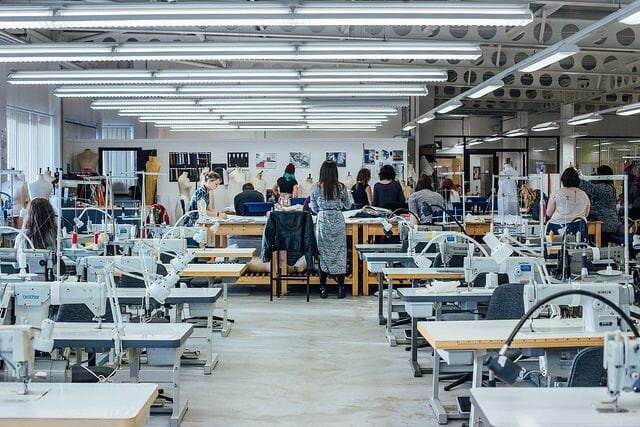
A cluster that size has everything: fabric, printing, elastic, cups and trims, and a deep pool of cut-and-sew factories from tiny workshops to large exporters. The range of quality is just as wide. The work for a brand is separating capable swim factories from trading companies and workshops that subcontract.
Best for: brands with mid to high volumes, or price-led ranges, that can vet suppliers carefully or have someone on the ground. Watch for: US tariffs on Chinese goods, which sit on top of the swimwear duty rates shown below, and the need for strong quality control.
3. Colombia: nearshore swim for the US
Colombia has built a reputation for swimwear design and construction, and it backs that with export data. According to ProColombia, the national promotion agency, Colombia's swimwear and beachwear exports reached USD 17.6 million in 2024, after growing by more than 12% a year on average over five years. The United States is the largest market, at USD 9.4 million, and Colombia is described as the top swimwear exporter in South America.
Those figures also show the scale: Colombia is a specialist, not a volume giant. Much of its swim industry is made up of design-led brands that produce their own collections, around Medellín, home of the Colombiamoda fashion week each July. Private-label capacity exists, but it sits in small and mid-size factories rather than large exporters.
Best for: US brands that want fashion-led swim, shorter transit than Asia, and factories used to body-conscious construction. Watch for: smaller factories with limited capacity in peak season, and Spanish as the working language in many workshops.
4. Italy: Carvico and Jersey Lomellina, the fabric behind premium swim
Italy matters to swimwear mainly through fabric. Two related mills in Lombardy, Carvico and Jersey Lomellina, are among the best-known suppliers of swim fabric. Carvico says its beachwear fabrics, including Vita and Vita Power, are made with ECONYL regenerated nylon and resist chlorine, sunscreens and oils while providing UV protection. It also names Arena, the competition swim brand, among the brands using Vita.
For a brand, this means a premium swimsuit is often "Italian" in its fabric even when it is sewn elsewhere. Many swim factories in Europe, Latin America and Asia can work with Italian fabric if you specify it, and buying the fabric is often the first decision in a premium swim programme. Italy also has its own swim cut-and-sew factories, at the higher end of the price range.
Best for: premium and sustainable swim brands that want a named, certified fabric. Watch for: fabric minimums and lead times set by the mill, and higher fabric cost per metre than generic swim fabric.
5. Portugal: a small specialty for short EU runs
Portugal is known for jersey, knitwear and activewear more than swimwear, and we want to be clear about that. In the 80 Portuguese makers PCF documented in October 2026, 2 list swimwear among their products, both alongside sportswear and circular-knit apparel. That is the honest size of the specialty.
What Portugal does offer is the sewing skill swimwear shares with activewear and lingerie, short shipping times to European customers, and quick sample rounds. Technical swim fabric usually comes from specialist mills, often Italian, so the factory sews and finishes while the fabric is bought in. Our team places and manages swimwear production with a Portuguese partner factory; our swimwear manufacturing page explains what we make and how a swim order runs.
Best for: EU brands launching small swim collections that want fast fit rounds and production close to their customers. Less suited to: high-volume programmes or the lowest unit price.
How Do the Five Compare?
| Maker or hub | Base | What it offers | Best for |
|---|---|---|---|
| Linea Aqua | Hanwella, Sri Lanka | Dedicated swimwear factory, about 3,100 employees, WaterNeutral certified | Large repeat programmes with a sustainability brief |
| Xingcheng cluster | Liaoning, China | About a quarter of world swimwear, 170 million pieces a year | Mid to high volume, price-led ranges |
| Colombia | Medellín and other cities | Design-led swim, USD 17.6m exports in 2024 | US brands wanting nearshore, fashion-led swim |
| Carvico / Jersey Lomellina | Lombardy, Italy | Chlorine-resistant swim fabric, recycled ECONYL options | Premium and sustainable swim fabric |
| Portugal | Northern Portugal | Small swim specialty, 2 of 80 documented makers | Short EU runs with fast fit rounds |
Sources: Everlane factory page, China Daily (5 January 2026), ProColombia via FashionUnited, Carvico, PCF documented makers (October 2026).
Citation capsule The best documented swimwear manufacturers are Linea Aqua, a dedicated swim factory in Hanwella, Sri Lanka with about 3,100 employees (Everlane), and four hubs: Xingcheng in China, which makes about a quarter of the world's swimwear (China Daily), Colombia, with USD 17.6 million of swimwear exports in 2024 (ProColombia), Italy's swim fabric mills, and a small specialty base in Portugal.
How Big Is the Swimwear Market?
Big enough to support specialist factories, and growing. Grand View Research values the global swimwear market at USD 23.0 billion in 2023 and expects it to grow from USD 27.3 billion in 2026 to USD 36.1 billion by 2030, a compound annual growth rate of 6.8% from 2024 to 2030.
Two details from the same report shape sourcing. Asia Pacific held 36.1% of revenue in 2023, the largest region, which fits with where production sits. And polyester was 34.8% of the market by fabric, with nylon blends making up much of the rest. Your fabric choice decides which factories and mills you can use, so it is worth making before you contact anyone.
Growth also brings new brands into the category every season. That is good for choice, but it means capable swim factories fill up early before summer. A brand that briefs in autumn for a spring delivery is competing for capacity with everyone else who left it late.
How Do You Choose the Right Swimwear Manufacturer?
Start with three questions, in this order: how many pieces per style, where you sell, and how technical the product is. The answers narrow the list quickly.
- Volume. Large specialists and big exporters plan around large programmes. A first order of a few hundred pieces per style is better placed with a mid-size swim factory or through a production partner.
- Market. Selling mainly in the US, Colombia shortens transit and lead times. Selling mainly in Europe, Portugal or Italy keeps production close to your customers. Selling worldwide at a sharp price points to Asia.
- Product. A printed bikini is a different job from a moulded-cup one-piece or a competition suit. Ask each factory for samples of the closest product it already makes, not a generic stretch swatch.
Three ways in for smaller swim brands
Most new swim brands take one of three paths. They work directly with a mid-size swim factory that is used to small brands and Western communication. They use a buying agent who groups small orders. Or they use a production partner that places and manages the order with a factory sized for it, and stays involved through sampling and quality control.
Whichever you choose, the checks are the same. Confirm the business registration. Ask for a live video walkthrough of the sewing floor. Check that the company on the quote, the invoice and any certificate is the same legal entity. And agree in writing where each step happens, including printing and any subcontracted sewing. Our guide to red flags when choosing a manufacturer covers the warning signs in more detail.
Citation capsule Choose a swimwear manufacturer by volume, market and product. Large specialists such as Linea Aqua suit big repeat programmes; brands with a few hundred pieces per style usually do better with a mid-size swim factory or a production partner. In every case, ask for samples in the exact elastic, lining and cup construction you need.
What Makes Swimwear Hard to Manufacture?
Swimwear has less room for error than almost any other garment. A tee that fits loosely still sells. A swimsuit that gapes at the leg or loses shape after one swim comes back. Five things decide whether a swim factory can deliver.
- Fabric. Swim fabric is usually nylon or polyester with elastane. It has to recover after stretching when wet and resist chlorine, salt and sun cream. Chlorine resistance is a property of the fabric you choose, so name it in your brief.
- Elastic and edges. Every opening carries swim elastic, and its tension decides the fit. Too tight and it digs in, too loose and it gapes when wet. Elastic tension belongs in the tech pack.
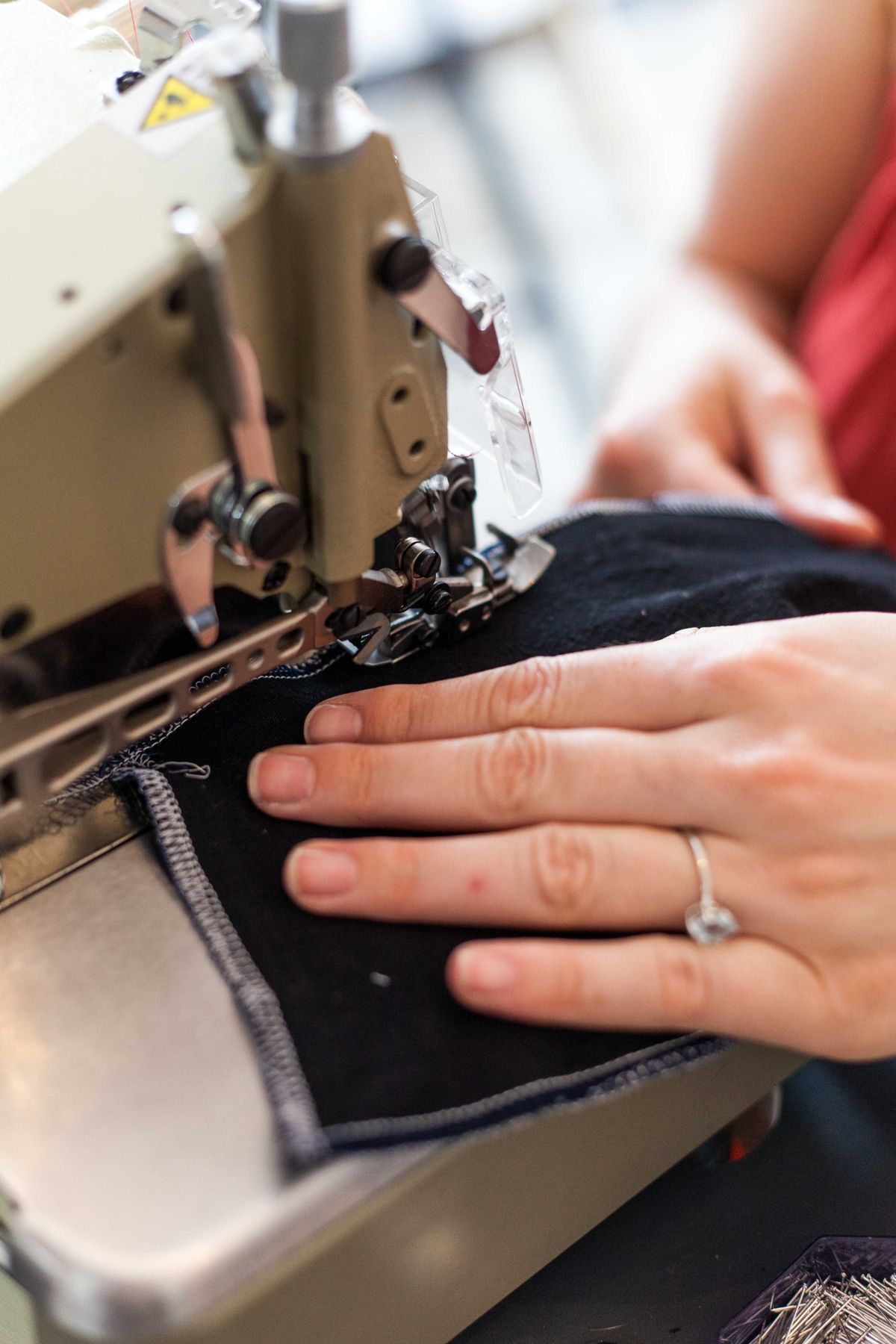
- Seams. Swim seams are sewn with overlock, coverstitch and zigzag stitches that stretch with the fabric. A straight lockstitch seam will crack.
- Lining and support. Self-lined, fully lined or front-lined only; removable pads, moulded cups or underwire. Each changes the cost and the number of operations.
- Fit. Swim usually needs more than one fit round, and samples should be checked wet as well as dry, on a body rather than a form.
This is why the best swim factories are often the ones that also make lingerie or activewear: the machines and the skills overlap. It is also why a factory's claim to "make swimwear" should be tested with a sample of your actual construction. Our activewear and underwear and lingerie pages show the stretch work that overlaps.
What Is the MOQ Reality for Swimwear?
There is no standard swimwear minimum, and anyone quoting one without seeing your brief is guessing. Three things set it.
- The fabric. A stock fabric that the mill or the factory already holds allows a low minimum. A fabric dyed to your colour or printed to your design has its own mill minimum, and that often becomes the real floor for the order.
- The construction. Cups, underwire and hardware add operations and components with their own minimums.
- The factory. Large exporters plan their lines around big programmes. Small and mid-size factories can take short runs, often at a higher price per piece.
In practice, this is how small swim brands keep minimums down: they use stock or stock-supported fabrics for the first collection, limit the number of colours, keep trims simple, and save custom prints for a later order once a style has sold.
For our own swimwear work in Portugal, the minimum is quoted per brief because fabric, lining, cups and print all move it. Our general starting point for cut and sew is 50 to 100 pieces per style and colour, and the partner factory confirms the swimwear figure in writing with your quote. Our guide to small batch clothing production explains how to plan a first run of that size.
What Duty Do You Pay on Imported Swimwear?
Duty is one of the biggest costs in swimwear, and it surprises brands that have only imported cotton basics. In the United States, the general rates in the Harmonized Tariff Schedule for swimwear are among the highest in apparel:
Three things stand out. Synthetic swimwear, which is most swimwear, pays roughly a quarter of its customs value in general duty. Men's woven swim trunks of man-made fibre pay the most, at 27.8%%. And women's woven swimwear sits much lower, at 11.8%%. The fibre and whether the fabric is knitted or woven change the line, so classify your product before you compare factory prices.
These are the general rates only. Additional country-specific tariffs can apply on top, and they change, so check the current position for your country of origin before you commit. For EU brands, goods made inside the EU move without customs duty, which is part of the case for sewing swim in Europe even at a higher unit price.
How Do You Work With a Swimwear Factory?
Start with a complete tech pack. Swim factories quote and sample faster when they get a full specification: measurements and grading, fabric with composition, weight and stretch, elastic width and tension at each opening, lining layout, cup and hardware specifications, stitch types per seam, and labels. If you do not have one, our tech pack service produces a factory-ready single-style tech pack for €79.
- Brief. Styles, fabric, lining, support, prints, colours and quantities, plus your target delivery date.
- Fabric first. Confirm the fabric and its lead time before anything else. In swim, fabric is usually the longest lead item.
- Proto and fit samples. Plan for at least one fit round, checked wet and dry. Our guide to ordering clothing samples covers what to ask for at each stage.
- Pre-production sample. Approve the sample made with the bulk fabric, elastic and trims, not a substitute.
- Production and inspection. Book a final inspection before the balance is paid. Many brands use an AQL sampling plan based on ISO 2859-1.
Ask each factory for its payment terms in writing at the start, and be careful with requests to pay a different company or an account in another country from the factory. For timing, work back from your launch date with fabric and fit rounds included; our guide to production lead times shows how to build that plan.
Citation capsule Working with a swimwear factory starts with a full tech pack: measurements, fabric composition and stretch, elastic tension per opening, lining, cups and stitch types. Confirm fabric first, plan at least one fit round checked wet and dry, approve a pre-production sample in bulk materials, and inspect before paying the balance.
Making swimwear in Europe? Our team places and manages swimwear production with a Portuguese partner factory, from brief to delivery. Send us your brief and we reply within 24 hours, or browse the factory directory (€49).
Which Certifications Matter for Swimwear?
Certifications in swimwear cover the fabric and the claims you make, not the factory's skill. The ones brands ask about most:
- OEKO-TEX STANDARD 100 tests textiles for harmful substances. It applies to a fabric or a finished article, and the certificate names the holder, so check it covers the material in your product.
- Recycled content. A claim such as "made from recycled nylon" needs a certificate such as GRS covering the fabric, as with the ECONYL-based fabrics Carvico describes.
- UV protection. A UPF or sun-protection claim on a label needs a test that backs it, such as UV Standard 801, done by an accredited lab on the fabric or garment.
Ask for certificates in the name of the company that actually supplies your fabric, and keep copies with each order. A certificate that belongs to a different legal entity, or that has expired, does not cover your goods.
How Much Does Swimwear Manufacturing Cost?
There is no honest single price, because swimwear has more cost drivers than most garments. The Garment Costing Guide from the International Trade Centre breaks a garment price into fabric, trims, cut-make-trim labour and overheads, and in swim every one of those is heavier than in a basic tee.
- Fabric is technical and often imported, and a lined piece uses it twice.
- Trims include swim elastic, cups, hardware, hygiene liners and labels.
- Labour rises with every lining, cup and edge finish.
- Duty and freight add the rates shown above, which are high for synthetic swim in the US.
So a lined, cupped one-piece costs far more than a simple stretch bottom from the same factory. The most useful number is the landed cost per piece for your exact style, quantity and destination. Ask each factory for an itemised quote on the same tech pack so you can compare like for like. Swimwear is not in our garment cost calculator, so for Portugal we quote it per brief.
Frequently Asked Questions About Swimwear Manufacturers
Who is the largest swimwear manufacturer in the world?
There is no single public ranking of swimwear factories. By place, the largest production base is Xingcheng in Liaoning, China, which state media report makes about a quarter of the swimwear sold worldwide. By company, the best documented specialist is Linea Aqua in Sri Lanka, a swimwear factory with about 3,100 employees at its Hanwella site.
Where is most swimwear made?
Asia leads. Grand View Research puts Asia Pacific at 36.1% of global swimwear revenue in 2023, and China's Xingcheng cluster alone makes around 170 million pieces a year. Colombia is the leading swimwear exporter in South America, and Italy is best known for the technical swim fabric itself.
Can a small brand work with these swimwear manufacturers?
The large specialists are built for big retail programmes, so a first order of a few hundred pieces rarely gets their attention. Smaller brands usually work with a mid-size swim factory, a sourcing agent, or a production partner that places and manages the order with a factory sized for it.
What is the minimum order for swimwear?
There is no standard figure. Fabric, lining, cups and print all move it, and stock-supported swim fabric allows lower minimums than a custom dyed or printed fabric. In Portugal our team quotes swimwear minimums per brief; our general starting point for cut and sew is 50 to 100 pieces per style and colour.
Is swimwear made in Portugal?
Yes, but it is a small specialty. Of the 80 Portuguese makers PCF documented in October 2026, 2 list swimwear among their products, both alongside sportswear and circular-knit apparel. The sewing skills overlap with activewear and lingerie, and technical swim fabric usually comes from specialist mills.
What duty does the US charge on imported swimwear?
Under the general column of the US Harmonized Tariff Schedule, synthetic knit swimwear is 24.9% for women's (6112.41) and 25.9% for men's (6112.31), and men's woven man-made fibre swim trunks are 27.8%. Additional country-specific tariffs may apply on top, so check the current rate for your origin.
How do I check a swimwear manufacturer is real?
Ask for the business registration, a live video walkthrough of the sewing floor, and finished samples in your exact construction: elastic, lining, cups and seams. Check that the company on the quote, the invoice and any certificate is the same legal entity, and agree in writing where each step will be done.
What to Do Next
Swimwear rewards preparation. Decide your volume, your main market and your fabric first; those three choices point you to the right kind of factory before you send a single email.
If you are launching a large programme, a specialist like Linea Aqua or a vetted factory in Xingcheng fits the scale. If you sell mainly in the US and want fashion-led swim, look at Colombia. If you want premium fabric, start with the Italian mills. And if you are a European brand with a small first collection, a short run sewn in Portugal keeps fit rounds fast and delivery close to your customers.
Our team places and manages clothing production with selected partner factories in northern Portugal, including swimwear with a Portuguese partner factory. Swimwear minimums are quoted per brief; our general starting point for cut and sew is 50 to 100 pieces per style and colour. Tell us your styles, fabric, volume and timeline; we reply within 24 hours. Fee quoted in writing, no commissions.
Get in contact Download the directory (€49)Need a tech pack? Get a factory-ready single-style tech pack for €79. See what's included.
Sources used in this article
- Grand View Research, Swimwear Market report: USD 23.0bn (2023), 27.3bn (2026), 36.1bn (2030), CAGR 6.8% 2024 to 2030, Asia Pacific 36.1%, polyester 34.8%. Read 3 November 2026.
- Everlane, Linea Aqua factory page: Hanwella, Sri Lanka, premium swimwear, 3,100 employees, MAS Intimates sister company, WaterNeutral and Sustainable Future Group certifications.
- MAS Holdings: company profile and Plan for Change.
- China Daily, 5 January 2026: Xingcheng, a quarter of the global swimwear market, 170 million pieces a year, 15 billion yuan.
- ProColombia and Inexmoda via FashionUnited: Colombia swimwear exports USD 17.6m (2024), US USD 9.4m, over 12% annual growth over five years.
- Carvico, Performance and sustainability in beachwear fabrics: Vita and Vita Power with ECONYL, chlorine and UV resistance, Arena.
- US Harmonized Tariff Schedule: general duty rates for HTS 6112.31, 6112.39, 6112.41, 6112.49, 6211.11.10 and 6211.12.10. Read 3 November 2026.
- OEKO-TEX STANDARD 100, ISO 2859-1 and the ITC Garment Costing Guide.
- PCF documented makers set, October 2026 (80 Portuguese makers; 2 list swimwear), as published on our swimwear manufacturing page.
Portugal Clothing Factory places and manages clothing production with selected partner factories in the northern Portuguese textile cluster. We quote our fee in writing, reply within 24 hours, and stay involved through sampling, quality control and delivery. See how we work or get in contact.